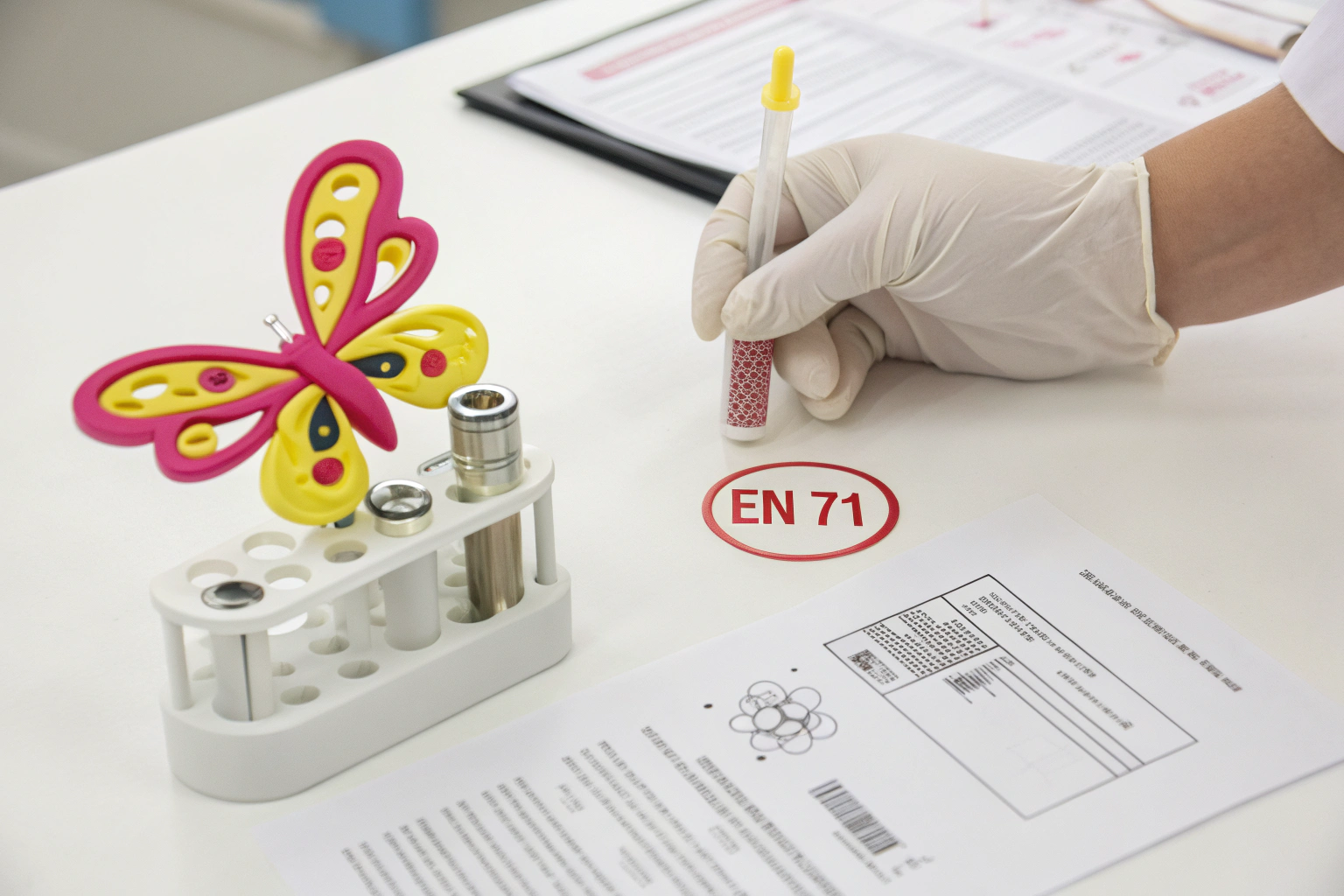
I received an urgent email from a Moscow-based distributor three years ago. He had just had an entire container of children’s hair accessories seized at Russian customs. The shipment was held because the clips lacked EN 71 certification. He lost the back-to-school selling season entirely. His retail customers canceled their orders and sourced from a competitor who had the correct documentation. He called me in a panic, asking if my factory could supply EN 71 certified clips within four weeks. I could. That conversation launched a partnership that has shipped over half a million units to Russia since then. The lesson was brutal but clear. Without EN 71, you do not have a children’s accessory business in the Russian market.
Russian buyers require EN 71 certification on children’s hair clips because Russia’s Technical Regulation TR CU 007/2011 on children’s product safety directly references the European EN 71 standard as its accepted testing methodology. This regulation mandates that any product intended for children under 14 years old must undergo mechanical, chemical, and flammability testing to prove it is free from small parts that could cause choking, heavy metals that could leach into a child’s mouth, and sharp edges that could cut skin. Without an EN 71 test report from an accredited laboratory, the product cannot legally be imported, cleared through Russian customs, or sold in any retail channel.
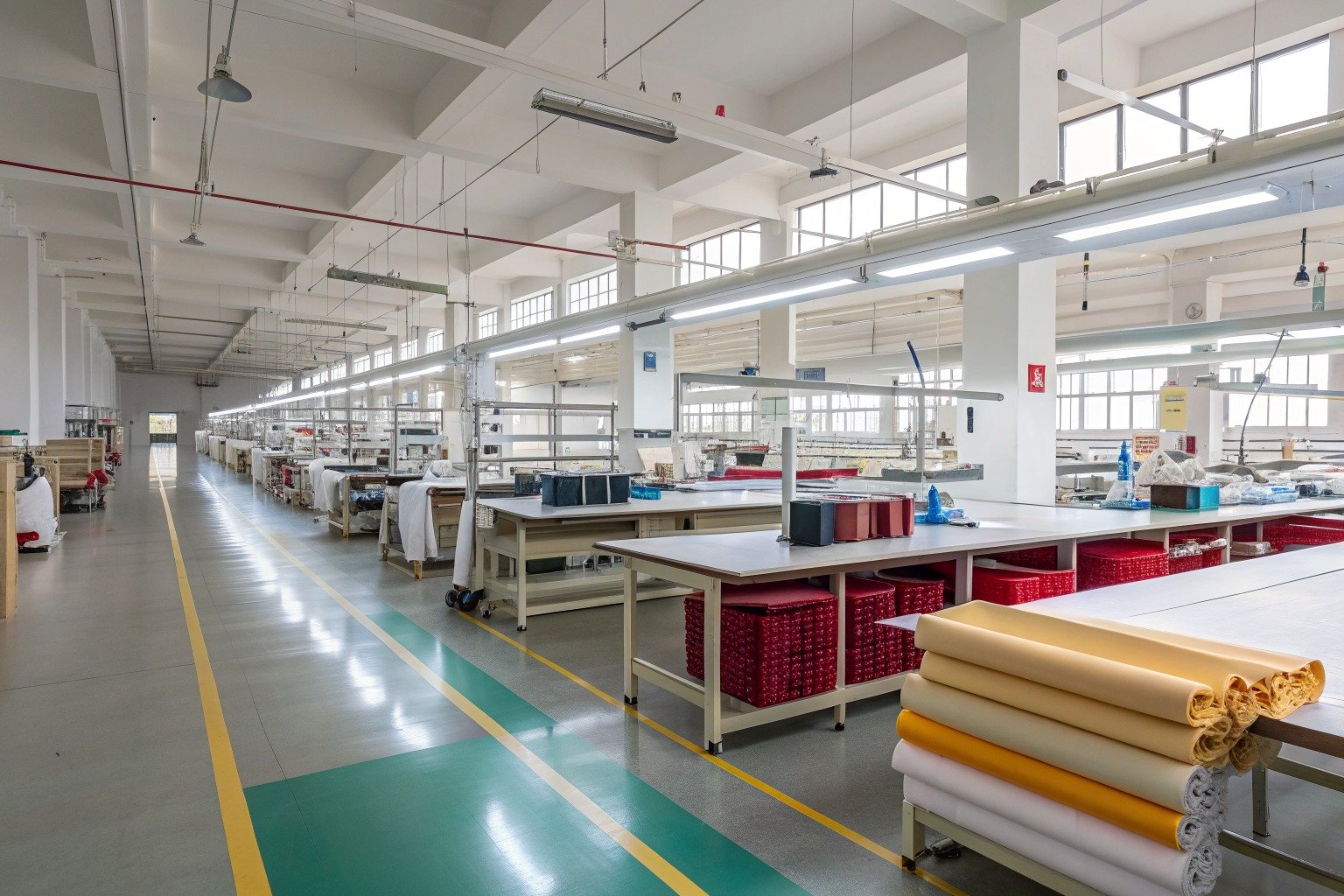
I manufacture children’s hair accessories in Zhejiang for distributors across Russia and the Eurasian Economic Union. I learned the TR CU 007 regulation inside and out after that distributor’s crisis. It is not optional. It is not a recommendation. It is a legally enforced mandatory certification with criminal penalties for non-compliance. I want to explain exactly what EN 71 testing involves, how it maps to Russian technical regulations, and how you can ensure your children’s hair clip orders pass customs and reach the retail shelf without delay or rejection.
What Is EN 71 Certification and Why Does It Apply to Hair Accessories?
EN 71 is not a single test. It is a comprehensive safety standard divided into multiple parts, each addressing a different hazard category for children’s products. When a Russian buyer asks for EN 71 certification on hair clips, they are typically referring to Parts 1, 2, and 3. These cover mechanical and physical properties, flammability, and migration of certain elements, which means toxic heavy metals. The standard was developed by the European Committee for Standardization, but its adoption by Russian technical regulations has made it the de facto safety benchmark for the entire Eurasian market.
EN 71 certification applies to hair accessories because any item intended for use by a child under 14 is classified as a toy or a children’s product under regulatory definitions. A hair clip, even if it is a functional accessory, is treated as a product that a child will handle, put in their mouth, pull apart, and potentially swallow components from. The certification process tests the clip for small parts detachment, sharp edges, sharp points, and chemical toxicity to ensure that even if the child misuses the product in foreseeable ways, it will not cause serious injury or illness.
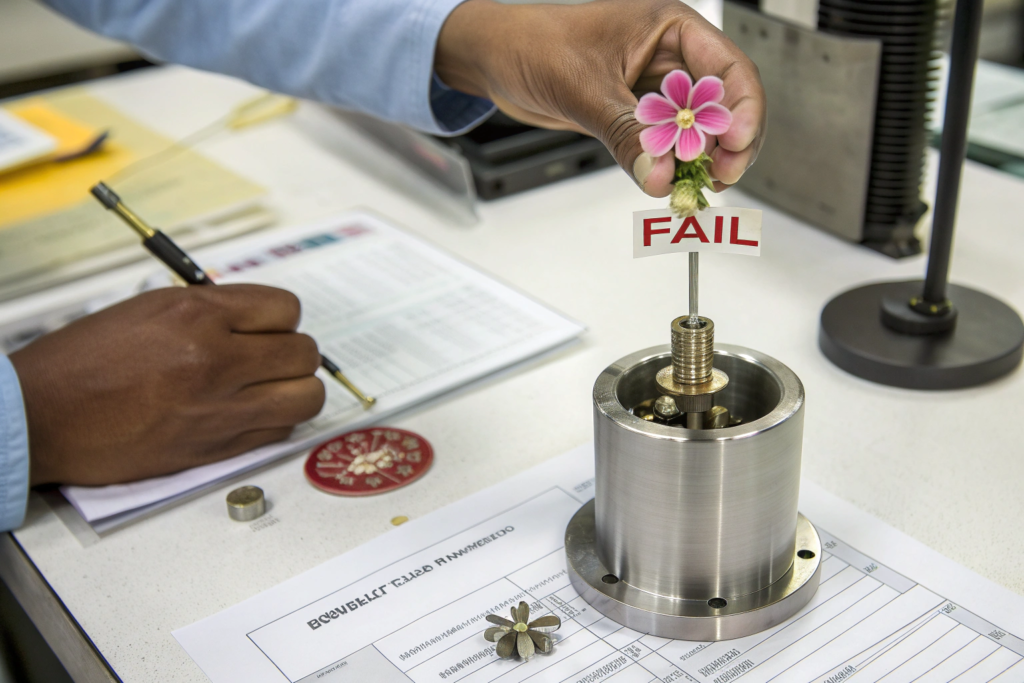
When I first started exporting to Russia, I assumed my standard quality control was sufficient. My clips were well-made, with smooth edges and secure attachments. But the EN 71 testing revealed that a specific butterfly clip had a decorative antenna element that detached under 90 newtons of pulling force, which is the test standard. The detached antenna fit entirely inside the small parts cylinder, which simulates a child’s throat. The clip failed. I redesigned the attachment method, replacing glued-on antennas with integrally molded ones. The redesign cost pennies per unit and made the clip certifiable. Without the test, I would never have identified the hazard.
What Are the Specific Parts of EN 71 That Apply to Children’s Hair Clips and Barrettes?
EN 71 is divided into thirteen parts, but three are mandatory and directly applicable to hair accessories. Part 1 covers mechanical and physical properties. This is the test where a hair clip is subjected to tension, torque, drop, and impact tests to see if small parts detach. A small part is any component that fits entirely into a cylinder with a diameter of 31.7 millimeters, which approximates the throat of a child under three years old. Any hair clip that contains or produces small parts during these tests fails.
Part 2 covers flammability. The hair clip, including any fabric bow, ribbon, or decorative element, is exposed to a controlled flame. It must not ignite and propagate flame faster than a specified rate. Part 3 covers the migration of specific toxic elements. The clip is submerged in a simulated gastric acid solution, and the solution is then analyzed for the presence of antimony, arsenic, barium, cadmium, chromium, lead, mercury, and selenium. The limits are extremely low, measured in milligrams per kilogram. This EN 71 safety standard overview is the reference document that every children’s accessory manufacturer must understand in detail before entering the Russian market.
How Does a Small Parts Cylinder Test Determine If a Hair Clip Is Safe for Young Children?
The small parts cylinder is a deceptively simple stainless steel device. It looks like a small cup with a precisely machined internal diameter of 31.7 millimeters and a sloping bottom that is 25.4 millimeters deep at one end and 57.1 millimeters deep at the other. This shape was developed by pediatricians and engineers to replicate the dimensions of a fully distended throat of a child under three.
The test procedure is rigorous. First, the hair clip is subjected to abuse tests. It is dropped from a height. The decorative elements are pulled with a tension force of up to 90 newtons. Seams are torn. If any component detaches, that component is placed into the small parts cylinder without compression. If the entire component fits inside the cylinder in any orientation, it is classified as a small part. The presence of any small part on a product intended for children under three results in an automatic failure. For hair clips marketed to children over three, the product must carry a clear warning label. However, most Russian buyers simply require the product to pass the under-three standard regardless of the target age, because they want maximum legal protection. The small parts testing methodology is universal across EN 71, ASTM F963, and ISO 8124, making it the single most important physical test for children’s hair accessories.
How Does Russia’s TR CU 007/2011 Regulation Mandate EN 71 Testing for Children’s Accessories?
Russia does not simply recommend EN 71. It enforces it through its own national technical regulation, TR CU 007/2011, which covers the safety of products intended for children and adolescents. This regulation is law across all member states of the Eurasian Economic Union, which includes Russia, Belarus, Kazakhstan, Armenia, and Kyrgyzstan. The regulation explicitly states that children’s products must undergo mandatory conformity assessment before they can be placed on the market. For hair accessories, the conformity assessment is performed against the safety requirements that mirror the EN 71 standard.
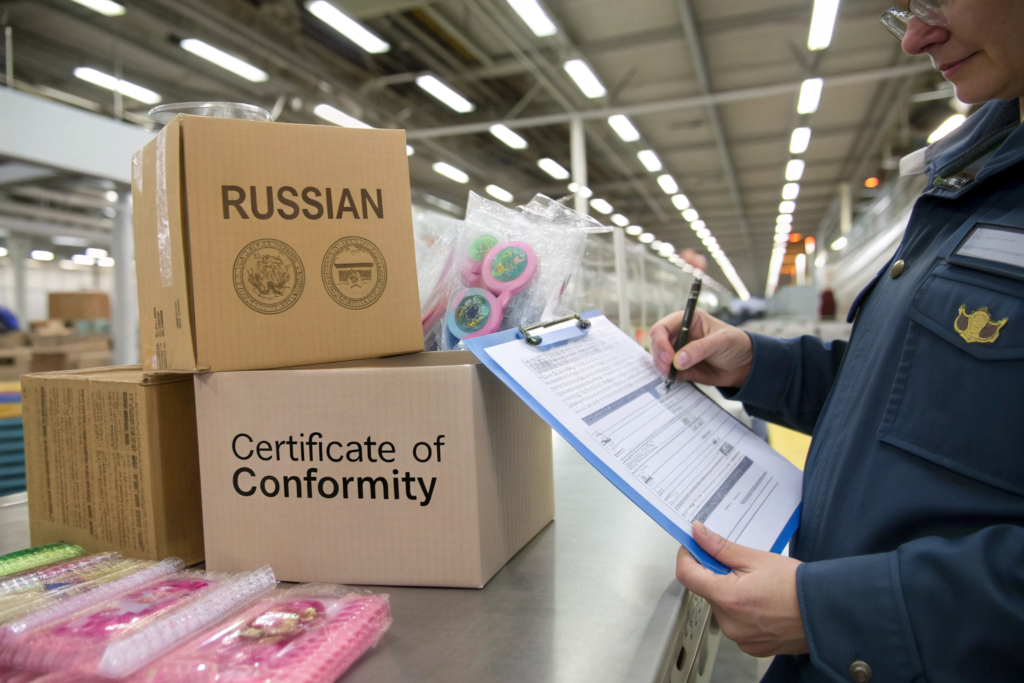
TR CU 007/2011 mandates EN 71-equivalent testing by requiring that all children’s products undergo either mandatory certification or declaration of conformity, depending on the product category. Hair accessories for children fall under the certification requirement. This means the manufacturer or importer must submit product samples to an accredited testing laboratory, obtain a test report showing compliance with the mechanical, chemical, and flammability requirements, and register a certificate of conformity with the Federal Service for Accreditation. Without this registered certificate, customs clearance is denied, and the goods are either re-exported or destroyed.
I work with a Russian certification partner who manages the document registration process. When I produce a new children’s hair clip design, I send pre-production samples to their accredited lab in Shanghai. The lab tests to EN 71 Parts 1, 2, and 3. The test report is then submitted to the Russian accreditation system. A certificate of conformity is issued, valid for up to three years. I include a copy of this certificate in every shipment’s documentation package. The Russian buyer presents it to customs. The shipment clears.
What Is the Difference Between a Certificate of Conformity and a Declaration of Conformity for Hair Clips?
Under TR CU 007/2011, products are classified into two conformity assessment tracks. A Certificate of Conformity is the stricter track. It requires testing by an accredited laboratory and the certificate is issued by a certification body that takes legal responsibility for the product’s safety. A Declaration of Conformity is a self-declaration track where the manufacturer or importer issues their own declaration of compliance based on their own test evidence.
Children’s hair clips fall under the mandatory certification track, not the declaration track. This is because they are classified as products for children under 14 that have direct skin contact and small components. The Certificate of Conformity must be registered in the unified register of the Eurasian Economic Union. The certificate has a unique registration number that customs officials can verify online. A factory that offers only a self-issued declaration for children’s hair clips is providing invalid documentation. The shipment will be rejected. The conformity assessment procedures for the Eurasian Economic Union are publicly available and clearly specify which product categories require which assessment track.
What Happens at Russian Customs If Children’s Hair Clips Arrive Without EN 71 Documentation?
Russian customs operates a strict documentation check for regulated children’s products. The customs broker submits the shipment documentation, including the commercial invoice, packing list, and the Certificate of Conformity. The customs officer verifies that the certificate is valid, registered, and matches the product description on the invoice. If the certificate is missing, expired, or mismatched, the consequences are severe.
The shipment is placed in temporary storage at the importer’s expense. The importer is given a limited period, typically 10 to 30 days, to produce valid certification documents. If the documents are not produced within this period, the goods are classified as non-compliant and are subject to either re-export at the importer’s cost or destruction. The importer may also face administrative fines for attempting to import uncertified children’s products. The Russian customs clearance procedures for children’s goods place the burden of proof entirely on the importer. The factory’s verbal assurance that the clips are safe carries zero legal weight. Only a registered Certificate of Conformity based on EN 71 testing satisfies the customs requirement.
What Are the Key Chemical and Heavy Metal Restrictions Under EN 71 for Hair Accessories?
The chemical safety of children’s hair clips is not about whether the clip looks clean. It is about what leaches out of the metal, paint, plastic, and adhesive when a child puts the clip in their mouth. Children mouth objects. They suck on the ends of barrettes. They chew on decorative charms. A clip that is chemically safe looks no different from one that is toxic. The difference is only detectable through laboratory extraction and analysis. The EN 71 Part 3 test simulates the chemical environment of a child’s stomach and measures what dissolves out of the product materials.
EN 71 Part 3 restricts the migration of nineteen elements from children’s products, with the strictest limits applied to the most toxic substances. For hair clips, the critical restricted substances are lead at a migration limit of 23 milligrams per kilogram, cadmium at 1.9 milligrams per kilogram, chromium VI at 0.05 milligrams per kilogram, and mercury at 1.9 milligrams per kilogram. These limits apply to every accessible component, including metal clips, painted surfaces, plastic charms, and adhesive residues. The limits are total per material, meaning each different material in the clip is tested separately.
I source the metal components for my children’s hair clips from a supplier who provides material composition certificates for every batch. The spring steel is lead-free. The plating is cadmium-free. The paint is heavy-metal-free enamel. I still send random production samples to an external lab for EN 71 Part 3 migration testing twice a year as ongoing verification. The lab report is shared with my Russian buyers as part of the annual certification renewal.

Why Are Lead and Cadmium Restrictions Particularly Important for Hair Clips Worn by Children?
Lead is a potent neurotoxin. In children, even low-level chronic exposure is linked to developmental delays, reduced IQ, and behavioral disorders. The mechanism of exposure from a hair clip is oral. A child handles the clip, then puts their fingers in their mouth. Or they put the clip directly in their mouth. The lead in the metal alloy or the paint dissolves in saliva and is ingested.
Cadmium is a carcinogen that accumulates in the kidneys and bones over a lifetime. It was historically used as a plating material for cheap metal accessories because it provides a bright, corrosion-resistant finish at very low cost. A hair clip with cadmium plating releases cadmium ions continuously when in contact with skin and saliva. The EN 71 migration limits for these substances are set based on toxicological data on the tolerable daily intake for a child’s body weight. The limits are not arbitrary. They are calculated to ensure that even if a child mouths the clip daily, their exposure stays below the safety threshold. The health effects of lead exposure in children are well-documented by the World Health Organization, and these findings underpin the regulatory limits in EN 71 and TR CU 007.
How Does EN 71 Part 3 Testing Simulate a Child Mouthing a Hair Clip?
The laboratory does not give hair clips to children and measure blood levels. It uses a standardized chemical simulation called a migration test. The test conditions are defined in EN 71 Part 3 and are designed to replicate the chemical environment of the human stomach.
The hair clip is disassembled into its component materials. Each material is placed in a separate container with a solution of 0.07 molar hydrochloric acid, which has a pH of approximately 1.5, matching stomach acid. The container is maintained at 37 degrees Celsius, body temperature, for two hours in the dark. The solution is then filtered and analyzed using inductively coupled plasma mass spectrometry, a highly sensitive analytical technique that can detect metal concentrations down to parts per billion. The concentration of each regulated element in the solution is calculated and compared against the legal migration limit. This EN 71 Part 3 migration testing protocol is a precise, reproducible, and legally defensible method for assessing the chemical risk of a children’s product.
How Can a Chinese Factory Produce Hair Clips That Reliably Pass EN 71 Certification?
Passing EN 71 certification is not achieved by testing alone. Testing reveals whether a product is safe. It does not make the product safe. Safety must be designed into the product from the material selection stage and maintained through disciplined production controls. A factory that treats EN 71 compliance as a paperwork exercise will eventually ship a non-compliant batch. A factory that treats it as a manufacturing discipline will pass every test, every time.
A Chinese factory can reliably produce EN 71 compliant children’s hair clips by implementing three systematic controls: upstream material certification requiring all metal, plastic, and paint suppliers to provide EN 71 Part 3 compliant material test reports before incoming goods are accepted, in-process design controls that eliminate small parts by using integrally molded decorative elements and mechanical fastening instead of adhesive bonding, and outgoing batch testing on randomly selected finished products sent to an accredited third-party laboratory at a defined frequency.
I implemented these controls after my first Russian order. I created an approved supplier list limited to material vendors who had demonstrated consistent EN 71 compliance. I redesigned my clip constructions to eliminate glued-on decorations, replacing them with molded-in features or mechanically crimped attachments that survive the tension test. I established a quarterly third-party testing schedule. The cost of these controls is approximately 2-3% of the product cost. The cost of a rejected Russian shipment is 100% of the order value plus lost customer trust.

What Design Modifications Eliminate Small Parts Risks on Decorative Children’s Hair Clips?
The most common failure on children’s hair clips is a decorative element that detaches. A plastic flower glued to a snap clip. A resin charm tied on with a thread loop. A rhinestone set in a prong that opens under tension. Each of these represents a potential small part that could choke a child.
The design solution is to eliminate the separable decorative element entirely. Mold the decorative shape as an integral part of the clip body. If a decoration is essential, attach it mechanically. A metal charm can be attached with a double-loop wire wrapping that is then soldered closed. A fabric bow can be sewn through a hole in the clip base, with the thread knot encased in a sealed plastic cover. Adhesive alone is never sufficient for a primary attachment. If adhesive is used as a secondary reinforcement, it must survive the tension test. The design for children’s product safety principle is that any component accessible to a child must withstand the foreseeable abuse that a child will apply. A well-designed children’s hair clip has no separate small parts at all.
What Ongoing Quality Assurance Program Satisfies Russian Buyers Between Annual Certifications?
A Certificate of Conformity is valid for one to three years, depending on the certification scheme. During that period, the factory continues to produce and ship. The Russian buyer needs confidence that the batch shipping in month 18 is built to the same safety standard as the batch tested in month one. An ongoing quality assurance program provides that confidence.
I provide my Russian buyers with a batch-level compliance document with every shipment. This document includes a factory-issued declaration that the goods are produced identically to the certified samples, material traceability records showing the lot numbers of the metal, plastic, and paint used, and a copy of the most recent third-party surveillance test report. I also invite buyers to conduct their own random sampling and testing. Several of my larger Russian distributors send an inspector to our factory annually to pull random samples and send them to an independent lab. This supply chain quality assurance for regulated products framework builds the trust that sustains long-term trade relationships. The certificate opens the door. The ongoing quality program keeps it open.
Conclusion
EN 71 certification for children’s hair clips destined for Russia is not a bureaucratic nuisance. It is a legal gatekeeper that separates legitimate, safety-conscious suppliers from those who are either ignorant of the law or willing to gamble with children’s health. You learned that TR CU 007/2011 is the governing regulation, and it mandates a Certificate of Conformity based on EN 71 testing for any children’s hair accessory entering the Eurasian Economic Union. Without this certificate, the goods do not clear customs. The shipment is detained, re-exported, or destroyed. The financial and reputational damage to the importer is catastrophic.
We walked through the testing itself. The small parts cylinder that simulates a child’s throat catches every poorly attached decoration, every glue failure, every design shortcut. The chemical migration test that simulates stomach acid reveals the lead, cadmium, and chromium that are invisible to the naked eye but devastating to a developing child’s neurological and organ health. These tests are rigorous because the hazard they prevent is serious and irreversible.
And we covered the manufacturing discipline required to pass these tests consistently. It begins with certified upstream materials, continues through safety-focused design that eliminates small parts, and is sustained by ongoing batch testing and transparent documentation. A Certificate of Conformity is a snapshot. A quality assurance system is a continuous guarantee.
At AceAccessory, I treat children’s hair accessory safety as the foundation of my Russian export business. My Zhejiang factory maintains an approved material supplier list, integrally molded decoration designs, and a quarterly third-party EN 71 testing program. Every shipment to Moscow, St. Petersburg, or Novosibirsk carries a complete compliance documentation package.
If you are sourcing children’s hair clips for the Russian or Eurasian market and need a factory that understands the TR CU 007 certification process from start to finish, I invite you to contact our Business Director, Elaine. She can share our current EN 71 test reports, our Certificate of Conformity template, and our compliance documentation package. Reach her at elaine@fumaoclothing.com. Let’s ensure your children’s accessories pass customs and reach the retail shelf with safety proven, documented, and guaranteed.