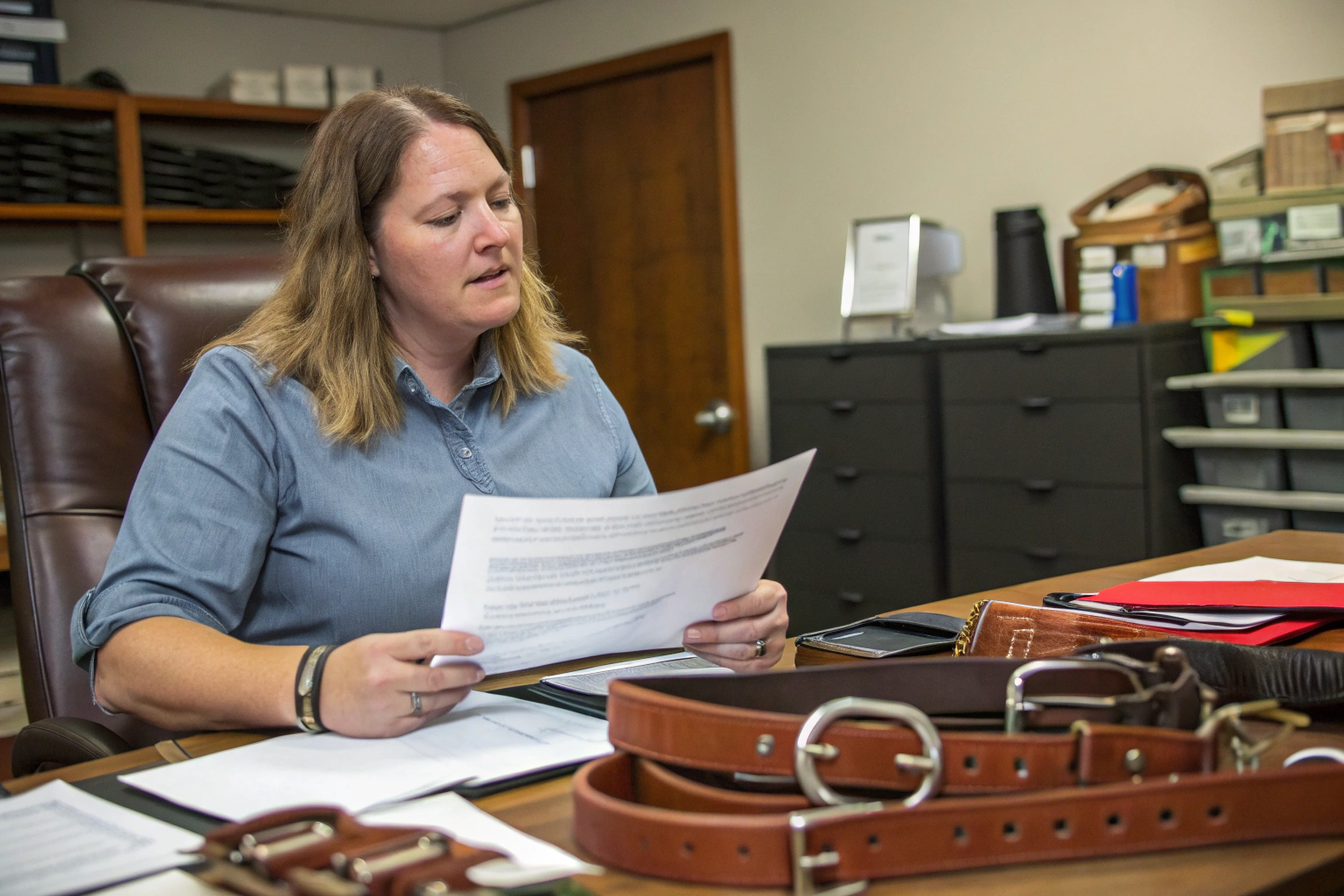
A quality assurance director from a major American workwear brand sat in my office last year with a story that illustrated exactly why video documentation has become non-negotiable in her industry. Her company had ordered 12,000 heavy-duty leather belts for construction workers. The belts had a large, load-bearing metal buckle that was rated to withstand 200 kilograms of tensile force. The factory provided a paper test report. The report was stamped, signed, and looked legitimate. The buckles had passed. But within weeks of the belts being issued to workers, the buckles started failing. The prongs were bending. The frames were cracking. A worker’s tool belt failed while he was climbing a ladder, and the falling tools narrowly missed a coworker below. The brand immediately quarantined the remaining inventory and sent an investigator to the factory. The discovery was infuriating. The factory had tested a single, specially prepared buckle, a golden sample, made from a higher-grade metal alloy. The test report was genuine. It documented a real test on a real buckle. But that buckle was not the buckle on the production belts. The production buckles were made from a cheaper, weaker alloy that cost 40 percent less. The factory had pocketed the difference. The brand faced a potential lawsuit from the injured worker, a recall of thousands of belts, and a devastating loss of trust with their retail partners. The director told me, "If we had required a continuous video of the test being performed on buckles randomly pulled from our shipment, this would never have happened."
US importers ask for factory videos of the buckle strength test because video documentation provides continuous, verifiable, and objective evidence that the buckle on the actual production belts meets the required tensile strength. The buckle strength test, also called the buckle tensile test or the buckle load test, measures the maximum force the buckle can withstand before it deforms, cracks, or breaks. For a functional, load-bearing belt, a tool belt, a safety harness belt, a tactical belt, or a heavy-duty work belt, the buckle is a critical safety component. A buckle that fails under load can cause injury or death. The test is performed by clamping the buckle into a universal testing machine, applying a steadily increasing tensile force, and recording the peak force at failure. A continuous video that shows the random selection of the belt from the shipping carton, the verification of the testing machine’s calibration, the buckling of the belt into the testing fixture, the progressive application of force, the real-time display of the force reading, and the final failure point or the successful holding of the required force, provides proof that the test was legitimate. The video protects the importer against product liability claims, satisfies retailer compliance requirements, and deters the sample substitution fraud that static photographs and paper reports cannot prevent.
The buckle is the most mechanically stressed component on a functional belt. When a worker hangs a heavy tool pouch from their belt, when a firefighter clips a radio harness to their buckle, when a climber hangs their body weight from a safety strap, the buckle is the single point of failure. If it breaks, everything fails. The buckle strength test is the primary quality gate that verifies the buckle can do its job. At AceAccessory, we produce belts with load-bearing buckles for workwear, outdoor, and safety equipment brands. Video documentation of all strength and safety-critical tests is a standard part of our quality control package. Let me walk you through exactly what the buckle strength test is, how video prevents fraud, and what a valid test video must include.
What Is the Buckle Tensile Strength Test for Belts
The buckle tensile strength test is a standardized mechanical test that measures the maximum force a belt buckle can withstand before it fails. It is not a single, universal test. The specific test setup depends on the buckle type and the belt’s intended use. The test is defined by international standards, including ASTM D7142 for snap fasteners, which includes buckle testing, and by specific retailer and industry protocols that often exceed the international standards. The principle is simple. The buckle is attached to the belt strap, or to a representative sample of the strap material, and the assembly is clamped into a tensile testing machine. The machine pulls the buckle and the strap apart at a controlled speed, measuring the force. The test continues until the buckle fails, or until the required force is achieved and held. The peak force is recorded.
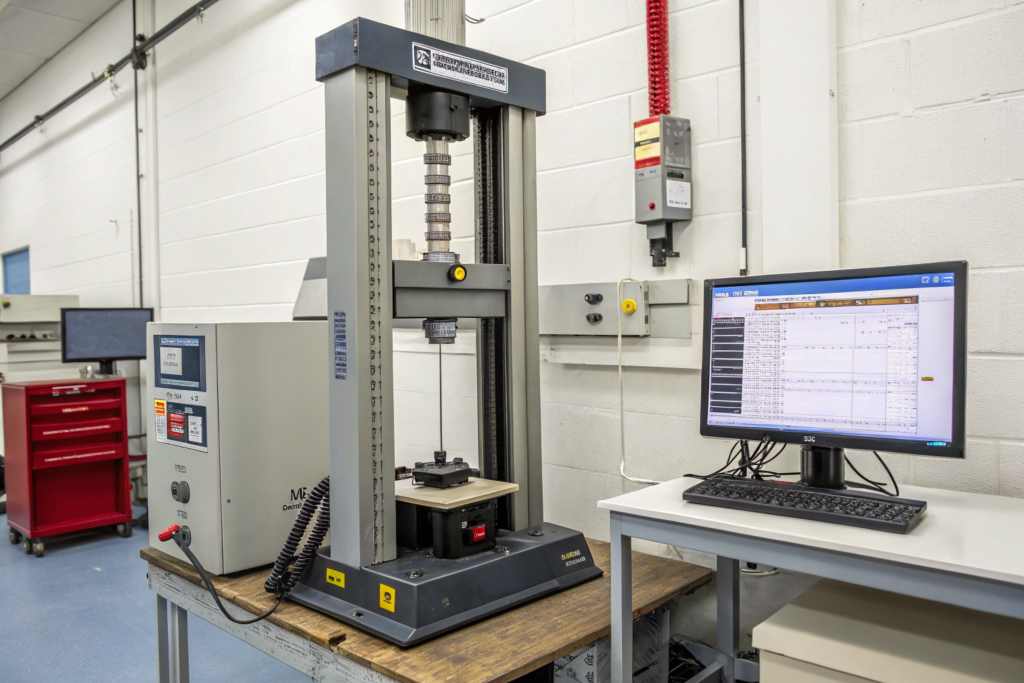
The buckle tensile strength test measures the maximum force a belt buckle can withstand before experiencing permanent deformation, fracture, or detachment from the strap. The test is performed on a universal testing machine, also called a tensile tester. The machine has two clamps, one fixed and one moving. The buckle is secured in one clamp, either directly or via a fixture that simulates the attachment to the belt. The belt strap, or a representative sample, is secured in the other clamp. The moving clamp travels at a constant speed, typically 50 to 100 millimeters per minute, applying a steadily increasing tensile force. The machine has a load cell that measures the force. The force is recorded continuously and plotted on a graph. The test continues until one of several failure modes occurs. The buckle frame deforms permanently, meaning it bends, stretches, or opens up and will no longer function correctly. The buckle frame fractures, meaning it cracks or breaks. The prong, the tongue of the buckle that goes through the belt hole, bends or breaks. The buckle detaches from the strap, meaning the rivets, screws, or stitching that attach the buckle fail. The peak force at failure is recorded. For a load-bearing belt, the buckle is often tested to a specified load without failure, rather than tested to destruction. The test report states the maximum force achieved and the failure mode, if any. The minimum acceptable force depends on the belt’s intended use. A heavy-duty tool belt buckle might be required to withstand 200 to 400 kilograms of force. A tactical belt buckle might require 500 kilograms or more. A fashion belt buckle might require 50 to 100 kilograms.
The buckle strength test is a destructive test when performed to failure. It destroys the buckle. It is performed on a sample of buckles from each production batch. Let me detail the two most important test methods.
How Does the ASTM Standard Test Buckle Strength on Belts?
ASTM D7142 is the Standard Test Method for Holding Strength of Prong-Ring Attached Snap Fasteners, but its methodology is also applied to buckle testing. The standard provides a detailed procedure for testing the strength of the attachment between a fastener and the fabric or leather to which it is attached. For a buckle, the standard is adapted. The buckle is attached to a representative sample of the belt strap using the same rivets, screws, or stitching that will be used in production. The strap sample is clamped in the lower jaw of the tensile testing machine. The buckle is secured in the upper jaw using a fixture. The fixture is a metal bar or a hook that passes through the buckle frame, simulating the way the belt would be worn. The force is applied in a straight line, parallel to the strap, at a constant speed of 100 millimeters per minute. The machine measures the force. The test continues until the buckle or the attachment fails. The peak force is recorded. The standard also specifies the conditioning of the samples. The samples must be conditioned at a standard temperature and humidity, 23 degrees Celsius and 50 percent relative humidity, for at least 24 hours before testing. The standard specifies the reporting requirements. The test report must include the sample identification, the test date, the equipment used, the test speed, the number of specimens tested, the individual and average results, and the failure mode. The ASTM standard provides a consistent, repeatable method for comparing the strength of different buckles and attachment methods. It is widely referenced in purchase specifications and retailer quality manuals.
What Force Thresholds Are Required for Load-Bearing Belts?
The force threshold for a load-bearing belt buckle is determined by the intended use and the relevant safety standard or retailer specification. There is no single universal number. For a heavy-duty work belt, a typical retailer specification might require the buckle to withstand a minimum of 200 kilograms of tensile force without failure. This is approximately the weight of two large men, providing a significant safety margin above the expected load of hanging tools. For a tactical belt, used by military and law enforcement, the requirement can be much higher. A common specification is 400 to 500 kilograms of tensile strength. These belts are used for rappelling, for attaching safety lanyards, and for carrying heavy equipment. The buckle must be exceptionally strong. For a safety harness belt, the buckle is part of a fall protection system. The requirements are governed by strict occupational safety standards, such as ANSI Z359 in the United States or EN 358 in Europe. These standards specify a minimum breaking strength, often 1,500 kilograms or more, and require rigorous testing and certification. For a fashion belt, the force threshold is much lower. A standard fashion belt buckle might be required to withstand 50 to 100 kilograms. This is sufficient for the normal stresses of holding up trousers. The threshold is specified in the purchase order or the tech pack. The factory must know the required force and must test to that force. The test report must state the force achieved and confirm that the buckle passed at the specified threshold. The video of the test must show the force reading on the machine display, clearly and legibly, as the force is applied.
How Does Video Documentation Prevent Buckle Test Fraud
Buckle test fraud is a known and serious problem in the global supply chain. The motivation is economic. A factory that has sourced a cheaper, weaker buckle, or a cheaper, thinner strap, knows that the product will not pass the required strength test. To avoid the cost of replacing the buckles or losing the order, the factory may falsify the test results. The methods of fraud are the same as those used for snap tests, button tests, and zipper tests. Sample substitution, machine manipulation, and procedural fraud. Static photographs and paper test reports are vulnerable to all of these methods. A continuous, unedited video of the entire test process is a powerful deterrent and detection tool.
Video documentation prevents buckle test fraud by capturing the entire testing process as a continuous, unbroken sequence from sample selection to final result. The most common fraud, sample substitution, involves the factory preparing a golden sample with a high-quality, certified buckle specifically for testing, while the production belts use a cheaper, inferior buckle. A video that shows the inspector walking to the shipping carton, showing the carton label with the purchase order number, opening the sealed carton, reaching inside to select a random belt, and then immediately testing that same belt, all in one continuous shot, eliminates the opportunity for sample substitution. The second fraud method, machine manipulation, involves tampering with the testing machine. The load cell can be recalibrated to read higher than the actual force. The digital display can be manipulated. A video that includes a calibration check, where a known weight is hung from the machine and the display is shown to read correctly before the test begins, prevents this. The third fraud method, procedural fraud, involves stopping the test early, before the required force is reached, or testing at a slower speed that produces a falsely higher reading. A video that shows the force increasing smoothly and continuously on the machine display, reaching the required threshold, is much harder to fake. The video must be a single, continuous file with no cuts or edits. Any break in the video invalidates it.
The video evidence is not just a nice-to-have. For many US importers and retailers, it is a contractual requirement. The cost of producing a proper test video is minimal. The cost of a buckle failure in the field is potentially catastrophic. Let me detail the two most important aspects of video fraud prevention.
How Do Factories Fake a Buckle Tensile Test?
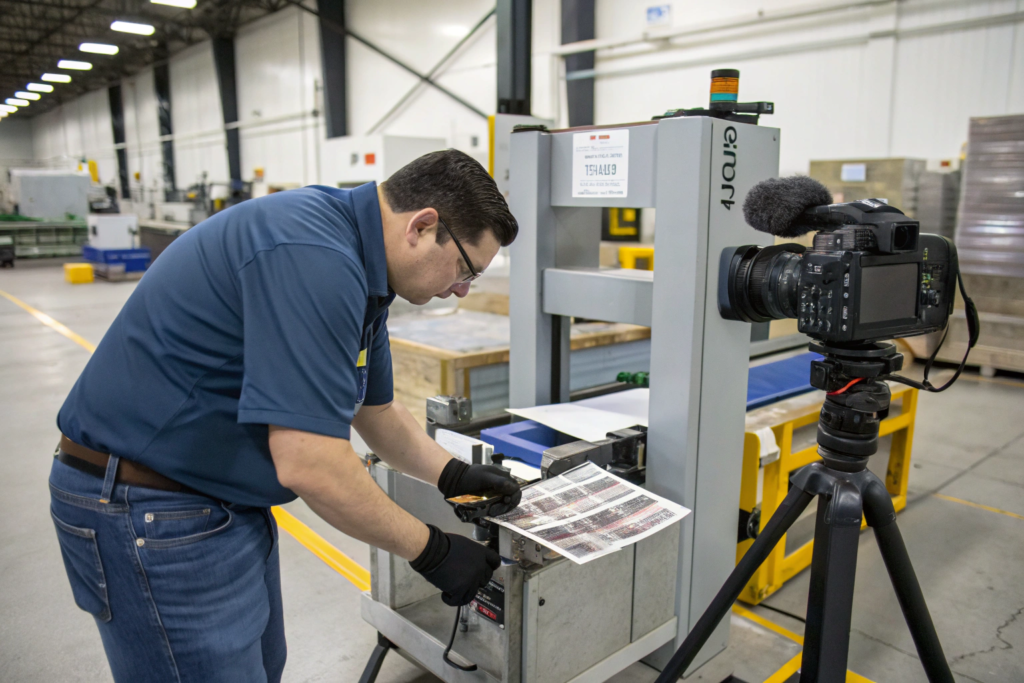
The most common method of faking a buckle tensile test is the golden sample trick. The factory manufactures the production belts using cheap, low-grade buckles. Separately, they obtain a small quantity of high-quality, certified buckles from a reputable supplier. They assemble a few belts with these high-quality buckles. These are the golden samples. When it is time to perform the quality control tests, the golden samples are presented for testing. The buckle is tested. It passes, easily exceeding the required force. The test report is genuine. The photographs are genuine. The buckle that was tested really did withstand 400 kilograms. The fraud is that the buckle on the tested belt is not the buckle on the shipped belts. A static photograph of the broken buckle and the test machine display does not prove that the buckle came from the production shipment. A video that shows the belt being taken from the shipping carton and the buckle being clamped into the machine proves the connection. Another method is to manipulate the test machine’s calibration. The load cell can be adjusted with a calibration factor, a multiplier. If the factor is set to 1.5, a force of 100 kilograms displays as 150 kilograms. A weak buckle that fails at 150 kilograms appears to have passed at 225 kilograms. A photograph of the display captures the false number. A video that includes a calibration check, showing a known weight being hung from the machine and the display reading the correct weight, prevents this fraud. A third method is to use a different, stronger strap for the test. The buckle is attached to a heavy-duty nylon strap for testing, rather than the leather strap that will be used in production. The nylon strap is stronger, so the failure point is higher. A video that shows the entire belt, the buckle and the strap, being clamped into the machine prevents this.
What Elements Must a Valid Buckle Test Video Include?
A buckle test video that is acceptable to US importers and retailers must include a specific set of elements, recorded in a specific sequence, without any cuts or edits. The required elements are designed to establish the provenance of the sample, the validity of the equipment, and the integrity of the test procedure. The elements, in sequence, are as follows. First, the carton identification. The video must begin by showing the shipping carton. The carton label must be clearly visible and legible, showing the purchase order number, the style number, and the quantity. The inspector should read this information aloud. Second, the carton opening. The video must show the sealed carton being opened for the first time. The tape or seal being cut. Third, the random sample selection. The inspector must reach into the middle of the carton and extract one belt. The belt must remain continuously in the camera frame from extraction to test completion. Fourth, the equipment calibration verification. The video must show the test machine’s calibration sticker, with the date and serial number, in close-up. A calibration check with a known weight should be performed on camera. The weight is hung from the machine, and the display reading is shown. Fifth, the test setup. The video must show the buckle being secured in the upper clamp, using the appropriate fixture. The strap must be secured in the lower clamp. The clamping arrangement must be clearly visible. Sixth, the test execution. The video must show the test being performed from start to finish, with a clear, unobstructed view of the force display throughout. The force reading must be legible. The pull speed must be smooth and consistent. Seventh, the result display. After the test, the peak force reading must be shown in close-up for at least five seconds. The pass-fail determination must be stated audibly, and the failure mode, if any, must be described. Eighth, the date and time verification. The video must be date and time stamped. Ninth, the continuous recording. The video must be a single, unbroken file. Any cut, edit, or jump in the video invalidates it. We follow this protocol exactly for every buckle test video we produce.
How Do Buckle Test Videos Protect Against US Product Liability
The buckle on a load-bearing belt is a safety component. A buckle that fails can cause a cascade of dangerous events. A falling tool can injure a worker below. A dropped weapon can endanger a police officer. A failed safety harness can result in a fatal fall. In the litigious environment of the United States, a product failure that causes injury can lead to a product liability lawsuit. The importer, the distributor, and the retailer can all be named as defendants. The buckle test video is a piece of evidence that can be used to defend against such a lawsuit. It demonstrates that the importer exercised reasonable care in ensuring the safety and quality of the product. It provides objective, visual proof that the buckles on the belts were tested and met the required strength standards before they were shipped.
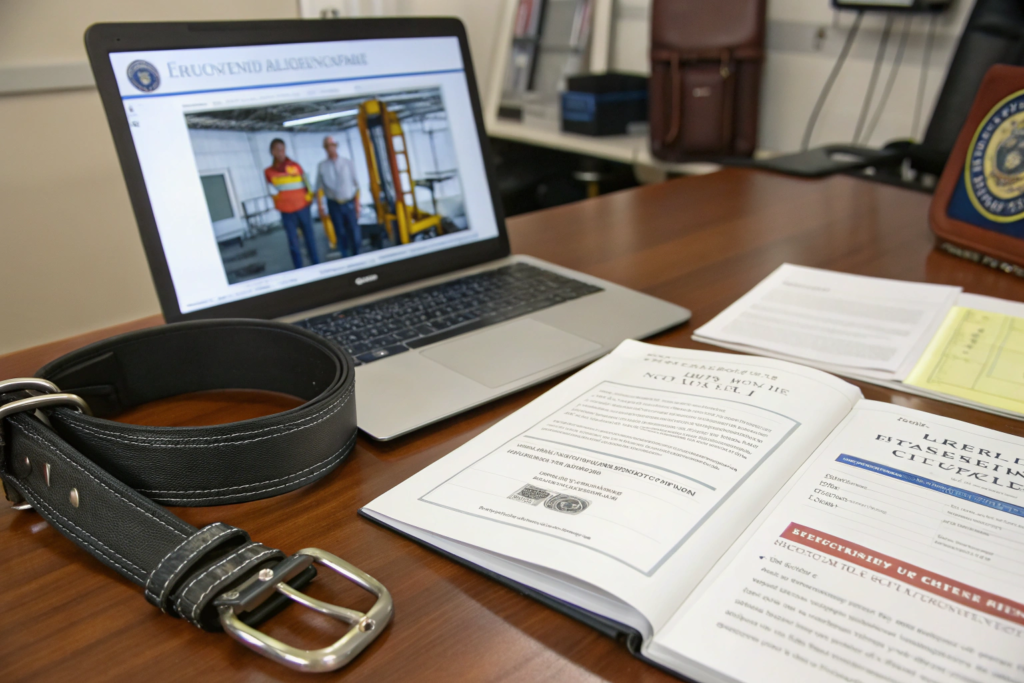
Buckle test videos protect US importers against product liability by providing objective, verifiable evidence that the buckle strength testing was performed on the actual production belts and that the buckles met the required strength standards. In a product liability lawsuit, the plaintiff’s attorney will argue that the buckle was defective and that the defect caused the injury. The importer’s defense will include the argument that the buckle was tested and met all applicable standards. A paper test report can be challenged as potentially falsified. A continuous video showing the random selection of a belt from the actual shipment, the testing of the buckle on that belt on a calibrated machine, and the achievement of a passing result, is much harder to challenge. It is objective, visual proof of due diligence. The video also supports the importer’s defense that they exercised reasonable care. It demonstrates a robust quality control program. For products sold to major retailers, the buckle test video is often a mandatory part of the vendor compliance package. Retailers like Home Depot, Lowe’s, and Grainger, who sell workwear and safety equipment, have stringent vendor requirements. They require video evidence of strength testing. Failure to provide it can result in refused shipments, chargebacks, and delisting. The test video is not just a legal defense. It is a commercial necessity.
The video is a small investment that protects against catastrophic loss. A single injury lawsuit can cost millions of dollars in settlements and legal fees. The cost of producing a test video is a few dollars of labor. The return on investment is incalculable. Let me detail the two most important legal and commercial protections.
Can a Buckle Test Video Defend Against a Workplace Injury Claim?
Yes, a buckle test video can be a key piece of evidence in defending against a workplace injury claim. Consider a scenario where a construction worker alleges that his tool belt buckle snapped while he was climbing a scaffold, causing his tool pouch to fall and strike a coworker below. The coworker sustains a serious head injury. The injured worker files a lawsuit against the belt manufacturer, the importer, and the retailer. The plaintiff’s attorney argues that the buckle was defectively manufactured from a weak alloy that was prone to brittle fracture. The importer’s defense includes the buckle test video. The video shows the random selection of a belt from the same production batch. The video shows the buckle being tested on a calibrated tensile machine. The video shows the force climbing to 400 kilograms, and the buckle holding without any deformation. The video is continuous, unedited, and clearly shows the buckle and the force reading. The importer’s attorney argues to the jury that the buckle was not defective. It was tested to four times its rated load and passed. The failure experienced by the worker was not due to a manufacturing defect. It may have been caused by misuse, by overloading the belt beyond its rated capacity, or by damage that occurred after purchase. The video is compelling, objective evidence. It is far more persuasive to a jury than a paper test report that could have been fabricated. The video creates reasonable doubt about the plaintiff’s claim. In many cases, the existence of a robust test video will encourage the plaintiff’s attorney to settle for a lower amount, or to drop the case entirely. The video demonstrates that the defendant has the evidence to mount a strong defense.
How Does a Test Video Satisfy Industrial Retailer Compliance?
Major industrial retailers in the United States, such as those in the construction, mining, and safety equipment sectors, have rigorous vendor compliance programs. These retailers sell products that are used in hazardous environments, and they have a legal and ethical responsibility to ensure that those products are safe. Their vendor manuals specify the testing and documentation required for every product category. For load-bearing belts and accessories, the buckle tensile test is a standard requirement. The retailer’s compliance auditor will request the buckle test reports and the test videos for the production batches that were shipped to the retailer. The auditor will review the videos for the required elements. Carton identification matching the purchase order. Calibration verification. Correct test setup. Clear force reading. Passing result. Continuous recording. If the videos are present and meet the standard, the audit item is passed. If the videos are missing, incomplete, or show improper procedures, the audit item is failed. A failed audit item results in a corrective action plan. The vendor is placed on probation. They must submit compliant videos for future shipments. If the failure is repeated, the retailer may reduce order volumes, impose financial penalties, or terminate the vendor relationship. The buckle test video is a compliance document that has direct commercial consequences. A factory that can provide compliant test videos is a factory that can do business with the largest and most demanding industrial retailers in the United States. We provide our brand clients with test videos that are organized, labeled, and formatted to meet the specific compliance audit requirements of their retail partners.
Conclusion
The US importer’s insistence on factory videos of the buckle strength test is a direct, rational response to the risk of buckle failure, a risk that carries potentially catastrophic consequences. A buckle that breaks is not just a product failure. It can be a life-altering event. The buckle test, a standardized mechanical evaluation that measures the maximum force the buckle can withstand, is the primary method of verifying that the buckle will perform its load-bearing function. The video of the test is the proof that the test was performed correctly, on the actual production units, on calibrated equipment, without fraud or manipulation. We have explored the test itself, the ASTM standard, the force thresholds, and the failure modes. We have examined the methods of test fraud, the golden sample, the machine manipulation, and the procedural shortcuts, that video documentation prevents. We have detailed the required elements of a valid test video, the carton selection, the calibration check, and the continuous recording. And we have discussed the legal and commercial protection that the video provides, defending against workplace injury claims and satisfying the compliance audits of major industrial retailers.
At AceAccessory, buckle testing is an integral part of our quality control process for every load-bearing belt we produce. We have invested in calibrated tensile testing machines, video documentation equipment, and trained QC personnel. We test buckles from every production batch and provide the complete video documentation to our clients. We do this because we understand that the buckle is the heart of a functional belt. If the buckle fails, the belt fails. And the consequences can be severe.
If you are sourcing belts with load-bearing buckles for the US market, for workwear, for tactical gear, for safety equipment, or for any application where failure is not an option, and you need a manufacturing partner who provides the documented, verifiable strength testing that US importers and retailers require, I invite you to contact us. Reach out to our Business Director, Elaine, at elaine@fumaoclothing.com. Tell her about your product, your strength requirements, and the documentation your retail partners demand. She can provide sample test videos, walk you through our buckle testing protocols, and provide a quotation for production that includes full mechanical testing and video documentation. Do not trust a paper report. Trust a video that proves your buckles are as strong as you claim.