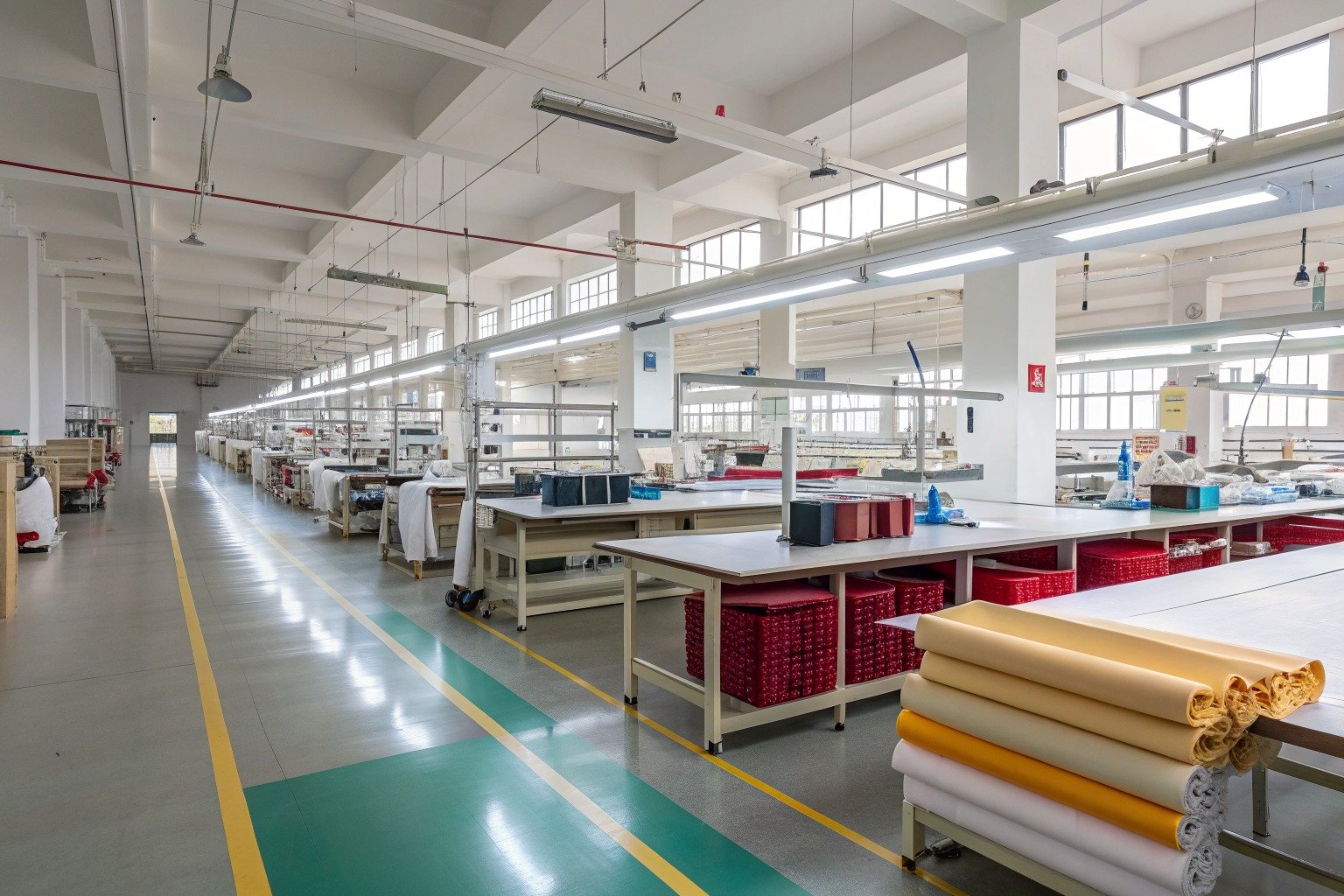
A sustainability director from a Parisian luxury fashion house sat in my office last spring, and she was visibly stressed. She had just returned from a meeting with her company’s executive board. The board had approved a new sustainability strategy that included a public commitment. By 2027, every product sold by the house would carry a carbon footprint label. The scarf category, one of their highest-volume and most iconic product lines, was the pilot. She needed to understand exactly what data was required, how to collect it from her supply chain, and how to present it on a label that would be accurate, credible, and consistent with the emerging EU regulations. She had a list of questions that no one in her supply chain had been able to answer. What was the scope? Cradle-to-gate or cradle-to-grave? What methodology should be used? How could she verify the data from her yarn suppliers and her dyehouses? She was not asking me for a marketing story. She was asking for a manufacturing partner who could provide verified, product-level carbon footprint data.
European brands require carbon footprint labels on scarves by 2027 because of a convergence of regulatory mandates, retailer sustainability commitments, and consumer demand for climate transparency. The regulatory driver is the proposed EU Green Claims Directive and the broader EU Green Deal framework, which will require companies to substantiate environmental claims, including carbon footprint claims, with rigorous, third-party verified data. The French Climate and Resilience Law already mandates carbon labeling for certain products, and France is setting the benchmark that other EU member states are following. The retailer driver is the voluntary commitments made by major European luxury groups, department stores, and fashion platforms to achieve net-zero emissions and to provide carbon transparency to their customers. The carbon footprint label is the mechanism for demonstrating progress toward these commitments. The consumer driver is the growing demand, particularly among younger, climate-conscious consumers, for information about the environmental impact of the products they buy. A carbon footprint label provides a single, comparable number that allows the consumer to make an informed choice. The label must be based on a standardized lifecycle assessment methodology, typically the Product Environmental Footprint, or PEF, methodology developed by the European Commission, or the ISO 14067 standard for carbon footprint of products. The label will display the total greenhouse gas emissions, in kilograms of CO2 equivalent, associated with the scarf’s lifecycle, from raw material extraction through manufacturing, transportation, use, and end-of-life.
The carbon footprint label is not just another sustainability certification. It is a fundamental shift in how products communicate their environmental impact. It moves the conversation from qualitative claims, "eco-friendly," "sustainable," "green," to a quantitative, comparable metric. It forces brands to understand their supply chains at a granular level. For a scarf, this means understanding the carbon impact of the cotton farming or the sheep grazing, the spinning of the yarn, the dyeing of the fabric, the printing, the finishing, the packaging, and the transportation at every stage. At AceAccessory, we have been preparing for the carbon footprint labeling requirement for two years. We have mapped the carbon footprint of our major scarf materials and processes. We are ready to provide our European brand clients with the data they need. Let me walk you through the regulations, the methodology, and the practical steps to prepare.
What EU Regulations Are Driving Carbon Footprint Labeling
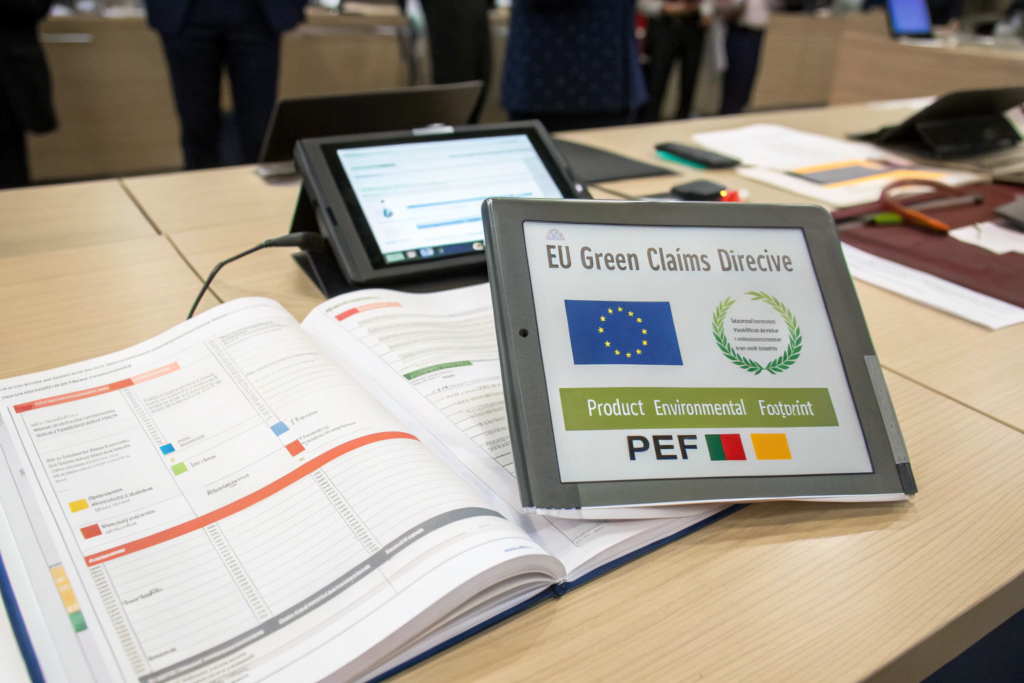
The shift to mandatory carbon footprint labeling in Europe is being driven by legislation. The European Union has made climate neutrality a legally binding goal, and product-level carbon transparency is a key enabler of that goal. The regulatory framework is being built through a series of interconnected directives and regulations. The proposed Green Claims Directive, published by the European Commission in 2023, will require companies to substantiate any environmental claim, including claims about carbon neutrality or carbon footprint, with evidence that complies with a standardized methodology. The Product Environmental Footprint, or PEF, methodology, developed by the Commission’s Joint Research Centre, is the recommended method for measuring and communicating product-level environmental impacts. National legislation, particularly in France, is already in force and is serving as a model for the rest of the EU.
The EU regulations driving carbon footprint labeling on scarves by 2027 are the proposed Green Claims Directive, the established Product Environmental Footprint methodology, and the French Climate and Resilience Law. The Green Claims Directive will require that any explicit environmental claim made on a product label, including a carbon footprint claim, must be substantiated using a lifecycle assessment that follows recognized scientific methods. The claim must be verified by an independent, accredited third party. Generic, unsubstantiated claims, such as "climate neutral" or "carbon positive," will be prohibited unless they are backed by verified data. The PEF methodology provides the standardized framework for conducting the lifecycle assessment. It defines the scope, the data quality requirements, the impact categories, and the communication format. The PEF for apparel and footwear, currently in development, will provide specific rules for textile products, including scarves. The French Climate and Resilience Law, enacted in 2021, already mandates carbon labeling for certain products and services, and it is expanding its scope. The French government has also developed the EcoScore, a front-of-pack environmental label that includes a carbon footprint component. Major French brands and retailers are voluntarily adopting the EcoScore or similar labeling schemes in anticipation of the mandatory requirements. The regulatory direction is clear. By 2027, selling a scarf in the European market without a credible, verified carbon footprint label will be increasingly difficult, and in some markets, legally impossible.
The regulations are not just about compliance. They are about creating a level playing field. A brand that has invested in measuring and reducing its carbon footprint should be able to communicate that effort to consumers without being undercut by competitors making unsubstantiated green claims. Let me explain the two most important regulatory components.
How Does the French Climate Law Mandate Carbon Labels on Textiles?
The French Climate and Resilience Law, adopted in 2021, is the most advanced national legislation in the EU regarding product-level environmental labeling. Article 2 of the law mandates the introduction of a carbon score, or "affichage environnemental," for a progressively expanding list of product categories. Textiles and apparel are a priority category. The law requires that the environmental label display the product’s carbon footprint, along with other relevant environmental indicators, in a format that is easily understandable by consumers. The label must be based on a lifecycle assessment that follows the PEF methodology or an equivalent standardized method. The French Agency for Ecological Transition, ADEME, has been tasked with developing the detailed rules for the textile sector. The implementation is being phased. A voluntary pilot phase, running from 2022 to 2025, allows brands to experiment with different labeling formats and methodologies. The mandatory phase is expected to begin in 2026 or 2027 for large companies, with a phased extension to smaller companies. The French law has extraterritorial reach. Any product sold in France, regardless of where it was manufactured, is subject to the labeling requirement. A scarf made in China and sold in a boutique in Paris must carry a carbon footprint label that complies with the French rules. The French law is being closely watched by other EU member states. Belgium, the Netherlands, and Germany are developing similar initiatives. The French model is likely to become the de facto EU standard. For a brand selling scarves in Europe, preparing for the French requirements is the safest strategy for ensuring compliance across the entire EU market.
What Is the Product Environmental Footprint Methodology?
The Product Environmental Footprint, or PEF, is a multi-criteria lifecycle assessment methodology developed by the European Commission’s Joint Research Centre. It provides a standardized way to measure the environmental impact of a product across its entire lifecycle, from raw material extraction to end-of-life disposal. The PEF covers sixteen environmental impact categories, including climate change, which is the carbon footprint. The methodology is defined in a European Commission Recommendation, 2013/179/EU, and is supported by detailed guidance documents. For textile products, the PEF methodology is being adapted into a specific set of rules called a Product Environmental Footprint Category Rule, or PEFCR. The PEFCR for apparel and footwear will define the specific system boundaries, the data requirements, the default values for common materials and processes, and the communication format. The PEF methodology follows a lifecycle approach. The lifecycle of a scarf is divided into stages. Raw material extraction, the farming of cotton or the raising of sheep for wool, or the extraction of petroleum for synthetic fibers. Material processing, the spinning of the fiber into yarn, the weaving or knitting of the fabric, and the dyeing and finishing. Manufacturing, the cutting and sewing of the scarf, and any printing or embellishment. Distribution, the transportation from the factory to the distribution center and to the retail store or the consumer. Use, the consumer’s washing, drying, and ironing of the scarf. End-of-life, the disposal of the scarf, whether it is landfilled, incinerated, or recycled. At each stage, the greenhouse gas emissions are calculated. The emissions are converted to kilograms of CO2 equivalent, using the global warming potentials published by the Intergovernmental Panel on Climate Change. The total carbon footprint is the sum of the emissions across all lifecycle stages. The PEF methodology emphasizes data quality. Primary data, actual data from the specific supply chain, is preferred over secondary data, industry average data from databases. The use of primary data is incentivized, as it typically results in a more accurate and often lower carbon footprint than secondary data. The PEF is the de facto standard for carbon footprint labeling in the EU. A brand that follows the PEF methodology is well-positioned for compliance with the Green Claims Directive and the French law.
How Is a Scarf’s Carbon Footprint Calculated
Calculating the carbon footprint of a scarf is a complex data exercise. It requires collecting information from every stage of the supply chain, from the cotton field to the customer’s washing machine. The calculation follows the lifecycle assessment methodology. The total carbon footprint is the sum of the emissions from each stage. The calculation must be transparent, verifiable, and based on the best available data. For a brand to publish a carbon footprint number on a label, they must have confidence that the number is accurate and defensible. The calculation is typically performed by a sustainability consultant or by the brand’s internal sustainability team, using specialized lifecycle assessment software and databases.
The carbon footprint of a scarf is calculated by mapping the product’s lifecycle, collecting primary and secondary data for each stage, and applying emission factors to convert the activity data into greenhouse gas emissions. The lifecycle mapping identifies every process involved in creating the scarf. For a cotton scarf, the stages are cotton cultivation, ginning, spinning, weaving or knitting, dyeing, finishing, cutting and sewing, packaging, and transportation between each stage. For each stage, activity data is collected. For cotton cultivation, the activity data includes the amount of fertilizer used, the water consumption, and the diesel fuel for farm machinery. For dyeing, the activity data includes the electricity and natural gas consumed by the dyehouse, the chemicals used, and the water treatment. Primary data, actual data from the specific suppliers, is the most accurate. For example, the actual electricity consumption per kilogram of fabric at the specific dyehouse used by the factory. Secondary data, industry average data from lifecycle assessment databases such as Ecoinvent or GaBi, is used when primary data is not available. The activity data is multiplied by emission factors. An emission factor is the amount of greenhouse gas emitted per unit of activity. For example, the emission factor for grid electricity in China is approximately 0.6 kilograms of CO2 equivalent per kilowatt-hour. The emission factor for natural gas is approximately 0.2 kilograms of CO2 equivalent per kilowatt-hour. The result is the carbon footprint for that stage. The results from all stages are summed to give the total carbon footprint of the scarf, expressed in kilograms of CO2 equivalent. The calculation is documented in a lifecycle assessment report. The report is verified by an independent, accredited third party to ensure the methodology, the data, and the calculations are correct.
The calculation of a scarf’s carbon footprint is a significant undertaking, but it is a necessary one. The data generated not only supports the carbon label but also identifies the hotspots, the stages with the highest emissions, where reduction efforts can be focused. Let me detail the two most important calculation stages.

What Lifecycle Stages Contribute Most to a Scarf’s Carbon Footprint?
The contribution of each lifecycle stage to the total carbon footprint of a scarf varies depending on the fiber type, the manufacturing processes, and the consumer use patterns. However, some general patterns are consistent. For a natural fiber scarf, such as cotton or wool, the raw material stage is typically the largest contributor. For cotton, the cultivation stage, including fertilizer production and use, irrigation, and farm machinery, can account for 30 to 50 percent of the total carbon footprint. The type of cotton matters significantly. Organic cotton, grown without synthetic fertilizers, generally has a lower carbon footprint than conventional cotton. The ginning and spinning stages add a smaller percentage. For a synthetic fiber scarf, such as polyester or acrylic, the raw material stage is also significant, driven by the extraction and refining of petroleum. The manufacturing stage, particularly dyeing and finishing, is a major contributor for both natural and synthetic scarves. Dyeing is an energy-intensive process. It requires large volumes of water to be heated to high temperatures, typically using natural gas or coal-fired boilers. The type of energy used is critical. A dyehouse that uses renewable energy or has implemented energy efficiency measures will have a significantly lower carbon footprint than a dyehouse that relies on coal. The dye class also matters. Natural dyes can have a lower carbon footprint than synthetic dyes, depending on the specific dye and the dyeing process. The transportation stage, shipping the scarf from the factory to the distribution center, contributes a smaller but still meaningful percentage, typically 5 to 15 percent. Air freight has a dramatically higher carbon footprint than sea freight. The use stage, the consumer washing and drying the scarf, can be a significant contributor, particularly if the scarf is washed frequently in hot water and tumble-dried. The care label instructions, recommending cold water wash and line drying, can influence the use-stage footprint. The end-of-life stage, landfilling or incineration, contributes a small percentage. A lifecycle assessment identifies these hotspots and enables the brand to focus reduction efforts where they will have the greatest impact.
How Do You Collect Primary Data From Yarn and Dye Suppliers?
Collecting primary data from yarn and dye suppliers is the most challenging part of the carbon footprint calculation. It requires the cooperation of multiple companies in the supply chain, many of which may not have experience with carbon accounting. The process begins with education. The brand, or the factory on behalf of the brand, explains to the supplier what data is needed, why it is needed, and how it will be used. The supplier is provided with a data collection template, a spreadsheet with clear instructions. The template asks for specific, quantifiable information. For a yarn spinner, the template asks for the annual production volume, the total electricity consumption, the energy source, grid electricity, on-site solar, the total fuel consumption, natural gas, diesel, the types and quantities of fibers processed, and the transportation mode and distance from the fiber supplier. For a dyehouse, the template asks for similar energy and production data, plus the types and quantities of dyes and chemicals used, the water consumption, and the wastewater treatment method. The supplier fills out the template to the best of their ability. The data is reviewed for completeness and plausibility. Follow-up questions are asked. The data is then used to calculate the supplier’s carbon footprint per kilogram of output, the carbon intensity. This carbon intensity value is used in the scarf’s lifecycle model. The primary data collection process takes time and requires building relationships with suppliers. It is an ongoing process. The data should be updated annually to track improvements. For suppliers who are unable or unwilling to provide primary data, secondary data from lifecycle assessment databases is used. However, the use of secondary data is becoming less acceptable for carbon footprint labeling, particularly for the most impactful stages. The PEF methodology incentivizes primary data. The trend is toward greater supply chain transparency and data sharing. We have been working with our yarn and dye suppliers for the past two years to collect primary data. We have developed simplified data collection templates and we provide support to our suppliers in completing them. We make this primary data available to our brand clients for their carbon footprint calculations.
How Will Carbon Labels Be Presented on Accessory Products
The carbon footprint label is the consumer-facing output of the entire lifecycle assessment process. It must communicate a complex data set in a simple, intuitive way. The label must be credible, understandable, and comparable across products. It must comply with the emerging regulatory requirements for format and content. The design of the label is still evolving. Several different formats are being tested by brands and retailers in the voluntary pilot programs. The common elements are a numerical value, the carbon footprint in kilograms of CO2 equivalent, a visual scale that helps the consumer interpret the number, and a digital link, a QR code, to more detailed information.
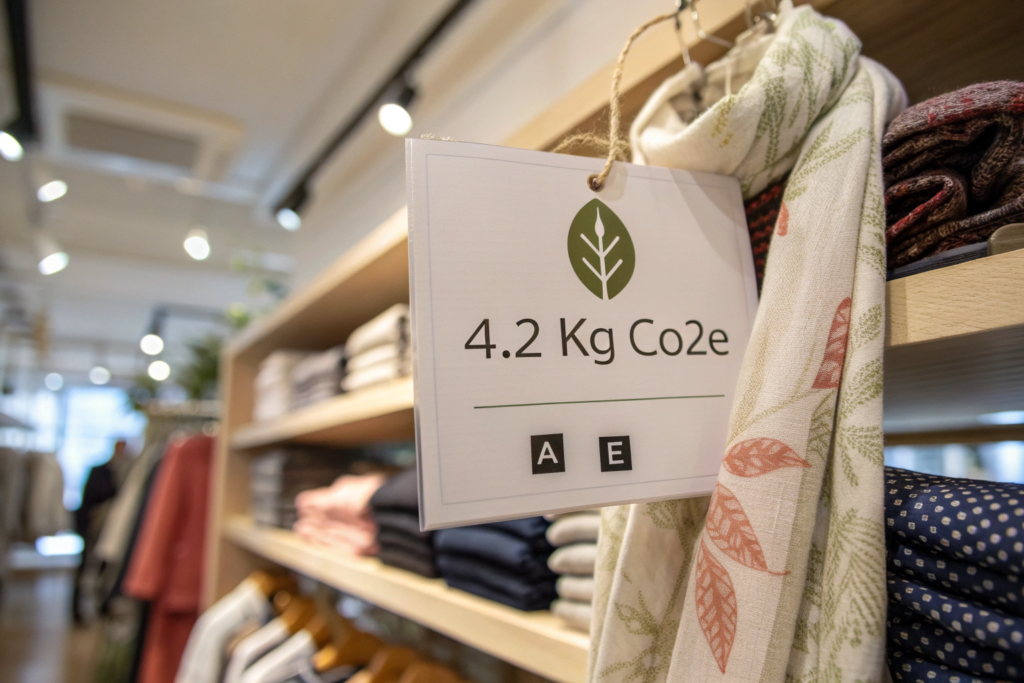
Carbon labels on accessory products like scarves will be presented using a combination of a simplified front-of-pack label and a detailed digital information source. The physical label on the scarf’s hangtag or sewn-in label will display the total carbon footprint number, for example, "Carbon Footprint. 4.2 kg CO2e." The number is the primary message. It tells the consumer the climate impact of producing and delivering this scarf. The label may also include a comparative scale, such as a letter grade from A to E, where A represents a very low carbon footprint and E represents a high footprint. The scale provides context. A consumer can compare two scarves in the same store and choose the one with the better grade. The French EcoScore uses an A to E scale. The PEF methodology supports the use of a comparative scale. The physical label will also include a QR code or a web link. The consumer scans the code with their smartphone and is taken to a web page with detailed information. The detailed page shows the breakdown of the carbon footprint by lifecycle stage, raw materials, manufacturing, transportation. It may show the carbon footprint compared to the industry average. It may show the brand’s efforts to reduce the footprint, such as using renewable energy or sourcing organic materials. The digital page provides the transparency that the physical label cannot accommodate. The carbon footprint label will be integrated with the other required product labels, the fiber content label, the care label, the country of origin, and the digital recycling label. The goal is a single, unified product label that provides the consumer with all the essential environmental and product information at a glance and in depth.
The carbon label is not just a disclosure. It is a competitive tool. A brand with a lower carbon footprint can use the label to differentiate its product and to justify a premium price. Let me detail the two most important presentation elements.
What Format Will the EU Standardize for Carbon Footprint Labels?
The EU has not yet finalized a single, mandatory format for carbon footprint labels on textile products, but the direction is becoming clear from the PEF methodology, the French EcoScore model, and the policy discussions in Brussels. The likely standardized format will include a numerical value, the total carbon footprint in kilograms of CO2 equivalent. The number will be based on a cradle-to-gate or cradle-to-grave lifecycle assessment, following the PEFCR for apparel and footwear. A comparative scale, a letter grade from A to E, similar to the EU energy label for appliances. The grade will be determined by benchmarking the product’s carbon footprint against the range of footprints for similar products. The benchmark ranges will be defined by the PEFCR, based on industry data. A QR code or digital link to a web page with the detailed lifecycle assessment results, including the breakdown by lifecycle stage. The digital page will be hosted by the brand or by a third-party platform, and the data will be structured according to a standardized template. The label will be required to be displayed on the product, on the hangtag or the packaging, and on the product’s web page for online sales. The label will be subject to third-party verification. The verification body will check that the lifecycle assessment was conducted correctly, that the data is accurate, and that the label accurately reflects the assessment results. The label will need to be updated periodically, typically every one to three years, or whenever there is a significant change in the product’s supply chain that affects its carbon footprint. The EU is working toward a harmonized, mandatory format to avoid a proliferation of competing labels that would confuse consumers. The PEF methodology provides the technical foundation. The EcoScore provides the practical model. The final standard will likely be a combination of the two.
Should Carbon Labels Include the Full Lifecycle or Cradle-to-Gate?
The scope of the carbon footprint label, cradle-to-gate or cradle-to-grave, is a significant methodological and strategic decision. Cradle-to-gate includes all emissions from raw material extraction through manufacturing, up to the point where the finished product leaves the factory gate. It excludes distribution, use, and end-of-life. Cradle-to-grave includes the entire lifecycle, including distribution, use, and end-of-life. The PEF methodology requires a cradle-to-grave scope for business-to-consumer products. The rationale is that the consumer should be informed about the full environmental impact of the product, including the impacts that occur during their ownership, such as washing and drying. The use stage can be a significant contributor to the carbon footprint, and consumer behavior can influence it. Including the use stage incentivizes brands to design products that require less energy to care for, and to provide care instructions that minimize impact. The challenge with cradle-to-grave is that the use stage depends on consumer behavior, which is variable and uncertain. The PEF methodology uses standardized use scenarios, assumptions about how many times the product will be washed, at what temperature, and how it will be dried. These assumptions are based on consumer surveys. The end-of-life stage is also based on assumptions about the waste management infrastructure in the country where the product is sold. Cradle-to-gate is simpler and more directly under the control of the brand and the factory. It is often used for business-to-business communication. However, for consumer-facing labels, cradle-to-grave is the emerging standard. The French EcoScore uses a cradle-to-grave scope. The PEFCR for apparel and footwear will specify the exact scope and the use-phase assumptions to be used. A brand that is preparing for the 2027 deadline should plan for a cradle-to-grave carbon footprint label.
Conclusion
The European brands’ requirement for carbon footprint labels on scarves by 2027 is a direct result of the regulatory, commercial, and consumer forces that are reshaping the fashion industry. The carbon footprint label is the physical manifestation of a fundamental shift toward climate transparency. It replaces vague, unsubstantiated green claims with a single, verified number. That number, the kilograms of CO2 equivalent, tells a story. It tells the story of how the cotton was grown, how the yarn was spun, how the fabric was dyed, and how the scarf traveled to the store. It is a story that every brand will soon be required to tell. We have explored the regulations driving this change, the French Climate and Resilience Law, the proposed EU Green Claims Directive, and the Product Environmental Footprint methodology. We have examined how a scarf’s carbon footprint is calculated, the lifecycle assessment, the primary data collection from suppliers, and the hotspots in the raw material and dyeing stages. We have discussed how the carbon label will be presented, the numerical value, the A to E grade, and the QR code linking to detailed information.
At AceAccessory, we have embraced the move toward carbon transparency. We have invested in mapping the carbon footprint of our key materials and processes. We have engaged our yarn and dye suppliers in primary data collection. We are ready to provide our brand clients with the verified lifecycle assessment data they need to create accurate, credible carbon footprint labels for their scarf products. We see carbon labeling not as a burden, but as an opportunity. An opportunity to demonstrate the efficiency of our manufacturing, to differentiate our clients’ products, and to contribute to a more transparent and sustainable fashion industry.
If you are a brand preparing for the 2027 carbon footprint labeling requirements, and you need a manufacturing partner who can provide the primary data and the verified lifecycle assessment results you need, I invite you to contact us. Reach out to our Business Director, Elaine, at elaine@fumaoclothing.com. Tell her about your product range, the materials you use, and your carbon labeling goals. She can provide sample carbon footprint data for our scarf products, discuss our data collection processes, and provide a quotation for production. Let us help you turn the carbon footprint label from a compliance challenge into a competitive advantage.