A premium leather goods brand owner from Florence called me last spring with a negotiation dilemma. He had found a factory that produced beautiful, hand-finished belts. The quality was exceptional. The samples were flawless. The factory was offering something he had never encountered before. A written quality guarantee. If any production belt failed to meet the approved sample standard, the factory would remake the defective units at their own cost, including shipping. This was a powerful commitment. It demonstrated confidence in their craftsmanship. But the factory wanted something in return. They wanted payment terms that reflected the value of the guarantee they were providing. They proposed a 50 percent deposit upfront and the 50 percent balance upon shipment, with the guarantee applying as a credit against future orders rather than a cash refund. He asked me, "Is this a fair deal? How should I structure the payment to align with this quality guarantee?"
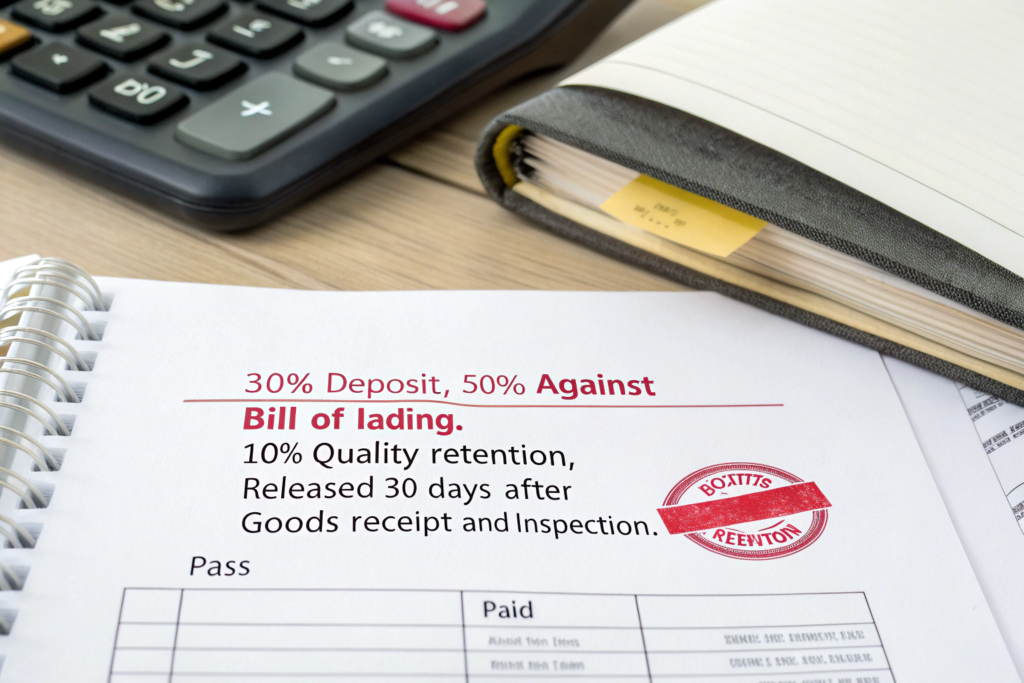
The best payment term for a factory that offers a quality guarantee is a structure where a portion of the payment, typically 10 to 20 percent, is retained as a quality holdback and released only after the goods have been received, inspected, and confirmed to meet the quality standard. The ideal structure is a 30 percent deposit to initiate production, a 60 percent payment against the bill of lading when the goods are shipped, and a 10 percent quality retention paid 30 days after the goods have arrived and passed inspection. This structure aligns the payment with the quality guarantee. The factory receives the majority of their payment upon shipment, which covers their production costs and provides their profit. The buyer retains a meaningful sum as leverage to ensure that any quality issues are addressed promptly. If the goods are perfect, the retention is released on time. If there are quality defects, the retention provides a fund from which the cost of remakes, repairs, or discounts can be deducted by mutual agreement, or it provides the leverage to ensure the factory fulfills their guarantee commitment. The quality guarantee itself should be documented in the purchase order or a separate quality agreement. It should specify the quality standard, the approved sample as the reference, the inspection method and AQL level, the remedies for non-conformance, remake, replacement, or price reduction, and the time frame for the factory to resolve any quality issues. The payment retention is the financial mechanism that backs the quality guarantee.
A factory that offers a quality guarantee is making a statement. They are saying that they believe in their product, that they are willing to stand behind their work, and that they want to build a long-term relationship based on trust and mutual benefit. This is the kind of factory that every buyer wants to find. But a guarantee is only as good as the mechanisms that enforce it. A verbal promise of quality, or a guarantee with no financial backing, is worth very little when a shipment of 5,000 defective belts arrives at the warehouse. The payment terms are the financial teeth behind the guarantee. At AceAccessory, we offer a quality guarantee to our clients because we are confident in our quality control systems. We also structure our payment terms to align with this guarantee. Let me walk you through how to structure a payment agreement that protects both the buyer and the factory.
What Is a Factory Quality Guarantee in Manufacturing
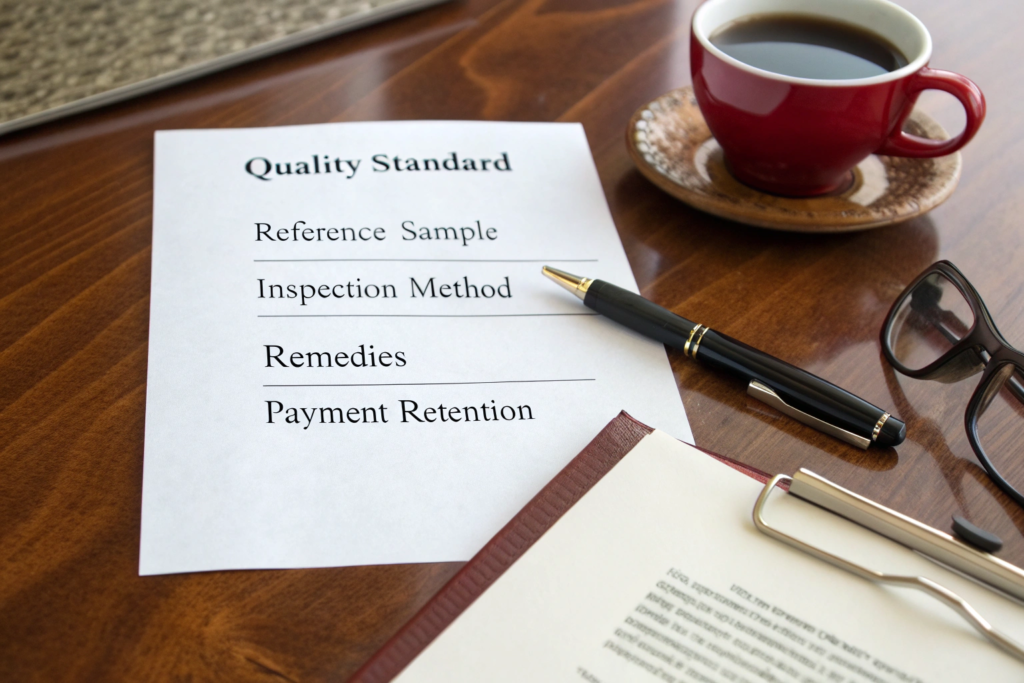
A factory quality guarantee is a formal, written commitment from the manufacturer that the goods they produce will meet a defined quality standard. It is not a vague marketing promise. It is a specific, enforceable clause in a purchase agreement. The guarantee defines the quality standard, typically by reference to an approved pre-production sample. It defines the inspection method that will be used to verify compliance, such as the AQL sampling plan and the inspection criteria. It defines the remedies that the factory will provide if the goods fail to meet the standard. And it defines the process and timeline for the buyer to notify the factory of defects and for the factory to respond. A quality guarantee shifts the risk of non-conformance from the buyer to the factory. Without a guarantee, the buyer bears the full cost of defective goods. With a guarantee, the factory bears the cost of making it right.
A factory quality guarantee is a contractual commitment that ensures the production goods will match the approved sample or specification, and that the factory will remedy any non-conformance at their own expense. The key elements of a quality guarantee are the quality standard, which is the benchmark against which the goods will be judged. This is typically the approved pre-production sample, sealed and signed by both parties. The standard can also include specific measurable criteria, such as dimensional tolerances, stitch density, color fastness ratings, and material specifications. The inspection method, which defines how conformity will be assessed. The standard method is the AQL, Acceptable Quality Level, sampling plan, with the AQL level specified, typically 2.5 for major defects and 4.0 for minor defects. The inspection may be performed by the buyer, by a third-party inspection company, or by the factory’s own QC team with the buyer’s oversight. The remedy provisions, which state what the factory will do if the goods fail the inspection. The remedies can include remaking the defective goods at the factory’s expense, replacing the defective goods with conforming goods from stock, if available, providing a price reduction or a credit note for the defective goods, or accepting a return of the defective goods and issuing a full refund. The time frame, which specifies how quickly the buyer must inspect the goods and notify the factory of any defects, typically within 14 to 30 days of receipt, and how quickly the factory must respond and provide the remedy.
The quality guarantee is a powerful tool for building trust between buyer and factory. It demonstrates the factory’s confidence in their production quality and their commitment to customer satisfaction. But it must be backed by a payment structure that gives the buyer the leverage to enforce the guarantee if necessary. Let me detail the two most important elements of a quality guarantee.
How Does an Approved Sample Serve as the Quality Benchmark?
The approved pre-production sample, often called the sealed sample or the golden sample, is the physical embodiment of the quality standard. It is the reference object against which all production goods are judged. The process of creating and approving the sample is the most important step in defining the quality agreement. The factory produces a sample using the exact materials, construction methods, and finishes that will be used in production. The sample is not a hastily assembled mock-up. It is a fully finished, production-ready piece. The buyer receives the sample and evaluates it thoroughly. The buyer checks the dimensions, the materials, the color, the stitching, the hardware, the packaging, and the overall appearance. If the sample meets the buyer’s expectations, it is approved. The approval is documented. Both parties sign and date the sample, or a tag attached to the sample. Photographs are taken. The signed sample is retained by the buyer, and a duplicate signed sample is retained by the factory. This sealed sample is the quality benchmark. If a dispute arises during production, the sealed sample is the reference. The production goods are compared to the sealed sample. If they match, they are conforming. If they deviate, they are non-conforming. The sealed sample eliminates ambiguity. There is no argument about what was agreed. The physical evidence is in hand. The sealed sample should be stored in a safe, protected place. It should not be used, worn, or handled except for quality comparisons. For ongoing production programs, the sealed sample is the reference for every repeat order. The standard is consistent and unchanging. We use sealed samples for every order. They are a standard part of our quality management system.
What Remedies Should a Quality Guarantee Include?
The remedy provisions of a quality guarantee define what the factory will do if the production goods fail to meet the standard. The remedies must be specific, actionable, and fair to both parties. A vague remedy, such as "the factory will address any quality issues," is unenforceable. A specific remedy provides clarity and prevents disputes. The most common and most effective remedy is remake or replacement. The factory remanufactures the defective goods at their own cost, including materials, labor, and shipping. The defective goods are either returned to the factory or destroyed with photographic evidence. The replacement goods must meet the quality standard and must be delivered within an agreed time frame. This remedy fully compensates the buyer for the factory’s failure. A price reduction is an alternative remedy for defects that are minor or cosmetic, where the goods are still usable but do not meet the premium standard. The price reduction is negotiated based on the severity of the defect and the impact on the product’s value. A typical price reduction for a non-conformance might be 10 to 30 percent of the unit price. A credit note is the financial mechanism for implementing a price reduction. The factory issues a credit note that can be applied against the current invoice or against a future order. The credit note should be issued promptly, within 30 days of the defect notification. A full refund is the remedy for severe non-conformance where the goods are unfit for purpose and cannot be remade in time. The factory refunds the full amount paid for the defective goods, including any shipping costs incurred by the buyer. The buyer returns or destroys the goods. The quality guarantee should also include an escalation clause. If the factory fails to provide the agreed remedy within the specified time frame, the buyer has the right to deduct the cost from any outstanding payments, including the quality retention, or to offset the amount against future orders.
How Does a Quality Retention Payment Work
The quality retention payment is the financial mechanism that backs the quality guarantee. It is a portion of the total invoice value, typically 10 to 20 percent, that is withheld by the buyer and released only after the goods have been received, inspected, and confirmed to meet the quality standard. The retention gives the buyer financial leverage. If quality issues are discovered, the buyer has funds in hand that can be used to offset the cost of remedies. The factory has a strong financial incentive to ensure that the goods are perfect, because their final payment depends on it. The retention is not a punishment. It is a mutual commitment to quality. The factory that agrees to a quality retention is signaling that they are confident in their product. The buyer that requests a quality retention is signaling that they are serious about quality and are willing to pay for it, but they need a mechanism to ensure they get what they paid for.
A quality retention payment works as a financial holdback that is released to the factory only after the goods have passed the buyer’s incoming inspection. The retention percentage is negotiated between the buyer and the factory. For a first-time relationship, a retention of 15 to 20 percent is common. For an established relationship with a proven quality record, 5 to 10 percent may be sufficient. The retention is held by the buyer and is not paid to the factory until the release conditions are met. The release conditions are defined in the purchase agreement. The typical condition is that the goods have been received by the buyer, a statistical inspection has been performed according to the agreed AQL standard, and the inspection result is a pass. If the inspection reveals defects that exceed the AQL limit, the retention is not released. The buyer notifies the factory of the defects and the remedies required. The retention funds are used to cover the cost of the remedies. If the factory remakes the defective goods, the retention may be held until the replacement goods are received and approved. If the buyer and factory agree on a price reduction, the retention is reduced by the agreed amount, and the balance is released to the factory. The retention agreement must specify the inspection time frame. The buyer must complete the inspection and notify the factory of the result within a defined period, typically 14 to 30 days after goods receipt. If the buyer fails to notify the factory within this period, the retention is automatically released. This protects the factory from unreasonable delays. The retention agreement must also specify the dispute resolution process. If the buyer and factory disagree on the inspection results, a third-party inspection company can be engaged to perform a binding arbitration inspection.
The quality retention is a standard practice in many industries, including construction and capital equipment. It is less common in consumer goods, but it is a best practice for buyers who prioritize quality and who are building long-term relationships with quality-focused factories. Let me detail the two most important aspects of a retention agreement.
What Percentage Is Standard for a Quality Holdback?
The standard quality holdback percentage depends on the order value, the product complexity, the relationship history, and the factory’s quality record. There is no single universal number, but industry practice provides useful benchmarks. For a new factory relationship, where there is no established quality history, a retention of 15 to 20 percent is appropriate. This provides the buyer with meaningful leverage while still providing the factory with the majority of their payment upon shipment. The higher retention reflects the higher risk of an unproven relationship. For an established factory relationship with a documented history of consistent quality, a retention of 10 percent is standard. This is a sufficient amount to cover the typical cost of minor quality issues, and it signals that the buyer trusts the factory’s quality systems but still requires a financial incentive for performance. For a mature, strategic partnership where the factory has consistently delivered perfect quality over many orders, a retention of 5 percent may be sufficient. The retention becomes more of a symbolic commitment than a financial necessity. For very large orders, over 100,000 dollars, the retention percentage may be lower, such as 5 to 10 percent, because the absolute amount is significant even at a lower percentage. The retention amount should be large enough to cover the potential cost of remedies. If the order is for 20,000 dollars, and the estimated cost of remaking 5 percent of the order is 1,000 dollars plus shipping, a 10 percent retention of 2,000 dollars provides adequate coverage. If the retention is too small, it does not provide effective leverage. The retention percentage is a negotiation point. The buyer should explain the rationale for the requested retention. The factory that offers a quality guarantee should be receptive to a retention, because it aligns with their stated commitment to quality. A factory that resists any retention may not be as confident in their quality as their guarantee suggests.
How Long Should the Quality Retention Period Last?
The quality retention period should be long enough for the buyer to receive the goods, perform a thorough inspection, and communicate the results to the factory. It should not be so long that it creates an unreasonable financial burden on the factory. The standard retention period is 30 days from the date the goods are received at the buyer’s designated warehouse or distribution center. Thirty days provides sufficient time for the logistics of receiving, the unpacking of cartons, the statistical sampling, the physical inspection, and the reporting. For products that require laboratory testing, such as chemical safety tests or mechanical strength tests, the retention period may need to be extended to 45 or 60 days to allow time for the laboratory to complete the testing and issue the report. The purchase agreement should specify the exact trigger for the start of the retention period. The most common trigger is the date of goods receipt. The retention period ends, and the retention is released, 30 days after this date, provided no quality defects have been notified. If defects are notified within the 30-day period, the retention period is extended until the agreed remedy has been completed and confirmed. The purchase agreement should also include a clause that if the buyer fails to inspect the goods and notify the factory of any defects within the retention period, the retention is automatically released. This prevents the buyer from using the retention as a permanent discount. It forces the buyer to perform the inspection promptly. For a factory, the retention period represents a delay in receiving their full payment. A factory that is financing the production and the shipping is waiting for the retention to be released. A reasonable retention period balances the buyer’s need for inspection time with the factory’s need for timely payment. Thirty days is the industry standard and is accepted by most quality-focused factories.
How to Structure Payment Terms With a Quality Guarantee
Structuring the payment terms to align with a quality guarantee is a matter of defining clear milestones, assigning appropriate percentages to each milestone, and linking the final payment to the successful completion of the quality inspection. The payment structure should be documented in the purchase order or the sales contract. It should be agreed by both parties before production begins. The structure should be transparent, with no hidden conditions or ambiguous language. The goal is to create a payment schedule that is fair to both parties, that provides the factory with the cash flow they need to produce the order, and that provides the buyer with the assurance that the quality guarantee is financially backed.
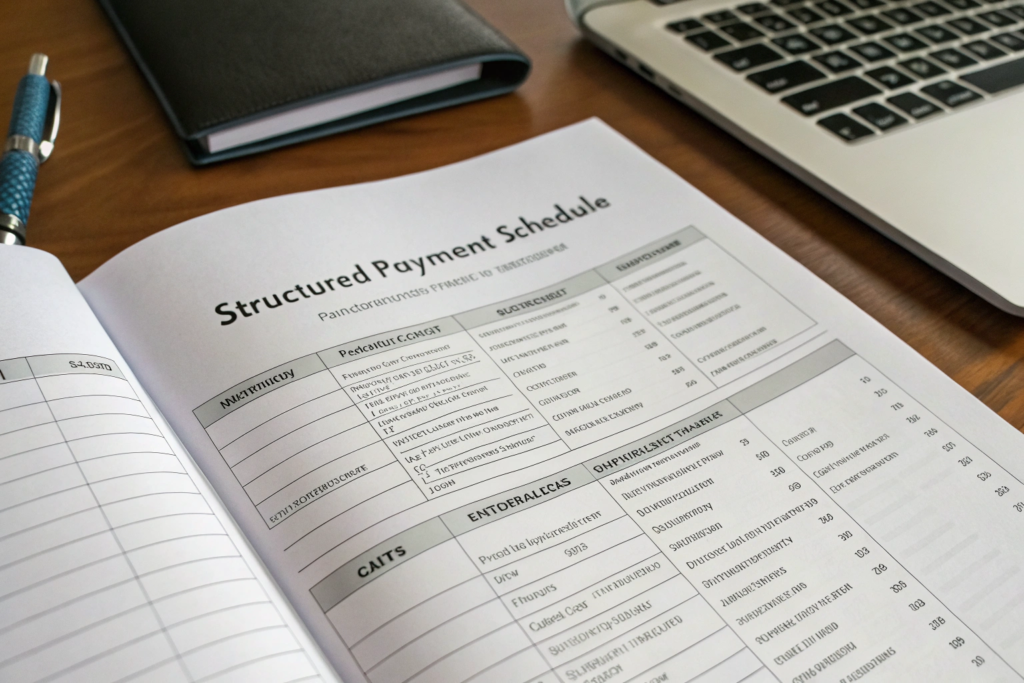
The best payment structure for a factory that offers a quality guarantee is a three-installment schedule. Installment one is the deposit, typically 30 percent of the total order value, paid upon order confirmation. This deposit covers the factory’s raw material costs and provides the working capital to begin production. The deposit is non-refundable unless the factory fails to ship the goods. Installment two is the shipment payment, typically 60 percent of the total order value, paid against a copy of the bill of lading or the airway bill. This payment is made when the goods have been loaded onto the vessel or the aircraft and are in transit. It covers the factory’s labor costs, overhead, and profit. The buyer should verify the bill of lading details, the container number, the vessel name, the port of loading, and the estimated date of departure, before making this payment. Installment three is the quality retention, typically 10 percent of the total order value, held by the buyer and released 30 days after the goods have been received and have passed the incoming quality inspection. The retention is released in full if the goods pass. If the goods fail, the retention is used to fund the remedies specified in the quality guarantee. This structure can be adjusted. For a higher-value order or a higher-risk relationship, the retention can be increased to 15 or 20 percent, with the deposit or shipment payment reduced accordingly. For a mature, trusted relationship, the retention can be reduced to 5 percent, with the shipment payment increased.
The payment structure should be specified in the purchase order with absolute clarity. The exact percentage for each installment, the trigger for each payment, and the conditions for the retention release should all be written down. Verbal agreements are invitations to disputes. Let me detail the two most important structuring decisions.
Should You Pay a Deposit Before Production Begins?
Yes, a deposit before production begins is standard practice and is fair to the factory. The factory must purchase raw materials, leather, fabric, hardware, and packaging, before they can begin production. These materials are specific to your order. If you cancel the order after the materials have been purchased, the factory is left with materials they may not be able to use for another client. The deposit covers this risk. The standard deposit is 30 percent of the total order value. This is approximately the material cost for most accessory products. The deposit is paid upon order confirmation, when both parties have signed the purchase agreement and the specifications are finalized. The deposit should be paid promptly, within a few business days of receiving the proforma invoice. A prompt payment demonstrates the buyer’s commitment and allows the factory to order materials without delay. The deposit is generally non-refundable if the buyer cancels the order. If the factory fails to produce the goods or fails to ship, the deposit is refundable. The purchase agreement should state the conditions under which the deposit is refundable. The deposit is the first installment of the payment. It is not an additional fee. The total order value is split into the deposit, the shipment payment, and the retention. A buyer who refuses to pay a deposit is signaling a lack of commitment. Most quality-focused factories will not accept an order without a deposit from a new client. For an established client with a strong payment history, the factory may reduce the deposit or, in rare cases, waive it entirely.
When Should the Final Retention Payment Be Released?
The final retention payment should be released when the buyer has confirmed that the goods meet the quality standard. The release is triggered by a positive inspection result. The specific conditions for release should be defined in the purchase agreement. The standard condition is that the buyer has completed the incoming inspection according to the agreed AQL sampling plan, and the number of defects found is within the acceptable limit. The buyer issues a written release notice to the factory, confirming that the retention is being released and that the payment will be processed. The retention is then paid within a specified number of days, typically 5 to 10 business days. If the inspection reveals defects that exceed the AQL limit, the retention is not released. The buyer issues a defect notification to the factory, describing the defects and the proposed remedy. The retention is held until the remedy is completed. If the remedy is a price reduction, the buyer deducts the agreed reduction amount from the retention and releases the balance to the factory. The retention release should never be unreasonably delayed. The buyer has an obligation to perform the inspection promptly and to communicate the results clearly. A buyer who sits on the retention for months without conducting an inspection is acting in bad faith and will damage the factory relationship. The purchase agreement should include a clause that the retention is automatically released if the buyer fails to complete the inspection and notify the factory within the retention period. This clause protects the factory and incentivizes the buyer to act promptly.
Conclusion
The best payment term for a factory that offers a quality guarantee is a structured schedule that aligns payment with performance, culminating in a quality retention that provides the financial backing for the guarantee. The deposit provides the working capital. The shipment payment provides the profit. The retention provides the assurance. The three-installment structure, 30 percent deposit, 60 percent against bill of lading, and 10 percent quality retention, is the balanced, fair model that has proven effective across countless buyer-factory relationships. The quality guarantee itself, with its defined quality standard, its reference to the sealed sample, its specified inspection method, and its clear remedies, is the foundation. The retention is the financial mechanism that makes the guarantee credible. Together, they create a framework of mutual commitment. The factory commits to quality. The buyer commits to prompt payment for quality delivered.
At AceAccessory, we offer a quality guarantee and a structured payment schedule to our clients because we believe in our product and we value our client relationships. Our quality guarantee is backed by our ISO 9001 certified quality management system, our in-house QC team, and our long track record of delivering consistent quality to brands and retailers around the world. Our standard payment terms for new clients are a 30 percent deposit, a 60 percent payment against the bill of lading, and a 10 percent quality retention released 30 days after goods receipt. For our established, long-term clients, we offer more flexible terms, including open account, because trust has been earned and proven over years of successful partnership.
If you are looking for a manufacturing partner who is confident enough in their quality to offer a formal guarantee, and who is willing to structure payment terms that align with that guarantee, I invite you to contact us. Reach out to our Business Director, Elaine, at elaine@fumaoclothing.com. Tell her about your product, your quality expectations, and the payment structure you are seeking. She can provide a sample of our quality guarantee document, discuss our standard and customized payment terms, and provide a quotation for production. Let us build a relationship based on mutual trust, backed by a quality guarantee that has real financial teeth.