A product development director from a major North American automotive accessories brand sat in my office last September with a spreadsheet and a frustrated expression. His company had been selling the same style of winter driving gloves for five years, a basic leather palm with a knitted wool back and a Thinsulate lining. Sales had been declining for three consecutive seasons. Customer reviews were increasingly negative. "Too bulky, can’t feel the steering wheel." "Touchscreen doesn’t work with the thumb." "Hands still cold after 20 minutes." "Leather cracked after one season." He needed a complete redesign for the 2026 winter season, but he was not sure which direction to take. He had gathered a folder of competitor products, concept sketches, and customer feedback transcripts. He laid it all out on my showroom table and said, "Tell me what is actually going to sell."
The 2026 winter driving glove trends for North America are defined by five key innovations. First, ultra-thin, high-sensitivity touchscreen compatibility across all five fingertips, not just the thumb and index finger, enabled by conductive yarns knitted directly into the glove rather than applied as a coating. Second, heated glove technology powered by slim, rechargeable lithium-ion batteries integrated discreetly into the cuff, with carbon fiber or graphene heating elements that provide consistent warmth for up to eight hours on a single charge. Third, sustainable and vegan materials replacing traditional leather, including high-performance microfiber palms made from recycled polyester, bio-based synthetic suede, and plant-tanned, chrome-free leathers for brands that still prefer genuine hide. Fourth, precision fit engineering using 3D hand scanning data to create gloves with pre-curved fingers, articulated knuckles, and zero excess material in the palm, allowing drivers to feel the steering wheel texture and respond to subtle road feedback. Fifth, modular convertible designs featuring a removable, windproof over-mitten that can be quickly deployed when scraping ice or walking from the car, then stowed in a discreet pocket on the back of the hand, leaving a slim, tactile glove for driving.
Winter driving is a unique use case that demands a unique glove. The driver needs warmth, but not at the expense of dexterity. They need grip on a leather or heated steering wheel. They need to operate a touchscreen infotainment system, a smartphone, and physical controls without removing their gloves. They need to transition from the cold exterior of the vehicle, scraping ice, brushing snow, to the climate-controlled interior. And they need these gloves to perform for the entire winter season, through wet snow, road salt, and repeated wear. At AceAccessory, we produce gloves for automotive brands, outdoor equipment companies, and fashion accessory labels across North America. Our design team has been tracking winter driving glove trends closely, and we are already producing samples for the 2026 season. Let me walk you through the five trends that will define the market.
Why Is Touchscreen Compatibility Essential for Driving Gloves
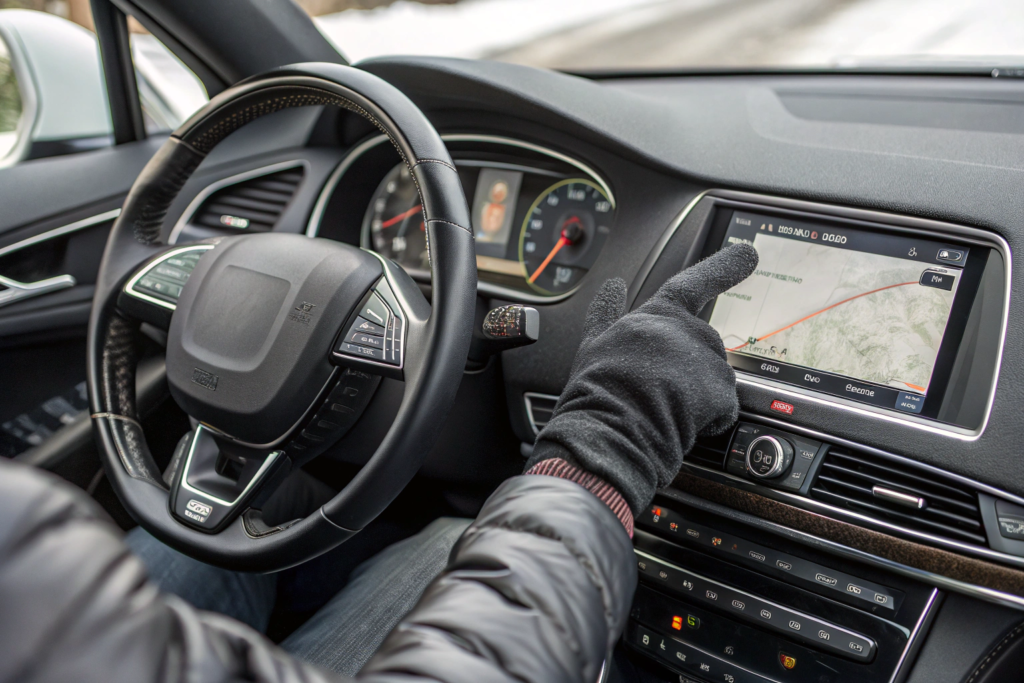
Touchscreen compatibility has evolved from a nice-to-have feature to a non-negotiable requirement for winter driving gloves. The modern automobile cockpit is dominated by touchscreens. Navigation, audio, climate control, and communication functions are all accessed through capacitive touch displays. A driver wearing traditional gloves must remove a glove to operate the screen, which is unsafe while driving, exposes the hand to cold, and defeats the purpose of wearing gloves. Early touchscreen gloves solved this problem partially, with a conductive patch on the thumb and index finger that worked inconsistently, especially when the patch wore off after a season of use. The 2026 generation of touchscreen driving gloves solves the problem completely.
Touchscreen-compatible driving gloves for 2026 use conductive yarns integrated directly into the knit structure of the glove, not applied as a surface coating. The conductive yarn, typically a silver-coated nylon or a carbon-infused polyester, is knitted into every fingertip, allowing the driver to use any finger on the touchscreen with full sensitivity. The conductive yarn is soft, flexible, and indistinguishable in feel from the non-conductive yarn around it. Because it is part of the knit, it will never wear off, peel, or lose conductivity. The entire glove fingertip is conductive, not just a small patch, so the touchscreen recognizes the touch across the full fingertip surface. This allows for precise gestures like pinch-to-zoom, swipe, and multi-touch. The technology has advanced to the point where the conductive fingertips can be integrated into even the warmest, most insulated gloves, though the ideal driving glove is relatively thin to maintain steering wheel feel. The conductive yarn does not interfere with the glove’s warmth, waterproofness, or durability.
The demand for full-finger touchscreen compatibility is being driven by consumer expectations shaped by smartphones. Users are accustomed to using their bare fingers with precision on their phone screens. They expect their gloves to provide a similar experience. A glove that requires a hard, deliberate press, or that only works on part of the fingertip, is a frustration that leads to negative reviews and returns. Let me detail the two critical aspects of touchscreen glove technology.
How Do Conductive Yarns Enable Full-Finger Touchscreen Use?
Capacitive touchscreens, the type used in virtually all modern smartphones and car infotainment systems, work by sensing the electrical charge of the human body. When a bare finger touches the screen, it disrupts the screen’s electrostatic field at that point, and the device registers a touch. A standard glove acts as an insulator, blocking the body’s electrical charge. The screen does not register the touch. Conductive yarns solve this problem by conducting the body’s electrical charge from the skin, through the glove, to the screen surface. The conductive yarn is made by coating a synthetic fiber, typically nylon or polyester, with a thin, uniform layer of a conductive metal, usually silver. Silver is used because it has the highest electrical conductivity of any metal, it is ductile enough to be drawn into fine threads, and it has natural antimicrobial properties that prevent odor. The silver-coated yarn is knitted into the glove fingertip along with the regular yarn. At the microscopic level, the silver-coated fibers form a continuous conductive network from the inside of the glove, where it contacts the skin, to the outside, where it contacts the screen. The conductivity is sufficient to trigger the capacitive sensor. The key to full-finger compatibility is knitting the conductive yarn throughout the entire fingertip, not just a small patch. The conductive yarn is knitted in a specific pattern, often a plated structure where the conductive yarn is on the outside and a soft, insulating yarn is on the inside against the skin. This provides conductivity on the outer surface and comfort on the inner surface. The durability of the conductive yarn is critical. Silver coatings can oxidize or wear off over time. High-quality conductive yarns use a thicker silver coating and a protective overcoat to prevent oxidation and abrasion. The yarn is tested for conductivity after repeated wash cycles and after mechanical abrasion to ensure it will last the life of the glove.
Can Touchscreen Gloves Also Provide Warmth and Grip?
The historical trade-off with touchscreen gloves was that they were thin and offered minimal warmth. The conductive patches worked best on lightweight, uninsulated gloves. This trade-off has been largely eliminated by the new conductive yarn technology, but there is still a balance to strike. A winter driving glove must prioritize dexterity and tactile feel over extreme warmth. The glove is worn inside a climate-controlled vehicle for most of the driving time. The primary warmth requirement is for the short periods outside the vehicle, scraping ice, brushing snow, and walking across a parking lot, and for the initial minutes in a cold car before the heater warms the cabin. The ideal driving glove provides moderate insulation without bulk. The insulation is typically a thin layer of Thinsulate, PrimaLoft, or a similar microfiber insulation, between 40 and 100 grams per square meter. This provides noticeable warmth without significantly impairing finger dexterity. The conductive yarn fingertips work perfectly with this level of insulation. For colder climates, a modular system with a removable over-mitten provides the additional warmth for exterior activities, while the thin inner glove provides the touchscreen functionality and driving feel. Grip is the other essential requirement for a driving glove. The palm and fingers must grip a leather or synthetic steering wheel securely, in both dry and wet conditions. The grip is provided by a silicone print pattern on the palm and fingers. The silicone is applied in a dot, honeycomb, or wave pattern that maximizes surface contact while allowing the glove fabric to remain flexible. The silicone is formulated to remain tacky at low temperatures. The touchscreen fingertips are integrated into the grip pattern. The conductive yarn is exposed on the fingertip, while the surrounding area has the silicone grip. The combination of touchscreen functionality and secure grip is the defining feature of a premium 2026 winter driving glove.
What Are the Latest Heated Glove Technologies for Driving
Heated gloves have been available for years, but the early generations were bulky, unreliable, and poorly suited for driving. The batteries were large, heavy, and attached to the outside of the cuff with a Velcro strap that dug into the wrist. The heating elements were thick wires that created hot spots and cold spots. The battery life was short, often two to three hours on the lowest setting. The 2026 generation of heated driving gloves addresses all of these shortcomings. The technology has been miniaturized, integrated, and optimized for the specific requirements of the driver.
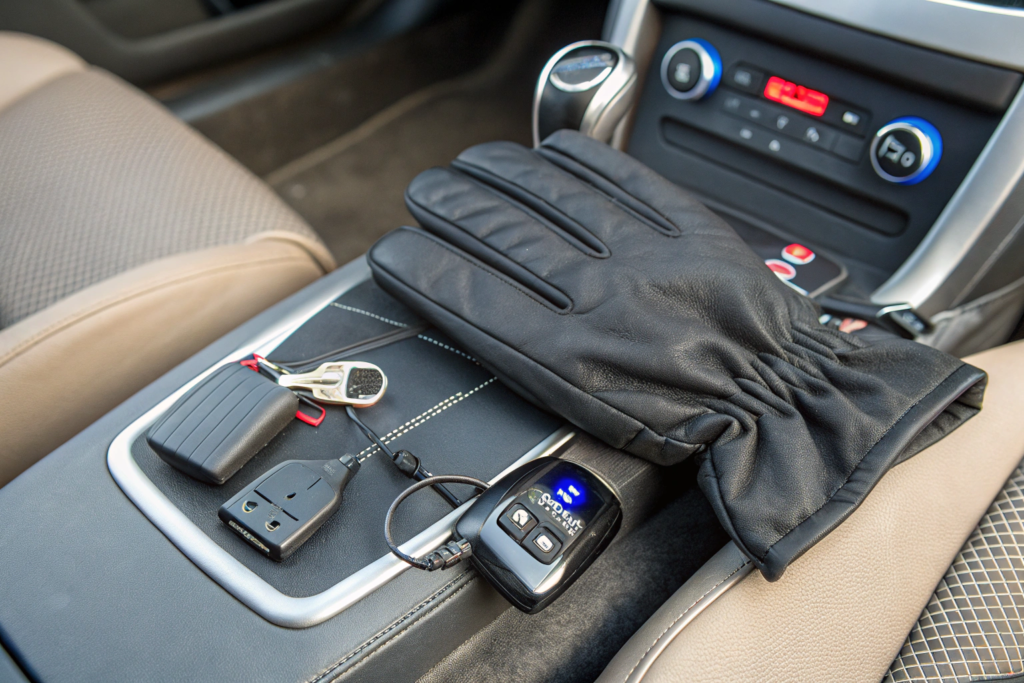
The latest heated glove technologies for winter driving in 2026 are defined by slim, integrated lithium-ion batteries, flexible carbon fiber or graphene heating elements, and intelligent temperature control. The batteries are flat, curved to match the contour of the wrist, and housed in a discreet zippered pocket on the inside of the cuff. They are rechargeable via USB-C, with a full charge taking 2 to 3 hours. The battery capacity ranges from 2200 to 3500 milliamp-hours per glove, providing 3 to 8 hours of heat depending on the setting. The heating elements are thin, flexible, and distributed across the entire back of the hand and the full length of each finger. Carbon fiber elements are made by weaving carbon fiber filaments into a fabric panel that heats evenly when a low-voltage current is applied. Graphene elements are a newer technology, an atom-thin layer of carbon that heats faster, more evenly, and more efficiently than carbon fiber. The temperature is controlled by a small button on the cuff or, in premium models, by a Bluetooth-connected smartphone app that allows the user to set a precise temperature and monitor battery life. The heating system is completely sealed and waterproof, so the gloves can be worn in wet snow without risk of electrical shock. The entire system adds minimal bulk, allowing the gloves to maintain the dexterity required for driving.
The market for heated driving gloves is growing rapidly, driven by consumers who are familiar with heated car seats and heated steering wheels and who want the same level of comfort for their hands. The technology is no longer a novelty. It is an expected feature in the premium segment. Let me explore the heating elements and the power management in more detail.
How Do Carbon Fiber and Graphene Heating Elements Compare?
Carbon fiber and graphene are both carbon-based materials that conduct electricity and generate heat, but they do so in different ways with different performance characteristics. Carbon fiber heating elements are made from bundles of carbon filaments, each about 5 to 10 microns in diameter, woven into a flexible fabric. When an electric current passes through the carbon fibers, their electrical resistance causes them to heat up. Carbon fiber heating elements are durable, flexible, and relatively inexpensive to manufacture. They heat up to their target temperature in about 30 to 60 seconds. The heat distribution is generally even, but there can be slight variations in temperature across the element, especially at the connection points. Carbon fiber elements are the current industry standard and provide reliable, proven performance. Graphene heating elements are an emerging technology that represents the next generation. Graphene is a single layer of carbon atoms arranged in a hexagonal lattice. It is the thinnest, strongest, and most conductive material known. A graphene heating element is made by depositing a layer of graphene flakes onto a flexible substrate, such as a thin polymer film. When an electric current is applied, the graphene heats up almost instantly, reaching the target temperature in 10 to 15 seconds. The heat distribution is perfectly even across the entire surface of the element because the graphene layer is a continuous conductive plane, not individual fibers. Graphene elements are more energy-efficient than carbon fiber, converting more of the battery’s electrical energy into heat and less into waste. This translates to longer battery life for the same amount of heat. Graphene elements are also thinner and more flexible, adding less bulk to the glove. The current disadvantage of graphene is cost. It is more expensive to manufacture than carbon fiber, and the supply chain is less mature. For the 2026 season, graphene heating elements are appearing in premium, flagship glove models, while carbon fiber remains the standard for mid-range products.
How Long Do Rechargeable Heated Gloves Last on a Single Charge?
Battery life is the critical performance metric for heated gloves. The driver needs the gloves to last for the entire commute, plus time outside the vehicle, without running out of power. Battery life depends on three factors. The battery capacity, the heat setting, and the ambient temperature. A typical 2026 heated driving glove uses a 7.4-volt lithium-ion battery with a capacity of 2200 to 3500 milliamp-hours. On the highest heat setting, which can reach surface temperatures of 55 to 60 degrees Celsius, the battery will last for 2.5 to 3.5 hours. This is sufficient for a long commute with exterior time. On the medium setting, a comfortable warmth of 40 to 45 degrees Celsius, the battery will last for 4.5 to 6 hours. On the lowest setting, a gentle background warmth, the battery can last for 7 to 8 hours, sufficient for a full day of intermittent driving and outdoor activity. The battery life is affected by the ambient temperature. In extreme cold, minus 20 degrees Celsius and below, the battery’s chemical efficiency decreases, and the run time can be reduced by 20 to 30 percent. The batteries are rechargeable via a standard USB-C port. A full charge from empty takes 2 to 3 hours with a fast charger. Many heated glove systems include two sets of batteries per pair, so one set can be charging while the other is in use, effectively providing unlimited runtime for long trips. The battery charge level is indicated by a small LED light on the cuff, typically green for full, yellow for medium, and red for low. The smartphone app, if available, provides a precise percentage readout. The batteries are designed to be easily removable for charging and for when the gloves need to be washed. The gloves themselves, with the batteries removed, are typically hand-washable. The charging port on the battery is covered by a waterproof flap to protect it from moisture during use. The battery is the single most expensive component of a heated glove system, and its quality determines the overall reliability and user experience.
What Sustainable Materials Are Trending for Driving Gloves
Sustainability has become a driving force in the North American winter accessories market. Consumers, particularly the demographics that purchase premium driving gloves, are increasingly making purchasing decisions based on the environmental impact of the products they buy. They are looking for gloves made from recycled materials, from bio-based alternatives to petroleum-derived synthetics, and from leathers that are tanned without toxic chromium. This trend is not a passing fad. It is a fundamental shift in consumer values that is reshaping the material supply chain for the entire accessories industry.
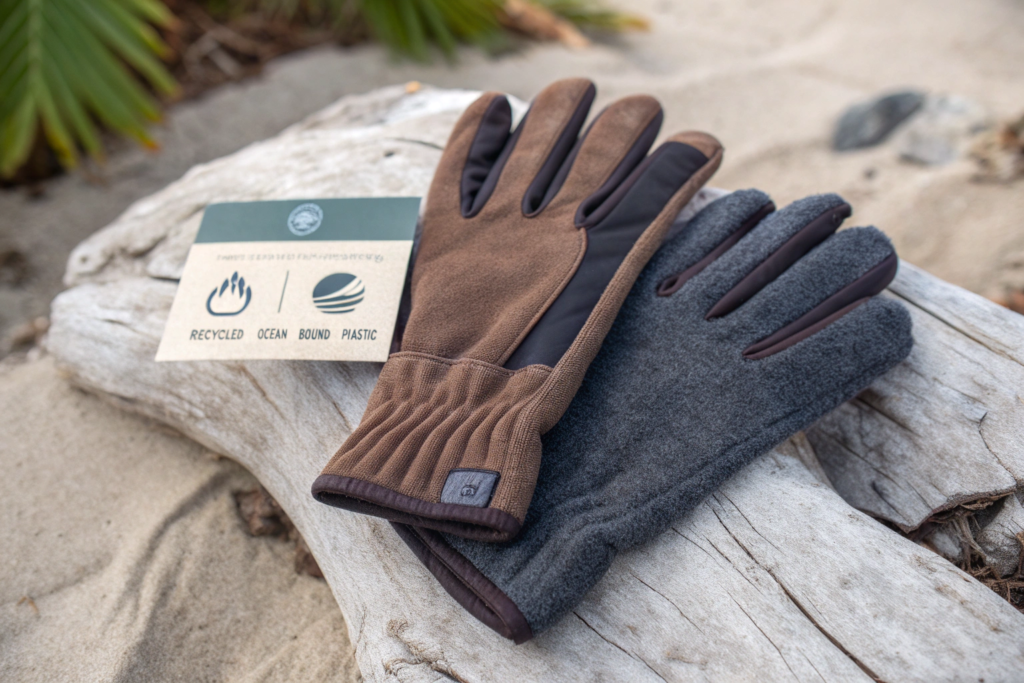
The sustainable materials trending for 2026 winter driving gloves are recycled performance microfibers, chrome-free and vegetable-tanned leathers, and bio-based insulation. Recycled performance microfibers are synthetic suede materials made from post-consumer PET bottles or recycled ocean-bound plastic. They have a texture and performance almost indistinguishable from genuine suede, with excellent grip, durability, and water resistance, and they can be dyed in a full range of colors. They appeal to vegan consumers and to brands with commitments to reducing their plastic footprint. Chrome-free leathers are tanned using plant-based tannins, such as mimosa bark or quebracho, or using synthetic tanning agents that are free of chromium VI, a known carcinogen. These leathers have a beautiful, natural appearance and a softer, more organic hand feel than chrome-tanned leather. Bio-based insulations are made from renewable resources such as corn starch, castor oil, or recycled natural fibers. They provide the same warmth-to-weight ratio as petroleum-based insulations with a significantly lower carbon footprint. These materials are often certified by third-party standards such as the Global Recycled Standard, OEKO-TEX Standard 100, or the Leather Working Group, providing credible, verifiable sustainability claims.
The challenge for sustainable materials is that they must meet the same performance standards as conventional materials. A driving glove made from recycled materials that delaminates after one season is not sustainable. It is waste. The 2026 sustainable materials have reached performance parity with their conventional counterparts. Let me explore the two most important material categories.
Why Are Microfiber Palms Replacing Genuine Leather?
Microfiber palms are synthetic materials engineered to mimic the properties of genuine leather, specifically the grip, the softness, the breathability, and the durability. The technology has advanced to the point where premium microfiber materials are, in some performance aspects, superior to leather for driving glove applications. Microfiber is made by extruding ultra-fine polyester and polyamide fibers, each less than 0.1 denier, creating a dense, non-woven fabric. The fabric is impregnated with a polyurethane binder and then surface-treated to create the desired texture, a smooth finish, a suede-like nap, or a grippy silicone-like surface. The resulting material is uniformly consistent, with no natural defects, scars, or variations in thickness that are inherent in genuine leather. It is lighter than leather. It is more water-resistant. It does not stiffen or crack after getting wet and drying. It is machine washable. It can be dyed in vibrant, consistent colors. It is vegan, appealing to a growing consumer segment. And it can be made from recycled polyester, giving it a sustainability credential. The grip performance of microfiber on a leather or synthetic steering wheel is excellent. The polyurethane surface has a naturally high coefficient of friction. Microfiber palms are used on the majority of mid-range and many premium driving gloves for 2026. The cost is comparable to mid-grade genuine leather. The only area where genuine leather still holds an advantage is in its unique aging characteristic. Leather develops a patina over time, a rich, personalized sheen that many consumers find appealing. Microfiber does not age in the same way. For brands that emphasize heritage, tradition, and the natural beauty of leather, chrome-free, vegetable-tanned leather remains the premium choice.
What Is Chrome-Free Leather and Why Does It Matter?
Chrome-free leather is leather that has been tanned without the use of chromium salts, specifically chromium III, which is the standard tanning agent for approximately 85 percent of all leather produced globally. Conventional chrome tanning is fast, cost-effective, and produces leather with excellent physical properties. The problem is that under certain conditions, the harmless chromium III can oxidize to form chromium VI, a known carcinogen and skin sensitizer. Chromium VI can cause severe allergic reactions and is restricted by regulations such as EU REACH. Chrome-free tanning avoids this risk entirely by using alternative tanning agents. The most common chrome-free methods are vegetable tanning, using natural tannins extracted from tree bark, leaves, and fruits, and synthetic tanning, using aldehyde-based or synthetic tannin chemicals that are free of chromium. Vegetable-tanned leather has a beautiful, natural, earthy color that deepens and develops a rich patina over time. It has a firm, substantial hand feel. It is biodegradable. The tanning process is slow, taking weeks rather than hours, and the cost is higher than chrome tanning. Synthetic chrome-free tanning produces leather with properties closer to chrome-tanned leather, a softer hand, brighter colors, and a faster production process, but without the chromium risk. Chrome-free leather is increasingly specified by automotive brands and premium accessory brands as part of their sustainability and safety commitments. It is often certified by the Leather Working Group or by OEKO-TEX. For driving gloves, chrome-free leather provides the luxurious feel and aging characteristics that leather enthusiasts value, without the potential health and environmental concerns of chromium.
How Is Precision Fit Engineering Changing Glove Design
The fit of a driving glove is not just about comfort. It is about safety. A glove that is too loose will slip on the steering wheel, reducing the driver’s control. A glove that is too tight will restrict circulation, causing cold hands and reduced finger dexterity. A glove with excess material in the palm will insulate the driver from the tactile feedback of the steering wheel, the subtle vibrations and resistance that communicate road conditions and vehicle behavior. The 2026 generation of driving gloves is being designed using 3D hand scanning data and advanced pattern engineering to achieve a level of fit precision that was previously only available in custom-made gloves.
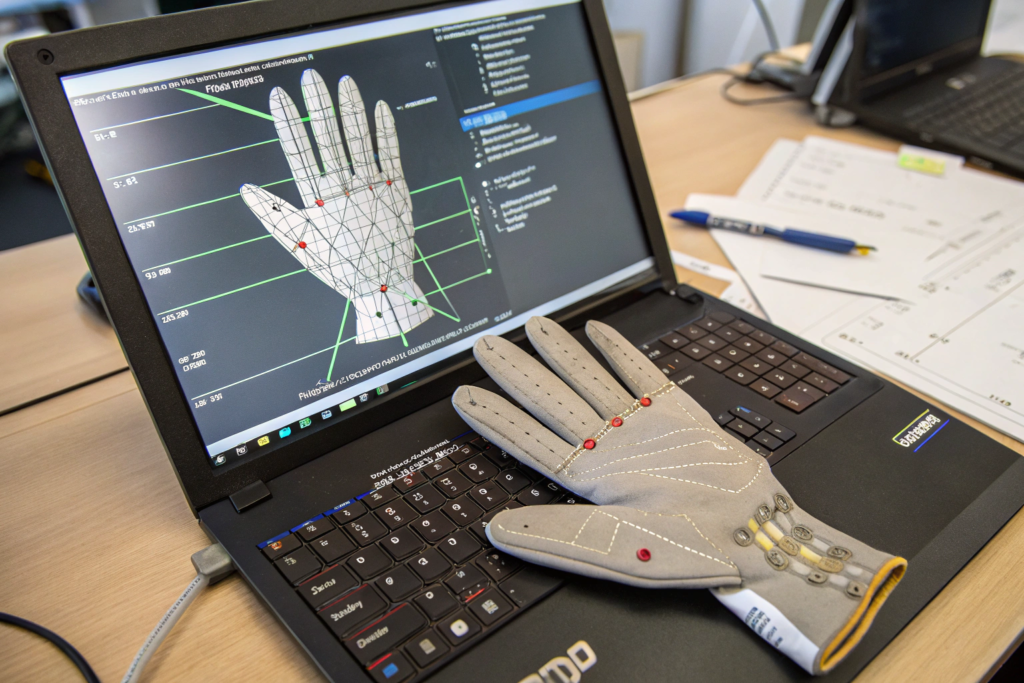
Precision fit engineering for driving gloves uses 3D hand scanning to create a digital model of the hand in the driving position, gripping a steering wheel. The scan captures the exact contours of the palm, the curvature of the fingers, the position of the knuckles, and the circumference of the wrist. This data is used to design a glove pattern that mirrors the natural shape of the hand in its functional position. The fingers are pre-curved, cut on a curve that matches the relaxed grip position, eliminating the bunching and stretching that occurs when a flat glove is wrapped around a curved steering wheel. The knuckles are articulated, with darts or gussets that allow the knuckle joints to flex without restriction. The palm is cut from a single, seamless piece of material that conforms to the natural cup of the palm, eliminating excess material that would reduce steering wheel feel. The wrist closure is engineered to provide a secure, gapless fit without constriction. The pattern is graded across a range of sizes using anthropometric data that reflects the diversity of the North American population. The result is a glove that fits like a second skin, allowing the driver to forget they are wearing gloves and focus entirely on the road.
This level of fit engineering requires a significant investment in scanning equipment, pattern design software, and skilled pattern makers. It is a point of differentiation for premium brands. Let me detail two specific aspects of precision fit.
How Does Pre-Curved Finger Design Improve Steering Wheel Feel?
The human hand at rest is not flat. The fingers are naturally curled inward, with the thumb opposing the fingers. When gripping a steering wheel, the fingers assume a specific curved posture. A traditional glove pattern is cut flat, with straight fingers. When the flat glove is wrapped around the curved steering wheel, the fabric on the palm side bunches up, creating folds and wrinkles. These folds become pressure points between the hand and the wheel. They reduce the contact area, making the grip less secure. They also create a physical barrier between the driver’s fingertips and the wheel, dulling the tactile feedback. A pre-curved glove pattern eliminates this bunching. The finger pieces are cut on a curve that matches the natural curl of the fingers in the driving grip position. When the glove is worn, the fingers naturally assume the curved shape, and the fabric on the palm side lies smooth and flat against the steering wheel. There are no folds, no wrinkles, and no pressure points. The full surface area of the fingers is in contact with the wheel, providing maximum grip security and maximum tactile feedback. The pre-curved design also reduces hand fatigue. A flat glove exerts a constant, gentle spring force as the elastic materials try to return to their flat state. The driver’s hand muscles must work against this force. A pre-curved glove is already in the driving position, so the hand muscles are relaxed. This is a subtle but significant comfort factor on long drives. The pre-curved pattern is achieved by cutting the finger pieces as curved shapes and by using curved seams. The thumb is set at an angle that matches the natural thumb position when gripping. The pinky finger is set slightly lower than the index finger, matching the natural slant of the hand. These anatomical details are derived from the 3D scan data and are unique to each glove model.
What Palm Construction Gives the Best Tactile Feedback?
The palm is the interface between the driver and the vehicle. Every vibration, every subtle shift in steering resistance, every texture of the steering wheel surface is transmitted through the palm of the glove. Maximizing this tactile feedback requires a palm construction that is thin, seamless, and tightly conforming. The ideal driving glove palm is made from a single piece of material, not multiple pieces sewn together. Every seam is a disruption. A seam creates a ridge that can be felt against the steering wheel. A seam can stretch or pucker, changing the fit. A single-piece palm, sometimes called a seamless palm or a whole-piece palm, eliminates these disruptions. The piece is cut from the highest quality, most consistent part of the hide or the microfiber roll. It is molded under heat and pressure to create a subtle, three-dimensional cup shape that matches the natural concavity of the palm. The molding process also pre-stretches the material, so it does not bag or stretch out over time. The thickness of the palm material is critical. Too thick, and the tactile feedback is muffled. Too thin, and the glove lacks durability and warmth. The optimal thickness for a leather driving glove palm is 0.6 to 0.8 millimeters, thin enough to feel the steering wheel texture, thick enough to withstand a season of driving. For a microfiber palm, the thickness is similar, 0.5 to 0.7 millimeters. The palm is unlined, or lined with a whisper-thin layer of moisture-wicking fabric that adds minimal thickness. The insulation, if present, is concentrated on the back of the hand, where it provides warmth without interfering with palm feel. The palm grip pattern, the silicone dots or waves, is applied in a thin, precise layer that adds grip without adding perceptible thickness. The combination of seamless construction, molded shape, and optimal thickness gives the driver the sensation of barehanded contact with the steering wheel, while still providing the protection and warmth of a glove.
Conclusion
The 2026 winter driving glove market in North America is being reshaped by five interconnected trends, each addressing a specific consumer demand that was underserved by previous generations of gloves. Touchscreen compatibility has evolved from a patchy, partial solution to a seamless, full-finger technology powered by integrated conductive yarns that never wear out. Heated glove technology has been miniaturized and refined, with graphene elements and slim batteries that provide consistent, long-lasting warmth without the bulk that made earlier heated gloves unsuitable for driving. Sustainable materials have reached performance parity with conventional materials, with recycled microfibers and chrome-free leathers offering genuine, verifiable environmental benefits without compromising on grip, durability, or aesthetics. And precision fit engineering, driven by 3D scanning and anatomical pattern design, is producing gloves that fit the driving hand so perfectly that they disappear from the driver’s awareness, allowing full focus on the road.
At AceAccessory, we are already producing gloves that embody these trends for our North American brand clients. Our conductive yarn supply chain is established and tested. Our heated glove integration process is refined and reliable. Our sustainable material sourcing meets the certification standards required by major retailers. And our pattern engineering team uses the latest 3D scanning and CAD technology. We are ready to help your brand develop a 2026 winter driving glove collection that meets the demands of the most discerning North American drivers.
If you are planning your winter 2026 driving glove line and you want a manufacturing partner who understands the technology, the materials, and the fit engineering that will define the market, I invite you to contact us. Reach out to our Business Director, Elaine, at elaine@fumaoclothing.com. Tell her about your brand, your target customer, and the features you are most interested in. She can provide samples, tech packs, and a quotation for a production run that will put your brand at the forefront of the winter driving glove market. Let us help you create gloves that drivers will reach for every cold morning, and that they will recommend to everyone they know.