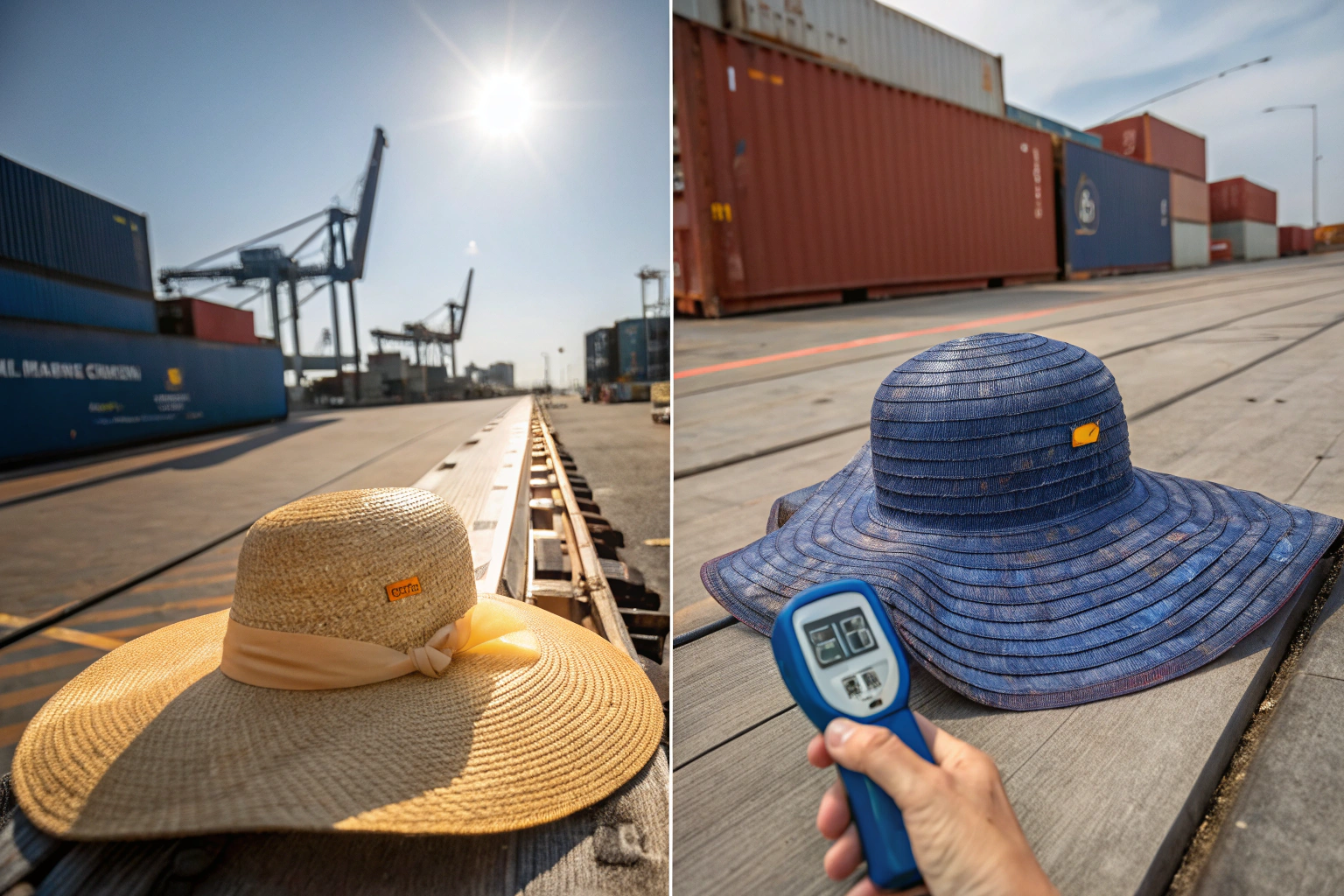
Have you ever opened a shipping container of premium hats on a sunny afternoon, only to find that the beautiful, vibrant brand label on the crown had turned a sickly, washed-out pastel? I have seen a brand owner physically stumble back in shock. She had shipped 2,000 straw fedoras for a summer resort launch. The hats were perfect when they left our factory. The woven label was a deep, rich navy blue with gold metallic thread. But the container had sat on a dock in the Suez Canal for four days under a blazing sun. The UV radiation had acted like an invisible bleaching agent. The navy label was now a pale, uneven sky blue. The gold thread had dulled to a rusty brown. The hats were unsellable. The label, the single most important branding element, was destroyed. The problem was not the hat. It was the label’s lack of lightfastness.
AceAccessory is a professional manufacturer and exporter of accessories. You avoid label fading on hats exposed to sunlight during shipping by specifying high-lightfastness, UV-stabilized polyester yarns for woven labels, using UV-inhibiting over-laminate films on printed labels, and physically shielding the hat labels with opaque tissue wraps and carton liners that block direct light exposure during the entire logistics chain.
A faded label screams "old stock." It erases the premium brand value instantly. The customer assumes the hat has been sitting on the shelf for years. They will not pay full price. They will not trust the quality. As a factory owner in Zhejiang who has solved this exact problem for brands shipping to sunny, equatorial markets, I have engineered a three-layer defense against photodegradation. Let me explain the material science, the testing standards, and the packaging design that keeps your label as vibrant as the day it was woven.
What Causes Label Color to Fade in Sunlight?
Sunlight is a stream of high-energy photons. The most damaging are the ultraviolet photons. They are invisible, but they pack a powerful punch. When UV light hits the dye molecule in a label, it breaks the chemical bonds that create the color. The dye molecule literally shatters into colorless fragments. This is photodegradation.
The problem is accelerated by heat and moisture. A shipping container acts like a solar oven. The sun heats the metal roof. The internal temperature can soar to 70 degrees Celsius. The heat accelerates the chemical reaction of the UV degradation. If the container also has high humidity, the moisture hydrolyzes the dye, adding a chemical fading mechanism. This triple threat, UV, heat, and moisture, destroys a standard label within days. The specific dyes most vulnerable are the reds and the navy blues. These are the "fugitive" colors. They fade first and fastest. A black dye is more stable, but even black can turn a rusty brown under extreme UV exposure. The label’s base material also matters. A natural cotton label holds the dye on the fiber surface. It offers little protection. A polyester label, where the dye is "solution-dyed" inside the molten polymer, is far more resistant. The dye is locked inside the fiber, not just sitting on it. This is the fundamental choice that determines a label’s fate.
What Is the Difference Between "Solution-Dyed" and "Yarn-Dyed" for Labels?
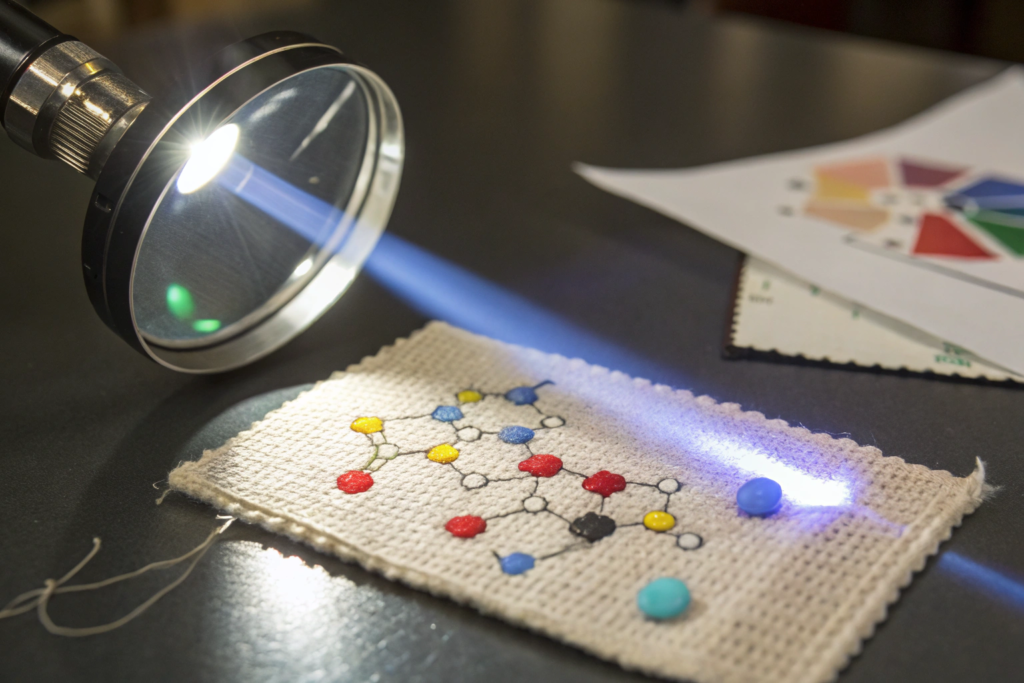
Yarn-dyed is the traditional method. The yarn is spun. Then it is dipped in a dye bath. The dye soaks into the outer layer of the fiber. It is like painting a wall. The color is on the surface.
Solution-dyed is the premium method. The color pigment is added to the liquid polymer before the fiber is extruded. The color is an integral part of the entire fiber cross-section. It is like a carrot, where the orange color goes all the way through. Solution-dyed polyester is massively more UV-resistant. The UV photons can only attack the outermost dye molecules. The inner molecules remain protected. The color fades incredibly slowly. We specify solution-dyed polyester for all labels destined for summer accessories or export to sunny climates.
How Does the Label’s Base Fabric Affect Fading?
Cotton absorbs UV. It acts as a host for the dye, but offers no sacrificial protection. Polyester, especially a dense, high-tenacity type, is naturally more UV-resistant. Nylon is the worst. It is highly susceptible to UV degradation itself, turning yellow and brittle, which accelerates dye fade. We never use nylon for outdoor hat labels. We use a specific UV-stabilized polyester that contains a titanium dioxide additive. This additive acts as a sunscreen for the yarn itself. It scatters the UV photons, preventing them from reaching the dye molecules. This base fabric choice is the first line of defense.
What Are the Best Label Materials and Inks for UV Resistance?
The material choice is the strategic decision. The ink or thread is the tactical one. For the ultimate UV resistance, we use a woven label made from 100% solution-dyed polyester threads. The threads themselves are the color source. There is no surface printing to wear off or fade. A high-density damask weave creates a tight, smooth surface that reflects some light. The label is physically durable and chemically stable. This is our standard recommendation for straw hats and outdoor caps.
For a printed label, which is required for complex, multi-colored brand logos, we use a specific UV-curable inkjet ink. This ink is a liquid polymer that is instantly cured into a solid, flexible film by a high-intensity UV lamp. The resulting print layer is a cross-linked polymer. It is highly resistant to UV breakdown. However, even this ink needs a shield. We apply a clear, matte, UV-inhibiting over-laminate film onto the printed label. This film contains a UV absorber. It sacrifices itself to protect the ink layer. The film will degrade over extreme time, but it will save the print. For a premium, textured label, we use a polyurethane faux leather. We emboss the logo deep into the material. The color is the material itself, often a dark brown or black. This is inherently UV-stable because there is no dye to fade. The deep embossing also creates a shadow effect. The logo is readable even under harsh light. This is the "no-fade" guarantee option.
How Do You Test a Label’s Lightfastness Rating?
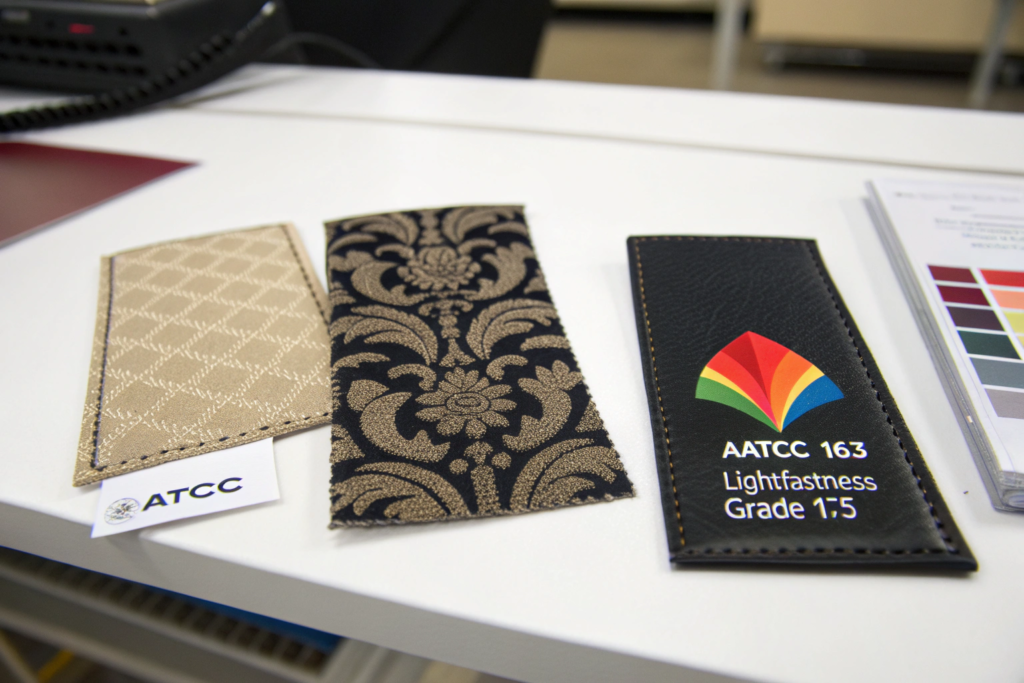
The test standard is the AATCC 16.3. This is a laboratory test using a Xenon arc lamp. This lamp simulates the full spectrum of natural sunlight, including the UV portion.
The label sample is exposed to a controlled, intense light for a specific number of hours. The color change is then compared to a standard "Blue Wool" scale. This scale has eight grades, from 1 (very poor, fades in a few hours) to 8 (outstanding, no fading after prolonged exposure). For a hat label that may experience shipping and outdoor retail display, we demand a minimum of Grade 4. A Grade 4 label shows a color change equivalent to the number 4 blue wool standard after 40 hours of accelerated exposure, which is roughly equivalent to a summer of indirect outdoor exposure. Our standard label specification is a Grade 4-5 or higher. We provide this test certificate for the label material.
What Is the Role of UV Over-Laminate Film?
The laminate is a sacrificial layer. It is a thin, clear polyester film coated with a pressure-sensitive adhesive. The film has a UV absorber chemical mixed into its base. This chemical captures the UV photon and converts it into a harmless, tiny amount of heat. The photon never reaches the ink. The laminate also provides a physical barrier against moisture and abrasion. It is applied with a cold-roll laminator, ensuring no air bubbles. The edge of the label is sealed. This is a standard addition for any printed label on a hat.
How Does the Packaging Design Shield the Labels from Light?
The material defense is the science. The packaging is the physical shield. The ultimate protection is to block the light entirely. Light cannot fade what it cannot reach. We use a "black-out" packaging protocol for light-sensitive hats.
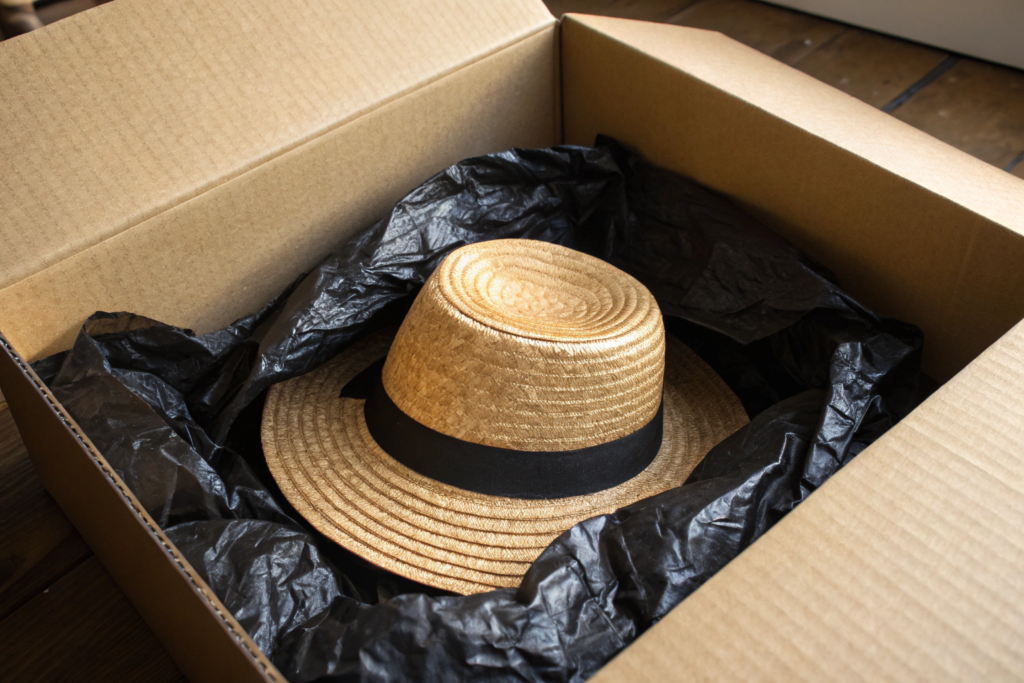
The first layer is the direct label cover. We place a single sheet of opaque, pH-neutral, black tissue paper directly over the woven label on the hat’s crown. This tissue is a physical light barrier. It is gentle on the label’s surface and prevents scratching. The second layer is the inner carton lining. We use a black, opaque polypropylene film as a liner inside the shipping carton. This film converts the carton into a light-proof box. Light might penetrate the cardboard fibers, but it hits the black film and is absorbed. Zero light reaches the hats. The third layer is the outer carton specification. We specify a high-burst-strength, double-wall kraft carton with a minimum thickness. This carton physically blocks the majority of the light. We also minimize the "air gap" between the cartons on the pallet. A tightly packed, fully wrapped pallet creates a collective light barrier. The outer layer of cartons on the container wall is the sacrificial shield. The inner cartons are in total darkness. This layered, physical defense is foolproof. It does not rely on a chemical additive that can be exhausted. It relies on physics. It is the most robust solution for long sea journeys through tropical zones.
Why Is Black Tissue Paper Used Instead of White?
White paper reflects visible light. It looks clean and premium. But white paper is often made with optical brighteners, chemicals that absorb UV and re-emit it as blue light. It does not block UV. It can actually intensify the UV exposure.
Black paper absorbs all wavelengths of light, including UV. It converts the light energy into a tiny, harmless amount of heat. It is the most effective light barrier. It also adds a premium, sophisticated unboxing moment. The customer unwraps the black tissue to reveal the pristine, vibrant hat inside.
What Is the "Container Stuffing" Strategy for Minimizing Light Exposure?
The container door is a source of intense, direct light during loading and unloading. We never pack light-sensitive hats in the cartons directly facing the door. We build a "sacrificial wall" of less-sensitive products, like bulk polybagged items, in the first two meters of the container. The hat cartons are loaded behind this wall. During transit, the container doors are sealed, and it is pitch dark inside. The only risk is at the ports. The sacrificial wall strategy minimizes the exposure window during the physical loading and unloading operations.
What Role Does the Shipping Route Play in Fading Risk?
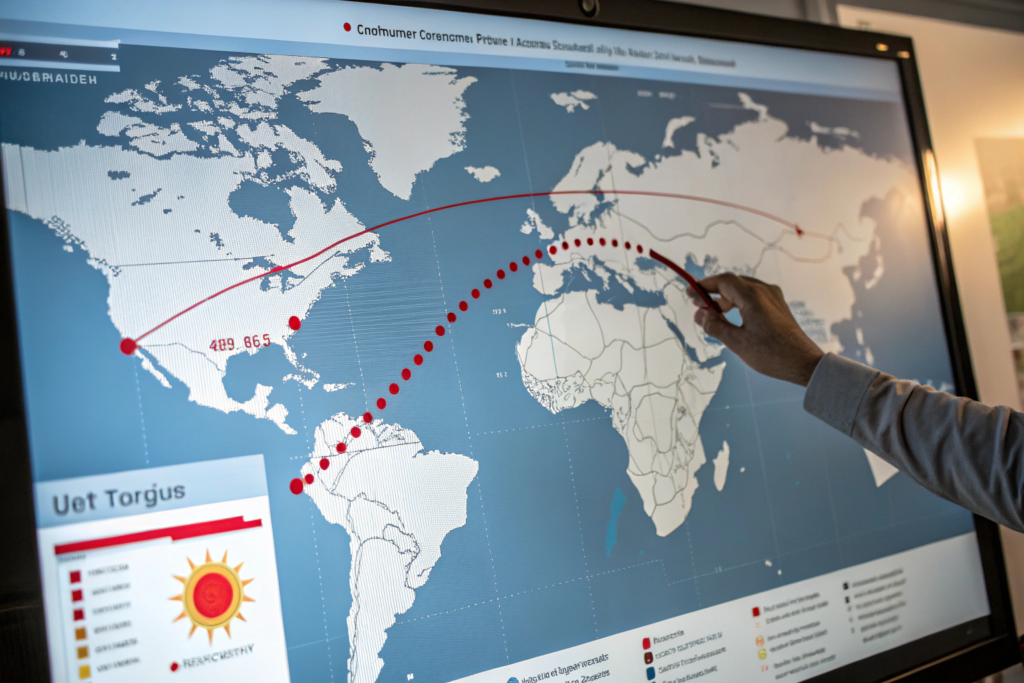
Geography is a risk factor. The closer a shipping route passes to the equator, the higher the UV index. The sun’s rays are more direct. The cloud cover is often less. A route from China to Northern Europe via the Suez Canal passes directly through the Red Sea and the equatorial Indian Ocean. This is a high-UV zone. A container spends up to two weeks in this intense solar environment.
A route to the US West Coast across the Pacific passes through the sunny mid-latitudes. The risk is slightly lower, but still significant in summer. We factor the destination and the shipping season into our label recommendation. For a summer shipment to the Middle East or Australia, we mandate the full blackout packaging and the solution-dyed labels. For a winter shipment to Northern Europe via the shorter Arctic route, the risk is lower, but we still recommend the UV-inhibiting laminate as a standard precaution. The shipping container’s position on the vessel also matters. A container on the top deck, exposed to direct sun, is a solar oven. A container below deck is shaded and cooler. Our shipping department requests "below-deck stowage" for sensitive hat shipments. This is a specific instruction on the bill of lading. The shipping line charges a small premium, but it dramatically reduces the thermal and UV load. This is a logistics detail that a professional factory manages.
How Does Container Ventilation Affect Fading?
A sealed container traps heat and moisture. A ventilated container allows some air exchange. The moisture risk is lower, but the light exposure risk might be slightly higher if the vents allow indirect light in. We use a sealed container for the black-out packaging protocol. The darkness is total. We control the internal humidity with desiccant bags, not ventilation. This is a managed microenvironment.
What Is the "Sun-Side" Risk During Road Transport?
The journey does not end at the port. The truck transport from the destination port to the warehouse can expose the cartons to direct sun. The driver’s delivery route might place the sun on one side of the truck for hours. We print a "Store in Dark / Keep Out of Sunlight" pictogram on the outer carton. We advise the buyer to instruct their logistics provider to use a covered, enclosed truck, not a flatbed. This end-to-end light discipline is the final mile of protection.
Conclusion
Preventing label fading on hats exposed to sunlight during shipping requires a holistic, three-layered strategy. The chemical layer uses solution-dyed polyester threads and UV-inhibiting laminates that resist photodegradation at the molecular level. The packaging layer uses black tissue paper, opaque polypropylene carton liners, and dense outer cartons to create an absolute physical light barrier. The logistics layer uses below-deck stowage requests, sacrificial container walls, and covered road transport to minimize the thermal and UV dose throughout the journey.
The result is a label that arrives as vibrant as the day it was manufactured. The brand identity is preserved. The premium value is protected. The customer’s first impression is the correct one.
In our Zhejiang factory, we specify the label material and lightfastness grade based on your product type and destination market. Our packaging team applies the appropriate UV-shielding protocol. Our shipping department manages the logistics instructions.
If you have experienced a label fading disaster, or if you are planning a summer hat launch to a sunny market, I invite you to contact our Business Director, Elaine. She can send you our lightfastness test certificates and samples of our solution-dyed woven labels and UV laminate finishes. She can explain our blackout packaging protocol in detail. Send her an email at elaine@fumaoclothing.com. Let us keep your brand colors flying bright, from our factory to the final customer’s hand.