Have you ever seen a nurse pull off her headband at the end of a 12-hour shift, revealing a deep, angry red groove etched into her forehead? I have witnessed this quiet suffering. The headband was a standard, one-size-fits-all elastic band. It was too tight. It had to be tight to stay in place during an emergency. But the constant pressure gave her a tension headache. It left a mark that took hours to fade. She needed adjustability. She needed to control the tension precisely for her unique head size and her specific shift demands. But her hospital procurement department only offered one type, the rigid stretch band. The problem was not the concept of a medical headband. It was the lack of a factory that could produce both adjustable and stretch variants within the same medical-grade quality system.
AceAccessory is a professional manufacturer and exporter of accessories. We produce both adjustable and stretch headbands for medical use. Our adjustable headbands use a soft, hypoallergenic silicone slider or a Velcro closure system for precise, personalized tension control. Our stretch headbands are knitted from a seamless, medical-grade nylon-spandex yarn with a calibrated compression profile that holds securely without excessive pressure.
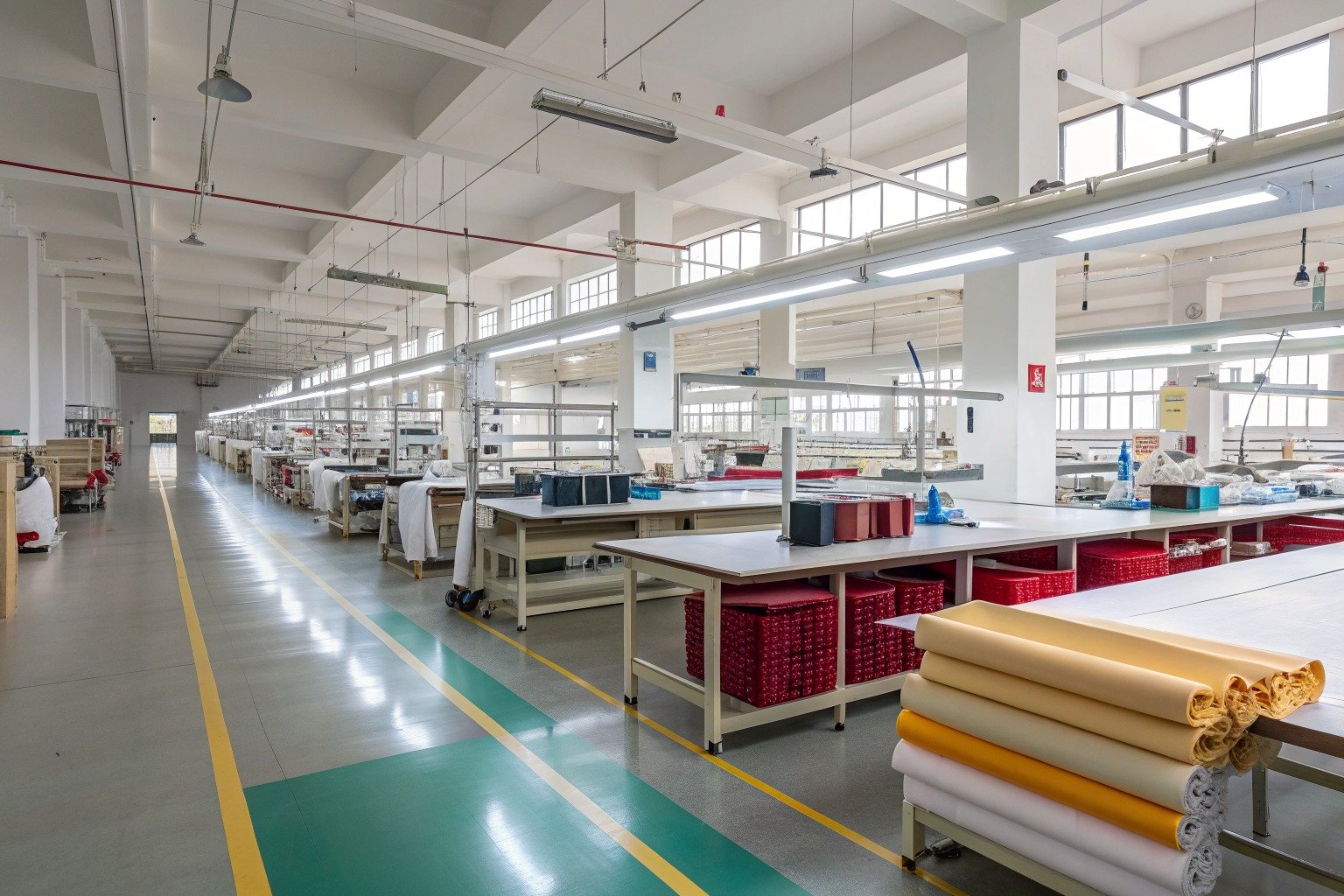
A medical headband is not a fashion choice. It is a tool for infection control, sweat management, and equipment compatibility. It must function flawlessly under stress. It must be comfortable for an entire shift. It must survive industrial sterilization. As a factory owner in Zhejiang with a dedicated clean-room medical accessories line, I have developed both types to meet the exacting demands of healthcare professionals. Let me explain the design differences, the material certifications, and the production protocols that make these two products a complementary solution for your medical supply catalog.
What Makes an Adjustable Medical Headband Different from a Stretch One?
The fundamental difference is the mechanism of fit. An adjustable headband is a linear strip with a fastener. It allows the wearer to manually set the exact circumference. A stretch headband is a closed elastic loop. It relies on the material’s inherent stretch and recovery to conform to the head. They serve different needs and different personal preferences.
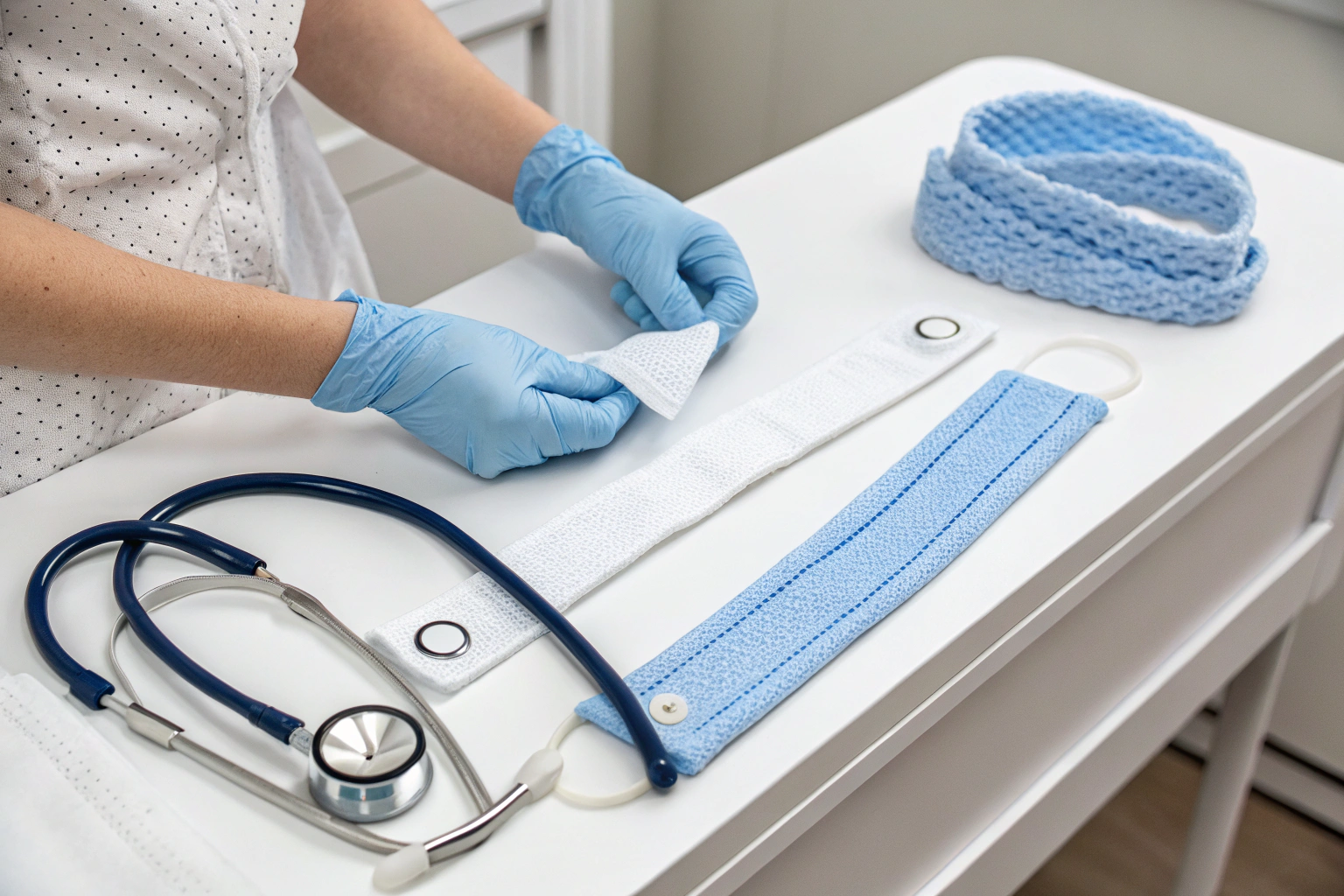
The adjustable headband is the choice for the professional who wants absolute, repeatable control. Our design uses a silicone slider bead. The headband is a strip of medical-grade, skin-safe silicone-backed woven cotton. The wearer slides the bead to tighten or loosen the band. Once set, it stays. It does not creep tighter during the shift. It does not loosen. The fit is locked. This is critical for surgeons who cannot adjust their headwear once scrubbed in. The adjustable band also serves as a "mask ear saver." We sew rows of buttonholes into the ends. The elastic loops of a surgical mask hook onto the buttons instead of behind the ears. This eliminates the painful ear chafing that plagues healthcare workers. The adjustable band is a multi-functional tool. The stretch headband is the choice for simplicity and speed. It is a single, seamless loop of fabric. The wearer just pulls it on. There are no fasteners to fiddle with. The stretch material distributes pressure evenly across the entire circumference. There are no pressure points from a buckle. It is the closest feeling to wearing nothing at all. It is ideal for long-haul comfort, for wearing under a surgical cap, or for patients.
How Does the Silicone Slider Mechanism Work and Why Is It Safe?
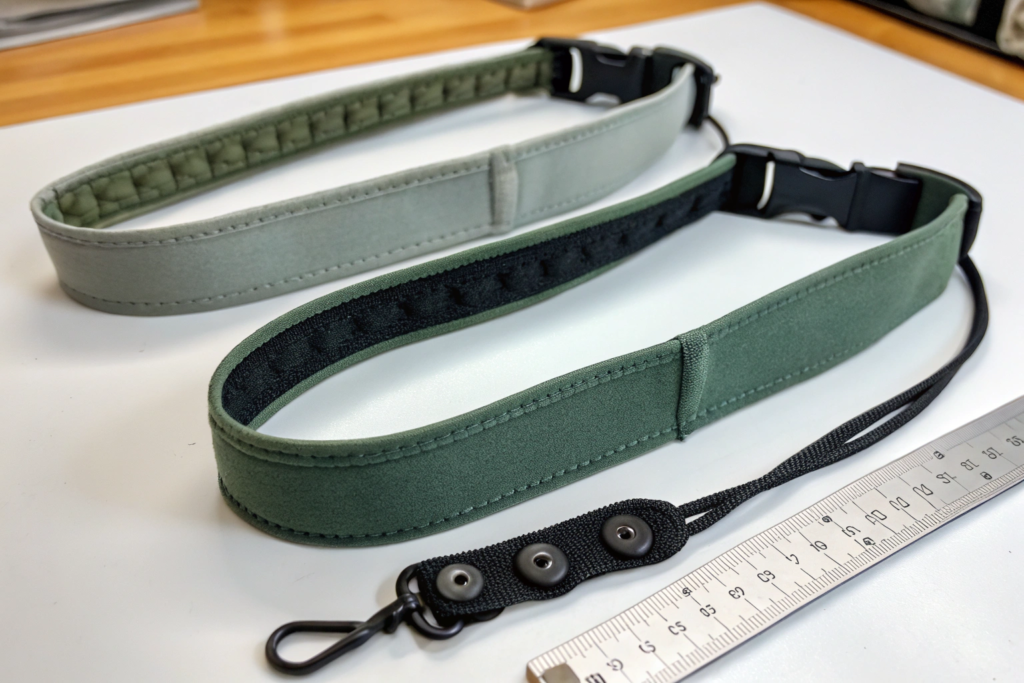
A cheap slider is made of hard plastic with sharp edges. It digs into the scalp. It cracks under an autoclave cycle. Our slider is injection-molded from medical-grade liquid silicone rubber. It is USP Class VI biocompatible. It is soft, flexible, and completely smooth with no parting lines. The internal grip teeth are molded with a rounded profile. They hold the fabric securely without cutting the fibers. The slider is sterilizable. It withstands 50 autoclave cycles at 134 degrees Celsius without hardening or deforming. It is the critical engineered component of the adjustable system.
Why Does the Stretch Headband Use a Seamless Knit Construction?
A seam is a ridge. On a sensitive, immobilized head, a seam can cause a pressure ulcer. A seam can chafe during a 12-hour shift. Our stretch headband is knitted on a specialized circular machine. It emerges as a complete, continuous tube. There is zero stitching. The knit structure is a specific rib pattern. The ribs create vertical channels that wick sweat away from the skin. The edge is a self-folded, turned welt. It is soft and clean. This seamless construction is the pinnacle of comfort for prolonged skin contact. It is the standard for burn unit and oncology headwear.
What Medical-Grade Materials Are Used for Both Types?
The material specification for medical use is non-negotiable. A fashion headband uses whatever is cheap. A medical headband uses only certified, traceable, biocompatible materials. We apply the same strict material library to both adjustable and stretch types.
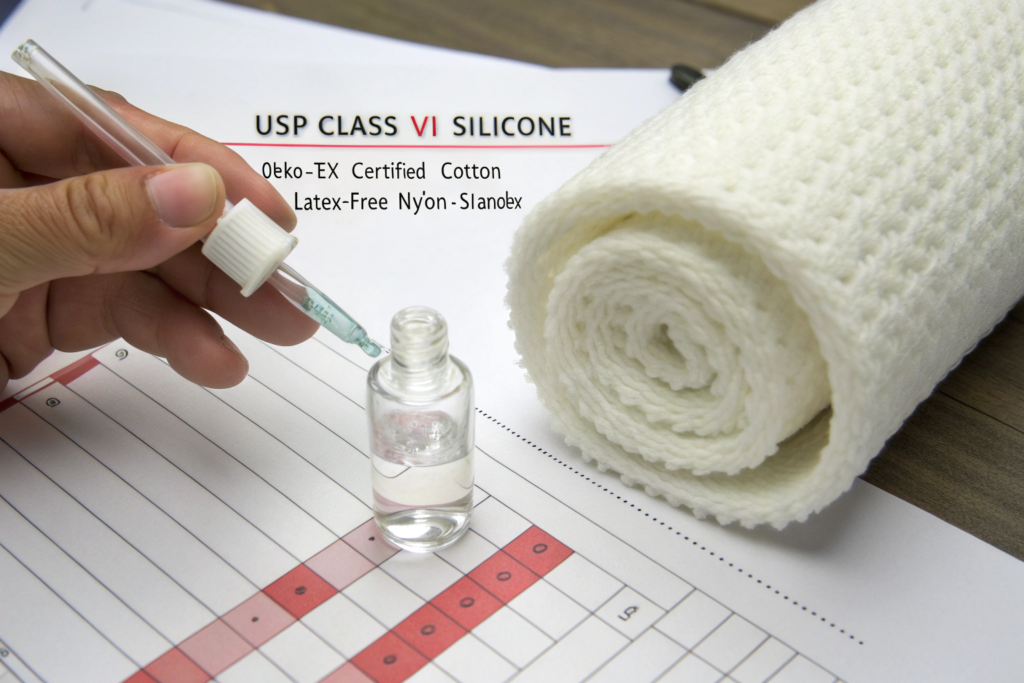
For the adjustable band body, we use a woven fabric of 70% long-staple cotton and 30% nylon. The cotton is GOTS-certified organic. It is unbleached or dyed with non-toxic, heavy-metal-free reactive dyes. The nylon adds durability and dimensional stability for the buttonholes. The backing is a thin, clear film of medical-grade silicone. This silicone is the grip. It is vulcanized directly onto the fabric. It is hypoallergenic. It does not harbor bacteria. It is wiped clean with an alcohol swab. For the stretch headband, we use a yarn spun from a blend of 80% nylon and 20% spandex. The nylon is a specific, continuous filament type with a silver-ion antimicrobial additive embedded inside the polymer. This is not a topical spray. It is a permanent part of the fiber. It provides a 99.9% reduction in bacteria. The spandex provides the calibrated stretch. The entire yarn is OEKO-TEX Standard 100 certified, Class I, which is the safest category for products with direct and prolonged skin contact, including infants. There is zero latex in any component. We use a synthetic polyisoprene for any elastic components that require a rubber-like snap, but for these headbands, we rely entirely on the spandex knit. The materials are sourced from certified suppliers with a full chain of custody.
Why Is Silver-Ion Antimicrobial a Must for Stretch Headbands?
A stretch headband is a closed loop of synthetic fabric. It can become a breeding ground for bacteria. It sits against the warm, slightly sweaty skin of the forehead. The silver-ion additive disrupts the bacteria’s metabolism. It prevents the formation of biofilm. It keeps the headband odor-free and hygienic for the entire shift. The additive is tested according to the AATCC 100 method. It maintains its efficacy for 100 industrial wash cycles. This is a critical infection control measure.
How Do You Test for Latex Allergens in the Factory?
Latex proteins are invisible. A latex-free claim must be verified. We use a rapid ELISA test on incoming raw materials. This is an immunological test that detects specific latex allergen proteins. The detection limit is parts per million. A positive test rejects the entire material batch. Our factory is a latex-free zone. We do not allow any natural rubber latex products through the door. This zero-tolerance protocol protects the most sensitive allergic patients and healthcare workers.
How Are Both Types Tested for Medical-Grade Performance?
Medical performance is defined by tension, durability, and chemical safety. Our QC tests are identical for both the adjustable and stretch headbands, with specific limits for each.
Test one is the "Tension Force Test." For the stretch headband, we use a tensile testing machine. The band is stretched to a circumference of 55 centimeters, the average female head size. The force exerted must be between 1.5 and 2.5 newtons. This is the therapeutic compression range. It holds without pressing. The test is repeated after 50 wash and sterilization cycles. The force must not drop by more than 20%. For the adjustable band, we test the slider’s holding force. The band is set to a fixed circumference. A pull force of 10 newtons is applied. The slider must not slip. This simulates the band being pulled by a mask or a sudden head movement. Test two is the "Biocompatibility Panel." We send a sample of the finished product to an ISO 10993 certified lab. The lab performs the three key tests: cytotoxicity, skin irritation, and skin sensitization. The material must be non-toxic to living cells. It must not cause any redness or swelling on a skin patch test. It must not trigger an allergic reaction. This test is the ultimate safety guarantee. Test three is the "Durability to Sterilization" test. The headbands are subjected to 50 cycles of steam autoclave sterilization at 134 degrees Celsius. The cotton must not scorch. The silicone must not harden. The stretch band must not lose its elasticity. The slider must operate smoothly. These tests are conducted on every new production batch. The data is recorded in our device history record.
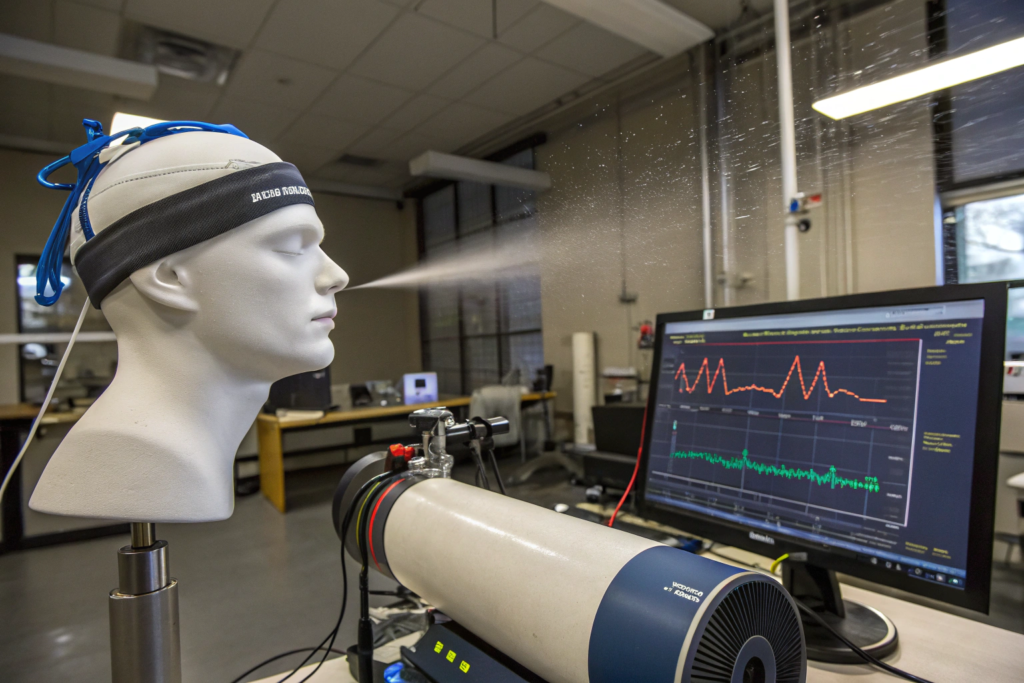
What Is the "Pressure Mapping" Test for Stretch Headbands?
We use a thin, flexible pressure sensor mat wrapped around the test mandrel. The stretch headband is placed over the sensor. The system generates a 2D color map of the pressure distribution. There must be no hot spots, no narrow, high-pressure rings. The pressure must be a uniform, broad band of low pressure. This visual proof confirms the even comfort that a seamless knit is designed to provide. It is the scientific validation of the comfort claim.
How Do You Verify the Buttonhole Strength on the Adjustable Band?
A mask loop can exert a sharp pull on the buttonhole. A failed buttonhole renders the ear-saver function useless. We use a button pull test. A metal hook is inserted through the buttonhole. The hook is pulled at a constant speed. The buttonhole must withstand a force of 25 newtons without tearing the fabric or fraying the stitching. This is significantly higher than the force a standard mask loop can exert. It is a safety margin.
Can Both Types Be Sterilized and Packaged for Clinical Use?
The transition from a clean product to a sterile product is a validated process. Both adjustable and stretch headbands can be supplied non-sterile, for hospital laundry processing, or terminally sterilized, ready for immediate clinical use.
We use a double-pouch system. The headband is first placed in a clear, medical-grade polyethylene inner pouch. This pouch is then placed in a Tyvek outer pouch, together with a chemical sterilization indicator strip. The pouch is sealed and labeled with a unique lot number. The lot number traces back to the raw material batch and the production date. The sealed pouches are palletized and sent to a contracted certified sterilization facility. They undergo ethylene oxide gas sterilization. This is a low-temperature process that does not damage the silicone or the elastic fibers. After sterilization, the pouches are quarantined until a biological indicator test confirms a Sterility Assurance Level of 10^-6. This means there is a one-in-a-million probability of a non-sterile unit. The sterile headbands are then ready for distribution to hospital central supply departments. The shelf life is three years from the sterilization date. This service is for our full-service medical supply clients.
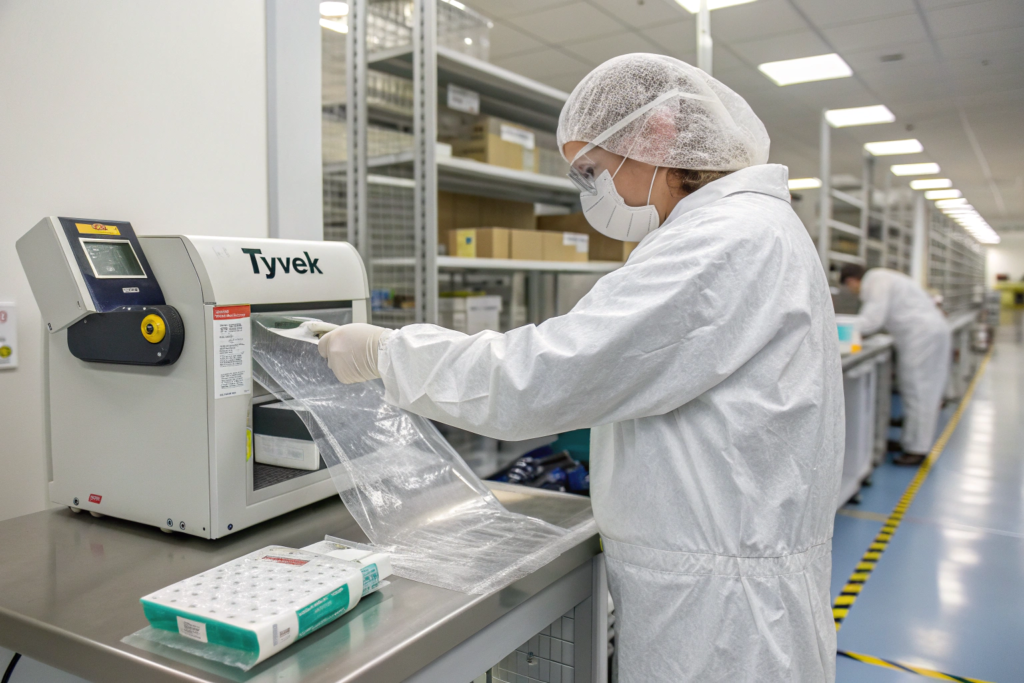
What Is the Purpose of the Tyvek Pouch?
Tyvek is a flash-spun polyethylene material. It is porous to the sterilant gas, allowing the ethylene oxide to enter and sterilize the headband. It then allows the gas to outgas completely. However, it is a barrier to bacteria. Once the sterilization is complete, the pouch maintains sterility until it is opened in the sterile field. The clear side is a non-porous film. The Tyvek side is the breathable window. The pouch is designed for aseptic presentation. The clinician peels open the pouch and drops the sterile headband onto the instrument tray without contaminating it.
How Are Non-Sterile Bulk Packs Prepared for Hospital Laundries?
Some hospitals prefer to buy in bulk and sterilize in their own autoclaves. We pack 50 headbands of a single type in a breathable, autoclavable polypropylene wrap. The wrap is sealed with indicator tape. The box is labeled with the material content and the recommended sterilization parameters. The hospital puts the entire box in their steam autoclave. The steam penetrates the wrap. The headbands are sterilized and ready for their internal distribution. This bulk option is cost-effective for high-volume hospital systems.
Conclusion
Producing both adjustable and stretch medical headbands requires a single, unified quality system that applies the same strict material certifications, the same rigorous performance testing, and the same validated sterilization protocols to two mechanically different products. The adjustable headband, with its medical-grade silicone slider and buttonhole ear-savers, provides locked, personalized control. The stretch headband, with its seamless antimicrobial knit and uniform pressure map, provides ultimate, effortless comfort. They are complementary solutions for different clinician preferences and different clinical scenarios.
In our Zhejiang clean-room facility, these two product lines run side by side. Our material library is latex-free and biocompatible. Our testing lab conducts the cycle, tension, and biocompatibility tests. Our documentation team prepares the device history records required for medical device registration.
If you are a medical distributor or a hospital procurement manager looking to offer a complete headband program, I invite you to contact our Business Director, Elaine. She can send you a sample kit containing both the adjustable silicone slider band and the seamless stretch band. She can provide the full ISO 10993 biocompatibility test reports and the sterilization validation documents. She can arrange a clean-room video walkthrough. Send her an email at elaine@fumaoclothing.com. Let us equip your healthcare heroes with the comfort and control they deserve.