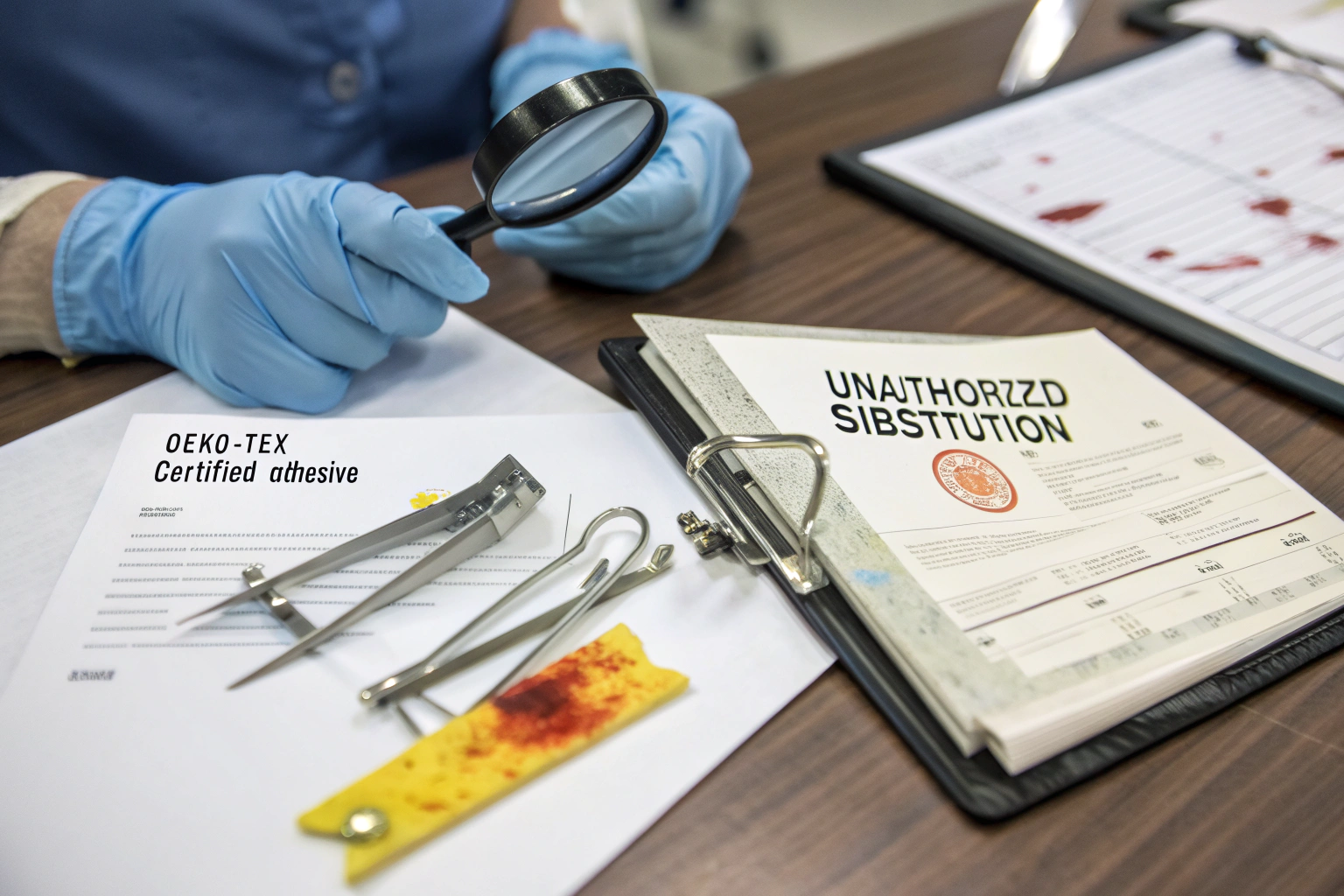
Have you ever opened a shipment of beautiful hair clips, only to be hit by a chemical smell so strong it made your eyes water? I have seen a boutique owner sob over this. She had ordered 2,000 satin-covered barrettes for her holiday collection. They looked perfect in the factory photos. But when she unboxed them, the smell was toxic. The glue had not cured properly. The satin was stained with a yellow ooze. She could not sell them. She could not even donate them. The entire batch was hazardous waste. The factory had switched to a cheap, locally-sourced solvent glue to save a few cents per unit. They did not tell her. They did not test it. They destroyed her season.
AceAccessory is a professional manufacturer and exporter of accessories. The best way to handle a factory that changes glue without telling you is to immediately quarantine the entire shipment, demand the original glue specifications and the new glue’s Safety Data Sheet, and enforce a rework or replacement at the factory’s cost under the principle of unauthorized material substitution.
Glue is the invisible skeleton of an accessory. It holds the fabric to the clip. It holds the pearl to the pin. It holds the layers of a belt together. A factory that secretly changes the glue is gambling with your brand’s safety and reputation. As a factory owner in Zhejiang who has fired suppliers for this exact sin, I can tell you exactly how to respond with force and logic. This is a guide to turning a betrayal into a binding corrective action.
Why Is Unauthorized Glue Substitution a Critical Breach of Contract?
This is not a minor mistake. It is a fundamental breach of the manufacturing contract. The glue is a specified material. It is written into the product specification sheet. It is part of the approved pre-production sample. When a factory changes it secretly, they are selling you a different product than the one you approved. This is a legal violation.
The breach is critical for three reasons. First, safety. The original glue was chosen because it passed skin sensitization tests. It was hypoallergenic. The new, cheap glue might contain toluene or formaldehyde. It can cause contact dermatitis. If a customer gets a rash from your hair clip, you are liable. Second, performance. The original glue had a specific shear strength and temperature resistance. It kept the clip together in a hot car. The new glue might soften at 40 degrees Celsius. It fails in summer. The product falls apart. Third, regulatory non-compliance. The original glue had a REACH and CPSIA compliance certificate. The new glue is an unknown chemical cocktail. It can cause a shipment to fail a port inspection. It is a triple threat. You must treat it with zero tolerance.
How Does This Breach Affect Product Liability Insurance?
Your insurance policy covers products made to the approved specification. A secret material change voids that coverage. The insurer will deny the claim.
If a customer sues for an allergic reaction, you will have no insurance defense. The factory’s unauthorized action becomes your personal financial liability. The legal term is "non-conforming goods" under the Uniform Commercial Code. You have the right to reject the entire shipment. You must document the change. The Safety Data Sheet of the new glue is your key evidence. It proves the material is different. It proves the factory knew they were changing it. This documentation is your legal shield.
What Is the Difference Between an Approved Alternative and a Secret Switch?
Factories have the right to propose an alternative. If the original adhesive is out of stock, they can present a replacement. They send the new glue’s technical data sheet. They send a new pre-production sample. You test it. You approve it in writing. This is a managed change.
A secret switch is done in the dark. No data sheet. No sample. No written approval. The motive is always cost reduction. The factory steals your margin by endangering your customers. The darkness of the act is what makes it unforgivable. It destroys the foundation of trust required for manufacturing partnership.
How Do You Document the Glue Switch and Quarantine the Goods?
The moment you suspect a glue change, you stop. You do not ship a single unit to a customer. You quarantine the entire batch. The goods become evidence. You must build a forensic documentation package.
Step one is the smell test. The original approved sample has a neutral or slightly sweet smell from a water-based adhesive. The new glue often has a sharp, solvent, nail-polish-remover smell. Document the smell in writing. Step two is the visual inspection. Take macro photographs. Compare the approved sample’s glue line with the received product’s glue line. The original is clear and thin. The new might be yellow, thick, or brittle. Step three is the adhesive strength test. Use a simple peel test. Pull the glued components apart. Measure the force with a basic spring scale. Document if the new glue fails at a lower force. Step four is the Safety Data Sheet demand. Send a formal email to the factory. "We have identified an unauthorized adhesive change. Provide the SDS for the glue used on PO#XXXX within 24 hours." The SDS reveals the chemical composition. It is the smoking gun. This package of evidence is irrefutable.
What Should You Look for in a Visual Glue Inspection?
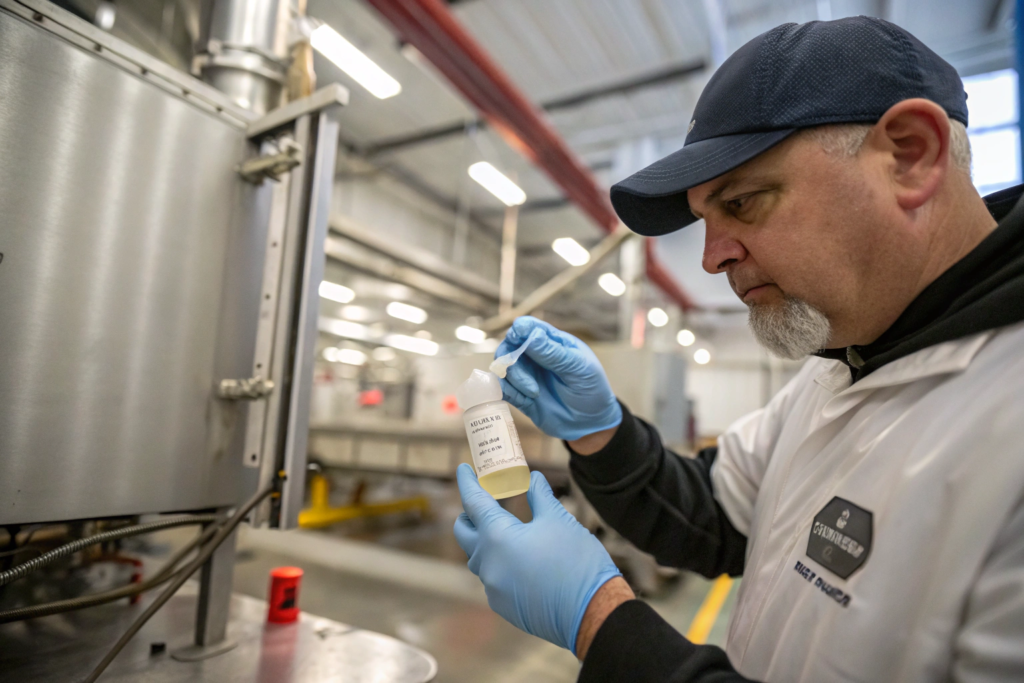
Use a jeweler’s loupe or a macro lens. Look at the color. Water-based acrylics dry crystal clear. Polyurethane dries slightly amber. Cheap neoprene dries a dirty yellow-brown.
Look at the seepage. The original glue stays exactly in the bond line. The new glue oozes out because it has a lower viscosity. Look at the residue. A powdery white residue is plasticizer migration. It means the glue is chemically unstable. These visual markers are the first red flags. They tell you the factory changed the formula, not just the brand. A professional factory can spot this in seconds. We train our incoming quality control team on these forensic visual standards.
How Do You Conduct a Field Adhesion Test?
You need a simple, calibrated pull force gauge. A 20-newton spring scale is sufficient.
Secure the metal clip base in a vise. Attach the scale hook to the fabric or the decorative element. Pull vertically at a constant, slow speed. Record the force at which the bond fails. Compare it to the approved sample. If the approved sample fails at 15 newtons and the new product fails at 5 newtons, you have a 70% loss of strength. This is quantitative evidence. It proves the glue is not just different, but functionally defective. It will fall apart in normal use. This test takes one minute. It is a powerful tool for immediate, on-the-spot rejection.
What Corrective Actions Must the Factory Take Immediately?
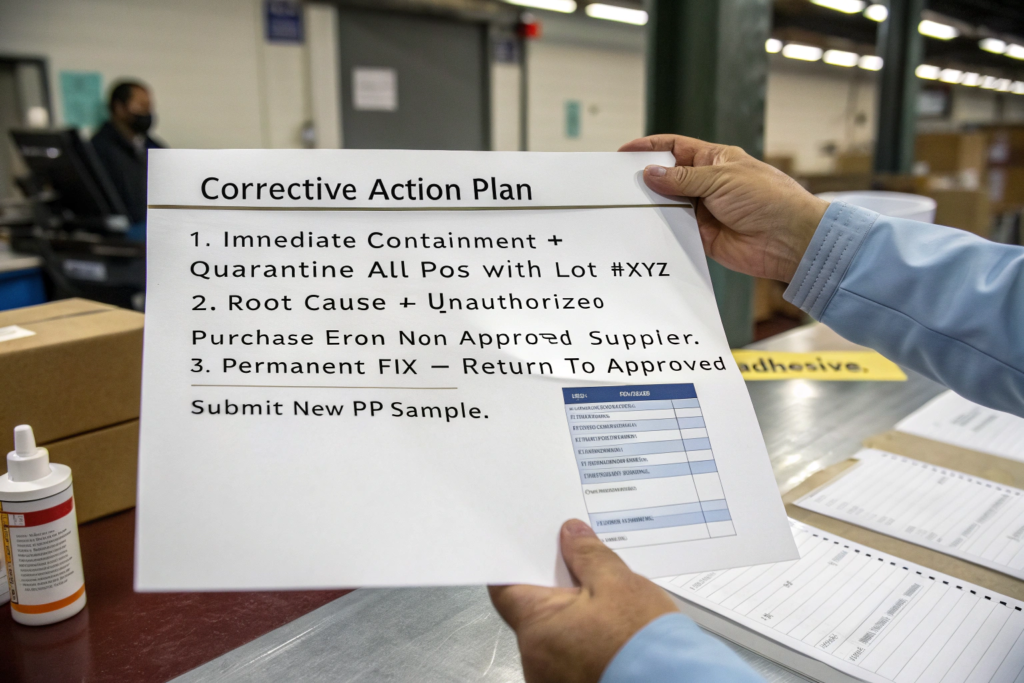
Your demand must be absolute. There are three non-negotiable corrective actions. First, full rework or replacement at factory cost. The factory must strip the old glue, clean the components, and re-glue with the approved adhesive. If the product is destroyed by the removal, the factory must remake the entire order from scratch using the correct glue. They pay the air freight to meet the original delivery deadline, or you cancel the order and claim a full refund plus damages.
Second, a formal corrective action report. The factory must identify the root cause. Was it a rogue purchasing manager? Was it a deliberate management decision? The report must state the name of the unauthorized glue supplier. It must provide the batch number. It must explain how the unauthorized glue entered the production line. "We do not know" is an unacceptable answer. Third, a barrier to recurrence. The factory must implement a "Locked Glue Specification" process. The approved glue brand, product code, and supplier are written into a protected production file. No alternative can be purchased without a dual-signature approval from the factory owner and the buyer. This lock-down is the only acceptable long-term fix.
Why Is Full Material Stripping Often the Only Safe Fix?
A wipe with solvent is not enough. The cheap glue’s chemicals have already soaked into the fabric and the porous metal coating. The residue remains.
The smell remains. The allergen remains. You cannot build a new bond on a contaminated surface. The product must be disassembled. The fabric must be stripped. The metal must be sandblasted. This is a destructive process. Often, the cost of labor to strip and clean exceeds the cost of new raw materials. The factory must bear this cost. The pain of this financial loss is the only lesson that changes behavior. It is the direct consequence of their shortcut. We have witnessed this difficult process and it is the only way to guarantee the final product is safe and identical to the approved sample.
How Do You Verify the Corrective Action Is Genuine?
A paper report is a promise. A live video call is proof. Demand a real-time video of the glue being purged.
The factory must show you the container of the unauthorized glue. They must pour a dye into it to mark it as contaminated. They must video the container being removed from the factory. They must then show you the new, sealed container of the approved glue. They must show you the purchase order for this new glue from the authorized supplier. They must assemble the first 10 units of the rework on video. You inspect them via the video call. Only then do you release the rework for full production. This is the "trust but verify" protocol. It is the modern standard of remote quality assurance.
How Do You Prevent Future Glue Substitutions in Your Supply Chain?
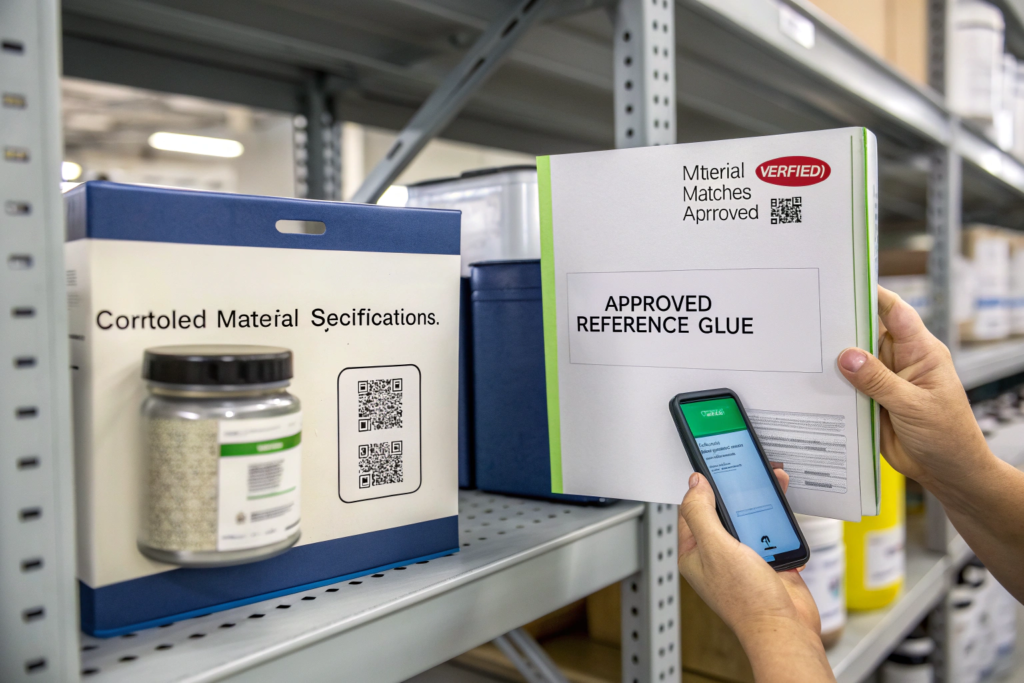
The best way to handle a secret glue change is to build a system where it is impossible to hide. You must become an active, not passive, quality partner. The solution is a "Controlled Substance List" for your product. You define the exact adhesive. You write it into the purchase order as a line item. "Glue: Nan Pao NP-300 Water-Based Acrylic. No Substitution Allowed Without Written Approval."
You request a "Glue Batch Traceability Report" with every shipment. The factory logs the glue brand, batch number, and application date for your specific order. They send you a photo of the empty glue drums with the batch labels clearly visible. This takes 30 seconds. It provides a verifiable chemical paper trail. You also build a "Retained Sample" library. The factory sends you a physical production reference sample from every order. You store it in a sealed bag. When the bulk shipment arrives, you pull the reference sample. You compare the smell, the color, and the peel strength. You are your own quality control check. This system makes the factory know you are watching. It makes a secret switch a guaranteed discovery. It prevents the crime by making the detection inevitable.
What Is a Glue Batch Traceability Report?
It is a simple table. It lists the product style number, the purchase order number, the glue brand, the glue product code, the glue batch number, and the date of application.
We generate this report automatically from our production software. We attach it to the final inspection report. It takes five minutes to create. It provides a complete chemical genealogy of the product. If a defect appears two years later, we can trace it back to the exact hour the glue was applied. This is the level of transparency that professional buyers demand. It is a standard part of our quality assurance package.
How Can You Build a "Material Lock" Contract Clause?
You add a clause to your manufacturing agreement. "Any change to specified materials without prior written approval constitutes a material breach. Seller shall be liable for the full cost of recall, rework, air freight, and brand damage."
You quantify the penalty. You define a liquidated damages figure, for example, 200% of the order value. This makes the financial consequence of a secret switch astronomical. The factory’s lawyer will see this clause. They will advise the factory owner to never switch glue without permission. The contract becomes a powerful behavioral control. It aligns the factory’s profit incentive with your safety requirement. It is a permanent structural fix.
Conclusion
A factory that secretly changes glue is a factory that has declared your brand’s safety is not its problem. The response must be swift, forensic, and absolute. Quarantine the goods and build an evidence file of photos, SDS documents, and adhesion test data. Enforce a complete rework or remake at the factory’s cost, under live video supervision. Extract a root cause analysis that names the specific unauthorized glue supplier. Implement a permanent lock on material specifications, enforced by a contractual penalty clause and a batch traceability report system.
This crisis, handled correctly, transforms a weak link into a controlled, transparent process. It identifies whether the factory is capable of being a long-term partner or must be immediately replaced.
In our Zhejiang factory, we learned this lesson early. We have a "No Substitution Without Approval" policy burned into our culture. Our glue specs are locked in our production software. Our batch traceability reports are automatically generated. We welcome our clients’ retained sample library and their random adhesion tests.
If you have been burned by a glue switch, or if you want to prevent one from ever happening, I invite you to contact our Business Director, Elaine. She can explain our controlled material protocol. She can send you a sample of our batch traceability report format. She can demonstrate how we lock your specification into our digital production system. Send her an email at elaine@fumaoclothing.com. Let’s build a bond that is legally, chemically, and ethically unbreakable.