A creative director from a California-based casual wear brand once sat in my showroom running his thumb across a belt sample. He was not looking at the leather. He was not looking at the buckle. He was tracing the stitching with his fingertip. He told me his customer might not consciously notice the stitching pattern on a belt, but they would feel the difference. A belt with flat, lifeless machine stitching felt like a commodity. A belt with raised, textured, deliberate stitching felt like a considered purchase. The stitching was the difference between a $25 belt and an $85 belt. He asked me what stitching patterns were trending for casual wear in 2026. He was asking the right question.
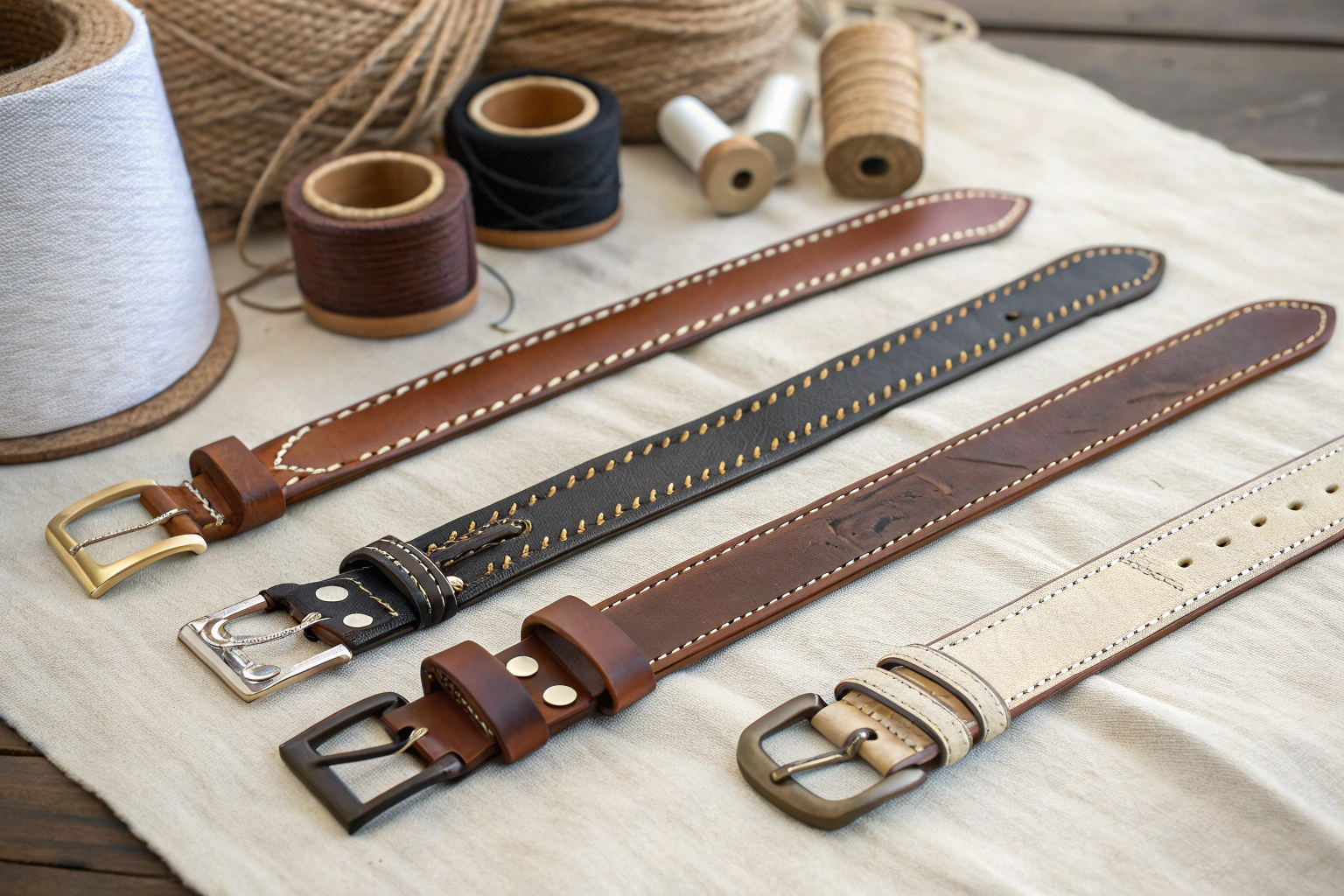
The top casual belt stitching patterns for 2026 are the contrast single-needle stitch for a clean, modern look, the double parallel stitch for a rugged workwear aesthetic, the hand-applied saddle stitch for artisanal heritage appeal, the decorative edge stitch for texture and colour accents, and the functional box stitch for reinforcement at stress points. The overarching trend is visible, deliberate stitching that communicates craftsmanship, moving away from hidden or invisible stitches toward patterns that celebrate the construction process.
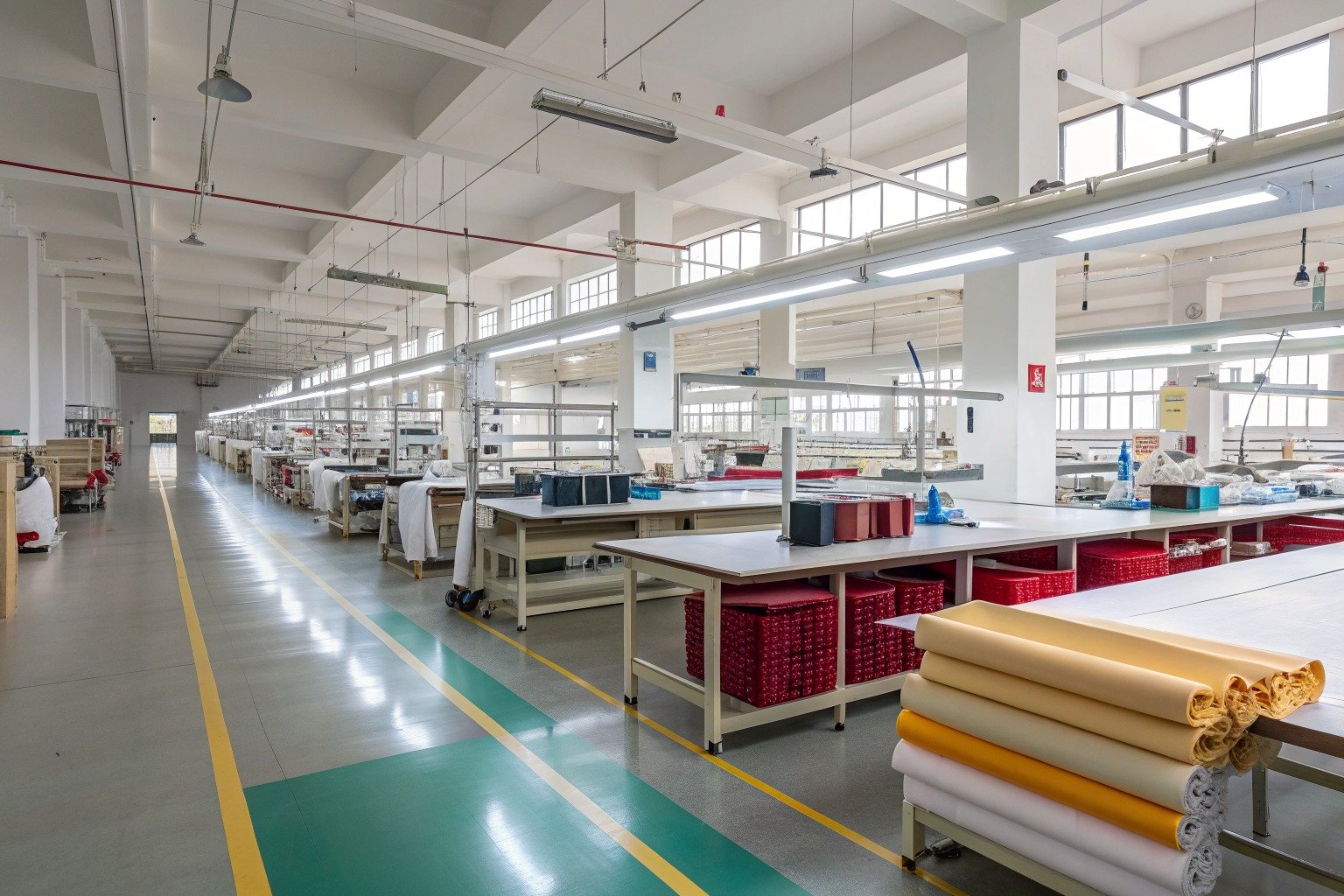
At Shanghai Fumao, we produce leather and canvas belts for casual wear brands across North America and Europe. Our stitching department runs industrial sewing machines for volume production and hand-stitching stations for premium details. We know that stitching is not just a construction method. It is a design element that defines the belt’s character. Let me walk you through the five stitching patterns that will shape the 2026 casual belt market.
Why Is the Contrast Single-Needle Stitch the Foundation of Modern Casual Belts?
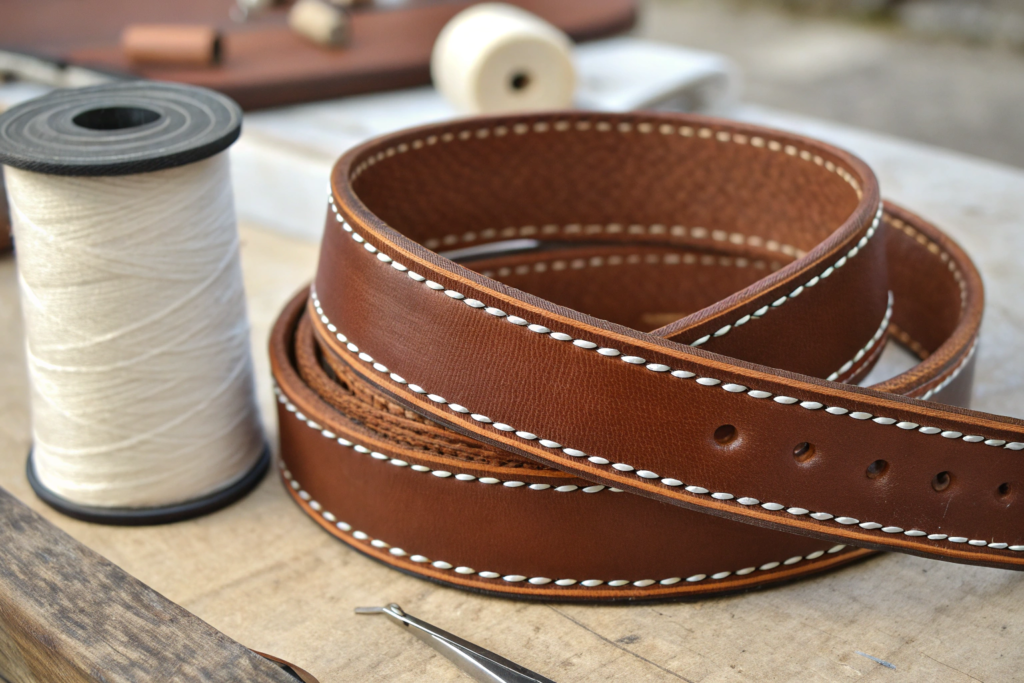
The contrast single-needle stitch is the most versatile and widely used stitching pattern in casual belts. It consists of a single line of stitching running parallel to the belt edge, typically 2 to 3 millimetres from the edge. The thread colour contrasts with the leather colour. Cream on brown. White on black. Tan on navy. The contrast makes the stitching visible and intentional.
This pattern is the foundation of modern casual belt design because it is clean, unfussy, and works with every leather type and every buckle style. It adds a finished look without dominating the belt’s aesthetic. The stitching says that the belt was made with care, but it does not shout for attention. It is the equivalent of a well-fitted white t-shirt. Essential. Versatile. Never out of style.
What Thread Types and Stitch Densities Define Quality Single-Needle Work?
The thread for a single-needle contrast stitch on a casual belt should be bonded nylon or polyester. Bonded thread is coated with a resin that increases its strength, reduces friction during sewing, and resists fraying and UV degradation. The thread thickness is typically Tex 70 to Tex 90, which provides a visible stitch line without being overly chunky.
The stitch density, measured in stitches per inch or SPI, should be 5 to 6 SPI for a casual belt. This density creates a visible, defined stitch line. Higher densities, 7 to 8 SPI, are used for dress belts where a finer, less visible stitch is desired. Lower densities, 3 to 4 SPI, are used for heavy workwear belts where a more rugged appearance is appropriate. The stitch line must be straight and parallel to the belt edge. A wandering stitch line that drifts closer and farther from the edge is a clear sign of poor workmanship. Our sewing machine operators are trained to maintain a consistent edge guide, and our QC team checks stitch alignment on every belt. Professional leather stitching thread selection guide helps you specify the correct thread for your belt’s intended use and aesthetic.
How Does Single-Needle Stitching Work with Different Leather Types?
The single-needle contrast stitch behaves differently depending on the leather. On smooth full-grain leather, the stitch sits on the surface and creates a clean, crisp line. On pull-up or oiled leather, the stitch creates a slight depression in the waxy surface, adding texture. On suede, the stitch can be tonal rather than contrast, because the nap of the suede makes a contrast stitch less legible.
The thread tension must be adjusted for each leather type. Too much tension on soft leather causes puckering. Too little tension on firm leather creates loose, loopy stitches. Our sewing technicians adjust the machine settings for each leather batch. The back side of the stitch must also be considered. On a casual belt, the back stitch is typically covered by a lining or left exposed as a design feature. An exposed back stitch must be as neat as the front stitch. Understanding leather sewing techniques for accessories ensures your belt stitching performs as intended on your chosen material.
What Makes the Double Parallel Stitch a Workwear Essential?
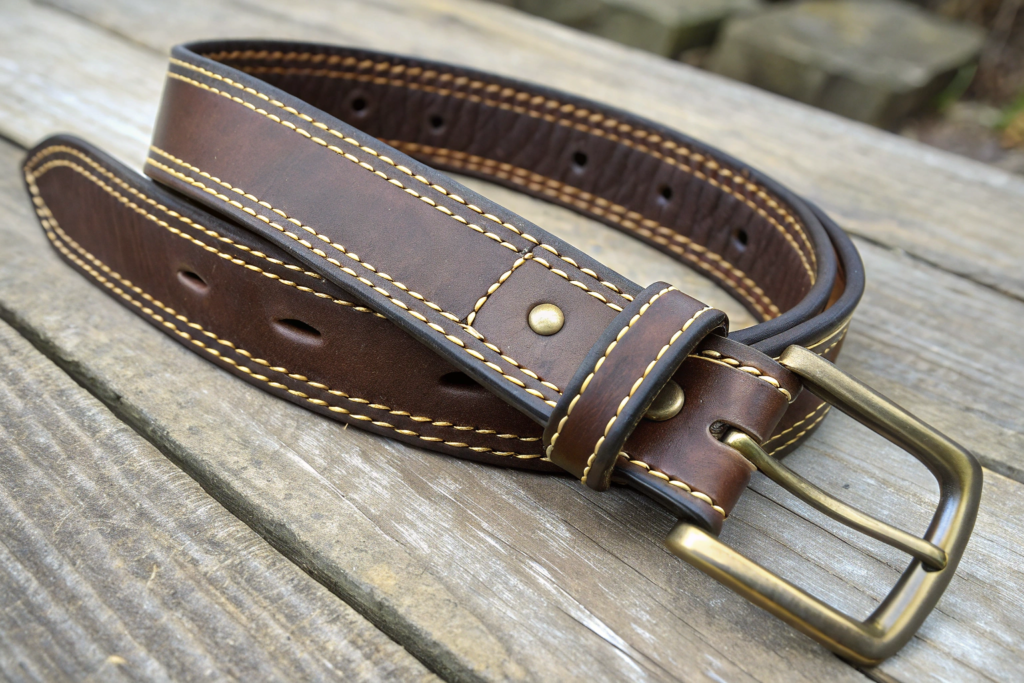
The double parallel stitch, also called a double-needle stitch, is two parallel lines of stitching running along the belt edge. The lines are typically 5 to 6 millimetres apart. The stitch is stronger than a single line, more visually substantial, and communicates a rugged, utilitarian character. This is the stitching pattern of workwear and heritage casual brands.
The double stitch originated as a functional reinforcement. Two lines of stitching hold the belt together more securely than one, especially at stress points like the buckle fold and the keeper loops. Over time, the double stitch became a visual signature of quality and durability. A belt with a double stitch looks like it can handle hard wear. It looks authentic. It looks like a tool, not just an accessory.
How Does a Double-Needle Machine Create Two Perfect Lines?
A double-needle sewing machine uses two needles mounted on a single needle bar. The needles sew simultaneously, creating two perfectly parallel stitch lines. The distance between the needles is fixed, typically 6 millimetres or 8 millimetres. The operator guides the leather using an edge guide that references the belt edge, ensuring both stitch lines remain parallel to the edge.
The double-needle machine requires more skill to operate than a single-needle machine. The operator must maintain consistent speed and pressure to avoid skipped stitches or thread breaks. The thread tension on both needles must be balanced. An unbalanced tension results in one stitch line being loose and the other tight. The bobbin thread consumption is double that of a single-needle stitch. The machine must be maintained carefully. A dull or damaged needle on one side will create inconsistent stitches that are immediately visible because of the direct comparison with the other, perfect stitch line. Professional double-needle sewing machine operation requires skilled operators and regular equipment maintenance.
What Does the Double Stitch Communicate About Brand Identity?
The double stitch is a brand signal. It tells the consumer that the brand values durability, craftsmanship, and authenticity. It is the stitching pattern of workwear brands, heritage leather goods brands, and outdoor lifestyle brands. A brand that uses a double stitch on its belts is aligning itself with values of ruggedness and longevity.
The colour contrast of the double stitch also communicates brand identity. A high-contrast white stitch on dark brown leather is bold and traditional. A tonal stitch, where the thread matches the leather colour, is subtle and contemporary. A coloured stitch, such as red or blue on natural leather, is playful and fashion-forward. The double stitch is a canvas for brand expression. The pattern itself is classic. The colour choice makes it modern. If your brand is developing heritage workwear accessories, the double stitch is a foundational design element that connects your product to a century of quality manufacturing tradition.
How Is the Saddle Stitch Defining Artisanal Casual Belts?
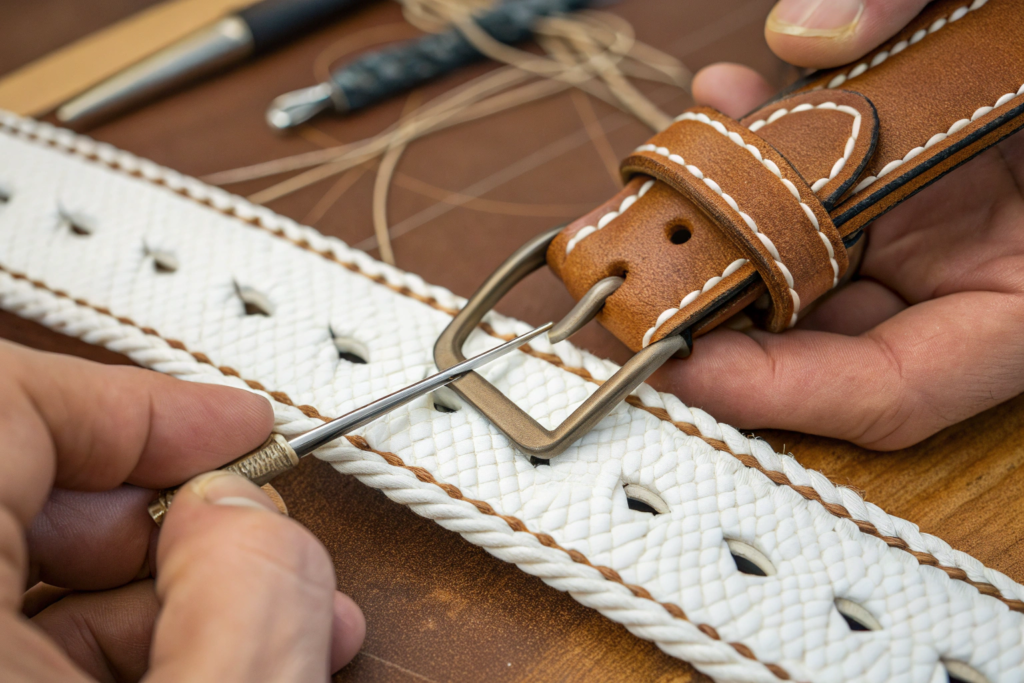
The saddle stitch is the hallmark of handcrafted leather goods. It is applied by hand using two needles and a single length of waxed thread. The needles pass through each hole from opposite sides, creating a stitch where the thread crosses inside the leather. The result is a stitch that is stronger than a machine lockstitch, because if one stitch breaks, the crossing thread holds the adjacent stitches in place. The stitch will not unravel.
The visual character of a saddle stitch is unmistakable. Each stitch sits at a slight angle to the stitch line. The thread is thicker than machine thread, typically 0.8mm to 1.2mm in diameter. The wax coating gives the thread a subtle sheen and a slightly tacky feel. The stitch spacing is slightly irregular, because it is applied by a human hand, not a machine. This irregularity is not a defect. It is the signature of handwork. The consumer perceives a saddle-stitched belt as a premium, artisanal product. It commands a higher price. It tells a story of craft.
What Is the Production Difference Between Saddle Stitch and Machine Stitch?
A saddle-stitched belt takes significantly longer to produce than a machine-stitched belt. A skilled leatherworker can saddle-stitch approximately 2 to 3 metres of belt per hour. A machine can stitch the same length in minutes. The labour cost for saddle stitching is much higher, which is why it is reserved for premium and limited-edition belts.
The process begins with marking the stitch line with a stitching groover or a set of wing dividers. The stitch holes are then punched with a stitching chisel or an awl. The leatherworker then stitches the entire length by hand, using a stitching pony to hold the leather. The thread is pulled tight after each stitch to ensure consistent tension. The finished stitch line is hammered flat to set the stitches into the leather. The entire process for a single belt can take 30 minutes to an hour, depending on the belt length and the stitch density. This labour is what makes a saddle-stitched belt a luxury product. If your brand is developing handcrafted leather belt collections, the saddle stitch is the definitive mark of artisanal quality.
Why Does the Waxed Thread Create a Distinctive Look and Feel?
The thread used for saddle stitching is waxed linen or waxed polyester. The wax serves multiple purposes. It lubricates the thread as it passes through the leather, reducing friction and wear. It protects the thread from moisture and abrasion. It gives the thread a slightly tacky surface that helps the stitch hold its position. And it creates a visual and tactile character that machine thread lacks.
The waxed thread has a subtle lustre. It catches the light differently than unwaxed thread. It feels slightly sticky to the touch when new, a sensation that smooths with use. Over time, the wax picks up a small amount of dirt and develops a patina, just like the leather itself. The thread becomes part of the belt’s aging story. This is the opposite of a pristine, machine-made product that stays unchanged. A saddle-stitched belt evolves. The consumer who buys it understands this. They are buying a product that will get better with age. Professional waxed thread for leather stitching is an essential material specification for artisanal belt production.
What Role Do Decorative Edge and Box Stitches Play?
Beyond the main seam stitches, two additional stitch types play important roles in casual belt design for 2026. Decorative edge stitching adds colour, texture, and visual interest. The functional box stitch reinforces stress points and communicates durability. These are detail stitches. They are small, but they contribute significantly to the overall quality perception of the belt.
The trend toward visible, deliberate stitching extends to these detail stitches. The edge stitch is no longer hidden or tonal. It is a design feature in a contrasting colour. The box stitch is no longer a purely functional element. It is a visible mark of reinforced construction. The consumer may not know the technical name for a box stitch, but they recognise it as a sign of a well-made belt.
How Does a Blanket Edge Stitch Add Colour and Texture?
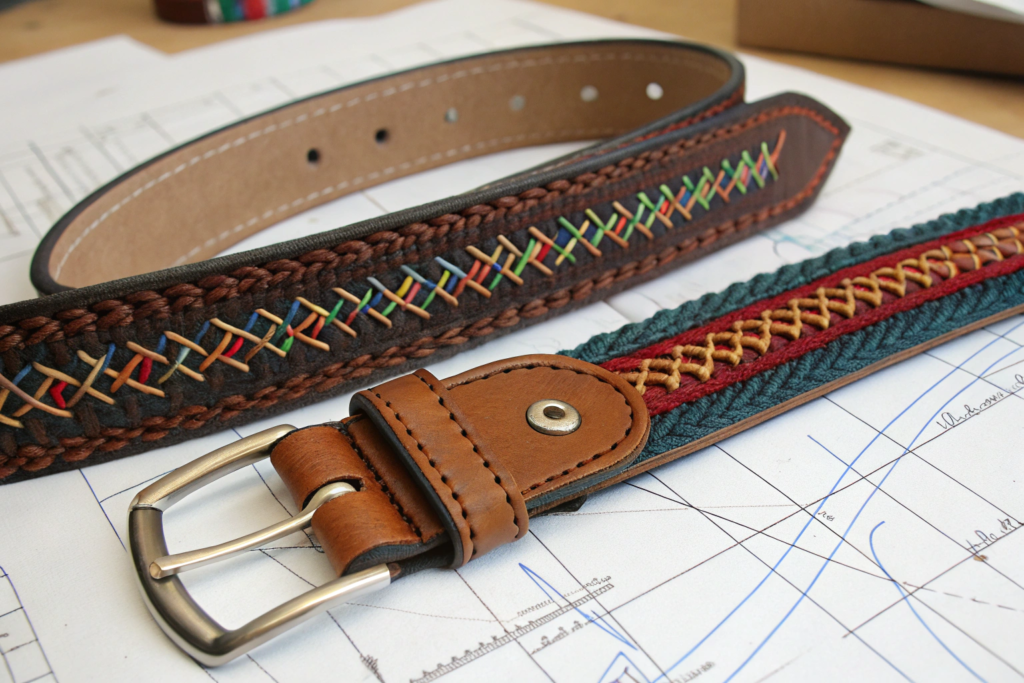
A blanket edge stitch, also called a whip stitch or an overcast stitch, wraps around the edge of the leather. It can be applied to a single layer of leather or to two layers to bind them together. The stitch creates a textured, almost braided appearance along the belt edge.
For casual belts, the blanket edge stitch is often done in a contrasting colour. A natural leather belt with a red blanket edge stitch. A brown leather belt with a turquoise edge stitch. The colour accent adds a playful, fashion-forward element to an otherwise classic belt. The stitch also serves a functional purpose. It seals the edge of the leather, preventing delamination and fraying. It is both decorative and protective. A blanket edge stitch takes time to apply, even by machine. It is a detail that signals a higher level of craftsmanship. If your brand is developing decorative stitching for leather accessories, the blanket edge stitch offers a unique combination of function and fashion.
What Is a Box Stitch and Why Does It Matter at Stress Points?
A box stitch is a rectangular stitch pattern with an X across the centre. It is used to reinforce the buckle fold, where the belt strap is folded over the buckle and stitched down, and the keeper loops, which hold the belt tail flat. These are the stress points of a belt. They experience the most tension during daily wear.
The box stitch distributes stress across a wide area. The multiple stitch lines create a strong, tear-resistant attachment. The X across the centre prevents the leather from stretching or deforming within the box. A belt with a box-stitched buckle fold will outlast a belt with a simple straight stitch. The consumer who has experienced a belt where the buckle stitches pulled out will appreciate the reinforcement. The box stitch is a functional feature that also looks good. The rectangular pattern is visually pleasing. It is a classic detail of quality leather goods. Professional leather belt construction techniques always include box stitch reinforcement at stress points.
Conclusion
The most common belt stitching patterns for casual wear in 2026 are the contrast single-needle stitch for clean versatility, the double parallel stitch for rugged workwear character, the hand-applied saddle stitch for artisanal luxury, the decorative blanket edge stitch for colour and texture accents, and the functional box stitch for reinforcement at stress points. The overarching trend is stitching as a deliberate design element. Visible, textured, and meaningful stitching that communicates the quality and the character of the belt.
The casual consumer is increasingly knowledgeable about quality indicators. They know to look for straight stitch lines, consistent thread tension, and reinforced stress points. They recognise the difference between a mass-produced belt with invisible stitching and a crafted belt with stitching that tells a story. A brand that specifies its stitching patterns thoughtfully, and partners with a factory that can execute them flawlessly, builds a reputation for quality that translates into customer loyalty and premium pricing.
At Shanghai Fumao, our belt production lines include single-needle and double-needle machines, edge stitching equipment, and a hand-stitching workshop for saddle stitch and decorative stitch applications. Our stitching team is trained in the specific techniques required for each pattern. Our QC team inspects stitch alignment, tension, and durability on every belt. We treat stitching as a core quality attribute.
If you are developing a casual belt collection for 2026 and you want a manufacturing partner who understands the design and functional importance of stitching, I encourage you to contact our Business Director Elaine at elaine@fumaoclothing.com. She can send you a stitch sample card showing all five pattern options, provide thread colour charts, and discuss which patterns best suit your brand aesthetic and target price point. Your belts deserve stitching that tells your quality story.