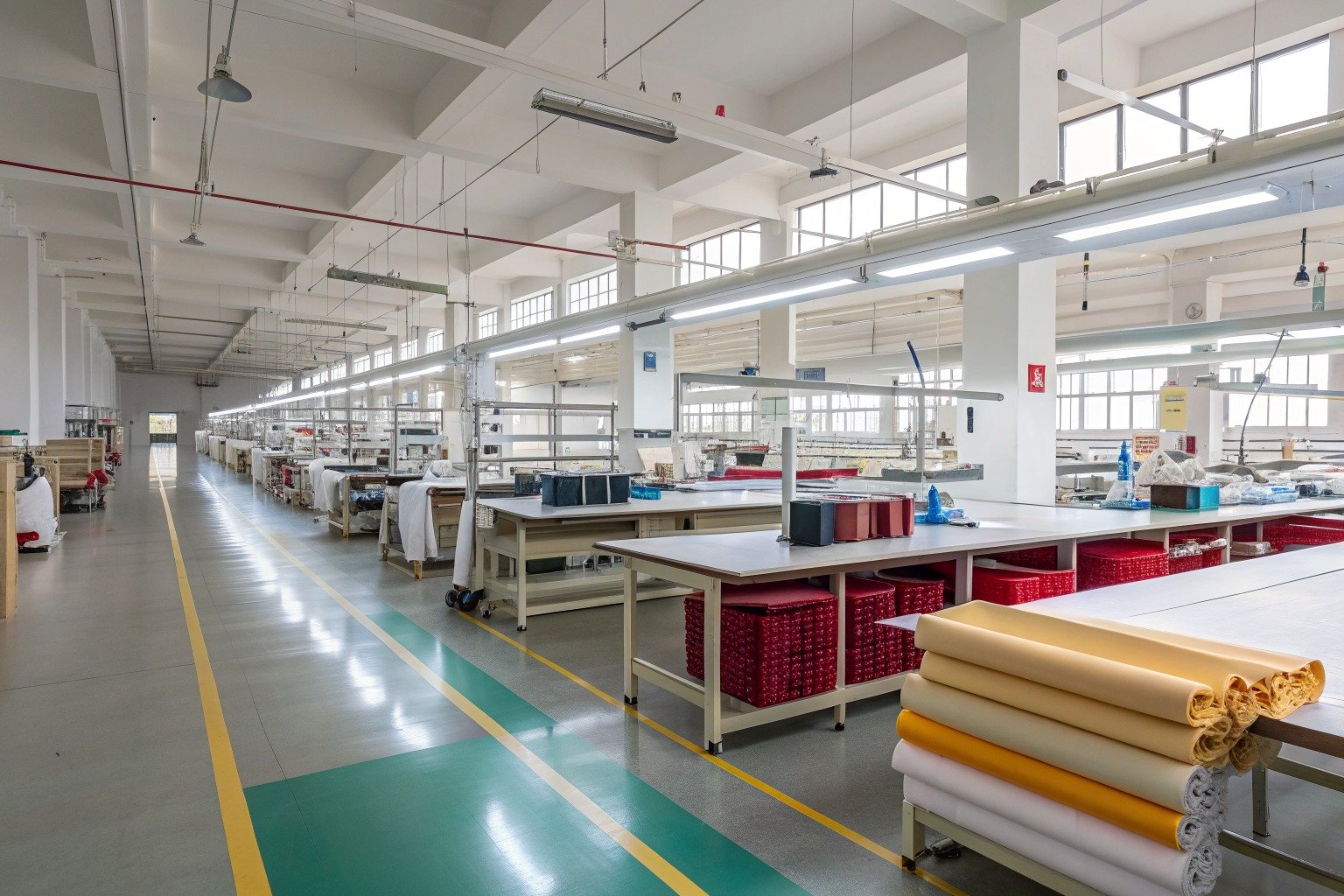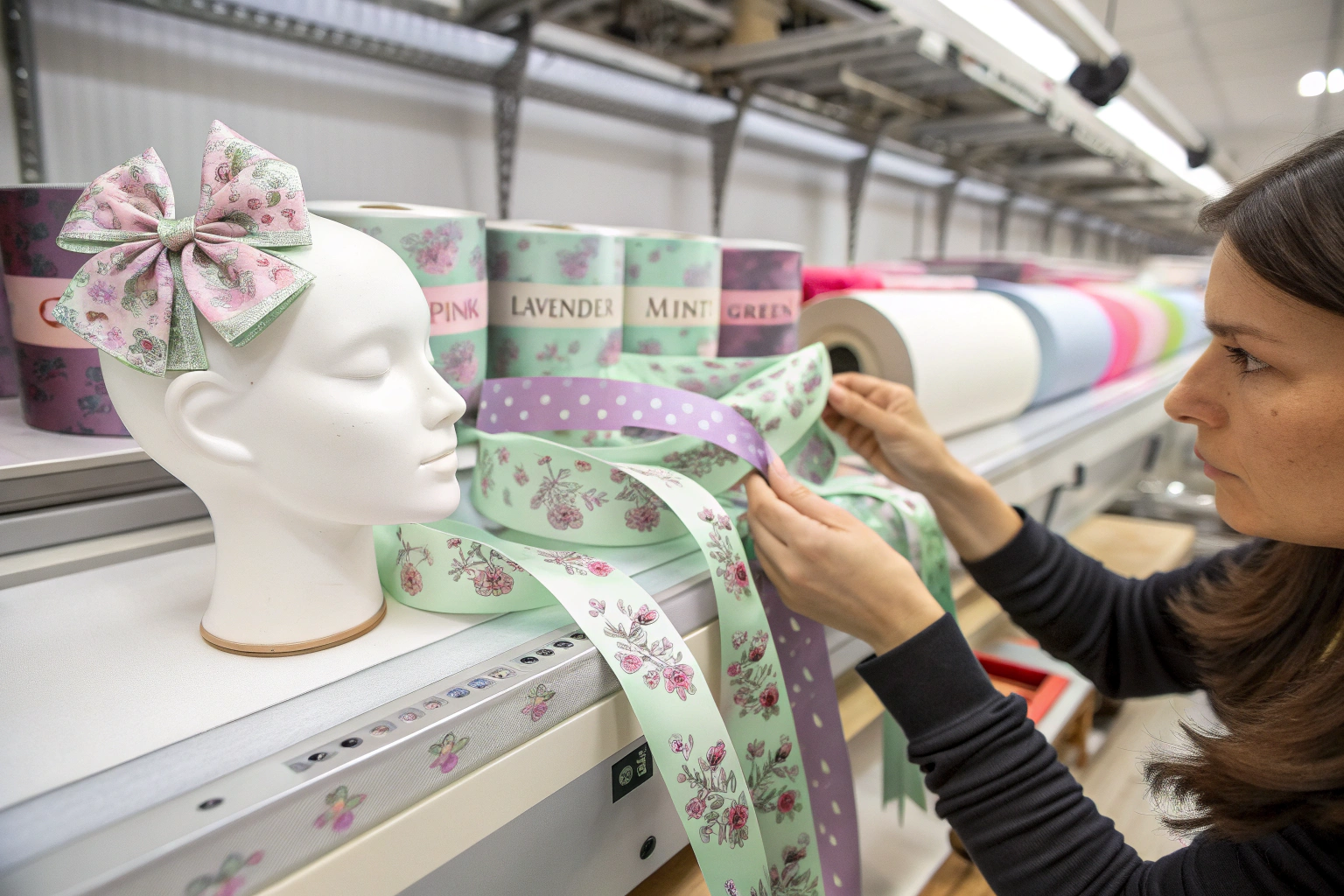
Three years ago, a children’s boutique brand from California asked me to print their signature unicorn pattern onto 500 yards of grosgrain ribbon. I said yes, but my usual supplier of pre-printed ribbon laughed and told me to just pick something from their catalog. They did not understand custom. They did not understand that this small brand was building an identity, not just assembling a hair bow. That moment pushed me to invest in our own digital ribbon printing line. Now, that boutique brand has grown into a national chain, and we produce every inch of their branded ribbon in-house. The lesson is simple. If you cannot offer true customization, you are invisible to the brands that matter.
The answer is a definitive yes. A professional accessories manufacturer like AceAccessory can absolutely produce custom printed ribbon for hair bow factories. But the real question you should be asking is not just "can you print a design on a ribbon." It is "can you replicate my exact Pantone shade across five different ribbon materials, guarantee colorfastness when the grosgrain touches a sweaty toddler’s forehead, and deliver the finished rolls in time for my seasonal launch?" That is the level of service that separates a printer from a true manufacturing partner.
This is the world I live in every day in our Zhejiang facility. We do not just push a button on a printer. We engineer the entire process from artwork optimization to ribbon selection to heat-setting and finished roll packaging. I want to walk you through exactly how we handle custom printed ribbon orders for hair bow manufacturers, what materials and printing techniques are available, and how we solve the common problems that cause delays and disappointing results. If you are tired of generic ribbon catalogs and minimum order quantities that strangle your creativity, you are in the right place.
What Types of Custom Printed Ribbon Are Available for Hair Bow Production?
When a hair bow factory comes to me asking for "custom ribbon," my first question is always the same. What is the bow going to be used for. A satin ribbon for a wedding flower girl’s hair bow requires a completely different engineering approach than a grosgrain ribbon for a cheerleading bow that will be thrown into a washing machine after every game. The material, the weave, the print technique, and the finishing all shift depending on the end use. Understanding these options is the first step to getting exactly what you envision without wasting money on a sample that looks beautiful but fails functionally.
We stock and print on five core ribbon types that cover virtually every hair bow application in the market. Each material has its own personality. Satin offers that classic, glossy, high-end look that photographs beautifully for e-commerce product pages. Grosgrain provides that distinctive ribbed texture and structural stiffness that makes a bow hold its loops perfectly. Velvet ribbon adds a touch of luxury and warmth, perfect for fall and holiday collections. Organza gives a sheer, ethereal quality for special occasion pieces. And cotton canvas ribbon serves the natural, organic aesthetic brands. Let’s examine the two most popular options in detail.
Why is satin ribbon the top choice for boutique hair bows?
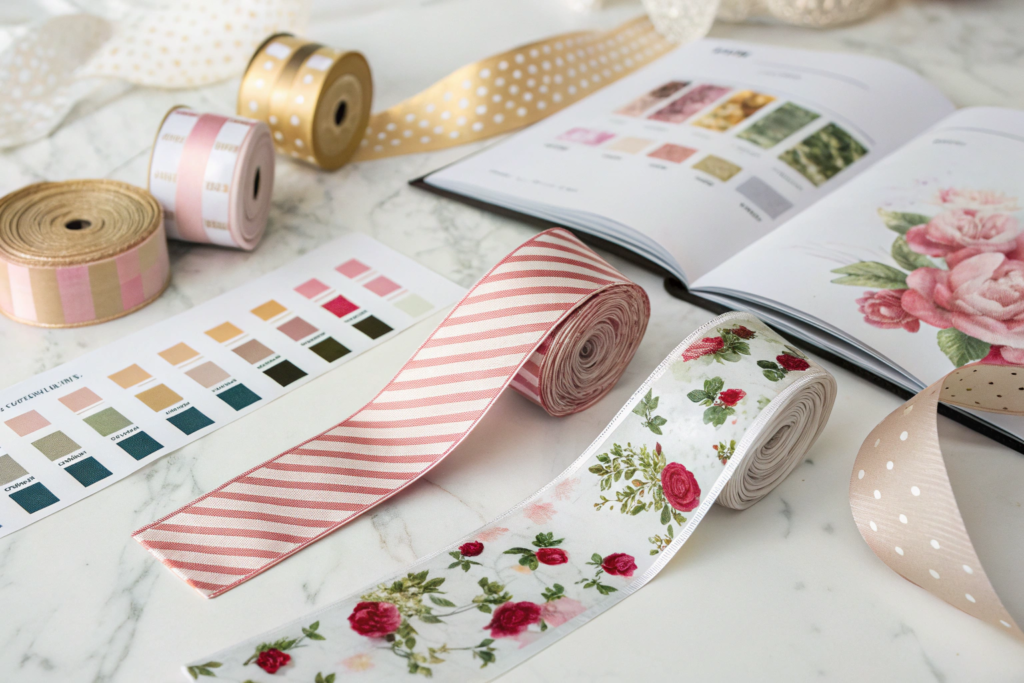
Satin ribbon provides a surface that is almost like liquid glass. The smooth, tightly woven structure reflects light evenly across the entire bow loop. This makes the bow look consistently expensive in photographs, which is critical for online boutiques where the image is the only salesperson the customer ever meets. We produce custom printed satin ribbon using a high-resolution digital textile printer with reactive dye inks. The ink bonds at a molecular level with the polyester fibers through a high-temperature steam fixation process. This means the print will not crack when the ribbon is folded into a tight bow loop. A surface-level heat transfer print looks good flat but develops ugly white crease lines the moment it is bent. We avoid that entirely. We recommend satin for formal hair bows, baby headbands, and luxury gift packaging accents. The satin ribbon printing process requires precise tension control during the printing and rewinding stages. A loose tension creates a blurry print. Too tight, and the ribbon stretches and distorts the design. Our digital printer operators calibrate the feed rollers for each ribbon width, whether it is a skinny 3/8 inch or a wide 2 inch. We also offer a soft backing finish on satin to reduce slipping. This is a small detail, but it keeps the bow from sliding down a baby’s fine hair. For brands focused on the premium market, satin with custom printing is the gold standard for hair accessories.
How does grosgrain ribbon offer better durability for active wear bows?
Grosgrain is the workhorse of the ribbon world. Its distinctive horizontal ribbing is not just decorative. Those ribs create structural integrity. A grosgrain bow resists creasing and crushing better than satin. It can be untied, re-tied, and washed without losing its shape. This is why cheerleading programs, dance studios, and school uniform suppliers demand grosgrain almost exclusively. The ribbed texture does present a printing challenge. A standard smooth print head will only deposit ink on the peaks of the ribs, leaving the valleys a lighter, washed-out color. We solve this by using a combination of pressure adjustment and a slightly deeper ink penetration setting on our digital printers. The ink is driven into the troughs of the ribs. The result is a consistent, saturated print across the entire textured surface. We also apply a protective top-coat sealant after printing. This sealant is critical for active wear because it prevents the color from transferring onto sweaty skin or light-colored leotards. Our grosgrain ribbon passes colorfastness to perspiration testing with a grade of 4 or higher. We offer grosgrain in polyester and a polyester-cotton blend. The polyester version holds the print better. The blend offers a softer hand feel. We guide our clients to the right choice based on whether the bow is for a one-time event or a full season of gymnastic meets.
What Custom Printing Techniques Do You Use for Hair Bow Ribbon?
The printing technique is where many ribbon suppliers cut corners, and it is the number one reason a beautiful design looks faded and cheap six months later. I have seen competitors offer "custom printing" that is basically a vinyl sticker heat-pressed onto the ribbon surface. It peels. It cracks. It makes the ribbon stiff and plasticky. A hair bow made with that ribbon feels like a disposable party favor. We have invested in multiple printing technologies so that we can match the technique to the material and the design complexity.
The two primary techniques we use for hair bow ribbon are digital direct-to-fabric printing and rotary screen printing. Digital printing dominates our custom orders because it offers unlimited colors, photographic detail, and zero setup charges for small batches. Rotary screen printing makes economic sense for very large orders of simple, repeating patterns. There is also a specialized technique for metallic and foil effects that is worth understanding for brands with a luxe aesthetic. The choice of technique impacts your minimum order quantity, the achievable detail level, and the final cost per yard. Let me break down the options.
How does digital ribbon printing enable small batch customization?
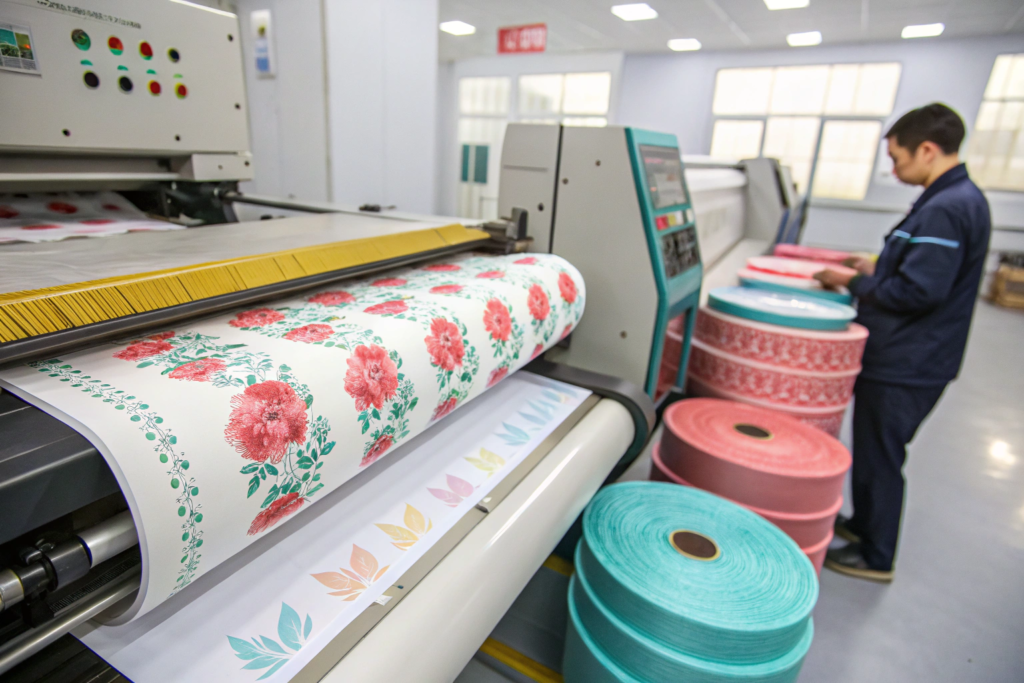
Digital printing has revolutionized the custom ribbon market. In the past, if you wanted a custom pattern, you had to pay for an engraved screen or a set of printing plates. The setup cost could be hundreds of dollars. This made small batch custom ribbon financially impossible for most boutique brands. Digital printing eliminates the screen entirely. Your artwork is sent directly from the computer file to the print heads. We can print as little as 100 yards of a custom design. This opens up a world of possibilities. You can test five different patterns in your online store without committing to 10,000 yards of each. You can create limited edition holiday bows. You can print your logo subtly along the ribbon tail. The digital process uses CMYK plus optional spot colors. This allows us to hit over 90 percent of the Pantone solid coated color gamut. The digital textile printing technology we use applies ink directly into the fabric fibers. The ribbon then passes through an inline heat fixation unit that cures the color instantly. For a hair bow factory, this means the ribbon is ready to cut and sew as soon as you receive it. There is no off-gassing waiting period. We also offer variable data printing on ribbon. This means each bow can have a unique name, a serial number, or a personalized message printed as part of the pattern. This is a powerful tool for personalized hair accessories that command a premium price.
When is rotary screen printing the better option for ribbon?
Digital printing is not always the right answer. If you have a proven, best-selling design that you reorder repeatedly in large quantities, rotary screen printing can reduce your per-yard cost significantly. The process uses cylindrical engraved screens. One screen per color. The ribbon passes under the rotating screen, and the ink is pumped through the engraved holes. The print is sharp, the color saturation is deep and consistent, and the production speed is much higher than digital. The initial screen engraving cost means this is not viable for orders under about 5,000 yards per design. But above that threshold, the economics flip in favor of screen printing. We recommend this for brands that have a signature stripe, a solid color with a small repeating logo, or a seasonal print that they know will sell out. The screen printing advantages include superior opacity on dark ribbons. Digital ink is slightly translucent. A white digital print on a navy ribbon will look slightly greyish. A rotary screen white print on navy ribbon is brilliantly opaque and pops dramatically. We maintain a library of screens for our long-term clients. Once the screen is made, reorders are fast and economical. We store the screens in a climate-controlled room to prevent warping. For a hair bow factory running a continuous production line, the cost savings of screen printing can be the difference between a good margin and a great one.
How Do You Ensure Print Quality and Color Accuracy on Narrow Ribbon?
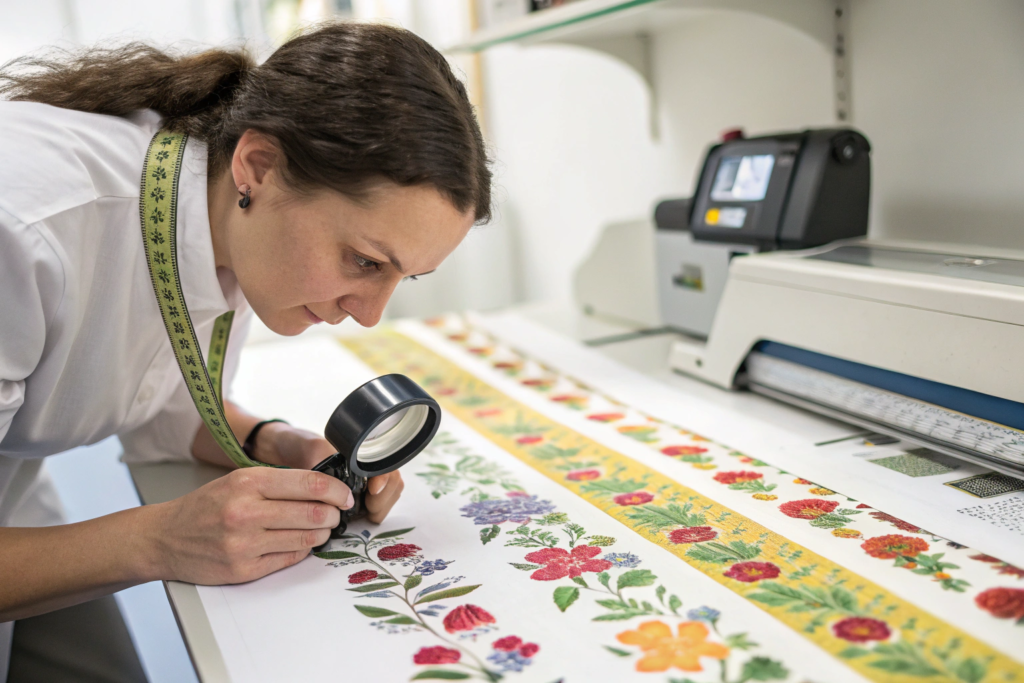
Printing on a wide bolt of fabric is forgiving. Minor registration errors, slight color shifts, or a little blurriness often disappear when the fabric is gathered or draped. Printing on a ribbon that is 5/8 inch wide is brutally unforgiving. A misalignment of half a millimeter is glaringly obvious. The pattern will look cut off on one edge and blank on the other. Small text or a delicate logo can become an illegible smudge. Quality control for narrow ribbon printing is a specialized discipline. It requires different equipment, different checkpoints, and a different mindset than general textile printing.
Our ribbon printing quality system is built on three pillars. Pre-press artwork preparation, real-time registration monitoring during the print run, and post-production sampling against the physical Pantone standard. We do not rely on the customer to catch a mistake. We catch it before the ribbon is even cut from the master roll. This proactive approach is what our hair bow factory clients value most. They ship their finished bows to retailers with confidence, knowing the branded ribbon will look exactly like the approved sample, every single time.
Why does registration control matter more on narrow ribbon?
Registration refers to how precisely each color layer aligns with the others and how precisely the pattern sits within the edges of the ribbon. On a 5/8 inch ribbon, a 0.5mm drift is visible to the naked eye. Your pattern will look like it is sliding off the fabric. We prevent this by using a web guiding system on our printing line. The ribbon passes through optical sensors that detect the exact edge position. Servo motors make micro-adjustments to the ribbon path to keep it perfectly centered under the print heads. The machine tracks the ribbon edge a hundred times per second. This technology is similar to the web guiding systems used in high-speed label printing. We also design the artwork with a safety margin. We do not place critical design elements like a logo within 1.5mm of the ribbon edge. Even with perfect registration, a slight fraying of the cut edge later in the bow-making process could cut into the print. We protect your design by engineering the artwork layout for the realities of textile manufacturing. Our pre-press team checks every file for edge safety before it is added to the print queue. This is the kind of detail you do not get from a supplier that simply prints a JPEG onto a ribbon and hopes for the best.
How do you match Pantone colors on different ribbon textures?
A color that looks perfect on a smooth satin ribbon will look completely different on a textured grosgrain, even if the exact same ink is used. Texture scatters light. A shiny satin surface reflects light directly back to the eye, making the color appear brighter and more saturated. A matte grosgrain surface diffuses light, making the same ink look flatter and slightly darker. We account for this during the color matching process. When a client gives us a Pantone number, we do not just mix the ink and print. We create a physical lab dip on the exact ribbon material they have chosen. We then measure that lab dip with a spectrophotometer under D65 daylight lighting conditions. If the measured color falls outside an acceptable Delta E tolerance, we adjust the ink formula and try again. We repeat this until the printed ribbon matches the Pantone standard as closely as the material allows. This color management process is documented and the final approved lab dip becomes the binding reference standard for the entire production run. We retain a physical copy and the digital spectral data. When you reorder six months later, we pull up that data and reproduce the exact same color. Consistency across repeat orders is the hallmark of a professional ribbon supplier. Your fall 2026 bows should match your fall 2025 bows perfectly.
What Are the Minimum Order Quantities and Lead Times for Custom Printed Ribbon?
This is the question that every brand owner asks within the first five minutes of our conversation. I understand why. You are running a business, not an art project. You need to know if this custom ribbon will tie up too much cash in inventory or if you can order in quantities that match your actual sales velocity. The era of "minimum order quantity of 10,000 yards or don’t bother calling" is over, at least in my factory. We have restructured our production workflow to accommodate both the small brand testing a new design and the established manufacturer placing a container-sized replenishment order.
For digital printing, our minimum order quantity is 100 yards per design per material. This is a true minimum, not a teaser price that triples when you actually place the order. For rotary screen printing, the minimum is 5,000 yards per design due to the screen engraving cost and the production setup time. Lead times are a function of the complexity of the artwork approval, the material availability, and the current production queue. But I can give you the standard benchmarks that we hit consistently for our hair bow factory clients.
How fast can you turn around a custom printed ribbon order?
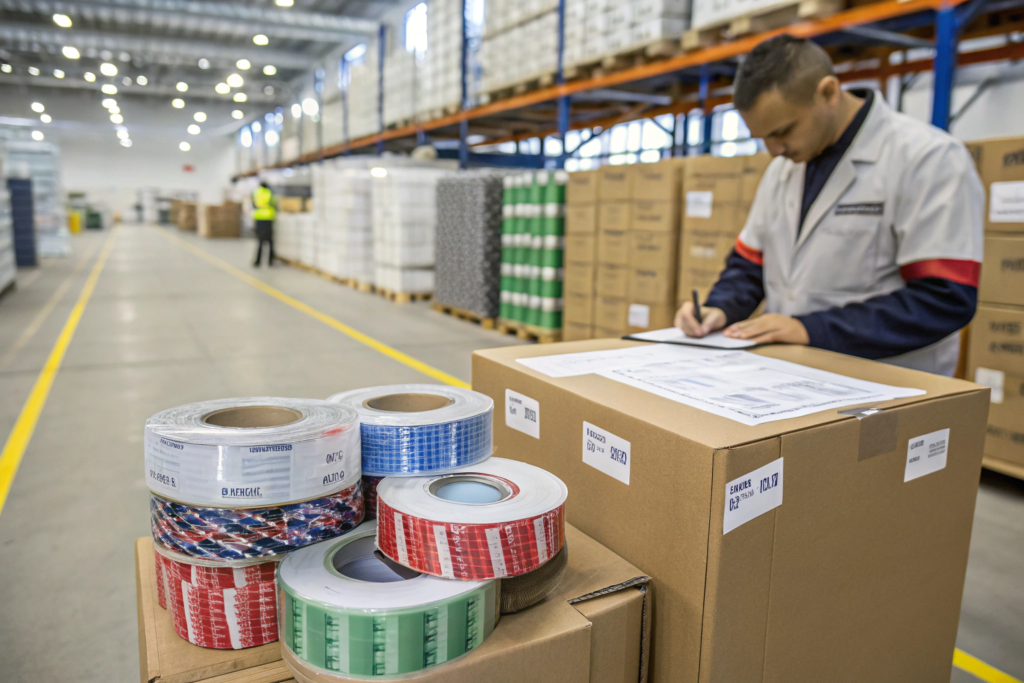
Speed is the currency of the fashion accessories market. If you see a rival brand’s rainbow stripe bow going viral on TikTok, you need your own version on the market in weeks, not months. Our standard lead time for a digital print order is 15 to 20 business days from artwork approval. This includes the lab dip creation if required, the production run, the heat setting, the slitting and rewinding onto individual rolls, and the final quality control inspection. Rush orders can be turned around in as little as 7 to 10 business days for a surcharge. We reserve a portion of our digital printing capacity specifically for rush orders from established clients. For screen printing, the lead time extends to 25 to 35 business days for a first order because of the screen fabrication process. Repeat screen orders are faster, typically 15 to 20 business days. These timelines depend on you providing print-ready artwork. If you send us a low-resolution screenshot from your phone, we will need extra time for our graphic designers to recreate the artwork as a vector file for printing. We offer artwork preparation services to help you get your design print-ready. Clear, high-resolution files are the single biggest factor you control to speed up your order.
What information do you need to provide an accurate quotation?
I can give you a ballpark price per yard over the phone, but for an accurate quotation that you can use for your own costing, I need six specific pieces of information. First, the ribbon material. Satin, grosgrain, velvet, organza, or cotton. Second, the ribbon width. Common sizes are 3/8", 5/8", 7/8", 1.5", and 2". Third, the print design. How many colors are in your pattern. Is it a repeating pattern or a placement print. Fourth, the target quantity. How many yards you want initially and what your projected annual volume looks like. Fifth, any special finishing requirements. Do you need the ribbon cut to specific lengths and heat-sealed on the ends. Do you need it spooled onto specific core sizes for your automated bow-making machinery. Sixth, your shipping destination and preferred method. Air freight is faster but more expensive. Sea freight is economical but takes weeks. We ship globally and handle all export documentation. Our international shipping process is streamlined and reliable. Once we have these details, our project manager Elaine can provide a formal quotation within one business day. The quotation will break down the tooling costs if any, the per-yard printing cost, the cost of the base ribbon material, and the freight estimate. Full transparency, no hidden surcharges.
Conclusion
Custom printed ribbon is not a commodity. It is the signature on your brand’s creative vision. A hair bow is a tiny canvas. The fabric, the print quality, the color accuracy, and the hand-feel all tell a story about your brand’s standards. A cheap, faded, peeling ribbon says your brand does not care about details. A vibrant, perfectly registered, luxuriously textured ribbon says your brand is worth the premium price.
We have explored the material options from glossy satin to rugged grosgrain, the printing techniques from flexible digital to cost-efficient rotary screen, the obsessive quality control that keeps tiny logos crisp on narrow widths, and the realistic lead times that respect your selling calendar. This is the complete picture of what it means to produce custom printed ribbon for the hair bow industry. It is a blend of art, chemistry, precision engineering, and reliable logistics.
If you are a hair bow factory or a brand looking to elevate your product with custom ribbon that genuinely reflects your identity, let’s have a practical conversation. We can review your design files, recommend the optimal material and printing method, and get a sample roll into your hands so you can feel the quality for yourself. Our Business Director Elaine manages our ribbon printing partnerships and can answer every technical and commercial question you have. Reach out to her directly at elaine@fumaoclothing.com. Your ribbon is the first thing the customer touches. Let’s make it unforgettable.