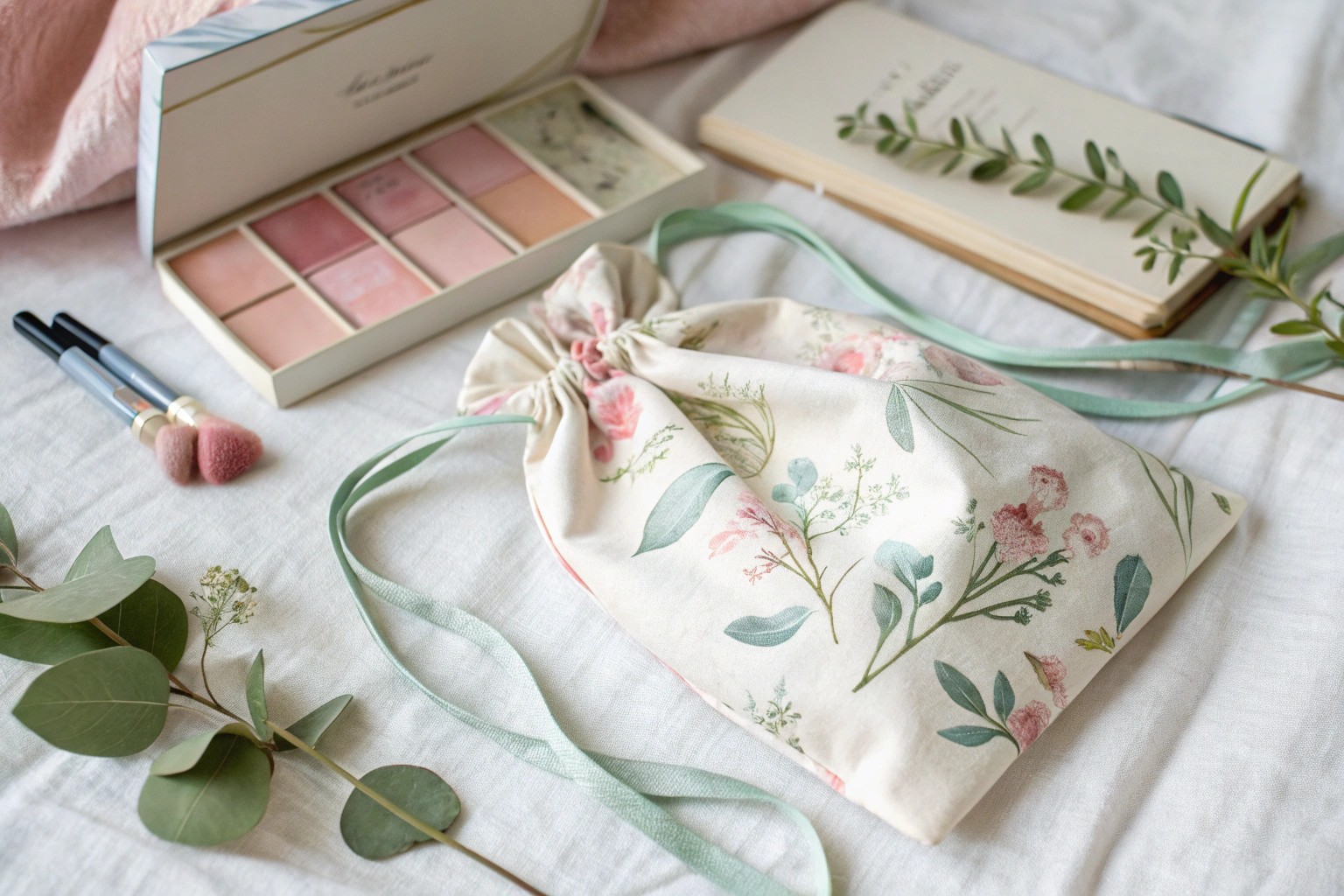
You have the design ready. A beautiful, minimalist floral print on organic cotton, with a matching satin drawcord. The bag will be the gift-with-purchase for your brand’s summer collection. You email a bag factory. The reply is a cold shower: "MOQ 5,000 units per print, 3 colorways minimum." You do not need 15,000 bags. You need 800 bags to cover the summer promotion. The factory is set up to supply promotional merchandise for pharmaceutical conventions, not curated accessory bags for a fashion brand. You are not their customer, and their minimum order quantity says so.
The minimum order for a custom printed drawstring bag as a fashion accessory in our factory is 300 units per design, with the option to split those 300 units across two different drawcord colors. This lower threshold is possible because we digitally print the fabric panels on-demand and sew the bags in a small-batch workflow, rather than screen-printing thousands of meters of fabric before cutting a single panel. The bag is treated as a soft accessory, not a disposable promotional item.
A drawstring bag for a fashion brand is not the same object as a giveaway backpack. It has a lining. The drawcord is a matched satin ribbon, not a rough cotton rope. The seams are French-seamed, not overlocked. These details place the product in a different manufacturing category with a different MOQ logic. I want to explain exactly how we structure small-batch production for these elevated accessory bags, what customization options are available at 300 units, and how the digital printing technology makes low minimums economically viable.
Why Do Traditional Bag Factories Set High Minimums for Printed Bags?
A traditional cut-and-sew bag factory is a volume operation. Its profitability depends on spreading the fixed setup costs, screen engraving, dye vat preparation, cutting die fabrication, across thousands of identical units. When a factory tells you the MOQ is 5,000 units, they are not being difficult. Their equipment physically cannot produce a smaller batch economically.
Traditional factories set high minimums because rotary screen printing requires engraving a cylindrical screen that costs $300 to $500 per color, and the dye paste for a single print run must be mixed in a minimum volume large enough to fill the printing trough. Any leftover dye paste is washed down the drain as chemical waste. The factory must run at least 3,000 to 5,000 units just to consume the minimum dye batch and recover the screen engraving cost.
A fashion accessory bag, by contrast, often uses digital pigment printing. A digital textile printer jets pigment ink directly onto the fabric from a print file, with no screens, no dye troughs, and no minimum ink volume. The setup cost is effectively zero. The per-meter ink cost is slightly higher than rotary printing, but on a 300-unit run of custom bags, the total cost is lower because there is no $500 screen engraving fee to amortize.
How does the cutting die cost affect the minimum order for a bag?
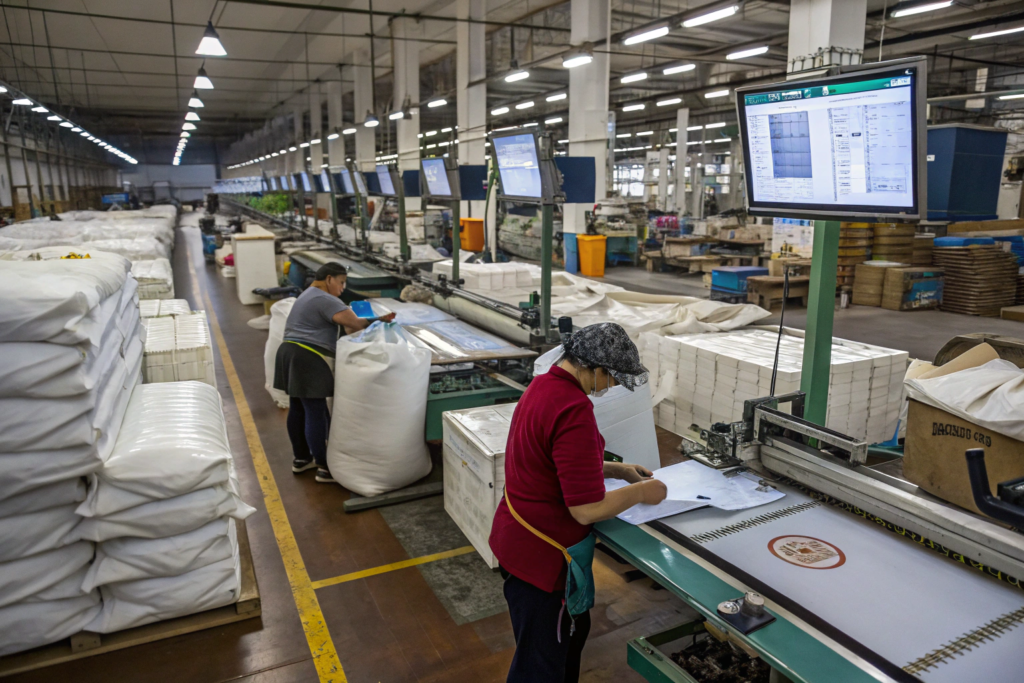
A traditional factory uses a steel rule cutting die, a plywood board with embedded steel blades bent into the exact shape of the bag panels. This die costs $150 to $300. The factory must cut thousands of panels with that die to justify the cost per unit. We use a digital laser cutter or a CNC oscillating knife cutter for small batches. The cutting path is programmed directly from the CAD file. There is no physical die. The laser cuts 300 panels for the same setup time as 3,000, making small batches economically viable.
What is the difference in seam finishing between a promotional bag and a fashion accessory bag?
A promotional bag typically has a single overlocked edge seam, fast and cheap but raw and prone to fraying. A fashion accessory bag requires a French seam or a bound seam, both of which fully enclose the raw fabric edge inside a clean, self-finished seam. This requires two passes on the sewing machine instead of one and a higher operator skill level. Our small-batch sewing team is trained for these premium seam finishes.
What Digital Printing Options Exist for Small-Batch Drawstring Bags?
The print quality on a fashion accessory bag must meet boutique standards. The colors must be vibrant, the edges crisp, and the print must survive repeated use without fading. Early digital textile printing struggled with colorfastness and hand feel. The 2026 generation of digital pigment inks has closed that gap.
Our small-batch drawstring bags are printed using a production-grade digital textile printer with 12-color pigment ink channels, providing a wide color gamut that covers 95% of the Pantone TCX color space. The pigment ink bonds to the cotton or linen fiber via a heat-cured polymer binder. The print feels soft and breathable with no plasticky hand feel. The colorfastness to washing meets a grey scale rating of 4.5, suitable for a washable accessory that a consumer will use repeatedly.
We print on-demand. When your 300-unit order is confirmed, we print exactly the fabric needed, roughly 75 meters for 300 small bags, with a 3% waste allowance. There is no leftover printed fabric. This on-demand model eliminates the inventory waste that plagues traditional screen-printed minimums.
Can the digital print reproduce watercolor textures and photographic images?
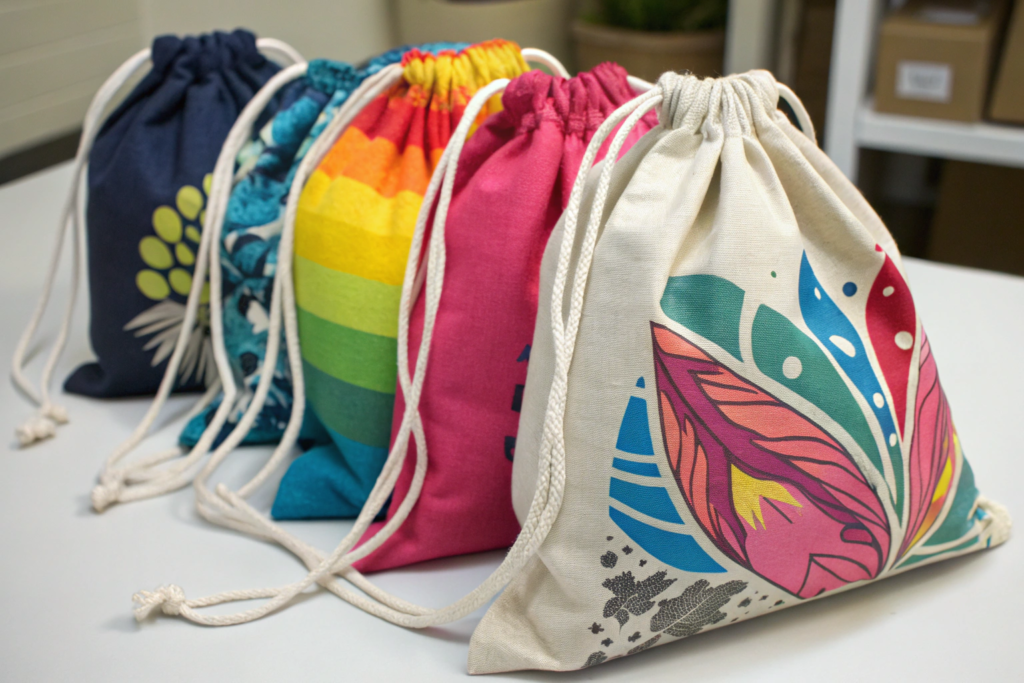
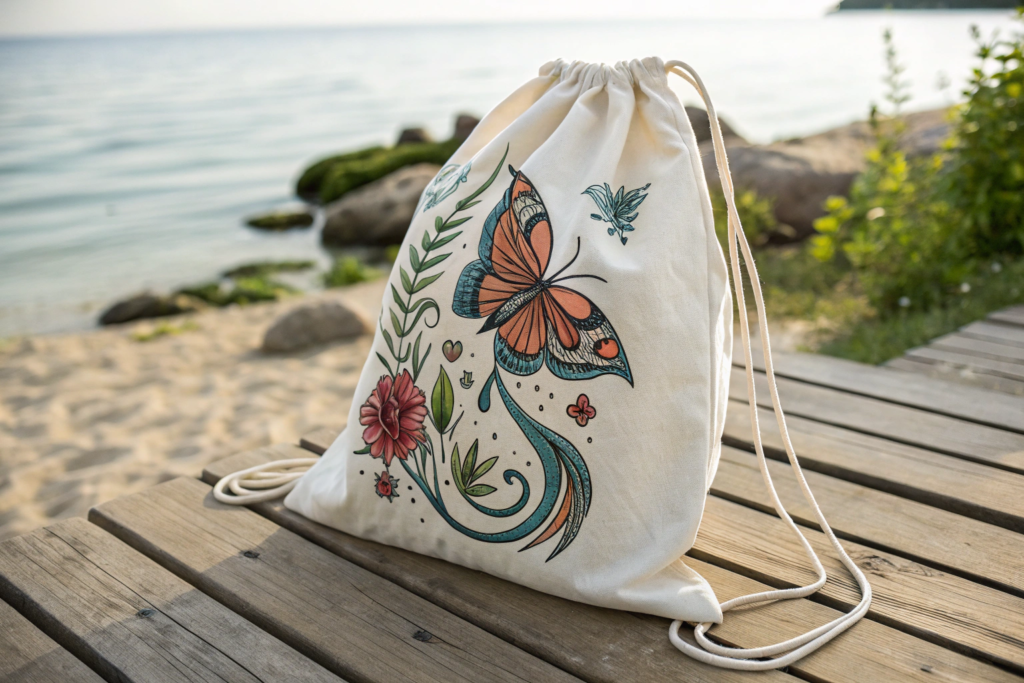
Yes, and this is the strongest advantage of digital over screen printing for small-batch fashion bags. A watercolor floral with soft, bleeding edges and subtle tonal washes is impossible to reproduce accurately with flat, solid spot-color screens. The digital inkjet head prints variable droplet sizes, reproducing photographic gradients and watercolor textures with high fidelity.
Does digital printing work on linen and textured fabrics?
Yes. The printer head height adjusts automatically to accommodate fabric textures up to 1 millimeter thick. We have successfully printed on slubby linen, organic cotton canvas, and silk-cotton blends. The textured fabric adds a tactile dimension to the print that enhances the handcrafted, artisanal feel of the accessory bag.
What Drawcord, Lining, and Hardware Options Elevate a Simple Bag to an Accessory?
The fabric and print are the face of the bag. The drawcord, the lining, and any hardware are the details that communicate quality. A cheap white cotton rope and a raw interior scream "free giveaway." A matched satin ribbon drawcord and a lined interior whisper "gift with purchase from a premium brand."
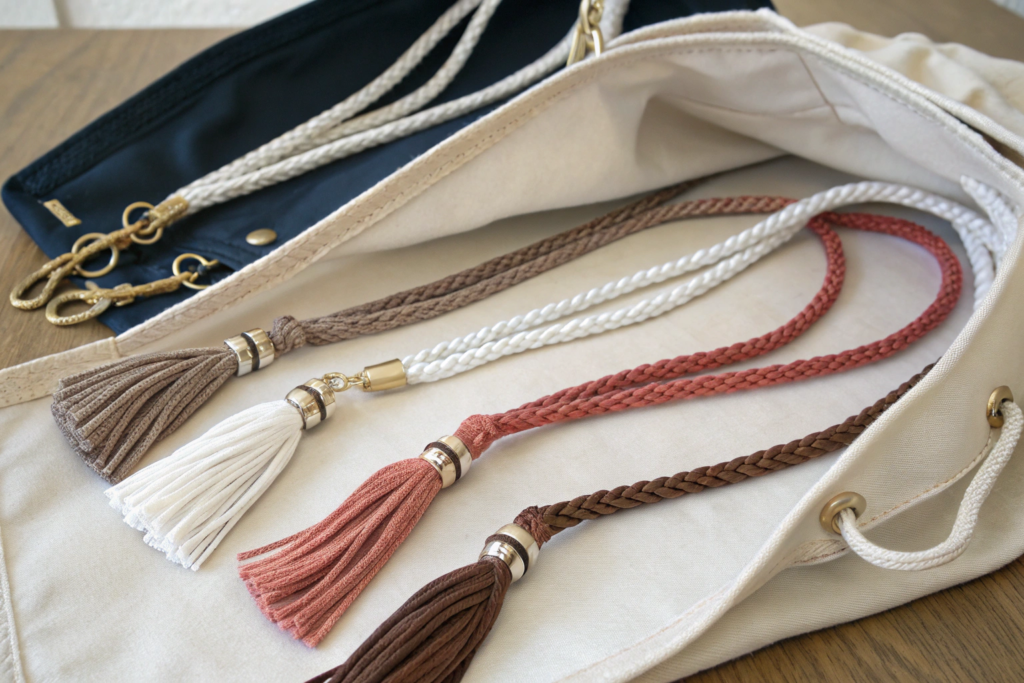
We offer drawcord options in flat satin ribbon, twisted rayon cord with a soft sheen, or a braided cotton cord in a natural or dyed finish. The cord ends can be finished with metal aglets, knotted tassels, or a simple overhand knot. The bag can be fully lined with a contrasting or matching fabric, with the lining attached via a clean, enclosed French seam so no raw edges are visible inside or outside the bag.
The satin ribbon drawcord is currently the most requested option for fashion accessory bags. The ribbon is 15 millimeters wide, double-faced satin, with a soft, smooth hand feel and a subtle luster. It threads through a channel at the bag opening, creating a gentle, gathered closure. The ribbon ends are heat-cut on a diagonal to prevent fraying.
Can the drawcord be custom printed with a brand name or logo?
Yes, we can print a repeating brand logo or a single placement logo onto the satin ribbon using a heat-transfer process that bonds the pigment to the polyester satin without altering the ribbon’s soft hand feel. The logo is printed before the ribbon is cut and threaded, ensuring perfect registration.
How is the lining attached without visible seam allowances?
The outer bag and the lining are sewn separately, then placed right sides together and stitched around the opening channel. The bag is then turned right-side out through a small opening in the lining, which is then hand-stitched closed. This "bagging out" technique fully encloses all seam allowances between the outer fabric and the lining. The result is a perfectly clean finish with no visible raw edges.
What Artwork File Setup Produces the Best Digital Print Result on a Bag?
The digital file you send determines the print quality on the physical bag. A low-resolution JPEG pulled from a website will print with visible pixelation. A correctly prepared vector or high-resolution raster file will print with crisp, sharp edges.
The best artwork file for a digital print on a drawstring bag is an Adobe Illustrator .ai or .eps vector file for logos and graphic designs, or a 300 DPI Photoshop .psd or .tiff file at the actual print size for photographic images and watercolor textures. All colors must be specified as Pantone TCX references for accurate matching. The file must include a 5-millimeter bleed beyond the panel cut line, and all text must be converted to outlines.
We provide a digital template for the bag panels, a flat rectangle with the cut lines, the fold lines, and the bleed area clearly marked in separate layers. You drop your artwork into the template, save it, and send it back. We print a test swatch on the actual fabric, photograph it under D65 daylight, and email you the photo for color approval before printing the full batch.
How do we ensure the print registers correctly relative to the drawcord channel?
The print template includes registration marks outside the cut area. The laser cutter’s optical sensor reads these registration marks and aligns the cut path precisely to the printed image. The drawcord channel fold line is printed as a subtle dashed guide on the fabric interior, invisible from the outside, ensuring the channel is sewn exactly where the designer intended.
What is the color accuracy tolerance for a digital print run?
We measure the printed color on the fabric swatch using a spectrophotometer and calculate the Delta E value against the Pantone TCX reference. Our standard tolerance is a Delta E below 2.0, imperceptible to the casual viewer. If the Delta E exceeds 2.0, we adjust the color profile and print a new swatch before proceeding.
Conclusion
A custom printed drawstring bag as a fashion accessory is produced under a different set of minimums and quality standards than a promotional giveaway bag. Digital printing eliminates the screen engraving cost. Laser cutting eliminates the steel rule die cost. On-demand printing eliminates leftover inventory waste. The result is a minimum order of 300 units with satin ribbon drawcords, full linings, and French seams, a bag that belongs in a boutique gift box, not a convention swag pile.
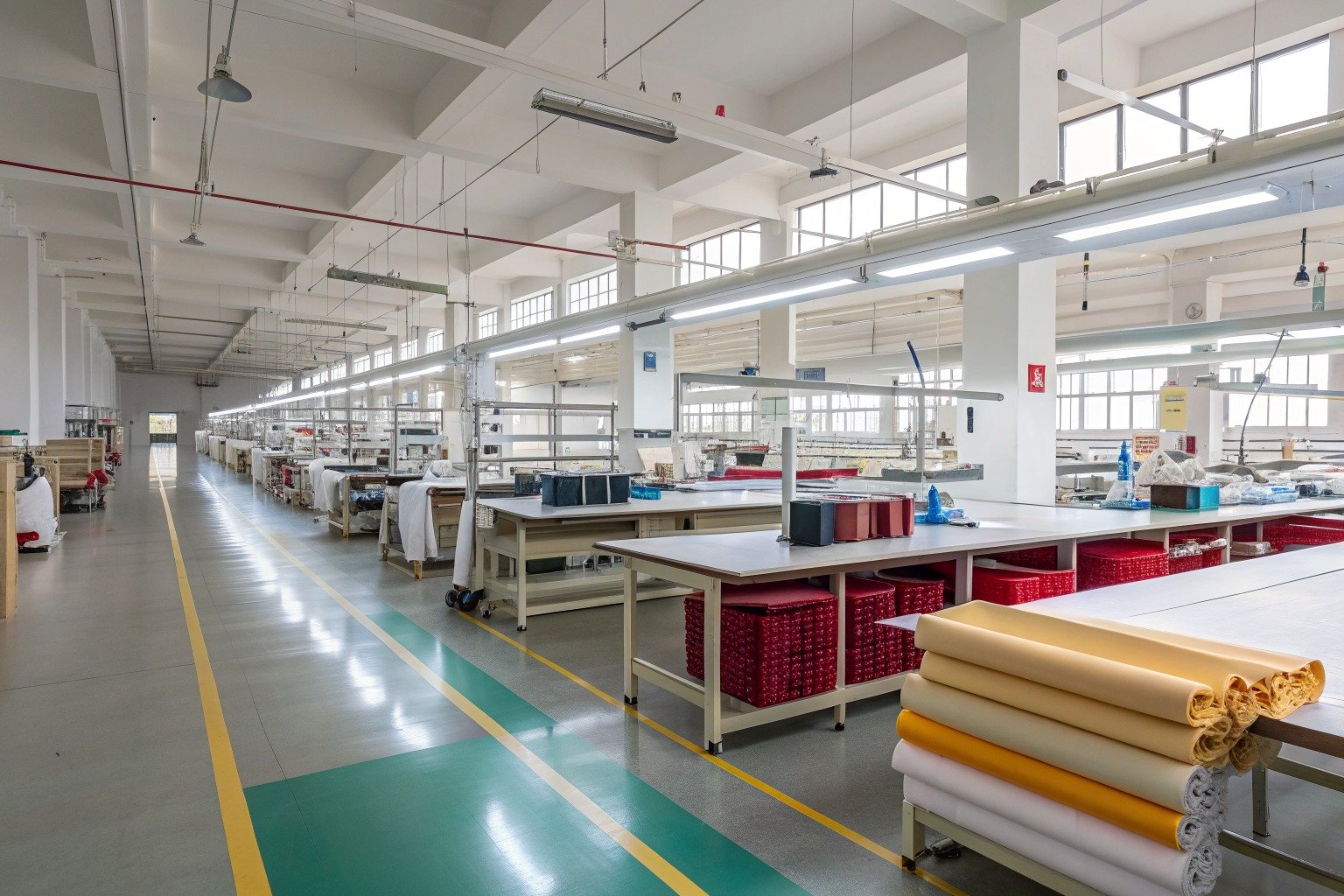
Our Zhejiang facility runs a dedicated small-batch accessory bag line with digital print capability, a laser cutter, and a sewing team trained for fine seam finishes. We source organic cotton, satin ribbon, and metal aglets from certified suppliers.
If you are planning a custom drawstring bag for your next collection launch, promotion, or retail gift program, contact our Business Director, Elaine. She will send you our digital print template, a sample bag with your chosen fabric and drawcord, and a quotation for your specific quantity. Write to her at elaine@fumaoclothing.com. Let’s create a bag your customers will keep, not toss.