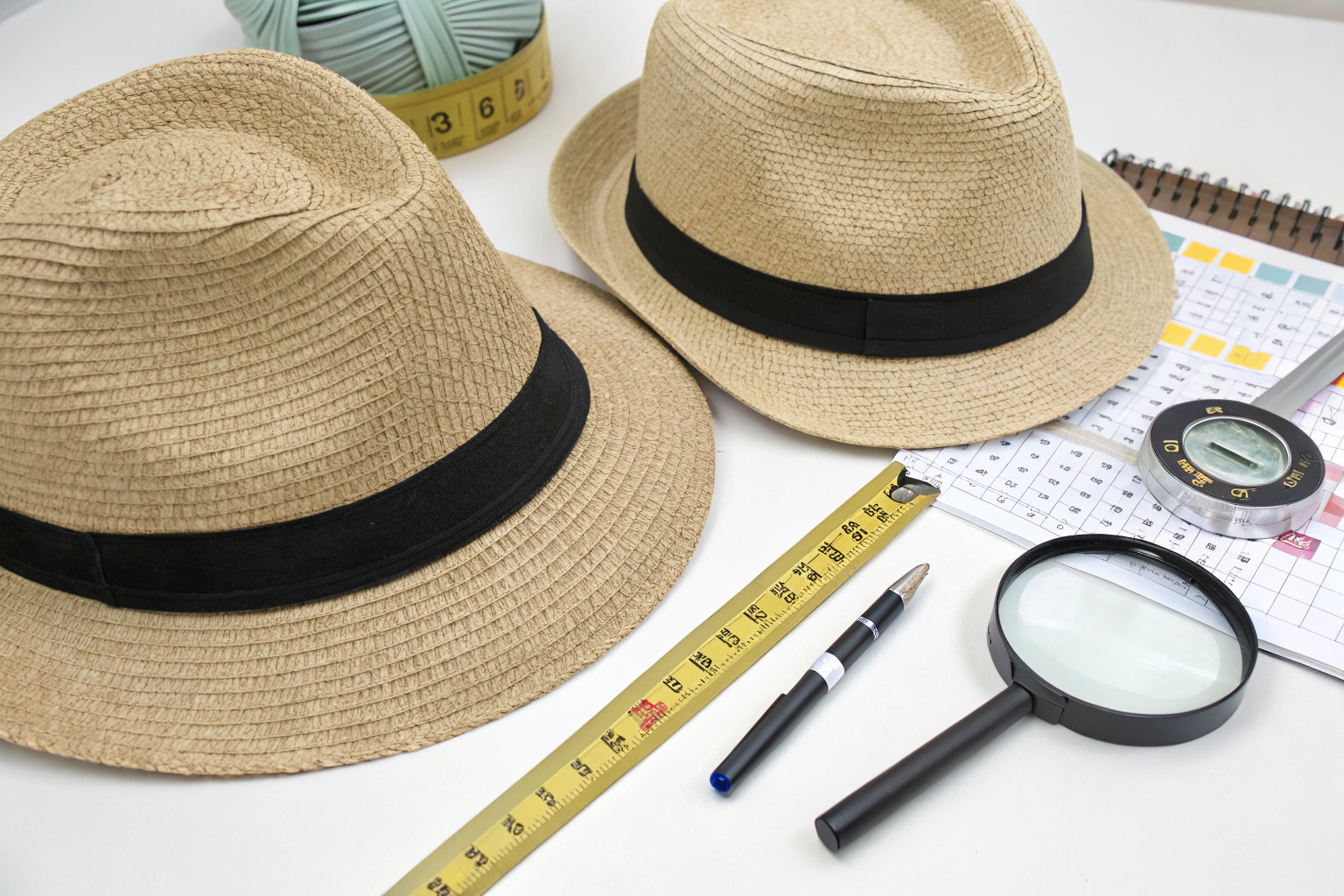
You have a hat in your hand. It’s a competitor’s straw fedora that is selling incredibly well. The shape is perfect. The color of the straw is just right. The ribbon has a specific, subtle texture. You want to create your own version. Not a cheap knock-off, but a product of equal or better quality that captures the same aesthetic. You send the hat to a few factories in China. Some send back samples that are vaguely similar, but the brim is too wide, the crown is too short, and the color is off. They just don’t "get" the nuances. You are not just asking for a straw hat. You are asking for a precise piece of reverse engineering that requires a specialized eye and a deep understanding of hat construction.
Yes, AceAccessory can match a competitor’s straw fedora sample with an exceptionally high degree of accuracy. This is achieved not through simple visual copying, but through a systematic process of deconstruction and analysis. We meticulously measure every dimension, identify the specific straw material and weave, match the color and texture of all trims, and analyze the internal construction to create a technical blueprint that allows us to faithfully reproduce the hat’s exact silhouette and character.
I manage AceAccessory in Zhejiang, and we specialize in this kind of detailed, forensic product development. Matching an existing sample is one of the most common, and most demanding, requests we receive. It requires a completely different skillset than creating a design from a sketch. Let me explain exactly how we approach this challenge to ensure the final product is a true match.
What Is the Step-by-Step Process for Matching a Straw Fedora Sample?
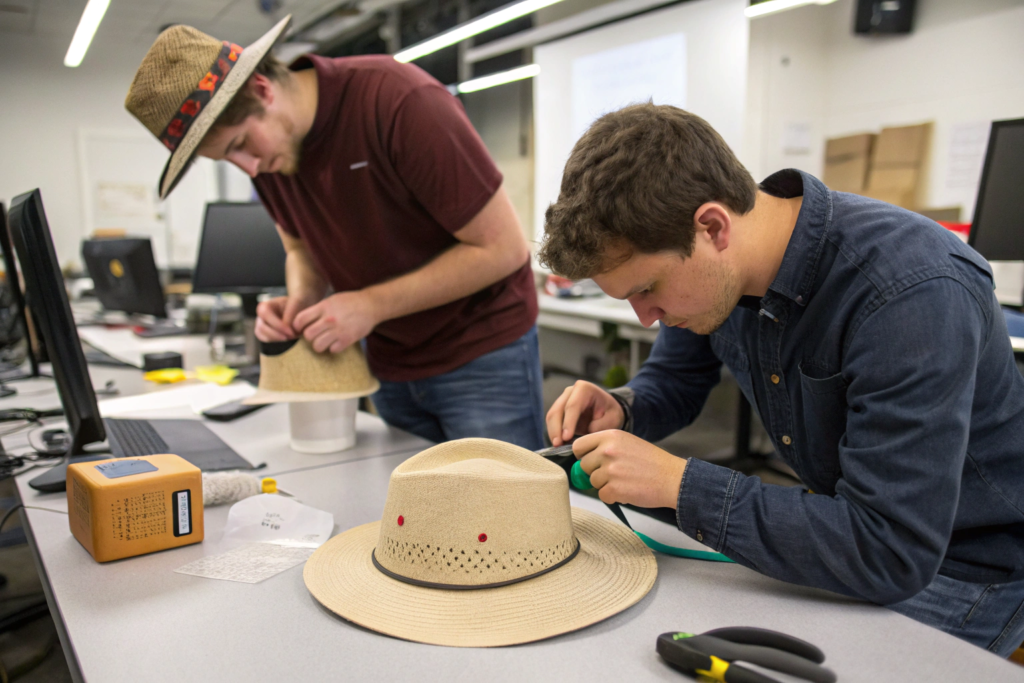
Matching a physical sample is a multi-step, forensic process that goes far beyond taking a few photos. It is a systematic deconstruction of the hat to understand every single component and how they work together. When we receive your competitor’s sample at AceAccessory, here is exactly what happens. Step one is Dimensional Analysis. Our pattern maker takes a complete set of precise measurements: crown height, brim width at multiple points, crown circumference, and the angle and depth of the pinch. Step two is Material Identification. We analyze the straw itself. Is it a fine-gauge paper braid? A natural raffia? What is the weave pattern? What is the color? We use a spectrophotometer to get an exact color reading. Step three is Trim Analysis. We examine the hatband. What is the material? The width? The exact color and texture? How is it attached? We do the same for the inner sweatband and any other trim. Step four is Construction Analysis. We look inside. How is the sweatband sewn in? Is there a liner? How is the brim edge finished? Step five is Creating the Tech Pack. All of this data is compiled into a detailed technical specification sheet, which becomes the blueprint for creating our sample. This systematic deconstruction and analysis process for matching a straw hat sample is the foundation of an accurate match.
How Do You Ensure the Crown Shape and Brim Angle Are Exact?
This is where many factories fail. They may get the material close, but the silhouette is "off." The specific shape of a fedora’s crown—the height, the taper, the sharpness of the pinch—and the exact angle of the brim are what give the hat its character. These shapes are created by pressing the straw body over a heated wooden or aluminum hat block. If the factory does not have the exact block shape, the hat will not match. We have an extensive library of hat blocks, with hundreds of variations in crown shape, height, and brim angle. Our block maker can also modify an existing block or, for a large enough program, create a new custom block based on the precise measurements taken from your sample. This importance of the correct hat block shape for matching crown and brim silhouette is the secret to a true match.
How Do You Match the Color of the Straw and the Hatband?
Color matching by eye is subjective and unreliable. The lighting in our factory is different from the lighting in your office. We use a scientific approach. A spectrophotometer is a device that measures the precise color of a surface and provides an objective, numerical readout. We take readings of the straw color and the hatband color from your sample. We then use these readings to formulate a dye recipe for a new batch of straw, or to select the closest matching ribbon from our extensive library. We provide a physical lab dip or swatch for your final approval. This using a spectrophotometer for objective color matching of straw and trims eliminates guesswork.
What Are the Most Common Challenges in Matching a Straw Hat?
Even with the most meticulous process, some aspects of matching a straw hat present unique challenges. It is important to be aware of these to set realistic expectations. The most common challenge is matching the exact straw material. A hat made from a specific, vintage, or proprietary paper braid weave that is no longer in production can be difficult to replicate with 100% fidelity. We can get extremely close, often 95-98%, by sourcing a very similar weave from our network of suppliers. Another challenge is matching a specific dye lot. Natural straw materials, especially raffia, have inherent variations in color. An exact match to a specific hat made six months ago may be impossible due to these natural variations. The goal is a commercially acceptable match that is visually indistinguishable. We are always transparent about these inherent limitations. This challenges in matching vintage or proprietary straw weaves and natural material variations is part of an honest conversation.
Can You Match the "Hand Feel" or Texture of the Straw?
Yes, this is a critical part of the analysis. The hand feel—whether the straw feels stiff and smooth, soft and pliable, or rough and rustic—is a key characteristic. We assess the hand feel of the sample and communicate this to our material suppliers. We can specify a "soft wash" finish on a paper braid to make it more pliable, or select a raffia with a specific coarseness. We provide material swatches for you to touch and approve. This matching the tactile hand feel and finish of straw materials is a key qualitative detail.
What If a Specific Trim on the Sample Is Unavailable?
Occasionally, a specific ribbon or a unique buckle on a hatband may be a proprietary item or from a limited production run. If we cannot source an exact match, we will do two things. First, we will present you with the closest possible alternative from our extensive library, showing you a side-by-side comparison. Second, for a large enough program, we can explore having the trim custom-made to match the sample. We are transparent about availability and work with you to find the best solution. This sourcing alternatives for unavailable or proprietary trims on a sample hat is a collaborative problem-solving process.
How Do You Ensure the Internal Construction Matches the Sample?
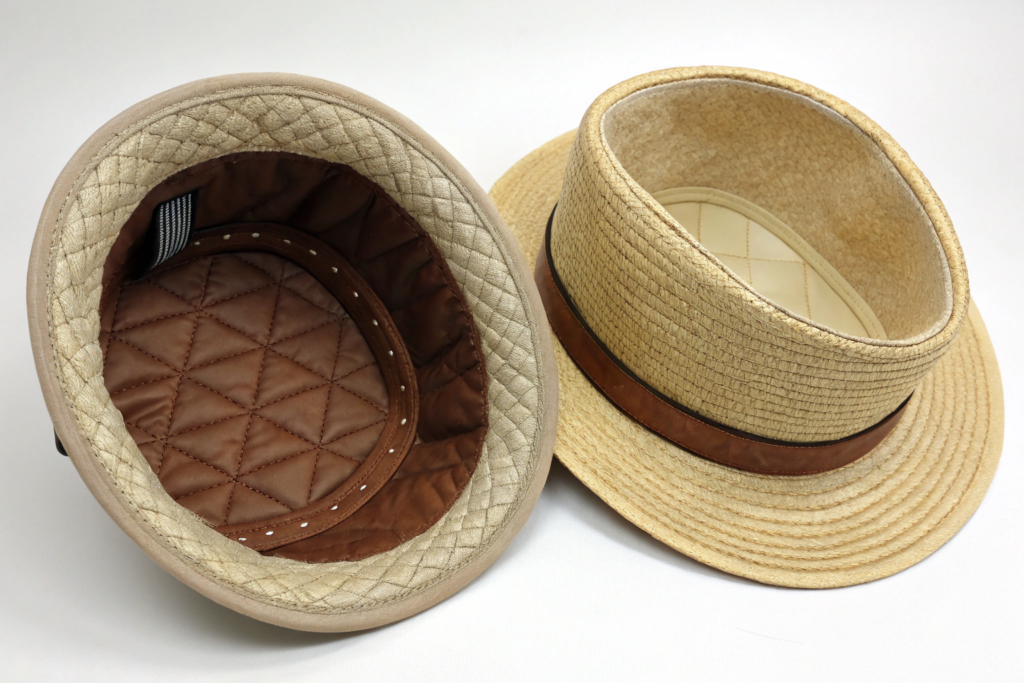
A true match goes beyond the exterior. The internal construction—what the customer feels when they put the hat on—is a crucial part of the quality and comfort equation. We carefully examine the interior of the sample. What type of sweatband is used? Is it a simple cotton twill, a soft grosgrain, or a padded leather? How is it sewn in? Is there a full lining? Is it a simple polyester, a quilted satin, or unlined with taped seams? Are there any interior labels or tags? We replicate these details precisely in our sample. A hat that looks identical on the outside but has a scratchy, cheap interior will never feel like the premium original. This replicating internal construction details sweatband lining and labels is essential for a complete match.
Can You Replicate a Specific Sweatband Material and Attachment?
Yes, absolutely. The sweatband is a key comfort and quality touchpoint. We can match the material—cotton, grosgrain, elastic, leather, or faux leather. We can match the width. And we can match the attachment method, whether it is a simple stitch, a folded and stitched seam, or a more complex "reeded" construction found in higher-end hats. This attention to detail ensures the hat feels identical on the head. This matching sweatband materials and attachment methods for hat samples is a detail we never overlook.
How Do You Replicate the Weight and Balance of the Original Hat?
The overall weight and balance of a hat contribute to how it feels and wears. A hat that is significantly heavier or lighter than the original will feel different. By carefully matching the straw material and weight, the thickness of the sweatband, and the inclusion or exclusion of a liner, we ensure that our reproduction has a very similar overall weight and balance to the sample. This is a subtle but important factor in creating a true match. This matching the overall weight and balance of a straw hat is part of our holistic approach.
What Is a Realistic Expectation for an "Exact" Match?
It is important to have a clear and honest conversation about what "exact" means in the context of manufacturing. A perfect, 100% atom-for-atom replica is not a realistic goal, especially when dealing with natural materials like straw and leather. There will always be minute, imperceptible variations. The realistic and commercially acceptable goal is a match that is visually and tactilely indistinguishable from the original to the end consumer. When your customer holds our reproduction next to the original, they should not be able to tell which is which without looking for a hidden label. That is the standard we aim for and consistently achieve. We are transparent about the process and provide you with pre-production samples for your own side-by-side comparison and final approval. This setting realistic expectations for an exact match in apparel and accessory manufacturing is the foundation of a successful project.
How Many Sampling Rounds Are Typically Needed for a Match?
For a complex match like a straw fedora, you should realistically plan for two rounds of sampling. The first sample, based on our initial deconstruction and analysis, will be very close, likely 90-95% of the way there. You will review it, wear it, and compare it side-by-side with your original. You will provide specific, targeted feedback. For example, "The crown height is perfect, but the brim needs to be 0.5cm wider," or "The straw color is a touch too warm. Can we cool it down slightly?" The second sample will incorporate these precise adjustments and is almost always the final, approved version. This typical number of sampling rounds for a competitive product match helps with timeline planning.
Can You Improve Upon the Original Sample?
Absolutely. This is where our expertise adds value beyond simple copying. While analyzing the competitor’s sample, we may identify a weakness. Perhaps the sweatband stitching is prone to unraveling. Perhaps the brim lacks structure and flops too easily. Perhaps a higher-quality ribbon could be used for a similar cost. We will proactively bring these observations to you and suggest improvements. The goal is not just to match the competitor, but to create a better product for your brand. This identifying and suggesting improvements to a competitor’s sample during the matching process is a key value-added service.
Conclusion
Matching a competitor’s straw fedora is a sophisticated form of reverse engineering that demands a factory with a unique blend of forensic attention to detail, deep material knowledge, and specialized hat-making craftsmanship. It is not a task for a generalist factory. It requires a partner who understands that the secret to a true match lies in the millimeter of the brim width, the precise curve of the hat block, and the subtle texture of the sweatband.
At AceAccessory, this meticulous, analytical approach to product development is one of our core strengths. We treat your competitor’s sample not as a product to be crudely imitated, but as a technical blueprint to be decoded and mastered.
If you have a straw fedora you want to match—or improve upon—and are looking for a factory partner with the specialized skills to do it right, I encourage you to contact our Business Director, Elaine. She can discuss the process in more detail and provide a timeline and cost estimate. You can email Elaine at: elaine@fumaoclothing.com. Let us show you how we can turn your competitor’s hat into your next bestseller.