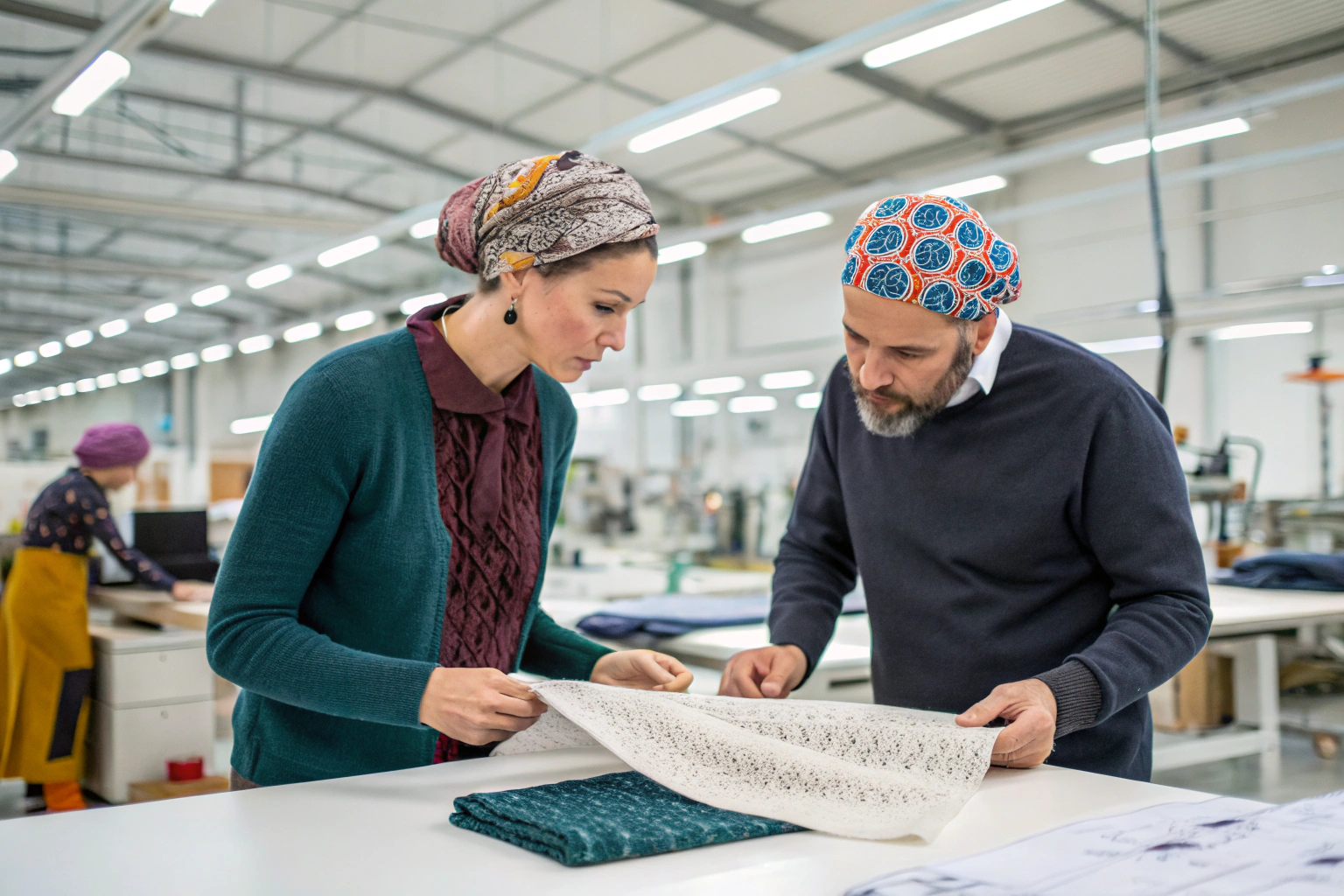
I have been manufacturing knit accessories in China for over 15 years. In that time, I have seen factories that are flexible and factories that are rigid. A knit hat factory is set up to make hats. Round shapes. Closed tops. Headwraps are different. They are flat. They have ties. They may have different dimensions. I remember a client who wanted a headwrap. She contacted a hat factory. They said no. They only made hats. She came to me. I said yes. We adjusted our machines. We trained our workers. We made her headwraps. That experience taught me that not every hat factory can make headwraps. But some can. Today, I want to share how to get a Chinese knit hat factory to produce headwrap styles.
To get a Chinese knit hat factory to produce headwrap styles, you need to find a factory with flat knitting machines, experience with non-hat shapes, and a flexible mindset. Headwraps are not hats. They require different patterns, different dimensions, and different finishing. A factory that only makes round hats may not be able to switch. A factory with flat knitting machines can. You also need to provide clear specifications. Length, width, taper, tie style. Provide a sample or a detailed sketch. Be prepared for a sample run. The factory may need to experiment. At Shanghai Fumao, we have made headwraps for many clients. We know the process.
You might be thinking, "A headwrap is just a tube. How hard can it be?" The difference is in the details. A hat has a crown. It decreases at the top. A headwrap is flat. It may have ties. The knitting pattern may be different. At AceAccessory, we have the equipment and the experience to make headwraps. Let me walk you through the process.
What Are the Key Differences Between Hats and Headwraps?
You cannot use a hat pattern to make a headwrap. I have learned the differences.
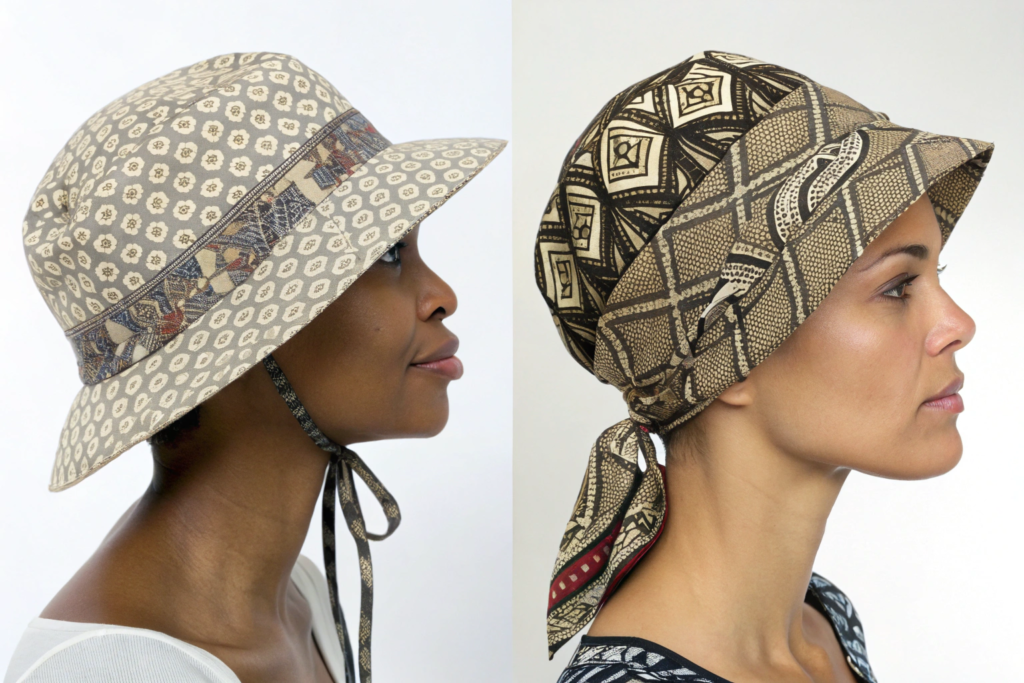
The key differences between hats and headwraps are shape, dimensions, and finishing. A hat is round. It has a crown that decreases to a closed top. A headwrap is flat. It is a rectangle or a tapered rectangle. A hat has a brim or a folded edge. A headwrap has ties or a slit. A hat is typically made on circular knitting machines. A headwrap can be made on flat knitting machines. The knitting pattern may also differ. A headwrap may need a tighter knit to stay in place. A hat can be looser. Understanding these differences is the first step.
I want to share a story about a client who sent a hat pattern for a headwrap. The factory tried to use it. The headwrap came out curved. It did not lie flat. The client had to redesign. Now, she uses a flat pattern.
What Knitting Machines Are Best for Headwraps?
Flat knitting machines are best. They knit a flat panel. The panel can be cut and sewn. Circular knitting machines knit a tube. A tube can be used for a headwrap, but it may not lie flat. We use flat knitting machines for headwraps.
What Dimensions Should You Specify?
Length. How long from end to end? Width. How wide is the main body? Taper. Does it narrow at the ends? Tie length. How long are the ties? These dimensions are critical. We provide a headwrap dimension guide.
How Do You Find a Factory That Can Make Headwraps?
Not every knit hat factory can make headwraps. You need to ask the right questions. I have learned to look for flat knitting machines and flexibility.
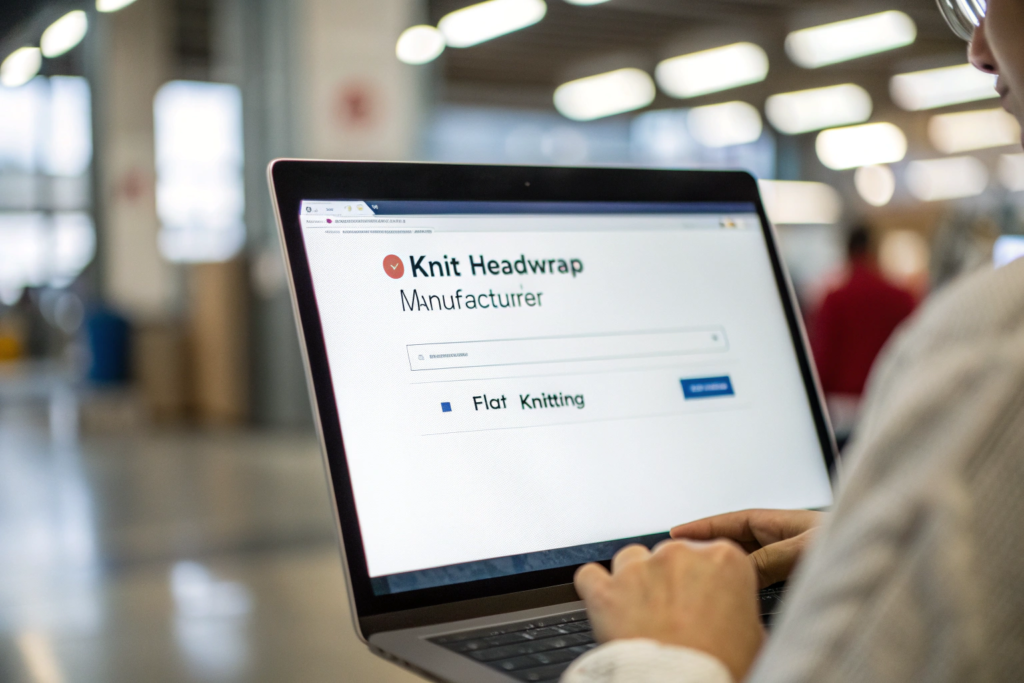
To find a factory that can make headwraps, look for those that mention flat knitting machines. Circular knitting machines are for hats. Flat machines are for scarves, headwraps, and other flat items. Ask the factory: "Do you have flat knitting machines?" "Have you made headwraps before?" "Can you share a sample?" Also look for flexibility. A factory that only produces standard hats may not be willing to adapt. A factory that does custom work is more likely to help. Alibaba is a good starting point. Search for "knit headwrap manufacturer" or "flat knit accessories."
I want to share a story about finding a factory. A client searched for "knit hats." She found many factories. She asked if they could make headwraps. Most said no. One said yes. It had flat knitting machines. She worked with that factory. The headwraps were perfect.
What Questions Should You Ask a Potential Factory?
Do you have flat knitting machines? Have you made headwraps before? Can you send a sample? What is your MOQ? What is your lead time? These questions will help you evaluate.
What Are Red Flags?
The factory says "yes" without asking questions. They have no samples. They cannot explain their process. They only have circular machines. These are red flags.
How Do You Provide Specifications for a Headwrap?
Clear specifications prevent mistakes. I have learned to be detailed.
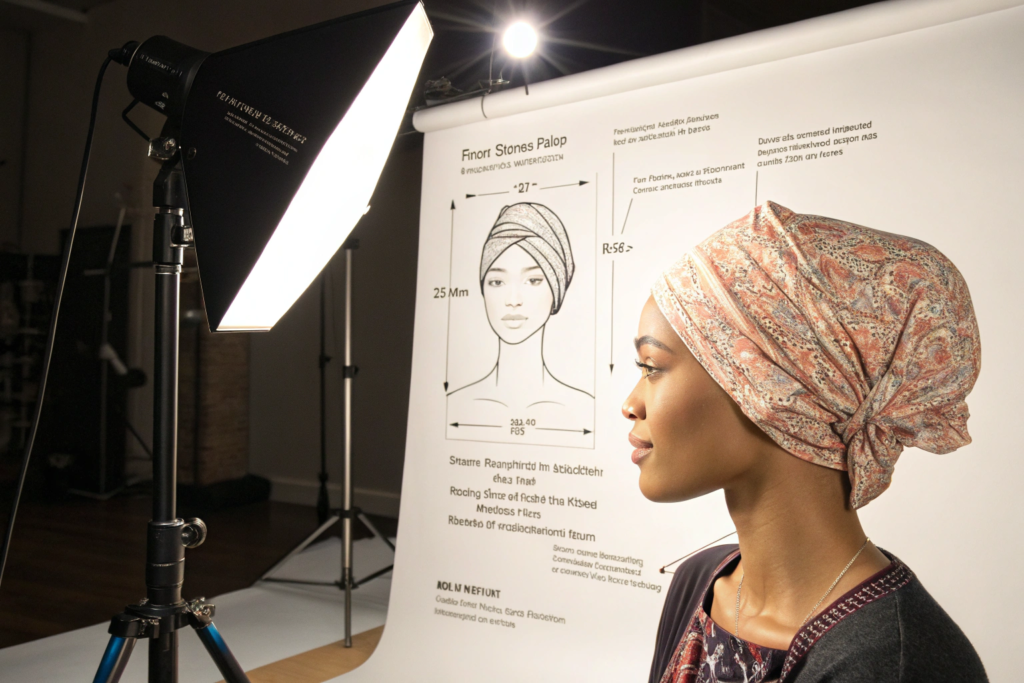
Provide clear specifications for your headwrap. Include the overall length. From tie end to tie end. Include the width of the main body. Include the taper. Does the width narrow at the ends? Include the tie length. How long are the ties? Include the stitch type. Rib knit? Jersey knit? Include the yarn type. Acrylic? Wool? Cotton? Include the color. Pantone number or physical swatch. Include a sample if possible. A physical sample is the best specification. If you cannot provide a sample, provide a detailed sketch with measurements.
I want to share a story about specifications. A client provided a sketch with all measurements. The factory followed it exactly. The headwraps were perfect. No back and forth. The clear specs saved time.
What Is the Best Stitch for a Headwrap?
Rib knit is best. It has elasticity. It stays in place. Jersey knit is smooth. It is less elastic. It may slip. For a headwrap, rib knit is recommended. We offer rib knit headwraps.
How Do You Specify Taper?
A taper refers to the gradual narrowing of a headwrap as it extends from its central point to its tied ends, creating a sleek, elongated silhouette that flatters the contours of the head. To define this taper precisely, one must first specify the width at the center—where the headwrap sits most prominently, often spanning the widest part of the forehead or crown, providing a full, voluminous base that feels soft and secure against the skin. Then, the width at the tie is noted—the point where the fabric is fastened, typically narrower, perhaps just a few inches wide, ensuring a neat, polished finish that doesn’t overwhelm the neck or shoulders.
How Do You Handle Sampling?
Samples are essential. You cannot skip this step. I have learned to order a sample before production.
Order a sample before placing a bulk order. The factory will make one or two headwraps. You will evaluate them. Check the dimensions. Is it the right length? The right width? Check the knit. Is it tight and even? Check the ties. Are they the right length? Are they securely attached? Check the color. Does it match your specification? If the sample is good, approve it. If not, request changes. The sample is your quality standard for production.
I want to share a story about a sample. A client ordered a sample. The length was off by 2 cm. She requested a change. The factory adjusted. The second sample was perfect. The bulk order was good. The sample saved the order.
How Many Samples Should You Order?
One sample per style is enough to capture the essence of its form and texture, allowing you to gauge its silhouette and how it might fit or function in your space. If you have multiple colors in mind, order just one sample in a single color to get a tangible sense of the material's feel, weight, and initial visual impact. For color accuracy, however, order a sample in each color—this way, you can hold the hues in your hands, observe how they shift under different lighting, from the soft glow of morning sunlight to the warm radiance of evening lamps, ensuring that the final choice aligns perfectly with your vision and the mood you wish to create.
What If the Sample Is Bad?
Reject it outright. Do not hesitate—ask for a new sample, one that shines with the promise of quality, not the dim glow of mediocrity. If the factory cannot conjure a sample that feels solid in your hands, that sparkles with attention to detail, that whispers of excellence even in its smallest components, then they are ill-equipped to deliver good bulk. Their inability to craft a single, flawless piece is a mirror reflecting their capacity to mass-produce with integrity. Do not waste your time or resources on such a partnership. Seek out another factory, one where the air hums with precision, where artisans take pride in their work, and where every sample they present is a testament to their commitment to delivering products that exceed expectations.
Conclusion
Getting a Chinese knit hat factory to produce headwrap styles is possible. You need to find a factory with flat knitting machines. You need to provide clear specifications. You need to order samples. You need to inspect bulk production.
The key differences between hats and headwraps are shape, dimensions, and finishing. Headwraps are flat. Hats are round. Headwraps have ties. Hats have closed tops.
At Shanghai Fumao, we have the equipment and the experience. We can produce headwraps in custom dimensions, colors, and knits. Your brand deserves headwraps that fit perfectly. Let us help you create them. Please contact our Business Director, Elaine, at elaine@fumaoclothing.com to discuss your headwrap project. We can send you samples and a quote.