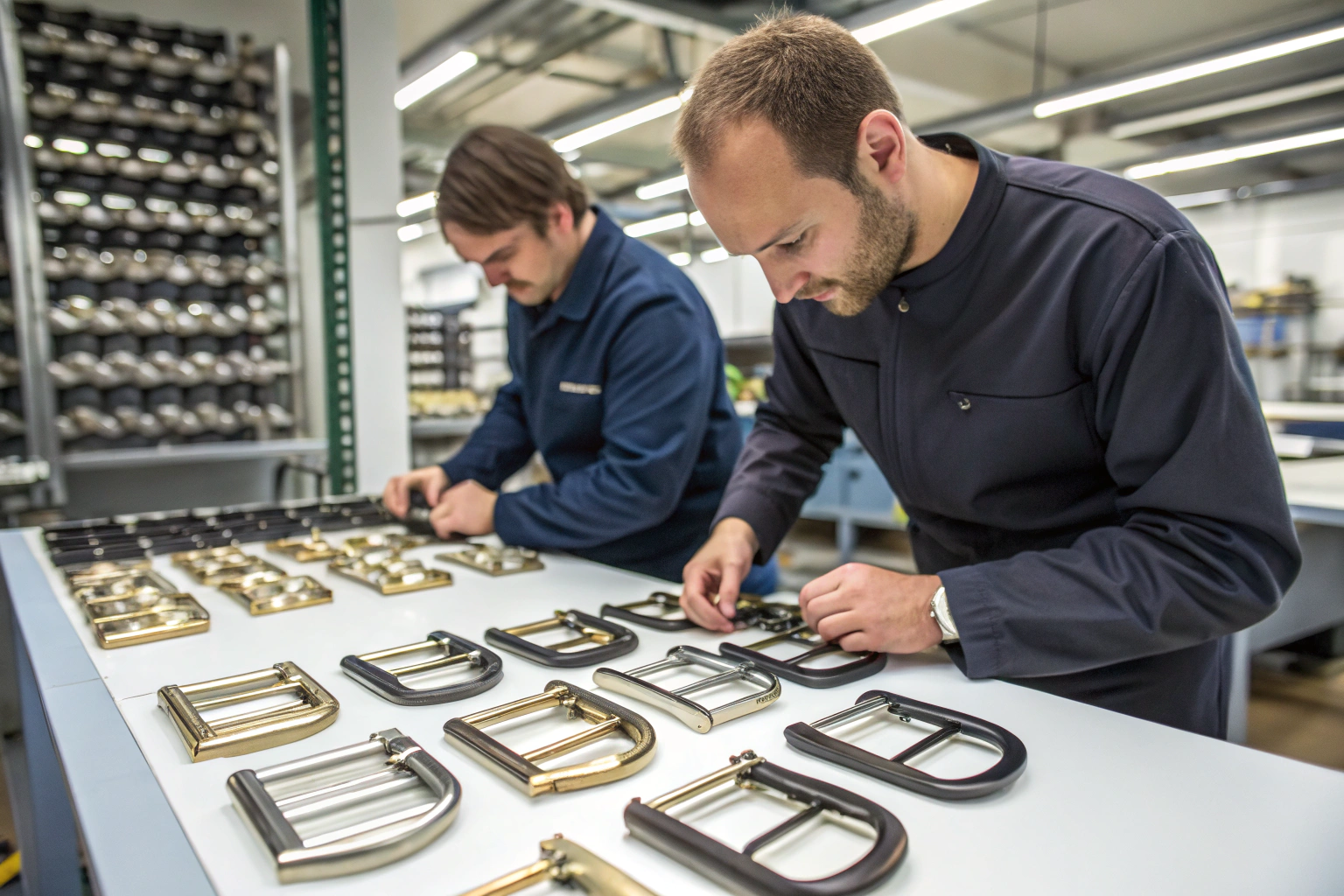
I have been making accessories for over 15 years. Belts are one of our core products. And I can tell you this with certainty: the buckle makes the belt. You can have the finest leather strap in the world. But if the buckle feels cheap, the whole product feels cheap. I have seen it happen. A client once sent me a sample of a beautiful leather belt. The leather was top-grain. The stitching was perfect. But the buckle was thin, lightweight, and the finish was already peeling. They asked me to match it. I told them, “I can make the leather. But I will not put that buckle on it. It will ruin your reputation.” They listened. We worked together to source a buckle with a proper metal finish. The final product sold out. That experience taught me that sourcing belt buckles with high-quality metal finishes is not just about finding a cheap supplier. It is about understanding materials, processes, and quality standards. Let me share what I have learned.
Sourcing belt buckles with high-quality metal finishes requires focusing on three key factors: base metal material, plating or finishing process, and quality control testing. The base metal determines durability. Zinc alloy is the industry standard for high-quality buckles because it is strong, casts well, and takes finishes beautifully. Solid brass offers premium quality and natural corrosion resistance. The finishing process, whether electroplating for shiny finishes or PVD coating for durability, determines how the buckle looks over time. Quality control testing, including salt spray tests for corrosion resistance and pull tests for strength, ensures the buckle meets your standards. At Shanghai Fumao, we work directly with specialized metal component factories. We do not just buy buckles off the shelf. We develop them with our partners to ensure every detail meets our clients’ requirements.
I know that as a buyer, you may not have time to become a metal finishing expert. You have a business to run. You have collections to plan. That is why you need a partner who handles these details for you. At AceAccessory, we have spent years building relationships with metal component specialists. We know which factories produce consistent, high-quality work. We know how to specify finishes that last. We know how to test for durability. Let me walk you through what matters when sourcing belt buckles.
What Base Metals Deliver the Best Quality for Belt Buckles?
The foundation of any high-quality belt buckle is the metal it is made from. I have seen buckles made from pot metal that break the first time someone tries to fasten their belt. I have seen buckles made from cheap alloys that develop white rust spots after a few weeks. These problems start with the base metal. Choosing the right material is the first and most important decision.
The best base metals for high-quality belt buckles are zinc alloy, solid brass, and stainless steel. Zinc alloy is the most common choice for premium buckles. It is strong, casts with excellent detail, and accepts plating very well. Solid brass is the classic choice. It has natural corrosion resistance and a warm, rich look. It can be polished to a high shine or given an antique finish. Stainless steel is the most durable option. It is extremely strong and resistant to corrosion. It does not require plating because its natural finish is attractive. Each material has its place depending on your price point, design requirements, and desired look.
I want to be clear about something. The base metal is not visible in the finished product. The plating or finish covers it. But the base metal determines how well that finish adheres and how long the buckle lasts. A good base metal means the buckle will not crack, will not bend easily, and will not develop surface defects. It is the hidden quality that your customers feel when they use the belt.
Why Is Zinc Alloy the Industry Standard for Premium Buckles?
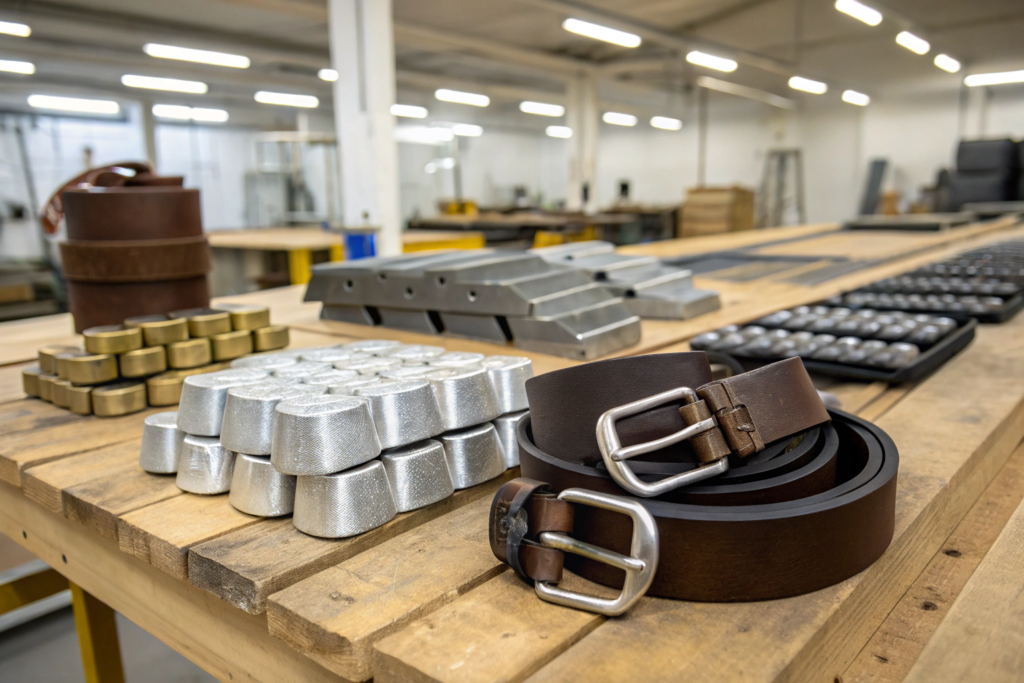
Zinc alloy has become the industry standard for good reason. It is a material that combines strength with workability. Zinc alloy is made by combining zinc with small amounts of aluminum, copper, and magnesium. This creates a metal that is strong but not brittle. It can be cast into very detailed shapes. This is important because belt buckles often have intricate designs, logos, or textures. The casting process, called die casting, produces buckles with smooth surfaces and sharp details. This means less finishing work is needed before plating. Zinc alloy also takes plating extremely well. The surface bonds with electroplated metals like nickel, chrome, brass, or antique finishes. The result is a buckle that looks high-end and stays that way. In our production, we use only high-grade zinc alloy from trusted mills. We have learned that not all zinc alloys are the same. Lower grades can contain impurities that cause bubbling in the plating or brittleness in the buckle. We test every batch of buckles to ensure the material is consistent. When you buy a belt from us with a zinc alloy buckle, you are getting a component that has been tested for strength and finish durability.
When Should You Choose Solid Brass or Stainless Steel?
Solid brass and stainless steel are premium options. They are more expensive than zinc alloy. But they offer unique benefits that make them worth the cost for certain applications. Solid brass is a beautiful material. It has a warm, golden color that cannot be exactly replicated with plating. Over time, brass develops a natural patina. Some customers love this aged look. Others prefer to keep it polished. Brass is also naturally antimicrobial. This is a selling point for some brands. The main drawback is that solid brass is more expensive to produce. It requires more finishing work to achieve a smooth surface. But the result is a buckle that feels substantial and looks luxurious. Stainless steel is the most durable option. It is extremely strong. It does not rust or tarnish. It does not require plating. The natural finish is a cool, silvery grey. Stainless steel buckles are ideal for workwear brands, outdoor gear, or any application where maximum durability is required. The challenge with stainless steel is that it is harder to cast. Most stainless steel buckles are made from stamped sheet metal or machined from solid bar stock. This limits the complexity of the design. At AceAccessory, we offer all three options. We help our clients choose based on their target price point, their desired aesthetic, and the expected use of the belt. For a high-end fashion belt, we often recommend solid brass. For a rugged outdoor belt, we recommend stainless steel. For most everyday belts, zinc alloy delivers the best balance of quality and value.
What Metal Finishing Processes Ensure Durability and Appearance?
The base metal is important. But the finish is what your customer sees. It is the first thing they notice. A finish that is uneven, thin, or prone to peeling will ruin the entire product. I have rejected thousands of buckles because the finish was not right. I have learned to be strict about the finishing process. It is the difference between a buckle that looks good for years and one that looks worn after a few weeks.
The metal finishing processes that ensure durability and appearance are electroplating, PVD coating, and antique finishing with proper sealing. Electroplating is the most common process. It uses electricity to bond a thin layer of metal, like nickel, brass, or chrome, to the base metal. Quality electroplating requires multiple layers, including a copper undercoat for adhesion. PVD coating, or physical vapor deposition, is a premium process that creates an extremely hard, scratch-resistant finish. Antique finishes, like antique brass or antique silver, require careful application and a clear top coat to prevent the finish from rubbing off. Each process requires skilled operators and strict quality control to achieve consistent results.
I want to give you a behind-the-scenes look at how we evaluate finishing quality. When a buckle supplier sends us a sample, we do not just look at it. We test it. We scratch it. We expose it to salt spray. We try to peel the finish. We want to see how it holds up. A good finish should be bonded to the metal, not just sitting on top of it. This bonding is what makes the difference between a buckle that lasts and one that fails.
What Is the Difference Between Standard Electroplating and Premium PVD Coating?
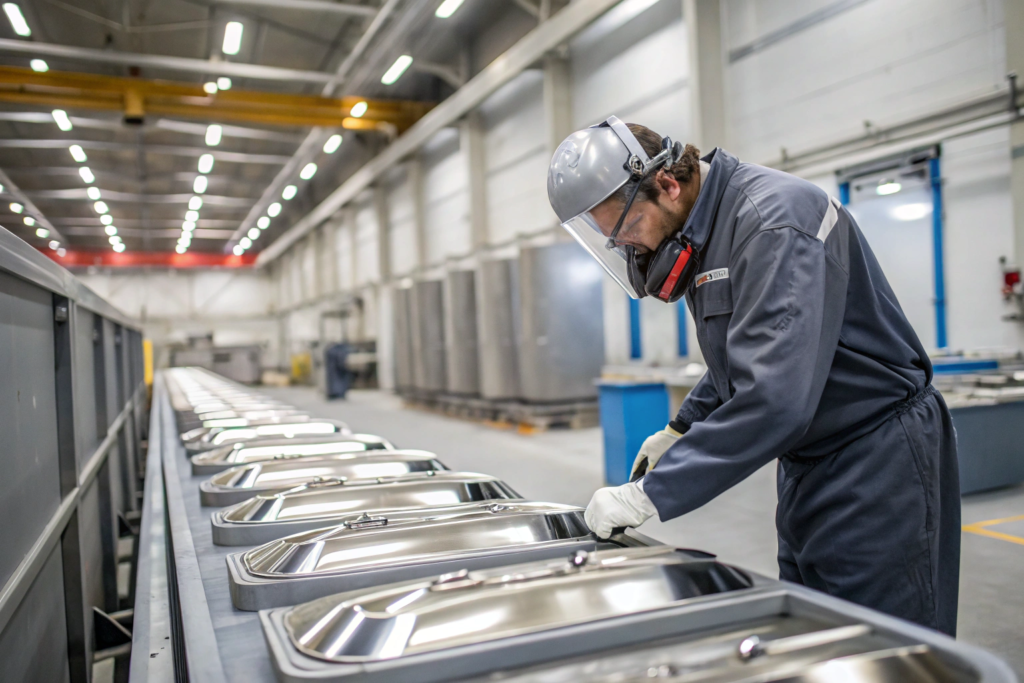
This is a question I get often from clients. The difference is significant, both in quality and in cost. Standard electroplating is a chemical process. The buckle is submerged in a solution containing metal ions. An electric current is applied, and the metal ions bond to the surface of the buckle. For a quality electroplated finish, the buckle should first receive a layer of copper. This copper layer helps the subsequent layers adhere. Then a layer of nickel is applied for smoothness and corrosion resistance. Finally, the top layer, whether it is brass, chrome, or another metal, is applied. This process produces a beautiful finish. But it is not the hardest finish. PVD coating, or physical vapor deposition, is different. In this process, the metal is vaporized in a vacuum chamber and then deposited onto the buckle as a thin, hard film. The result is a finish that is extremely hard and scratch-resistant. It is also more resistant to corrosion and does not fade over time. PVD coatings are used in high-end watches and automotive trim. For belt buckles, they are the premium choice. The cost is higher. But for clients who want the absolute best durability, we recommend PVD. For most applications, high-quality electroplating with proper undercoats delivers excellent results at a more accessible price point.
How Can You Verify That an Antique Finish Will Not Rub Off?
Antique finishes are very popular. They give a belt a vintage, worn-in look. But they are also the most difficult finishes to get right. An antique finish is typically created by applying a dark chemical patina to a bright base metal, then selectively buffing it away to create highlights. The challenge is that the dark patina is often just on the surface. If it is not properly sealed, it will rub off over time. This is a common problem with cheap buckles. The antique finish looks great when new, but after a few wears, it starts to wear away, revealing the bright metal underneath. The solution is proper sealing. After the antique finish is applied, the buckle should receive a clear top coat. This top coat, usually a clear epoxy or powder coat, protects the finish from abrasion. It also prevents the finish from reacting with skin oils or moisture. When we source antique-finish buckles, we specifically require a clear top coat. We also test by rubbing the buckle with a cloth to see if any color transfers. A quality antique finish will not transfer. We also test by exposing the buckle to salt spray to ensure the clear coat is intact. This attention to detail is what ensures that an antique brass buckle from us will look good for years, not just for the first few wears.
What Quality Control Tests Ensure Buckle Reliability?
I have learned that you cannot trust a buckle just because it looks good in the sample. I learned this the hard way. Early in my career, I approved a batch of buckles that looked perfect in the sample. When we received the production quantity, they looked fine too. But after we assembled them onto belts, problems appeared. Some buckles broke when the customer tried to fasten them. Others developed rust spots after a few weeks. I lost money and, worse, I lost a client’s trust. That is why we now have a strict quality control system for every buckle we source.
The quality control tests that ensure buckle reliability include salt spray testing for corrosion resistance, pull strength testing for mechanical integrity, and adhesion testing for finish durability. Salt spray testing exposes buckles to a saline mist for a specified period, usually 24 to 48 hours, to simulate years of exposure to sweat and humidity. Pull strength testing measures how much force the buckle can withstand before breaking or deforming. Adhesion testing involves scratching or tape-pulling to ensure the finish is properly bonded. These tests are not optional. They are essential for ensuring that the buckles on your belts will perform as expected in the real world.
I want to be transparent with you. Not every buckle supplier performs these tests. Many rely on the visual inspection only. That is a risk. A buckle can look perfect and still have hidden defects. The casting might have internal voids. The plating might be too thin. The metal might be contaminated. The only way to catch these problems is with testing. We have made this testing a standard part of our process.
What Is Salt Spray Testing and Why Does It Matter?
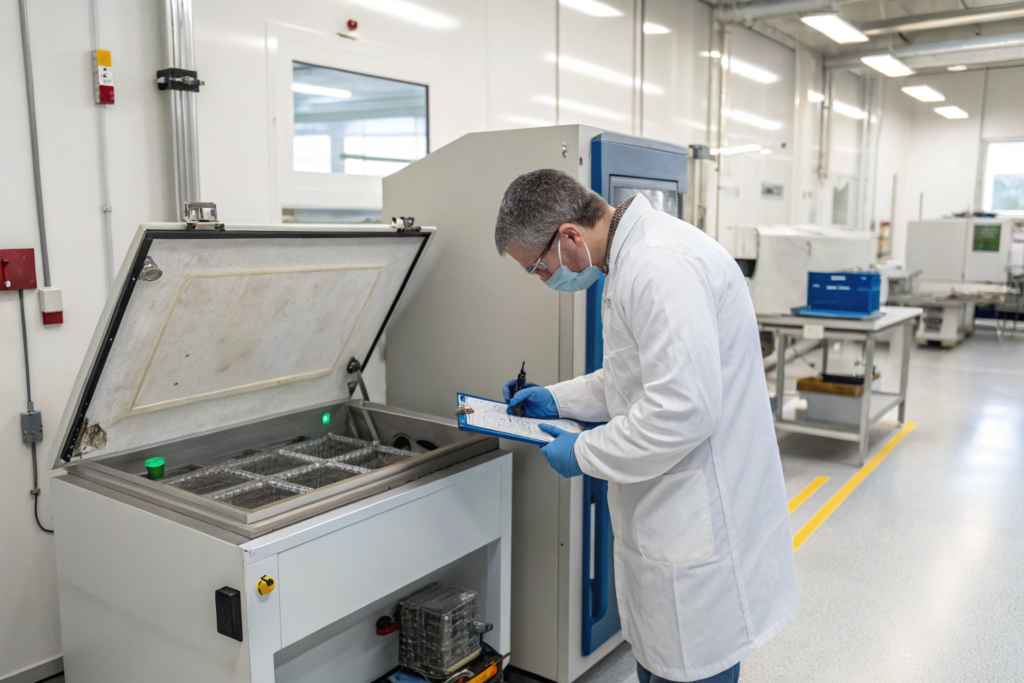
Salt spray testing is one of the most important tests for metal components. It is a standardized test that measures corrosion resistance. The test works by placing buckles inside a chamber and exposing them to a fine mist of salt water. The chamber is kept at a constant temperature. After a set period, usually 24, 48, or 96 hours, the buckles are removed and inspected. A good buckle should show no signs of rust, bubbling, or peeling. The reason this test matters is that it simulates real-world conditions. People sweat. Sweat contains salt. People wear belts in the rain. They live in humid climates. A buckle that cannot pass a salt spray test will eventually corrode on a customer’s belt. This is not acceptable for any product we produce. For our clients, we specify the required salt spray hours based on the expected use. For a fashion belt that will be worn indoors, 24 hours is usually sufficient. For a work belt or outdoor belt, we require 48 or 72 hours. We work with our buckle suppliers to ensure they have the testing equipment and that they provide us with test reports for every production batch. When you source through us, you are getting a corrosion-resistant buckle that has been verified, not just assumed.
How Do We Test for Pull Strength and Finish Adhesion?
Pull strength testing is about safety and durability. A belt buckle must be strong enough to withstand the forces of everyday use. If a buckle breaks, it is not just an inconvenience. It can be dangerous if it fails while someone is using it to hold up their pants. We test pull strength using a tensile testing machine. The buckle is placed in a fixture, and force is applied until the buckle breaks or deforms. For a standard belt buckle, we require a minimum of 200 pounds of force. For heavy-duty belts, we require 300 pounds or more. This ensures that the buckle will not fail under normal use. Finish adhesion testing is about how well the plating bonds to the base metal. We use two methods. The first is a cross-hatch test. We make a grid of small cuts in the finish, apply tape, and then pull it off. If the finish comes off with the tape, it is a fail. The second method is a simple scratch test. We use a metal tool to try to scratch through the finish. A properly bonded finish will resist scratching. These tests take only a few minutes. But they reveal a lot about the quality of the manufacturing process. A buckle that passes these tests is a buckle that will look good and perform well for a long time. We have quality control checklists for every buckle style we produce. We do not cut corners on testing.
How Can AceAccessory Simplify Your Belt Buckle Sourcing?
I understand that sourcing belt buckles can feel overwhelming. There are so many choices. Materials, finishes, sizes, shapes. And you have to worry about quality, cost, and lead times. You might be asking yourself, “Should I find a buckle supplier myself? Or should I let my belt manufacturer handle it?” Based on my experience, I can tell you that the second option is almost always better. Here is why.
AceAccessory simplifies your belt buckle sourcing by managing the entire component supply chain for you. We have established relationships with specialized metal component factories that we have vetted over years. We know their capabilities, their quality levels, and their pricing. When you place a belt order with us, we take care of sourcing the buckles. We specify the materials, the finishes, and the testing requirements. We manage the production schedule to ensure the buckles arrive at our factory when we need them. And we inspect every batch before we assemble them onto your belts. This integrated approach saves you time, reduces your risk, and ensures a consistent result.
I want to be clear about the value of this approach. When you source buckles separately from your belt production, you are adding complexity. You have to manage two suppliers. You have to coordinate deliveries. If something goes wrong with the buckle, you have to figure out who is responsible. When you work with us, you have one point of contact. One project manager handles everything. One quality control system covers everything. One shipment delivers everything. It is simpler, safer, and more efficient.
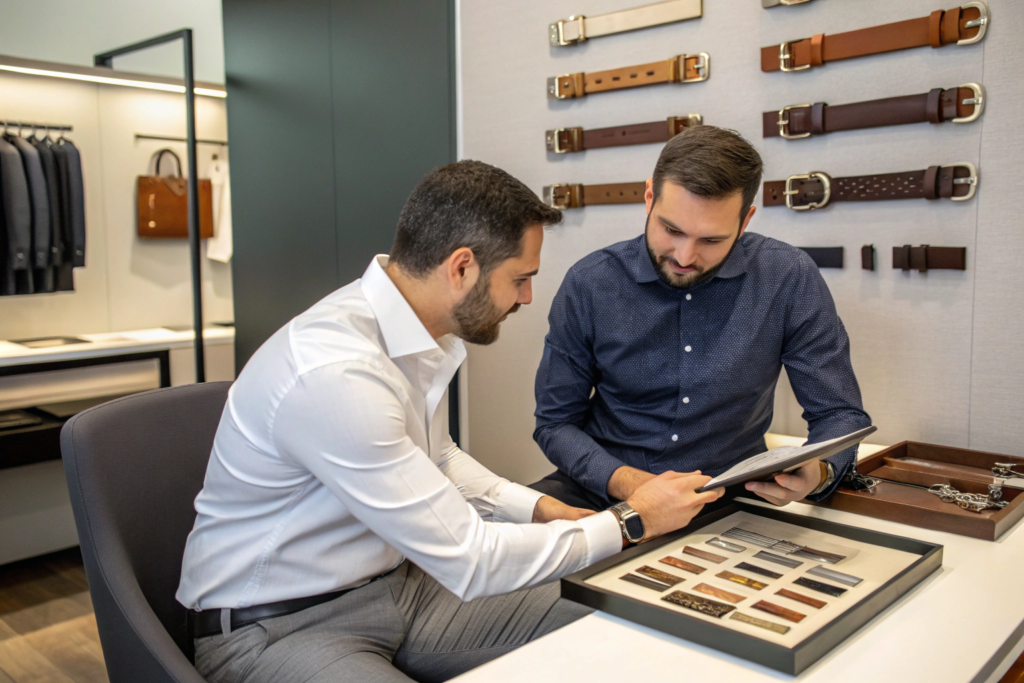
What Is the Advantage of Our Integrated Supply Chain?
The advantage is control and consistency. When we source buckles for our belts, we are not just buying a commodity. We are specifying a component that is critical to the final product. Because we work with the same buckle factories year after year, we know exactly what to expect. We know their lead times. We know their quality levels. We know how they respond to problems. This relationship allows us to get better pricing and priority treatment. It also allows us to offer you more options. Need a custom buckle with your logo? We can do that. Need a specific antique finish? We have a supplier who specializes in it. Need a rush order? We know which factories can handle it. This integrated supply chain is something we have built over many years. It is not something a new supplier can offer overnight. When you work with us, you benefit from this infrastructure without having to build it yourself. We handle the complexities of sourcing metal components so you can focus on your business.
How Do Our Project Managers Protect Your Order?
Our project managers are the key to this process. They are not just order takers. They are experienced professionals who understand the entire production chain. When you place a belt order with us, a project manager is assigned to your project. They work with our design team to finalize the buckle specifications. They coordinate with our buckle supplier to schedule production. They track the buckle production to ensure it is on schedule. When the buckles arrive at our factory, they oversee the quality inspection. If there is any issue, they work with the buckle supplier to resolve it immediately. This happens before the buckles go into production. This proactive approach prevents problems. It also saves time. If a problem is caught at the buckle factory, it can be fixed in days. If it is caught after the belts are assembled, it is a disaster. Our project managers also handle communication with you. They give you regular updates. They answer your questions. They provide peace of mind. This is what we mean by timely, professional, and reliable service. It is not just a slogan. It is how we operate every day.
Conclusion
Sourcing belt buckles with high-quality metal finishes is a skill. It requires knowledge of materials, understanding of finishing processes, and a commitment to testing. It also requires trusted partnerships with specialized suppliers. Over the years, I have built these partnerships. I have learned what to look for and what to avoid. I have made mistakes so you do not have to.
At Shanghai Fumao, we have integrated buckle sourcing into our belt production process. This means you get a complete solution. You do not have to manage multiple suppliers. You do not have to worry about whether the buckle will match the strap. You do not have to test for corrosion resistance or pull strength. We do all of that for you. Our in-house design team can help you create custom buckles that reflect your brand. Our quality control team ensures every buckle meets our strict standards. Our project managers keep your order on track. And our factory in Zhejiang produces the finished belts with the same attention to detail.
Whether you need classic leather belts with antique brass buckles, work belts with heavy-duty stainless steel buckles, or fashion belts with custom logo buckles, we have the experience and the capability to deliver. Your brand deserves accessories that are built to last. Your customers deserve products that look good and perform well. Let us help you achieve that. Let us take the complexity out of sourcing belt buckles and focus on what matters: creating a product you are proud to sell.
Please contact our Business Director, Elaine, at elaine@fumaoclothing.com to discuss your next belt project. We can help you select the right buckles and finishes for your collection.