I remember a conversation with a client from a large European apparel brand. He was frustrated. He had ordered 20,000 knit hats for the winter season. But the trend shifted. A warmer winter came, and he was left with too much stock. Then, he had to scramble to order more lightweight scarves and hair bands for a sudden spring trend. He missed the peak sales window. He told me, “I am just guessing. I look at last year’s numbers and hope.” That moment stuck with me. I realized that my job is not just to make high-quality accessories. My job is to help you make better decisions. Data analytics is the tool that can turn guessing into knowing. It can help you predict what your customers will want, when they will want it, and how much you need. For a business owner like you, who is confident and leads the conversation, this is a game-changer. It gives you the power to tell your customers, “I know exactly what you need, and I can deliver it.”
Data analytics improves your accessory sales forecasts by transforming historical sales data, market trends, and consumer behavior into actionable predictions. Instead of relying on intuition or last year’s numbers, you can use data to see patterns. For example, you can analyze which hair bands sold best in the last three spring seasons. You can track how social media trends affect demand for specific styles of baseball caps or scarves. You can even factor in weather data to predict demand for knit hats or umbrellas. When you combine this with our fast development and production capabilities at AceAccessory, you get a powerful advantage. You can order the right products, in the right quantities, at the right time. You reduce your risk of overstock or stockouts. You protect your margins. You make better decisions.
Now, you might be thinking, “This sounds great, but I am a fashion buyer, not a data scientist.” I understand. I am a factory owner. I am not a data expert either. But I have learned that you do not need to be. You just need to know what data to look at and how to use it with a partner like us. Our role at AceAccessory is to support you with the production side of those forecasts. When you have a data-driven prediction, we are here to make it a reality with fast development, flexible MOQs, and reliable production. Let me show you how this works in practice.
What Key Data Points Should You Track for Accessory Sales?
The first step in using data analytics is knowing what to measure. I see many buyers who track everything or track nothing. They get overwhelmed. They end up making decisions the same way they always did. I want to simplify it for you. Based on what I have learned from working with our clients, there are a few key data points that matter most for accessory sales.
The key data points you should track for accessory sales are historical sales data by product category, seasonality trends, social media and influencer signals, weather patterns, and lead time performance. Historical sales tell you what sold well in the past. Seasonality helps you plan for peaks like winter for knit hats and gloves. Social media signals, like trending hashtags on TikTok or Instagram, can show you what styles of hair bands or belts are about to explode. Weather patterns help you predict demand for umbrellas or straw hats. And lead time performance data helps you understand how long it actually takes to get products from development to your warehouse. When you track these, you move from guessing to forecasting.
You might be thinking, “I have some of this data, but it is all over the place.” That is normal. The goal is not to have a perfect system on day one. The goal is to start. Pick one or two data points and begin tracking them consistently. Over time, you will see patterns. And you will start to trust the numbers more than your gut. I have seen this transformation happen with our clients. They become more confident. They lead their businesses with clarity.

How Can Historical Sales Data Predict Future Trends?
This is the most basic but powerful data point. Look at your sales for the last two or three years. Break it down by product. Did your hair bands sell better in spring or fall? Did your knit hats peak in November or December? But do not just look at the totals. Look at the rates. When did sales start to rise? When did they drop off? This tells you your true selling window. For example, one of our supermarket clients noticed that their sales of scarves always started to climb in mid-September. They used that data to push their order timing earlier. They avoided the late-season rush and got better freight rates. They also reduced their risk of stockouts. Historical data gives you a baseline. It is your starting point for every forecast.
What Role Do Social Media and Influencers Play?
This is the new reality of fashion. Trends do not just come from runways anymore. They come from TikTok, Instagram, and influencers. You can track this data. Look at hashtags related to your products. Is #hairbandstyle growing? Are influencers wearing a specific type of belt or baseball cap? You do not need to be a social media expert. Just watch. Set up simple alerts. When you see a trend starting to gain traction, you have a signal. This is where our fast development capability at AceAccessory becomes critical. If you see a new style of hair clip trending, you can come to us. We can develop a sample in days. We can start production quickly. You can be on the market while the trend is hot, not six months later when everyone else has caught on. Data from social media gives you the ability to be first.
How Can Better Forecasting Reduce Your Sourcing Risks?
I often hear from buyers that their biggest stress is not knowing. They do not know if they will have enough stock for the holiday rush. They do not know if they will be stuck with too many unsold hats after the season ends. This uncertainty is a risk. And in business, risk often means lost money. Data analytics is not just about making more sales. It is about protecting what you already have. It is about reducing the risks that come with sourcing.
Better forecasting reduces your sourcing risks by aligning your purchase orders more precisely with real demand. When you have a solid forecast, you reduce the risk of overstocking, which ties up your cash and often leads to discounting. You also reduce the risk of understocking, which means lost sales and disappointed customers. For us as your manufacturing partner, a good forecast helps us plan our production schedules. We can allocate materials, manage our lines, and ensure on-time delivery. This creates a smoother process for everyone. It also helps you manage tariff costs better because you can plan your shipments and consolidate them more effectively.
Think about the risks you face. There is the risk of choosing the wrong product. There is the risk of ordering too much or too little. There is the risk of a supplier being late. There is the risk of tariffs changing. A good forecast does not eliminate all risk. But it reduces the uncertainty. It gives you a clearer picture. And with a clearer picture, you can make smarter decisions.

How Does Accurate Forecasting Help with Inventory Management?
Inventory is money. When it sits in a warehouse, it is not working for you. When you have too much, you have to discount it. When you have too little, you lose sales. Accurate forecasting helps you find the balance. Let us say your data shows that you sold 8,000 gloves last December. With a good forecast, you can plan to order 9,000 this year, factoring in growth. You are not guessing 5,000 or 15,000. You are making a calculated decision. This precision extends to our production. We can schedule your order of umbrellas or bags to be ready exactly when you need them. You are not paying for storage months in advance. You are not rushing to find last-minute capacity. The entire supply chain becomes more efficient. And efficiency means lower costs and higher margins for you.
Can Forecasting Help You Navigate Tariff and Logistics Volatility?
Yes, it can. Tariffs and shipping costs are volatile. They can change quickly. But if you have a good forecast, you can plan ahead. You know what you will need to order six months from now. You can look at the tariff landscape and make decisions. Maybe you decide to ship a larger order early to avoid a potential tariff increase. Maybe you consolidate multiple orders into fewer, larger shipments to get better freight rates. You can do this because you have confidence in your forecast. Our team at AceAccessory supports this. We help you with HTS code planning, as I mentioned earlier. We help you with logistics planning. We can store your goods in our facility for a short time if you want to hold them before shipping to beat a tariff deadline. A good forecast gives you the flexibility to make these strategic moves. It turns you from a passive buyer into an active supply chain manager.
How Can You Start Using Data Analytics Without a Data Team?
I know what you might be thinking. “This all sounds great, but I do not have a data team. I do not have a budget for expensive software.” I hear you. Most of our clients are in the same position. They are talented buyers, marketers, and business owners. They are not data scientists. The good news is that you do not need to be. You can start using data analytics today with the tools and resources you already have.
You can start using data analytics without a data team by focusing on simple, accessible tools and starting small. Use your own sales reports from your e-commerce platform or retail system. Use free tools like Google Trends to see what people are searching for. Use the analytics from your social media accounts to see which posts get the most engagement. Track these numbers in a simple spreadsheet. Over time, you will start to see patterns. You do not need a complex AI system to get value from data. You just need consistency. And you can leverage our team at AceAccessory as a partner. We share our production data with you. We tell you what other clients are ordering. We give you insights from our side of the business. This collaboration gives you more data points without adding complexity.
I want to encourage you to think of data as a conversation. It is not a set of commands from a computer. It is information that helps you ask better questions. And the more you use it, the more comfortable you will become. I have seen clients start with a simple spreadsheet and, within a year, transform how they buy. They move from being reactive to being proactive. They lead their market instead of following it.

What Free Tools Can You Use to Track Trends?
There are many free tools that give you valuable data. Google Trends is one of the best. You can type in “hair bands” or “straw hats” and see how search interest changes over time. You can compare different terms. You can see which regions are most interested. This is real-time data on what people are looking for. Another tool is the analytics section of your social media accounts. Instagram and TikTok show you which posts get the most views and saves. This tells you what styles are resonating with your audience. If a post featuring a specific baseball cap gets high engagement, that is a signal. You can also use Facebook Analytics to understand your audience demographics. All of these are free. They just require a few minutes of your time each week. Set a reminder. Look at the data. Write down what you see. Over time, you will build a picture of your market.
How Can AceAccessory’s Production Data Help You?
This is a unique advantage of working with a factory like ours. We see what other brands are ordering. We see trends before they hit the mainstream. We share this with our clients. For example, if we notice that three of our European clients have suddenly ordered large quantities of a specific style of belt, we will tell you. If we see that orders for knit hats are starting earlier than usual this year, we will share that insight. Our project managers are trained to watch these patterns. They are not just order-takers. They are your eyes on the ground in China. They see the manufacturing side of the market. This is data you cannot get from a spreadsheet. It comes from a partnership. So when you work with us, you get more than just production. You get market intelligence that helps you make better forecasts. This is part of our commitment to providing timely, professional, and reliable service.
How Does Fast Development Fit Into a Data-Driven Strategy?
Data is only useful if you can act on it. You can see a trend on TikTok today. You can track the search volume on Google Trends. But if it takes six months to get a sample and start production, the trend is dead. The data becomes useless. This is why fast development is not just a nice-to-have. It is a critical part of a data-driven strategy. It is the bridge between insight and action.
Fast development fits into a data-driven strategy because it allows you to capitalize on trends while they are still relevant. When your data signals a new trend—like a specific style of hair band or a new material for scarves—you need a partner who can move quickly. At AceAccessory, our in-house design team can turn a trend into a sample in days. We do not have to outsource design or wait for materials. We have the materials in stock. We have the expertise in-house. This means you can test the market with a small order quickly. If the trend takes off, we can scale production fast. If it does not, you are not stuck with a huge inventory. This agility is the key to making data work for you.
Think of it as a loop. You gather data. You see a signal. You come to us. We develop a sample fast. You test it with your customers. You get more data. Then you decide to scale up or pivot. This loop is what separates successful brands from those that are always playing catch-up. We are built to support this loop. Our entire operation is designed for speed and flexibility.
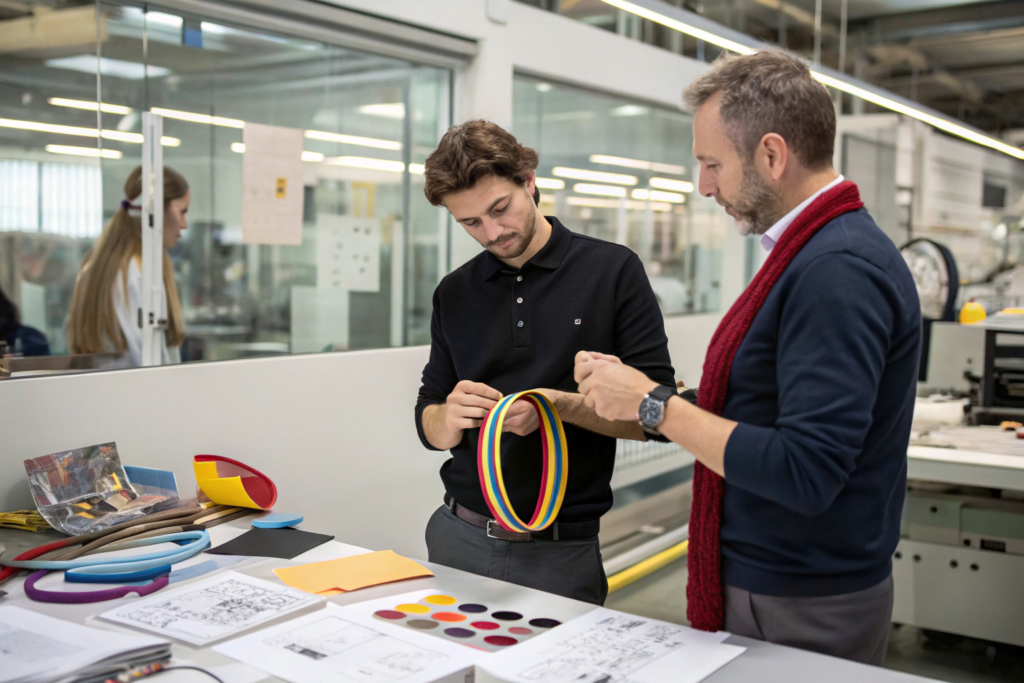
How Quickly Can You Test a New Accessory Idea?
Speed is our specialty. For a simple product like a hair band or a baseball cap, we can have a sample ready in 3 to 5 days. For a more complex product like a bag with custom hardware, it might take 7 to 10 days. But the key is that we are fast because we control the process. Our designers, sample makers, and material stock are all in one place. We do not send your idea to a separate sample house. We do not wait for material shipments. We get to work immediately. This speed allows you to test. You can order a small batch, 100 or 200 units, to put in your online store or test in a few retail locations. You will have real sales data in weeks, not months. That data then informs your next, larger order. This reduces your risk. It also means you can be the first to market with a new trend. And being first gives you a pricing advantage.
How Do We Scale Production When a Trend Takes Off?
This is the other side of the coin. Testing is great. But when a product takes off, you need to scale fast. You need thousands of units, not hundreds. And you need them quickly. Our factory is built for this. We have the capacity to handle large orders for knit hats, scarves, and belts. Our production lines are flexible. We can shift capacity to focus on a hot product. And because we are the factory, we are not reliant on a third party. We control the schedule. Our project managers will work with you to create a production plan that matches your sales forecast. If you see that sales are exceeding your expectations, we can ramp up. If they are slower, we can adjust. This flexibility is only possible with a true manufacturing partner. It is the difference between a supplier who just takes orders and a partner who helps you grow your business.
Conclusion
Data analytics is not a trend. It is a fundamental shift in how successful businesses operate. It moves you from reacting to the market to anticipating it. It replaces guesswork with confidence. And in the fast-moving world of fashion accessories, that confidence is your biggest advantage.
I built AceAccessory to be more than a factory. I built it to be a partner. I wanted to create a place where clients like you could get not just high-quality hair bands, belts, scarves, and hats, but also the support you need to make smarter decisions. Our fast development, flexible production, and experienced project managers are all designed to help you act on your data. When you see a trend, we help you bring it to market. When you need to scale, we have the capacity. When you want to reduce risk, we help you plan.
You are a leader in your business. You are confident. You take charge of the conversation with your customers. Let me help you do the same with your supply chain. Let me give you the tools and the partnership you need to turn data into profit.
If you are ready to start using data to drive your accessory sales, I invite you to reach out. Let us talk about your next collection. Let us show you how our team can support your growth. Please contact our Business Director, Elaine, at elaine@fumaoclothing.com to start a conversation about how we can help you forecast better and sell more.