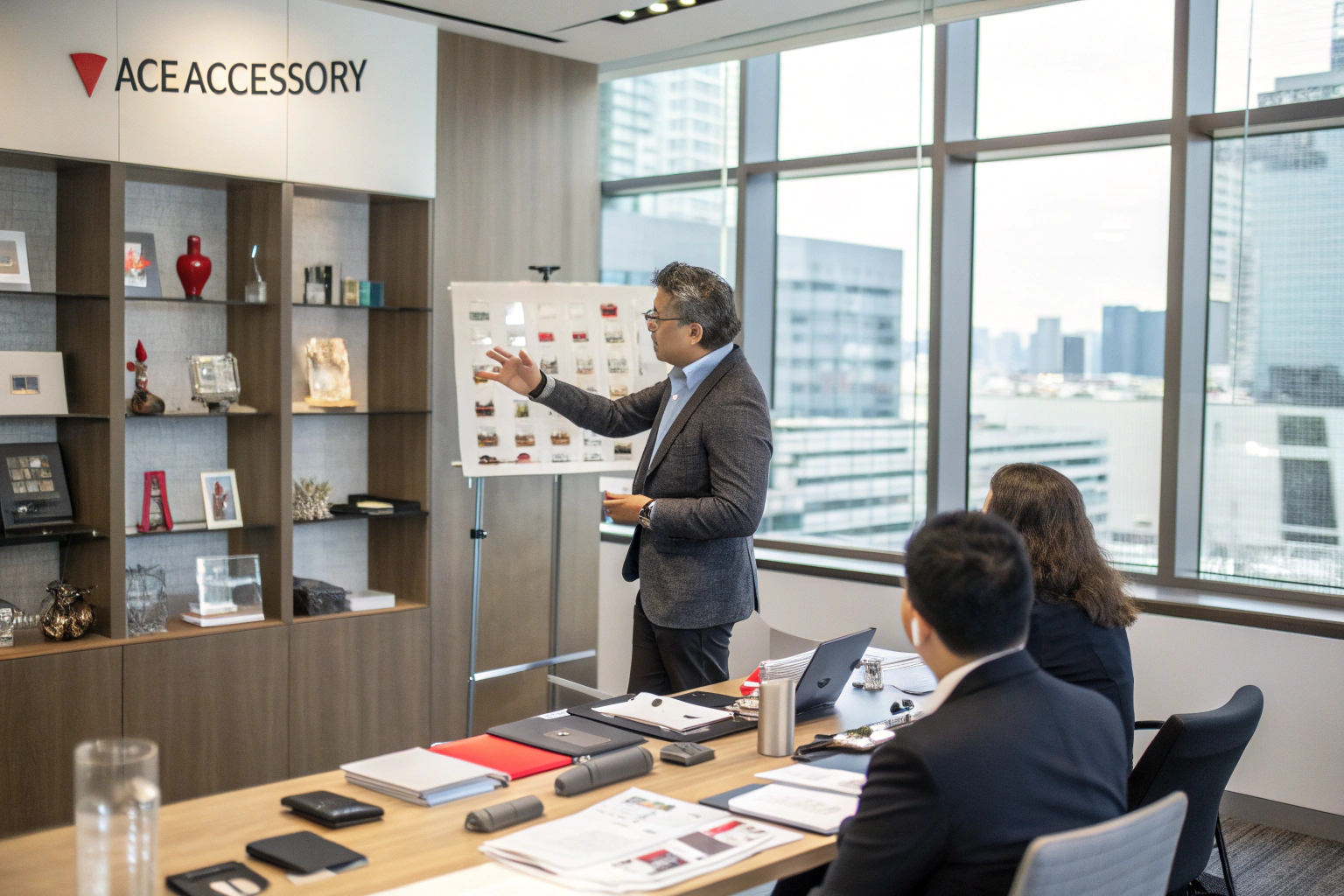
I have been in this industry for over fifteen years. I have seen it all. Beautiful designs that could never be mass-produced. Samples that looked perfect but broke after two uses. Orders that arrived late and missed the entire season. Every time I talk to a new client, I hear the same stories. They are frustrated. They have lost money. They have lost time. And most of them are about to make the same mistakes again.
The truth is, developing a new accessory is not just about having a great idea. It is about understanding how that idea becomes a real product. And that process is full of traps that can sink your project before it even gets to market. I am the owner of AceAccessory. Our factory in Zhejiang has helped hundreds of brands avoid these pitfalls. Let me walk you through the most common ones I see, so you can build a development process that actually works.
Skipping the Material Verification Stage?
I cannot tell you how many times a client has come to me with a sample they love. They are ready to place a huge order. But when I ask about the materials, they have no idea. They just trusted the first factory they found.
This is a huge mistake. Materials are everything. They determine how your product looks, how it feels, and how long it lasts. And different materials behave completely differently in mass production.
Why Does Material Choice Determine Product Success?
Think about a simple hair clip. You can make it from cheap plastic, high-quality ABS, or even metal. Each material has a different cost. Each one has a different strength. Each one feels different in the hand.
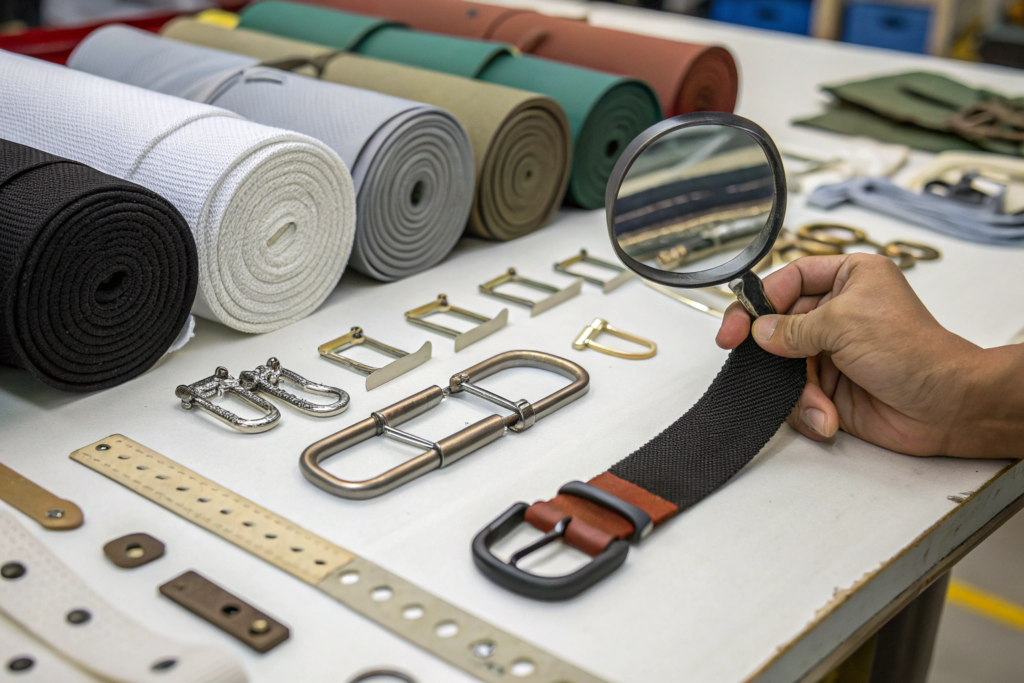
A client once came to me with a beautiful belt sample. The leather felt amazing. The buckle was heavy and solid. But when I looked closer, I realized the leather was a thin top-grain with a cheap backing. After a few weeks of wear, it would crack. The buckle looked great but was made from a zinc alloy that would break under stress.
We had to go back to square one. We found a full-grain leather supplier that could provide the quality they needed. We sourced a solid brass buckle that would last for years. The cost went up, but the product became something they could stand behind. They avoided a disaster that would have damaged their brand reputation.
When you skip material verification, you are gambling. You are hoping the factory uses what they promised. And that is a bet you will lose more often than you win.
How Can You Test Materials Before Mass Production?
Testing is not complicated. But it does require discipline. At our factory, we have a simple rule: we test every material before we cut a single piece. For fabrics, we test color fastness. We rub the fabric with a white cloth to see if the dye comes off. We wash it. We expose it to light. If it fades or bleeds, we reject it.
For metals, we test for rust and corrosion. We put them in a salt spray chamber. We check the plating thickness. If a metal component cannot survive that test, it will not survive a humid warehouse or a customer’s bathroom. For plastics, we test for strength and flexibility. We bend them. We drop them. We see if they snap or hold.
We have a full material testing lab on site. But even if your factory does not, you can ask for test reports. You can ask for samples of the raw materials themselves, not just the finished product. You can send them to a third-party lab.
I remember one client who insisted on a specific glitter fabric for a headband. It looked amazing in the sample. But when we tested it, the glitter fell off after just three washes. We showed them the test results. They were shocked. They had no idea. We found an alternative fabric with embedded glitter that stayed put. That product is now one of their best sellers.
Do not skip this stage. It takes time. It costs a little money. But it saves you from the nightmare of a recall or a warehouse full of unsellable products.
Ignoring Production Feasibility for Complex Designs
I love creative designs. Some of my favorite projects have come from clients who think outside the box. But I have also seen creativity crash into the hard wall of manufacturing reality.
A design that looks amazing in a 3D render can be impossible to make. Or it can be so expensive to make that no one can afford to buy it. The key is to find the balance between vision and feasibility.
What Makes a Design Difficult or Expensive to Manufacture?
Let me give you a real example. A client wanted a scarf with a complex jacquard pattern. The pattern had twelve different colors. It looked beautiful on the screen.
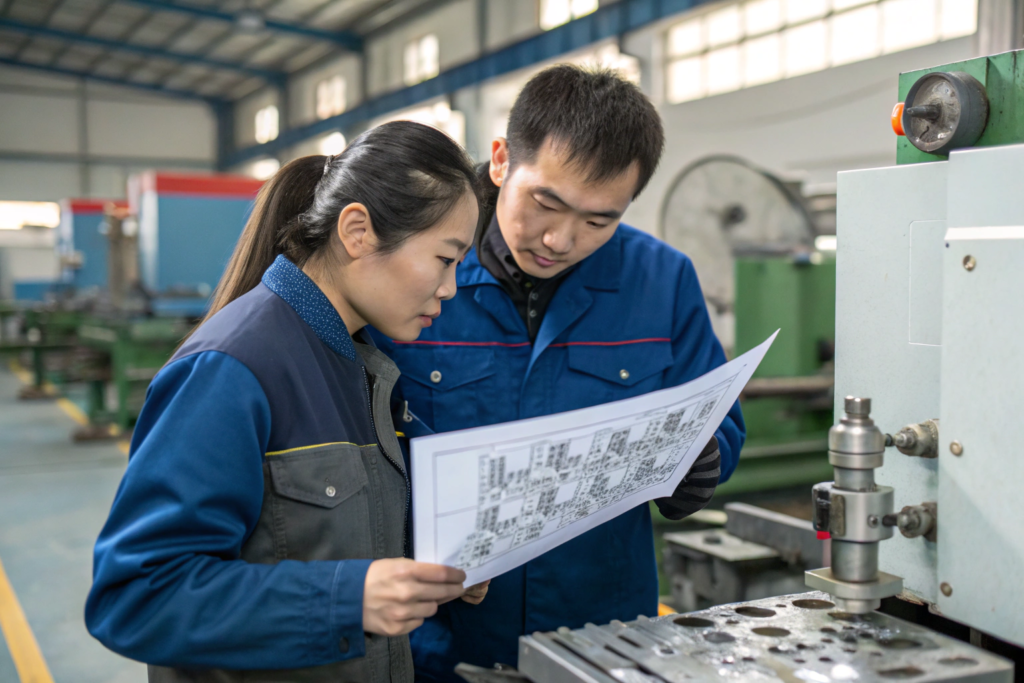
But when we looked at the production side, we ran into problems. A jacquard loom can only handle a certain number of colors before the fabric becomes too thick and stiff. Twelve colors meant the scarf would be heavy, rough, and expensive.
We worked with the client. We simplified the pattern to eight colors. We used a special high-count jacquard technique that kept the fabric soft. The final product was 90% of the original vision, but it was actually manufacturable. And the cost was 40% lower than the original estimate.
Another common issue is with metal components. A hair clip with a very thin, intricate shape might look elegant. But if the metal is too thin, it will bend the first time someone uses it. If the shape is too complex, the mold cost becomes astronomical.
We use a simple rule: if a design requires more than three moving parts, we stop and ask questions. Every moving part is a potential failure point. Every complex shape adds tooling cost and production time.
How to Collaborate with Your Factory During the Design Phase?
The best projects I have worked on started with a conversation. The client came with an idea. We sat down with our design and engineering team and talked through it.
One client wanted a belt with a hidden compartment. It was a cool idea. But they had no idea how to make the compartment work without making the belt bulky and uncomfortable.
We spent two hours sketching ideas. Our engineer suggested a magnetic closure system. Our designer worked out how to integrate it into the leather without adding bulk. We made a prototype. It worked perfectly.
That collaboration happened because the client came to us early. They did not spend months perfecting a design that would have been impossible to make. They brought us a concept, and we helped them turn it into a real product.
Here is my advice: bring your factory into the process as early as possible. Show them your sketches. Show them your inspiration. Ask them what is possible. Ask them what will cost more. A good factory will be honest with you. They will tell you when an idea is too expensive or too hard to make.
We do this for all our clients. We give them a design feasibility report before we even start sampling. It saves time. It saves money. And it prevents the heartbreak of falling in love with a design that can never be produced.
Overlooking Quality Control for Small Components
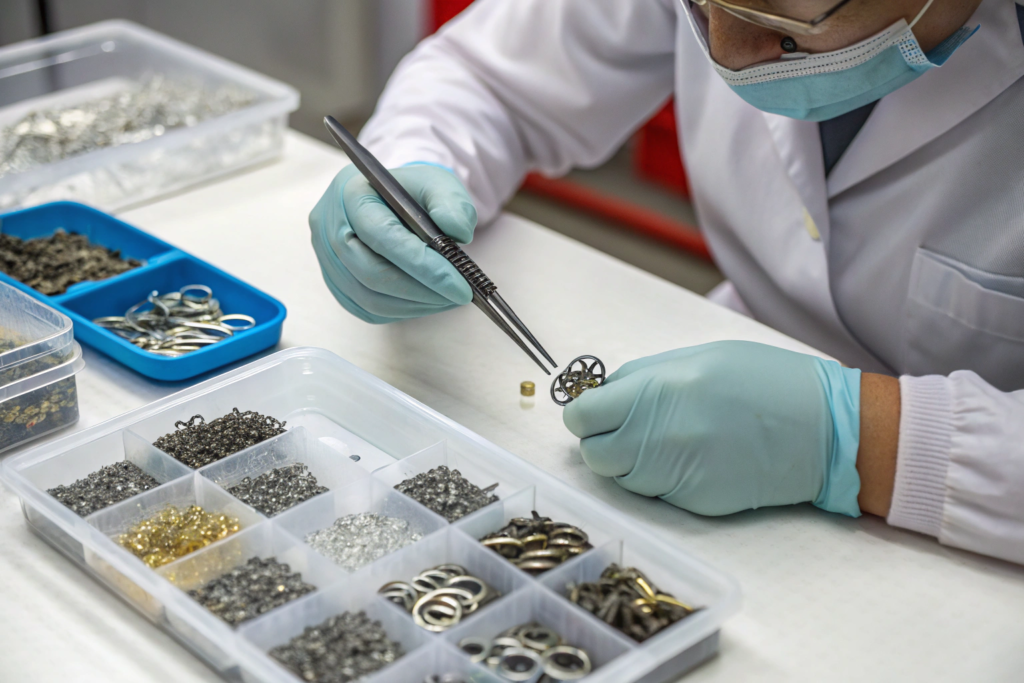
I have learned that the smallest parts cause the biggest problems. A hair clip might look perfect. But if the spring inside is weak, the clip will not hold. A belt might look beautiful. But if the rivet is cheap, the buckle will fall off. Your customers will not notice the main product. They will notice the failure. And they will blame your brand.
Why Do Small Parts Like Springs and Rivets Fail So Often?
It comes down to cost-cutting. A factory might use a cheaper spring to save one cent per unit. On an order of 50,000 units, that is $500 in savings. But if that spring fails for even 1% of your customers, you now have 500 angry customers. The cost of those returns, the damage to your reputation, and the lost future sales are far more than $500.
We had a client who learned this the hard way before they came to us. They ordered a large batch of headbands from a different supplier. The headbands looked great. But the elastic inside was low quality. After a few weeks of use, the elastic stretched out. The headbands became loose and useless.
The client had to replace thousands of units. They lost money. They lost trust. When they came to us, we showed them our process. We use high-retention elastic that we test for stretch recovery. We put it through 500 stretch cycles before we approve it. We know it will last.
The same goes for springs in hair clips. We use stainless steel springs that we test for tension. We check the plating on metal clips to ensure it does not flake off. We test the strength of plastic hinges by opening and closing them hundreds of times.
These small components are invisible to the customer when they work. But they are very visible when they fail. Do not overlook them.
What Testing Should Be Done on Clips, Elastics, and Metal Parts?
We have a standard testing protocol for every type of small component. It is not complicated, but it is thorough.
For elastics and elastic bands, we do a stretch test. We mark the original length. We stretch it to a standard length. We release it. We measure how much it returns. We repeat this hundreds of times. If the elastic loses more than 5% of its original length, we reject it.
For springs, we use a tension gauge. We measure the force required to open the clip. We close it and measure again. We do this hundreds of times. The force should remain consistent. If it drops by more than 10%, the spring is not good enough.
For metal rivets and snaps, we do a pull test. We attach the rivet to a piece of leather or fabric. We pull until it comes out. We record the force. A good rivet should withstand at least 50 pounds of pull. For plastic parts, we do a drop test and a bend test. We drop the finished product from a standard height onto a hard surface. We check for cracks. We bend the part to see if it snaps or returns to its original shape.
We document all these tests. We provide the reports to our clients. We also keep samples of every batch of small components we use. If a problem comes up six months later, we can trace it back to the exact batch. This attention to detail is what separates a reliable factory from one that just pushes boxes out the door. We are proud of our small component testing program, and we believe it is one of the main reasons our clients stay with us for years.
Neglecting Accurate Sampling and Approval Processes
I have seen more projects delayed by poor sampling than by any other single factor. A sample comes in. It looks okay. You approve it. Then the mass production comes, and it looks completely different.
This happens because the sampling process was rushed or unclear. The factory made a handmade sample that could never be reproduced by machines. Or they used different materials in the sample than they planned to use in production. A good sampling process protects you from these surprises.
What Is the Difference Between a Prototype and a Production Sample?
This is a critical distinction that many buyers miss. A prototype is a one-off. It is often made by hand. A skilled worker might spend hours carefully assembling it. It looks perfect because it was made with extra time and attention.
But a production sample is made on the actual machines that will be used for the full order. It is made by the same workers, using the same materials, and the same processes. A production sample might look slightly less perfect than a prototype. But it is an accurate representation of what you will actually receive.
I always advise my clients to approve based on production samples, not prototypes. We send them a production sample approval package that includes the physical sample, photos of the production process, and a list of all materials used.
One client learned this lesson the hard way before they found us. They approved a prototype from another factory. The prototype was beautiful. But when the mass production arrived, the stitching was uneven. The colors were slightly off. The factory had used different materials because the prototype materials were not available in large quantities.
The client was stuck. They had already sold the product to their retailers. They had to accept the order and deal with the returns. That experience cost them tens of thousands of dollars and damaged their relationship with their retail partners.
How to Create a Foolproof Approval Checklist?
We have developed a simple checklist that we use for every sample approval. I share it with all my clients. It has saved us from countless misunderstandings.
First, check the materials. Does the fabric match the specification? Is the metal the correct type and finish? If the sample uses a different material than what was agreed, stop. Do not proceed until you have a sample with the correct materials.
Second, check the measurements. Does the belt match the specified length? Is the hair clip the correct size? We provide a detailed measurement report with every sample. We ask our clients to verify it.
Third, check the function. Does the clip open and close smoothly? Does the belt buckle fasten securely? Does the umbrella open and close without sticking? A product that looks perfect but does not work is a defective product. Fourth, check the workmanship. Look at the stitching. Is it straight? Is the thread tension consistent? Look at the edges. Are they finished cleanly? Look for any glue marks or stray threads.
Fifth, check the packaging. If you have specified a certain type of polybag or hang tag, make sure it is on the sample. Packaging problems are a common cause of delays at the final stage. We send all this information to our clients in a digital approval portal. They can see the sample, the measurements, the test results, and the photos. They can approve or request changes with one click. This system has eliminated almost all of the back-and-forth that used to cause delays. Our clients know exactly what they are approving. And we know exactly what we are making.
Conclusion
Developing a new accessory is a journey. It is exciting. But it is also full of traps. I have walked this path hundreds of times with my clients. And I have learned that the projects that succeed are the ones where we talk about these pitfalls early and build a process to avoid them.
Do not skip material verification. Bring your factory into the design phase. Pay attention to the small components. And create a clear, foolproof approval process. These steps take time. They require discipline. But they protect you from the much bigger costs of failure: returns, refunds, lost customers, and damaged reputation.
At AceAccessory, we have built our entire business around helping our clients avoid these mistakes. Our design team works with you from the start. Our quality control team tests every material and every small component. Our project managers guide you through a clear, documented sampling and approval process.
We are not just a factory. We are your partner in creating products that your customers will love and trust. We are here to make your next development project your most successful one. If you are ready to start a project the right way, I invite you to reach out to our Business Director, Elaine. She will personally help you navigate the process and ensure your vision becomes a reality. Her email is: elaine@fumaoclothing.com.