I have been in this industry for over two decades, and I have learned that the difference between a good glove and a great glove is almost always in the stitching. A beautiful leather glove with weak stitching will fall apart. A cozy knitted glove with a loose thread will unravel. The stitching is what holds everything together, literally. My clients across America and Europe, from fashion brands to outdoor retailers, all depend on gloves that are built to last.
The best way to check glove stitching is through a combination of visual inspection under proper magnification, physical testing of seam strength and tension, and verification of stitch density and consistency against industry standards, all performed at multiple stages of production.
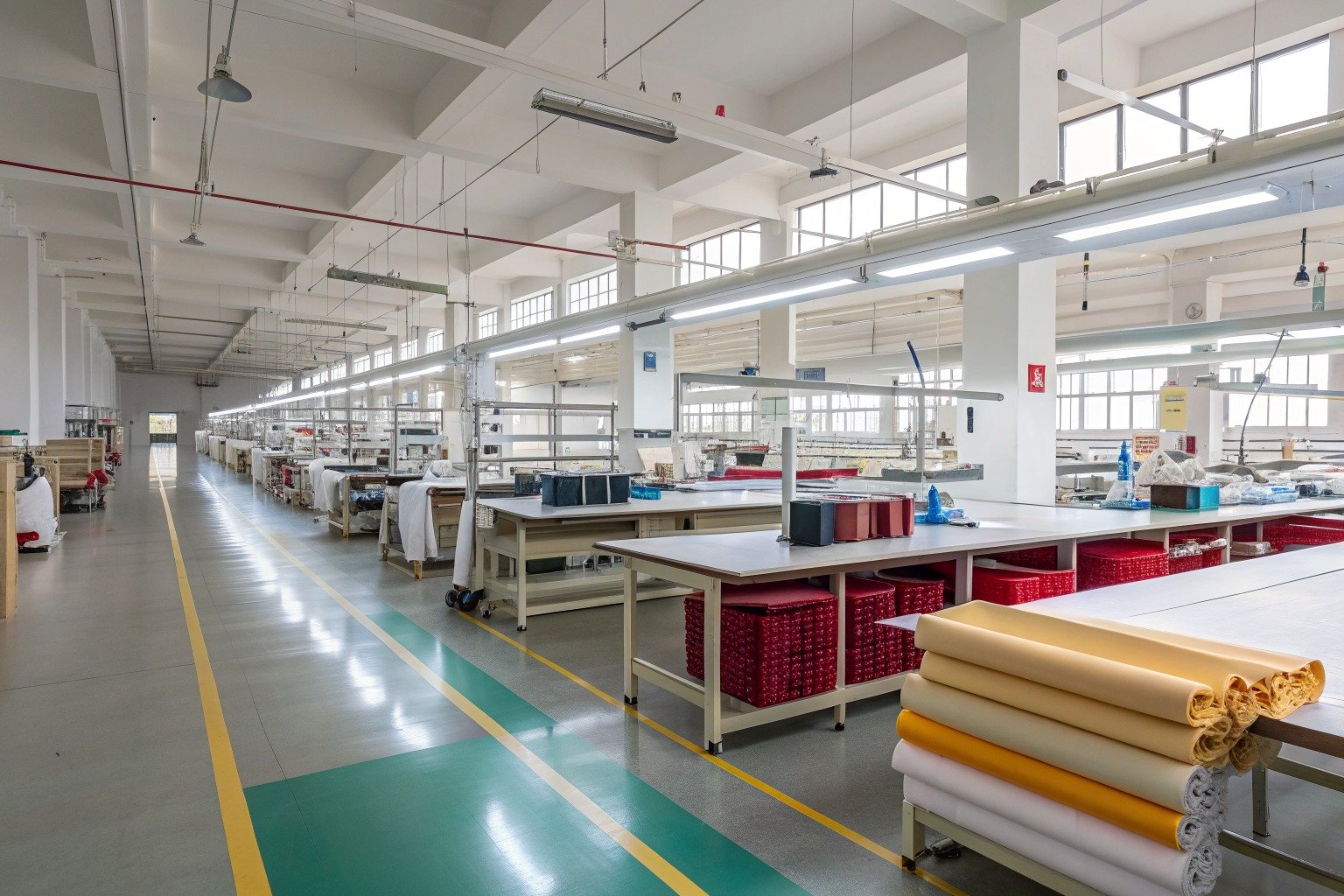
I have seen too many shipments arrive with problems that could have been caught with proper inspection. A skipped stitch here, a loose thread there. These small flaws become big problems for the end user. For a buyer like Ron, who values quality and reliability, understanding how to check stitching is essential for ensuring that the gloves he sells will stand up to customer expectations. At Shanghai Fumao Clothing, our quality control team has developed a rigorous system for inspecting stitching. Let me share the methods we use to ensure every glove that leaves our factory is perfectly constructed.
What are the key stitching areas to inspect on different types of gloves?
Different glove types have different stress points. A leather work glove fails in different places than a knitted fashion glove. Knowing where to look is the first step in effective inspection. You cannot just glance at a glove and call it good. You need to know the weak spots.
Where do leather gloves typically fail at the seams?
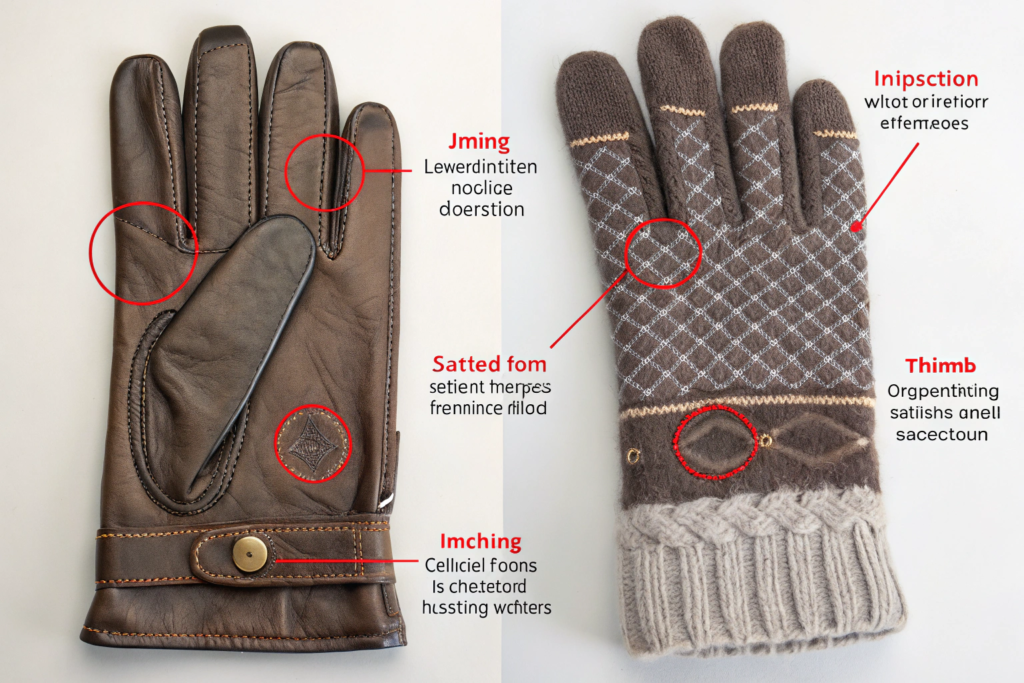
Leather gloves are all about the seams that join the pieces of leather together. The most critical areas are the finger side seams and the thumb joint. These areas experience the most stress and movement. If the stitching here is too shallow or the thread is weak, the seam will pop open with use. We inspect these seams closely for consistent stitch length and tension. The thread should be pulled tight enough to hold the leather securely but not so tight that it cuts into the material. We also check the "fourchettes," the small pieces of leather between the fingers. The stitching attaching these must be perfect, or the glove will be uncomfortable and weak. Any skipped stitches or loose threads in these areas are immediate grounds for rejection.
What stitching problems are common in knitted gloves?
Knitted gloves are constructed differently, but stitching is still critical. The main areas of concern are the cuff edge and the tip closures on the fingers. The cuff must be finished with a secure stitch that will not unravel when the glove is pulled on and off. We check for a clean, even edge with no loose loops. The fingertips are another key area. In knitted gloves, the knitting is often "closed" at the tips. If this closure is not secure, the tip will develop a hole. We inspect each fingertip carefully, gently stretching the fabric to ensure the closure is tight and will hold. For gloves with sewn-on embellishments or reinforcements, we also check those attachment points.
What tools and techniques are used for visual stitching inspection?
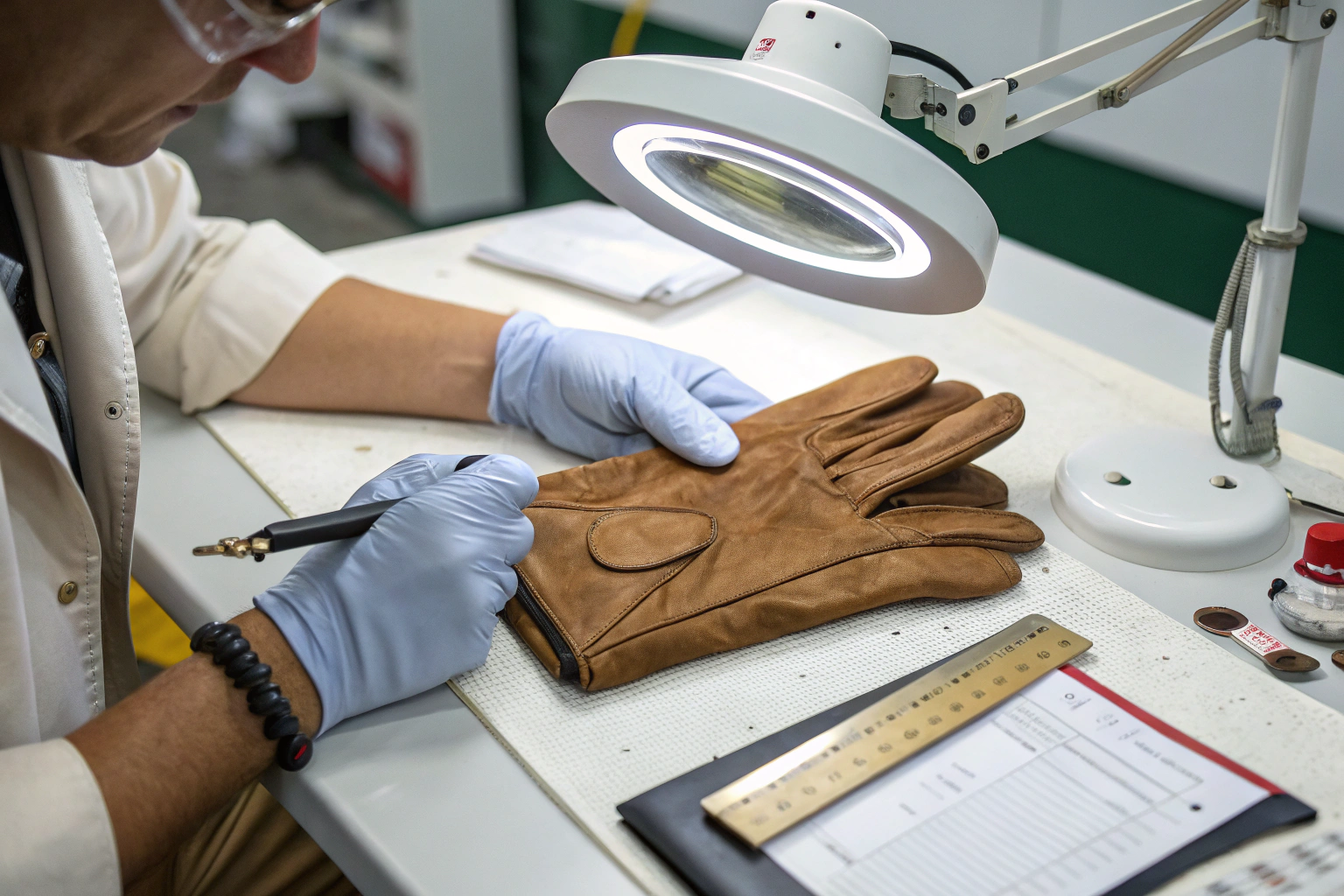
Visual inspection is the first and most important line of defense. But you cannot do it with the naked eye alone. You need the right tools and a systematic approach. Our QC team uses a combination of techniques to catch every flaw.
Why is magnification essential for inspecting glove stitching?
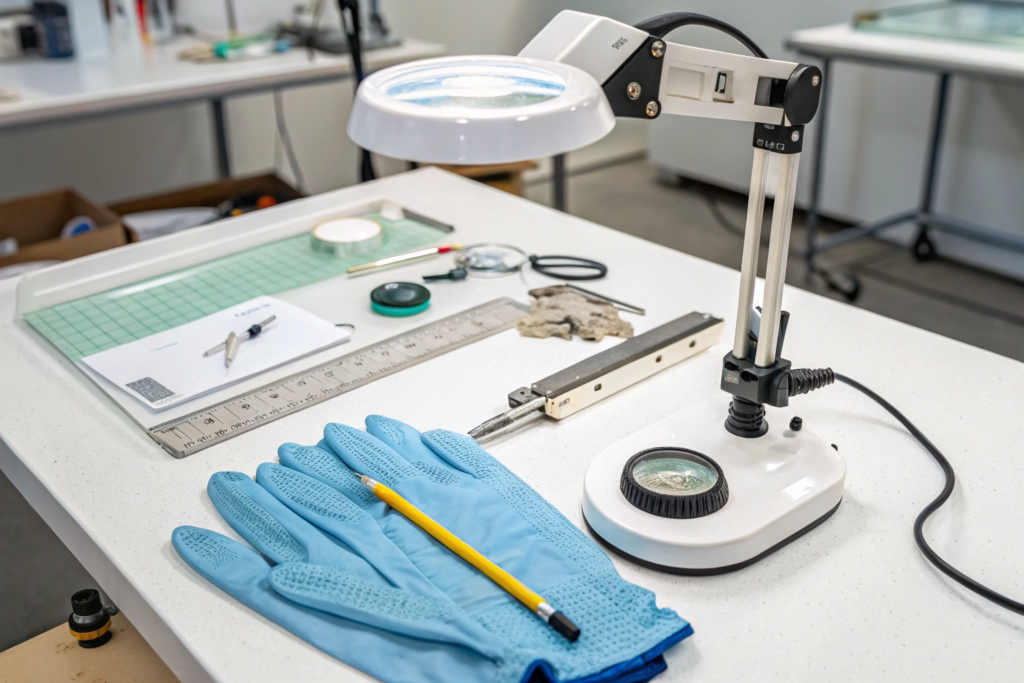
Stitching is small. Threads are thin. A skipped stitch or a tension issue can be almost invisible without help. This is why we use high-intensity magnifying lamps at every inspection station. The magnification allows us to see the individual stitches clearly. We can see if the thread is lying flat or if it is twisted. We can see if the stitch density is consistent across the seam. We can spot a tiny loop of loose thread that could become a pull. This level of detail is impossible to achieve with the naked eye. Investing in good magnification is one of the simplest and most effective ways to improve quality control. It turns a quick glance into a thorough examination.
How do you measure stitch density and consistency?
Stitch density, or the number of stitches per inch, is a key indicator of quality. Too few stitches, and the seam will be weak. Too many, and the thread might cut the material or create bulk. We measure stitch density using a small tool called a thread counter or a simple ruler. We count the stitches over a one-inch length and compare it to the specification for that product. Consistency is just as important as the number. The stitch density should be uniform across the entire seam. If it varies, it indicates a problem with the sewing machine or the operator’s technique. We check stitch density at multiple points on each glove to ensure uniformity.
What physical tests are used to check stitching strength?
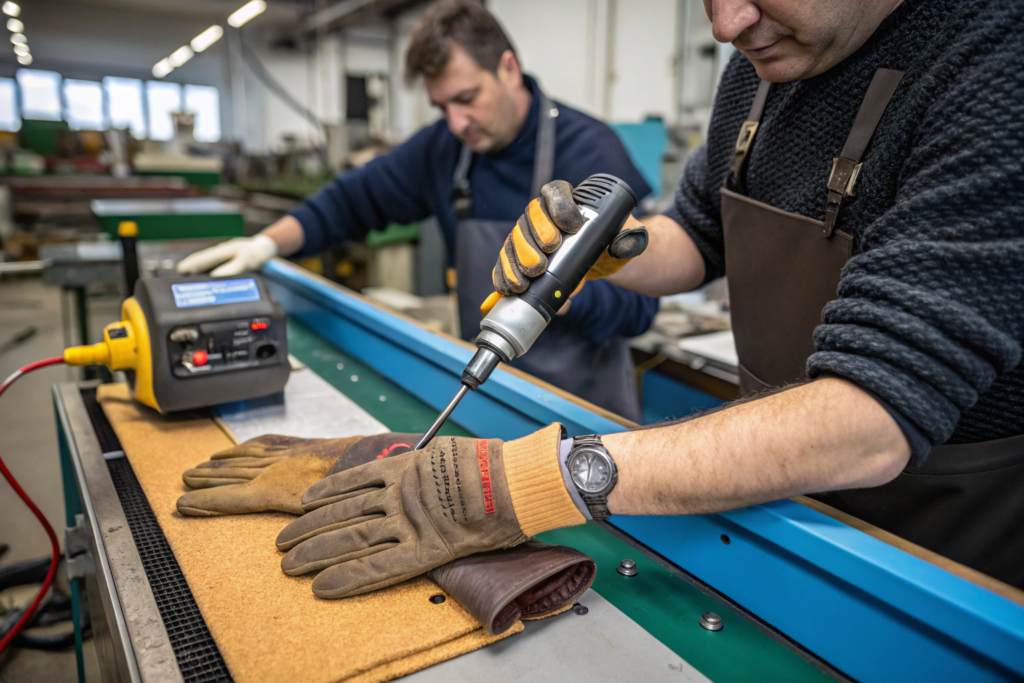
Visual inspection can catch many flaws, but it cannot tell you how strong the stitching really is. The human eye may spot a loose thread or an uneven seam, but it fails to reveal the hidden resilience beneath the surface—the quiet strength that will hold fast when hands are gripping, pulling, or enduring the rigors of daily wear. For that deeper truth, for the unyielding backbone of durability, you need physical tests.
These tests are not mere formalities; they are rigorous trials that simulate the stresses the glove will experience during actual use: the strain of a heavy lift, the friction of repeated motion, the tension of a sudden tug. They mimic the real-world forces that threaten to fray, tear, or break the bond between threads and fabric.
How do you perform a pull test on glove seams?
The pull test is simple but effective. We take the glove and apply gentle, steady pressure to the seam we want to test. For a finger seam, we might hold the glove on either side of the seam and pull. We are feeling for any give or separation. A well-stitched seam should hold firm. If we feel the seam starting to separate or hear any creaking, that is a red flag. We do this on every critical seam: fingers, thumb, and cuff. This test gives us a direct sense of the seam’s integrity. It is a tactile check that no visual inspection can replace. It is also a test that consumers will do themselves when they first put on the glove, so we want to make sure it passes.
What is the best way to test fingertip stitching on knitted gloves?
Fingertips on knitted gloves are a common failure point. To test them, we use a gentle but firm stretch. We hold the glove near the fingertip and gently pull the fabric away from the tip. We are checking to see if the knitted closure holds. If the tip pops open or if we see the stitches starting to loosen, the glove fails. We also check the fit. The fingertip should be shaped correctly and comfortable, not tight or bunchy. For gloves with reinforced fingertips, like those for touchscreen use, we check the stitching that holds the conductive material in place. This is a detailed, hands-on process that ensures every fingertip is ready for the wear and tear of daily use.
Conclusion
Checking glove stitching is a detailed, multi-step process that requires the right tools, the right techniques, and a commitment to quality. We have explored the key areas to inspect on different types of gloves, from the finger seams of leather gloves to the tip closures of knitted ones. We have discussed the importance of magnification for seeing small details and measuring stitch density for consistency. And we have looked at the physical tests, like the pull test, that verify the real-world strength of the stitching.
For a professional buyer like Ron, this knowledge is power. It allows him to ask the right questions of his suppliers and to understand what goes into a truly well-made glove. It also helps him explain to his customers why his gloves are worth the price.
At our factory in Zhejiang, we have built our reputation on this kind of attention to detail. Our quality control team is trained to inspect every stitch, and our processes are designed to catch problems before they become your problems. We know that a glove is only as good as its stitching, and we take that responsibility seriously. If you are ready to source gloves that are built to last, with stitching you can trust, we are here to help.
To discuss your next glove project and learn more about our quality control processes, please contact our Business Director, Elaine, at elaine@fumaoclothing.com. Let’s create gloves that hold up.