
Have you ever bought a winter hat that was incredibly warm but so bulky and heavy it felt like a helmet? Or a stylish, lightweight beanie that offered almost no protection against a real winter chill? This is a common frustration. As a manufacturer, I often speak with buyers like Ron from the US, who are looking for that perfect balance for their customers: a hat that provides serious warmth without the weight.
The secret to making a warm and lightweight winter hat lies in choosing the right high-performance materials and using an advanced knitting technique. It’s not about thickness; it’s about the science of the fibers. Materials like merino wool and cashmere blends offer superior insulation with minimal bulk, while specific knit structures trap air effectively to create warmth.
For over two decades, I’ve been dedicated to perfecting this balance. It’s a challenge that combines material science with craftsmanship. In this article, I’ll pull back the curtain on how we, as manufacturers, create winter hats that are both incredibly warm and comfortably lightweight. We’ll explore the "miracle" materials we use and the construction methods that make all the difference. Let’s get into the details of what makes a truly great winter hat.
What are the best materials for a warm and lightweight hat?
Ever wondered why some thin hats are warmer than some thick ones? The problem isn’t the amount of material, but the type of material. Many people assume that thickness equals warmth, leading them to choose bulky, uncomfortable hats that are heavy and cause overheating.
The key to warmth without weight is selecting fibers with superior thermal properties. The best materials are natural fibers like merino wool and cashmere, or advanced synthetic fleeces, which have a natural crimp or structure that traps air. This trapped air creates an insulating barrier that keeps your head warm.
In my factory, Shanghai Fumao Clothing, material selection is the most critical step in designing a winter hat. We source specific grades of yarn to meet the performance demands of our clients, who supply everything from high-end fashion boutiques to outdoor gear retailers. Let’s break down why these materials are the top choices for creating the perfect winter hat.
Why is merino wool the top choice?
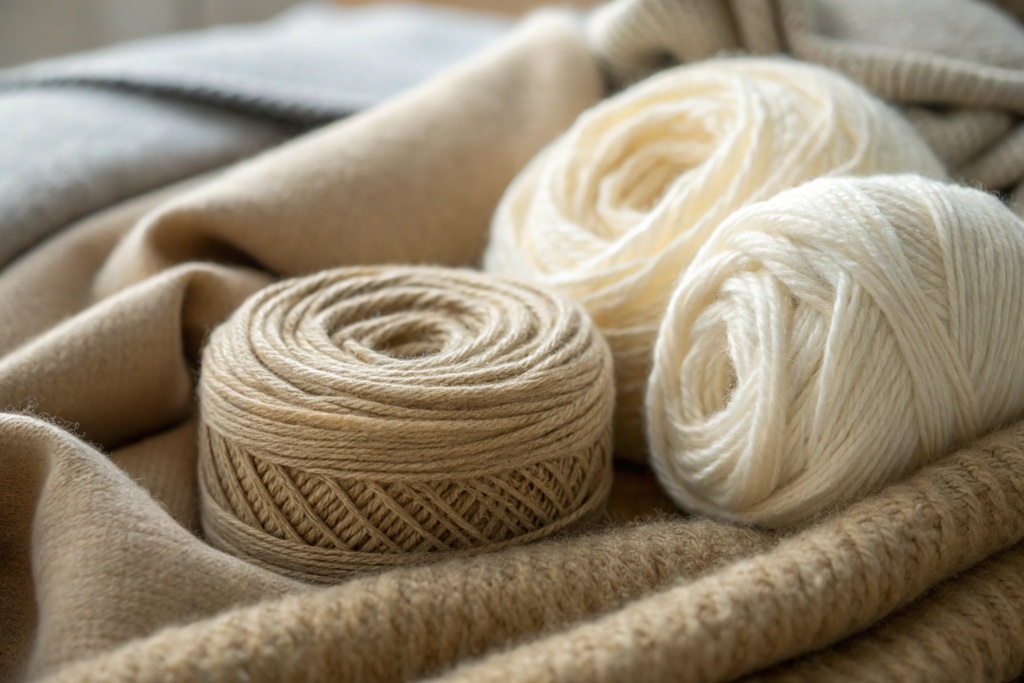
Merino wool is nature’s super-fiber and our number one choice for lightweight warmth. Unlike traditional, scratchy wool, merino fibers are incredibly fine and soft. Their natural crimp creates thousands of tiny air pockets that trap body heat, providing exceptional insulation. What makes merino truly special is its breathability and moisture-wicking properties. It can absorb up to 30% of its own weight in moisture without feeling damp, drawing sweat away from your skin to keep you dry and comfortable.
This ability to manage moisture is crucial for preventing the "chill" that happens when you stop moving after being active. We produce a vast range of merino wool beanies because they perform just as well on a city street as they do on a hiking trail. For more in-depth information on the technical benefits of this material, organizations like the International Wool Textile Organisation (IWTO) provide extensive research on wool’s properties.
Are there other good natural fiber options?
Absolutely. For a touch of luxury, nothing beats cashmere. Cashmere fibers, which come from the soft undercoat of cashmere goats, are even finer than merino wool, making them incredibly soft and lightweight. A cashmere or cashmere-blend beanie offers exceptional warmth with a silky, luxurious feel against the skin. While it’s less durable than merino for rugged outdoor use, it’s an unparalleled choice for everyday luxury and comfort.
Another excellent, though less common, option is alpaca wool. Similar to merino, alpaca fibers are hollow, which gives them a fantastic warmth-to-weight ratio. It’s also naturally water-resistant and hypoallergenic. We often create blends, such as merino-cashmere or merino-alpaca, to combine the best properties of each fiber—achieving the perfect balance of softness, warmth, and durability. You can learn about the unique qualities of these fibers from resources like the Cashmere and Camel Hair Manufacturers Institute (CCMI).
How does the hat’s construction affect warmth?
Have you ever noticed how two hats made from the same yarn can have different levels of warmth? The material is only half the story. The way the hat is knitted—its construction—plays an equally vital role in its ability to insulate. This is a detail that is often overlooked by consumers but is a key focus for manufacturers.
The construction of a hat determines how effectively it can trap air. A denser, tighter knit will be more wind-resistant and trap more air within its structure, while a double-layered construction can dramatically increase warmth by creating an extra insulating layer. The specific knit pattern, like a rib or waffle knit, also influences the hat’s stretch, fit, and thermal properties.
At my factory, our technicians program the knitting machines to create specific structures that maximize the performance of the chosen yarn. It’s a precise science. A simple change in the knit can alter a hat’s warmth, breathability, and weight. Let’s explore the most effective construction techniques.
What is the benefit of a double-layered hat?
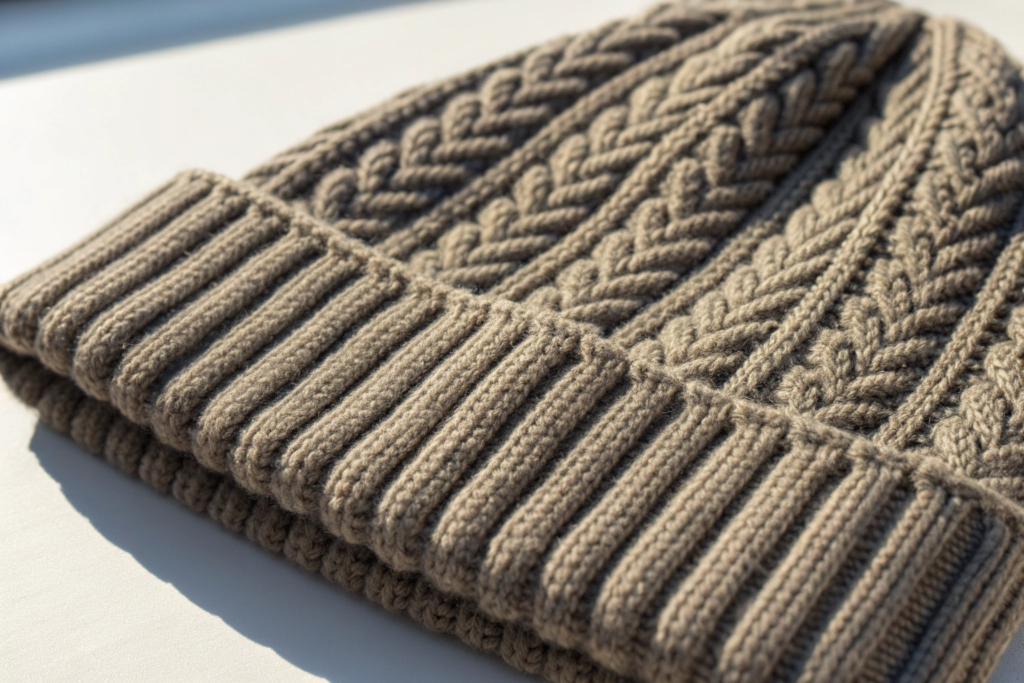
A double-layered or double-knit construction is one of the most effective ways to boost a hat’s warmth without adding significant bulk. This technique involves knitting two layers of fabric simultaneously, which are joined at the edges. The space between these two layers traps an additional pocket of air, creating a powerful insulating barrier, much like a double-pane window.
This method is particularly effective for blocking wind, making it ideal for very cold or blustery conditions. We often use this technique for our performance-oriented winter hats, sometimes using a moisture-wicking material for the inner layer and a weather-resistant material for the outer layer. This advanced construction is a hallmark of high-quality winter headwear, a standard feature in many of the products we create at Shanghai Fumao Clothing.
Which knit patterns are the warmest?
The knit pattern itself contributes to warmth. A classic rib knit (like the pattern you see on the cuffs of sweaters) is excellent because it creates channels that trap air. It’s also very stretchy, which ensures a snug fit that prevents heat from escaping around the edges. A snug fit is crucial; a loose hat will let cold air in, no matter how good the material is.
Another effective pattern is a waffle knit or thermal knit. This pattern creates a three-dimensional, grid-like texture with deep pockets that are superb at trapping body heat. It’s a classic pattern used in thermal underwear for this very reason. While a very open or lacy knit might be stylish, it will not be effective for warmth as it allows air to pass through freely. For more on different knitting techniques and their properties, you can explore educational resources like Knitting for Dummies which provides clear explanations of various stitch patterns.
Does the fit of the hat matter for warmth?
You’ve chosen the perfect material and a warm knit, but you still feel a draft around your ears. What went wrong? The fit of your hat is the final, crucial piece of the puzzle. An ill-fitting hat, no matter how well-made, will fail to keep you warm.
Yes, the fit is critically important for warmth. A winter hat should be snug enough to cover your ears completely and prevent cold air from getting in, but not so tight that it’s uncomfortable. A proper fit ensures that the insulating layer of trapped air stays close to your head, where it can be warmed by your body heat.
This is a key aspect of our design and quality control process. We test our hat sizes and shapes to ensure they provide optimal coverage and a comfortable, secure fit for the average head. A perfect fit seals in warmth and completes the high-performance system. Let’s look at what defines a good fit and how different styles affect it.

How should a winter hat fit?
A well-fitting winter hat should pull down comfortably over the tops of your ears. This is non-negotiable for warmth, as your ears are particularly susceptible to the cold. The band of the hat should feel secure around your head without being constricting. If it’s too loose, it will let heat escape and cold air enter. If it’s too tight, it can cause headaches and be uncomfortable to wear for long periods.
The ideal fit creates a seal around your head, trapping the warm air that the material and knit structure are designed to hold. When you try on a hat, shake your head slightly. It shouldn’t shift or slide off easily. For guidance on measuring your head for a perfect hat size, many retailers like REI provide simple instructions that can help you find the right size.
Do different styles offer different levels of warmth?
Yes, the style of the hat definitely impacts its warmth. A classic beanie that is designed to be worn snugly is generally the most thermally efficient style. A slouchy beanie, while stylish, can sometimes be less effective if the extra fabric creates gaps or if the fit around the band is too loose.
A cuffed beanie offers an advantage because the folded-up cuff provides a double layer of fabric over the ears and forehead, which are key areas for heat loss. This makes it one of the most practical and popular styles for cold weather. When we design different styles at Shanghai Fumao Clothing, we adjust the patterns to ensure that even more fashion-forward shapes provide adequate coverage and a secure fit.
How can I care for my hat to maintain its properties?
You’ve invested in a high-quality, lightweight, and warm winter hat. How do you make sure it lasts? A common mistake is to treat these high-performance accessories like any other piece of laundry, which can quickly ruin their special properties. Improper washing can cause shrinking, stretching, or damage to the delicate fibers.
Proper care is essential to maintaining your hat’s warmth, shape, and softness for years to come. For natural fibers like merino wool and cashmere, this means gentle hand-washing in cool water with a mild detergent and always laying it flat to dry. Avoid the washing machine and dryer at all costs.
As a manufacturer, we want the products we make to have a long life. That’s why we always provide clear care instructions. Taking a few extra minutes to care for your hat properly will protect your investment and ensure it keeps you warm season after season. Let’s go over the simple steps for washing and storing your hat correctly.
What is the correct way to wash a wool or cashmere hat?
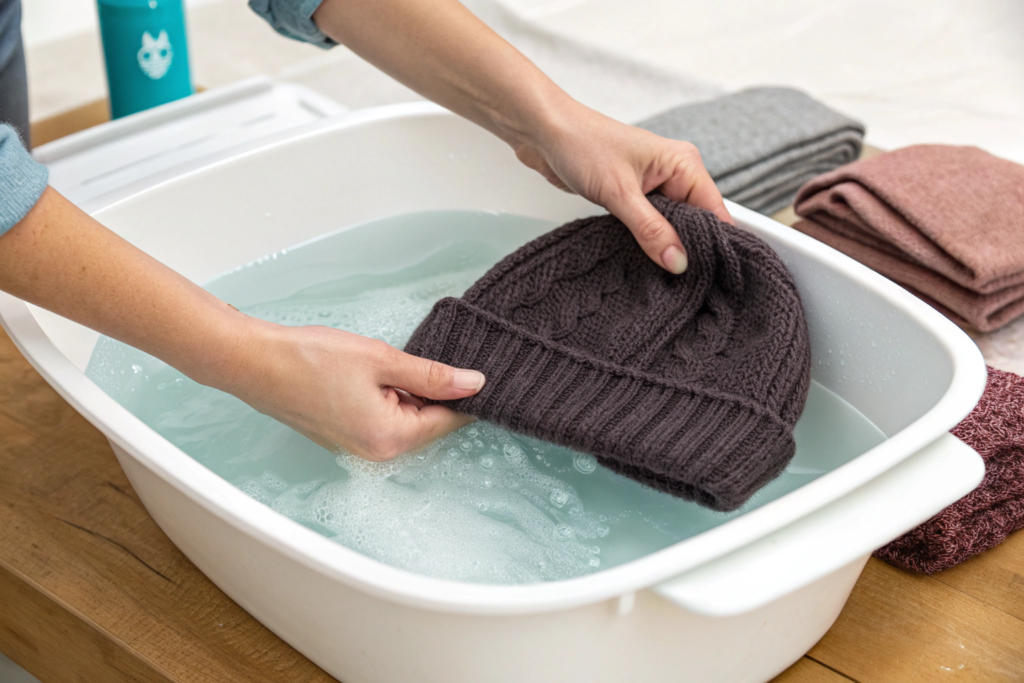
The best method is to hand-wash. Fill a clean basin with cool or lukewarm water and add a small amount of a gentle, wool-safe detergent. Submerge the hat and let it soak for about 10-15 minutes. Gently squeeze the suds through the fabric, but avoid vigorous rubbing or wringing, as this can stretch and damage the fibers.
After washing, drain the soapy water and rinse the hat thoroughly with cool, clean water until all the detergent is gone. To remove excess water, gently squeeze the hat into a ball—never twist or wring it. Then, lay it on a clean, dry towel, roll the towel up, and press gently to absorb more water. Finally, reshape the hat and lay it flat on a fresh towel or a drying rack, away from direct sunlight or heat. This process is recommended by experts like The Woolmark Company to preserve the integrity of the wool.
How should I store my hat in the off-season?
Proper storage is just as important as proper washing. Before storing your hat for the summer, make sure it is completely clean. Moths and other pests are attracted to dirt and body oils left on the fabric. Once clean and dry, the best way to store a knit hat is to fold it neatly and place it in a breathable container, like a cotton storage bag.
Avoid hanging a knit hat for long periods, as this can cause it to stretch out of shape. For added protection against moths, you can include natural repellents like cedar blocks or lavender sachets in the storage area. Storing your hat correctly will ensure that when you pull it out next winter, it’s fresh, in perfect shape, and ready to keep you warm. For more tips on clothing storage, home organization sites like The Spruce offer excellent advice.
Conclusion
Creating a winter hat that is both warm and lightweight is a thoughtful process that goes far beyond just choosing a thick material. It’s a science that balances the incredible insulating properties of high-performance fibers like merino wool and cashmere with the technical precision of advanced knit constructions. From a double-layered design that traps extra air to a snug fit that seals out the cold, every detail matters. By understanding what makes a great winter hat and how to care for it, you can invest in a piece that will provide superior comfort and style for many winters to come.
If you are a brand or importer looking to create a line of high-quality winter accessories that truly performs for your customers, we at Shanghai Fumao Clothing have the expertise to bring your vision to life. We are masters of material science and quality construction. To start developing your next collection, please reach out to our Business Director, Elaine, at her email: elaine@fumaoclothing.com.