I have been in this industry for over twenty years, and I have seen beautiful, well-made products destroyed by bad packaging. It is a heartbreaking sight. A client invests so much in design and production, only to have their hair clips arrive bent, scratched, or tangled because they were thrown into a box without a thought. Packaging is not an afterthought. It is the final, critical step in delivering quality to your customer.
The best way to pack hair clips and bands is to use a combination of protective individual packaging, secure bulk packing, and strategic carton loading that prevents movement and crushing during transit, all while considering sustainability and your customer’s unboxing experience. It is a balance of protection, cost, and presentation.
I have learned through decades of shipping millions of units that the journey from our factory in Zhejiang to a store shelf in America or Europe is brutal. Boxes are stacked, tossed, and compressed. If your products are not packed correctly, they will not survive. For a buyer like Ron, who values quality and reliability, understanding packaging is just as important as understanding production. At Shanghai Fumao Clothing, we have developed packaging systems that protect your products and reflect the care you put into them. Let me walk you through the best practices for getting your hair accessories to your customers in perfect condition.
How should individual hair clips be packaged for protection and presentation?
The first layer of packaging is the one your customer sees. It sets the tone for their entire experience with your brand. But it also has a very practical job: to protect the clip from damage and keep it looking perfect.
Why are carded displays the premium choice for hair clips?
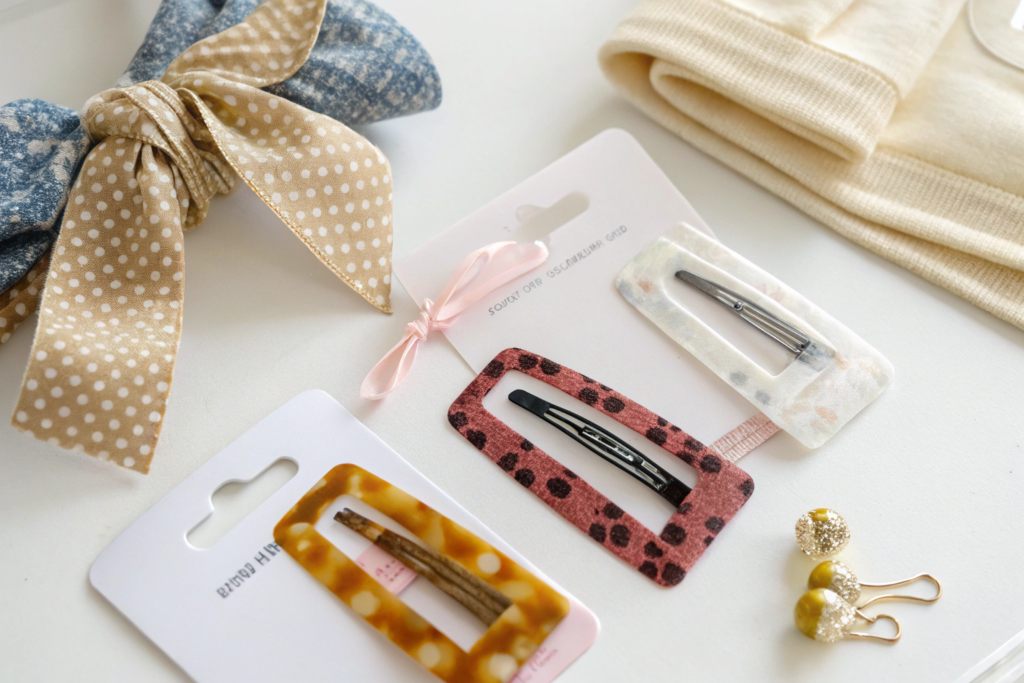
Carded packaging, where a hair clip is attached to a printed card, often with a clear plastic bubble or a ribbon, is the gold standard for retail presentation. It keeps the clip visible and secure. It prevents the teeth of the clip from snagging on other items. It also provides a perfect surface for branding, product information, and pricing. This type of packaging tells the customer that this is a quality item worth the price. It is ideal for retail stores where products are hung on pegs or displayed on shelves. The card protects the clip and makes it easy to handle without damaging the product. For a premium line, this is often the best choice. The card stock needs to be thick enough to resist bending, and the attachment method must be secure but allow the customer to try the clip if that is your store’s policy.
When are poly bags a better option for bulk or online sales?
For online sales, where products are shipped directly to customers, poly bags are often the most practical and cost-effective solution. A small, clear poly bag protects the hair clip from dust and minor scratches during its journey inside a larger shipping box. It is lightweight and takes up almost no space. For bulk orders going to a distributor or a store’s warehouse, poly bags are essential for keeping bulk items separate and organized. However, the unboxing experience is different. You lose the visual impact of a card. To compensate, many brands use custom-printed poly bags with their logo or a thank you sticker. This adds a personal touch. The key is to use the right thickness of bag. A bag that is too thin will tear easily. We recommend a thickness that is durable but still easy to open.
How should hair bands be packaged to prevent tangling and stretching?
Hair bands present a different set of challenges. They are soft, stretchy, and can easily become tangled or stretched out of shape if not handled correctly. The goal is to keep them organized and maintain their original form.
What is the best way to fold and secure fabric hair bands?
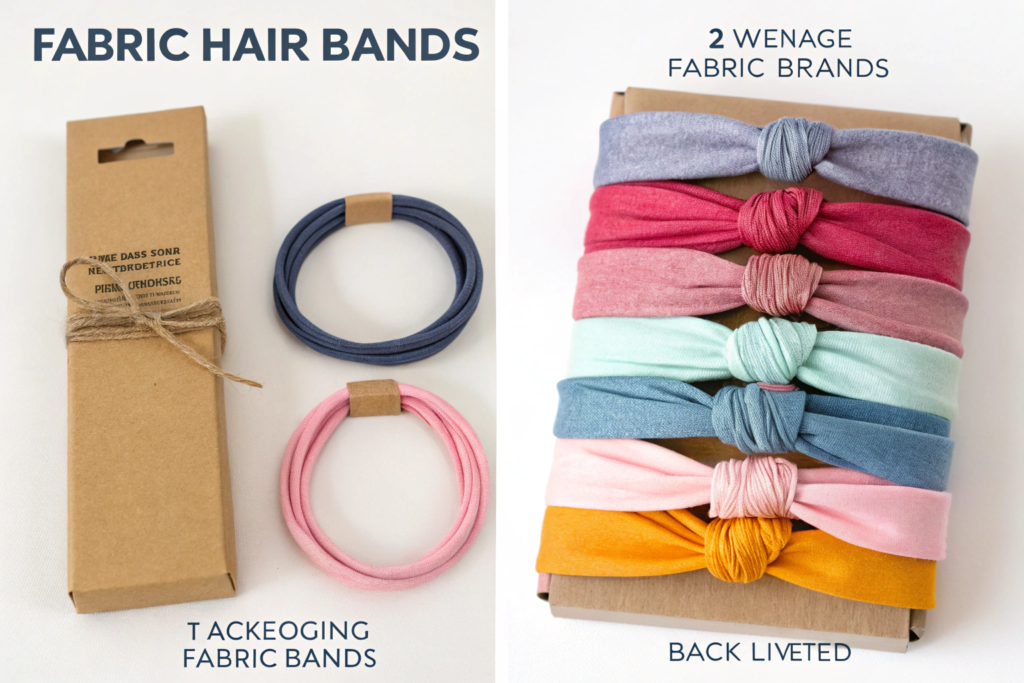
The enemy of a fabric hair band is stretching. If a thick elastic band is simply thrown into a box, it can get stretched around other items and lose its shape permanently. The best practice is to fold the band neatly and secure it in its folded state. This can be done with a small piece of tape, a paper band, or a simple staple through a small tag. The key is to hold the band in a relaxed, folded position so the elastic is not under tension during shipping. For scrunchies, which are bulkier, laying them flat in a shallow tray is often best. For thinner elastic bands, wrapping them loosely around a small piece of cardboard can also work, but you must ensure the cardboard is smooth to avoid snagging the fabric.
How do you prevent elastic from losing its shape during shipping?
This is a physics problem. Elastic is constantly trying to return to its shortest length. If a band is stretched over a large display card or hooked on something during transit, it will be under constant tension. Over days or weeks, this can weaken the elastic and cause it to lose its snap. The solution is to ensure the band is always stored and shipped in a relaxed state. It should not be stretched to its limit. The folding method I just mentioned achieves this. For bulk packing, bands should be laid flat in layers, not thrown in loosely. We also advise against hanging bands on hooks for long-term storage before shipping, as this can create a permanent "bend" in the fabric where it hangs.
What are the best practices for bulk packing and carton loading?
Once individual items are packaged, they need to be packed into larger shipping cartons. This is where many shipments fail. The forces inside a shipping container are immense. A poorly packed carton can lead to crushed products, no matter how good your individual packaging was.
Why is carton strength and size critical for safe shipping?
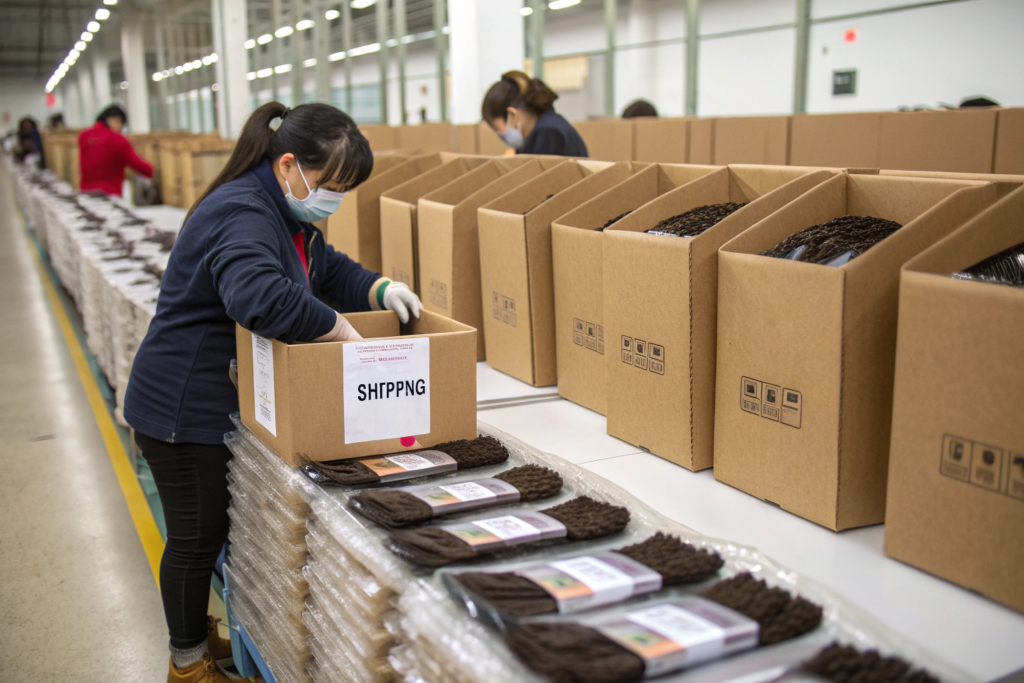
The outer carton is your product’s last line of defense. You must use a carton that is strong enough for its weight. A flimsy box will collapse under the weight of others stacked on top of it. We always specify a minimum bursting strength for our cartons. The size of the carton is also crucial. A box that is too large for its contents allows items to shift and bang into each other during transit. This causes damage. A box that is too tight will put pressure on the items inside and may bulge, making it unstable to stack. The goal is a snug fit. We use custom-sized cartons for different product lines to ensure a perfect fit. This minimizes movement and maximizes stackability.
How should items be layered inside a master carton?
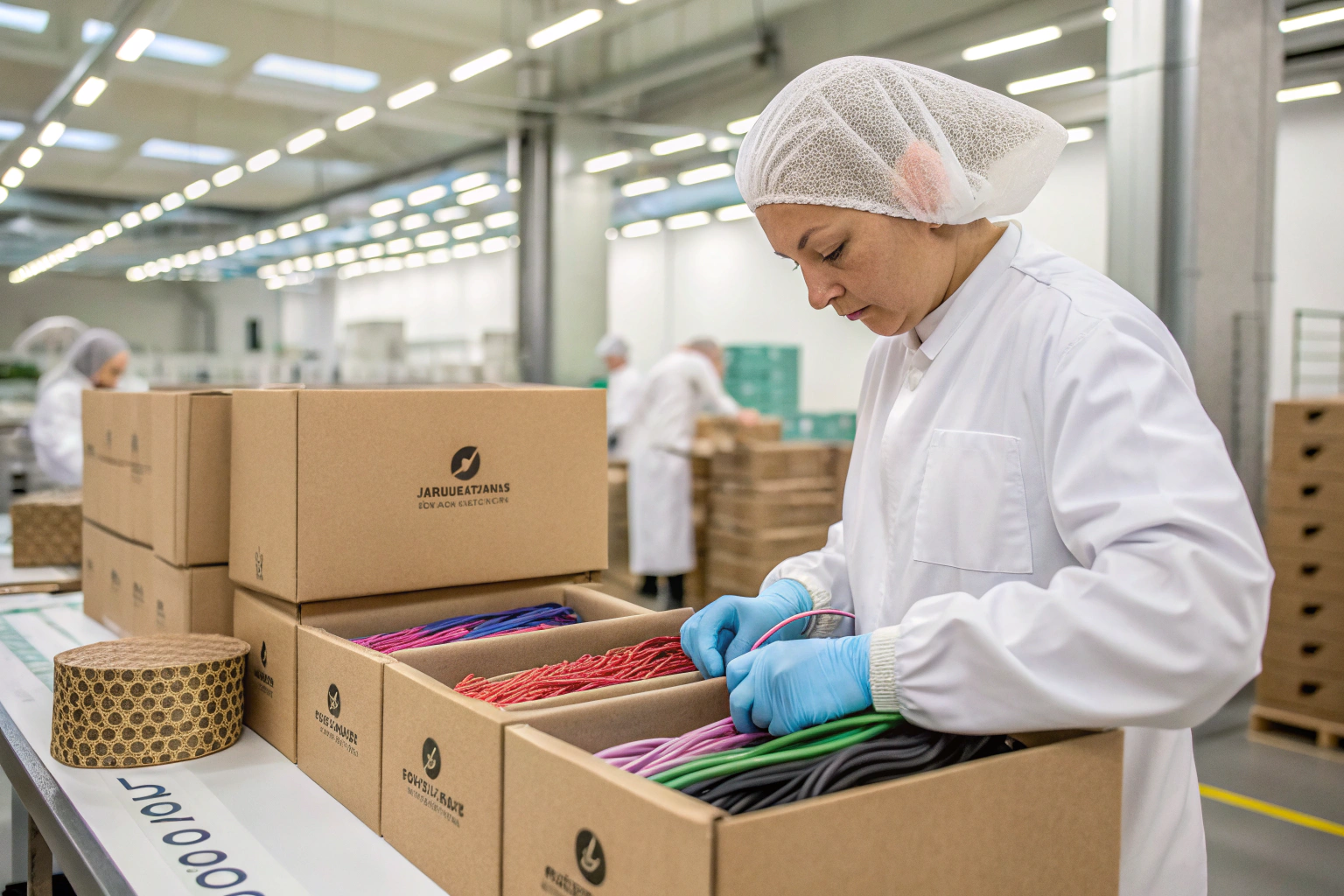
Layering is an art. We never just dump products into a carton. We pack them in organized layers. For flat items like carded hair clips, we lay them flat, often in rows, and then place a sheet of cardboard on top before adding the next layer. This "tiering" or "layer packing" distributes weight evenly and prevents the items in the bottom layer from being crushed. For irregular shapes, we might use dividers or void fill. Void fill, like air pillows or crumpled paper, is used to fill any empty spaces and prevent items from shifting. The goal is to create a solid, stable block of product inside the carton. When the carton is shaken, nothing inside should move. This is the gold standard for protective bulk packing.
Conclusion
Getting your hair clips and bands to your customers in perfect condition is the final, essential step in the manufacturing process. We have explored how individual packaging, from premium carded displays to practical poly bags, sets the stage for the customer’s experience and provides the first layer of protection. We have discussed the specific techniques needed to keep hair bands from stretching and tangling. And we have looked at the critical importance of strong outer cartons and intelligent layer packing to survive the journey across the ocean.
For a professional buyer like Ron, these details are not minor. They directly impact his bottom line. Damaged goods mean returns, refunds, and unhappy customers. Investing in proper packaging is investing in your brand’s reputation.
At our factory in Zhejiang, we treat packaging with the same seriousness as production. Our experienced team ensures that every shipment is packed to withstand the rigors of international shipping. We work with you to find the right balance of protection, presentation, and cost for your specific products.
If you are ready to ensure your hair accessories arrive safely and beautifully, we are here to help.
To discuss your packaging needs for your next hair accessory order, please contact our Business Director, Elaine, at elaine@fumaoclothing.com. Let’s make sure your products arrive perfect.