You’ve found the perfect product online—a sleek bag, a stylish belt, or a cozy hat. You love the design, but a nagging doubt creeps in: "Will it fit me?" In the split second you hesitate, you might click away, and the sale is lost. This is the silent conversion killer of e-commerce, and it’s why adjustable features are no longer just a nice-to-have; they’re a critical sales driver.
Adjustable features are key for online sales because they directly combat the primary barrier to purchase: uncertainty about fit and suitability. They reduce return rates by accommodating a wider range of body types and preferences, enhance perceived value by offering customization, and create positive, confident customer experiences. For products like belts, hats, bags, and even some apparel, adjustability transforms a static item into a versatile solution, dramatically boosting conversion rates and building brand loyalty in a market where customers cannot physically try before they buy.
The impact of adjustability goes far beyond adding a simple strap or buckle. It’s a strategic design choice that addresses fundamental consumer psychology and logistical challenges in digital retail. Let’s explore how this simple feature builds trust, solves real problems, and ultimately protects your profit margins.
How Do Adjustable Features Reduce Online Return Rates?
High return rates are the Achilles’ heel of online retail, especially for fashion and accessories. They slash profits through reverse logistics, restocking costs, and potential item devaluation. A significant portion of these returns is due to "fit" or "size" issues.
Adjustable features act as a powerful hedge against this. A scarf that can be styled multiple ways, a hat with a hidden sizing band, or a bag with a multi-position strap gives the customer control to achieve a perfect personal fit. This directly decreases the likelihood of a return due to the item being "too tight," "too loose," or "not as expected." For retailers, this means more final sales, lower operational costs, and less wasted inventory. It’s a direct contributor to a healthier bottom line.

What is the direct financial impact of fit-related returns?
The cost is staggering. According to the National Retail Federation, returns cost retailers an average of 21% of the order value. For a $50 belt, that’s over $10 lost in processing, shipping, and potential markdowns—often erasing the profit margin. Fit-related returns are particularly costly because they involve no defect; the product is often resold as used. By integrating adjustability, brands can significantly shrink this category of returns. For example, a study by the Fit Technology sector often shows that products with noted adjustability features can see a reduction in size-related returns by 15-25%. This saving directly improves net profit and allows for reinvestment in areas like product development or customer service.
How does adjustability expand your target market?
A fixed-size product inherently excludes customers. A one-size-fits-most hat often doesn’t. An adjustable strap, however, can comfortably fit a much wider range—from a petite to a larger frame. This inclusivity isn’t just ethical; it’s commercially smart. It increases your potential customer base without needing to stock multiple, complex SKUs. You market one product that serves many. This is especially powerful for global online sales, where average body sizes can vary significantly between regions. An adjustable belt sold from Shanghai Fumao Clothing can fit customers in both North America and Europe without alteration, simplifying inventory and maximizing market reach.
How Does Adjustability Boost Conversion and Perceived Value?
Online shoppers are savvy. They seek products that offer flexibility, durability, and smart design. Adjustable features signal that a brand has thought about the user’s experience beyond the point of sale. This builds trust during the consideration phase, directly influencing the decision to add to cart.
When a product description highlights "adjustable strap," "customizable fit," or "multiple wearing styles," it answers the customer’s unspoken questions about fit and versatility. This reduces purchase anxiety. Furthermore, adjustability increases the perceived value. A scarf that can be worn as a shawl, headwrap, or belt is effectively three products in one. This justifies a higher price point and makes the product more appealing compared to a static alternative, winning in competitive online marketplaces.

How should adjustable features be communicated in listings?
Don’t just list "adjustable" as a bullet point—show it and explain it. Use high-quality images or videos demonstrating the adjustment mechanism in use. For a backpack, show a model shortening and lengthening the straps. For a belt, show the buckle being moved to different holes. Include copy that speaks to the benefit: "Find your perfect fit," "Customizable for all-day comfort," or "Style it your way." Incorporate customer reviews that mention the ease of adjustment. This multi-sensory proof builds confidence far more effectively than text alone. It turns a feature into a compelling benefit, directly addressing the key factors buyers consider before clicking "buy."
Can adjustability create a premium brand perception?
Absolutely. Precision adjustment mechanisms—like micro-adjustable clasps on a watch, magnetic sliders on a bag strap, or graduated sizing on a hat—connote sophistication and quality. They show an investment in engineering and user-centric design. This positions a brand as thoughtful and premium, differentiating it from competitors who offer basic, fixed alternatives. Customers are often willing to pay more for this perceived innovation and quality, as it promises a better, longer-lasting user experience. This brand equity is invaluable for driving repeat purchases and building a loyal customer base.
What Are the Best Adjustable Features for Common Accessories?
Implementing adjustability requires thoughtful design that is intuitive, durable, and aesthetically pleasing. The goal is to solve a fit problem without complicating the product or compromising its style.
The best features are seamless and user-friendly. They should feel like a natural part of the product, not an afterthought. For different categories, certain mechanisms have become industry standards because they simply work best. Let’s look at some applications for the types of products we manufacture.
Which mechanisms work best for bags and straps?
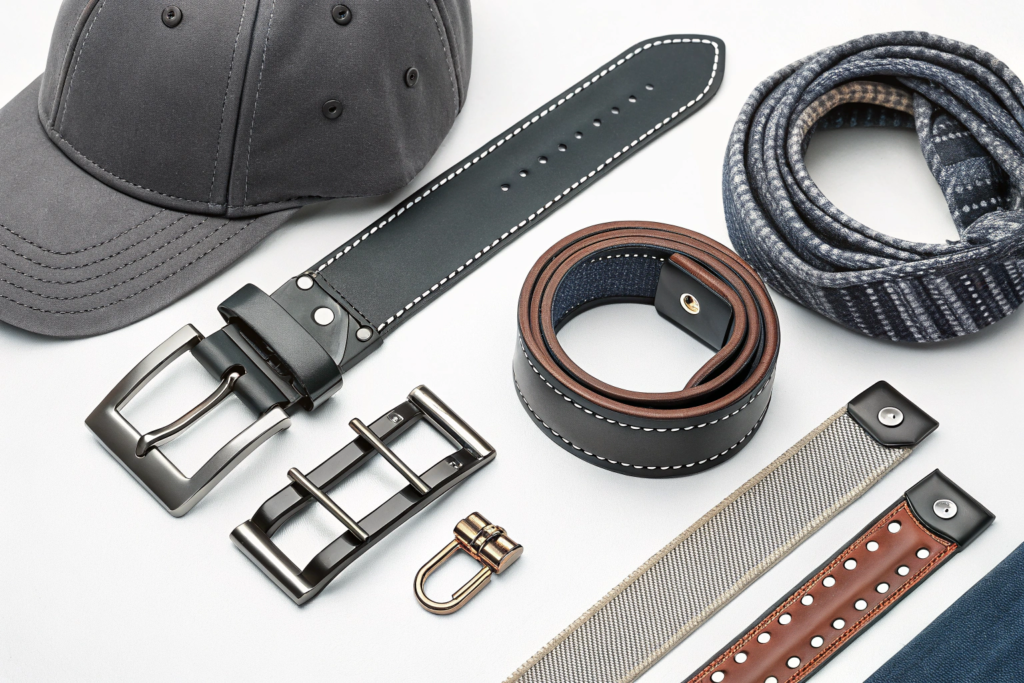
For bags, backpacks, and crossbody styles, sliding buckle adjusters (like ladder locks) are industry staples for their strength and ease of use. Magnetic quick-adjust sliders are gaining popularity for a sleek, modern look. For tote or bucket bags, drawstring closures offer adjustable volume and security. The key is ensuring the adjustment hardware is durable—cheap plastic buckles will break and negate any benefit. Using solid brass or zinc alloy hardware, as we do at Shanghai Fumao Clothing, ensures the mechanism lasts the lifetime of the product, aligning with strong quality control standards.
How is adjustability achieved in hats and belts?
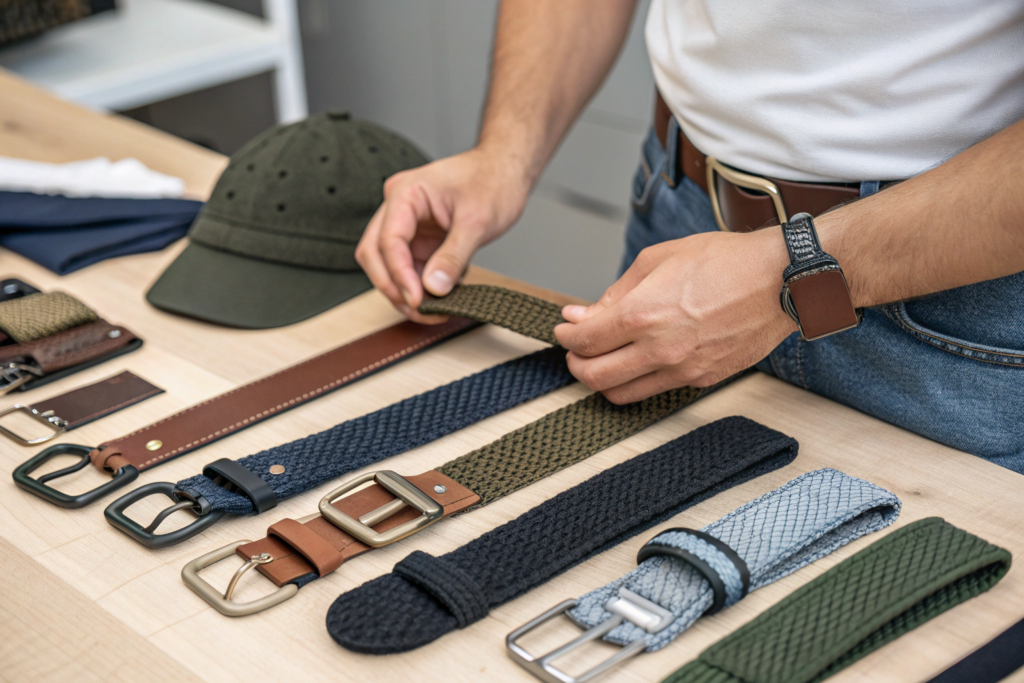
For hats, the snapback closure is the universal solution for adjustable fit, suitable for most head sizes. For a more refined look, leather bands with hidden snaps or elasticated inner bands provide comfort and flexibility. For belts, the traditional punched hole and prong system is reliable, but consider adding an extra-long tail for more sizing range. Higher-end options include ratchet buckle systems that allow micro-adjustments without visible holes. The choice depends on the brand’s price point and aesthetic, but all serve the core function of delivering a reliable, personalized fit that customers can trust when ordering online.
How to Source Products with Reliable Adjustable Features?
As a buyer, you must look beyond the catalog image. A poorly executed adjustable feature can be worse than none at all—it can break, be difficult to use, or look cheap. Vetting a supplier’s capability in this area is crucial.
Your sourcing questions should shift from "Do you have this?" to "How do you make this adjustable?" Request close-up photos and videos of the adjustment mechanism in action. Ask about the specific materials used for buckles, sliders, and elastics. The goal is to ensure durability and a quality user experience that will earn positive reviews, not complaints.
What quality tests are essential for adjustable parts?
Any adjustable component must undergo rigorous testing. For buckles and sliders, this includes pull strength tests to ensure they won’t detach under stress. For elastic elements like in hat bands, stretch and recovery tests are vital to prevent them from becoming loose over time. Cycle testing (repeating the adjustment action hundreds of times) simulates long-term use. A professional factory will have protocols for these tests and should be able to describe them. They should also source hardware from reputable sub-suppliers, not the cheapest option. This level of detail in manufacturing is what separates a reliable partner from a mere vendor.
How does adjustability affect packaging and instructions?
Consider the unboxing experience. If an item has a unique adjustment method, simple illustrated instructions included in the package can enhance customer satisfaction. For example, a scarf with multiple snaps might include a small card showing different styling options. Packaging should also protect adjustable parts from getting bent or damaged in transit. When discussing your order with a supplier, ask how they plan to package the item to preserve these functional elements. This end-to-end consideration, from factory production capabilities to the customer’s hands, is what ensures the adjustable feature fulfills its promise and drives those all-important five-star reviews.
Conclusion
In the world of online sales, where physical interaction is absent, adjustable features are a powerful tool to bridge the gap of uncertainty. They are a strategic investment that reduces costly returns, boosts conversion rates by alleviating purchase anxiety, enhances product value, and fosters brand loyalty through inclusive, customer-centric design.
For retailers and brands, prioritizing adjustability in product development and sourcing is not just a trend; it’s a smart response to the fundamental challenges of e-commerce. It aligns perfectly with the goal of delivering satisfaction on the first try, every time.
If you are looking to source or develop fashion accessories with smart, reliable adjustable features—from belts and bags to hats and scarves—partnering with an experienced manufacturer is key. We specialize in integrating high-quality, functional adjustability into our designs. To discuss how we can help create best-selling, low-return products for your online store, please contact our Business Director Elaine. She can connect you with our design and engineering team. Email her at: elaine@fumaoclothing.com.