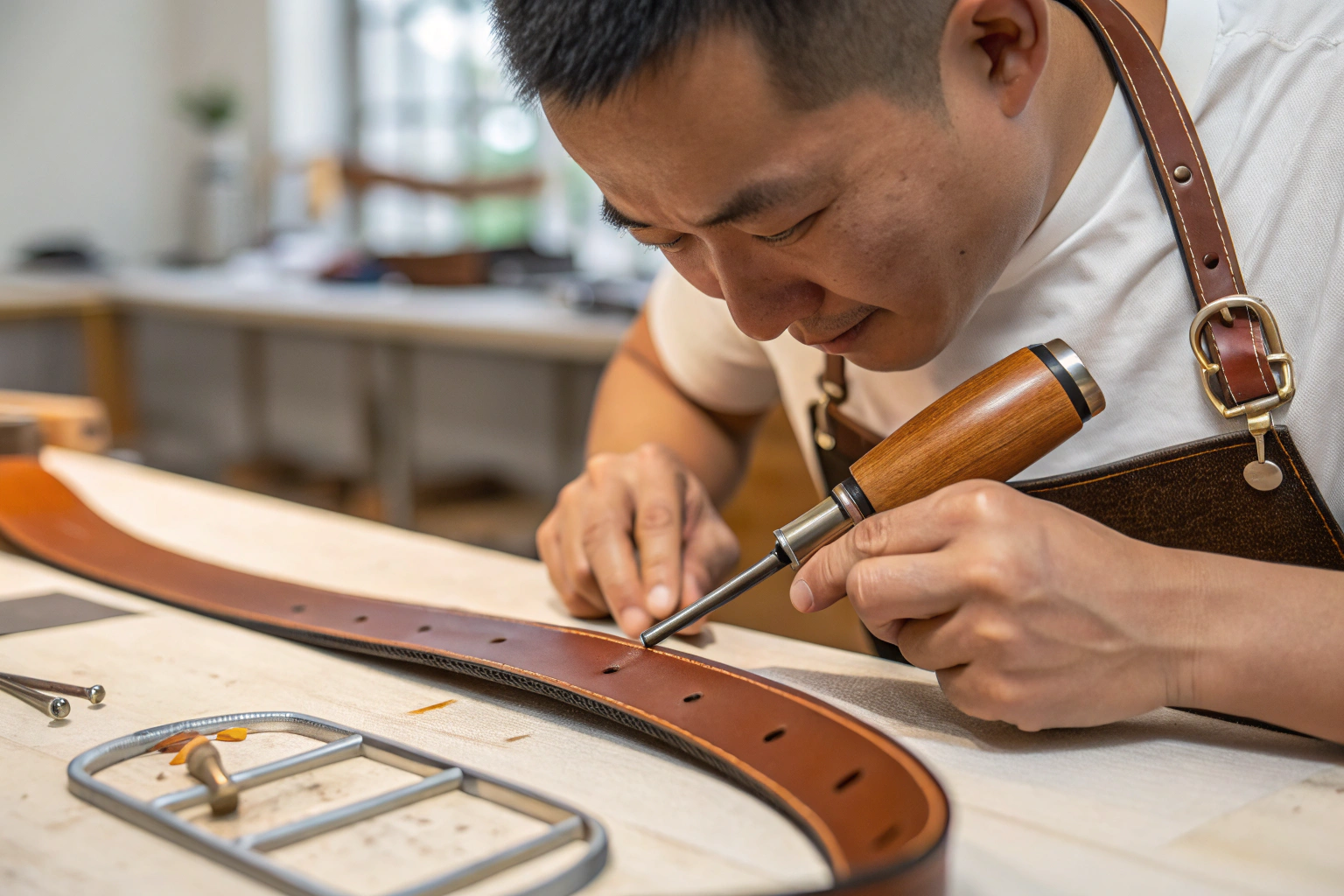
You admire the rich look and feel of a genuine leather belt, but wonder why some cost a fortune while others fall apart quickly. The secret lies in the meticulous, hands-on process behind authentic handmade leather belts. As a manufacturer who has supplied belts to global brands, I’ve seen the market flooded with mass-produced imitations that can’t match the durability and character of a truly handcrafted piece. Understanding the process reveals why quality justifies the investment.
The process of making a handmade leather belt involves a series of precise, skilled steps: selecting and cutting premium full-grain leather, beveling and burnishing the edges, dyeing and finishing the surface, setting solid hardware, and punching buckle holes with exact spacing. Unlike automated production, each step is performed with hand tools and careful attention, resulting in a belt that molds to the wearer, develops a unique patina, and lasts for decades. The craftsmanship ensures structural integrity and aesthetic detail that machines cannot replicate.
This journey from a raw hide to a functional work of art combines traditional techniques with modern precision. Let’s walk through each stage to appreciate the skill and time required. You’ll see how material choices and artisan decisions directly impact the belt’s longevity, appearance, and value—a crucial insight whether you’re a brand sourcing products or a consumer seeking quality.
What are the First Steps in Leather Selection and Cutting?
The foundation of an exceptional belt is, unsurprisingly, exceptional leather. This initial stage determines the belt’s inherent strength, grain character, and potential to age gracefully. Mass producers often use split or corrected-grain leather to save costs, but true handmade belts start with full-grain or top-grain leather.
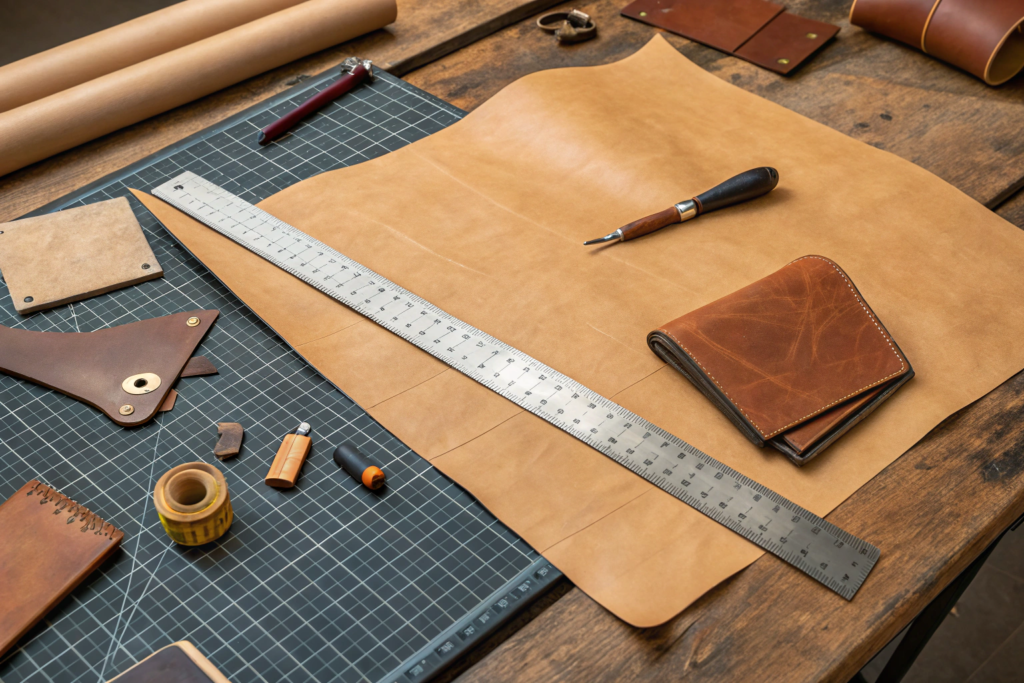
Full-grain leather is the strongest and most durable part of the hide, retaining the natural grain and imperfections. It develops the best patina over time. The artisan inspects the hide for consistent thickness, firmness, and any major flaws. Using a metal ruler and a sharp rotary cutter or utility knife, they cut a long, straight strap. This requires a steady hand to ensure parallel edges, which is critical for the belt’s final fit and appearance. The width is cut precisely based on the buckle style, typically between 1.25 to 1.5 inches for a standard dress belt.
How do you choose the right type and thickness of leather?
Choosing leather involves balancing aesthetics, function, and durability. Vegetable-tanned leather is a favorite for traditional handcrafting. It is tanned using natural tannins from trees, making it firm, eco-friendly, and ideal for tooling and aging. Chromium-tanned leather is softer, more water-resistant, and available in more colors, but lacks the same aging character. For belt thickness, a range of 8 to 10 oz (approximately 3.2 to 4.0 mm) is standard. A thicker belt (10-12 oz) is suited for heavy-duty or casual wear, while a slightly thinner one (8-9 oz) offers more flexibility for dress belts. The choice directly affects the belt’s break-in period and final drape.
What tools are essential for precise cutting and shaping?
Precision begins with the right tools. A self-healing cutting mat protects surfaces and blades. A sharp utility knife or rotary cutter ensures clean cuts without tearing the fibers. A heavy-duty metal ruler or straight edge guides the cut. After cutting, an edge beveler is used to round the sharp, 90-degree corners of the strap. This is a critical step for comfort and a professional look. The size of the beveler corresponds to the leather’s thickness. A skiving knife might be used to thin specific areas, like the tip where the buckle attaches, for a smoother transition. These foundational tools, used skillfully, set the stage for all subsequent detailing, much like rigorous Quality Control sets the stage for a flawless finished product.
How are the Edges and Surfaces Finished by Hand?
If the leather selection is the heart of the belt, the edge and surface finishing is its soul. This is where the belt transforms from a simple strip into a refined accessory. Hand-finishing is the most time-consuming and visually defining part of the process, creating a smooth, polished look that distinguishes handmade goods.
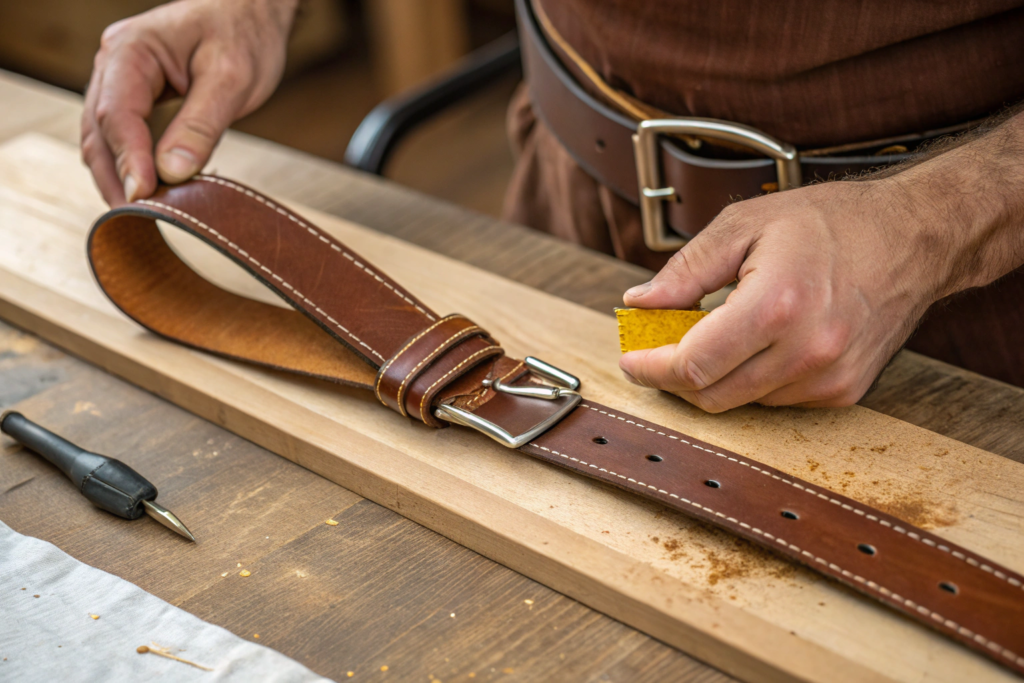
The process starts with sanding the cut edges to make them perfectly even and smooth. Then, the artisan uses an edge beveler to create a rounded profile. Next, they apply a dye or edge paint. For a natural look, the edge is dampened and vigorously rubbed with a wooden slicker or burnisher along with a bit of beeswax or gum tragacanth. The friction heats and compresses the fibers, creating a glassy, sealed edge. The belt surface may be dyed with aniline or pigment dyes, often applied with a dauber in multiple thin coats for even coverage. Finally, a protective topcoat or conditioner is applied.
What techniques create a smooth, polished edge?
Achieving a mirror-like edge requires patience and specific technique. After beveling, the edge is lightly sanded with progressively finer grits of sandpaper (starting from 400 up to 1000+ grit). Water is sparingly applied to raise the grain, which is then sanded down again for ultra-smoothness. The artisan then applies a burnishing compound like tokumole or a simple beeswax bar. Using a canvas cloth, wood slicker, or dedicated burnishing machine, they apply rapid friction. The heat generated melts the wax and fuses the leather fibers, creating a hard, sealed, and shiny edge. This process not only looks beautiful but also protects the edge from moisture and fraying, significantly extending the belt’s life—a testament to the artisan’s development capability for product longevity.
How is dye applied for consistent and rich color?
Hand-dyeing ensures deep, even color penetration. The leather is first cleaned and deglazed if necessary. Using a wool dauber or soft cloth, the artisan applies a thin, even layer of leather dye, usually an alcohol-based aniline dye. They work in sections, following the direction of the grain, and allow it to dry completely. Multiple light coats are better than one heavy coat, which can lead to blotchiness. After the final coat dries, any excess dye on the surface is wiped off. To set the color and add protection, a leather finisher or resolene is applied. This topcoat can be matte, satin, or glossy, depending on the desired look. For a more natural, pull-up effect, oils and waxes are used instead, which allow the leather to lighten in areas of stress.
What is Involved in Attaching the Buckle and Punching Holes?
This stage transforms the leather strap into a functional belt. The precision here dictates the belt’s usability, security, and overall professional finish. A poorly set buckle or misaligned holes can ruin an otherwise perfectly crafted strap.
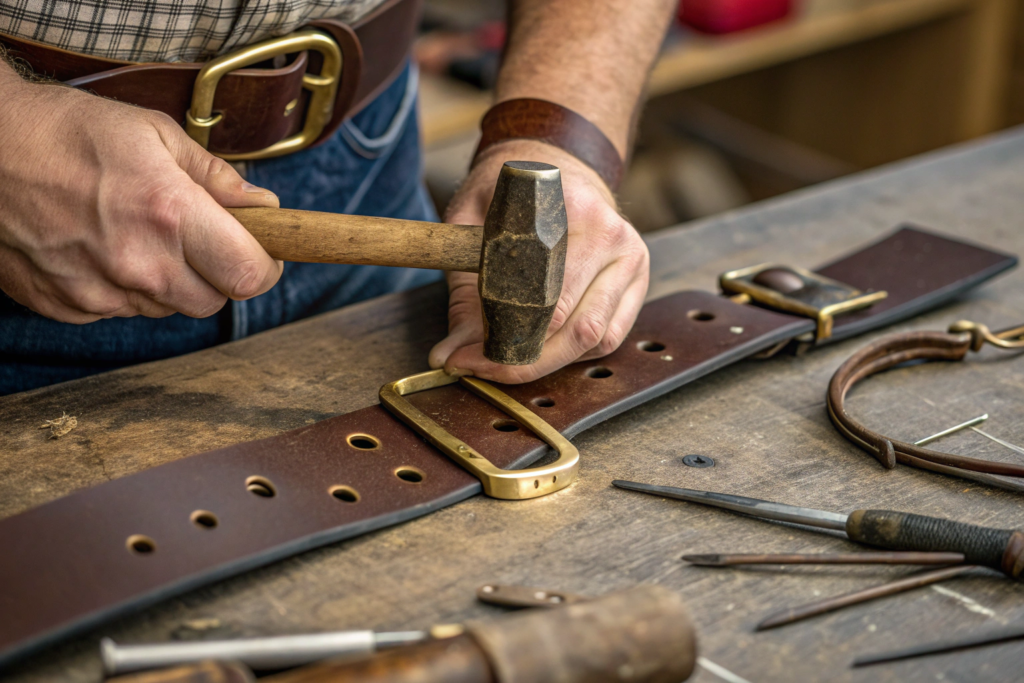
The process begins at the belt’s "tongue end." The artisan measures and marks where the buckle will attach. They then carefully skive (shave) the leather at this tip to a thinner profile, creating a smooth, tapered layer that will fold over the buckle’s frame. The fold is made, and heavy-duty solid brass rivets and/or saddle stitching are used for permanent attachment. Saddle stitching, done with two needles and a single thread, is incredibly strong because the stitch locks itself; if one part breaks, the rest remains intact. After the buckle is secured, the artisan measures and punches the buckle holes with a round drive punch, ensuring they are perfectly centered and spaced.
What are the strongest methods for buckle attachment?
The two strongest methods are riveting and saddle stitching, often used in combination. Copper or brass rivets provide a mechanical bond that is virtually indestructible. They are set by placing a burr on the post and hammering it to form a second head. Saddle stitching is the gold standard for leather strength. Using a stitching awl to pre-punch holes, the artisan pulls two needles, threaded on the same piece of waxed linen thread, through from opposite sides in a locking motion. This creates a stitch that is both decorative and extremely durable, lying flush with the leather. For the most secure belts, like those we produce at Shanghai Fumao Clothing, a combination of two rivets at the corners and a line of saddle stitching along the fold is employed. This ensures the hardware will outlast the leather itself.
How do you ensure accurate and durable buckle hole placement?
Accuracy is non-negotiable. The standard measurement from the buckle fold to the first (center) hole is typically 5 inches, but this is customized based on the client’s sizing chart. Holes are usually spaced 1 inch apart thereafter. The artisan uses a belt hole punch spacer or carefully measures and marks each spot with a wing divider and an overstitch wheel for a small prick mark. A sharp, round hole punch of the correct size (usually 1/4" or 5/16") is aligned perfectly on the mark. Using a maul, they punch straight down through the leather onto a poly or hardwood cutting board. The holes must be clean and round, without tearing. To reinforce the holes and prevent stretching, a small amount of edge finish can be applied to the inside of each hole. This attention to functional detail is as crucial as managing the logistics and customs clearance of the finished product—both require precise execution for a successful outcome.
How is the Final Quality Control and Conditioning Done?
Before a handmade belt is deemed complete, it undergoes a final, meticulous inspection and conditioning process. This is the artisan’s last chance to correct any minor flaws and ensure the belt not only looks impeccable but is also nourished and ready for a lifetime of wear. This step separates a good belt from a heirloom-quality one.
The belt is thoroughly examined under good light. The artisan checks for any inconsistencies in dye, the smoothness of all edges, the alignment and strength of stitching/rivets, and the function of the buckle. Any residual dust from sanding or punching is wiped away. Then, the entire belt is lightly conditioned with a high-quality leather conditioner or cream. This replenishes the natural oils lost during the crafting and drying processes, restoring suppleness and providing a layer of protection. Finally, the belt is polished with a soft cloth, packaged carefully to avoid creasing, and is ready for its new owner.
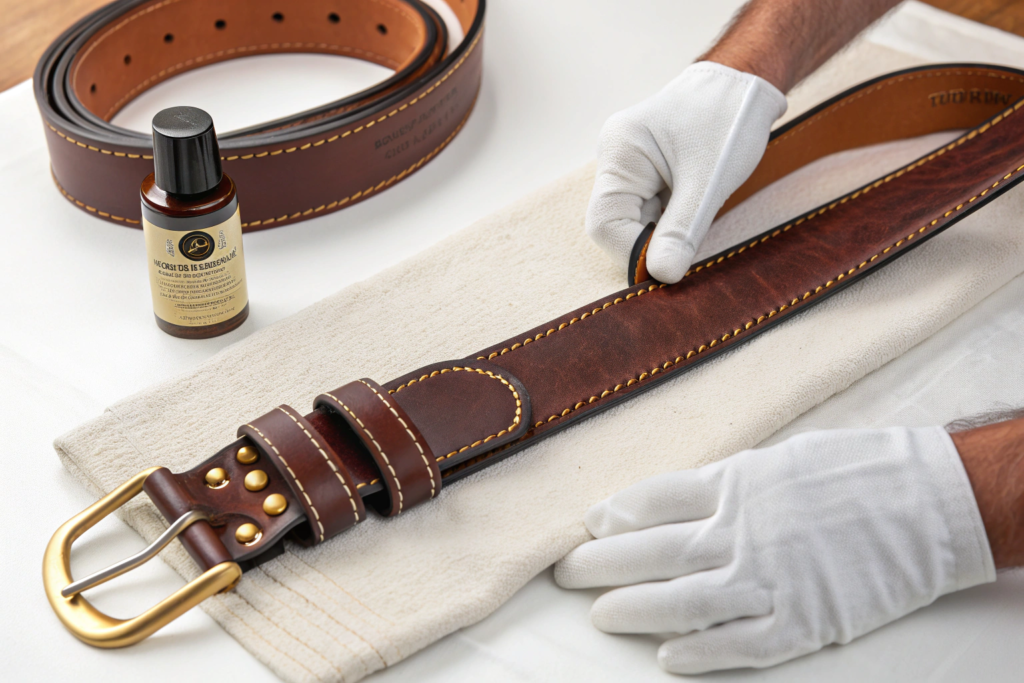
What specific details are checked during final inspection?
The inspection is systematic. Edges: Run a finger along all edges to ensure they are uniformly smooth and polished, with no rough spots. Surface: Check for even dye coverage, no spots, scratches, or discoloration. Hardware: Ensure the buckle is firmly attached, the prong moves freely, and any rivets are set flush without sharp burrs. Stitching: Inspect every stitch for consistent tension, length, and depth; there should be no loose threads. Holes: Verify all buckle holes are clean, round, properly aligned, and of identical size. Overall Structure: Flex the belt to ensure there are no weak points or cracks, especially at the buckle fold. This rigorous final Quality Control mirror the standards expected from a professional accessory manufacturer, ensuring every product that leaves the workshop meets exacting specifications.
Why is conditioning the final product essential?
Leather is skin, and it needs to be hydrated. The crafting process—particularly dyeing, drying, and finishing—can dehydrate the fibers. Conditioning replaces these lost oils and fats, preventing the leather from becoming brittle and prone to cracking over time. It also enhances the color and helps develop a richer patina. A proper conditioner, like one based on lanolin or beeswax, is absorbed without leaving a greasy residue. This final act of care is a commitment to the product’s longevity. It signals that the artisan views their work as a living material that will evolve with the wearer, not just a disposable commodity. This philosophy of enduring quality is what brands should seek when evaluating a manufacturer’s true development capability and commitment to excellence.
Conclusion
The process of making a handmade leather belt is a symphony of traditional skill, precise toolwork, and patient attention to detail. From selecting the perfect hide to the final conditioning, each step is performed with an intent that mass production cannot replicate. The result is not merely an accessory, but a durable, evolving personal item that gains character with age.
Understanding this process empowers you to recognize true quality, whether you’re a buyer for a retail brand or an end consumer. It highlights the value of craftsmanship in a world of fast fashion and explains the justifiable premium on goods made to last generations.
If your brand is looking to offer exceptional, handcrafted leather belts or any fashion accessory with this level of artisanal care, partnering with a manufacturer that respects the craft is crucial. We specialize in bringing such detailed, quality-focused products to market for our global clients. To discuss how we can craft your next collection, please reach out to our Business Director Elaine. She can guide you through our process and capabilities. Contact her at: elaine@fumaoclothing.com.