You’ve invested in high-quality leather belts for your store or brand. They look perfect when they arrive from your manufacturer. But after a few weeks in storage, you notice some belts have developed unwanted creases, others feel dry, and a few even have a strange color change. This isn’t just an aesthetic issue—it’s a direct hit to your inventory value and brand reputation. Improper storage can ruin your products before they ever reach a customer.
The best way to store leather belts is to replicate the conditions leather naturally thrives in: cool, dry, dark, and with room to breathe. It’s a systematic approach that combines the right environment, supportive shaping, and protective barriers. For us at Shanghai Fumao Clothing, this isn’t just aftercare advice; it’s a critical part of the post-production handling we recommend to all our clients, especially those ordering in bulk for major supermarkets or brands. Proper storage preserves the supple feel, rich color, and structural integrity that define a premium accessory, ensuring your products arrive in showroom condition, whether they’re in a warehouse for a month or a distribution center for a season.
By following a few key principles, you can transform your storage area from a potential danger zone into a preserve of quality. This protects your investment and guarantees your customers receive belts that look and feel flawless.
Why Does Proper Leather Belt Storage Matter?
You might think a warehouse shelf is just a place to put boxes. But for leather, that environment is active. Leather is a porous, natural material that reacts to temperature, humidity, light, and pressure. Ignoring these factors doesn’t just lead to minor flaws; it can cause irreversible damage that turns first-quality goods into unsellable seconds.
Proper storage matters because it directly maintains the product’s value, quality, and longevity. For a retailer or brand, this means preserving your profit margin and customer trust. For a manufacturer like us, it ensures the belts we meticulously craft are presented to the end-user exactly as intended. Poor storage can lead to permanent creasing or cracking from being bent in tight spaces, mold and mildew in humid conditions, fading and discoloration from UV light, and drying out from excessive heat or lack of conditioning. Each of these issues translates into returns, complaints, and markdowns. Understanding that leather requires active care even in storage is the first step to preventing loss. Resources like the Leather Working Group emphasize responsible stewardship of leather products throughout their lifecycle, including the storage phase.
What are the Worst Enemies of Leather in Storage?
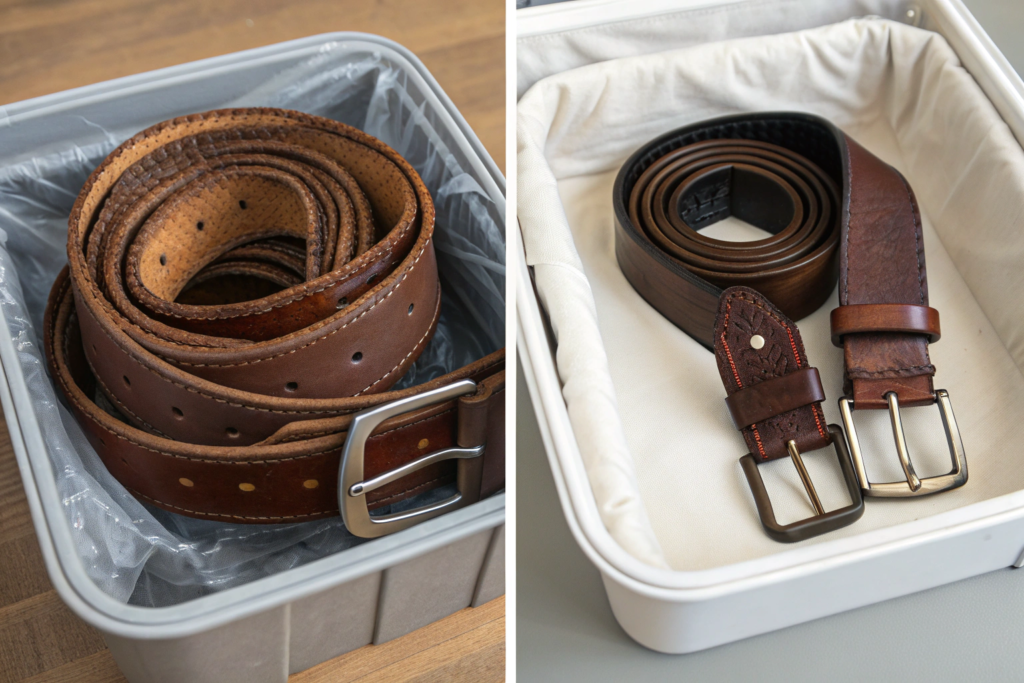
Leather’s greatest enemies in a storage setting are predictable but often overlooked. Heat and Dryness are a deadly duo. High heat, like in an attic or near a heater, sucks the natural oils and moisture from leather, causing it to become brittle and prone to cracking. This is a common issue with uncontrolled warehouse environments. Humidity and Moisture are equally damaging. They create a breeding ground for mold and mildew, which can stain leather and cause a musty odor. Direct Sunlight and UV Exposure will fade and discolor the dye in leather over time, just like it fades furniture. Pressure and Improper Shaping cause permanent deformation. Storing belts buckled tightly or bent at sharp angles sets in creases that are impossible to remove. Finally, Dust and Dirt can grind into the leather’s surface, acting as an abrasive over time. Identifying and mitigating these threats in your storage space is non-negotiable.
How Does Improper Storage Affect Belt Quality and Price?
The impact on quality and price is direct and severe. A belt with set creases or a faded color cannot be sold as new. It must be discounted, often heavily, or written off entirely. For a bulk order, this can mean thousands of dollars in lost revenue. Beyond the physical damage, improper storage signals a lack of care in the supply chain, which can damage relationships with discerning buyers and brands. They expect their supplier—whether a factory or an importer—to understand and protect the product integrity from production to delivery. At Shanghai Fumao Clothing, we see our responsibility extending beyond the factory gate. We advise our clients on packaging and initial storage solutions, such as using individual poly bags and rigid cartons, to provide the first line of defense. This proactive approach is part of a holistic supply chain quality management strategy that protects value at every touchpoint.
What is the Ideal Environment for Storing Leather Belts?
Creating the right environment is more important than any single storage trick. It’s about controlling the macro-conditions so the belts remain stable and unchanged for months.
The ideal environment is cool, dry, dark, and stable. Aim for a consistent temperature around 60-70°F (15-21°C). Avoid fluctuations, as they can cause the leather to expand and contract. Humidity should be maintained at a moderate level, ideally between 40-50%. Use a dehumidifier in damp climates or a humidifier in very dry, heated warehouses. The storage area must be dark. Keep belts away from windows or skylights, and use opaque storage boxes or cover shelves with cloth. Good air circulation is also key to prevent stale, moist air from settling. Avoid storing belts near chemicals, solvents, or in newly painted rooms, as leather easily absorbs odors. For large-scale operations, investing in a controlled section of your warehouse is far cheaper than replacing ruined inventory. Many professional archivists use similar principles for preserving leather artifacts.

How to Control Humidity in a Storage Room?
Controlling humidity is a battle against the local climate. The first step is to monitor it. Place several digital hygrometers in different areas of your storage space. If humidity consistently reads above 60%, you need to take action. For a sealed room, a desiccant dehumidifier (like those using silica gel) is excellent for smaller spaces or enclosed boxes. For larger warehouse areas, a compressor-based dehumidifier is necessary. Improving ventilation can also help if the outside air is drier than the inside air. Conversely, in very dry desert climates or heated winter warehouses where humidity drops below 30%, a humidifier may be needed to prevent the leather from drying out. Simple practices like avoiding storing belts directly on concrete floors (which can transmit moisture) and using pallets or shelves can make a big difference. This level of environmental control is standard for protecting sensitive goods and is a key aspect of professional warehouse management.
Can You Store Leather Belts in a Basement or Attic?
It is highly inadvisable to use basements or attics as primary storage for leather goods. Basements are typically prone to high humidity, temperature fluctuations, and potential flooding or dampness—all of which are catastrophic for leather. Attics often suffer from extreme heat in summer and cold in winter, with poor insulation and ventilation. These spaces are unstable and pose a high risk. If you have no alternative, you must create a microclimate within them. Use a heavy-duty, sealed plastic storage bin (with a gasket) and place several large desiccant packs inside with the belts. Store the bin on a shelf, never directly on the floor. However, this is a last-resort solution, not a best practice. For commercial inventory, the cost of climate-controlled warehouse space is a justified business expense to protect your assets, much like the care taken in temperature-sensitive logistics for other perishable goods.
What are the Best Methods for Shaping and Hanging Belts?
How you position the belt is just as critical as where you put it. The goal is to support its natural shape without introducing stress points.
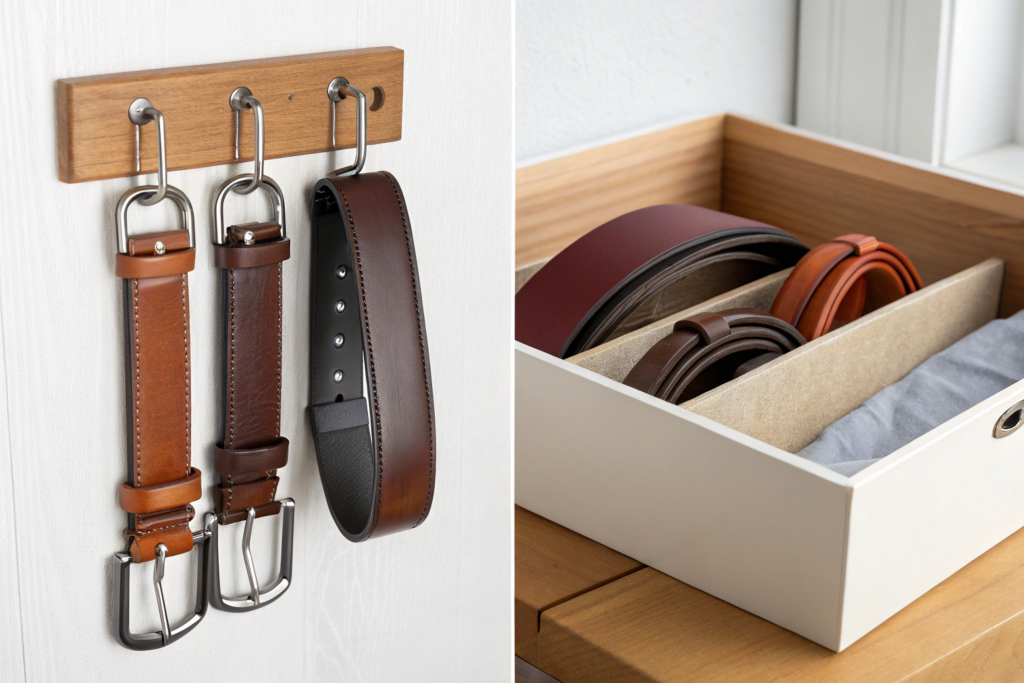
The best methods depend on the space and the number of belts. For individual belts or small quantities, the optimal method is to lay them flat. Unbuckle them completely and lay them out straight in a shallow, wide drawer or on a shelf, with a breathable material like acid-free tissue paper between them if stacked. For larger inventories where space is a premium, hanging is an excellent solution. However, you must use the right hardware. Always hang a belt by its buckle, not by a random point on the strap. Use sturdy, rounded hooks (not sharp wire or plastic hooks that can dent or cut into the leather). The buckle distributes the weight evenly. For belts without a fixed buckle (like a slide belt), it’s better to roll them loosely. Never coil a belt tightly like a rope, as this sets a permanent circular crease. Our own factory finishing process includes shaping belts correctly before they are poly-bagged and boxed, setting the standard for how they should be maintained.
Is it Okay to Roll Leather Belts for Storage?
Rolling can be acceptable, but only if done very loosely and with care. The goal is to minimize the bend radius. To do it properly, unbuckle the belt. Start rolling from the buckle end, making a large, open circle (at least 6-8 inches in diameter). Do not pull the tail tight. Place the loosely rolled belt into a breathable cotton bag or wrap it in acid-free tissue paper before putting it in a box. This method is sometimes used for shipping or very compact storage. However, laying flat is always superior to rolling. Rolling, even done well, still introduces a gentle curve that may take time to relax. For expensive, thick, or embossed leathers, avoid rolling altogether. This attention to the physical handling of soft goods is a principle shared in museum conservation techniques for textiles and leather.
What is the Correct Way to Hang Belts to Prevent Damage?
The correct hanging method prevents stress and deformation. Follow these steps:
- Unbuckle Completely: Do not hang a belt that is still buckled into a loop. The tension can strain the leather and the holes.
- Choose the Right Hook: Use a hook with a broad, smooth, rounded surface. A polished wooden knob, a thick plastic-coated hook, or a sturdy rounded metal hook is ideal.
- Hang by the Buckle: Drape the buckle bar directly over the hook. The weight of the leather strap will pull it straight down naturally.
- Ensure Ample Space: Leave enough space between hooks so the belts do not touch or tangle with each other. Crowding can cause them to rub and scuff.
- Keep Away from Walls: If hanging on a wall-mounted hook, ensure the belt strap does not press against the wall, which could transfer dust or paint.
This method is efficient for retailers and allows for easy visual inspection. For our clients with large volumes, we sometimes ship belts pre-hanged on custom display hooks, ready for their retail merchandising plans.
How to Protect Belts from Dust, Light, and Pests?
The storage environment has invisible threats. Dust settles, light fades, and pests can cause catastrophic damage. A passive “store and forget” approach won’t work.
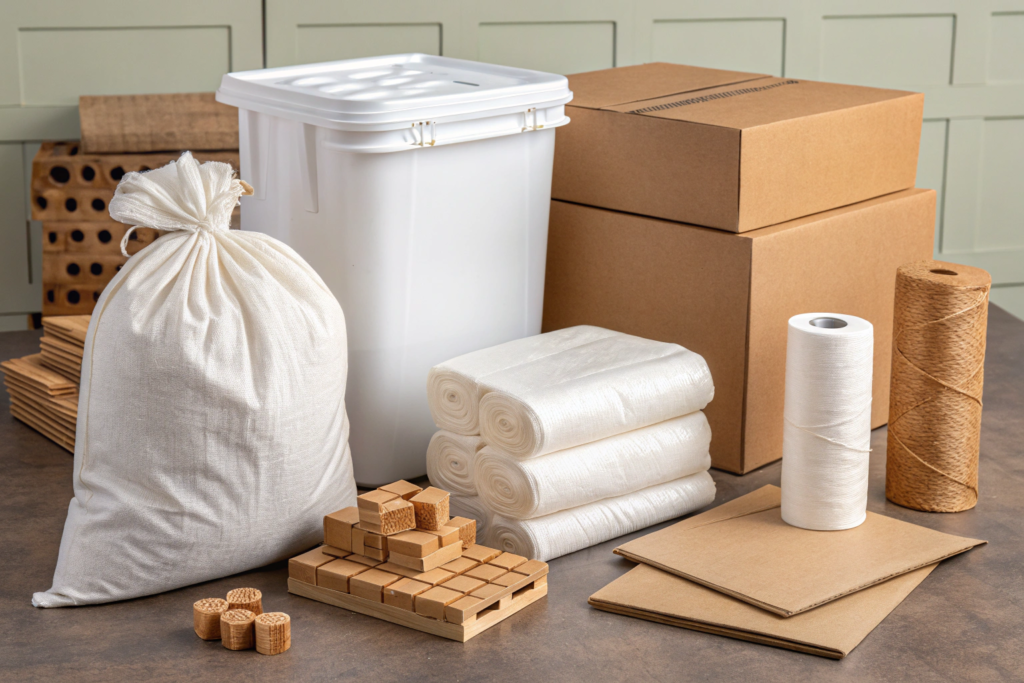
Protection involves creating physical barriers. For dust, store belts inside something. Individual breathable cloth bags (like cotton or muslin) are perfect. They allow air circulation while keeping dust off. For boxes, ensure they have lids. For light, the rule is simple: darkness. Use opaque storage containers, keep shelves away from direct light sources, or cover open racks with a dark cloth. For pests, especially moths and silverfish that are attracted to leather’s organic compounds, prevention is key. Maintain a clean, dry storage area. Avoid using mothballs or strong chemical pesticides directly near leather, as the fumes can be absorbed and cause damage. Instead, use natural repellents like cedar wood blocks or rings placed around the storage area. Regularly inspect your stock for early signs of pest activity. This multi-layered defense is standard practice in inventory preservation for a wide range of products.
Should You Use Plastic Bags for Long-Term Leather Storage?
No, you should generally avoid sealing leather in standard plastic bags for long-term storage. Regular polyethylene bags trap moisture and prevent the leather from breathing. This can create a humid microclimate inside the bag, leading to condensation, mold, and a deterioration of the leather’s finish called “red rot.” If you must use plastic for an added layer of protection (e.g., in a very dusty environment), use breathable garment bags or acid-free polyethylene zip bags specifically designed for archival storage, which have a controlled permeability. A far better alternative is unbleached cotton or muslin bags. They provide an excellent barrier against dust while allowing essential air exchange. This principle is why high-end accessory brands often use flannel dust bags for their products.
How Often Should You Check on Stored Leather Belts?
Leather shouldn’t be “out of sight, out of mind.” Establish a routine inspection schedule. For inventory in active rotation, a quick visual check every time you access the stock is sufficient. For long-term or seasonal storage (e.g., winter belts stored over summer), a more formal inspection every 4-8 weeks is wise. During the check, look for any signs of mold, unusual dryness, pests, or odor. Feel the leather to ensure it still feels supple. This is also a good time to gently reposition belts that have been hanging or rolled to vary any stress points. This proactive monitoring allows you to catch small issues before they become big problems, ensuring your investment from partners like Shanghai Fumao Clothing remains in pristine, salable condition. It’s a core habit of effective asset management and inventory control.
Conclusion
Storing leather belts correctly is not a matter of luck; it’s a matter of science and diligent practice. It requires understanding leather as a living material and creating a stable, protective environment that shields it from its greatest enemies: heat, humidity, light, pressure, and contaminants. From choosing a cool, dark room to selecting the right hanging hardware or breathable storage bags, every detail contributes to preserving the quality, appearance, and value of your products.
For retailers, importers, and brands, this knowledge is a powerful tool for protecting profit margins and upholding brand standards. It turns storage from a passive cost center into an active part of your quality assurance process. By implementing these methods, you ensure that the craftsmanship and quality built into each belt at the factory are fully maintained until the moment a customer receives it.
If you are sourcing leather belts or any fashion accessories and want guidance on optimal packaging and storage from the point of manufacture, we are here to help. Our team can advise on solutions that fit your supply chain. For a consultation on producing durable, high-quality leather belts with storage longevity in mind, please contact our Business Director, Elaine. She can connect you with our experts to ensure your entire process, from production to storage, is seamless. Reach Elaine at: elaine@fumaoclothing.com.