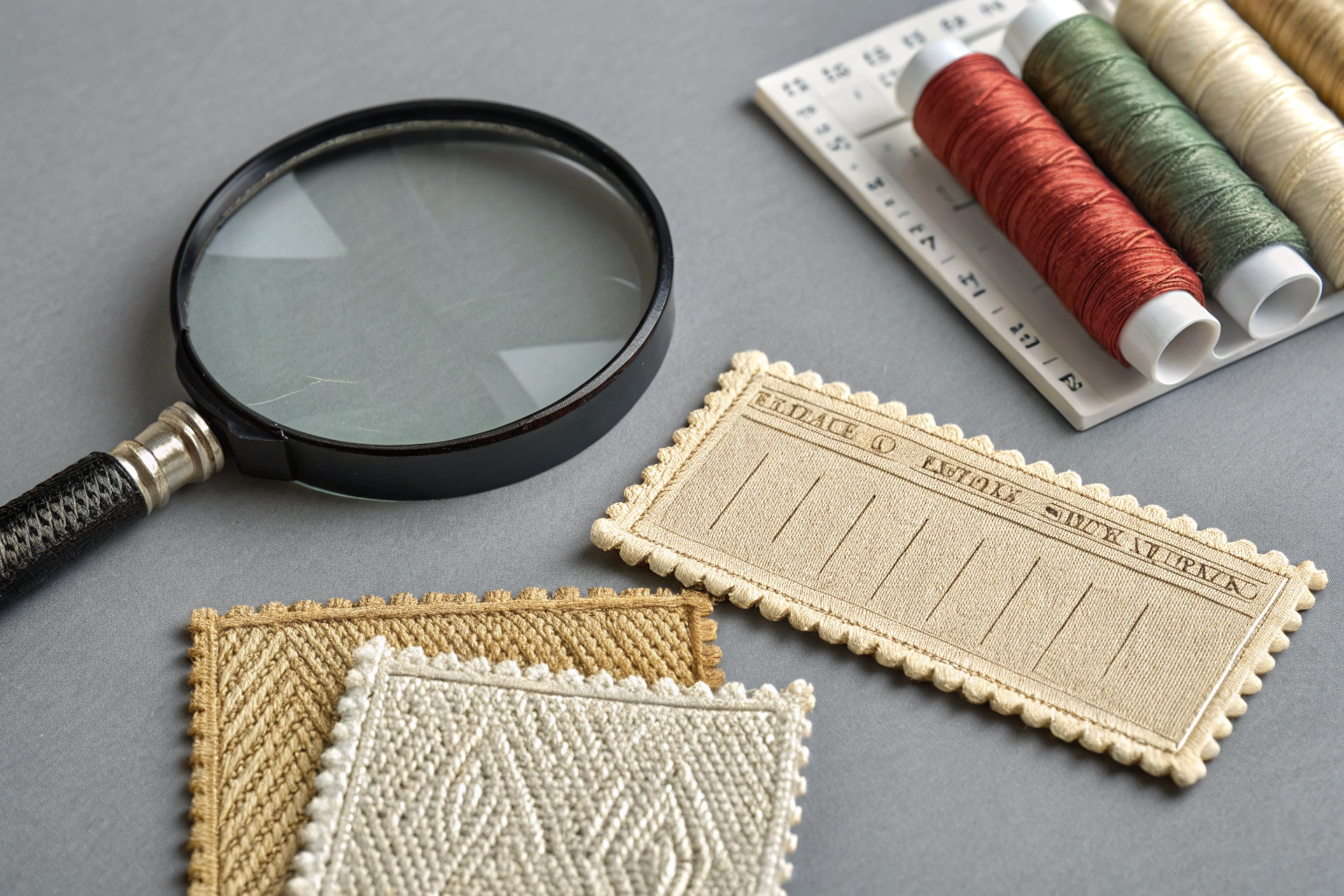
Are you finalizing your accessory line but stuck deciding between an embroidered or woven label? Do you wonder which one better conveys quality, fits your budget, and aligns with your brand’s aesthetic? This seemingly small detail has a significant impact on perceived value, durability, and customer experience. Choosing the wrong type can make a premium product feel cheap or a minimalist design look cluttered.
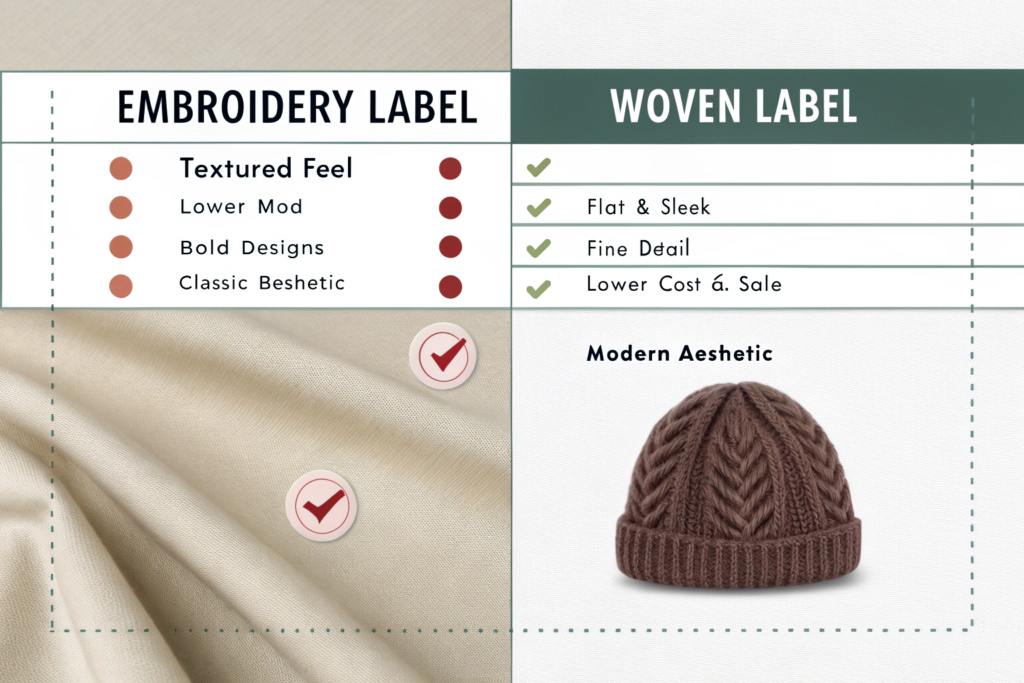
The core difference lies in their manufacturing process and resulting physical properties. Embroidery creates labels by stitching threads onto a backing fabric, resulting in a textured, raised design. Weaving creates labels by interlacing warp and weft threads on a loom, producing a flat, dense, and precise piece of fabric with the design integrated into its structure. This fundamental distinction drives differences in appearance, cost, minimum order quantities, and best-use applications.
This guide will clearly break down the pros, cons, and ideal uses for each type. We’ll cover the manufacturing processes that define their look and feel, analyze cost and MOQ considerations, explore design limitations and possibilities, and provide guidance on how to choose the right label to elevate your specific product. Let’s ensure your brand’s signature is perfectly presented.
How Do the Manufacturing Processes Define Their Look and Feel?
The production method is the root of all differences. Understanding these processes explains why each label has its distinct characteristics.
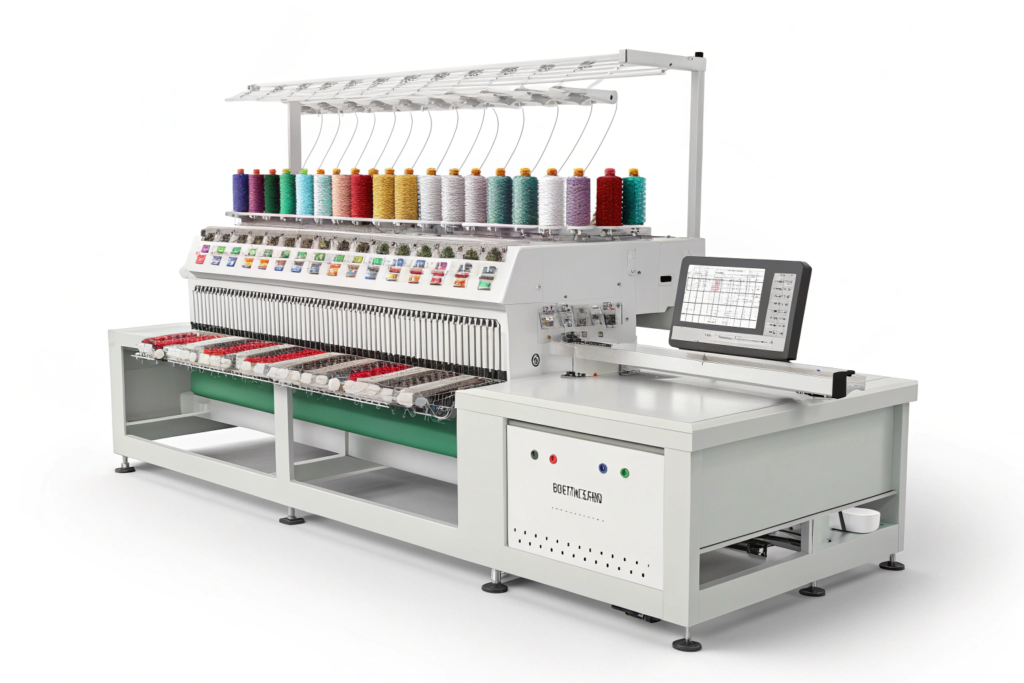
Embroidery: This is an additive process. A digital design file guides a multi-needle embroidery machine. The machine uses needles to stitch colored threads (typically polyester or rayon) onto a pre-cut piece of backing fabric (often twill, satin, or felt). The design is built up from the surface, creating a tactile, raised texture. The edges are usually finished with a merrow stitch (an overlock stitch) that binds the fabric, giving it a clean, fabric-bound border. The process is similar to the embroidery on a baseball cap or a logo on a polo shirt.
Weaving: This is an integrative process. It happens on a specialized narrow fabric loom, similar to how fabric is made but on a tiny scale. Warp threads (lengthwise) and weft threads (crosswise) are interlaced according to a precise pattern to create the label itself, including its design, text, and background, all in one step. This results in a single, flat, and thin piece of material where the design is part of the fabric’s structure. The edges are typically cut (creating a "cut-edge" label) or can be folded and looped (for end-folds).
Why Do Embroidered Labels Have a Raised, Textured Feel?
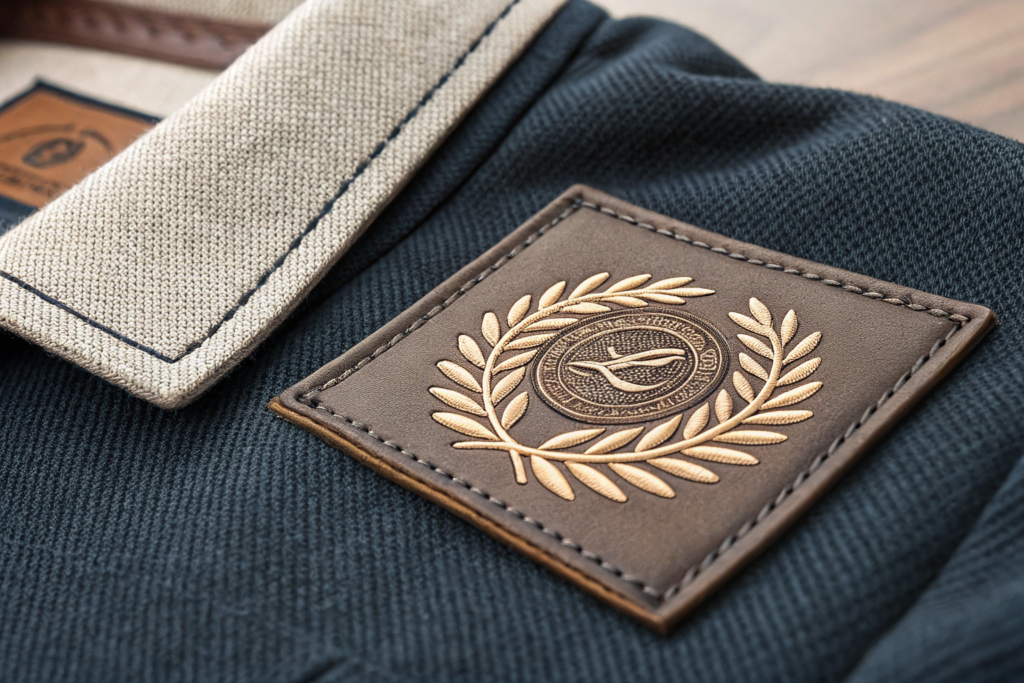
The texture comes from the layers of thread. Each color in the design is stitched with hundreds of individual thread loops sat on top of the backing fabric. This creates a dimensional, tactile surface that you can feel with your fingers. The thickness depends on the number of stitch layers (stitch density). This raised quality is a hallmark of durability and traditional craftsmanship, often associated with heritage, outdoor, or luxury brands. It’s a physical feature that adds a subtle sense of quality, much like the substantial hand-feel of acetate.
What Gives Woven Labels Their Crisp, Flat Appearance?
Because the design is created by the interplay of colored threads within the fabric structure, there is no added height. The surface is completely even and smooth. The precision of the loom allows for incredibly fine detail and sharp edges, especially on small text or intricate logos. The result is a sleek, modern, and professional look that integrates seamlessly into the garment without adding bulk. This precision is akin to the clean execution expected in tech accessory manufacturing.
What Are the Cost, MOQ, and Lead Time Implications?
This is often the deciding factor for brands, especially startups or those producing smaller batches. The economies of scale and setup complexity differ greatly between the two processes.
Embroidery:
- Cost: Generally lower cost for small to medium quantities. The setup is digital (converting artwork to a stitch file), which is less expensive than weaving setup.
- MOQ (Minimum Order Quantity): Typically lower, often starting at 50 to 100 pieces per design. This makes it accessible for small runs, sampling, and crowdfunding campaigns.
- Lead Time: Shorter setup and production time, often 2-3 weeks.
Weaving:
- Cost: Higher initial setup cost due to the complex process of programming the loom and setting up the warp threads. However, the per-unit cost decreases dramatically at higher volumes.
- MOQ: Significantly higher. Standard MOQs start at 500 to 1,000 pieces per design/colorway due to the setup involved.
- Lead Time: Longer due to setup, typically 4-6 weeks.
For brands planning large, ongoing production, woven labels become very cost-effective. For limited editions or testing, embroidery is more practical.
How Does Design Complexity Affect the Price of Each Type?
- For Embroidery: Price increases with stitch count (more complex, dense designs use more thread and machine time) and number of thread colors. A simple one-color logo is very affordable.
- For Weaving: Price is heavily influenced by the number of shuttle changes (essentially, the number of weft thread colors) and the detail of the design. A simpler design with fewer colors is more economical to set up.
A professional supplier like Shanghai Fumao Clothing can provide a cost analysis based on your specific artwork for both methods.
Can You Mix Techniques for a Custom Look?
Yes, hybrid labels exist. The most common is a woven label with an embroidered border or highlight. This combines the fine detail of weaving for text/logo with the textured luxury of embroidery for an accent. Another option is laser-cut woven labels, where a woven label is precision-cut into a unique shape (like a tag shape) using a laser, which seals the edges to prevent fraying. These custom options come with higher costs and MOQs but offer unique branding opportunities.
What Are the Design Limitations and Possibilities for Each?
Your logo and brand aesthetic will guide which technology can best reproduce your vision. Each method has inherent strengths and constraints.
Embroidery excels at:
- Bold, solid shapes and text.
- Creating a classic, rugged, or luxury feel.
- Simulating texture (e.g., a woolly look for a knitwear brand).
- Using specialty threads like metallic, glow-in-the-dark, or high-sheen rayon.
Embroidery struggles with:
- Extremely fine detail and tiny text (below 5pt font can become blurry).
- Photographic detail or gradients (can be approximated with complex stitch patterns but not perfectly).
- Achieving a perfectly flat surface.
Weaving excels at:
- Extremely fine detail and small, legible text (down to 2-3pt font).
- Clean, flat logos with sharp edges.
- Dense color coverage without added thickness.
- Damask weaving, which creates a subtle, tonal pattern by using different weaves (like satin vs. plain) rather than different colored threads, for a very high-end look.
Weaving struggles with:
- Creating a textured, raised feel.
- Very large, solid blocks of color can sometimes show slight barre lines (subtle horizontal stripes) due to the weaving process.
How Small Can You Go with Text on Each Type?
This is a critical practical question.
- Woven Labels: Can clearly reproduce text as small as 2-3 points (approximately 1mm tall). This is why care/content instructions are almost always woven—they pack a lot of information into a small space.
- Embroidered Labels: Legible text typically starts at 5-6 points (approximately 2mm tall). Anything smaller risks the individual stitches blurring the letterforms.
If your brand name is intricate or you have lengthy care instructions, weaving is the superior choice for clarity.
Which Method Offers Better Color Accuracy and Durability?
- Color: Woven labels generally offer superior color accuracy and vibrancy because the threads are dyed beforehand and the weave structure can create very saturated color fields. Embroidery thread colors are also excellent, but the texture can create slight visual shading.
- Durability: Both are highly durable if well-made. Embroidered labels are very robust due to the multiple layers of thread, but the raised stitches can be prone to snagging if a loop is caught. Woven labels are extremely durable against abrasion and washing because the design is integral to the fabric; however, cut-edge labels can fray over time if not properly heat-sealed or folded. For the highest durability, a woven label with a folded edge is often the best choice, similar to how secure construction is prioritized in hair accessories.
How to Choose the Right Label for Your Product?
The decision should be based on your brand identity, product type, budget, and volume. Use this decision matrix as a guide:
| Consideration | Choose Embroidery If… | Choose Weaving If… |
|---|---|---|
| Brand Aesthetic | Rugged, heritage, athletic, cozy, handcrafted, luxury. | Minimalist, modern, technical, high-fashion, sleek. |
| Product Type | Heavyweight knits (beanies, scarves), outerwear, bags, canvas goods. | Lightweight apparel (blouses, dresses), delicate knits, technical wear, lingerie. |
| Design Detail | Bold logos, simple text, textured effects. | Fine detail, small fonts, intricate logos, care instructions. |
| Budget & Volume | Lower upfront cost, smaller MOQs (e.g., <500 pcs). | Larger volumes, lower per-unit cost at scale. |
| Desired Hand Feel | You want a noticeable, textured label. | You want a flat, smooth label that disappears against the skin. |
Always request physical samples of your design in both techniques before committing. Seeing and feeling them on your actual product is irreplaceable.
What Questions Should You Ask Your Label Supplier?
To ensure quality and avoid surprises, ask:
- "What is the exact MOQ and cost breakdown for my design in both embroidery and weaving?"
- "What base fabrics do you offer?" (e.g., Satin, Taffeta, Damask for weaving; Twill, Felt for embroidery).
- "What is the turnaround time from approved artwork to shipment?"
- "Can you provide stitch/weave density specifications?" (Higher density = better quality).
- "Do you offer edge finishing options?" (Merrow, cut+heat seal, fold+loop).
- "Can you provide color-fastness test reports?" (Especially important for dark colors on light fabrics).
A reputable supplier will answer these easily and guide you to the best choice, much like a good manufacturing partner provides DFM feedback.
Can Sustainable Materials Be Used for Both Types?
Absolutely, and this is a growing demand. For both woven and embroidered labels, you can specify:
- Organic Cotton Thread/Fabric: For a natural feel.
- Recycled Polyester (rPET) Thread/Fabric: The most common eco-friendly option. It performs identically to virgin polyester.
- Tencel™ or Bamboo Blends: For woven labels, offering a soft, silky hand feel.
- Water-Based Inks & Dyes: For any printed elements on the label.
Ensure your supplier can provide relevant certifications like GRS (Global Recycled Standard) for recycled content. This aligns your branding touchpoint with a broader sustainability strategy.
Conclusion
The choice between embroidered and woven labels is a strategic branding decision with tangible implications for cost, aesthetics, and customer perception. Embroidered labels offer textured, rugged appeal with low startup costs, ideal for bold brands and small batches. Woven labels deliver sleek, precise detail ideal for modern aesthetics and complex information, becoming cost-effective at scale.
By understanding the technical processes, design constraints, and commercial factors, you can select the label that perfectly complements your product, reinforces your brand identity, and provides the durability your customers expect.
Need expert guidance and production for your brand’s labels? At Shanghai Fumao Clothing, we offer in-house label sourcing and manufacturing, providing samples in both techniques and advising on the best choice for your accessories. Contact our Business Director Elaine at elaine@fumaoclothing.com to finalize the perfect signature for your collection.