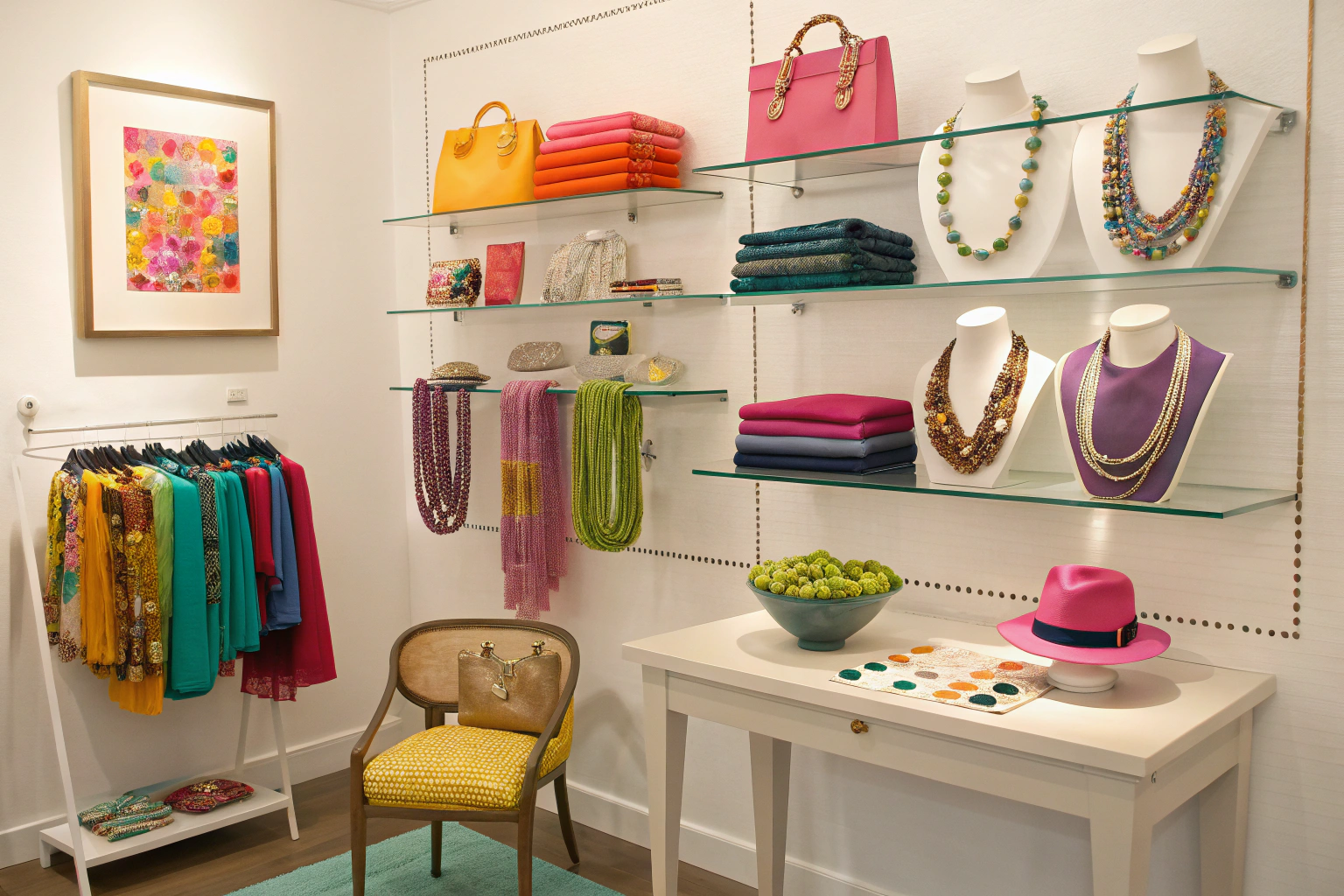
Your accessories are beautiful, but if customers can’t see them, feel them, or imagine wearing them, they simply won’t sell. In a crowded retail environment, accessories often face the "shelving" dilemma—placed flat, piled up, or hidden away, losing their potential to drive impulse purchases and higher margins. The challenge is to transform these small items into irresistible, must-have objects of desire.
The best ways to display accessories in store combine strategic product grouping, multi-sensory customer engagement, and tactical placement that guides the shopper’s journey, all while maintaining clear visual storytelling and effortless shoppability. Effective display is a silent salesperson that educates, inspires, and converts.
This article will explore the four core strategies of winning accessory merchandising. We’ll cover the principles of impactful grouping and storytelling, the power of tactile and interactive displays, the critical role of placement and store flow, and how to leverage lighting and technology. For retailers sourcing their displays, partnering with a manufacturer that understands both product and presentation, like Shanghai Fumao, ensures your fixtures are as well-crafted as the accessories they hold.
How to Group and Tell Stories with Your Accessories?
Random arrangement kills interest. Customers don’t just buy a product; they buy into an idea, a style, or a solution. Strategic grouping transforms individual items into compelling narratives that inspire multiple purchases and elevate perceived value.
The most effective grouping methods are: by style or theme (e.g., "Boho Festival," "Office Chic"), by color story (creating a gradient or tonal block), by product category (all belts together for easy comparison), and by outfit solution (cross-merchandising a scarf, hat, and bag that work together). Each method serves a different customer mindset.
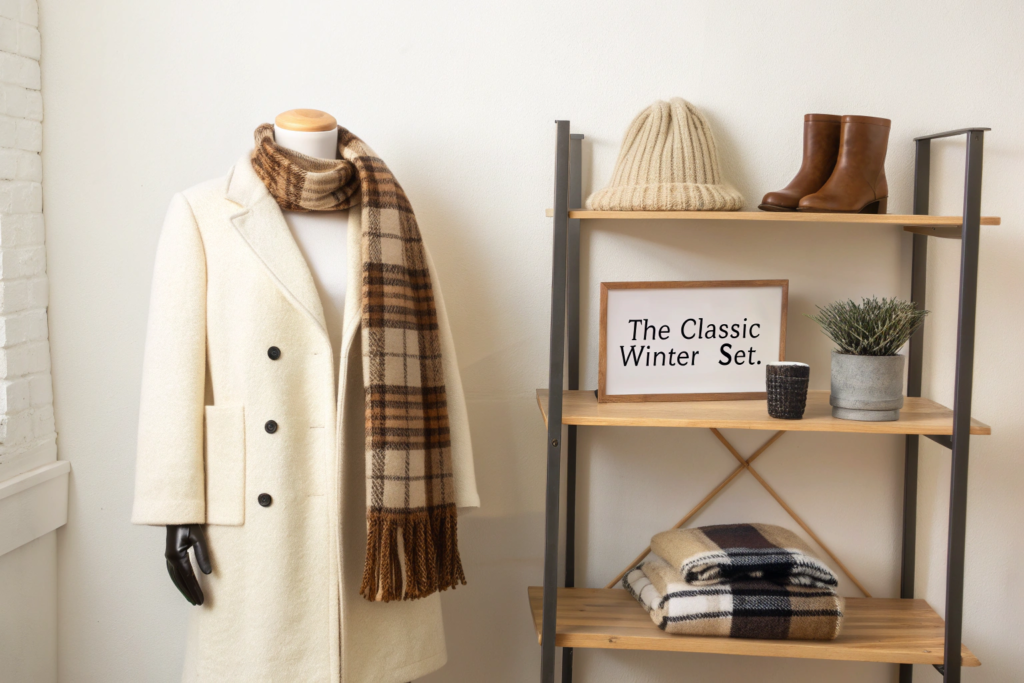
Think like a magazine editor. A thematic vignette on a table or shelf might feature a wide-brim straw hat, a woven tote bag, and tortoiseshell sunglasses on a mannequin head, styled with a linen scarf. This instantly sells a complete summer look. A color-blocked wall of beanies in shades of cream, taupe, and grey is visually stunning and helps a customer find their perfect shade quickly. For category grouping, like all leather gloves displayed on a dedicated rack with size guides, it facilitates focused decision-making. We help our retail clients plan these strategies by providing display guidelines and fixtures tailored to our products, ensuring that the story of quality and style we build into each scarf or hat is fully realized at the point of sale.
What is Cross-Merchandising and Why Does It Boost Sales?
Cross-merchandising is the practice of placing complementary products from different categories together. It’s the retail equivalent of "you might also like."
- Example: Placing a display of delicate gold necklaces next to the eveningwear section, or a basket of colorful scrunchies near the casual knitwear.
- Psychology: It solves a problem for the customer ("What do I wear with this dress?") and encourages add-on purchases by showing the complete outfit. Studies by the Point of Purchase Advertising International (POPAI) consistently show that effective cross-merchandising can significantly increase average transaction value.
The key is logical adjacency. The connection between the products should feel intuitive and helpful, not forced.
How to Create a "Color Story" Display?
A color story is one of the most visually powerful and Instagram-friendly tactics. To execute it:
- Select a Palette: Choose a spectrum (e.g., ombre from pale pink to burgundy) or a tonal family (all earth tones).
- Use Repetition: Arrange the same accessory in all the colors together (e.g., a row of headbands in the rainbow).
- Mix Textures Within the Color: Include silk scarves, felt hats, and beaded bags all in shades of blue. This adds depth and interest.
- Keep it Clean: Use minimalist fixtures (clear acrylic, natural wood) that don’t compete with the color narrative.
This method appeals to the customer shopping by color preference and creates a memorable, photogenic zone in your store.
How to Engage Customers with Tactile and Interactive Displays?
Accessories are personal; customers want to touch, try on, and interact with them. Static displays behind glass create barriers. The goal is to lower these barriers and invite engagement, turning browsing into a playful, sensory experience.
Engagement is driven by encouraging touch with accessible materials, facilitating try-on with mirrors and convenient hooks, creating "discovery" moments with bins and trays, and adding an element of play or customization. The more a customer interacts, the stronger their connection to the product.
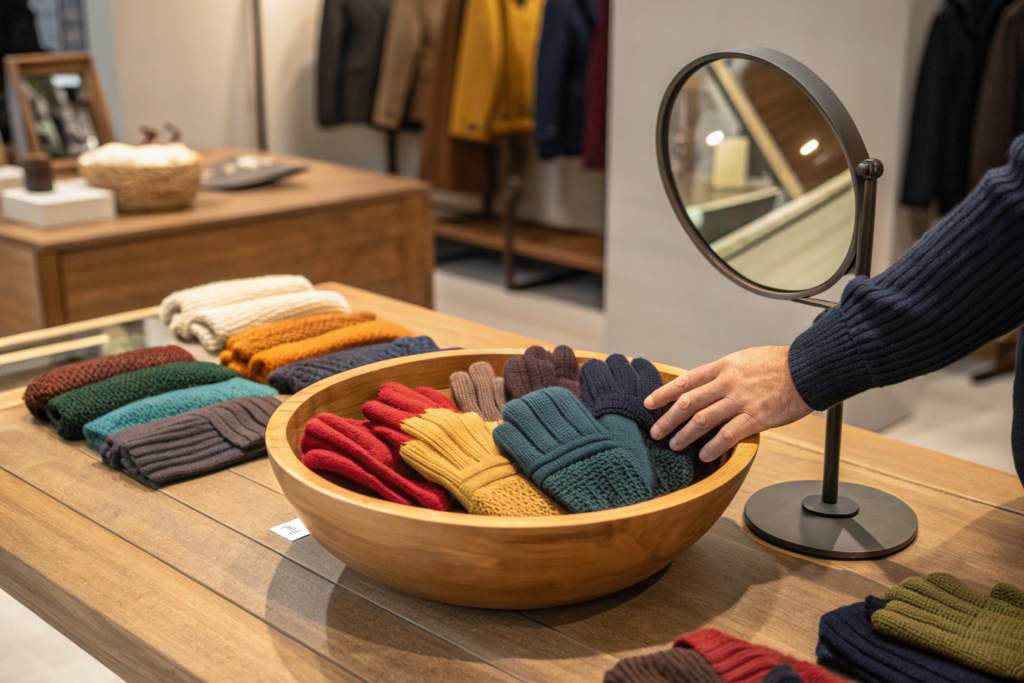
Tactility is key. A basket of textured wool pom-pom hats invites customers to feel their softness. A "touch here" sign next to a sample of luxury faux fur used in a scarf can highlight quality. For try-on, ensure every hat display has a mirror nearby. For jewelry, provide clean, well-lit try-on stations with sanitizing wipes. Interactive displays could be a rack of blank baseball caps with a display of patches and pins, allowing for customization, or a digital screen showing different ways to tie a printed scarf. At Shanghai Fumao, we design our product packaging and tags to be part of this experience—for instance, hanging tags that describe the fabric’s hand-feel or origin story, adding a layer of engagement even before the product is touched.
What Are the Best "Open-Sell" Techniques for Accessories?
Open-sell means removing packaging and barriers. Effective techniques include:
- Trays and Bowls: For small items like hair clips, earrings, or bracelets. They encourage rummaging and discovery.
- Peg Walls with Hooks: Ideal for belts, bag charms, or sunglasses. They keep items organized but fully accessible.
- Ledge Shelving: For folded scarves or stacked beanies, allowing customers to easily pick them up and unfold them.
- Testers and Samples: Have one unwrapped sample of each sunglass style for trying on, while the boxed inventory is stored neatly below.
The rule is: make it easy to pick up, and even easier to imagine taking home.
How Can Mirrors and Lighting Transform a Display?
They are the essential enhancers. Mirrors should be plentiful, large, and flattering. Place them directly adjacent to hat displays, jewelry cases, and scarf tables. A customer who can instantly see themselves wearing an item is much closer to a purchase. Lighting is equally crucial. Use focused, adjustable spotlights to create pools of light on featured displays. This draws the eye, makes colors pop (especially important for gemstone jewelry or colorful silk), and creates a sense of importance. Avoid harsh, shadow-creating overhead lights. The combination of great light and a clear mirror makes every product—and every customer—look their best.
How Does Store Placement and Flow Drive Accessory Sales?
Where you place accessories in your store is a strategic decision that can maximize exposure and capitalize on different shopping modes. Prime real estate isn’t always at the back; it’s about intercepting the customer journey at the right moments.
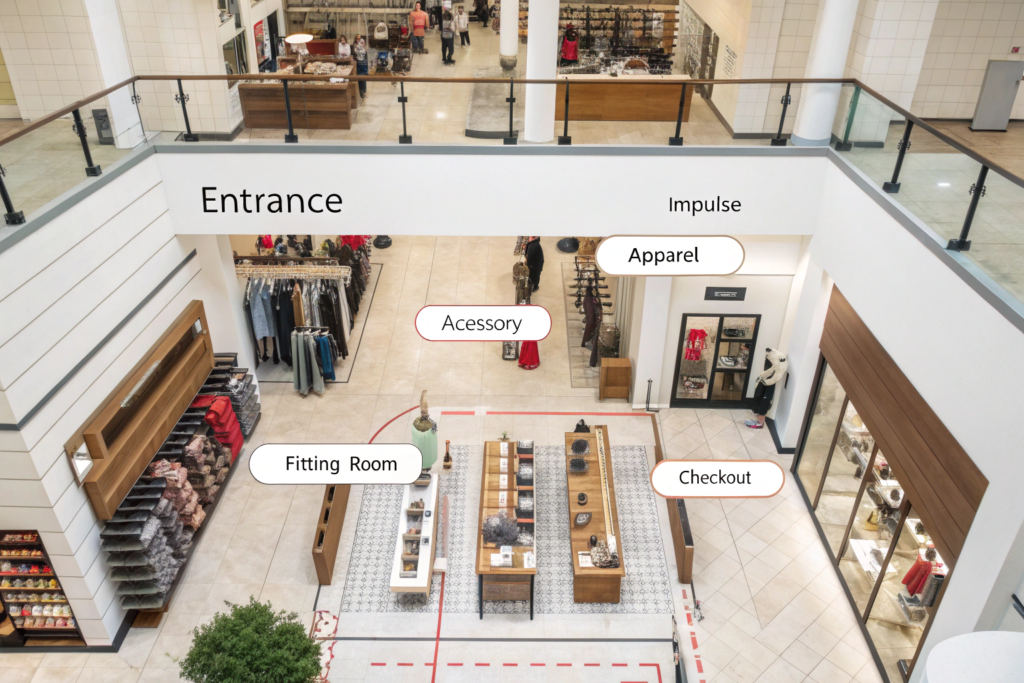
Critical placement zones include: the entrance/decompression zone for impulse items, the checkout counter for last-minute add-ons, adjacent to fitting rooms for outfit completion, and along the path to bestsellers to capture high traffic. The flow should feel natural and guide customers through a curated journey.
Think of your store layout as a story with chapters.
- Chapter 1: The Entrance. This is for high-impact, new, or seasonal items that create a first impression. A stunning display of statement necklaces or trendy bucket hats works here.
- Chapter 2: The Pathway. As customers move toward core apparel, line the pathway with accessible displays like scarf tables or sunglasses spinner racks. This is "browsing" territory.
- Chapter 3: The Fitting Room Area. This is the highest-conversion zone for accessories. When a customer is trying on a dress, having a curated selection of belts, bags, and hair accessories right outside answers the question "What else do I need?" This is pure outfit-solving.
- Finale: The Checkout. This is for low-cost, high-impulse items like socks, keychains, or lip balm. The wait time is perfect for a final grab.
We advise our partners to analyze their store’s hot spots (high-traffic areas) and cold spots (neglected areas) and use accessory displays strategically to energize the entire space.
Why is the Fitting Room Area the #1 Spot for Accessories?
The psychology is powerful. In the fitting room, the customer is in a decision-making mode, critically evaluating their look. They are mentally invested in creating an outfit. Having accessories readily available at this moment:
- Solves a Problem: "This dress needs a belt."
- Completes the Look: It helps the customer visualize the final, polished outfit.
- Justifies the Purchase: Adding a $25 scarf can make a $100 dress feel like a complete, worthwhile investment.
Place complementary accessories on hooks, shelves, or a rolling cart right outside the fitting rooms. Train staff to suggest items from this display.
What is a "Decompression Zone" and How to Use It?
The decompression zone is the first 5-15 feet inside the store entrance. Customers need a moment to adjust from the outside world, slow down, and take in the store environment. This area is perfect for visual, low-commitment displays.
- Do: Use a striking mannequin in a full accessory-heavy outfit, a beautiful seasonal table display, or a rotating feature of bestsellers.
- Don’t: Place crowded racks or complex product here; it’s overwhelming.
The goal here is to inspire and welcome, not to overwhelm with choice. It sets the tone for the shopping experience.
How to Use Lighting, Technology, and Rotation for Maximum Impact?
A static display grows invisible over time. The final layer of mastery involves dynamic elements that create freshness, highlight quality, and connect the physical to the digital. This keeps both regular customers and staff engaged.
Maximize impact with dramatic and layered lighting, integrated digital tools like QR codes or tablets, and a disciplined display rotation schedule tied to seasons, promotions, or new arrivals. These elements signal that your store is current, curated, and customer-centric.
Lighting should be theatrical. Use spotlights to create focal points on new collections or high-margin items. Backlighting behind clear acrylic shelves holding crystal jewelry can make them sparkle. LED strip lights inside display cases add a modern touch. For technology, consider simple integrations. A QR code on a display tag can link to a "How to Tie This Scarf" video. A tablet mounted in a display can show a lookbook of how the accessories are styled. Most importantly, rotate your displays regularly. A weekly "refresh" of one key table or a monthly full rearrangement prevents visual fatigue. It also gives you a reason to promote "New Looks In Store" on social media. We support our retail partners with regular delivery of new products and display ideas, making it easy to keep their accessory department looking fresh and exciting, just like our continuously updated accessory collections.
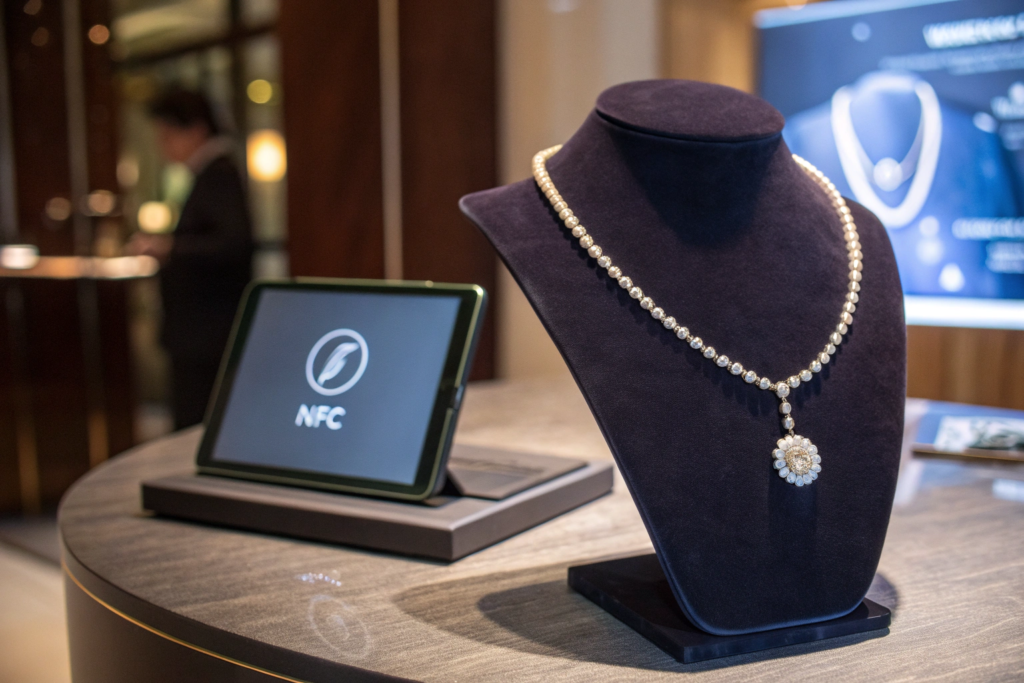
How Can Digital Integration Enhance Physical Displays?
Bridge the online and offline experience seamlessly:
- QR Codes: Link to styling tutorials, product provenance stories, or an online wish list.
- Near Field Communication (NFC): Customers can tap their phone on a tag to see additional colors or reviews.
- Digital Lookbooks: A screen showing models wearing the in-store accessories in various settings inspires customers and shows versatility.
- Social Media Walls: Display live Instagram posts tagged with your store location or a specific hashtag. This builds community and provides social proof.
This approach caters to the modern shopper who researches online but buys in-store, and vice-versa.
Why is Consistent Display Rotation Non-Negotiable?
Rotation fights "display blindness"—when both staff and customers stop seeing the products because they’ve been in the same place for too long. Benefits include:
- Rediscovery: Longtime customers see "new" products that were simply buried before.
- Seasonal Relevance: Aligns your store with current holidays, weather, and trends.
- Inventory Management: Forces you to feature older stock and prevent it from becoming forgotten.
- Staff Engagement: Gives the team a creative task and keeps them knowledgeable about all products.
A simple plan, like "First Monday of the month = major display refresh," ensures it gets done.
Conclusion
The best accessory displays are strategic, sensory, and dynamic. They go beyond simple storage to become a core part of the retail narrative—grouping products into desirable stories, inviting touch and interaction, positioning themselves smartly along the customer’s path, and utilizing light and technology to create a memorable, modern experience. When executed well, your display strategy doesn’t just show accessories; it sells the lifestyle, confidence, and joy they represent.
Investing in thoughtful merchandising is an investment in your sales density, brand perception, and customer loyalty. It turns square footage into profit-generating, brand-building real estate.
Ready to transform your accessory department into a high-performing destination? Contact our Business Director, Elaine, at elaine@fumaoclothing.com. Shanghai Fumao can provide not only the beautiful accessories but also the display strategies and partnership to help them shine in your unique retail space.