
As a brand owner or designer like Ron, you know that winter accessories are a huge market in North America. But gloves are a particularly challenging category. It’s a constant battle between function (warmth) and fashion (style). It’s easy to make a bulky glove that’s warm but clumsy, or a thin glove that’s stylish but useless in a cold snap. You’re aiming for the holy grail: a glove that not only keeps your customers’ hands warm but also acts as a key fashion statement, elevating their entire winter look.
To design stylish winter gloves for the North American market, you must focus on three key areas: a slim, elegant silhouette achieved through premium materials; the integration of smart, functional details like tech-friendly fingertips; and a sophisticated color and texture palette that aligns with contemporary "Quiet Luxury" trends. The goal is to create a glove that looks and feels like a second skin, not a bulky piece of survival gear.
I’m the owner of Shanghai Fumao Clothing, and we’ve been manufacturing premium gloves for top North American brands for years. The most successful collections are always the ones that refuse to compromise. They understand that the modern consumer expects both performance and style. They want a glove they can wear on their commute, to a business meeting, and out to dinner, all while being able to answer a text message without exposing their hands to the cold. Let’s break down the design principles for creating that perfect, best-selling winter glove.
Why is Material Selection the Foundation of Style?
You’re looking at two pairs of gloves. One looks sleek, elegant, and expensive. The other looks bulky, cheap, and shapeless. The core difference isn’t the design; it’s the material. You know that material choice is important for warmth, but you need to understand how it directly dictates the glove’s style and silhouette.
The choice of material is the single most important factor in designing a stylish glove because it determines the product’s fit, silhouette, and perceived value. Premium, supple materials like lambskin leather, sheepskin, and fine-gauge cashmere or merino wool allow for a slim, elegant profile that conforms to the hand, while cheaper, bulkier materials inevitably lead to a clumsy, unflattering shape.
Think of it like the difference between a bespoke suit and a cheap, off-the-rack one. The former uses high-quality fabric that drapes and fits perfectly; the latter uses stiff material that hangs poorly. For gloves, the goal is a "second skin" fit.
- Lambskin/Sheepskin Leather: This is the gold standard for stylish dress gloves. It’s incredibly soft, supple, and strong, allowing for a very close, elegant fit without feeling restrictive. It has a natural luster that signals luxury.
- Fine-Gauge Knits: For a softer, more casual look, a fine-gauge knit made from merino wool or cashmere is ideal. Unlike chunky acrylic knits, these fine natural fibers can be knitted into a dense but thin fabric that provides excellent warmth without bulk.
At Shanghai Fumao Clothing, we always start the design process with a conversation about materials, because the material is the design.
What is the role of the lining?
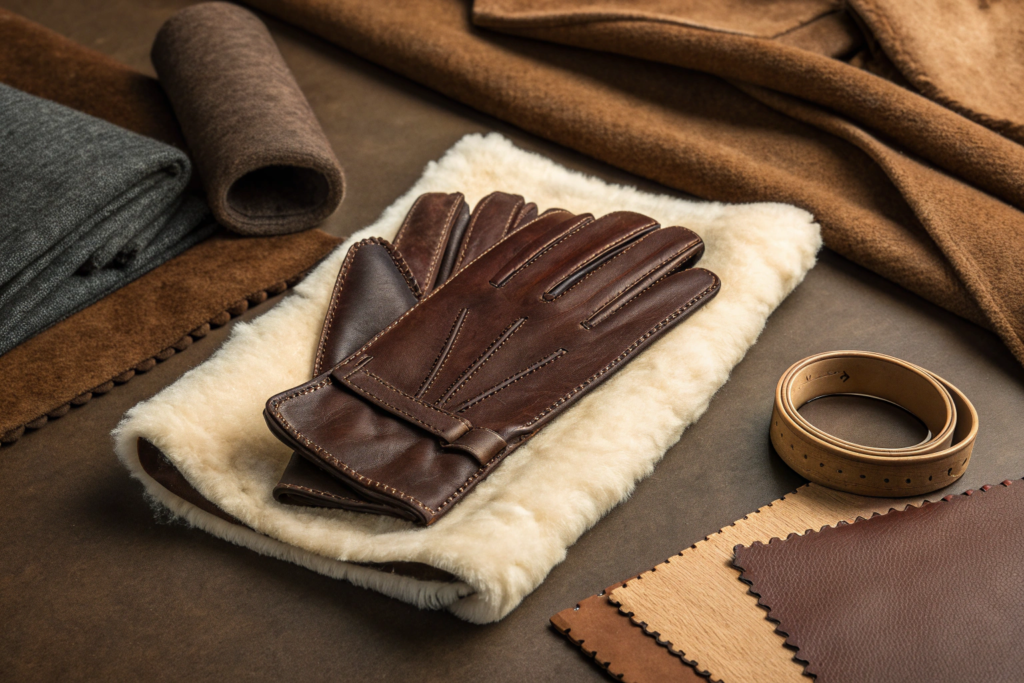
The lining is crucial for balancing warmth and bulk. A heavy, thick fleece lining will ruin the slim silhouette of a leather glove. The best practice is to use a thin but high-performance lining. A cashmere or merino wool knit lining is a premium choice that offers incredible warmth with minimal bulk. For a more affordable but still effective option, a high-quality, thin technical fleece can work well. The key is to ensure the lining doesn’t make the glove feel tight or clumsy.
What about performance materials like suede or shearling?
Suede, which is the underside of the leather hide, offers a beautiful, soft texture and a more casual look than smooth leather. It’s a great choice for driving gloves or weekend styles. Shearling (a sheepskin with the wool left on) is a super-premium option that offers unbeatable natural warmth and a bold, luxurious style statement. Because it’s naturally insulated, a shearling glove often doesn’t need a separate lining, which helps maintain a good fit.
How Can Functional Details Elevate the Design?
In today’s connected world, a glove that forces you to take it off to use your phone is not just inconvenient; it’s poorly designed. Your customers live on their devices. You’re looking for ways to integrate modern functionality into your gloves in a way that feels seamless and stylish, not clunky or obvious.
Integrating "tech-touch" capability is no longer an optional feature; it’s a mandatory design element for any modern winter glove. The most stylish execution involves using a discreet, conductive thread that is carefully stitched into the fingertips of the thumb and index finger, allowing for smartphone use without compromising the glove’s elegant appearance.
The best functional details are the ones you don’t see. The goal is to solve a problem without creating a visual distraction.
- Invisible Tech: Avoid the ugly, contrasting fingertip patches seen on cheap tech gloves. The use of a tonal, conductive thread that matches the leather or fabric is the hallmark of a premium, well-designed tech glove.
- Improved Fit and Warmth: Small details can make a big difference in performance. A small leather strap with a snap button at the wrist allows for an adjustable fit and a cleaner look. An elasticated panel or "ruching" at the inner wrist creates a seal that traps warm air inside the glove.
These details show that you’ve thought about how the customer will actually live in the product, a principle that is core to good industrial design.

How does tech-touch functionality work?
Most modern touchscreens are "capacitive," meaning they work by sensing the tiny electrical charge from your skin. Standard glove materials block this charge. Tech-touch gloves solve this by incorporating a conductive material—either a special thread or a treated patch of leather—on the fingertips, which allows the electrical charge from your finger to pass through to the screen.
What other details add value?
Consider the context of use. For a "driving glove" style, adding small perforations on the back of the hand and an open knuckle detail is a classic, stylish nod to its automotive heritage. For a more rugged style, a reinforced palm patch can add durability and a touch of workwear-inspired character.
What Colors and Textures Are On-Trend for North America?
You know that color can make or break a collection. While black is a perennial best-seller, a collection of only black gloves is boring. You need a color palette that feels modern, sophisticated, and versatile enough to appeal to the broad tastes of the North American consumer.
For the North American market, the trend is a palette of rich, versatile, and "new neutral" colors that go beyond basic black. While black remains the commercial foundation, key trend colors include deep browns like "Cognac" and "Chocolate," sophisticated jewel tones like "Forest Green" and "Burgundy," and elevated neutrals like "Charcoal Grey." Combining smooth leather with textured materials like suede or wool creates additional depth and interest.
The North American consumer appreciates classic, versatile colors that are easy to style.
- The New Browns: A rich, warm Cognac or Whiskey brown is arguably the most important color after black. It’s incredibly versatile, pairing beautifully with the navy, grey, and camel coats that are staples of a winter wardrobe.
- Sophisticated Accents: Instead of bright, primary colors, the trend is towards deep, saturated jewel tones. A Forest Green suede or a deep Burgundy leather adds a pop of color that feels expensive and intentional.
- Elevated Greys: Move beyond basic grey with a deep Charcoal or a warm Taupe. These complex neutrals feel more modern and luxurious than a standard mid-grey.
Mixing textures—like a smooth leather palm with a wool knit back—is also a key trend that adds a tactile, modern dimension to the glove.

Is there a place for brighter colors?
Brighter colors can work, but they are more of a niche, fashion-forward statement. A pop of color like a deep red can be a great accent piece in a larger collection. However, the core of a commercially successful collection should be built on the foundation of black, rich browns, and sophisticated deep tones.
How important is hardware color?
If your glove design includes hardware like a snap, buckle, or zipper, the finish is very important. The trend is moving away from shiny, polished gold and chrome towards more understated finishes like brushed gunmetal, matte black, or antique brass. The hardware should complement the glove’s color and feel like an integrated, high-quality component.
How Do Proportions and Length Define the Style?
Most winter gloves end right at the wrist. But you’re seeing more varied sleeve lengths in outerwear, from cropped jacket sleeves to elegant three-quarter length coat sleeves. This presents a design opportunity. How can you use the length and proportion of the glove to create a more dramatic fashion statement?
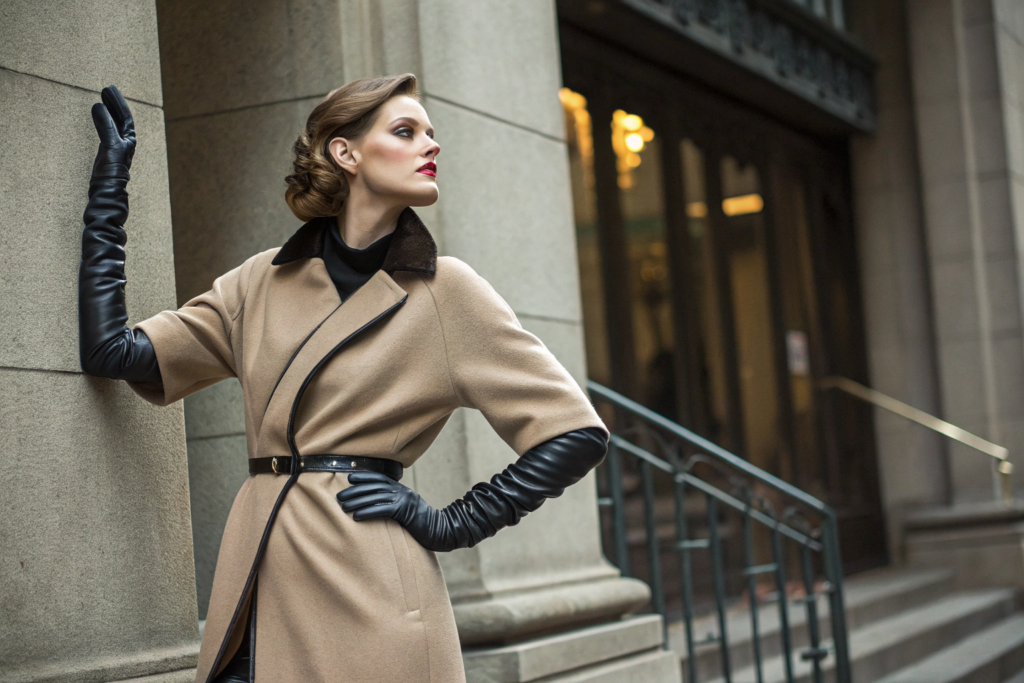
While the classic wrist-length glove remains the commercial staple, the growing trend of varied sleeve lengths in outerwear has created a demand for longer glove styles. An "opera-length" or "elbow-length" glove is no longer just for formalwear; it has become a powerful high-fashion accessory for creating a dramatic, elegant, and intentionally styled winter look.
This is a trend that comes directly from the high-fashion runways and is now trickling down to the mainstream.
- Wrist-Length: This is your bread and butter. It’s the most practical and versatile length, designed to meet the sleeve of a standard winter coat.
- Mid-Length (2-3 inches above the wrist): This is a great emerging trend. It’s perfect for bridging the gap created by slightly shorter jacket sleeves and ensures there is no exposed skin. It feels modern and thoughtful.
- Opera-Length (to the elbow or beyond): This is a true statement piece. Paired with a cape or a coat with cropped or wide sleeves, it creates an incredibly chic, vintage-inspired silhouette that is guaranteed to get noticed. While it’s a more niche item, including one or two opera-length styles in a collection signals that your brand is fashion-forward.
How does a longer glove affect fit?
For a longer glove, a perfect fit on the forearm is crucial. It should be snug enough to stay up without slouching, but not so tight that it’s uncomfortable. This often requires using very high-quality, supple leather with a bit of natural stretch, or incorporating a discreet, hidden zipper or elasticated panel to ensure a sleek fit.
Is this trend for both men and women?
While opera-length gloves are primarily a womenswear trend, the mid-length glove is emerging for men as well. A slightly longer, cuffed glove that can be worn over the sleeve of a sweater or under the sleeve of a jacket is a stylish and practical look that has roots in classic menswear and motoring style.
Conclusion
Designing a truly stylish winter glove for the North American market is a masterclass in balance. It’s about balancing warmth with a slim silhouette, integrating modern technology without sacrificing elegance, and choosing a color palette that is both commercially safe and fashionably sophisticated. By starting with premium, supple materials, weaving in smart, discreet functionality, and paying close attention to the nuances of color and proportion, you can create a glove that does more than just protect from the cold—it completes an outfit. This is the key to moving beyond a basic commodity and creating a desirable, premium fashion accessory.
At Shanghai Fumao Clothing, we live at this intersection of function and fashion. Our technical expertise and our eye for style allow us to partner with brands to create glove collections that are beautiful, practical, and profitable. If you are ready to design a winter glove collection that your customers will love and wear for years to come, please reach out to our Business Director, Elaine, at elaine@fumaoclothing.com.