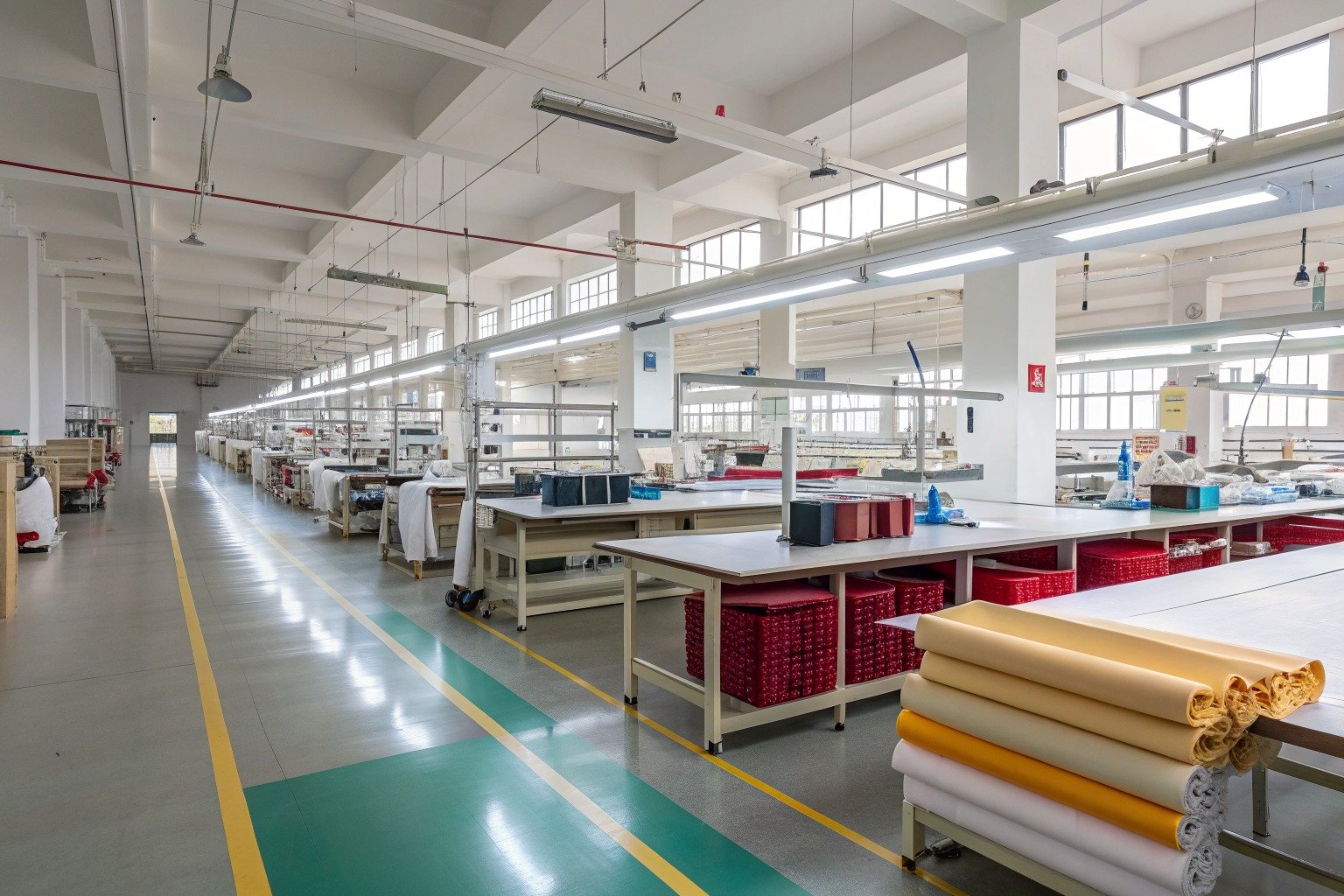
You’re always looking for products that solve a real problem for your customers. With growing awareness of sun safety, the demand for high-performance UV protective umbrellas is soaring. But this is a technical product, not a simple fashion accessory. You’re worried about navigating a market where every supplier claims their umbrellas offer UV protection. How can you be sure you’re sourcing a product that genuinely works and meets safety standards, rather than a standard rain umbrella with a misleading marketing tag?
To find a legitimate manufacturer for UV protective umbrellas, you must focus your search on factories with proven expertise in technical textiles and performance coatings. The process requires you to demand verifiable, third-party lab test reports certifying the fabric’s Ultraviolet Protection Factor (UPF) rating, and to rigorously vet the manufacturer’s quality control over the specific coatings and fabric constructions that deliver true sun protection.
I’m the owner of Shanghai Fumao Clothing, and we’ve seen the UV umbrella market evolve from a niche item to a mainstream wellness product. I can tell you that the difference between a real UV umbrella and a fake one lies in the science of the fabric—something you can’t see with the naked eye. It’s about specific coatings, weave density, and verifiable data. Finding a partner who understands and can prove this science is the only way to protect your customers and your brand’s reputation. Let’s walk through how to find a true expert manufacturer.
What Makes an Umbrella "UV Protective"?
Before you can source the product, you must understand the technology. You see terms like "UV coating," "black vinyl," and "UPF 50+," but what do they actually mean? You’re concerned that without this knowledge, you’ll be unable to differentiate between a factory using genuine technical materials and one that’s just using buzzwords.
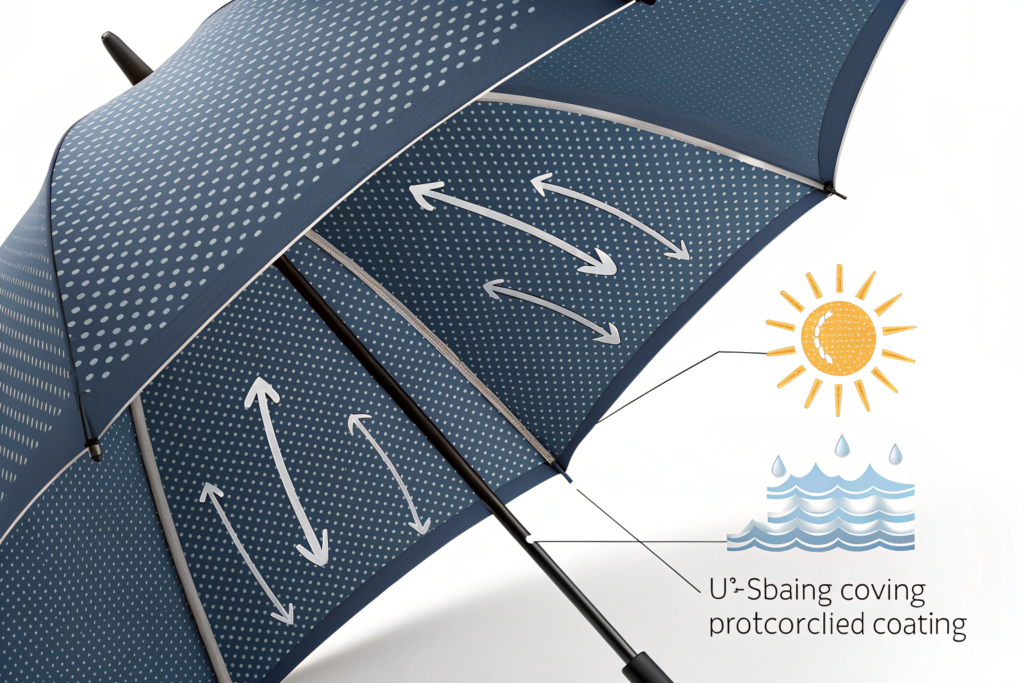
A truly UV protective umbrella relies on two key factors: a dense fabric weave to physically block sunlight, and, most importantly, a specialized coating (often a black vinyl or titanium dioxide layer) that is specifically formulated to absorb or reflect harmful UVA and UVB rays. The effectiveness of this combination is measured by its Ultraviolet Protection Factor (UPF) rating.
Think of it like sunscreen for fabric. A standard rain umbrella is designed only to block water. A UV umbrella is engineered to block a spectrum of light you cannot see.
- Weave Density: A tighter weave provides more physical shade, which is the first line of defense. If you can easily see points of light through the fabric when holding it up to the sun, it’s not a good UV protective fabric.
- The Coating: This is the critical component. A high-quality UV coating, often seen as a black layer on the underside of the canopy, is packed with UV-absorbing compounds like carbon black or titanium dioxide. This coating does the heavy lifting of blocking the 98%+ of UV radiation required for a UPF 50+ rating.
A factory that cannot explain the specific type of coating they use or why it works is not a specialist. A true partner like Shanghai Fumao Clothing can discuss the technical specifications of our coatings and provide the data to back them up.
What is UPF and why is it important?
UPF stands for Ultraviolet Protection Factor. It measures how much UV radiation (both UVA and UVB) a fabric allows to reach your skin. A fabric with a UPF of 50, for example, blocks 98% of the sun’s rays, allowing only 1/50th to penetrate. This is the standard recognized by organizations like the Skin Cancer Foundation. For a product to be marketed as sun-protective, it must have a UPF of 30 or higher. A UPF 50+ rating is the highest and most desirable certification.
Is a black coating always necessary?
While a black vinyl or rubberized coating on the underside is the most common and effective method, it’s not the only one. Some advanced fabrics use a titanium dioxide or zinc oxide coating that can be lighter in color. However, the black coating is a strong visual indicator of a dedicated UV protective design. Be very skeptical of a standard, single-layer, light-colored fabric that claims high UPF protection without a specific technical explanation or a test report.
How Do I Find and Vet Specialist Factories?
You search for "UV umbrella factory" and are flooded with thousands of listings. Many show fashionable umbrellas but offer no technical details. How do you filter out the noise and identify the handful of manufacturers who are true experts in performance textiles?
You must vet potential factories by asking for specific, technical proof of their capabilities. Go beyond their product photos and demand to see their UPF test reports, inquire about their coating technology, and ask for samples specifically from their certified UPF 50+ production lines.
A legitimate manufacturer of technical goods will be proud to show you their data.
- Demand the UPF Certificate: This is non-negotiable. Ask for a copy of a recent, third-party lab report certifying their fabric to UPF 50+. The report should be from a reputable lab (like SGS, Intertek, or TÜV). Check the date on the report to ensure it’s recent.
- Ask About the Coating: Ask "What is the composition of your UV coating? Is it a vinyl, rubber, or titanium dioxide base? What is the typical lifespan of the coating?" A specialist will be able to answer this. A non-specialist will say "it’s a UV coating."
- Request a Technical Sample: When you request a sample, specify that you need a sample of the exact fabric and coating combination that was certified in their UPF test report. This ensures you are evaluating the actual performance product, not a different fashion version.
- Look for "Technical" Language: A specialist’s website and communications will often use technical terms correctly. They will talk about "UPF ratings," "fabric density," "coatings," and "wind-resistant frames," not just "fashionable" and "good quality."
A factory that hesitates or is unable to provide these things is likely not a true manufacturer of UV protective umbrellas.

What should a UPF test report look like?
A legitimate test report from a lab like SGS will be a formal document. It will clearly state the name of the factory, the specific fabric tested, the testing standard used (e.g., AATCC 183 or AS/NZS 4399), the average UPF rating calculated, and the final UPF classification (e.g., "Excellent Protection" / UPF 50+). It will often include detailed data about its UVA and UVB transmittance.
Are there specific regions for these factories?
The "umbrella capital" of China is the area around Shangyu in Zhejiang province. This region has a massive concentration of umbrella and umbrella-part manufacturers, including many who specialize in technical fabrics and frames. While you can find good factories elsewhere, this region is a logical place to focus your initial search.
How Can I Test the UV Protection Myself?
You’ve received a sample and its test report. It looks good on paper, but you want a simple, tangible way to confirm that it actually works. How can you perform a quick, confidence-building test without sending it back to a lab?
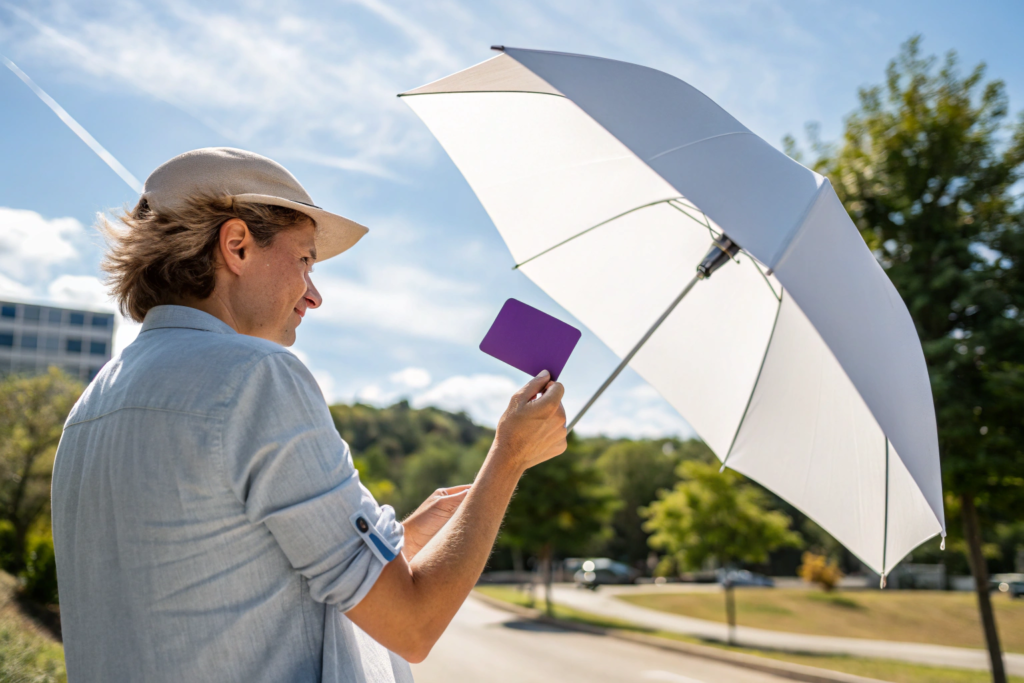
While you can’t measure the exact UPF rating yourself, you can easily verify the umbrella’s basic UV-blocking ability using a simple UV test card. These inexpensive cards change color when exposed to UV radiation. A good UV umbrella should almost completely prevent the card from changing color when held underneath its canopy.
This is a simple but powerful test.
- Get a UV Test Card: These are widely available online for a low cost.
- Test in Direct Sun: Place the card in direct, bright sunlight. It should quickly turn a shade of purple, confirming the presence of UV radiation.
- Test Under the Umbrella: Now, place the card in the shade directly under the canopy of your sample umbrella. A high-quality UPF 50+ umbrella should block nearly all UV rays, and the card should fade back to white (or very close to it) within seconds.
- Compare with a Regular Umbrella: For a dramatic comparison, perform the same test under a standard rain umbrella. You will likely see that the card remains noticeably colored, proving that the regular umbrella is not effectively blocking UV rays.
This simple, visual test can give you and your team great confidence that the product you’ve sourced actually performs as advertised.
What is the "light test"?
This is another simple, common-sense test. Stand under the umbrella in the bright sun. The shade it casts should be deep and dark. Hold the canopy up to the light. You should not be able to see individual points of light through the fabric. If it looks like a starry sky, the weave is too loose, and it will not offer good protection, regardless of the coating.
Does the color of the outside canopy matter?
For a coated umbrella, the exterior color has a minor effect compared to the coating itself. Lighter exterior colors may reflect slightly more heat, making it feel a bit cooler to stand under, but the UV protection is almost entirely determined by the density of the fabric and the quality of the underside coating.
What Other Quality Features Should I Look For?
A great UV protective canopy is useless if the frame breaks in the first gust of wind. You know that customers expect a premium performance product to be durable in every aspect. What are the key features of the frame and handle that you should specify to your manufacturer?
Beyond the UPF-rated fabric, a high-quality UV umbrella must have a durable, wind-resistant frame. You should look for manufacturers who use superior materials like fiberglass for the ribs, as it is stronger and more flexible than cheap metal. Also, consider features like a reinforced shaft, a comfortable handle, and a smooth, reliable automatic mechanism.
When creating your tech pack, be sure to specify these features:
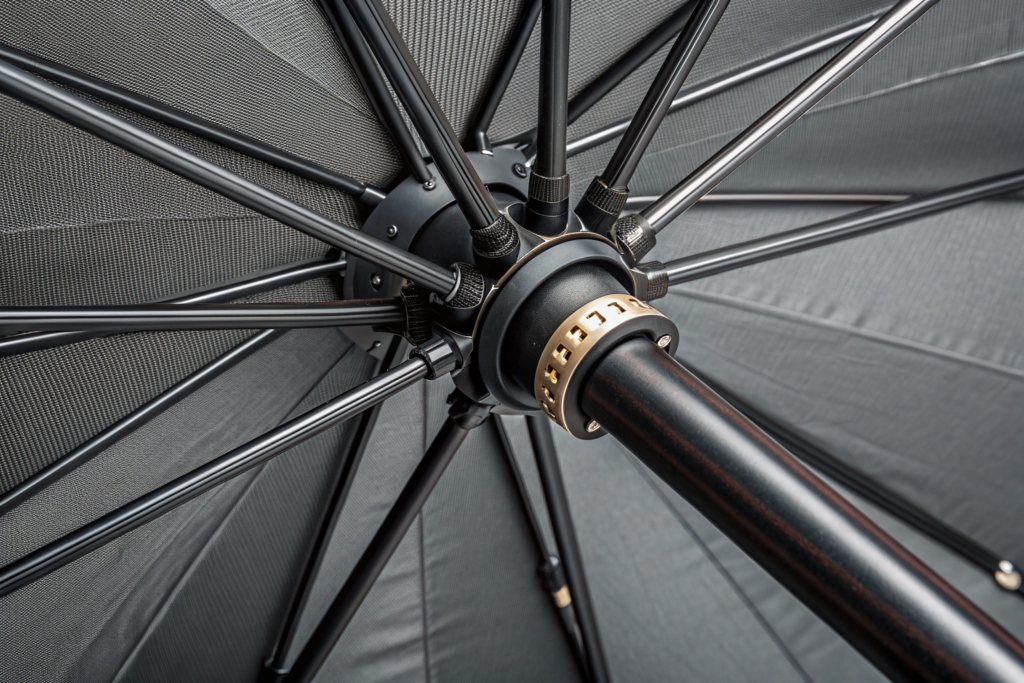
- Rib Material: Insist on fiberglass for at least the main ribs. It can bend and flex in the wind without breaking or getting permanently bent like cheap steel or aluminum.
- Frame Construction: Look for frames with more ribs (e.g., 8-10 ribs instead of 6) for greater stability. Ask about "windproof" or "double-canopy" designs that allow wind to vent, preventing the umbrella from turning inside out.
- Handle and Mechanism: The handle should be ergonomic and made from a comfortable, non-slip material. If it’s an automatic umbrella, the open/close mechanism should feel smooth and robust, not flimsy.
Why is fiberglass better than metal for ribs?
Cheap metal ribs will bend out of shape in the wind and stay bent, ruining the umbrella. Fiberglass is a composite material that is both strong and flexible. It can bend dramatically under wind load and then return to its original shape without damage. This is a critical feature for a durable, long-lasting product.
What is a double-canopy design?
A double-canopy or "vented" umbrella has a second, smaller canopy layered over a vent in the main canopy. This allows strong gusts of wind to pass through the umbrella rather than getting trapped underneath it. This design makes the umbrella significantly more stable and resistant to inverting in windy conditions.
Conclusion
Finding a manufacturer for a technical product like a UV protective umbrella requires a shift in your sourcing strategy. You must move from a fashion-focused approach to a data-driven, scientific one. By prioritizing manufacturers who can provide verifiable UPF 50+ test reports, who understand the science of technical coatings, and who build their umbrellas with durable, high-performance frames, you can source a product with confidence. This diligence ensures you are providing your customers with genuine, effective sun protection, building your brand’s reputation for quality, and tapping into a rapidly growing market for wellness and safety products.
At Shanghai Fumao Clothing, we combine our deep knowledge of technical textiles with our expertise in high-quality manufacturing. We can provide the certified materials, durable construction, and verifiable data you need to launch a successful UV protective umbrella line. If you are ready to develop a product that offers proven performance, please reach out to our Business Director, Elaine, at elaine@fumaoclothing.com.