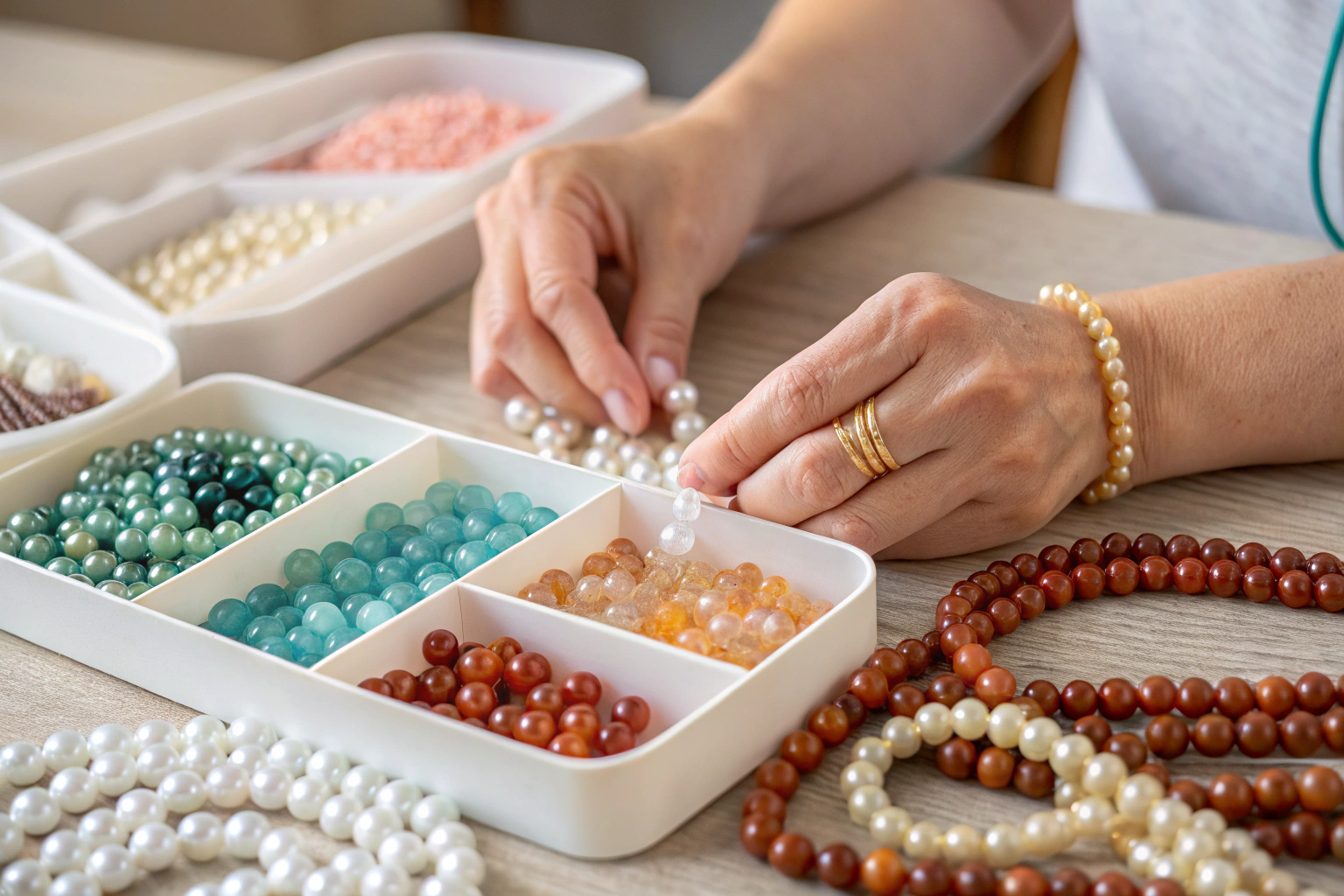
You have a vision for a beautiful, beaded accessory—perhaps a delicate bracelet, an embroidered headband, or a tasseled keychain. You know the design you want to create, but then you face a dizzying array of choices: what kind of beads should you use? Glass, plastic, wood, stone? What size? What hole size? Choosing the right bead is a critical decision that will define your product’s style, quality, durability, and price point. So, how do you navigate this vast world of options to make the perfect choice?
How can you select the best beads? You must make a series of four strategic decisions: 1) you must choose the right bead material, as this has the biggest impact on quality, weight, and cost, 2) you must select the appropriate bead size and shape to match your design’s scale and complexity, 3) you must pay close attention to the hole size and orientation to ensure it’s compatible with your construction method, and 4) you must rigorously test the bead’s durability and colorfastness to ensure your final product will last. At Shanghai Fumao Clothing, we guide our clients through this selection process to ensure the components we source are not only beautiful but also perfectly suited for a high-quality, marketable product.
Is a bead just a bead? Not at all. Let’s break down the four critical choices in selecting the perfect beads for your project.
How Do You Choose the Right Bead Material?
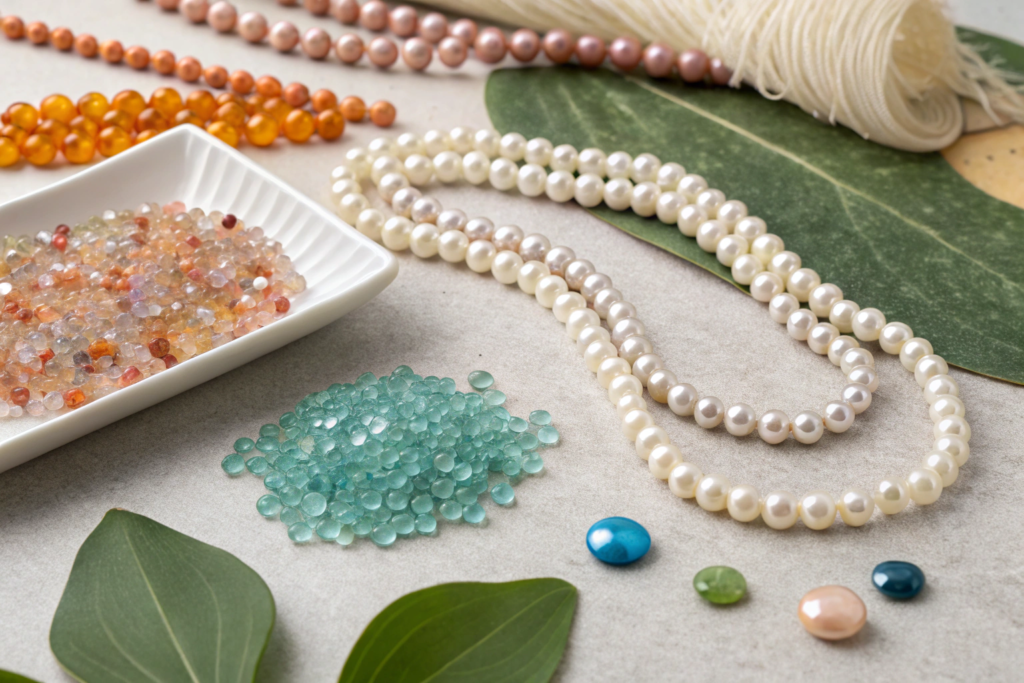
What is the most important decision you will make? It’s the material of the bead itself. The material dictates the bead’s weight, luster, feel, durability, and, most importantly, its cost and perceived value. Choosing the right material is about aligning your product with your brand’s price point and your customer’s expectations.
Here’s a look at the most common options:
- Glass Beads: This is a vast and versatile category. It includes tiny "seed beads" used for weaving and embroidery, as well as larger, faceted crystal beads (like those from Czech or Austrian makers) that sparkle brilliantly. Glass has a satisfying weight, a cool touch, and a high-perceived value.
- Plastic & Acrylic Beads: These are lightweight and inexpensive, making them ideal for children’s accessories or chunky, oversized designs where weight is a concern. However, they can sometimes look and feel "cheap" if not chosen carefully. High-quality, modern acrylics can be very stylish.
- Natural Stone Beads: Beads made from semi-precious stones like turquoise, amethyst, quartz, or agate. Each bead is unique, with natural variations in color and pattern. They have a heavy, substantial feel and a very high perceived value, perfect for bohemian or luxury designs.
- Wood & Seed Beads: Lightweight, warm to the touch, and eco-friendly. They are perfect for creating natural, earthy, or rustic-style accessories.
- Freshwater Pearls: An organic gem, each with a unique shape and luster. They instantly signal a classic, premium, and elegant aesthetic.
- Ceramic & Clay Beads: Often handmade, these beads can be glazed in vibrant colors and unique patterns. They have a solid, artisanal feel.
How Do You Choose Based on Your Brand?
What material aligns with your brand’s identity?
- Luxury/Bridal Brand: You should focus on high-quality glass crystals, freshwater pearls, and semi-precious stones.
- Fast-Fashion/Trendy Brand: High-quality acrylics and more affordable glass beads are a great choice.
- Eco-Conscious/Bohemian Brand: Wood, seeds, recycled glass, and natural stone beads are a perfect fit.
- Children’s Brand: Lightweight, non-toxic, and durable plastic beads are the safest and most practical option. This is a key consideration for children’s product safety.
Why is Weight So Important?
Can a bead be too heavy? Yes. Imagine a pair of earrings made with heavy stone beads. They might look beautiful, but they would be uncomfortable to wear for long periods. Similarly, a garment heavily embroidered with glass beads can become very heavy and drape poorly. You must always consider the final weight of the product.
How Do You Select the Right Bead Size and Shape?
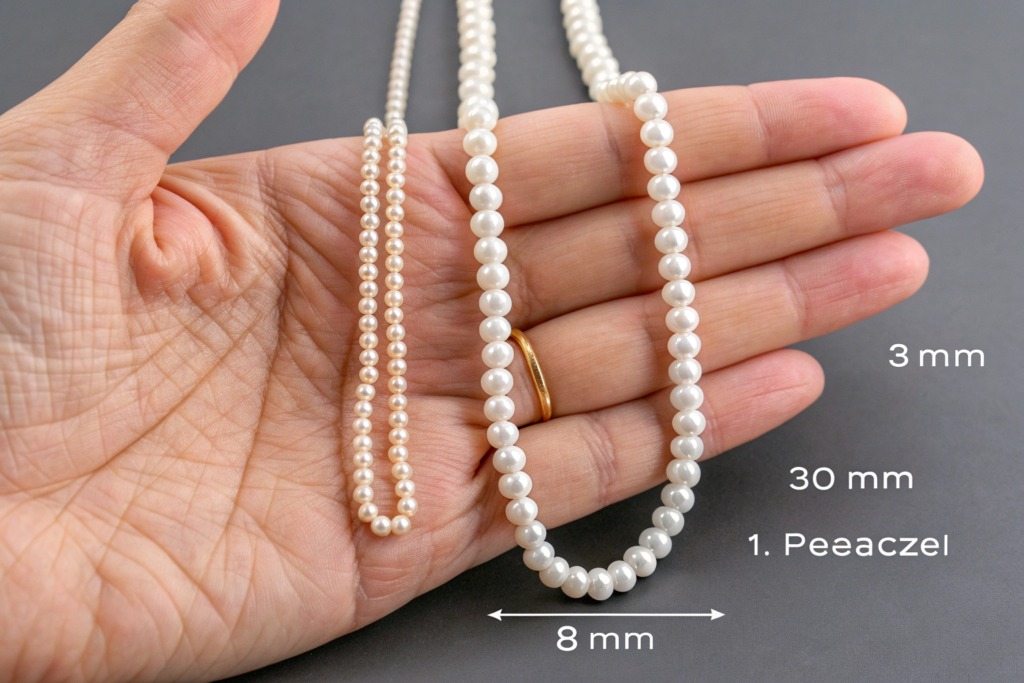
Once you’ve chosen your material, what’s the next step? You need to select the right size and shape. Bead sizes are typically measured in millimeters (mm). The size you choose will dramatically affect the look of your final design.
- Small Beads (2mm – 4mm): These are often called "seed beads." They are perfect for creating intricate, detailed patterns, delicate jewelry, and for embroidery work where you want to create a texture rather than individual focal points.
- Medium Beads (6mm – 10mm): This is a versatile, all-purpose size range. These beads are large enough to be noticed individually but small enough to be used in strings or clusters. This is the most common size for bracelets and necklaces.
- Large Beads (12mm and up): These are "statement" or "focal" beads. A single large, beautiful bead can be the centerpiece of a design. They are great for pendants, tassels, or bold, chunky jewelry.
The shape is equally important. Beyond a simple round bead, you can find faceted beads (which catch the light), tube beads, disc beads, and countless "novelty" shapes like hearts, flowers, or stars.
How Does Size Affect the Design?
How do you choose the right size for your project? Think about the "visual weight." Do you want the design to feel delicate and airy, or bold and substantial? For a multi-strand bracelet, using smaller beads will keep it from becoming too bulky. For a simple pendant necklace, a single large bead might be all you need.
Why is Consistency Important for Professional Products?
Should all the beads be exactly the same size? For a professional, high-quality product, yes. When buying beads in bulk, you need to ensure they are well-calibrated. A strand of beads where the sizes are noticeably inconsistent will look amateurish. This is less of a concern for natural materials where variation is part of the appeal, but for glass or crystal, consistency is a sign of quality.
Why is the Bead’s Hole Size So Critical?
What is the most overlooked technical detail? It’s the hole. A beautiful bead is completely useless if you can’t get your stringing material through it. You must ensure that the bead’s hole size is compatible with the thread, cord, or wire you plan to use.
Hole sizes are also measured in millimeters.
- Small Holes (0.5mm – 0.8mm): Common in small seed beads and pearls. Suitable for fine beading thread (like nylon) or very thin wire.
- Standard Holes (1mm – 1.5mm): Found in most medium-sized glass and stone beads. Works with most standard jewelry elastics, leather cords, and thicker threads.
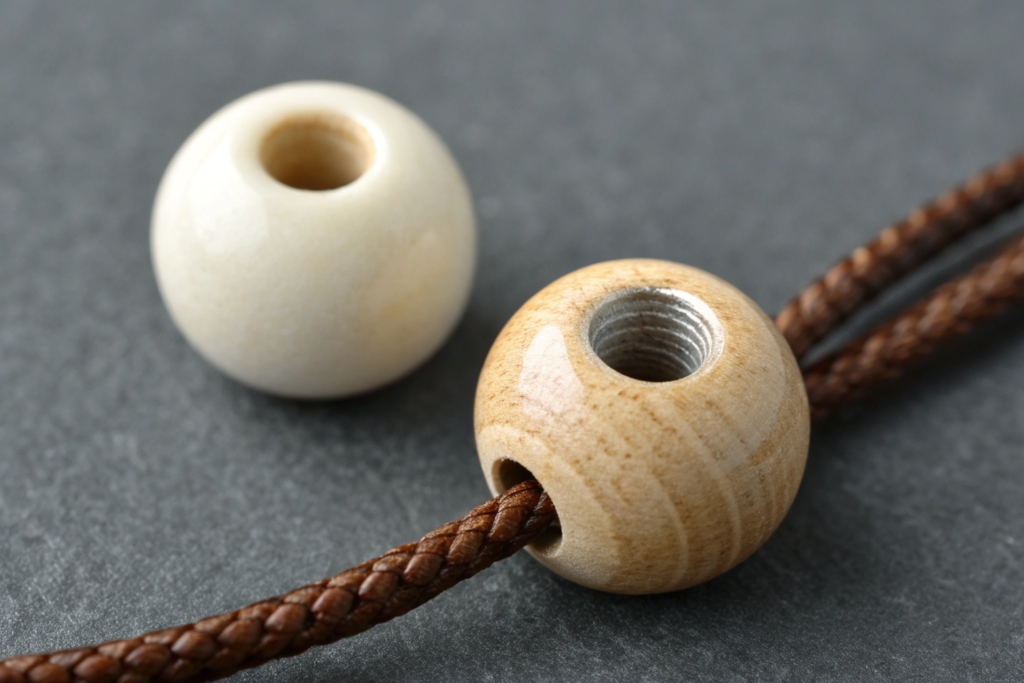
- Large Holes (2mm and up): Often found in wood, ceramic, or "Pandora-style" beads. Necessary for use with thick leather cords, ribbons, or multiple strands of elastic.
You also need to consider the hole’s orientation. Is it drilled straight through the center? Or is it a "top-drilled" bead, designed to hang like a pendant?
How Do You Plan This?
Should you choose the bead or the string first? It’s best to think of them together. When you are designing your product, you should decide on your construction method first. If you know you want to use a 2mm thick leather cord, this immediately narrows your bead selection to only those with a hole larger than 2mm.
What Should You Specify in Your Tech Pack?
How do you communicate this to a factory? In your technical drawing or tech pack, you must specify both the bead and the stringing material. For example: "Bead: 8mm Blue Glass Bead, minimum hole size 1.5mm. Stringing Material: 1mm Clear Elastic Cord." This level of detail prevents costly sourcing mistakes.
How Can You Test for Durability and Colorfastness?
What is the final quality check you must perform? You must test the beads to ensure they will last. A beautiful bead that fades, chips, or breaks easily will lead to customer complaints and damage your brand’s reputation.
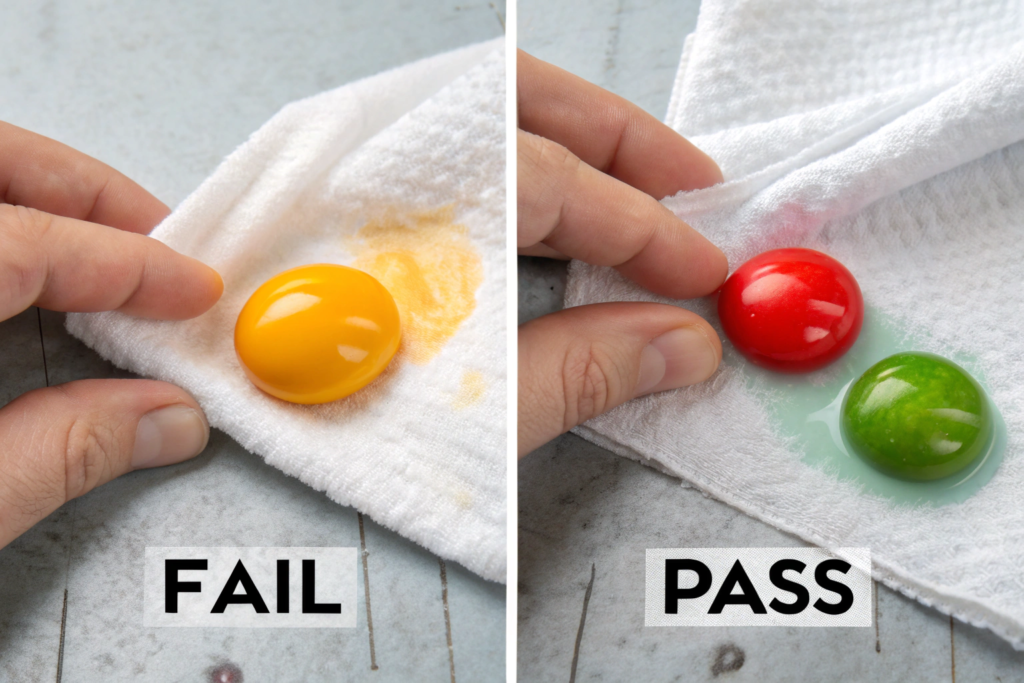
Before you approve a bead for mass production, you must get samples from your supplier and perform some simple but critical tests:
- Colorfastness Test: Rub the bead vigorously with a damp white cloth. Does any color come off? If so, the dye is not stable and will likely bleed onto clothing or skin. This is especially important for brightly colored wood or glass beads.
- Chip Test: For coated or plated beads (like metallic-coated glass), try to scratch the surface with your fingernail or a coin. Does the coating flake or chip off easily? If so, it won’t stand up to normal wear and tear.
- Durability Test: For glass or stone beads, drop one from a few feet onto a hard surface. Does it shatter easily? While all glass can break, it should have a reasonable level of durability.
- UV Test: If possible, leave a bead in direct sunlight for a few days. Does the color fade noticeably? This is important for products that will be worn outdoors.
Why is This Step Non-Negotiable?
Can’t you just trust the supplier? You should never assume. Always test the samples yourself. A good supplier will be confident in their product’s quality and will have no problem providing samples for you to test. This testing phase is a critical part of a professional quality inspection process.
How Does This Protect Your Brand?
Isn’t this about protecting your reputation? Yes. Selling a product that falls apart or whose color runs is one of the fastest ways to lose customer trust. Taking the time to rigorously test your components is a fundamental part of building a brand that is known for quality and reliability.
Conclusion
So, how do you select the best beads for your handmade accessories? Is it just about picking the prettiest one? No. It is a thoughtful, multi-step process that balances aesthetics with practicality.
It’s about choosing a bead material that reflects your brand’s quality and price point. It’s about selecting the perfect size and shape to bring your design to life. It’s about paying close attention to the critical technical detail of the hole size. And it’s about being a diligent professional and rigorously testing for durability and colorfastness.
By making these four decisions with care and attention to detail, you can be confident that the beads you choose will not only look beautiful but will also form the foundation of a high-quality, durable, and successful product.
If you are looking for a partner to help you source, test, and manufacture beautiful beaded accessories at scale, our team has the expertise to guide you. Please contact our Business Director, Elaine, at her email: elaine@fumaoclothing.com.