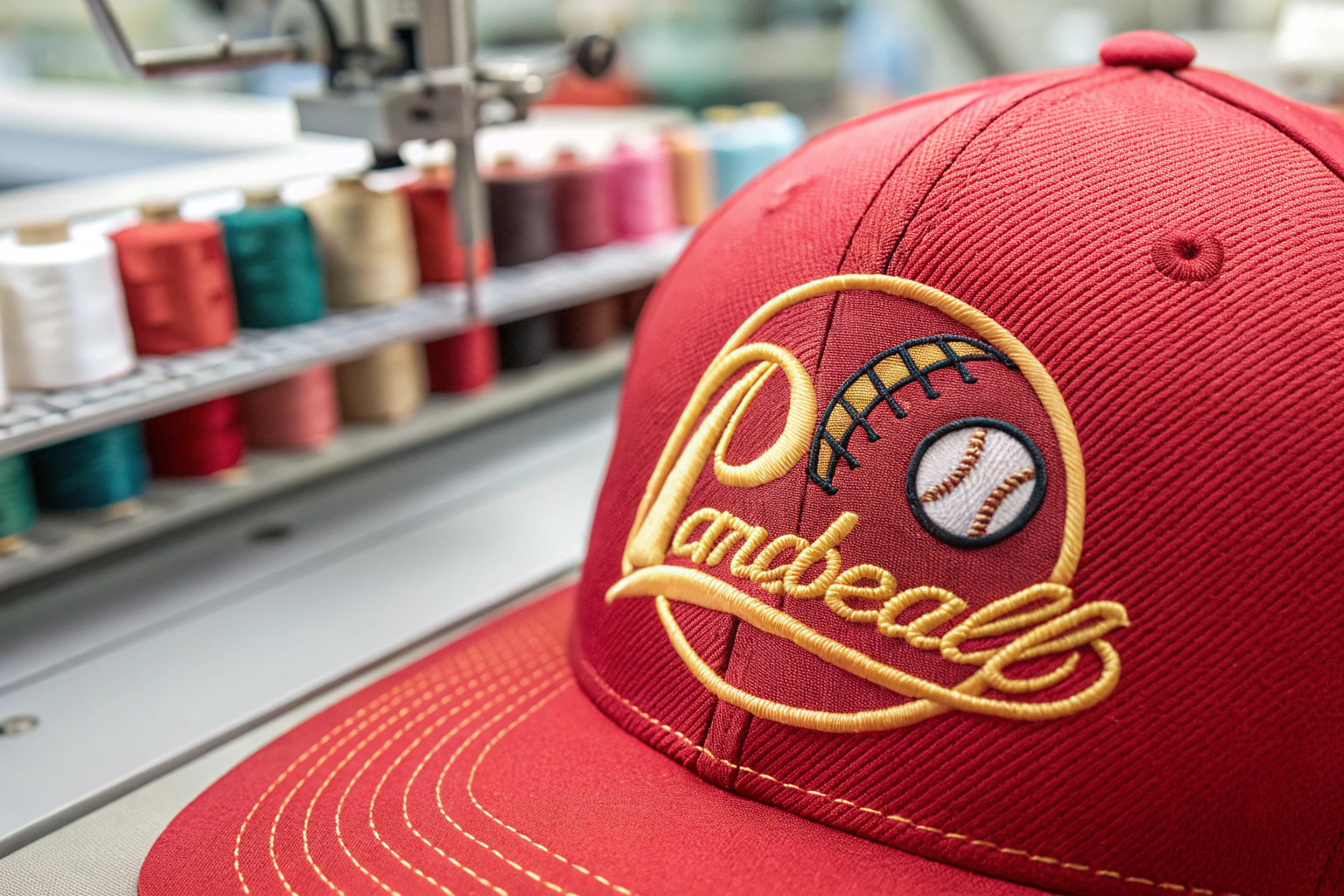
You’ve spent weeks perfecting your brand’s logo. Now, you want to embroider it onto a cap, a beanie, or the chest of a polo shirt. You send the design to your manufacturer, but then they ask a question you weren’t expecting: "What kind of thread do you want to use? Polyester or Rayon? What about the weight?" Suddenly, you realize that the thread itself is a critical choice. How do you select the thread that will best represent your brand’s quality and aesthetic?
How can you choose the right thread? You must make a strategic choice based on four key factors: 1) you must select the right material—primarily choosing between the vibrant sheen of Rayon and the rugged durability of Polyester, 2) you must understand thread weight and how it impacts detail and coverage, 3) you must consider special-effect threads to add unique texture and dimension, and 4) you must ensure the thread color is perfectly matched to your brand’s official Pantone colors. At Shanghai Fumao Clothing, we see thread selection as a crucial design decision, and we guide our clients to the choice that best serves their product and brand.
Why is the Choice Between Polyester and Rayon So Important?
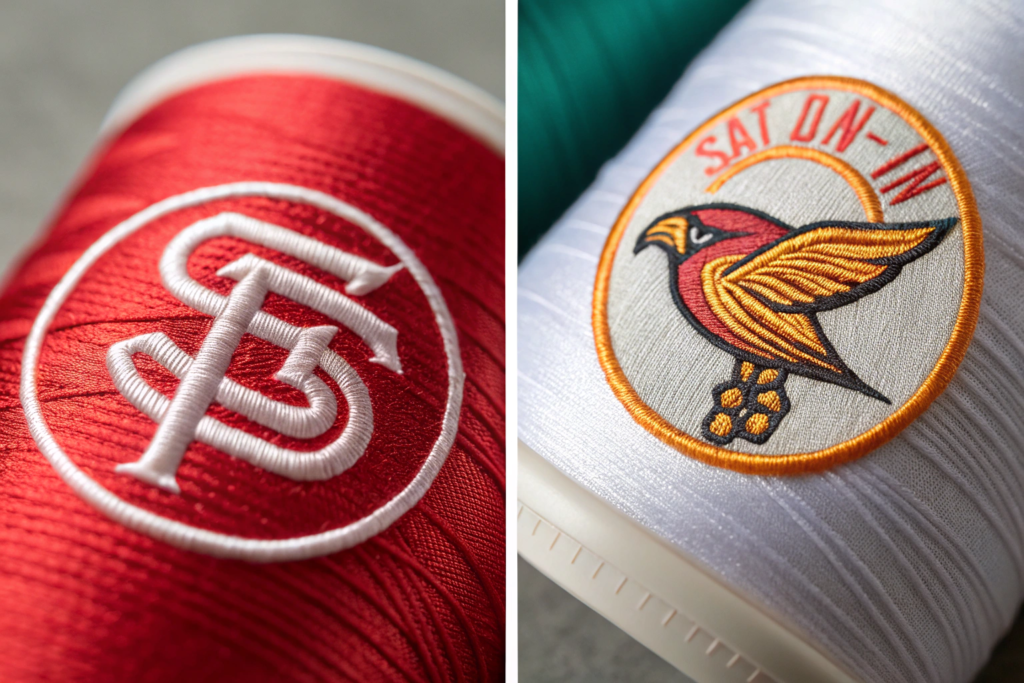
What is the first and most fundamental choice you will make? It’s the thread’s material, or fiber content. In the world of commercial embroidery, there are two dominant champions: Polyester and Rayon. While they can look similar from a distance, they have distinct characteristics that make them suitable for different purposes.
Rayon is the traditional choice for embroidery. It is made from cellulose (wood pulp) and is beloved for its beautiful, high-sheen, silky finish. It drapes softly and is known for producing brilliant, vibrant colors. It is often considered the more "luxurious" option.
Polyester is the modern workhorse. It is a synthetic polymer that is engineered for strength and durability. While early polyester threads were dull, modern polyester can now closely mimic the high sheen of rayon. Its key advantage is its incredible resilience.
How Do You Choose Between Them?
So, which one is right for your project? Here’s a simple breakdown:
| Feature | Rayon Thread | Polyester Thread | Winner For… |
|---|---|---|---|
| Sheen & Luster | Silky, high sheen, luxurious | High sheen, slightly crisper | Rayon (for high-fashion, premium look) |
| Durability | Good | Excellent | Polyester (for workwear, sportswear, caps) |
| Colorfastness | Good, but can fade with bleach | Excellent, bleach-resistant | Polyester (for items needing frequent washing) |
| Softness | Very soft, flexible drape | Slightly stiffer, holds shape well | Rayon (for knits and delicate fabrics) |
| Cost | Slightly more expensive | Generally more cost-effective | Polyester (for budget-conscious projects) |
For most of the accessories we produce, like durable sports caps and items that will see a lot of wear and tear, we almost always recommend Polyester. Its strength, colorfastness, and ability to hold up to abuse make it the most reliable and practical choice for long-lasting, high-quality logos.
How Does Thread Weight Affect Your Logo’s Detail?
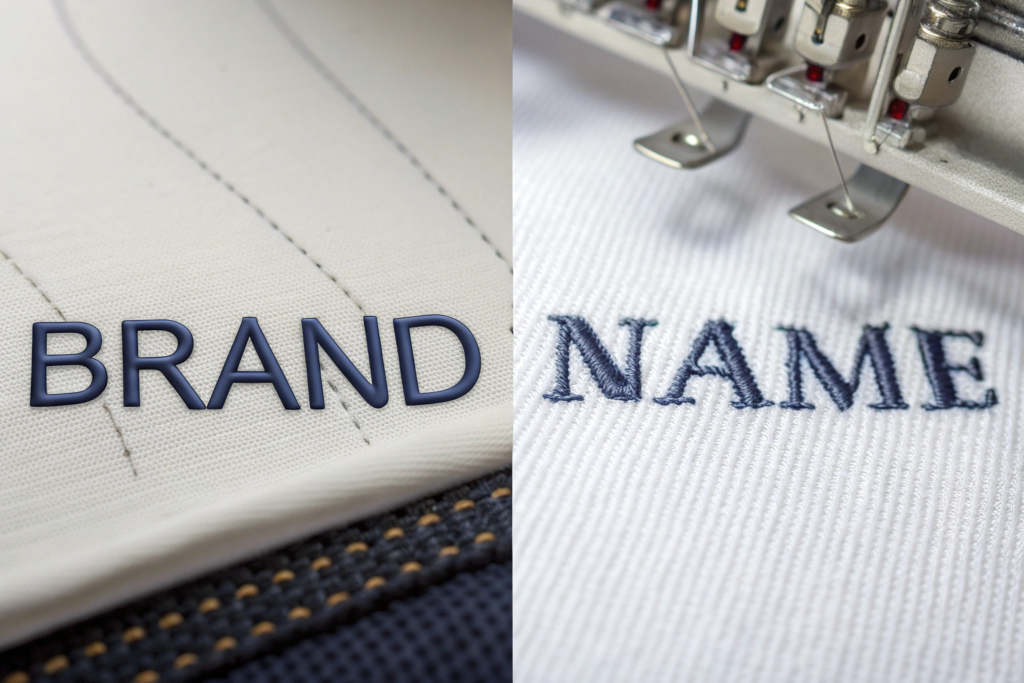
What does it mean when a factory talks about "40 weight" thread? Thread weight (or thickness) is a crucial factor that determines the level of detail your embroidery can achieve. The system is a bit counterintuitive: the higher the number, the finer (thinner) the thread.
The undisputed industry standard for embroidery logos is 40 weight. This is the versatile, all-purpose weight that offers the best balance between good coverage (filling in large areas of color) and the ability to render reasonably fine detail. Almost every logo you see on a cap or polo shirt is stitched using 40 weight thread.
However, if your logo has extremely small text or very intricate details, a 40 weight thread might be too thick to render them clearly. In these cases, a skilled embroiderer will switch to a finer 60 weight thread for those specific elements. This thinner thread can create much sharper, more legible small letters and details.
When Should You Use a Thicker Thread?
Is there a use for thicker threads? Yes. A thicker thread, like a 30 weight, is great for quickly filling in large areas of color. It requires fewer stitches to cover the same area, which can save time and money on very large designs. It can also be used to create a bold, chunky, hand-stitched look. However, it is not suitable for fine details.
How Do You Discuss This With Your Manufacturer?
Do you need to be an expert on this? No. But you should be aware of the concept. A good manufacturer will advise you. If you send them a logo with very small text, they should proactively suggest, "For the small tagline, we recommend using 60 weight thread to ensure it is legible. Is that okay?" This shows they are an expert partner focused on delivering the best possible result, a key trait to look for when working with Chinese factories.
How Can Special-Effect Threads Make Your Logo Stand Out?
What if you want your logo to be more than just flat color? This is where special-effect threads come in. Using a specialty thread for all or part of your logo can add a huge "wow" factor and a premium, custom feel. These threads are more expensive and can be more challenging to work with, but they can create an unforgettable result.
Some popular options include:
- Matte Finish Thread: The opposite of high-sheen. This thread has a completely flat, non-reflective finish. It creates a very modern, sophisticated, and understated look. It’s perfect for a minimalist, high-end brand.
- Metallic Thread: These threads have a core of polyester wrapped in a metallic foil, creating a brilliant, shimmering, metal-like effect. They are perfect for adding a touch of luxury or creating a bold, eye-catching design.
- Glow-in-the-Dark Thread: This thread is treated with a phosphorescent material that absorbs light and then glows in the dark. It’s a fantastic, playful option for event merchandise, children’s products, or streetwear brands.

Are There Other Specialty Options?
What other creative choices are there?
- Puff / 3D Embroidery: This isn’t a type of thread, but a technique where foam is placed under the embroidery to create a raised, three-dimensional effect. It is almost always done with durable Polyester thread. This is the standard for pro-style sports caps.
- Variegated Thread: This thread is dyed with multiple colors along its length, creating a random, multi-tonal effect as it stitches out.
What is the Main Consideration for Specialty Threads?
Is there a catch? The main consideration is cost and complexity. Specialty threads are more expensive and often require the embroidery machine to run at a slower speed, which increases production time. Therefore, they are best used as an accent to make a key part of your logo pop, rather than for the entire design.
How Do You Ensure Perfect Color Matching?
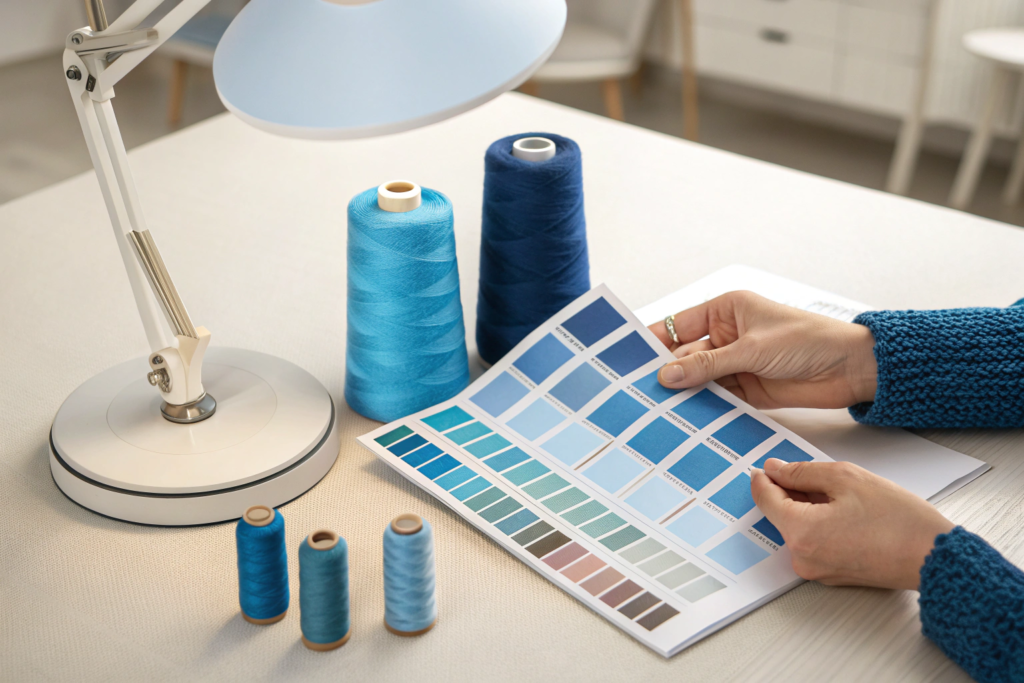
You’ve chosen the material, weight, and finish of your thread. Now for the most important step: the color. Your brand has specific colors, defined by a system like the Pantone Matching System (PMS). You cannot simply tell your manufacturer "light blue." You must provide your exact Pantone color code.
Every major thread manufacturer (like Madeira, Isacord, or Robison-Anton) produces swatch books with thousands of colors. The job of your manufacturer is to take your Pantone code and find the absolute closest matching thread color in their inventory. A professional factory will have swatch books from multiple thread suppliers to find the best possible match.
What is a "Stitch-Out" and Why Must You Request One?
How can you be sure the color is right before production? You must request a "stitch-out" sample. This is a physical sample of your actual logo, embroidered on a scrap piece of your chosen fabric, using the exact thread colors the factory has selected. Computers and photos can distort color. The only way to be 100% sure that the thread color is correct and that it looks right on your fabric is to see it in person. Approving a physical stitch-out sample before a full production run is a non-negotiable step for any professional brand.
Why Does the Fabric Color Matter?
Can the fabric affect the thread color? Yes. The perceived color of a thread can change slightly depending on the color of the fabric it is stitched on. A red thread will look different on a white cap than it does on a black cap. This is another reason why a stitch-out on your actual fabric is so critical. It allows you to see the final color combination in the real world.
Conclusion
So, how do you choose the right thread for your embroidery logo? Is it a minor detail to be left to the factory? Absolutely not. It is a series of deliberate design choices.
It’s about choosing the right material, balancing the beauty of Rayon with the durability of Polyester. It’s about understanding thread weight to ensure your finest details are rendered with perfect clarity. It’s about considering special-effect threads to give your logo a unique and memorable personality. And it’s about a disciplined commitment to perfect color matching using Pantone codes and physical stitch-out samples.
By taking control of these four decisions, you are no longer just a client; you are a knowledgeable designer, guiding your manufacturing partner to create a final product that perfectly represents your brand’s commitment to quality.
Our team is expert in this process. If you’re ready to bring your logo to life with the perfect embroidery, we are here to guide you through every choice. Please contact our Business Director, Elaine, at her email: elaine@fumaoclothing.com.