When you’re sourcing women’s fashion belts from overseas suppliers, getting the size right isn’t just about fit—it’s about customer satisfaction, return rates, and brand reputation. Many importers tell us they’ve faced costly mistakes because their supplier used inconsistent or outdated sizing charts. That frustration is real—and avoidable.
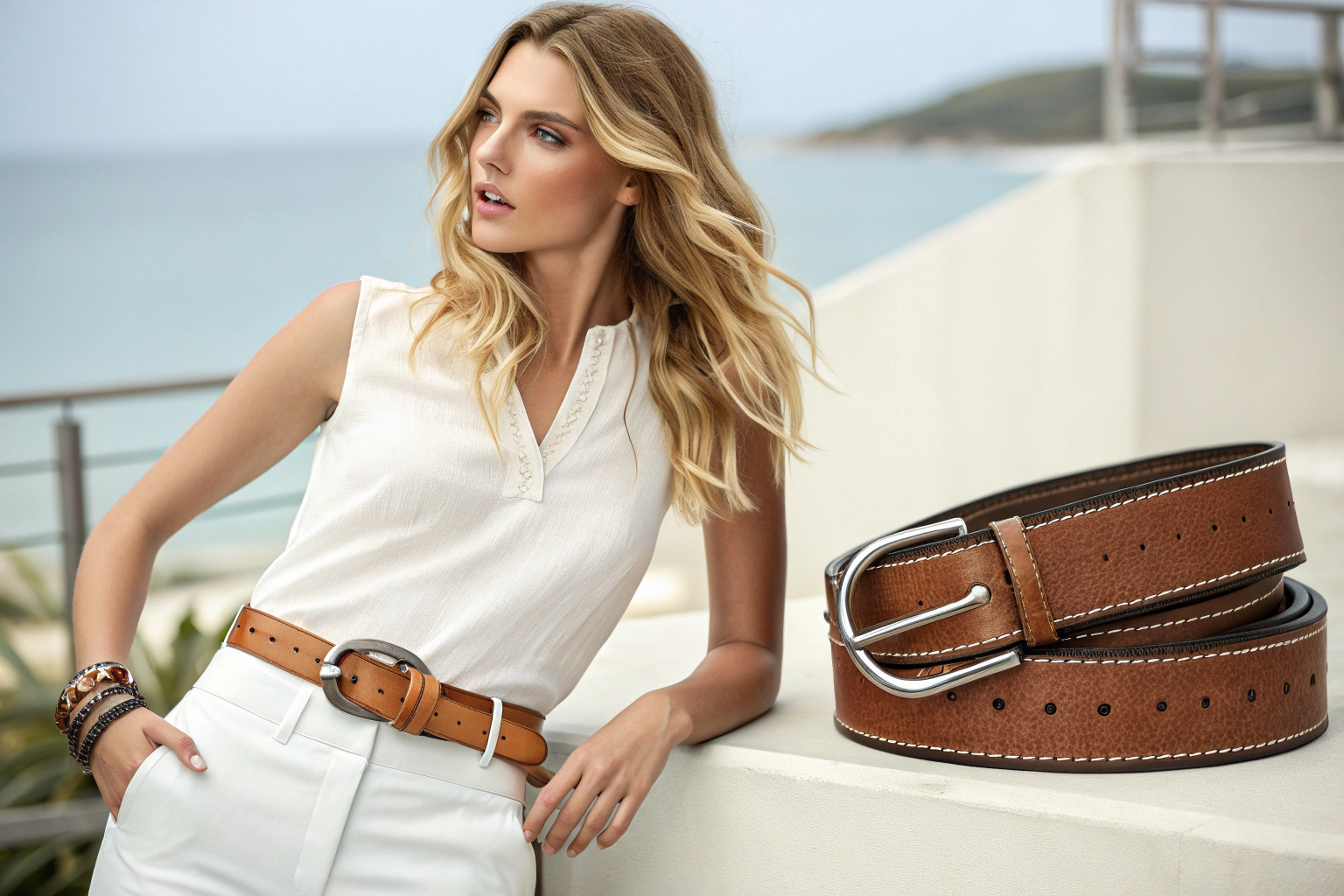
Women’s fashion belt sizes typically range from 24 to 36 inches (61–91 cm) in length, with standard buckle widths between 1.0 to 1.5 inches (25–38 mm). However, true “standard” sizing depends on regional markets, body trends, and product type—like woven vs. leather belts.
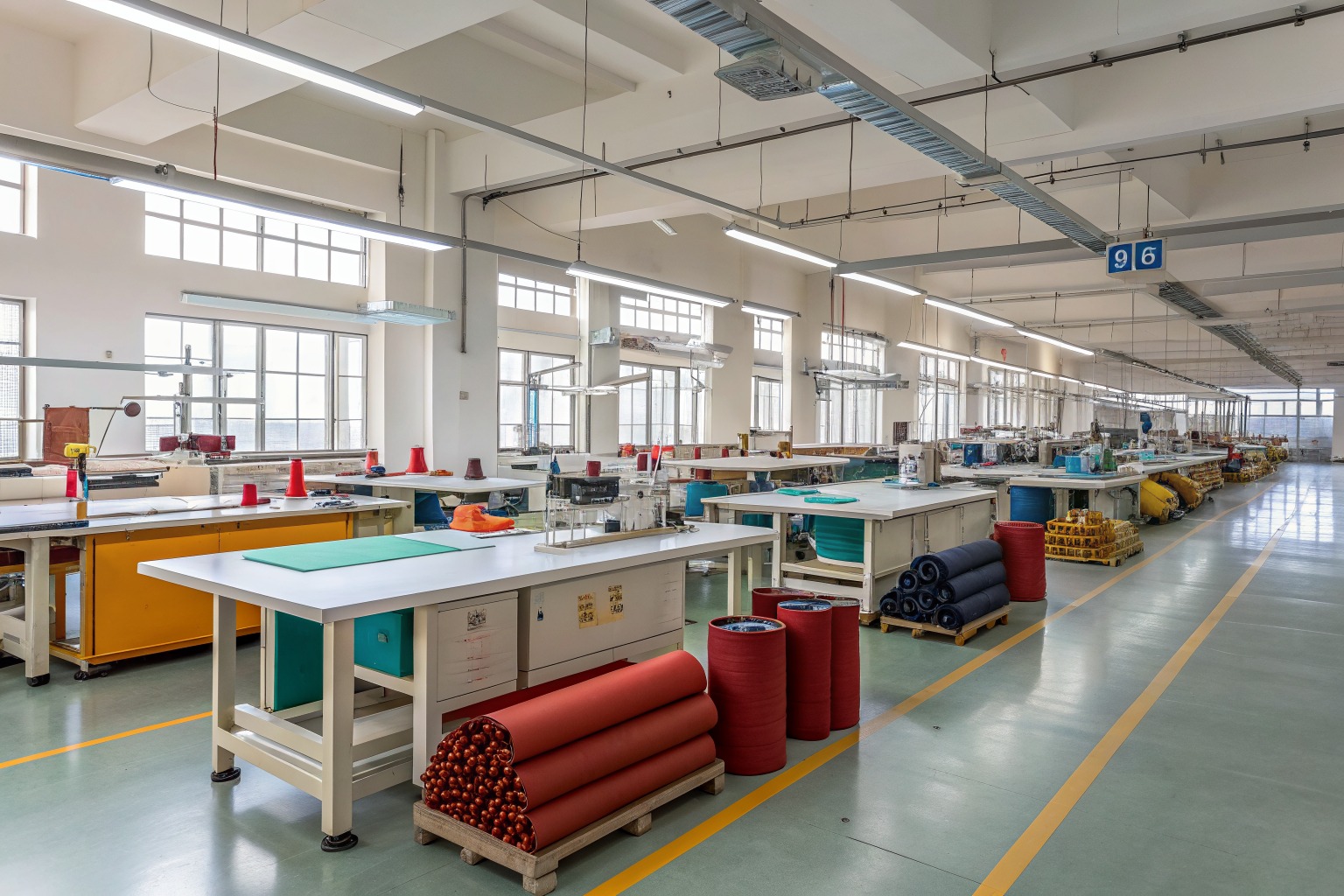
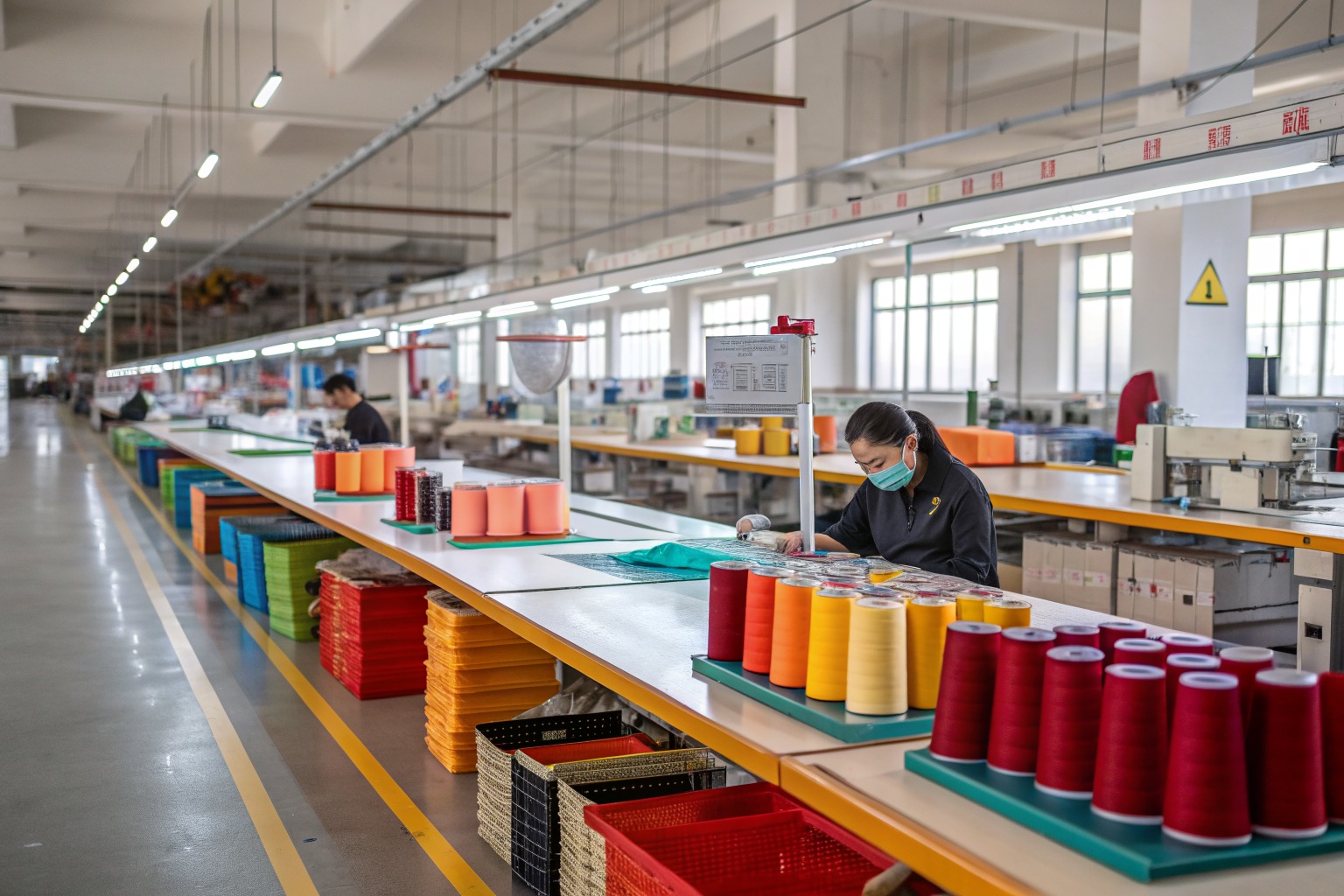
At Shanghai Fumao Clothing, we’ve spent over a decade refining our size systems based on real retail data from North America and Europe. We don’t just follow old charts—we adapt to how women actually wear belts today: higher waists, looser fits, or layered styling. Below, we break down exactly what modern buyers expect.
How do women’s belt sizes differ by region?
Buyers in the U.S., EU, and UK often assume global sizing is universal—but it’s not. A “size 30” in Paris might measure differently than one in Dallas. This mismatch causes confusion, excess inventory, and unhappy end customers.
Women’s belt sizing varies significantly across markets due to differences in average waist measurements, fashion trends, and even how belts are worn (e.g., on hips vs. natural waist). In the U.S., most brands use inch-based sizing (24", 26", 28", etc.), while Europe favors centimeters (60 cm, 65 cm, 70 cm). The UK sometimes blends both systems but leans toward inches.
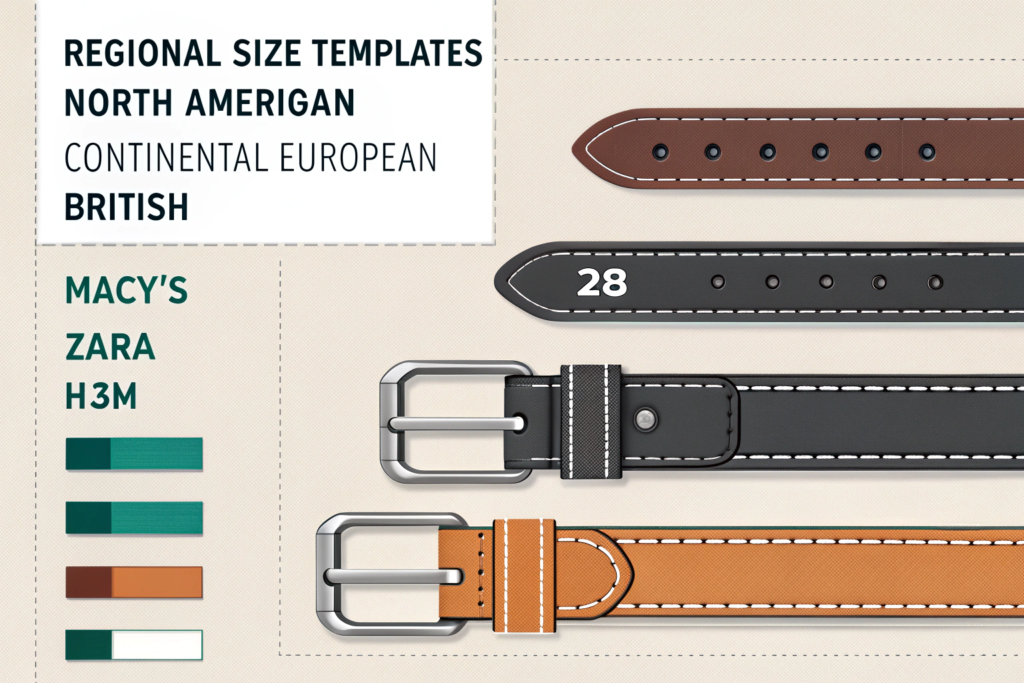
To help our clients avoid cross-border sizing errors, we maintain three regional size templates—North American, Continental European, and British—that align with current retail standards from major department stores like Macy’s, Zara, and H&M. For example, a U.S. size 28 belt typically measures 28 inches from buckle end to the middle hole, whereas a EU 70 belt equals ~27.5 inches but includes five holes spaced 1 inch apart for adjustability.
Why does U.S. sizing use inches while Europe uses centimeters?
The U.S. retains imperial units in apparel due to legacy manufacturing systems and consumer familiarity. In contrast, Europe standardized on metric sizing under ISO guidelines. This affects everything from labeling to packaging. Reliable suppliers like Shanghai Fumao Clothing provide dual-unit spec sheets so you can meet local compliance without redesigning your entire line.
For deeper insights, refer to the U.S. Department of Commerce’s Textile Guidelines and the European Committee for Standardization (CEN) EN 13402 series on body measurements.
Can one size chart work for both U.S. and EU markets?
Not without risk. While some online brands use “universal” sizing, physical retailers demand region-specific accuracy. A belt labeled “70 cm” sold in Germany must match local expectations—not approximate conversions. We recommend using separate tech packs per market. Our design team can generate compliant size charts within 48 hours, complete with ASTM International and OEKO-TEX® documentation if needed.
What measurements actually matter for belt sizing?
Many importers focus only on total belt length—but that’s just one piece. Hole placement, buckle type, and strap width all impact usability. Miss one detail, and your “perfect size” becomes unwearable.
The key measurements for women’s fashion belts are: total length, effective wearing length (from buckle to middle hole), strap width, and hole spacing. Total length helps with packaging and display, but effective length determines fit. Most women wear belts at their natural waist (just above the hip bones), which averages 26–32 inches in the U.S. adult female population according to CDC data.
We’ve seen clients lose sales because their “size 30” belts had the middle hole at 28 inches—too short for curvier customers. At Shanghai Fumao Clothing, we use a 5-hole system with 1-inch spacing, placing the center hole at the labeled size. So a size 30 belt has its middle hole at exactly 30 inches from the buckle tip.
| Measurement Type | U.S. Standard | EU Equivalent | Notes |
|---|---|---|---|
| Strap Width | 1"–1.5" | 25–38 mm | Narrow for dresses, wide for coats |
| Hole Spacing | 1 inch | 2.5 cm | Allows ±2" adjustment |
| Effective Length | Labeled size | Labeled size | Measured to middle hole |
How do you measure a woman’s waist for belt sizing?
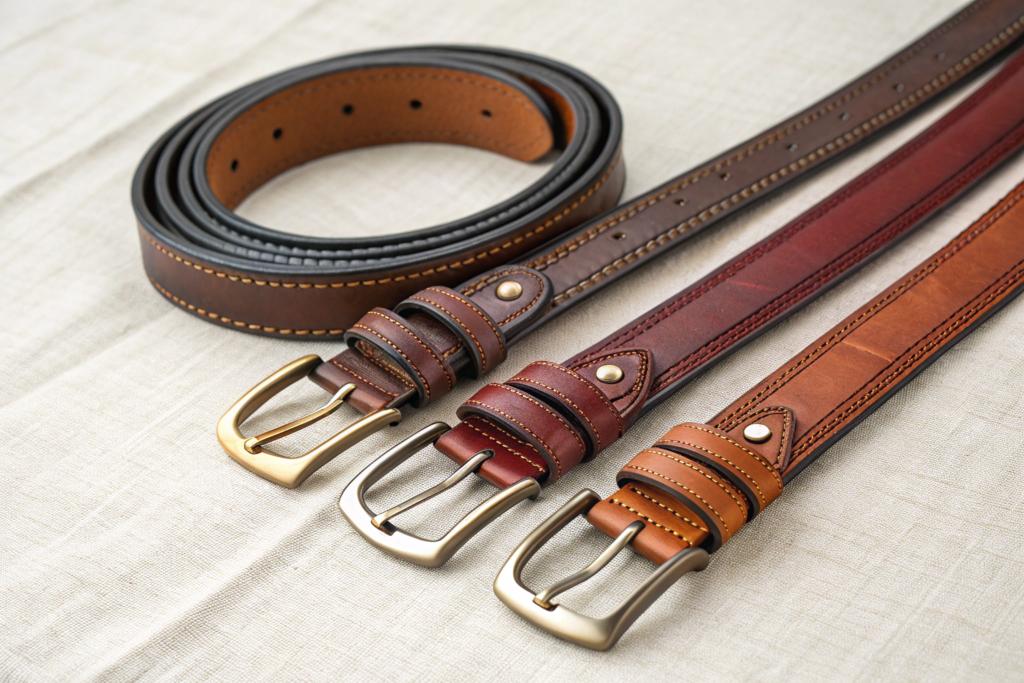
Use a soft tape measure around the natural waist—the narrowest part of the torso, usually just above the navel. For fashion belts worn lower (e.g., on jeans), measure at the hip level. Always advise customers to match their pant waist size to belt size: if they wear size 28 pants, choose a size 28 belt. The CDC’s Anthropometry Guidelines offer detailed protocols, while Fashion Institute of Technology (FIT) publishes updated fit standards annually.
Does strap width affect perceived size?
Yes. Wider belts (1.5") visually shorten the torso and suit high-waisted styles, while narrow belts (0.75") elongate the silhouette—ideal for petite frames. However, very narrow belts may not fit through standard belt loops. We follow Apparel Specifications by ASTM D6240 for loop compatibility testing and can customize widths from 19 mm to 40 mm based on your target demographic.
Are adjustable or one-size belts better for mass retail?
Big-box retailers love “one-size-fits-most” belts for simplicity—but they often fail in real life. True adjustability requires smart engineering, not just extra length.
One-size belts work best for elasticized or drawstring designs (common in loungewear), but rigid fashion belts need precise sizing. Adjustable belts with sliding buckles or extenders can bridge gaps—but only if designed well. Poorly made sliders snag fabric or slip during wear. At trade shows, we’ve heard buyers say, “I’d rather stock four sizes than one ‘universal’ that returns at 30%.”
For mass retail, we recommend offering core sizes (26, 28, 30, 32) with optional extended sizes (24, 34, 36) based on your customer analytics. Our factory produces over 200,000 belts monthly with <0.5% size-related complaints thanks to strict QC checkpoints aligned with AQL 2.5 standards.
What are the pros and cons of elastic vs. rigid belts?
Elastic belts offer stretch and comfort—great for casual or maternity lines—but lack structure for tailored outfits. Rigid belts (leather, PU, webbing) hold shape and support heavier garments. The Textile Exchange Material Guide details performance specs, while WWD’s Retail Trends Report shows rigid belts dominate premium segments.
How do I reduce size-related returns in e-commerce?
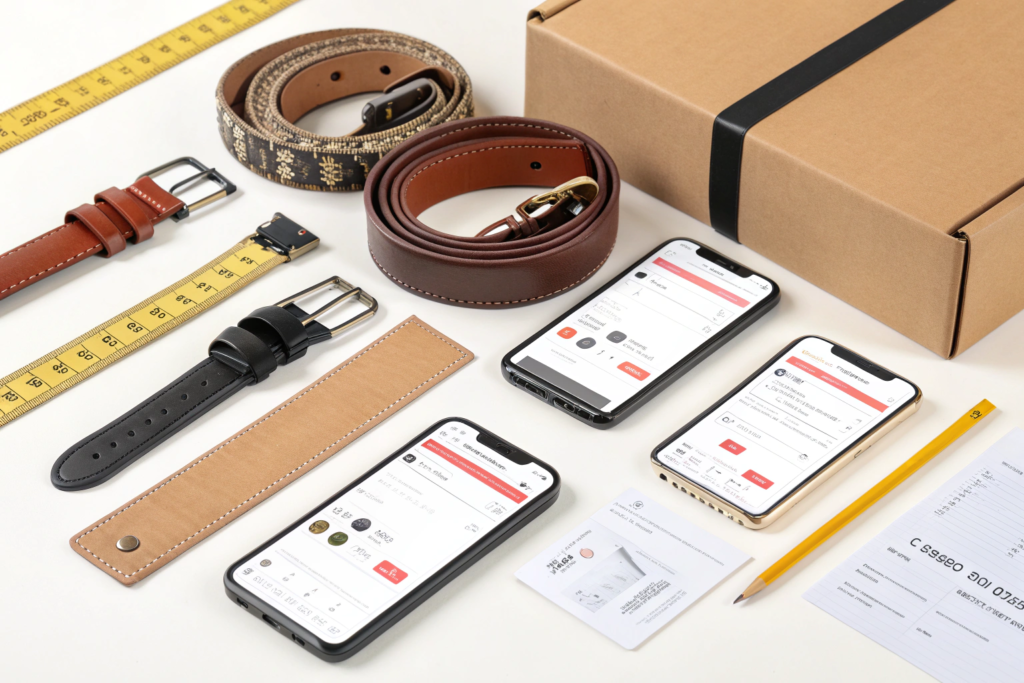
Provide a clear size chart with visual guides (e.g., “measure your favorite belt”) and recommend matching pant waist size. Include a video demo on your product page—our clients see 18% fewer returns when they do. Also, ensure your supplier uses consistent hole punching; we calibrate machines weekly using ISO 9001-certified jigs to prevent drift.
How can I ensure my supplier uses up-to-date belt sizing?
Outdated size charts are a silent profit killer. Some factories still use GB1335-1981—a Chinese standard abolished decades ago. Others copy old Zara or H&M specs without verifying current versions.
Always request a tech pack with dimensioned drawings, material specs, and hole layout diagrams. Then cross-check against your target retailer’s vendor manual. For example, Target’s Product Integrity Standards require specific tolerance levels, while Amazon’s Apparel Style Guide mandates accurate size labeling.
At Shanghai Fumao Clothing, we update our size database quarterly using feedback from 50+ global clients. Our QC team validates every batch against digital calipers and laser measurers—not rulers. Plus, we’re unaffected by U.S. tariffs thanks to strategic material sourcing and Vietnam co-production options.

What certifications should a reliable belt supplier have?
Look for BSCI, SEDEX, OEKO-TEX® Standard 100, and ISO 9001. These verify ethical labor, chemical safety, and quality systems. Avoid suppliers who only show Alibaba Gold status—it’s paid, not earned. You can verify our credentials via Sedex Members Directory and OEKO-TEX® Label Check.
How do I audit a supplier’s sizing accuracy remotely?
Ask for a pre-production sample with full measurements and compare it to your spec sheet. Use video calls to inspect hole alignment and buckle attachment. We offer live factory walkthroughs via Zoom and share real-time production photos through our client portal—no guesswork needed.
Conclusion
Getting women’s fashion belt sizing right isn’t about memorizing numbers—it’s about understanding regional expectations, body diversity, and retail realities. Whether you’re supplying Macy’s, ASOS, or your own Shopify store, consistency, accuracy, and adaptability make the difference between repeat orders and costly returns.
At Shanghai Fumao Clothing, we combine agile design, rigorous quality control, and tariff-smart logistics to deliver belts that fit—and sell. Our team speaks your language, meets your deadlines, and stands behind every stitch.
If you’re ready to develop a women’s belt line that aligns with North American or European sizing standards—without the usual sourcing headaches—reach out to our Business Director Elaine at elaine@fumaoclothing.com.