The creation of a straw hat is a fascinating journey that blends traditional craftsmanship with modern manufacturing precision. At AceAccessory, we’ve refined this process to deliver high-quality, stylish hats that meet the demands of global brands. For buyers, understanding this process is key to evaluating quality, lead times, and cost. A well-made straw hat is not simply woven; it’s the result of over 15 meticulous steps that transform natural fibers into a durable and fashionable accessory.
The production of a straw hat follows a sequenced flow: 1) Material Sourcing & Processing, 2) Weaving & Braiding, 3) Blocking & Shaping, and 4) Trimming & Finishing. Each stage requires specific skills and quality checks to ensure the final product is consistent, comfortable, and visually perfect. From selecting the right straw to sewing the final label, the process ensures the hat holds its shape and withstands wear.
Let’s walk through each critical stage to see how raw materials become a finished product ready for retail.
How to Conduct Efficient Material Sourcing and Straw Preparation?
The process begins long before any weaving, with the selection and treatment of the raw material. The type of straw used defines the hat’s character, price point, and end-use. Common materials include Toquilla straw (for fine Panama hats), Buntal straw (for smooth, pliable hats), Braid straw (often paper or synthetic for fashion hats), and natural Raffia. Each has distinct properties for texture, durability, and dye absorption.
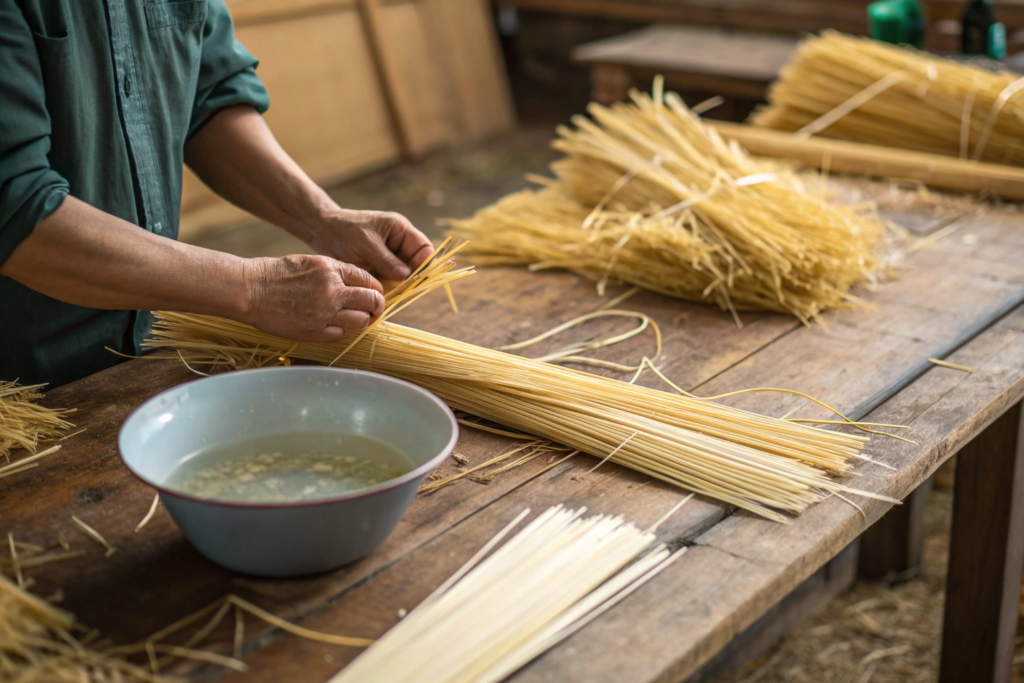
Once sourced, the straw undergoes crucial preparation. First, it is sorted and graded by thickness, color, and length to ensure uniformity. Next, it is soaked or steamed to make the fibers pliable for weaving without breaking. For dyed hats, this is the stage where straw is immersed in vats of color. Our quality control team checks the colorfastness here to ensure the dye won’t run or fade later. The prepared straw is then often split or flattened into even strands, ready for the artisans or machines. This foundational step is vital, as any inconsistency in the material will compound through later stages, affecting yield and final quality.
What are the Most Common Types of Straw?
Choosing the right straw is a strategic decision that balances cost, aesthetics, and function.
- Toquilla Straw: Known for its incredible fineness and flexibility, it’s woven into genuine Panama hats. It’s a premium, labor-intensive material.
- Buntal Straw: Made from the stalks of the buri palm, it produces smooth, uniform, and durable hats that take dye very well.
- Paper Straw / Braid: A cost-effective and versatile material made from twisted paper or synthetic fibers. It’s pre-woven into flat braids, which are then sewn together. This is common for wide-brimmed fashion hats.
- Raffia: Made from palm leaves, it’s soft, lightweight, and has a distinct textured look, often used in boater hats and casual styles.
Why is Material Processing Critical for Quality?
Proper processing directly prevents common hat defects. Inadequate soaking leads to brittle straw that snaps during weaving, causing weak points. Uneven dyeing results in patchy color, especially visible on natural materials. At Shanghai Fumao Clothing, we source from certified suppliers and conduct our own incoming material inspections. This upfront diligence in the sourcing phase is a core part of our quality control system, ensuring a high yield and consistent quality in bulk production, which directly addresses buyer concerns about reliability and efficiency.
What Are the Core Techniques for Weaving, Sewing, and Initial Forming?
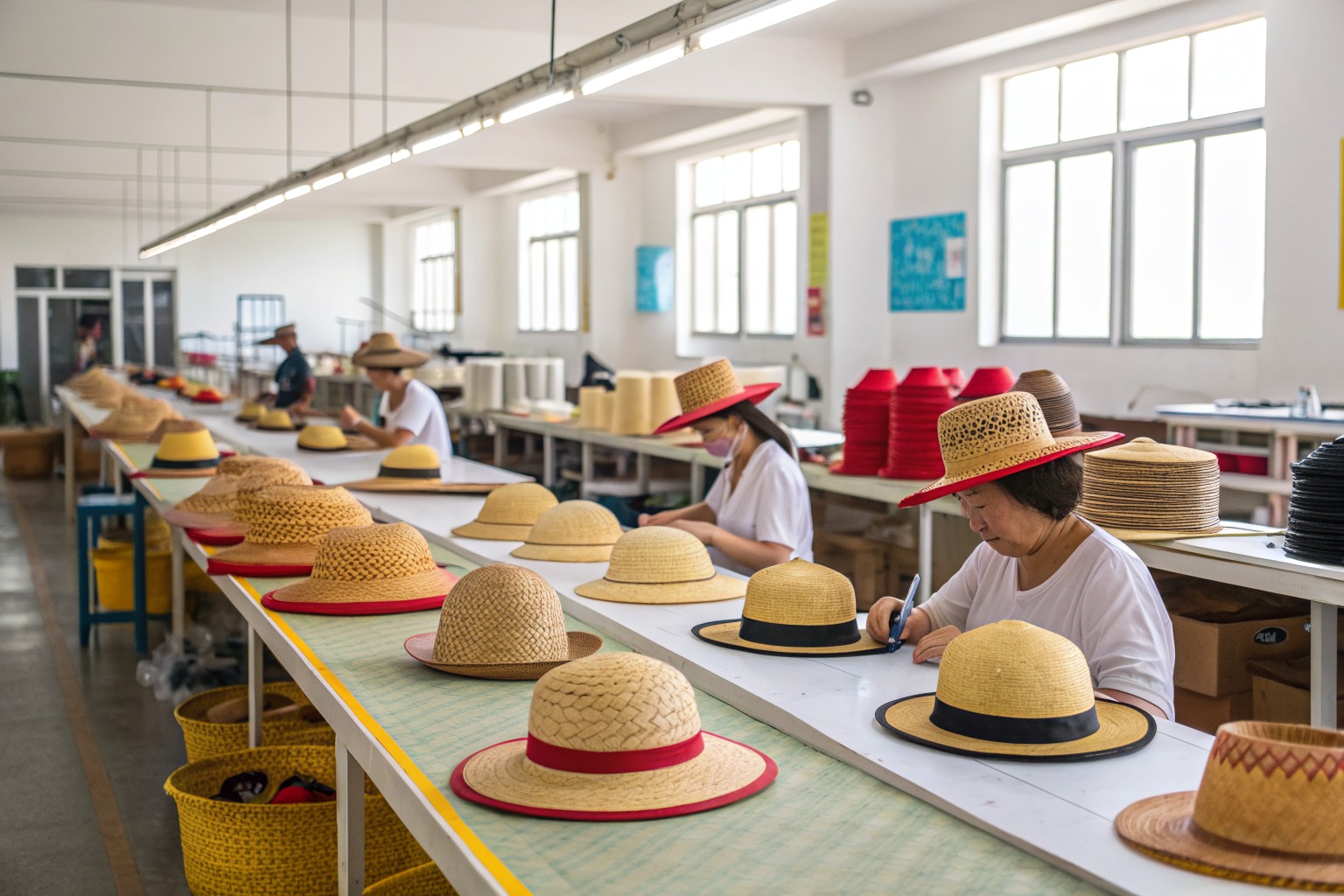
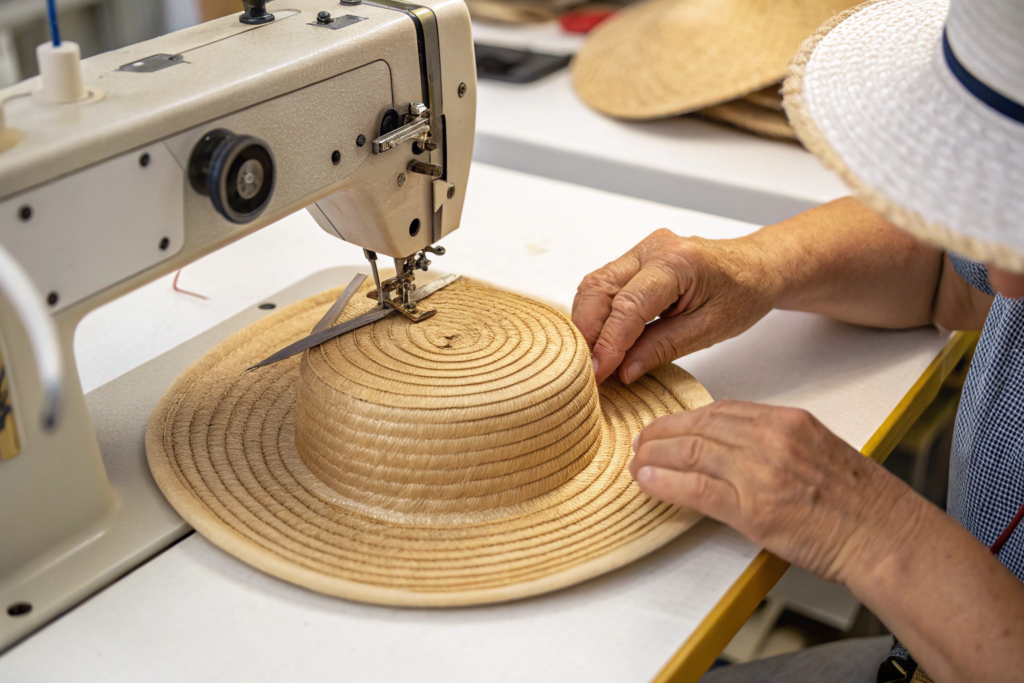
This is the core crafting stage where the hat begins to take shape. The method depends entirely on the material type. For hats made from braided straw (like many fashion hats), the process is one of sewing and joining. Pre-woven straw braid is coiled and stitched together in a spiral, starting from the center of the crown (the "knot") and expanding outwards to form the top and then the brim. This is often done by skilled workers on sewing machines adapted for this purpose.
For hats made from individual straw strands (like traditional Panamas), the process is one of hand-weaving. Artisans weave the crown and brim as one continuous piece on a wooden form. This is a highly skilled, time-intensive craft resulting in seamless, high-value hats. After the basic hat body, or "hood," is complete, the rough edges are trimmed, and a temporary wire or stiff thread is often sewn around the edge of the brim to hold its shape loosely before the final blocking. This stage requires immense attention to detail, as the tightness and consistency of the weave determine the hat’s durability and appearance.
How Does Weaving Method Affect Lead Time and Cost?
The weaving method is the primary driver of production time and price.
- Machine-Sewn Braid: This method allows for fast production and is highly scalable, making it ideal for large orders for major supermarkets and fast-fashion brands. It offers good consistency and a lower cost point.
- Hand-Weaving: This is a slow, artisanal process. Lead times are significantly longer, and costs are higher, but the product commands a premium in the market. It appeals to apparel and accessories brands focusing on craftsmanship and luxury.
A clear understanding of this difference helps buyers like Ron align their product choices with their price and timeliness requirements.
What Quality Checks Happen During Weaving?
Even during production, checks are continuous. Workers and line supervisors check for:
- Stitch Consistency: Ensuring stitches per inch (SPI) are even and tight to prevent unraveling.
- Braid Alignment: Making sure the braid pattern flows smoothly without twists or jumps.
- Size Verification: Measuring the crown diameter and brim width against the spec at key intervals.
Our project managers monitor these in-process checks to catch and correct deviations immediately, preventing a small flaw from affecting an entire batch. This proactive approach is part of our commitment to professional service and high yield manufacturing.
How to Ensure Uniformity During Blocking, Shaping, and Stabilization Processes?
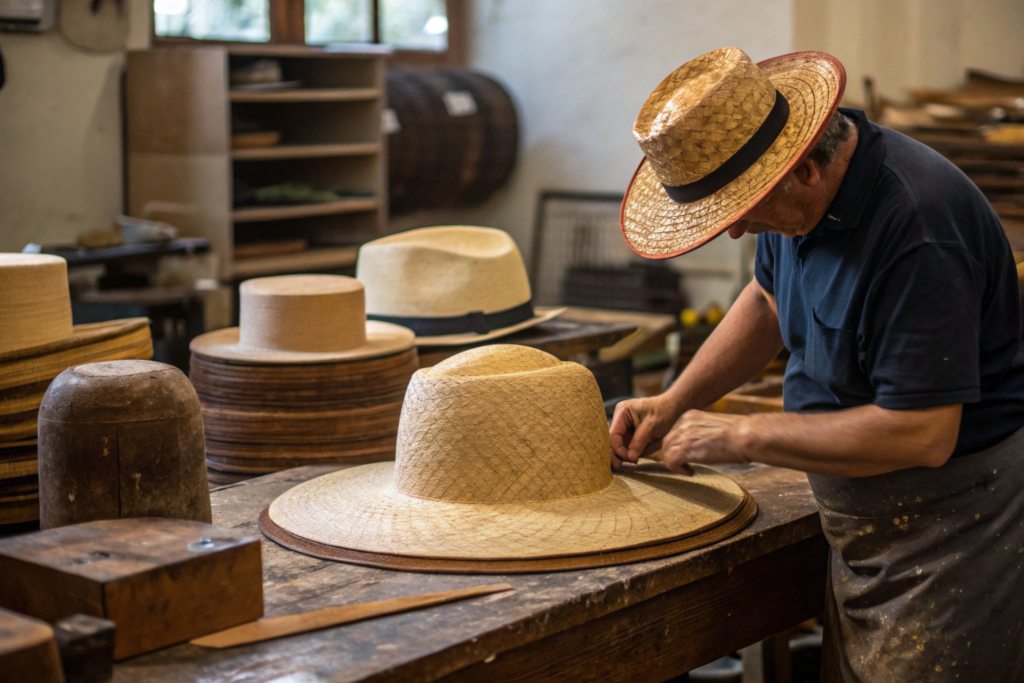
This is where the flat, floppy hat body gets its definitive personality and structure. Blocking is the transformative step that sets the final shape. The woven hood is first thoroughly dampened with steam or water to make the straw completely malleable. It is then forcefully stretched and pulled over a wooden or aluminum hat block—a mold in the specific head size and style (fedora, cloche, wide-brim, etc.). The hat is pinned onto the block and left to dry completely, which can take from several hours to a full day.
Once dry and set, the hat undergoes stabilization. A permanent sweatband (often made from cotton, leather, or synthetic ribbon) is fitted and sewn into the inside crown. This band is crucial for comfort, absorbency, and maintaining the hat’s interior circumference. For many styles, a wire is also permanently stitched inside the very edge of the brim. This thin, flexible wire allows the customer to shape the brim up or down slightly and provides essential support to keep the brim from drooping over time. This stage turns a woven form into a structured, functional accessory.
What is the Difference Between Blocking and Shaping?
While often used interchangeably, they are sequential:
- Blocking refers to the initial act of forming the hat on the mold to create its primary architecture (crown height, brim width, overall silhouette).
- Shaping often refers to the finer adjustments made after blocking, such as pinching the crown to create a "teardrop" or "center dent" crease, or giving the brim a specific upward or downward curve. A factory with strong design and development capacity will have a vast library of blocks to offer diverse styles.
How Does Stabilization Ensure Long-Term Quality?
The sweatband and brim wire are unsung heroes of hat durability. A poorly attached sweatband can come unglued or unravel. A cheap or corroded wire can break or poke through the straw. We use quality materials and secure stitching for these components. Furthermore, for added shape retention, some hats receive a light, internal stiffening spray (like a diluted shellac) after blocking, especially at the brim. This quality control step ensures the hat survives packaging, shipping, and eventual customer use without losing its form, directly addressing buyer pain points about product integrity upon arrival.
What Are the Must-Follow Steps for Trimming, Finishing, and Quality Assurance?
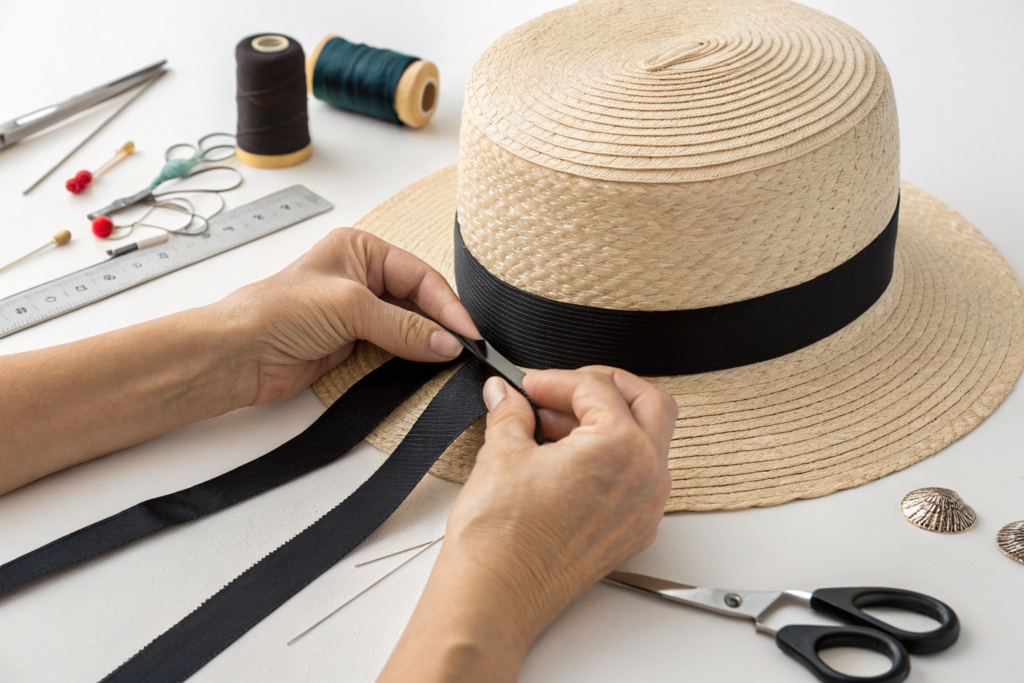
The final stage is all about details, aesthetics, and rigorous inspection. Trimming involves adding the decorative elements: the hatband. This is typically a ribbon (grosgrain, satin, or leather) that is carefully measured, cut, sewn, and often adorned with a bow, buckle, or label. Any additional decorations like feathers, fabric flowers, or brooches are also attached at this point.
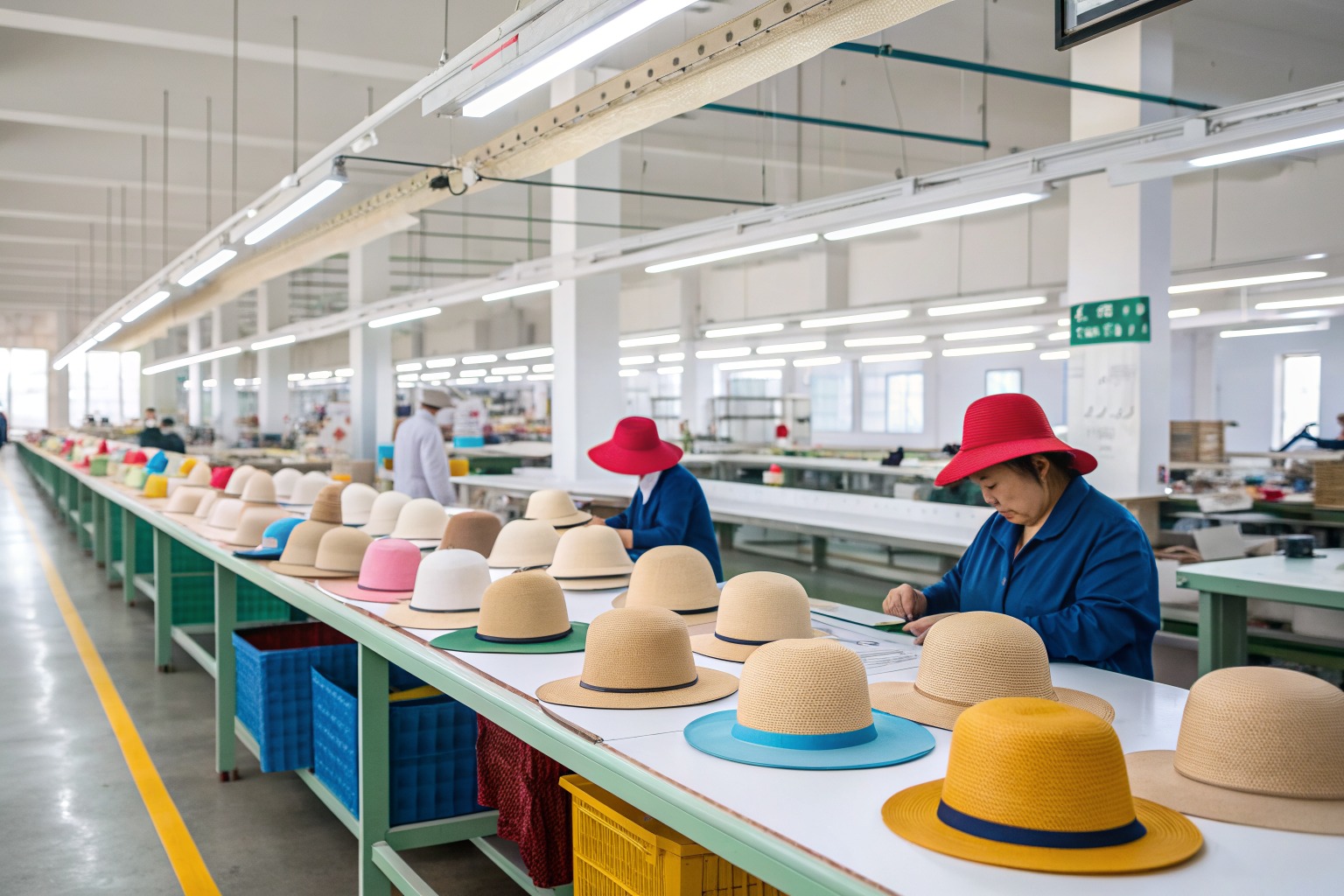
Then comes the comprehensive finishing. Every single hat is brushed to remove loose fibers. The interior is cleaned. The final shape is given a last check and gentle adjustment. The most critical step is the Final Quality Assurance (QA) Inspection. Each hat is examined against a strict checklist: symmetry of shape, cleanliness of stitching, alignment of the hatband, correct placement of labels (brand, size, care), and overall visual appeal. It is then tried on a standard-sized mannequin head to ensure fit. Only after passing this check is the hat prepared for packaging—usually with tissue paper stuffing to maintain shape, a plastic bag for protection, and finally into its shipping carton.
What Does a Final QA Checklist Include?
A professional factory’s final inspection is systematic. For each straw hat, we verify:
- Dimensions: Crown height, brim width, and inner circumference match the spec sheet.
- Workmanship: No loose ends, broken straws, or uneven stitching. The hatband is straight and securely attached.
- Visual Symmetry: The hat looks even from all angles; the crown dent is centered.
- Labeling: All labels are present, legible, and correctly placed.
- Function: The hat sits correctly on a form; the sweatband is smooth and comfortable.
This exhaustive check is what allows us to guarantee the high quality that brands require, minimizing the risk of returns.
How Does Packaging Protect the Product for Export?
Proper packaging is the last step of production and the first step of logistics. For straw hats, packaging must prevent crushing and moisture damage. We use shaped insert cards or tissue paper to support the crown. Each hat is individually bagged. They are then packed in strong cartons, often in a "head-to-toe" arrangement to maximize space and stability. Cartons are clearly marked as containing headwear. For clients concerned about tariff costs, we ensure paperwork like the certificate of origin is accurate, as the material (natural straw) can sometimes affect duty rates. Our experience in package transportation and customs clearance ensures the products we craft with care arrive in perfect condition.
Conclusion
The production of a straw hat is a remarkable synthesis of material science, skilled labor, and precise industrial processes. From the initial selection and treatment of straw to the final decorative trim, each of the 15+ steps is integral to creating an accessory that is beautiful, durable, and comfortable to wear. Understanding this process empowers you to appreciate the value, assess quality, and communicate effectively with your manufacturing partner.
It highlights why choosing a factory with expertise in material processing, skilled craftsmanship, and rigorous quality systems is essential for a successful product.
At Shanghai Fumao Clothing, we control every step of this meticulous process, ensuring timely delivery, consistent quality, and expert guidance from design to shipment. Contact our Business Director Elaine today at elaine@fumaoclothing.com to discuss your next project.