You’re looking at a belt. It says "100% Leather" on the label, and it looks good. But how can you be sure it’s actually genuine leather and not a clever imitation made from plastic? In a market flooded with confusing terms like "PU Leather," "Bonded Leather," and "Faux Leather," being able to identify the real thing is an essential skill. A genuine leather belt can last for decades, while a fake one might crack and peel within a year.
How can you check if a belt is genuine leather? You must use your senses and look for the tell-tale signs of an organic material. The four key tests are: 1) closely examining the surface grain and edges for natural imperfections, 2) feeling the texture and bending the belt to check for characteristic wrinkling, 3) smelling the belt for the distinct, earthy scent of real leather, and 4) understanding the deceptive labeling terms used to disguise fake leather. At Shanghai Fumao Clothing, we believe an educated customer is our best customer, because they can truly appreciate the quality of the genuine materials we use.
Is there one single test that is 100% foolproof? Not always, as fakes are getting better. But by combining these four methods, you can become very confident in your ability to spot a genuine leather belt.
How Can You "Read" the Surface and Edges of the Belt?
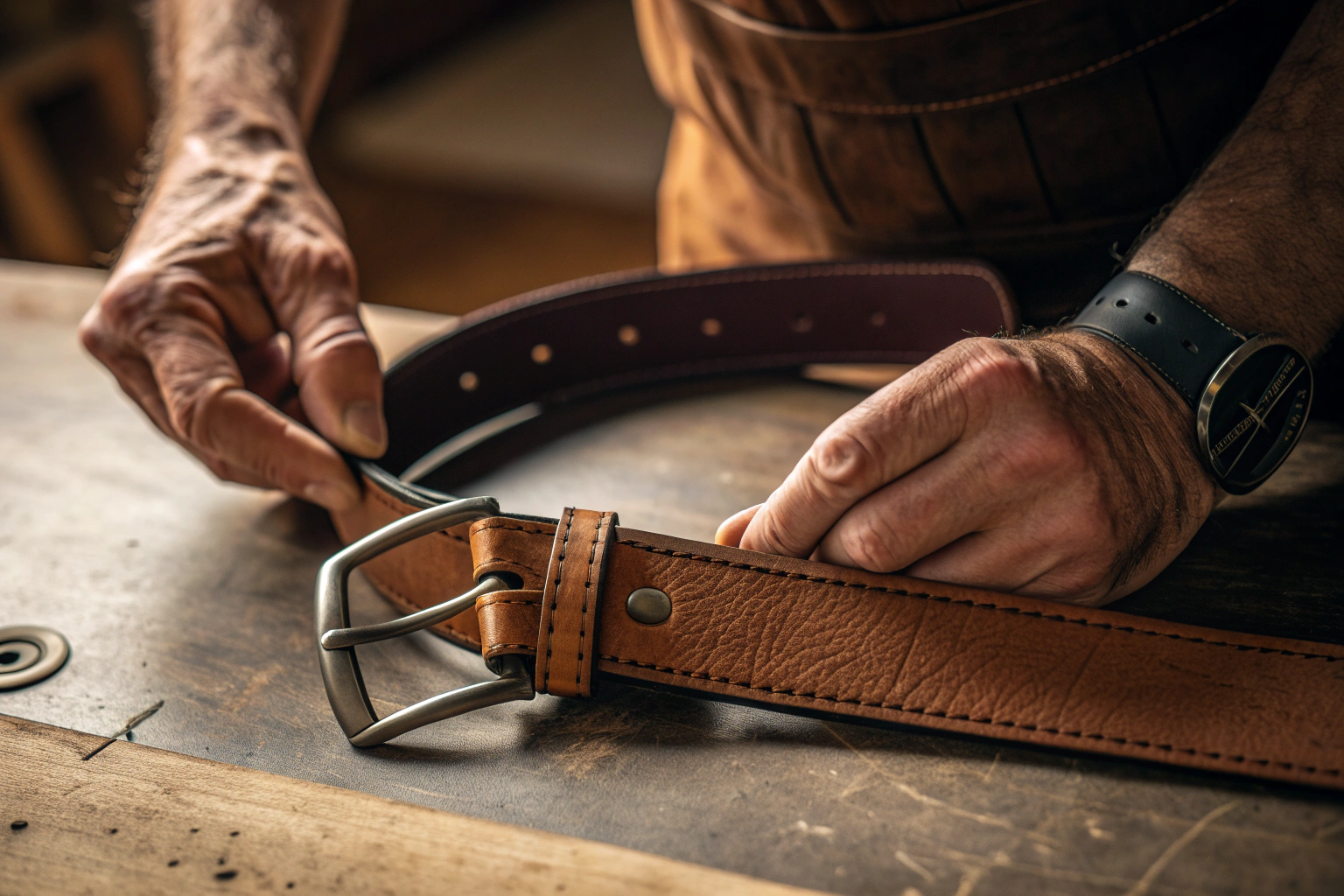
What is the first and most revealing test you can do? It’s a close visual inspection. Nature is never perfect, and genuine leather is a natural material made from an animal hide. It will have subtle imperfections, just like human skin.
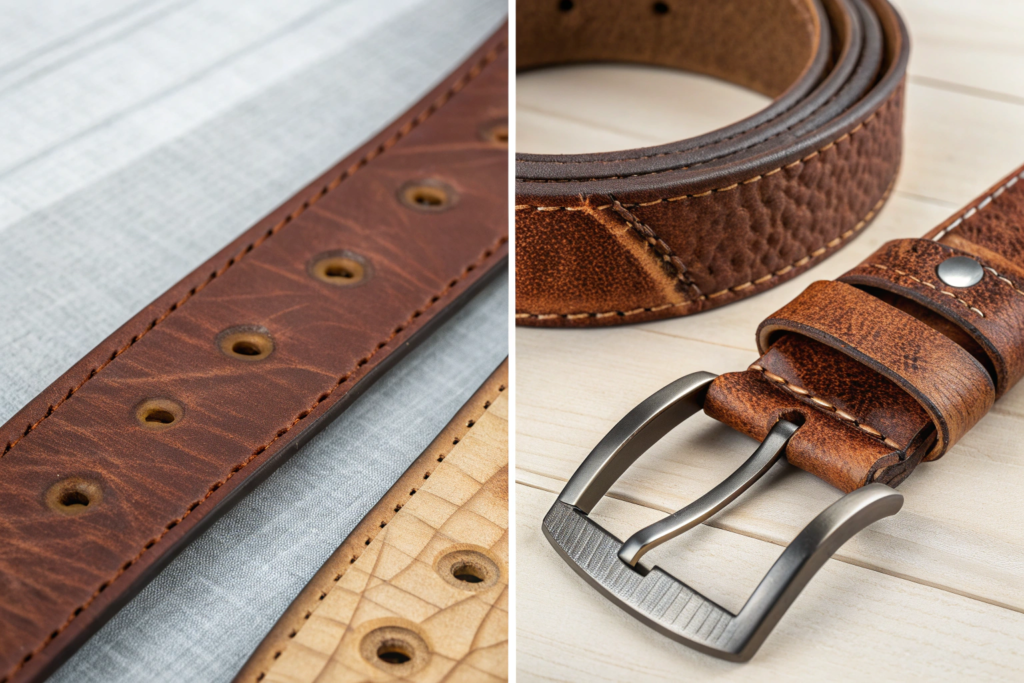
Look very closely at the surface of the belt. Genuine leather will have an inconsistent grain pattern. You might see tiny pores, small scars, or subtle variations in the texture. These are not defects; they are hallmarks of authenticity. Fake leather, on the other hand, is made by a machine. It will have a perfectly uniform, repeating pattern that looks unnaturally consistent. It’s too perfect.
Next, look at the edges of the belt. If possible, look at the raw, cut edge (sometimes visible near the buckle holes). A genuine leather belt will have a fibrous, suede-like texture on its raw edge. A fake leather belt will often have a smooth, plastic-like edge, or you might see a layer of fabric with a plastic coating on top.
What if the Edge is Painted or Sealed?
Can’t manufacturers hide the edge? Yes, most high-quality belts have their edges sanded, beveled, and painted for a smooth, durable finish. This is a sign of good craftsmanship. However, even on a finished edge, you can often still discern the underlying texture. A fake leather edge often looks and feels distinctly like smooth plastic, whereas a well-finished genuine leather edge still feels more organic. This is a key detail we focus on when packaging belts to prevent damage, as a damaged edge can reveal the material’s true nature.
Are All Imperfections a Good Sign?
Should you look for flaws? Don’t confuse the natural character of leather with poor manufacturing. Scratches, discoloration from glue, or sloppy stitching are signs of poor quality control, not authenticity. You are looking for the subtle, inherent variations of the hide itself, which should still be crafted into a beautiful, well-made product.
How Should the Belt Feel and React When You Bend It?
What can your sense of touch tell you? A great deal. Run your fingers over the surface of the belt. Genuine leather typically feels soft, supple, and slightly warm to the touch. It has a natural, pliable texture. Fake leather often feels cold, smooth, and rigid, like plastic.
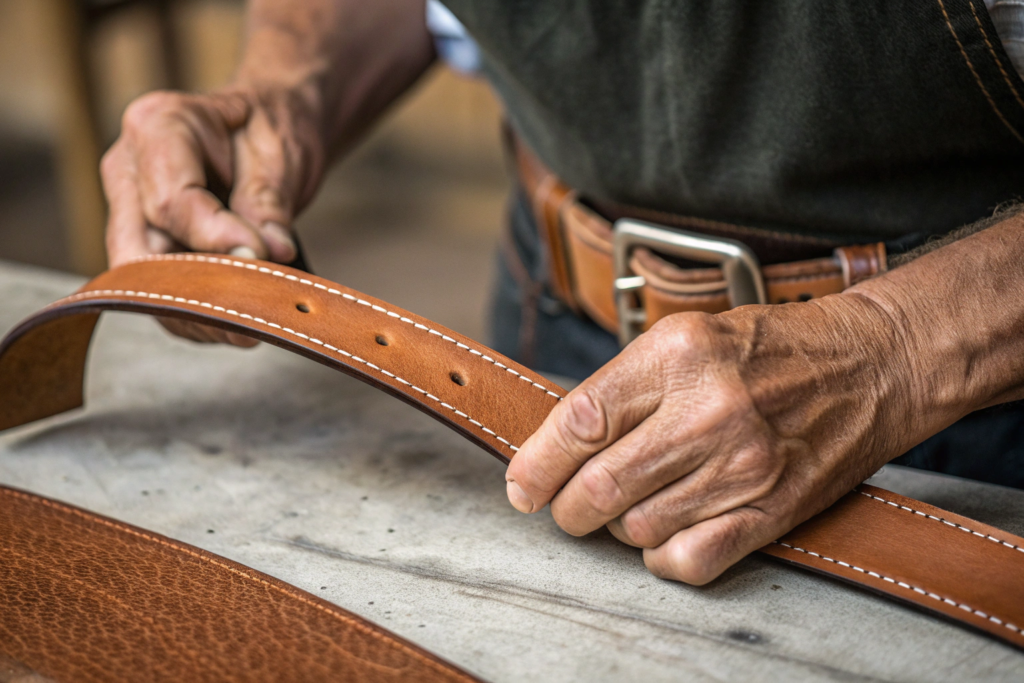
The most revealing physical test is the "wrinkle test." Take a section of the belt and bend it firmly. Genuine leather will wrinkle and crease under pressure, much like your own skin does when you make a fist. When you let it go, the wrinkles will mostly disappear. This shows the natural elasticity of the leather fibers. Fake leather, when bent, will either resist bending and feel very stiff, or it will simply fold over, creating a hard crease without the fine, subtle wrinkling. It doesn’t have the same fibrous structure to react in that organic way.
Does All Genuine Leather Feel the Same?
Will a tough work belt feel as soft as a dress belt? No. The "hand feel" of leather can vary greatly depending on the animal it came from (e.g., cowhide vs. calfskin), the tanning process, and the finishes applied. A rugged, full-grain work belt will be much stiffer than a soft, pliable dress belt. However, the wrinkle test is almost universal. Even a stiff, new leather belt will show those characteristic fine wrinkles when bent, whereas a fake plastic belt will not.
What if You Press Your Fingernail into it?
Is the scratch test reliable? Gently press your fingernail into the surface. Genuine leather will often show a slight mark that then fades away, demonstrating its ability to "heal" or recover. Fake leather will either be too hard to mark or will show a permanent scratch, as the plastic coating has been damaged. Be careful with this test in a store, as you don’t want to damage the product.
What is the Unmistakable Smell of Genuine Leather?
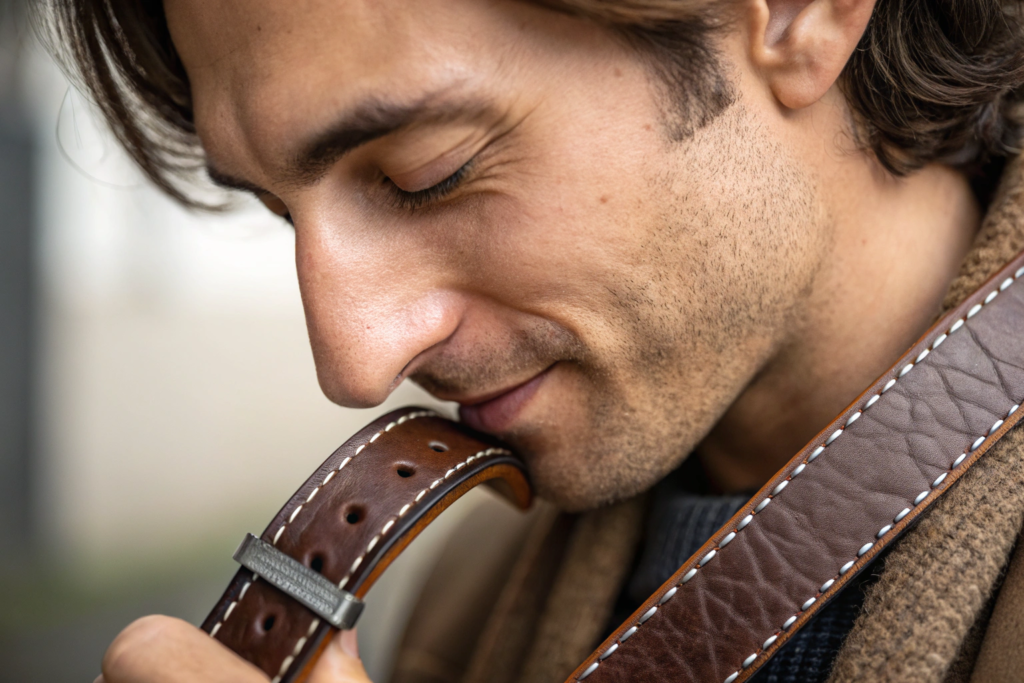
What is one of the hardest things for a machine to fake? Scent. This is one of the most primitive and reliable tests. Bring the belt up to your nose and take a good sniff.
Genuine leather has a rich, distinct, slightly earthy and organic smell that is unmistakable. It smells "natural." Even leather that has been dyed and finished will still have this underlying scent. It’s a smell that many people find pleasant and associate with quality.
Fake leather, being a plastic-based product (typically polyurethane or PVC), will have a chemical or plastic-like smell. It often has a sharp, synthetic odor, especially when it’s new. There is nothing natural or organic about it. Some manufacturers try to spray a "leather scent" on their fake products, but this scent is usually overpowering, fades quickly, and doesn’t smell like the real thing up close.
Can This Test Be Fooled?
What if you have a cold? While scent is powerful, it can be subjective. However, the difference between "earthy/organic" and "chemical/plastic" is usually very clear. If a belt has a strong chemical smell, it is almost certainly not high-quality genuine leather. Trust your instincts. The smell of real leather is a result of the tanning process, which is a complex treatment of an organic material, and it’s very difficult to replicate convincingly.
How Can You Decode Deceptive Labels and Terminology?
What if the label itself is trying to trick you? This is where many people get fooled. Manufacturers of lower-quality products use specific, legally ambiguous terms to imply their product is leather when it is not, or when it is of very low quality.
A high-quality belt will be proudly and clearly labeled "Genuine Leather," "Full-Grain Leather," or "Top-Grain Leather." These are terms for real, solid cuts of hide. Be very wary of other terms.
What Deceptive Terms Should You Watch Out For?
What are the main "imposter" terms?
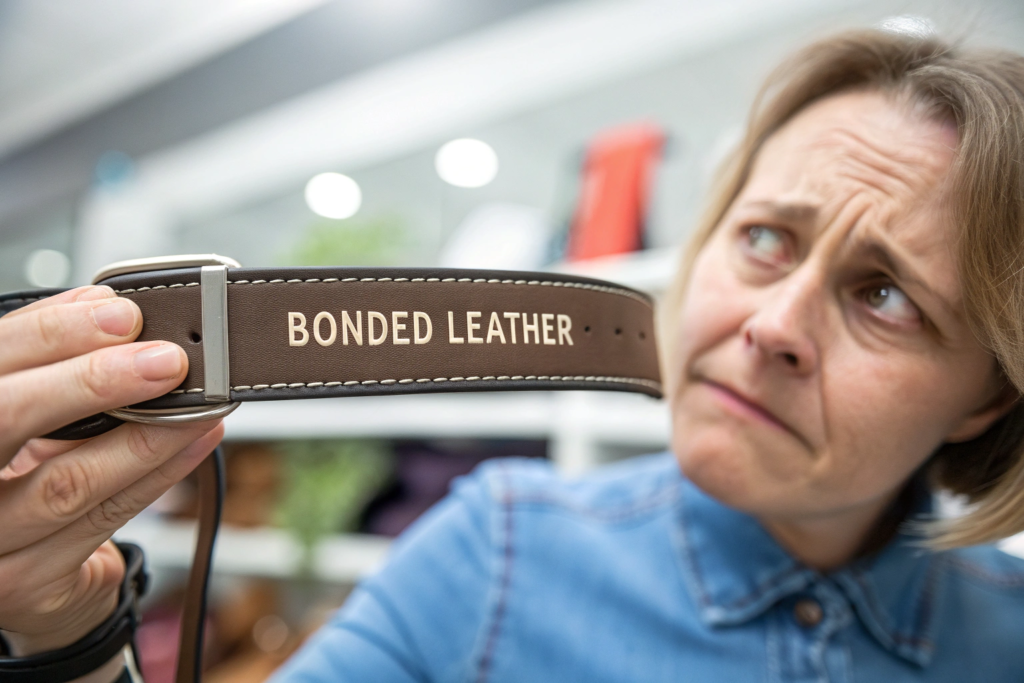
- Bonded Leather / Reconstituted Leather: This is the "chicken nugget" of the leather world. It’s made from leftover scraps of leather that are ground up into a pulp, mixed with glue and plastic (polyurethane), and then pressed onto a backing material. It contains some real leather fibers, but it is a weak, low-quality composite material that will peel and crack quickly.
- PU Leather: This is not leather at all. It stands for Polyurethane Leather. It is a 100% artificial material made by putting a polyurethane coating on a fabric backing. It is plastic.
- Faux Leather / Vegan Leather / Man-Made Leather: These are all marketing terms for fake, plastic-based leather. While "Vegan Leather" is a clever marketing term to appeal to ethical consumers, in most cases it simply means it’s made from plastic like PU or PVC, not a high-quality, plant-based alternative like Piñatex.
Why is "Genuine Leather" Sometimes Not the Best?
Can the term "Genuine Leather" also be tricky? Yes. While it means the product is technically real leather, it often refers to the lower-quality "split" layer of the hide. The best quality leathers are "Full-Grain" (the top layer with all its natural grain intact) and "Top-Grain" (the top layer with the surface sanded to remove imperfections). "Genuine Leather" is good, but Full-Grain and Top-Grain are the true marks of a premium product.
Conclusion
So, how can you be sure you’re buying a genuine leather belt? Is there a magic trick? No. It requires you to be a detective and use all your senses.
It’s about looking for the natural imperfections of a real hide and the absence of a machine-made, repeating pattern. It’s about feeling for the supple texture and testing for the characteristic wrinkling when you bend it. It’s about smelling for that unmistakable, earthy scent and rejecting any hint of chemicals or plastic. And finally, it’s about understanding the language on the label and not being fooled by deceptive marketing terms.
By combining these four methods, you can shop with confidence, knowing that you can distinguish a product of lasting, natural quality from a cheap imitation. You’ll be able to invest in a belt that will not only hold up your trousers but will also develop a beautiful patina and character for years to come.
If you are looking for a manufacturing partner who is transparent about materials and committed to using high-quality, genuine leather, we are here to help. Please contact our Business Director, Elaine, at her email: elaine@fumaoclothing.com.