You’ve perfected your new collection of dresses, trousers, and jeans. But are the outfits truly complete? A well-chosen belt can be the single accessory that ties an entire look together, turning a simple garment into a styled, finished ensemble. But with so many options, how do you choose a belt that not only matches your brand’s style but also meets your standards for quality and durability?
How can you select the right belts for your apparel line? You must focus on four key areas: 1) choosing the right strap material for your desired price point and aesthetic, 2) scrutinizing the quality and finish of the buckle hardware, 3) ensuring the construction techniques are built to last, and 4) aligning the belt’s style with your core apparel collection and target customer. At Shanghai Fumao Clothing, we believe a belt shouldn’t be an afterthought; it should be as thoughtfully designed and specified as any garment in your line.
Is it possible to find a belt that is both trendy and timeless, both stylish and strong? Yes, if you know what to look for. Let’s break down the four essential elements of a great fashion belt.
What Strap Material Best Suits Your Brand and Budget?
Before you even think about style, don’t you need to decide on the foundation of the belt? The strap is the largest component, and its material will have the biggest impact on the belt’s durability, price, and perceived value. Your choice of material is a direct reflection of your brand’s position in the market.
When Should You Choose Genuine Leather?
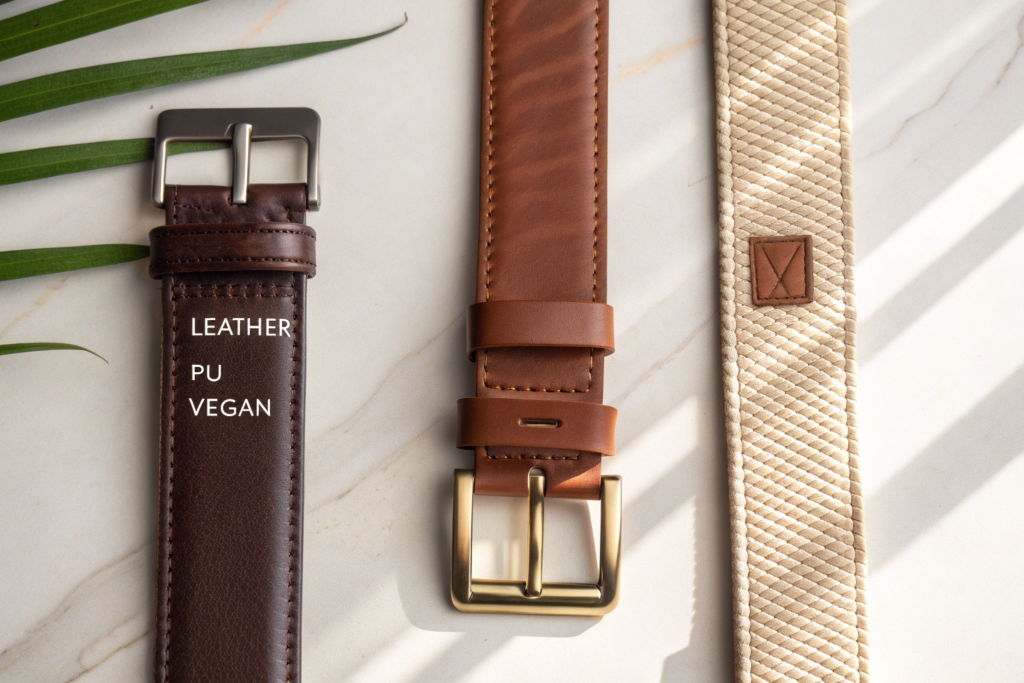
Is leather always the best choice? For a premium or heritage brand, Full-Grain Leather is the gold standard. It’s the highest quality leather, made from the top layer of the hide, and it develops a beautiful patina over time. It’s incredibly durable but also the most expensive. A more common and cost-effective option is Top-Grain Leather, which is slightly thinner and more processed but still offers excellent durability and a high-quality feel. A genuine leather belt signals a commitment to quality and longevity, making it a perfect match for high-end denim or tailored trousers.
What Are the Advantages of PU (Vegan) Leather?
Is there a quality alternative to genuine leather? Yes. Modern Polyurethane (PU) Leather is a fantastic option for fashion-forward or budget-conscious brands. Unlike cheap PVC, high-quality PU has a soft, flexible feel that can closely mimic real leather. Its main advantages are cost-effectiveness and versatility. PU can be produced in any color, texture, or finish imaginable (like mock-croc or high-gloss patent), making it perfect for creating trendy, seasonal belts that align with specific fashion color palettes. This is a key material for fast-fashion accessories.
How Can You Judge the Quality of the Buckle?
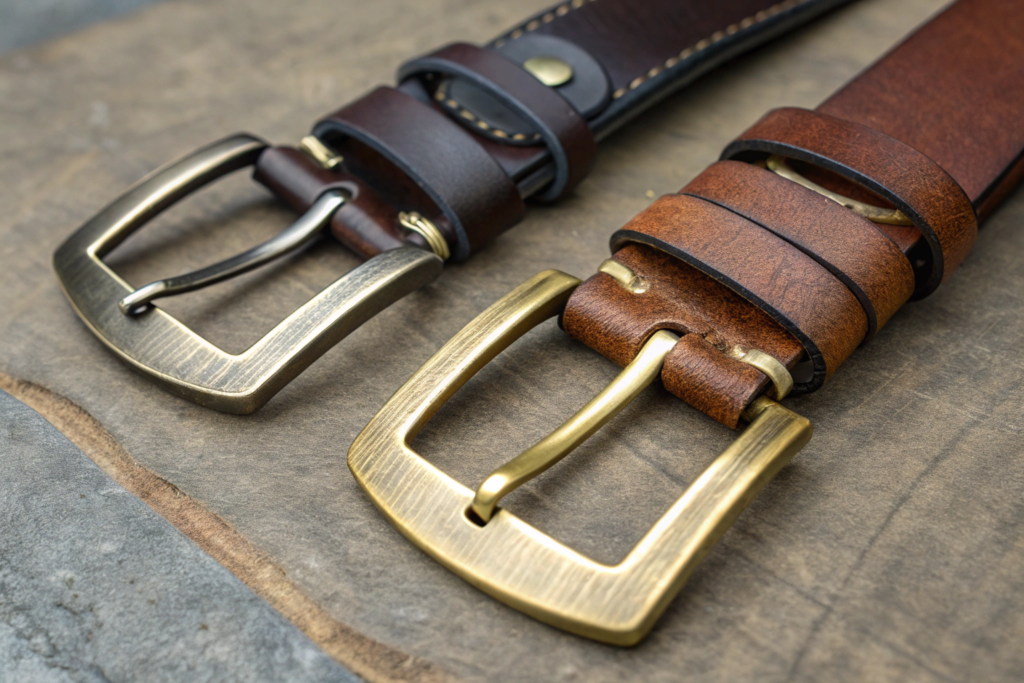
If the strap is the foundation, what is the "face" of the belt? It’s the buckle. The buckle is the piece of hardware your customer will touch and operate every single time they wear the belt. Its weight, finish, and functionality will form their daily impression of your product’s quality. A flimsy, lightweight buckle that scratches easily can make even a genuine leather strap feel cheap.
Why Does the "Weight" of the Buckle Matter?
Have you ever picked up a product that just felt expensive? For hardware, weight is often a proxy for quality. A buckle made from a solid metal alloy like Zamak or Brass will have a satisfying heft and substance. A cheap buckle is often made from a thinner, stamped metal or even plastic, and it will feel lightweight and unsubstantial. This weighty feel is a tactile cue to the customer that they are holding a quality item.
What Are the Best Finishes for Durability?
How do you prevent the buckle from scratching and tarnishing? The finish is everything. Standard electroplating can wear off over time, especially on gold-toned buckles. For superior durability, you should look for advanced finishing techniques. PVD (Physical Vapor Deposition) coating is a process that bonds the finish to the metal on a molecular level, creating a finish that is incredibly resistant to scratches, tarnishing, and corrosion. It is a more expensive process, but it’s the secret to hardware that looks new for years. This is a level of detail we scrutinize in our product inspection reports.
What Construction Details Signal a Durable Belt?
Beyond the materials, how can you tell if a belt is well-made? You need to look at the construction details—the small, often-hidden techniques that determine how well the belt will hold up to the stress of daily wear. A poorly constructed belt will fail at its stress points, usually where the buckle is attached or at the holes.
How Should the Buckle Be Attached?
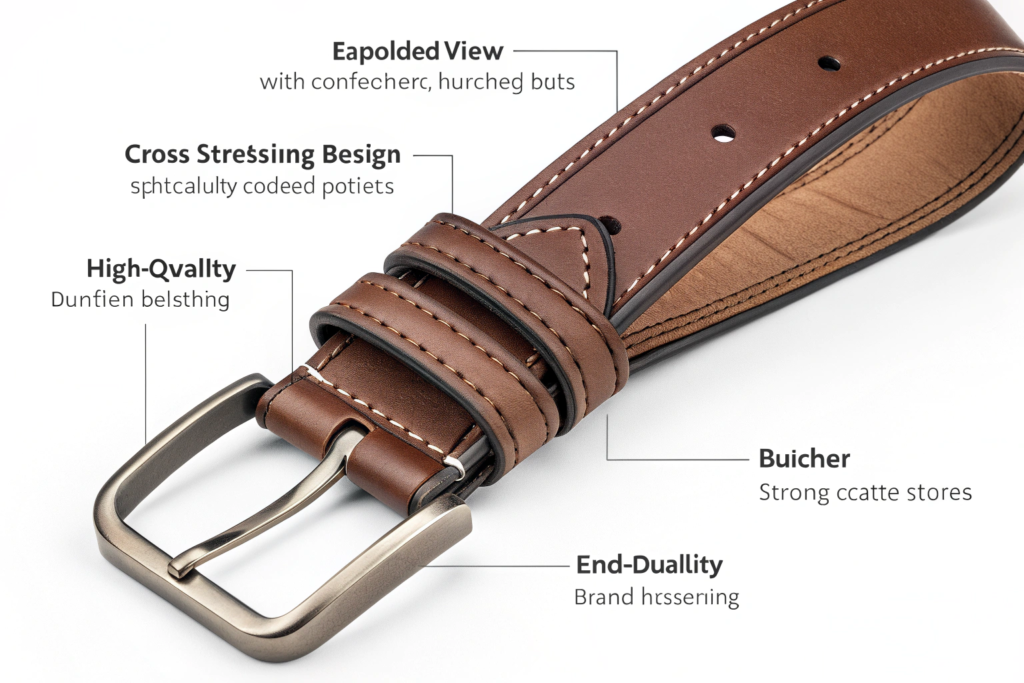
What’s the strongest method? For leather belts, the buckle should be secured with both strong stitching and, ideally, a metal screw rivet. The screw allows the buckle to be changed, which is a feature of very high-end belts, but more importantly, it provides a mechanical fastening that backs up the stitching. For fabric belts, the buckle should be secured with multiple rows of dense, heavy-duty stitching (a "bar tack") to prevent the fabric from tearing under strain.
Why Do the Edges of the Belt Matter?
Have you ever seen a leather belt where the edges look fuzzy and started to separate? This is a sign of poor edge finishing. On a quality leather belt, the edges should be sanded, beveled, and burnished or painted with a special edge paint. This process seals the raw edge of the leather, preventing it from absorbing moisture, fraying, and separating. It results in a smooth, clean, and durable edge that is a clear sign of quality craftsmanship.
How Should the Belt’s Style Complement Your Apparel?
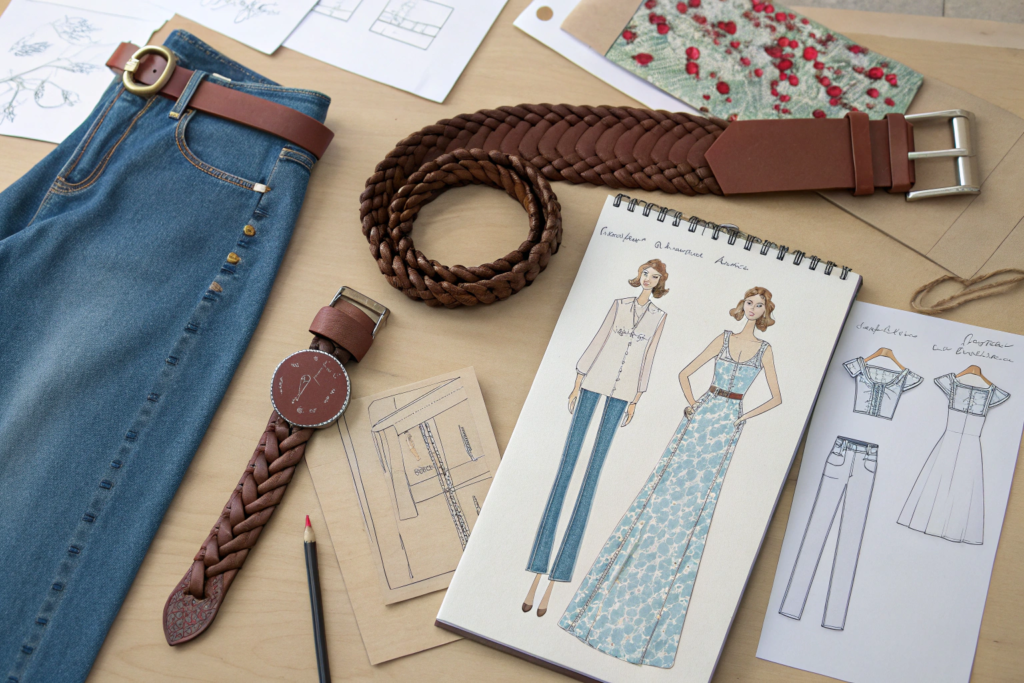
Finally, after ensuring the belt is durable and well-made, how do you ensure it’s stylish for your brand? A belt should never be chosen in a vacuum. It must have a clear relationship with the garments in your collection. It should be designed to be worn with your specific trousers, jeans, or dresses.
Should You Match the Belt Width to Your Belt Loops?
Isn’t this the most basic rule? Yes, but it’s often forgotten. If you are designing a belt to be worn with trousers or jeans, its width must be appropriate for the belt loops on those garments. A wide, 1.5-inch (38mm) belt is perfect for the larger loops on jeans, while a slimmer 1.25-inch (32mm) belt is more appropriate for the smaller loops on dress trousers. Offering belts that are perfectly scaled to your apparel shows a thoughtful, cohesive design approach.
How Can a Belt Define an Outfit’s Silhouette?
Can a belt change the shape of your clothes? Absolutely. A wide, statement belt can be used to cinch the waist of a loose-fitting dress or an oversized blazer, creating a dramatic hourglass silhouette. A skinny belt, on the other hand, can add a subtle touch of definition to a high-waisted skirt or a knit dress without overpowering it. You should think about the silhouette you want to create and offer the belt that helps your customer achieve that look with your apparel. This is a key part of styling and visual merchandising.
Conclusion
So, how do you select the perfect belts for your apparel line? Is it just about picking a trendy style? No. It is a holistic process that demands attention to both form and function.
It requires you to choose a strap material that reflects your brand’s quality and price point. It demands that you scrutinize the buckle hardware for its weight, substance, and finish. It means you must inspect the construction details to ensure the belt is built to last. And finally, it requires you to think like a stylist, selecting belt styles that are perfectly scaled and suited to complete the outfits in your own collection.
By treating the belt as a hero product rather than an afterthought, you can create a valuable, high-margin addition to your apparel line that enhances your brand and delights your customers.
Our specialty is helping apparel brands develop private label accessory lines that meet these high standards. If you’re ready to create the perfect belts to complement your collection, please contact our Business Director, Elaine, at her email: elaine@fumaoclothing.com.