You’re a brand owner, ready to bring your vision for a new accessory line to life. You’ve researched designs, and you have a budget. Now you face a crucial step: finding a manufacturing partner overseas. As you begin your search, one practical concern quickly rises to the top of the list: "How will I find a supplier I can actually communicate with clearly?" It’s a valid and incredibly important question.
Finding a fashion accessories supplier with good English requires a strategy that prioritizes vetting communication skills with the same rigor you apply to vetting product quality, focusing on clarity and technical understanding over perfect grammar. As the owner of Shanghai Fumao Clothing, I have built my entire business on the principle of clear, professional communication. We invest heavily in training our project managers to be fluent, not just in English, but in the language of manufacturing. A supplier who can’t understand the nuance between "navy blue" and "royal blue" or the technical details of your request is a liability, no matter how low their price is.
Don’t leave communication to chance. It is a skill you must actively search for and test. This guide will provide you with a practical, four-step strategy to find a manufacturing partner who not only speaks your language but understands your business.
How to look for signals of ‘good English’ during the initial search process?
Before you even send the first email, you can begin filtering for suppliers who prioritize communication. In today’s global market, a factory that is serious about attracting international clients invests in its English-language presence. Their online footprint is your first clue.
Think of their website, their B2B platform profile, and their marketing materials as their digital handshake. Is it firm, professional, and clear? Or is it sloppy, confusing, and filled with obvious errors? A supplier who presents themselves professionally in English online is signaling that they have the resources and the intention to communicate effectively with clients like you. This initial screening can save you hours of wasted time.
Let’s break down the specific signals to look for during this research phase. This is the very first step in your vetting process, even before you start thinking about factory reports.

Does Their Website and Profile Look Professional?
A well-written website is a huge green flag. Read their "About Us" page and their product descriptions. Are they clear, coherent, and professional? A few minor grammatical errors are acceptable, but if the text is confusing or nonsensical, it’s a major red flag. It suggests they either don’t have English-speaking staff or they don’t care enough about the international market to invest in a professional presentation. This attention to detail often reflects their attention to detail in manufacturing.
Do They Showcase Their English-Speaking Team?
Look for a "Our Team" section. Do they feature their sales managers or project managers? Do their profiles mention their English proficiency or their experience working with clients from North America or Europe? A factory that is proud of its English-speaking team will often highlight them as a key selling point. This is a direct signal that they have dedicated personnel ready to communicate with you. This is a key factor we look for when choosing our own partners.
How to test their written communication skills?
You’ve identified a few promising suppliers. Now it’s time to make first contact. Your initial email is not just a request for a quote; it’s your first real-world test of their written communication skills. The quality of their response is incredibly revealing.
Craft a clear, concise, and professional first email that includes a few specific, technical questions. Don’t just ask for a price. Ask about their MOQ for a specific item, their lead time for sampling, or if they can work with a particular material. This gives them an opportunity to demonstrate their ability to understand and respond to detailed queries.
The goal here is to assess their clarity, responsiveness, and attention to detail in writing. This is where you separate the professional communicators from the rest. This is just as important as the physical sample evaluation you will conduct later.

What Does a "Good" Email Response Look Like?
A good response has several key characteristics:
- Timeliness: They should respond within a reasonable timeframe (typically 24-48 hours on business days).
- Clarity: The English should be clear and easy to understand, even if not grammatically perfect.
- Completeness: They should answer all of your specific questions. A supplier who ignores your questions is either not paying attention or cannot understand them.
- Professionalism: The tone should be professional and courteous. They should address you by name and have a proper email signature.
A response that is just a single line with a price attached is a major red flag.
What is "Technical English" vs. "Conversational English"?
It’s important to distinguish between perfect conversational English and effective "Technical English." Your supplier’s sales manager doesn’t need to be able to discuss Shakespeare. They need to know the difference between "PU leather" and "genuine leather," understand what "Pantone 18-3838 Ultra Violet" means, and know what a "6-panel structured cap" is. Their ability to use and understand the specific vocabulary of the accessories industry is far more important than perfect grammar. Test this by using correct technical terms in your email.
Insist on a Voice or Video Call?
Written communication is one thing, but real-time conversation is the ultimate test. Before you commit to anything—even paying for a sample—you must have a voice or video call with the specific sales or project manager who will be handling your account.
A call allows you to gauge their listening skills, their fluency, and their ability to think on their feet. It’s also the fastest way to build rapport and determine if this is someone you can have a productive working relationship with. A supplier who is hesitant or unwilling to get on a call is a massive red flag. It often means the person emailing you is not the person you will be dealing with, or they are not confident in their spoken English.
In our factory, a video call is a standard part of our onboarding process for any new client. It builds trust and ensures we are perfectly aligned from day one. This step is non-negotiable for any serious buyer.

What Should You Discuss During the Call?
Use the call to ask open-ended questions. Don’t just repeat the questions from your email. Ask things like:
- "Can you walk me through your production process for a knit beanie?"
- "What are some of the biggest challenges you face during peak season?"
- "Can you tell me about a similar project you’ve worked on?"
Their ability to explain complex processes and share their experience will tell you everything you need to know about their communication skills and their expertise.
Why is a Video Call Better Than a Voice Call?
Whenever possible, opt for video. Video calls allow you to read body language and facial expressions, which adds another layer of communication. It also confirms you are speaking to a real person in a real office or factory setting. It helps to build a human connection, which is the foundation of a strong business partnership. In a world of remote work, video conferencing tools like Zoom and Skype have become essential for international business.
How to assess the consistency of communication?
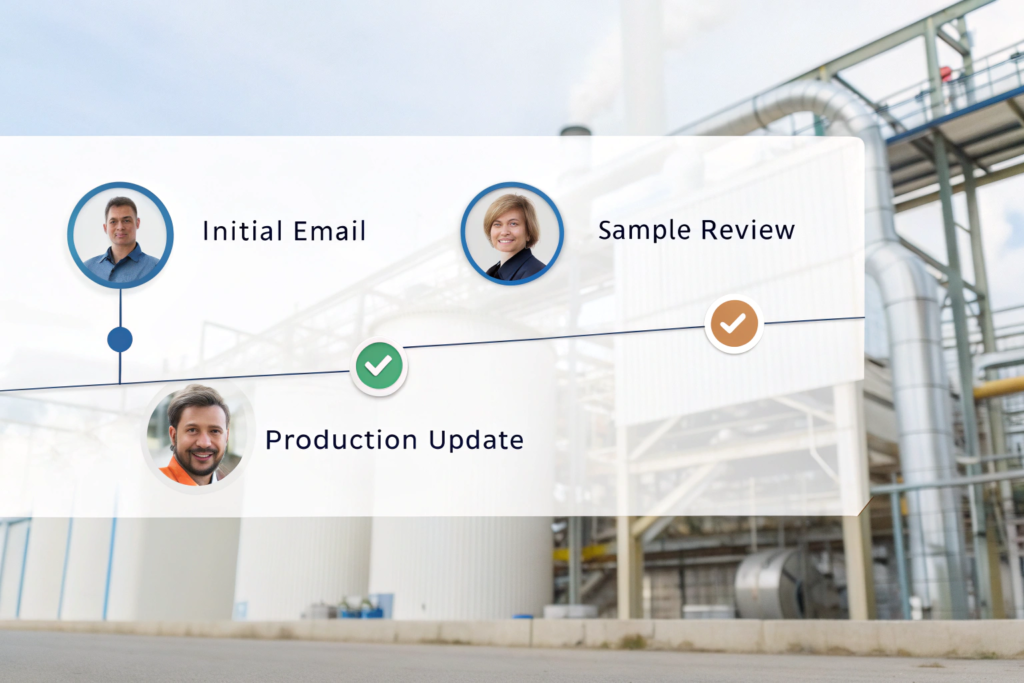
You’ve found a supplier who passed the first three tests. Their website was professional, their emails were clear, and the video call went well. There’s one final check: consistency. Is the person you are communicating with consistently the same person? And is the quality of communication consistent over time?
In some factories, a fluent English-speaking salesperson might handle the initial inquiry to "hook" the client, only to pass you off to a junior project manager with poor English skills after the order is placed. This is a classic bait-and-switch that can lead to major problems down the line.
Your goal is to build a relationship with the person who will actually be managing your project from sampling to shipment. Ensuring you have a consistent, reliable point of contact is crucial for a smooth and stress-free production process.
How Do You Ensure You Have a Dedicated Project Manager?
During your video call, ask directly: "Will you be my dedicated project manager for the entire process, from sampling through to shipping?" A good factory will assign a specific, qualified person to your account. This person will be your single point of contact. This is the most efficient and reliable way to manage a project. This system is a key part of the agile project management philosophy that many modern companies adopt.
What If You Get Passed to Someone Else?
If you are handed off to a new contact after the initial sale, you must immediately vet their communication skills by scheduling a new video call with them. Do not proceed with the order until you are confident that this new person can communicate effectively. If they cannot, you must raise this as a serious issue with the initial salesperson or their manager. A good supplier will understand your concern and find a solution. A supplier who dismisses your concern is not a partner you want to work with.
Conclusion
Finding a supplier who speaks good English is not a luxury; it is a fundamental requirement for a successful international business partnership. By actively and systematically vetting for communication skills, you can avoid costly mistakes and build a strong, efficient supply chain.
The process is simple but crucial: scrutinize their online presence, test their written skills with specific questions, insist on a video call to gauge their real-time abilities, and ensure you have a consistent, reliable point of contact. Remember, you are looking for clear, technical communication, not a poet.
At our company, we believe that our English-speaking project managers are one of our greatest assets. They are the bridge between your vision and our production floor. If you are looking for a partner who prioritizes clear communication as much as you do, we would be delighted to show you the difference it makes. Please contact our Business Director, Elaine, at her email: elaine@fumaoclothing.com.