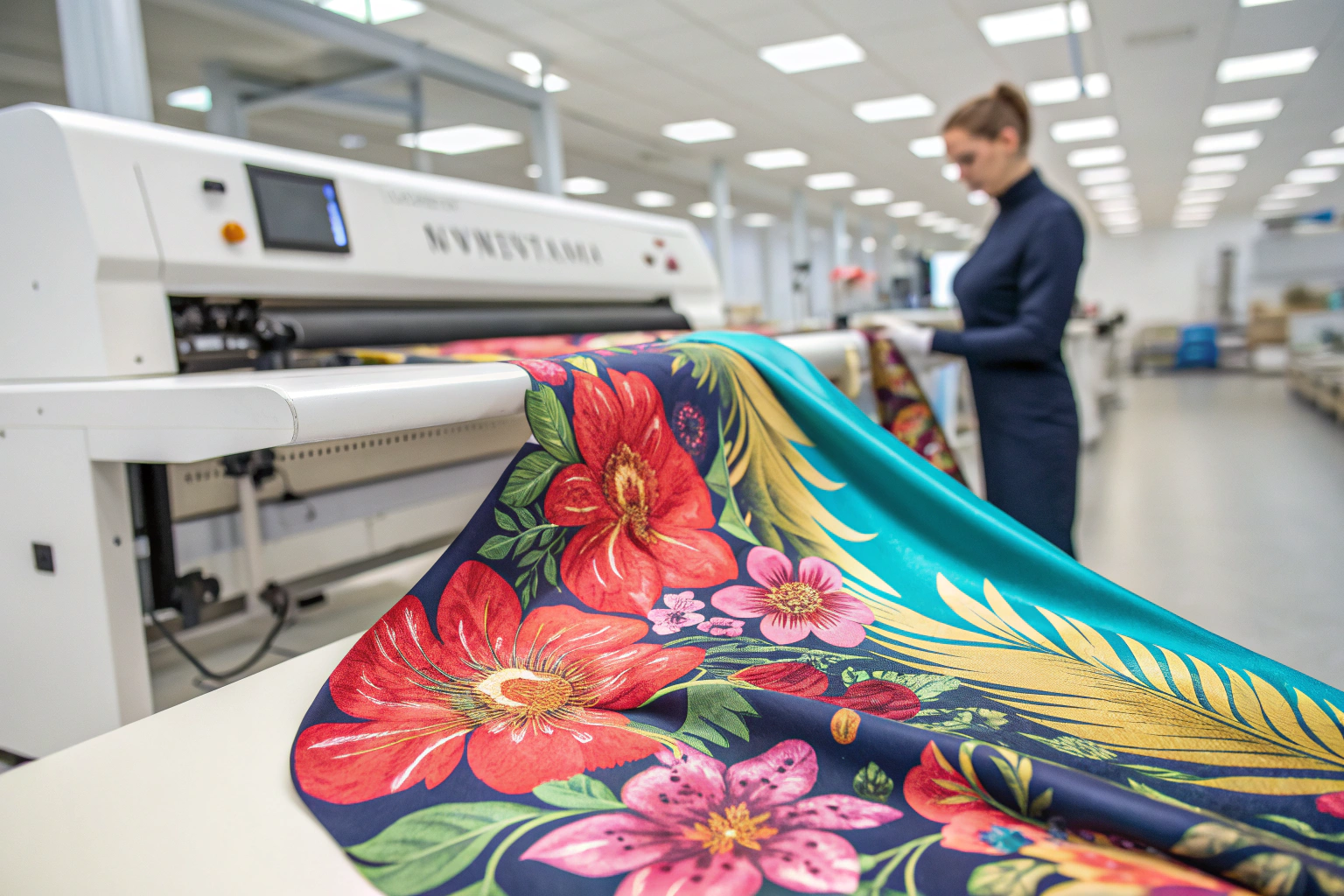
If you’re sourcing fashion accessories like scarves, shawls, or custom hats, you’ve likely asked how to make your designs stand out in a crowded market. For years, traditional printing methods set the boundaries of what was possible, often leaving smaller brands and fast-moving designs behind. At AceAccessory, we work with clients daily who face the challenge of balancing vivid, intricate designs with the practicalities of cost, speed, and minimum order quantities. This is where understanding modern production technology becomes a game-changer.
The primary advantages of digital printing on fabric are its ability to produce highly detailed, unlimited-color designs with minimal setup, its cost-effectiveness for small to medium production runs, its significantly faster turnaround time from design to production, and its eco-friendliness due to reduced water and ink waste. This technology transforms how fashion accessories are created, allowing for unprecedented creativity, agility, and sustainability in product development. It directly addresses key industry pain points like high upfront costs for sampling, long lead times, and the environmental impact of production.
For brands and importers looking to differentiate their product lines—whether it’s a uniquely patterned silk scarf, a photorealistic print on a tote bag, or a limited-edition cap collection—digital printing offers a pathway that was previously unavailable or prohibitively expensive. Let’s explore the specific advantages that make this technology not just an alternative, but a superior choice for modern fabric accessory manufacturing.
Why is Digital Printing Superior for Complex, Multi-Color Designs?
When designing fashion accessories, creative vision should not be limited by technical constraints. Traditional printing methods like screen printing require a separate screen for each color in a design. This makes producing a photorealistic image, a watercolor effect, or a gradient with thousands of colors economically unfeasible for most orders. How then can you bring the most vibrant and detailed artwork to life on products like fashion scarves or printed bandanas without astronomical costs?
Digital printing eliminates the need for physical screens or rollers. It works much like a desktop inkjet printer but on an industrial scale, applying ink directly onto the fabric. This process allows for the reproduction of an unlimited color palette from a single digital file. Whether your design has 10 colors or 10,000, the production complexity and cost remain largely the same. This capability is revolutionary for creating high-end, artistic accessories that capture every nuance of the original artwork, making it ideal for brands that prioritize unique, eye-catching designs.
How Does Digital Printing Achieve Photorealistic Quality?
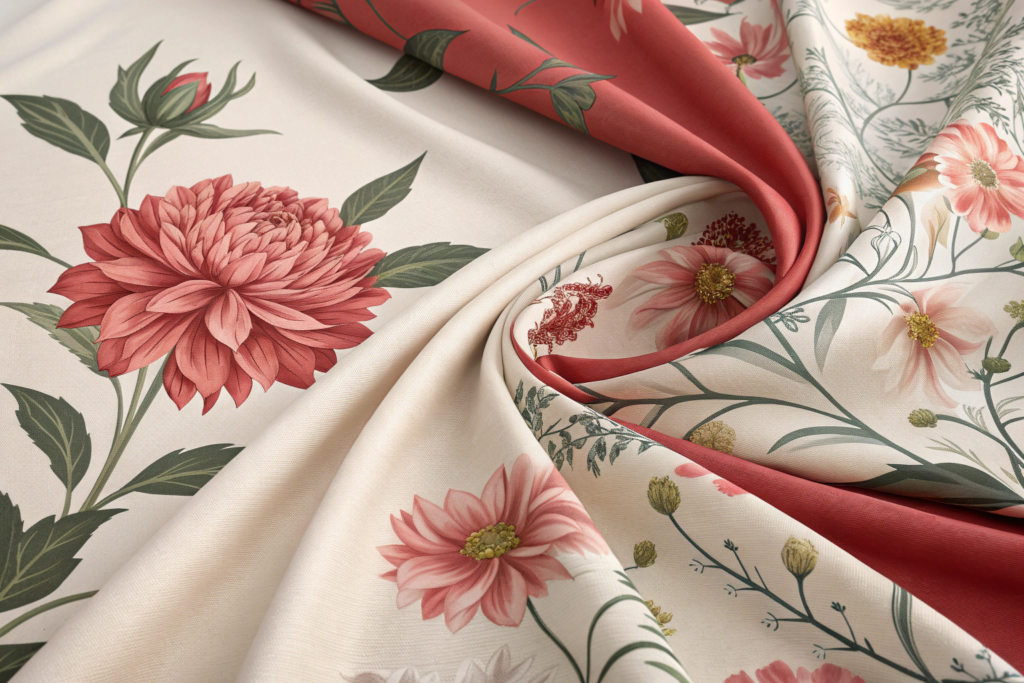
The secret lies in its droplet-based application and color management software. Industrial digital printers use microscopic droplets of ink that are precisely placed on the fabric’s surface. Advanced software translates a digital image file into printing instructions, mixing base inks to create millions of perceived colors. This allows for smooth color gradients, subtle shadows, and extremely fine details. For products where design is the key selling point, such as luxury shawls, this quality is non-negotiable. Resources from organizations like The Digital Textile Community often highlight the technical advancements driving this print fidelity.
What Are the Cost Implications for Short-Run Production?
For complex designs, the economic advantage of digital printing is most apparent in small to medium runs. In screen printing, the high cost of engraving multiple screens is only justified by spreading it over thousands of yards. Digital printing has virtually no setup costs; you only pay for the fabric and ink used. This dramatically lowers the minimum order quantity (MOQ), enabling brands to test the market with new designs or produce limited editions. This agility is a core component of fast development strategies. Partnering with a manufacturer like Shanghai Fumao Clothing that offers digital printing services means you can leverage this flexibility for your accessory lines.
How Does Digital Printing Speed Up Time-to-Market?
In the fast-fashion world and even for trend-driven accessories, speed is currency. The traditional design-to-shelf timeline, often stretched by weeks for screen creation and setup, can cause you to miss a crucial selling season. For buyers and brand managers under pressure to constantly refresh offerings, a bottleneck at the production stage is a major pain point. How can you compress your lead times and get new styles from concept to customer in record time?
Digital printing is inherently faster in the pre-production phase. Since it requires no screens, the step of screen engraving—which can take days or weeks—is completely eliminated. The workflow is streamlined: once a digital design file is approved, it can be sent directly to the printer. This allows for extremely fast sampling. A print prototype of a new scarf design can be produced in a matter of hours, not weeks. This rapid iteration means you can approve, adjust, and finalize designs with incredible speed, locking in production dates much sooner and ensuring your products hit the market while the trend is still hot.

What is the Impact on Sampling and Prototyping?
The sampling process is transformed. Traditionally, requesting a sample with a new print meant committing to screen costs upfront. With digital printing, you can request multiple sample variations at a very low cost and with quick turnaround. This encourages more creative experimentation and ensures the final product is exactly right. It empowers design teams to collaborate more effectively. You can see a physical product almost immediately after a digital idea is conceived. Industry analysis on platforms like Just-Style frequently discusses how digital sampling is revolutionizing supply chain responsiveness.
How Does It Streamline the Bulk Production Process?
Even in bulk production, digital printing offers speed advantages. There’s no need to wait for screens to be manufactured, shipped, and mounted. Production can start the moment the fabric is pre-treated and loaded. Furthermore, it enables efficient made-to-order or on-demand manufacturing models. This is perfect for e-commerce store owners who want to offer customized accessories without holding inventory. By reducing the time spent on product development and setup, digital printing directly addresses the industry’s demand for fast production, a key service offered by forward-thinking manufacturers like Shanghai Fumao Clothing.
Is Digital Printing a More Sustainable Choice?
Environmental responsibility is no longer a niche concern but a mainstream demand from consumers and a core consideration for brands. Traditional textile printing can be resource-intensive, using large amounts of water and producing chemical-laden wastewater. As you look for suppliers, you may ask: can my accessories manufacturing partner help me reduce the environmental footprint of my products?
Yes, digital printing is widely recognized as a more sustainable printing technology. Its ecological advantages are significant. First, it is a water-saving process. Unlike many traditional methods that require extensive washing, digital printing often uses inkjet systems where most of the ink is absorbed directly into the fiber. Second, it is an on-demand technology that drastically reduces waste. You print only the fabric you need, minimizing excess inventory. This efficiency aligns perfectly with the growing movement towards eco-friendly fashion.

How Does It Reduce Chemical and Water Usage?
The environmental benefit stems from its precise application. Digital printers deposit tiny droplets of ink exactly where needed, with almost no overspray or runoff. This precision means that up to 95% of the ink is utilized on the fabric. Furthermore, many modern digital textile inks are formulated to have a lower environmental impact. They contain fewer harmful volatile organic compounds. The reduced need for washing also means less energy consumption for heating water. Information from the Sustainable Apparel Coalition provides context on why these reductions are critical for the industry’s future.
Can It Support a Circular Fashion Economy?
Digital printing’s flexibility makes it a key enabler for circular business models. Its suitability for small batch production supports made-to-order systems, which combat overproduction—the fashion industry’s biggest waste problem. When combined with organic or recycled fabrics, digitally printed accessories become a powerful statement of sustainable practice. For a manufacturer, investing in this technology is part of a commitment to responsible manufacturing. At Shanghai Fumao Clothing, integrating digital printing allows us to help clients create beautiful products that are also kinder to the planet.
How Does Digital Printing Enhance Design Flexibility and Customization?
The modern market craves personalization and exclusivity. However, traditional manufacturing methods are geared towards standardization and mass repetition. This creates a tension for brands: how do you offer personalized custom accessories or rapidly test niche designs without being punished by high costs and long lead times?
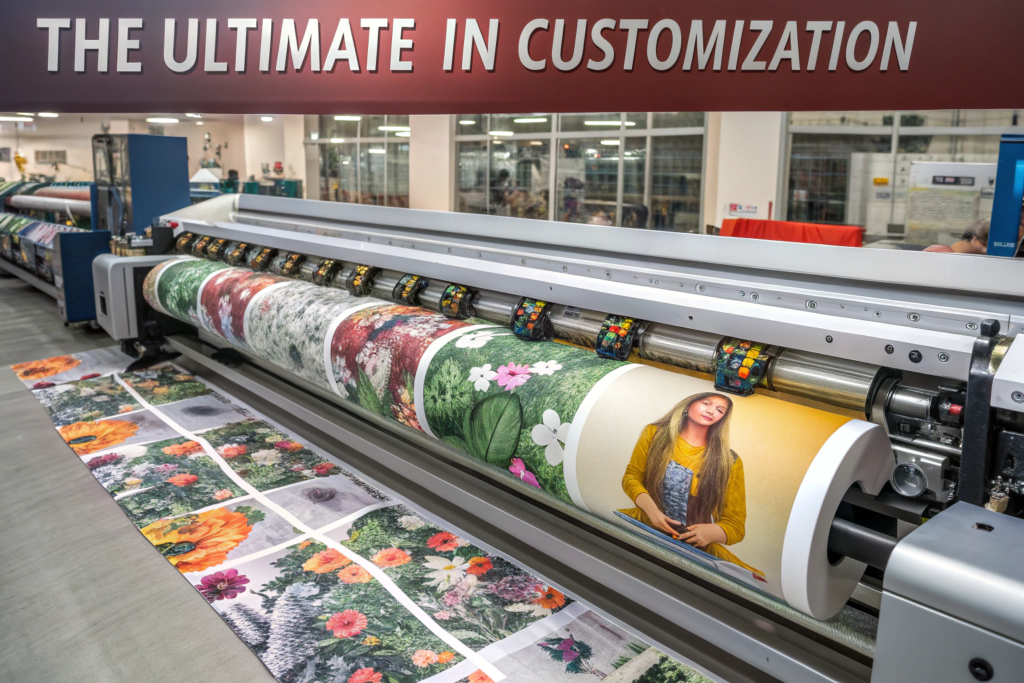
Digital printing is the ultimate tool for customization and design flexibility. Because each yard can be printed with a completely different image from the next without stopping the machine, it enables true mass customization. Imagine producing a run of promotional tote bags where each bag has a different individual’s name. This capability transforms your product from a commodity into a personalized experience. It also allows for effortless design iteration; changing a colorway is as simple as editing a digital file.
What Opportunities Does It Create for Small Brands and Startups?
The lowered barriers to entry are perhaps its most democratizing feature. A small startup can now produce a highly professional, design-driven product line without the need for large capital investment in screen setups. They can order exactly what they need, reducing upfront financial risk. This fosters innovation and diversity in the market. It empowers businesses to be agile, testing multiple designs in small quantities. This operational model is perfectly suited for the direct-to-consumer (DTC) landscape. Forums for entrepreneurs in fashion often cite digital printing as a key technology enabling small-batch production.
How Does It Integrate with On-Demand and Just-in-Time Manufacturing?
Digital printing is the technological backbone of on-demand production. It aligns perfectly with just-in-time inventory models that are crucial for reducing waste and storage costs. A manufacturer equipped with digital printing can hold blank, pre-treated fabrics and print them only once an order is received. This is ideal for items like custom team uniforms or event-specific merchandise where demand is uncertain. For importers managing complex supply chains, this flexibility can mitigate risks associated with long sailing schedules. By choosing a partner that masters this technology, you gain a supplier capable of supporting both large-scale orders and hyper-customized production.
Conclusion
Digital printing on fabric is far more than just a different way to apply color; it is a transformative technology that reshapes the economics, creativity, and ethics of producing fashion accessories. Its advantages—unmatched design detail for complex graphics, dramatically accelerated speed to market, a significantly reduced environmental footprint, and unparalleled flexibility for customization—address the most pressing needs of modern brands and retailers. In an industry driven by trends, speed, and increasing demand for sustainability, it provides a compelling competitive edge.
For anyone sourcing printed fabric accessories, from scarves and shawls to hats and bags, understanding and leveraging digital printing is essential. It allows you to operate with greater agility, lower risk, and higher creative freedom, ultimately enabling you to build a more responsive and responsible brand.
If you are looking to explore how digital printing can enhance your next accessory collection with vibrant, detailed, and sustainable results, we are here to help. Our team at AceAccessory has the expertise and technology to guide you from concept to finished product. Contact our Business Director Elaine today at elaine@fumaoclothing.com to discuss your specific project and see how we can bring your most ambitious designs to life.