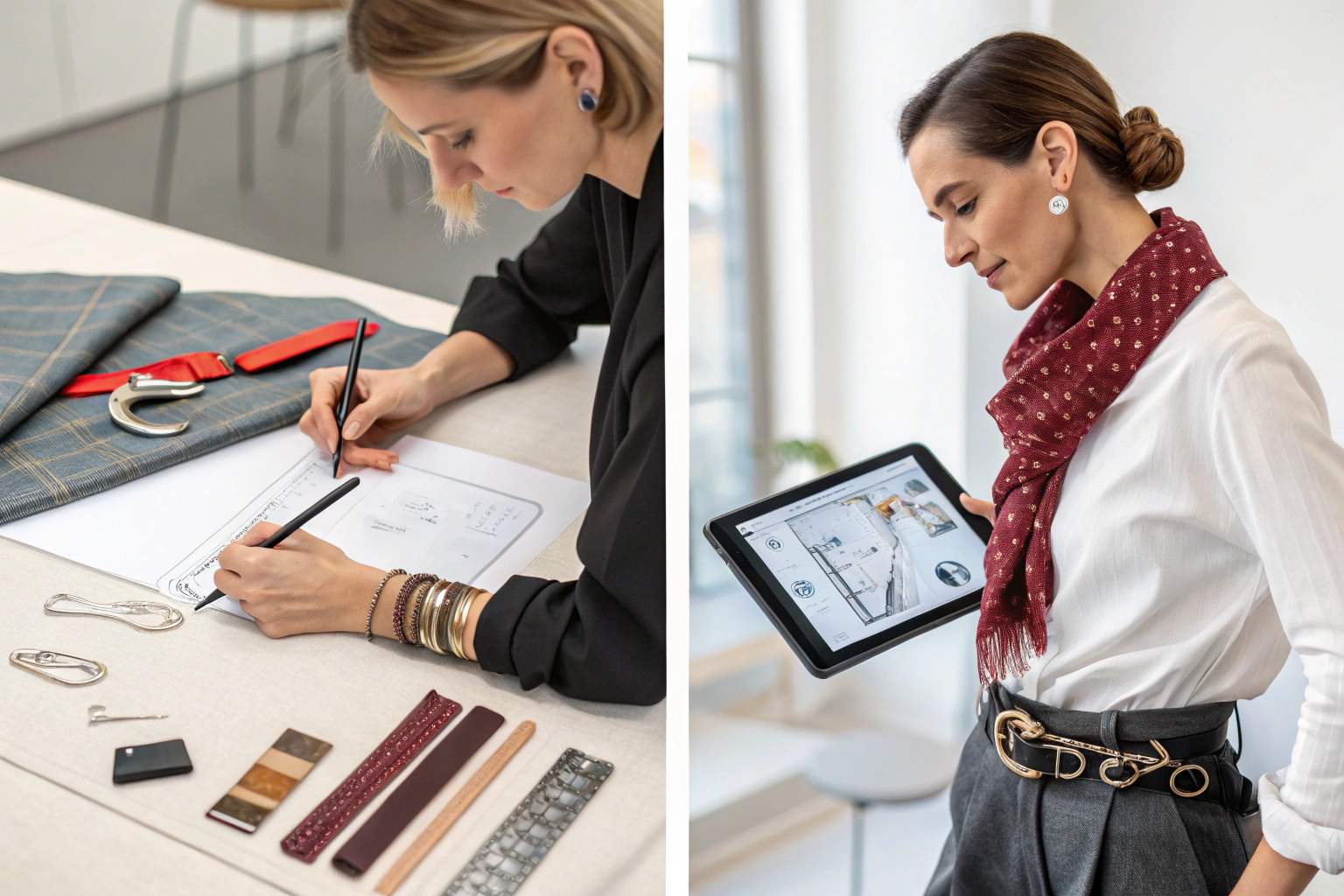
For fashion brand owners and importers, bringing a new accessory line to market is filled with critical decisions. One of the most fundamental choices is determining how your products will be created. Do you invest in a completely custom design, or do you leverage existing, proven styles? This decision boils down to selecting between two primary manufacturing models: OEM (Original Equipment Manufacturing) and ODM (Original Design Manufacturing). Understanding this distinction is crucial, as your choice will directly impact your costs, timeline, control over the final product, and your brand’s unique position in a crowded market.
The core difference lies in who owns the product design and intellectual property. In OEM, you, the brand owner, provide the complete design, specifications, and technical drawings. The factory then manufactures the product exactly to your blueprint. In contrast, with ODM, you select a product from the factory’s existing catalog of designs. The factory handles both the design and production, and you typically add your own branding, with options for minor customizations like color or packaging. Your choice should align with your brand’s strategy, resources, and stage of growth.
This guide will break down the advantages, challenges, and ideal scenarios for both OEM and ODM. By the end, you’ll have a clear framework to decide which partnership model—a customized OEM collaboration or a streamlined ODM solution—will best help you build a successful and distinctive fashion accessory line. Learn moreShanghai Fumao Clothingdetails page.
When should you choose the OEM model for your accessories?
The OEM path is a strategic investment in your brand’s long-term identity and market position. It is the preferred route when your core value proposition hinges on having a product that cannot be found anywhere else. If you are building a brand known for innovative design, patented features, or superior quality with specific material choices, OEM is not just an option—it’s a necessity.
The most compelling reason to choose OEM is to achieve true product differentiation. In the competitive world of fashion accessories, standing out is paramount. With OEM, you control every aesthetic and functional detail, from the unique clasp mechanism on a handbag to the signature blend of fibers in a luxury scarf. This exclusivity protects you from the "market saturation" common in ODM, where the same base design might be sold to multiple competitors, leading to a race to the bottom on price. By owning the design through OEM, you create a legitimate barrier to competition and can build a brand that commands customer loyalty and higher profit margins.
Do you have a strong, unique product design or technical innovation?
If your answer is yes, OEM is your clear path. This model is ideal when you have a specific, unique design in mind or a technical innovation—like a new type of adjustable hair band or a scarf with integrated tech features. You provide the factory with detailed specifications and design files, and they bring your exact vision to life. This process ensures that the final product is unmistakably yours. Crucially, in an OEM agreement, the intellectual property rights for your custom design belong to you. This is a critical form of protection that allows you to potentially patent your design and prevent others from copying it, securing your investment in innovation. For brands looking to establish a strong, defensible market position, this control over IP is invaluable.
Are you prepared for a longer timeline and higher initial investment?
Embracing OEM requires patience and capital. The development cycle is significantly longer than ODM. It involves multiple steps: creating detailed tech packs, engineering for production, developing prototypes (which may go through several rounds of revisions), and fabricating custom molds or tooling—for example, a unique metal die for a belt buckle or a specialized loom setting for a patterned scarf. This process can take anywhere from three to six months or more before mass production even begins. Financially, you bear these upfront tooling and development costs. Additionally, to make this investment worthwhile, factories will require a higher Minimum Order Quantity (MOQ). Therefore, OEM is best suited for established brands with a clear market strategy, adequate funding, and the confidence to place larger orders for a unique product.

When is the ODM model a smarter business move?
The ODM model is the engine of agility and efficiency in the fashion world. It is the smarter choice when your business priority is speed, cost-effectiveness, and the ability to rapidly test and respond to market trends without being weighed down by the complexities and expenses of original design. This approach is particularly powerful for new brands, e-commerce sellers, and businesses looking to expand their product lines with minimal risk.
The paramount advantage of ODM is its incredible speed to market. Because the products are pre-designed, engineered, and "production-ready," you can bypass the lengthy development phases of OEM. Once you select a style from a catalog, you can often receive samples for approval within weeks and have stock ready for shipping in as little as 1-4 weeks after order confirmation. This allows you to capitalize on fast-moving trends—like a sudden surge in demand for a particular style of headband or a popular color in gloves—ensuring your brand remains relevant and responsive. For online retailers and startups, this agility can be the difference between catching a wave and missing it entirely.
Are you launching a new brand or testing a new market segment?
For entrepreneurs and new brands, ODM offers a low-barrier entry into the market. It eliminates the need for a large, upfront investment in design and engineering. You can start with a relatively low Minimum Order Quantity (MOQ), which allows you to test multiple different products—a variety of scarf styles, hat designs, or jewelry pieces—without committing a huge amount of capital to any single one. This "test and learn" approach is invaluable for validating your brand concept, understanding what resonates with your customers, and refining your focus before you commit to the heavier investment of custom OEM development. Many successful brands begin with ODM to establish cash flow and market presence before transitioning to OEM for their signature products.
Is your product line based on classic styles rather than radical innovation?
Not every product needs to reinvent the wheel. If your brand strategy is to offer well-made, on-trend versions of classic accessories—like a well-constructed leather belt, a cozy knitted beanie, or a reliable foldable umbrella—ODM is exceptionally efficient. Factories have honed these designs over many production runs, often leading to better yield and consistent quality. Your role shifts from designer to curator and marketer. You can focus your resources on selecting the best-quality options from your supplier’s range, building a compelling brand story, and mastering marketing and sales channels. This model allows you to build a robust business by executing brilliantly on branding and customer experience, rather than competing on unique product design.

How do you protect your interests in either partnership?
Whether you choose the bespoke path of OEM or the streamlined route of ODM, a successful manufacturing partnership is built on a foundation of clear agreements and proactive management. Protecting your business interests—especially your intellectual property and product quality—is non-negotiable. The specific risks differ between models, but vigilance is required in both.
In OEM agreements, your main protectable asset is your custom design. A comprehensive contract is essential. It must explicitly state that all design files, technical specifications, and any resulting products are your sole intellectual property. The contract should also prohibit the factory from using your design to manufacture products for any other client. Furthermore, clarify the ownership of any custom tooling or molds created for your order; you should ensure these are either owned by you or cannot be used for other parties without your permission. For ODM arrangements, the IP landscape is different. The factory typically owns the underlying design. Your contract should focus on securing exclusivity for your specific modifications (like your unique colorway or pattern) within a certain market or region. It should also prevent the factory from selling the exact same configured product (with your colors and branding) to your direct competitors.
What should a good manufacturing contract include?
A robust contract goes beyond just price and quantity. It is your blueprint for the entire partnership. Key clauses should cover:
- Detailed Product Specifications: For OEM, this is your tech pack. For ODM, it’s the catalog reference number plus your specific modifications (Pantone colors, logo placement, packaging). This becomes the objective standard for quality.
- Quality Assurance (QA) Protocols: Define the QA process. Will there be in-process checks? How many pre-shipment samples are required? What is the Acceptable Quality Limit (AQL) for final inspection? Defining this upfront prevents disputes.
- Payment Terms: Standard terms often involve a deposit (e.g., 30%) to start production and the balance before or upon shipment. Clearly outline the schedule and conditions.
- Delivery and Logistics Responsibilities: Specify the Incoterms (e.g., FOB, EXW, DDP), which dictate who handles and pays for shipping, insurance, and customs clearance. This is crucial for avoiding unexpected costs and delays.
- Confidentiality and Non-Disclosure: This is critical, especially in OEM, to protect your designs.
Why is on-site verification and clear communication vital?
No contract can replace due diligence and strong communication. Before finalizing a partnership, if possible, visit the factory or use a trusted third-party service for verification. Assess their quality control processes firsthand, the condition of their equipment, and their working conditions. Once production begins, maintain clear and regular communication. Assign a dedicated project manager from your side to work with the factory’s point of contact. Regular updates, photo reports during production, and strict adherence to sample approvals are the best ways to ensure the final shipment matches your expectations and keeps your brand’s reputation secure.

Conclusion
Choosing between OEM and ODM is a strategic decision that defines how you bring your fashion accessory vision to life. OEM offers the path to distinction, granting you full control over design and intellectual property, which is ideal for building a unique, innovation-driven brand. ODM provides the tools for agility, enabling rapid market entry, cost-effective testing, and efficient scaling with classic or trend-based styles.
The right choice hinges on honestly assessing your brand’s current stage, resources, and long-term goals. Are you investing in a signature product that will define your brand, or are you building a versatile collection to capture immediate market opportunities?
As a professional manufacturer with deep expertise in both models, Shanghai Fumao Clothing is equipped to be your ideal partner on either path. Our modern facility, experienced design and QC teams, and dedicated project management ensure that whether you need to engineer a custom OEM solution or select from our curated ODM ranges, the process will be seamless, reliable, and focused on your success. We help you navigate these critical decisions to build a supply chain that is a true asset to your business.
If you’re ready to discuss which model is the perfect fit for your next accessory line and how we can bring it to life with quality and precision, we invite you to start a conversation. For a direct consultation, please reach out to our Business Director Elaine. She and her team are ready to provide you with timely, professional, and reliable service. You can contact her at: elaine@fumaoclothing.com.