For modern beach brands, the product portfolio is evolving far beyond swimwear. Today’s sun-conscious consumer demands functional, UV-protective accessories that extend protection to every moment of their coastal lifestyle. From the water’s edge to the poolside lounge, a new category of anti-UV accessories is emerging, blending high-tech fabrics with fashion to create essential gear for safety, comfort, and style. This shift represents a significant opportunity for brands to diversify their offerings and build deeper loyalty with customers who prioritize skin health.
Beach brands are increasingly catering to consumers with a range of anti-UV fabric accessories that go beyond clothing, including UPF 50+ sun-protective hats, breathable cover-ups like shawls and kaftans, lightweight towels and "smart" capes for instant drying and shade, and durable shade solutions for marine and outdoor use. These products are defined by their use of advanced materials—such as tightly woven synthetics, recycled fabrics, and fibers with integrated UV-inhibiting additives—that offer reliable protection while meeting demands for sustainability, comfort, and aesthetic design.
Let’s explore the specific accessory categories leading this trend and the material innovations that make them possible.
What are the top-selling UV-protective accessory categories?
The market has moved past basic rash guards. Today’s best-selling UV-protective accessories are those that solve multiple problems: they provide superior sun defense, offer versatile functionality, and align with a fashionable, eco-conscious lifestyle. The most successful categories seamlessly integrate into the entire beach day experience, from active water sports to relaxed lounging.
The top-selling categories include high-coverage apparel accessories like long-sleeve cover-ups and kaftans, innovative headwear such as wide-brimmed cloth hats and bucket hats, multi-functional textile gear like sand-free towels and capes, and durable shade structures for personal and marine use. These items are popular because they address the core consumer desire for comprehensive protection without sacrificing style or convenience. Brands that bundle these accessories—like matching father-son swimwear with UV-protective towels—see stronger customer engagement.
Why are multi-functional cover-ups and kaftans gaining popularity?
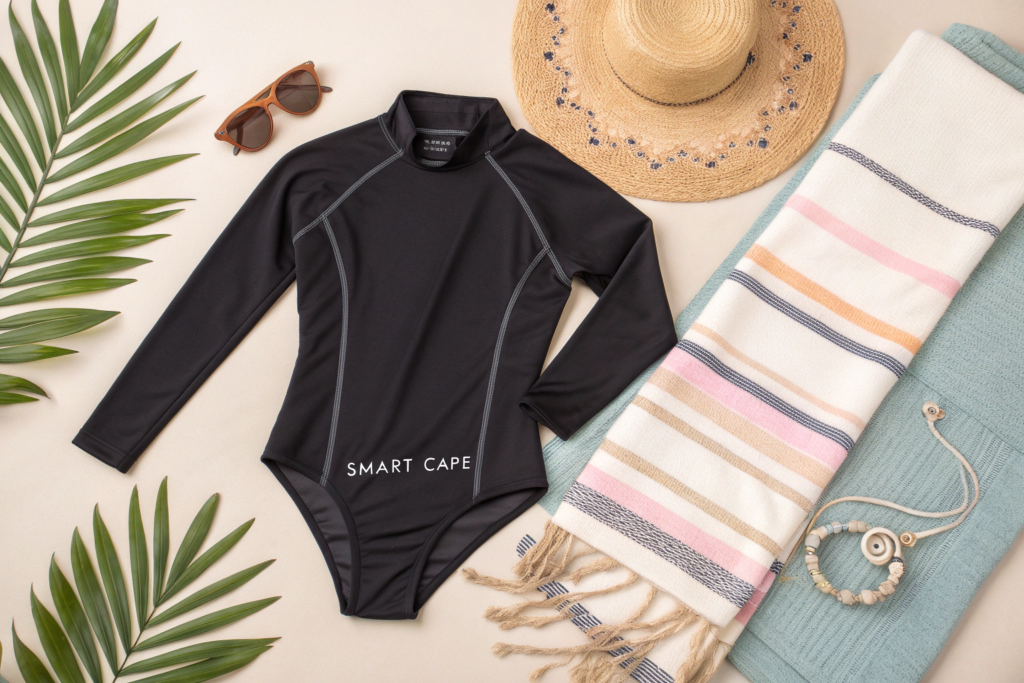
The humble cover-up has been transformed into a wardrobe cornerstone. Modern versions, often made from quick-drying, breathable nylon or polyester with a UPF 50+ rating, are designed for all-day wear. A consumer might wear it from the beach to a casual seaside lunch without needing to change. Brands like Helly Hansen design items like the Bask shirt, which is made from recycled materials, offers UPF 50+ protection, and features a stylish cut suitable for both water activities and town wear. This shift from a single-use garment to a versatile fashion piece significantly increases its perceived value and sales potential. For your brand, offering cover-ups in fabrics that are chlorine and saltwater resistant adds a key practical selling point that resonates with active consumers.
How are high-tech towels and capes redefining beach gear?
Traditional terry cloth towels are being replaced by innovative alternatives. Turkish towels and lightweight ponchos are prized for their quick-drying properties and compact portability. The innovation frontier is represented by products like the "smart cape" or "smart cloak," which takes functionality further. As showcased by companies like Suzhou Roman Roland, these capes use ultra-fine fibers to achieve extreme lightness (some as light as 98 grams), offer UPF 50+ sun protection, and feature antibacterial and stain-resistant treatments. This transforms a simple drying tool into a "mobile changing room" and a "portable sun shield," justifying a premium price point. For brands targeting families, matching kids’ poncho towels add a cute and practical element to the collection.
Which material innovations are driving this trend?
Behind every effective UV-protective accessory is a deliberate material choice. Consumers are increasingly knowledgeable, looking not just for a UPF label but for understanding how the protection is achieved and whether the materials align with their values around sustainability and performance.
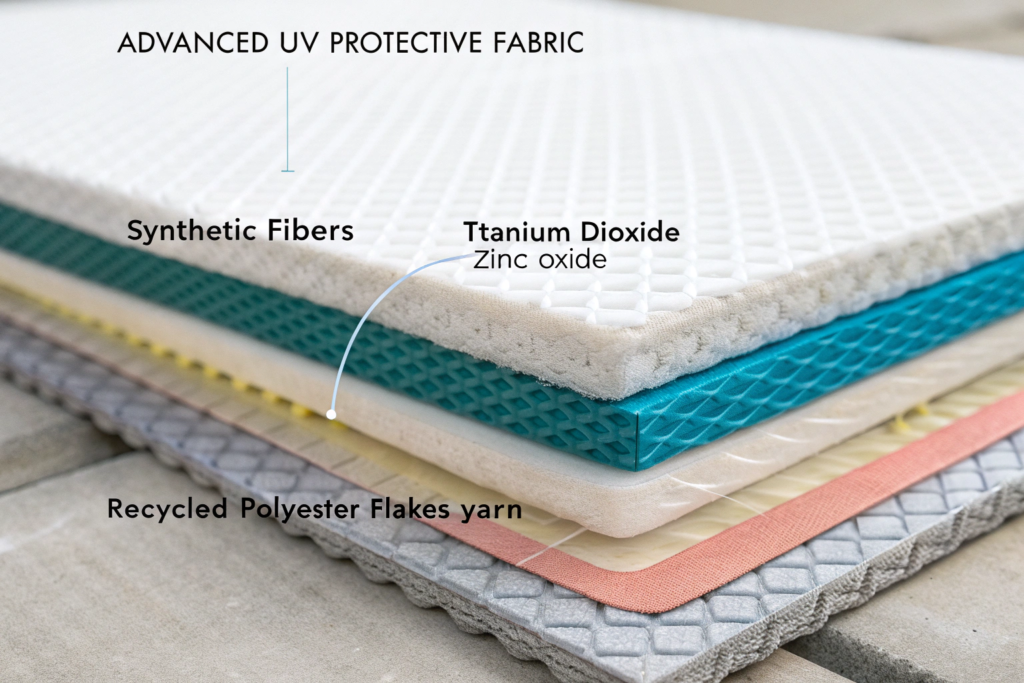
The trend is driven by three key material innovations: the use of high-tenacity, UV-stabilized synthetic yarns for durability and fade resistance; the integration of UV-inhibiting additives at the fiber production stage; and the strong market shift towards certified recycled materials, particularly those from ocean waste. These innovations allow fabrics to meet the stringent demands of prolonged sun exposure while answering the call for greater environmental responsibility in the fashion industry.
What makes a fabric durably UV-resistant?
True, long-lasting UV protection is engineered into the fabric. One proven approach is the use of UV-stabilized acrylic or solution-dyed acrylic fabrics, such as those in the Sunbrella family. These fabrics are renowned for their exceptional colorfastness and resistance to degradation from sunlight, backed by warranties of five years or more. The protection comes from both the inherent properties of the synthetic fibers and the construction; tightly woven or knitted fabrics naturally block more UV radiation than loose weaves. For accessory manufacturers, sourcing these types of performance fabrics ensures the product’s core functionality—sun protection—remains effective season after season, which is a powerful brand promise.
How are sustainability and UV protection merging?
This is perhaps the most significant driver in the current market. Leading beach brands are now insisting that UV protection does not come at an environmental cost. This is achieved by using recycled materials that are also engineered for high performance. For instance, brands like Seabass create UV-protective swim and resort wear from recycled ocean waste, contributing to ocean cleanup efforts. Similarly, Tolu Australia manufactures its swim shorts and accessories from recycled materials that carry both OEKO-TEX Standard 100 and Global Recycled Standard (GRS) certifications, ensuring they are free from harmful substances and meet high environmental standards. For a factory, offering GRS-certified recycled fabrics with built-in UV protection is becoming a critical differentiator for attracting premium beach brands.
How can brands successfully integrate these accessories?
Successfully launching a line of UV-protective accessories requires more than just sourcing the right fabric. It involves strategic product development, cohesive branding, and clear communication about the technology and benefits to the end-consumer.
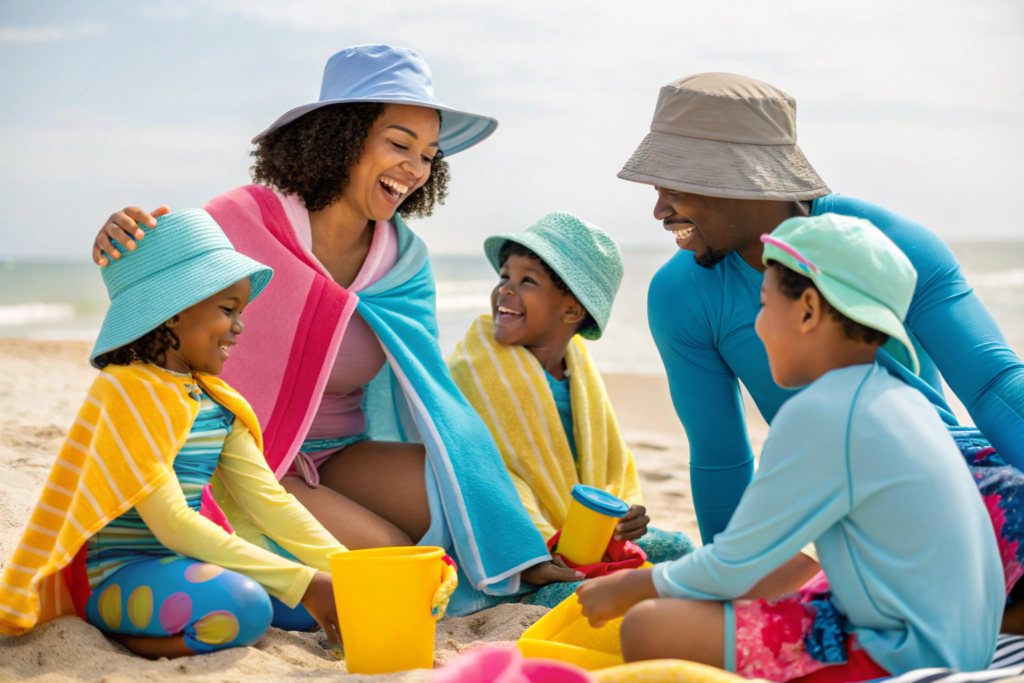
Brands succeed by developing cohesive, head-to-toe collections that mix and match; leveraging certifications (like UPF 50+, GRS, B Corp) for marketing credibility; and clearly communicating the lifestyle benefits—not just the technical specs—of the accessories. The most resonant messaging focuses on enabling worry-free, enjoyable, and stylish time in the sun for the whole family.
What are the key selling points beyond UPF rating?
While a high UPF rating (like 50+) is the essential baseline, the winning sales narrative includes adjacent benefits. These include:
- Quick-Dry & Comfort: Fabrics that wick moisture and dry rapidly enhance comfort and convenience.
- Easy Care & Durability: Features like bleach-cleanable fabrics or stain and mildew resistance appeal to practical consumers.
- Multi-Scenario Use: Marketing an item as suitable for the beach, pool, boat, and casual street wear maximizes its appeal and use cases.
- Family & Connection: Offering matching or coordinated items for parents and children taps into the emotional drive of family activities.
Presenting these features in a simple table can help buyers quickly grasp the value proposition:
| Accessory Type | Core UV Feature | Key Additional Selling Points | Target Use Case |
|---|---|---|---|
| Smart Cape/Cloak | UPF 50+ | Ultra-lightweight, instant-dry, antibacterial | Beach changing, portable shade |
| Cover-up/Kaftan | UPF 50+ weave | Fashion-forward design, recycled materials | Beach-to-street wear |
| Performance Hat | Tightly woven brim | Packable, moisture-wicking lining | All-day outdoor activity |
| Turkish Towel | Dense, protective weave | Fast-drying, sand-resistant, versatile wrap | Drying, lounging, scarf |
Why is third-party certification crucial for marketing?
In a market saturated with claims, certifications provide objective, trusted validation. They are shorthand for quality and ethics that resonate with both B2B buyers and end consumers. The UV STANDARD 801 test, for example, is rigorous because it tests fabrics in a wet and stretched state, mimicking real-use conditions. Equally important are sustainability certifications. A B Corp Certification, like that held by Seabass, signals a brand’s overall commitment to social and environmental performance. For a manufacturer, partnering with testing labs and sourcing certified materials allows your brand clients to market with greater authority and trust.Learn moreShanghai Fumao Clothing details page.
Conclusion
The demand for anti-UV fabric accessories is a clear and growing trend driven by heightened health awareness and a desire for stylish, multi-functional gear. The opportunity lies in moving beyond basic protection to create accessories that are integral to a modern, sustainable, and enjoyable coastal lifestyle. Success in this space hinges on a deep understanding of material innovations—from durable, UV-stabilized synthetics to certified recycled fabrics—and the ability to translate these technologies into desirable products with compelling lifestyle narratives.
For beach brands, this means curating collections that offer comprehensive sun safety, from hats and cover-ups to high-tech towels, all characterized by credible certifications and clear consumer benefits. For manufacturers, it underscores the need to master and offer these advanced material solutions.
If you are looking to develop a leading-edge line of UV-protective accessories that blend uncompromising protection with fashion and sustainability, expert manufacturing partnership is key. For a reliable partnership in producing high-quality, certified anti-UV accessories, feel free to reach out to our Business Director, Elaine, at elaine@fumaoclothing.com to discuss your next collection. Let Shanghai Fumao Clothing be the foundation for building your brand’s success in the sun-safe market.