As a fashion accessories manufacturer, I’ve seen many retailers and brands struggle with slow-moving leather belt inventory. Excess stock ties up capital, increases storage costs, and risks obsolescence in fast-changing fashion markets.
Improving inventory turnover for leather belts requires implementing demand-driven production strategies, optimizing product assortment through data analysis, executing targeted sales and marketing tactics, and fostering collaborative supplier relationships.These approaches work together to reduce excess stock, increase sales velocity, and maintain optimal inventory levels.
Let me share practical strategies that have helped our partners at AceAccessory achieve inventory turnover rates 30-50% higher than industry averages.
What Are the Key Strategies for Faster Belt Turnover?
Many importers make the mistake of focusing on single solutions rather than implementing a comprehensive approach. The most successful companies combine multiple strategies to create a synergistic effect on their inventory performance.
The key strategies for faster belt turnover include implementing just-in-time production principles, conducting regular product performance analysis, developing flexible supply chain partnerships, and creating dynamic pricing and promotion systems.

Why is a balanced inventory approach crucial?
A balanced approach prevents the common pitfalls of either overstocking or stockouts. Many businesses focus solely on reducing inventory, which can lead to lost sales when popular items are unavailable. Others accumulate safety stock excessively, tying up working capital. The ideal balance involves maintaining optimal levels of core inventory while having flexible production capacity for fast-moving items.
How can technology improve turnover metrics?
Modern inventory management technology provides the visibility and analytics needed for informed decision-making. Cloud-based systems can track sales patterns, forecast demand, and generate automatic reorder points. Advanced platforms integrate with point-of-sale systems to provide real-time visibility into which belt styles are selling fastest.
How Does Demand Forecasting Reduce Excess Inventory?
Inaccurate forecasting is the primary cause of inventory imbalances. Without reliable predictions, businesses either overproduce slow-moving styles or underproduce popular ones.
Effective demand forecasting reduces excess inventory by using historical sales data, market trend analysis, and predictive analytics to anticipate customer demand accurately.

What data sources improve forecast accuracy?
Relying on a single data source leads to incomplete predictions. The most accurate forecasts combine internal sales history with external market intelligence. We recommend analyzing at least 2-3 years of historical sales data segmented by belt style, season, and customer demographic.
How often should forecasts be updated?
Static annual forecasts cannot capture market dynamics. The most effective systems update forecasts monthly or quarterly based on actual sales performance and emerging trends. For fashion items like leather belts, we recommend a rolling forecast approach that continuously incorporates new information.
What Product Mix Optimizes Belt Inventory Turns?
An unbalanced product assortment is a common barrier to healthy inventory turnover. Carrying too many similar styles spreads demand thin across SKUs.
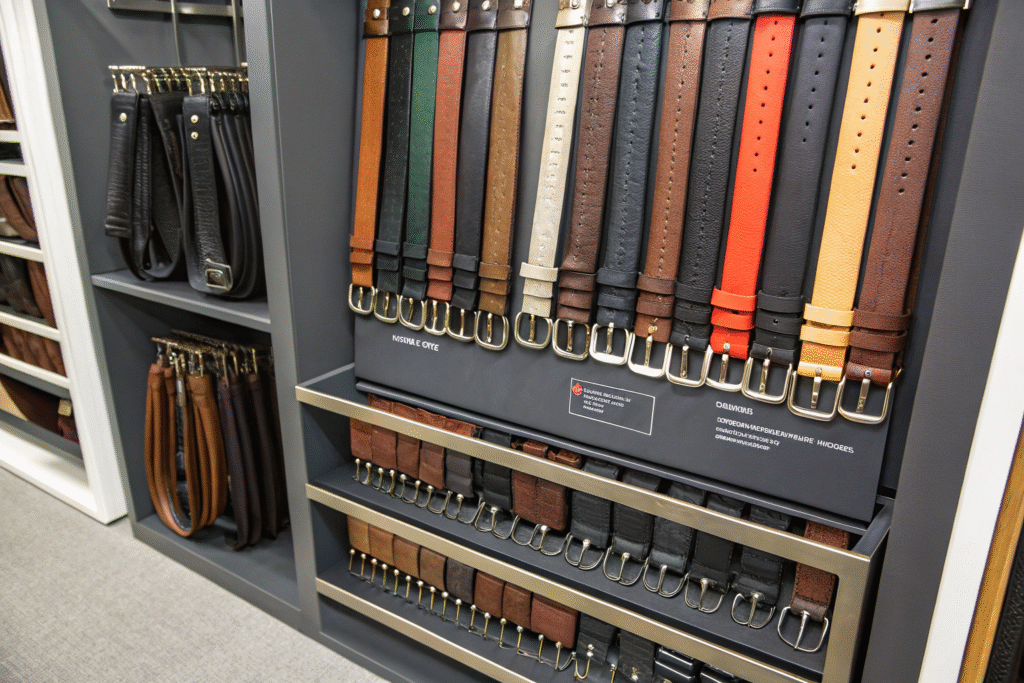
The optimal product mix for belt inventory turns follows the 80/20 principle, focusing inventory investment on high-velocity core styles while limiting variety in slow-moving categories.
How does ABC analysis improve assortment planning?
ABC analysis categorizes products based on sales contribution, enabling smarter inventory allocation. Typically, A-items representing 20% of SKUs generate 80% of revenue and deserve priority in inventory planning. B-items maintain steady sales with occasional promotions, while C-items should be considered for discontinuation.
What’s the ideal balance between core and seasonal items?
Maintaining a foundation of perennial core styles supplemented by limited seasonal collections creates stability while capturing trend opportunities. We recommend a 70/30 split where 70% of inventory investment goes to year-round bestsellers and 30% to trend-driven pieces.
How Can Supplier Collaboration Improve Turnover Rates?
Traditional adversarial supplier relationships create inefficiencies that hurt inventory performance. The most successful importers treat manufacturers as strategic partners.
Supplier collaboration improves turnover rates through shared forecasting, flexible production arrangements, and transparent communication that enables quicker response to demand changes.

What supplier capabilities support faster turnover?
Key supplier capabilities include flexible production capacity, quick response manufacturing, and willingness to share inventory responsibility. Manufacturers with agile capabilities can produce smaller batches more frequently, reducing the need for large inventory buffers.
How does lead time reduction impact inventory levels?
Shorter lead times directly reduce the inventory required to maintain service levels. Each week reduction in supply chain lead time can decrease safety stock requirements by 5-10%. This acceleration allows clients to order closer to the selling season with greater confidence.
Conclusion
Improving leather belt inventory turnover requires a systematic approach that integrates forecasting, assortment planning, sales execution, and supplier collaboration. By implementing these strategies, businesses can transform their inventory from a cost burden into a strategic asset that drives profitability and growth.
If you’re ready to transform your leather belt inventory performance, AceAccessory has the manufacturing expertise and supply chain capabilities to support your goals. For a personalized consultation, please contact our Business Director Elaine at elaine@fumaoclothing.com.