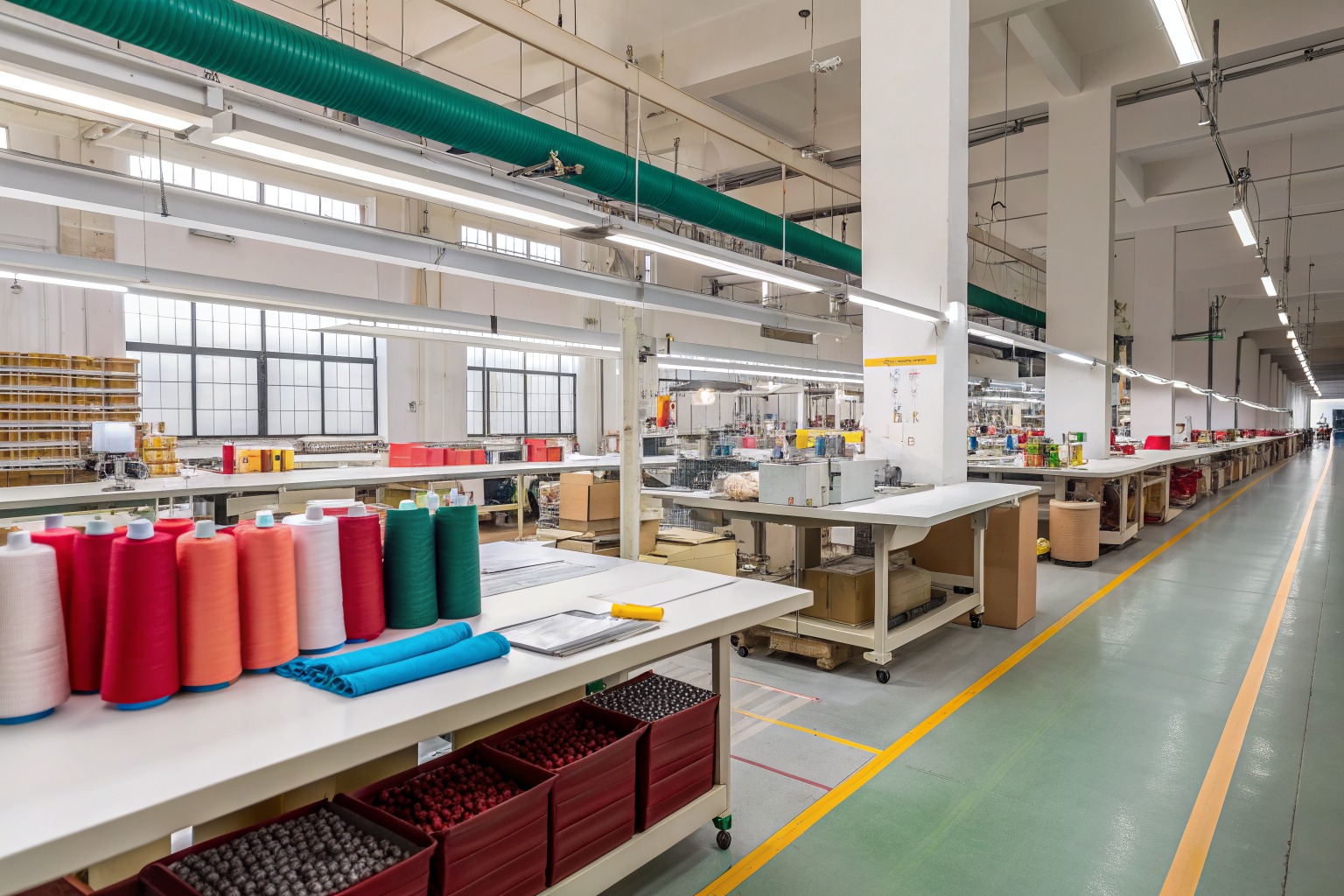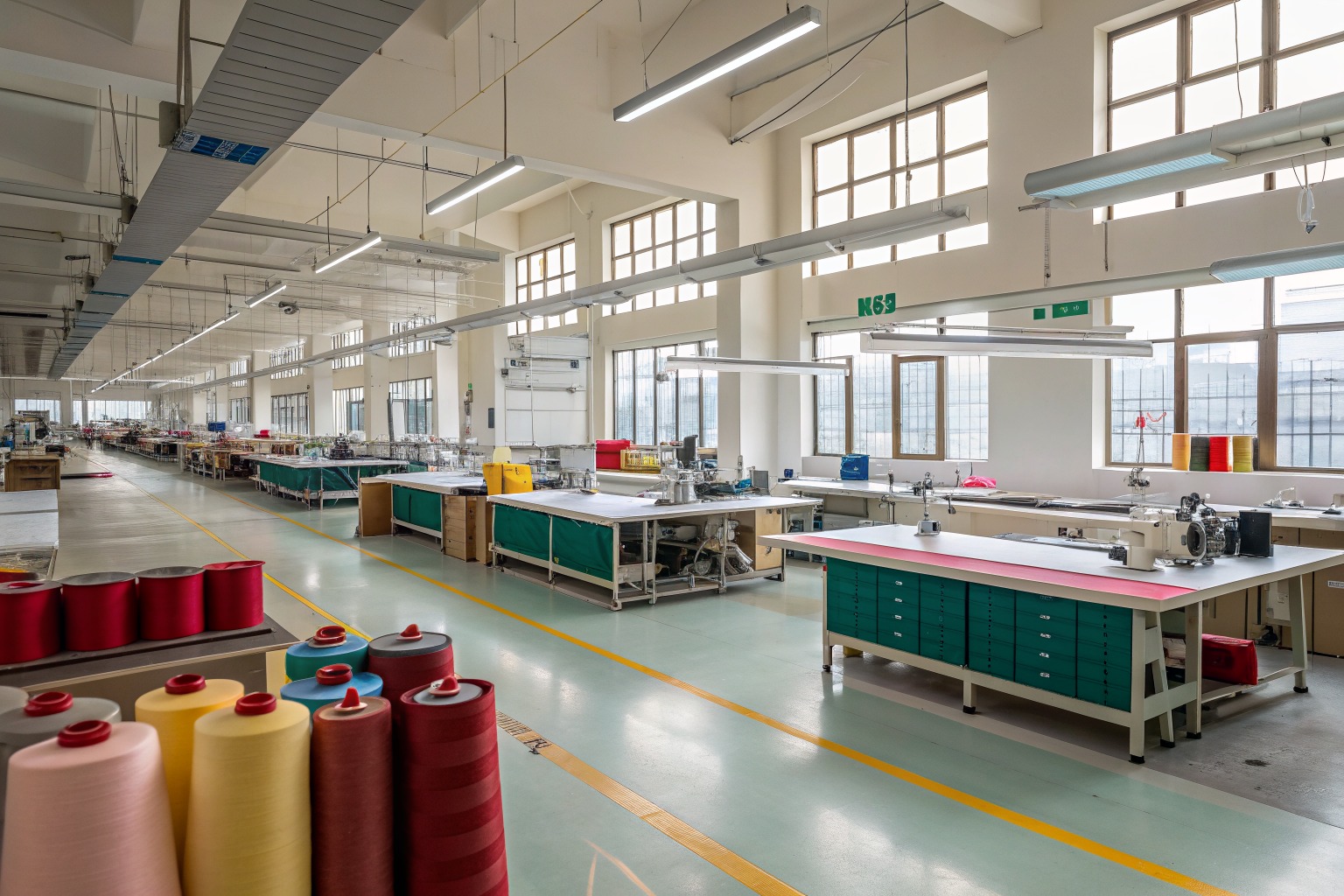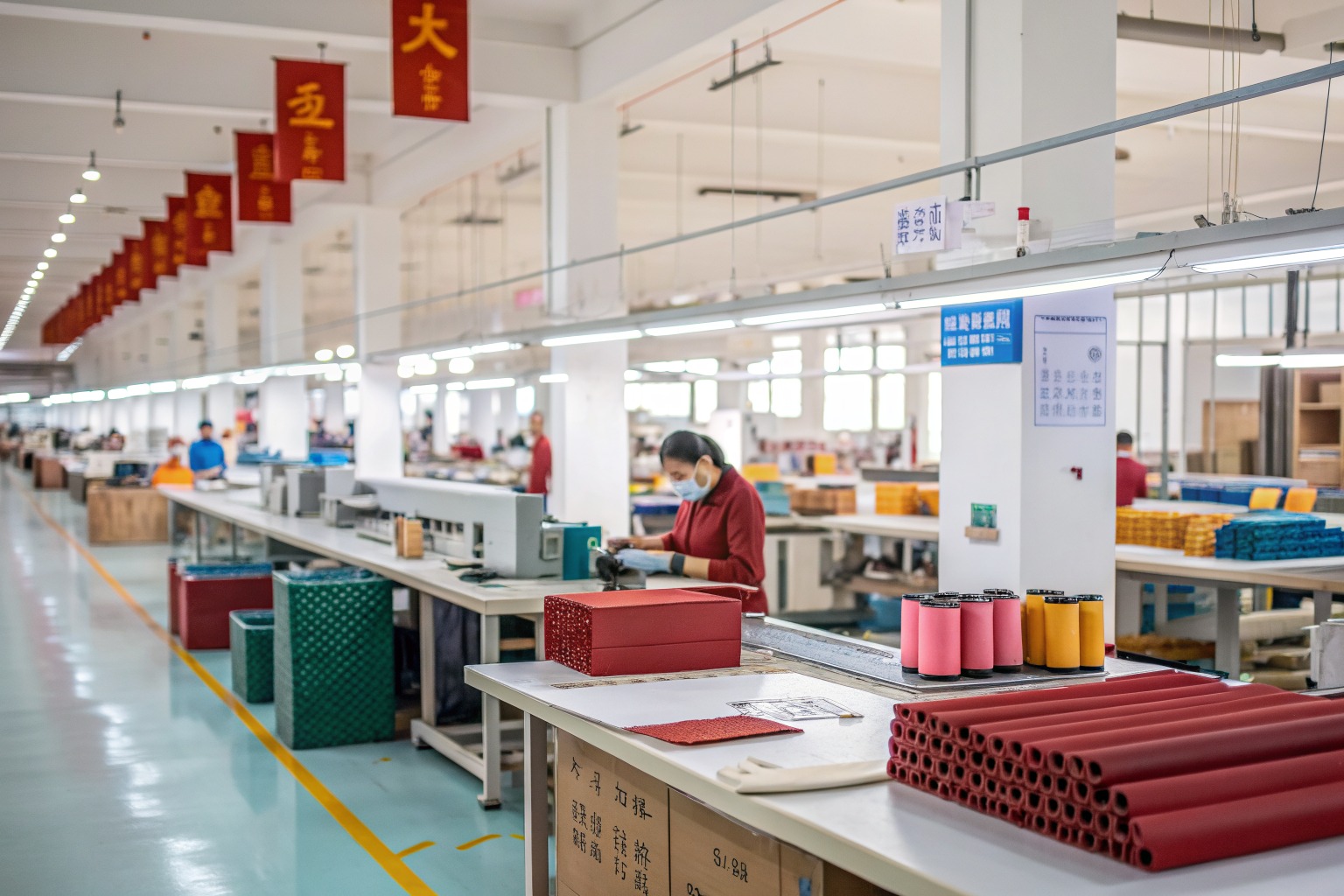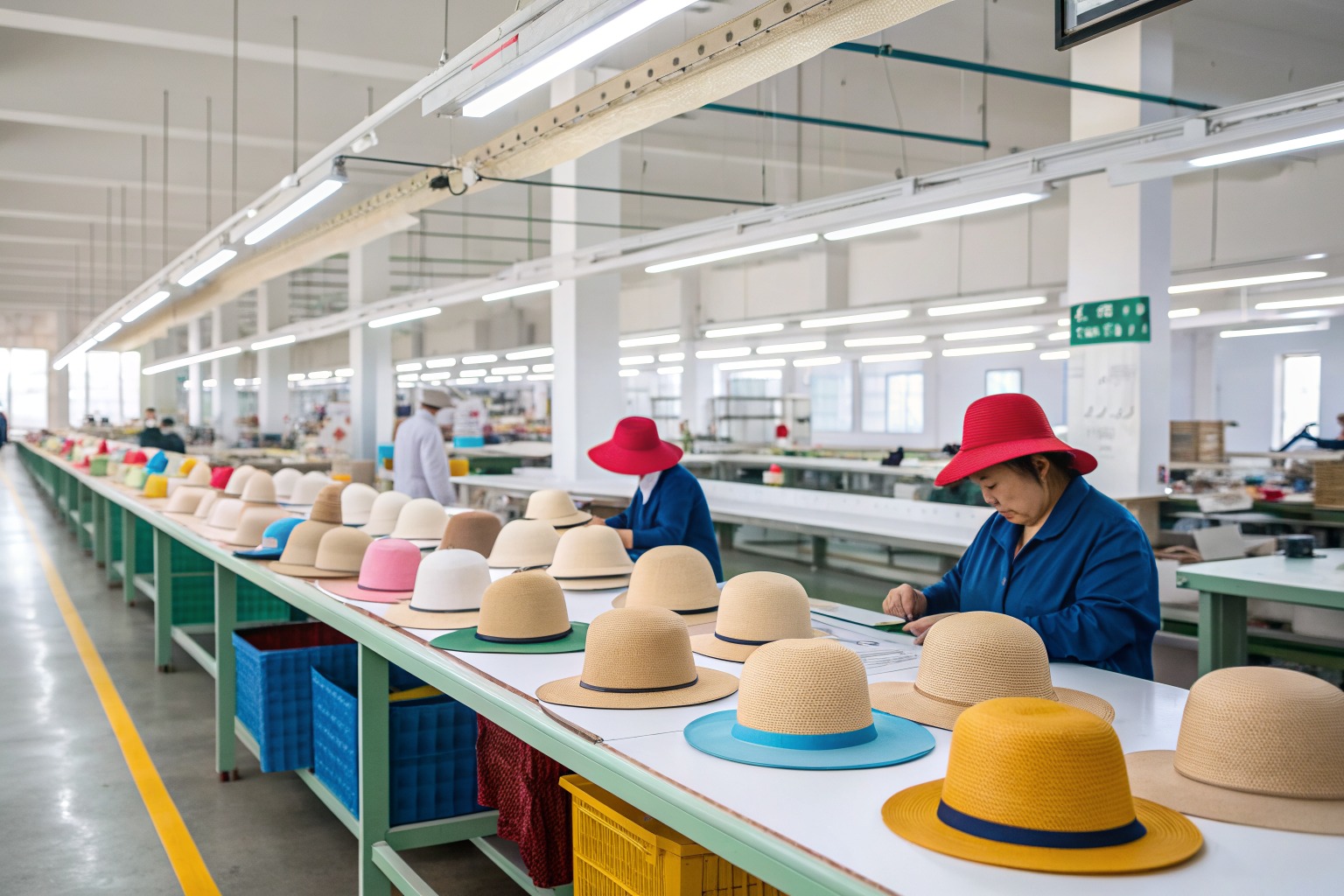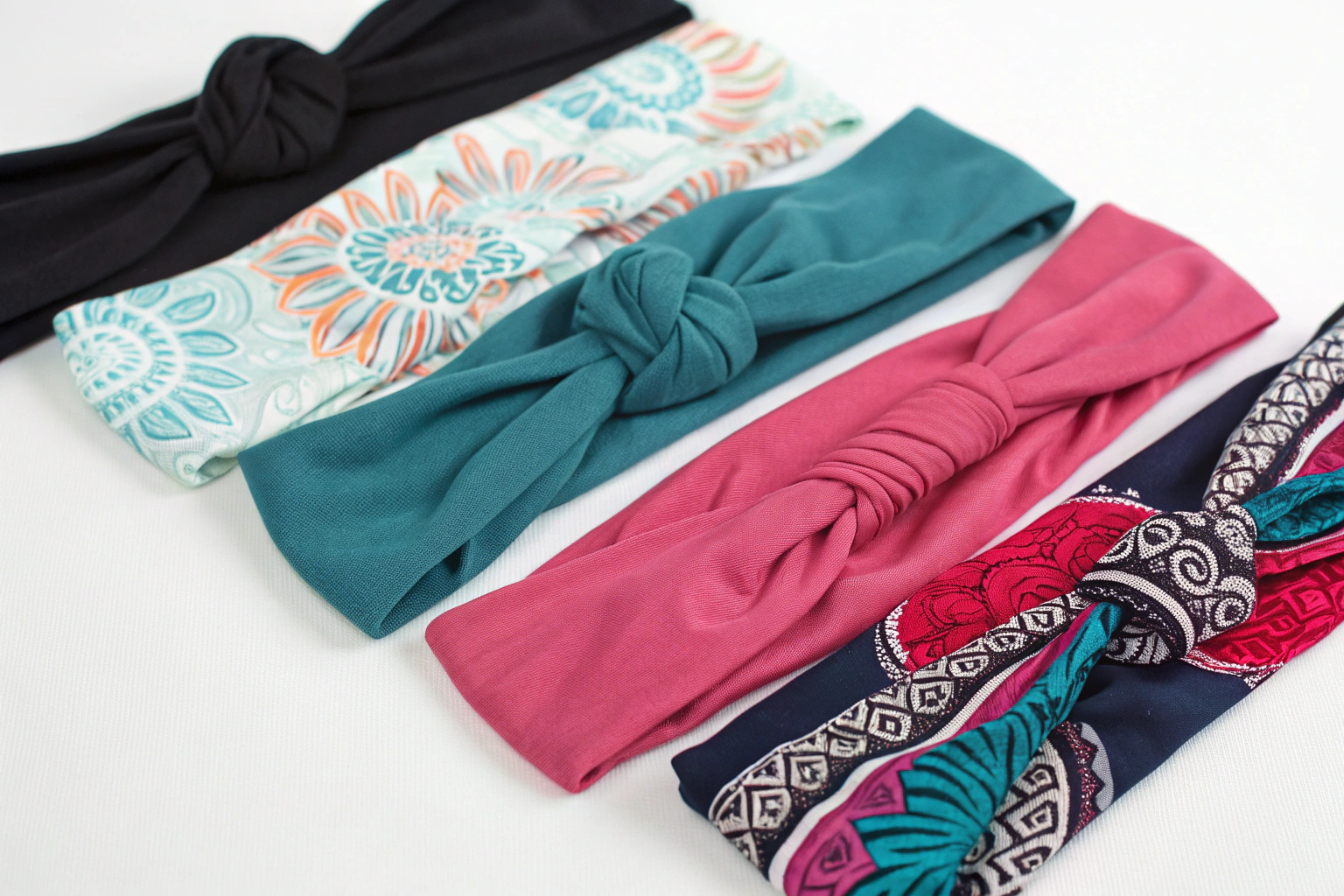
The elastic fabric headband market has exploded in recent years, driven by fashion trends, fitness awareness, and functional hair management needs. However, manufacturing these seemingly simple accessories presents unique challenges that traditional production methods struggle to address efficiently. Through implementing specialized production systems in our headband manufacturing division, we’ve documented significant advantages that transform both operational efficiency and product quality.
Production systems for elastic fabric headbands deliver substantial benefits including consistent quality control, increased production efficiency, reduced material waste, enhanced worker safety, and improved scalability to meet fluctuating market demands.These integrated systems transform what appears to be simple accessory manufacturing into a precision operation that maximizes both quality and profitability.
The systematic approach to headband manufacturing represents a fundamental shift from artisanal production to engineered manufacturing. Let’s examine the specific benefits that make production systems invaluable for elastic fabric headband operations.
How do production systems ensure consistent quality?
Elastic fabric headbands face rigorous use conditions—constant stretching, moisture exposure, and friction—that reveal even minor quality variations. Traditional manufacturing often produces inconsistent results that lead to customer dissatisfaction and returns.
Integrated production systems establish and maintain quality standards through standardized processes, continuous monitoring, and systematic quality verification at multiple production stages.
What in-process quality controls prevent defects?
Traditional quality inspection typically occurs at the end of production, allowing defects to propagate through multiple stages before detection. Our production systems implement multiple quality gates throughout the manufacturing process. At material preparation, vision systems verify fabric integrity and elasticity consistency. During cutting, automated inspection ensures pattern alignment and detects fabric flaws. Sewing stations include real-time stitch monitoring that identifies tension issues or skipped stitches immediately. This distributed quality approach has reduced our defect rate by 75% compared to traditional end-line inspection methods. The system automatically documents each quality check, creating complete quality histories for every production batch that enable traceability and continuous improvement.
How does standardized equipment setting maintain consistency?
Manual equipment adjustments introduce variations that affect headband quality and performance. Our production systems utilize digital equipment profiling that stores optimal settings for each headband style and material type. Operators simply select the appropriate program, and the system automatically configures sewing parameters, cutting pressures, and tension settings. For critical operations like elastic insertion or seam finishing, the systems include auto-calibration features that maintain precise settings throughout production runs. This equipment consistency ensures that every headband, regardless of when it was produced or which operator assembled it, meets identical quality standards for stretch recovery, seam strength, and dimensional accuracy.
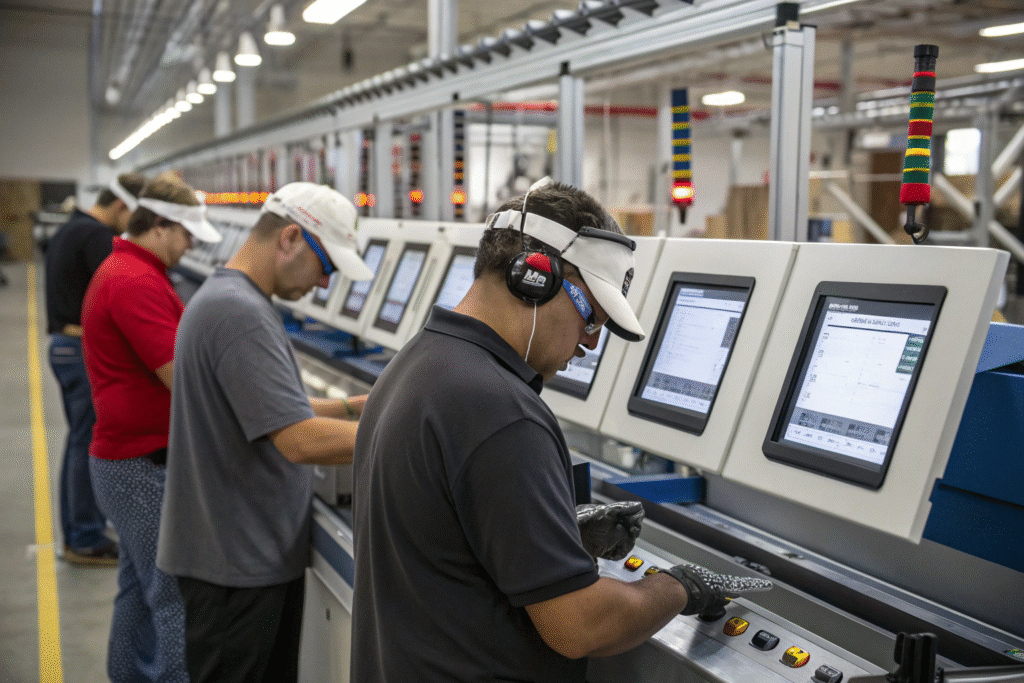
How do production systems increase manufacturing efficiency?
Traditional headband manufacturing often involves significant non-value-added time through material handling, equipment setup, and process transitions. Disconnected process steps create bottlenecks that limit overall throughput and increase labor costs.
Integrated production systems optimize workflow, reduce handling time, and maintain optimal production pace through systematic process design and automation.
What workflow optimization reduces production time?
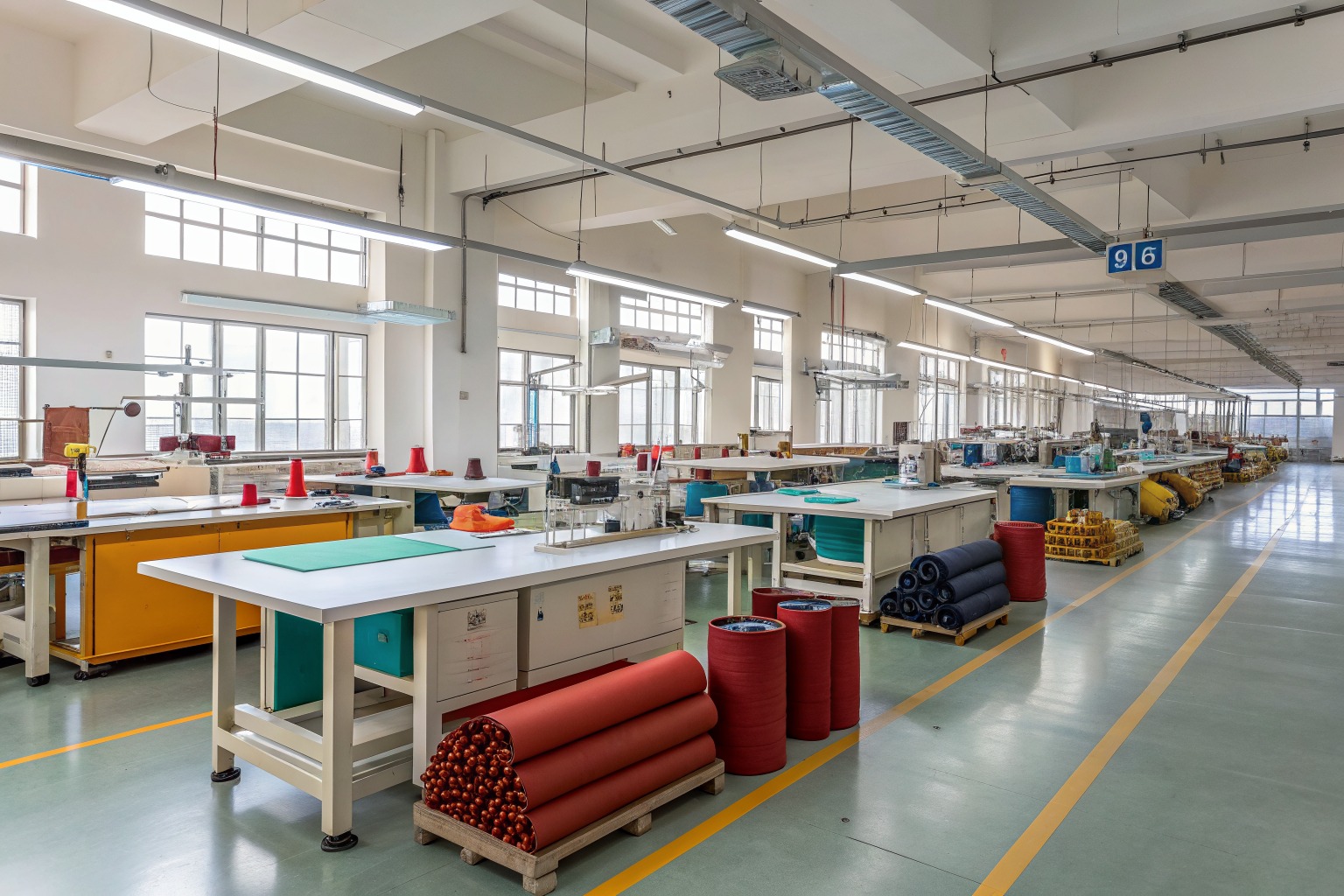
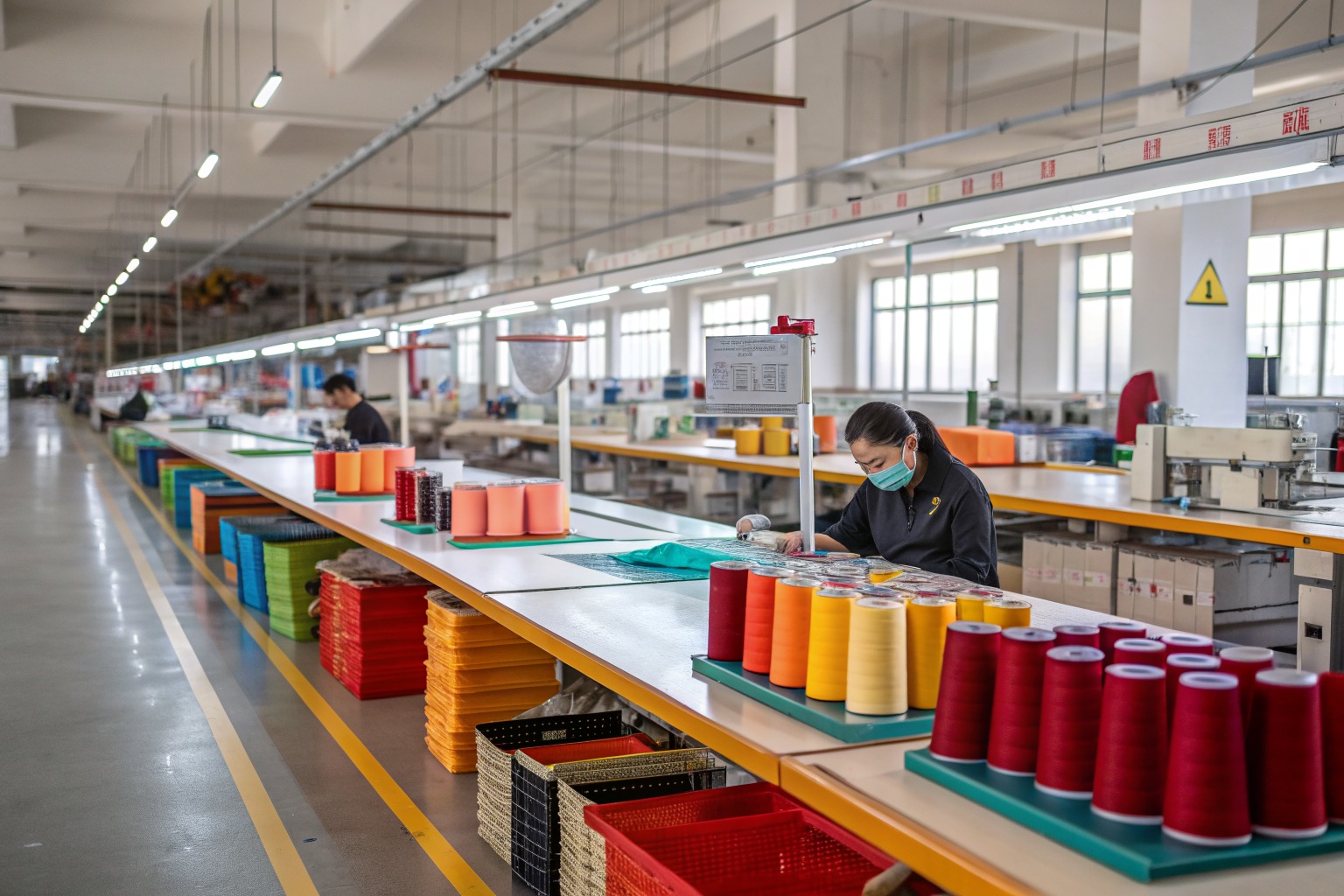
Traditional headband manufacturing typically arranges equipment by function rather than product flow. We’ve implemented cellular manufacturing layouts that organize all required operations into compact work cells dedicated to specific headband styles. This approach eliminates the material movement and waiting time between departments that traditionally consumed 20-30% of total production time. Within each cell, we’ve established balanced workstations that ensure similar time requirements at each process step, preventing bottlenecks and maintaining smooth workflow. For high-volume styles, we’ve created U-shaped production lines that allow minimal operator movement between operations. These layout optimizations have increased our production output by 45% without additional equipment or labor.
How does automated material handling accelerate production?
Material handling represents a significant time component in traditional headband manufacturing. Our production systems incorporate automated material transport that moves cut components to sewing stations and finished headbands to packaging areas without manual intervention. We’ve implemented kanban replenishment systems that ensure materials arrive at each workstation precisely when needed, eliminating searching or waiting time. For fabric cutting, automated systems stack and organize cut pieces in production sequence, ready for immediate processing. This reduced handling has decreased our total labor requirements by 30% while simultaneously increasing output through eliminated delays and more consistent work pace.
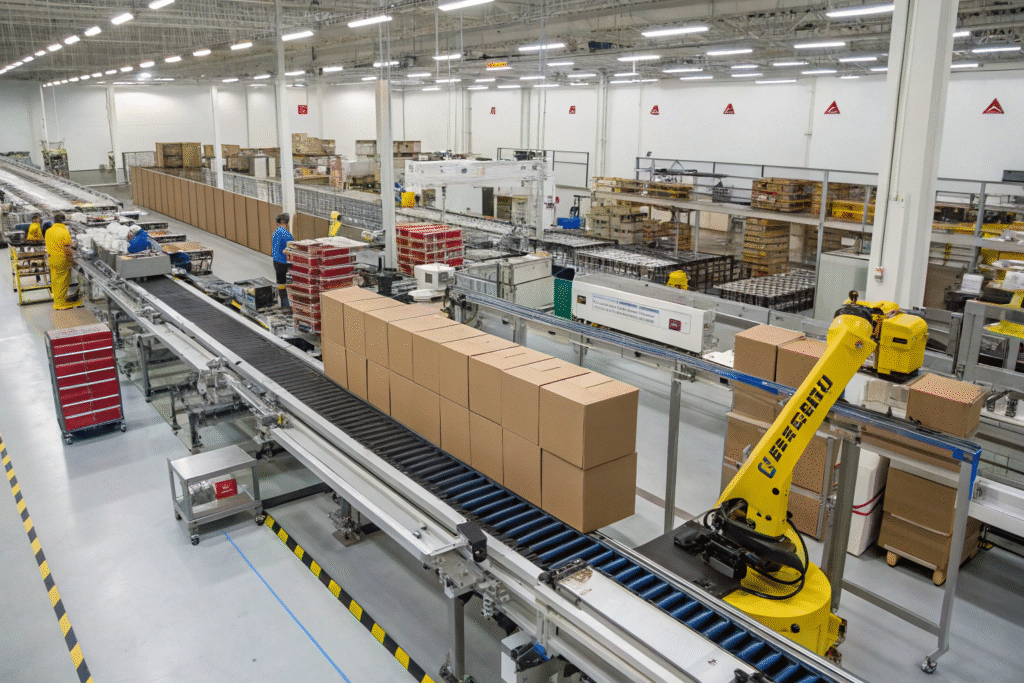
How do production systems reduce material waste?
Elastic fabric headbands generate significant material waste through cutting processes, particularly when using traditional manual layout methods. This waste represents both environmental concerns and substantial cost inefficiencies that impact product pricing and sustainability credentials.
Systematic production approaches optimize material usage through computational layout planning, precision cutting, and waste reduction initiatives that maximize utilization rates.
What nesting software maximizes fabric utilization?
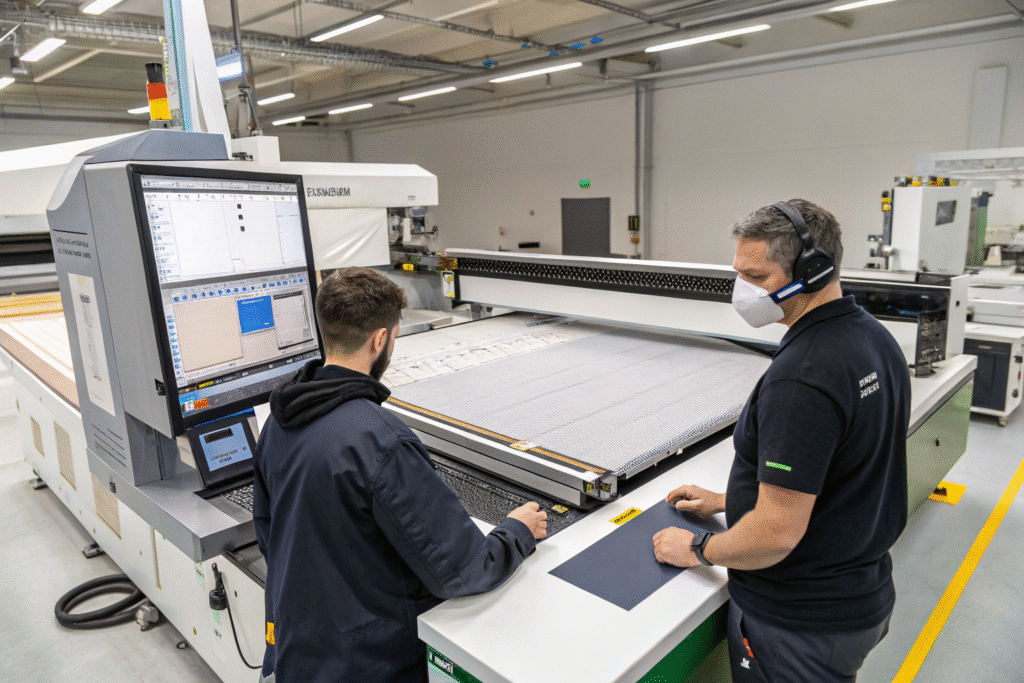
Manual fabric layout typically achieves 65-75% material utilization for headband production. Our production systems employ AI-powered nesting software that calculates optimal cutting patterns to maximize usage from each fabric roll. The system considers multiple factors including fabric stretch direction, pattern alignment requirements, and any fabric imperfections that need avoidance. For printed fabrics, the software ensures pattern matching across headbands while still maximizing yield. This automated approach has increased our material utilization to 88-92%, significantly reducing both material costs and waste disposal expenses. The system automatically generates cutting instructions that guide operators through the most efficient cutting sequence, further reducing processing time.
How does precision cutting minimize errors?
Manual cutting inevitably introduces variations that either create unusable components or require rework. Our production systems utilize computer-controlled cutting equipment that reproduces perfect patterns every time with accuracy within 0.5mm. The systems include vision alignment that ensures pattern placement precision, particularly important for printed or directional fabrics. For elastic materials, the cutting systems maintain consistent tension during cutting to prevent distortion that would affect final headband dimensions. This precision has virtually eliminated cutting-related quality issues and the associated material waste from remaking defective components. The reduction in errors has particularly significant impact when working with premium materials where waste costs are substantial.
How do production systems enhance workplace safety?
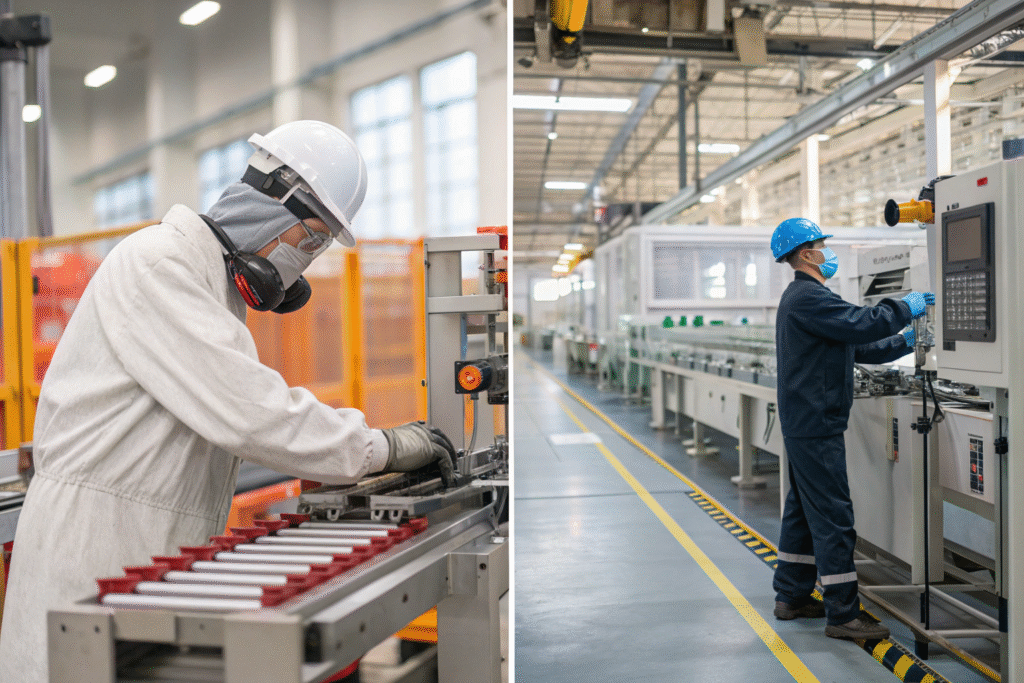
Headband manufacturing involves various potential safety hazards including repetitive motion injuries, cutting accidents, and ergonomic stresses. Traditional manufacturing often addresses these concerns reactively rather than systematically designing safety into production processes.
Integrated production systems prioritize worker safety through ergonomic design, engineered safeguards, and systematic risk reduction that protect employees while maintaining productivity.
What ergonomic improvements reduce worker fatigue?
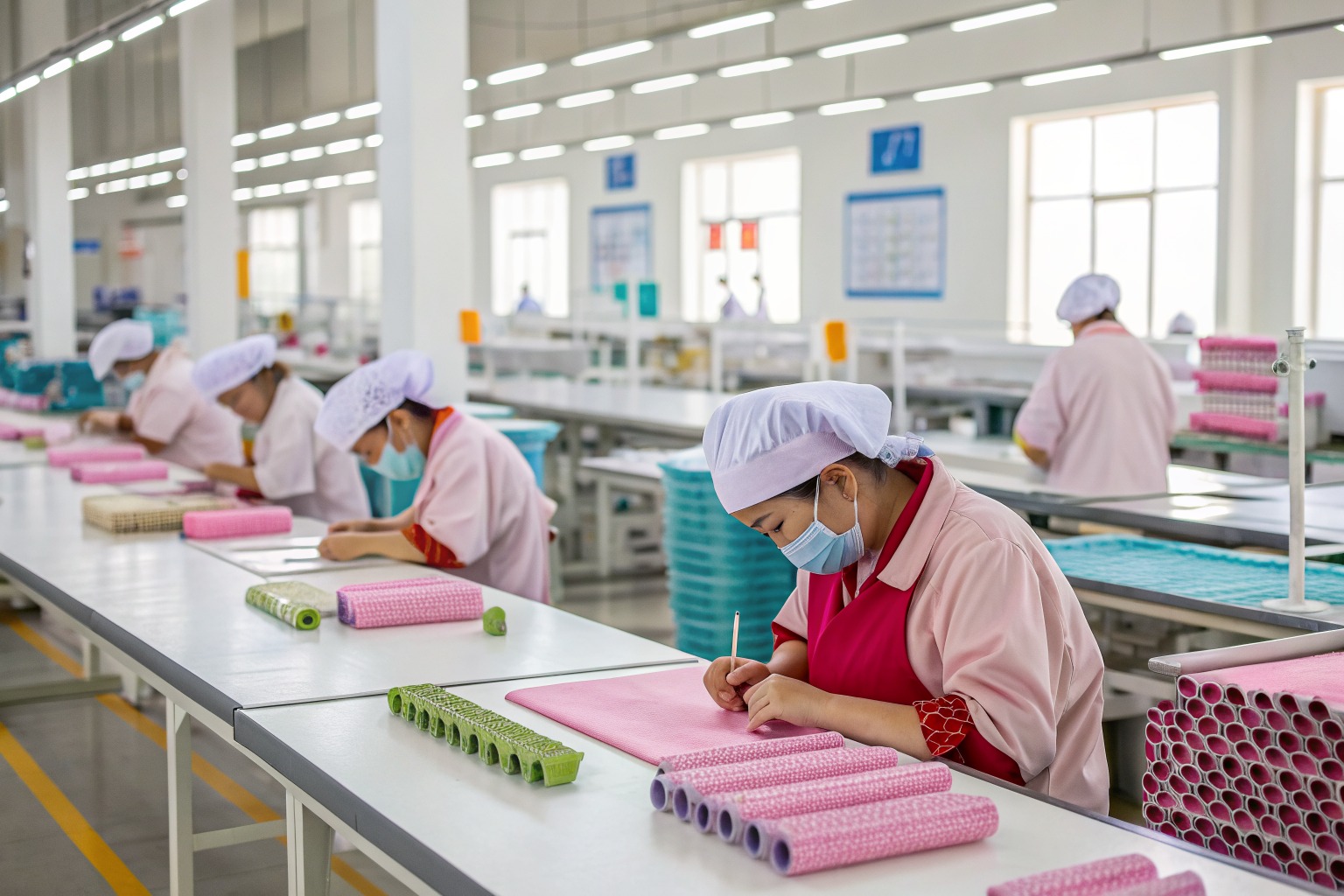
Traditional sewing stations often create posture problems and repetitive stress injuries over time. Our production systems feature ergonomically optimized workstations with adjustable heights, proper lighting, and supportive seating that reduce physical strain. We’ve implemented material positioning aids that present components at optimal angles and heights to minimize reaching and twisting motions. For repetitive tasks like turning headbands right-side-out or attaching closures, we’ve introduced assistive devices that reduce force requirements and motion repetition. These ergonomic improvements have reduced work-related discomfort reports by 60% while simultaneously improving productivity through reduced fatigue and more sustainable work pace.
How do engineered safeguards prevent accidents?
Traditional manufacturing often relies on worker caution for safety, but production systems build protection directly into equipment and processes. Our systems include light curtain safety systems on cutting equipment that immediately stop operation when hands approach danger zones. Sewing machines feature needle guard systems that prevent finger injuries during operation. Throughout the production area, we’ve established clear safety zones and implemented automated material handling that reduces manual contact with moving equipment. These engineered safeguards have virtually eliminated serious injuries in our headband production while creating a work environment where employees feel secure and can focus on quality rather than potential hazards.
Conclusion
Production systems for elastic fabric headbands deliver comprehensive benefits that address quality consistency, manufacturing efficiency, material optimization, and workplace safety simultaneously. The systematic approach transforms headband manufacturing from a simple assembly process to an engineered operation that maximizes value at every production stage. Companies that implement these integrated systems position themselves for sustainable growth through superior product quality, competitive cost structure, and responsible manufacturing practices that appeal to modern consumers.
If you’re considering implementing production systems for your elastic fabric headband manufacturing, we invite you to contact our Business Director, Elaine. Our experience in optimizing headband production through systematic approaches can help you achieve similar benefits in quality, efficiency, and profitability. Reach her at: elaine@fumaoclothing.com.