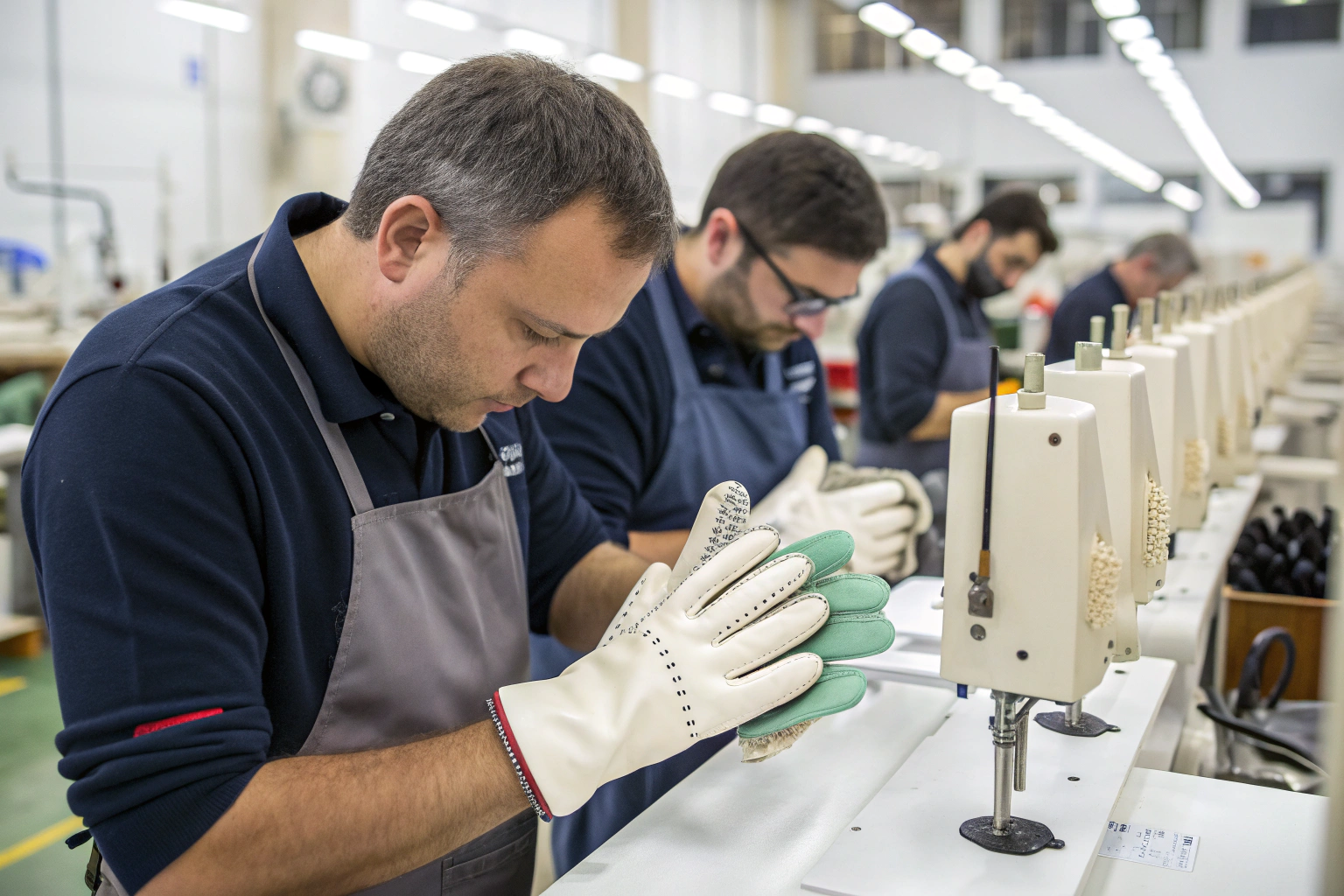
Achieving exceptional craftsmanship and consistent quality in glove manufacturing represents one of the most significant challenges in accessory production. From uneven stitching to poor fit and material failures, quality issues can undermine even the most beautiful designs. Through our extensive experience manufacturing gloves for demanding international markets, we’ve developed a comprehensive approach that ensures both artistic craftsmanship and reliable quality in every pair.
Ensuring glove craftsmanship and quality requires a holistic system that integrates skilled artisan techniques with modern quality control, combining traditional manufacturing wisdom with contemporary technology to deliver products that excel in both aesthetic appeal and functional performance.
True excellence in glove manufacturing comes from respecting traditional craftsmanship while implementing rigorous quality systems. Let’s explore the specific methods that guarantee both artistic integrity and consistent quality in glove production.
How does artisan training preserve craftsmanship excellence?
The human element remains irreplaceable in glove manufacturing, particularly for operations requiring judgment, dexterity, and attention to detail that machines cannot replicate. Investing in comprehensive artisan training ensures that traditional skills are preserved while adapting to modern production requirements.
Systematic skill development, knowledge transfer, and continuous improvement programs create a workforce capable of executing complex craftsmanship while maintaining quality standards.
What makes apprenticeship programs effective?
Traditional apprenticeship systems have evolved into structured training programs that efficiently transfer complex skills. We’ve developed a comprehensive apprenticeship program where experienced master craftspeople mentor new artisans through progressively challenging tasks. Trainees begin with basic operations like material handling and simple stitching before advancing to complex techniques like three-dimensional finger construction, gusset installation, and specialized finishing. This gradual skill development ensures fundamental craftsmanship principles are thoroughly understood before artisans tackle sophisticated operations. Our program typically spans six months, with competency verification at each stage before advancement.
How does continuous skill enhancement maintain standards?
Even experienced artisans require ongoing development to maintain and enhance their craftsmanship. We conduct regular skill refinement sessions where artisans practice challenging techniques, learn new methods, and address common quality issues. These sessions include analysis of returned products and customer feedback, helping artisans understand the real-world consequences of craftsmanship variations. We also facilitate cross-training across different glove types—from fashion gloves to technical performance models—broadening artisan capabilities and fostering innovative problem-solving approaches. This continuous learning culture ensures our craftsmanship evolves with market demands while maintaining traditional quality standards.
What technical processes ensure construction quality?
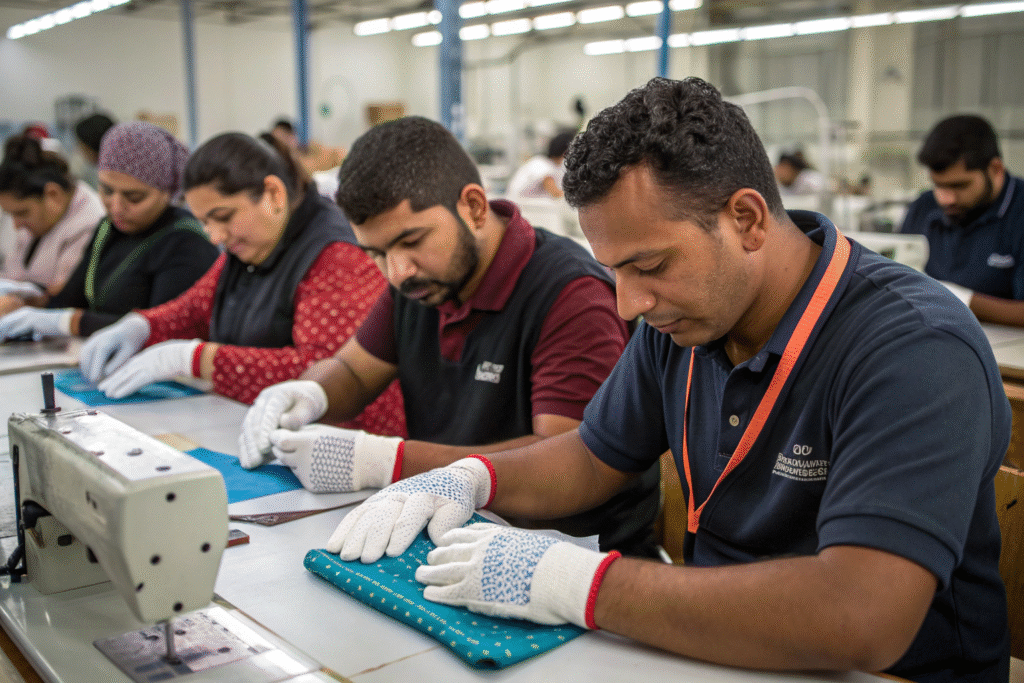
While artisan skill provides the foundation, consistent quality requires standardized technical processes that guide manufacturing operations. These processes ensure that every glove, regardless of who makes it, meets the same high standards of construction and performance.
Technical specifications, standardized workflows, and precise equipment settings create the framework within which craftsmanship flourishes while maintaining quality consistency.
How do digital patterns ensure precise construction?
Traditional paper patterns introduce variations that compromise fit and appearance. We’ve transitioned to fully digital pattern systems that ensure exact replication across production runs. Our technical team creates precise digital patterns using advanced CAD software, accounting for material stretch characteristics, seam allowances, and ergonomic considerations. These digital patterns drive automated cutting machines that reproduce components with millimeter precision. For complex glove designs with multiple panels and gussets, this digital approach ensures perfect component matching during assembly. The result is consistent fit and appearance that mass production methods cannot achieve with manual patterning.
Why are specialized sewing techniques critical?
Different glove types and materials require specific sewing techniques to ensure both aesthetic quality and functional durability. We’ve documented specialized stitching protocols for various applications: reinforced lockstitch for high-stress areas, stretch stitches for elasticized sections, and decorative techniques for fashion elements. Our production team uses engineered thread types matched to specific materials—strong synthetic threads for technical gloves, fine cotton threads for fashion leather, and elastic threads for stretch panels. This technical approach to sewing ensures seams are not just visually consistent but also functionally appropriate for each glove’s intended use, significantly enhancing durability and user satisfaction.

How does material selection impact craftsmanship?
The quality of craftsmanship can only be as good as the materials being worked with. Superior materials not only enhance the final product but also make the crafting process more precise and predictable, directly influencing both aesthetic and functional outcomes.
Strategic material selection, proper handling, and meticulous preparation create the ideal foundation for exceptional craftsmanship and lasting quality.
What makes leather quality assessment crucial?
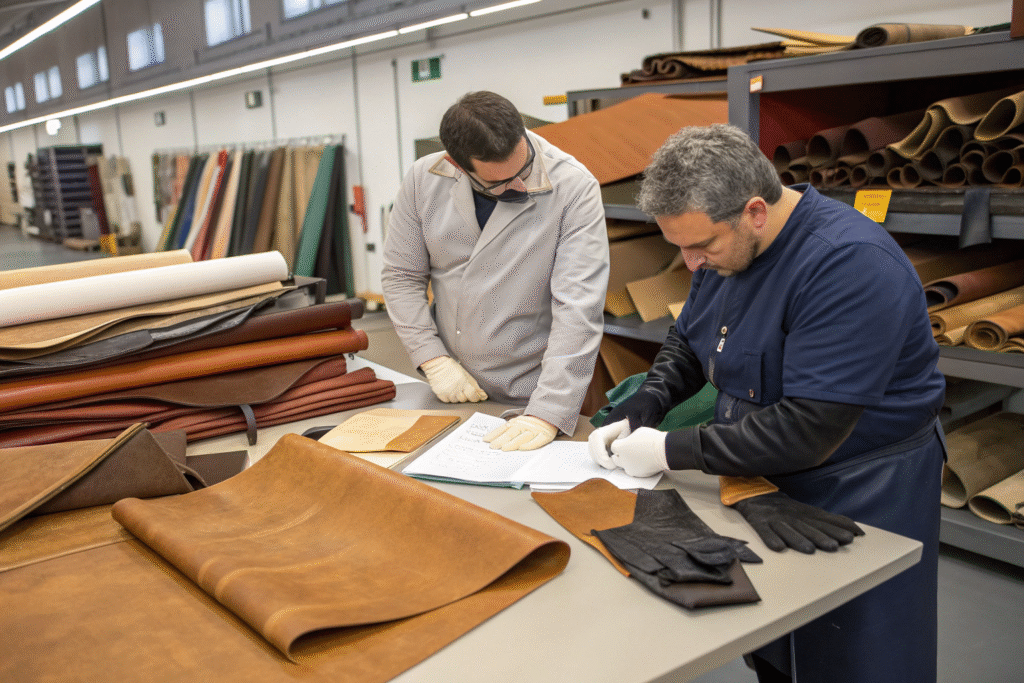
Leather represents one of the most challenging materials for glove manufacturing due to its natural variations. We implement comprehensive leather grading systems that evaluate hide quality, thickness consistency, stretch characteristics, and surface perfection. Our experienced material specialists inspect every hide, marking areas suitable for different glove components—palm sections requiring durability receive the strongest leather, while backhand areas needing flexibility receive more supple selections. This careful matching of material characteristics to component requirements ensures optimal performance while allowing artisans to work with consistent materials that respond predictably to crafting techniques.
How do technical fabrics enhance modern gloves?
Contemporary glove manufacturing increasingly incorporates technical fabrics that offer specific performance properties. We’ve developed material certification processes for technical fabrics like Gore-Tex for waterproofing, Thinsulate for insulation, and Kevlar for cut resistance. These materials require specialized handling techniques that our artisans have mastered through targeted training. For example, waterproof membranes demand specific seam sealing methods, while insulation layers require special quilting techniques to maintain loft. Understanding these material-specific requirements allows our craftspeople to optimize their techniques for each material combination, ensuring the finished gloves deliver both craftsmanship excellence and technical performance.
What quality verification methods protect craftsmanship?
Even with skilled artisans and perfect materials, consistent quality requires systematic verification at multiple production stages. These verification processes ensure that craftsmanship standards are maintained throughout manufacturing and that any deviations are detected and corrected immediately.
Multi-stage inspection, functional testing, and craftsmanship assessment work together to guarantee that every pair meets established quality benchmarks.
How does in-process inspection prevent defects?
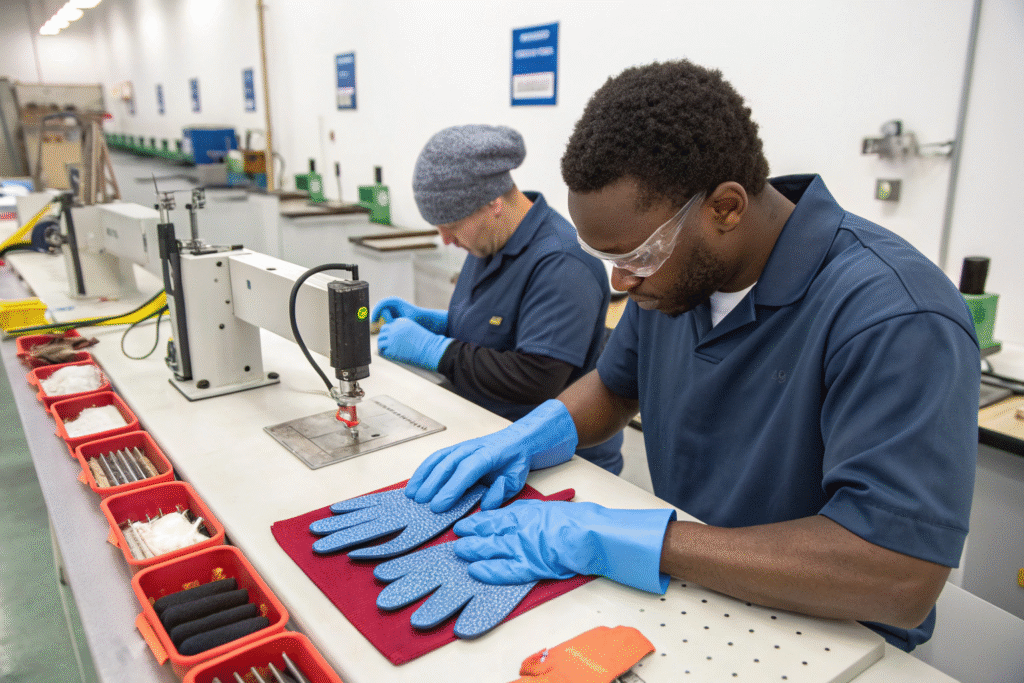
Waiting until final inspection to assess quality means discovering problems after significant value has been added. We’ve implemented multiple in-process inspection points where trained quality staff verify critical craftsmanship elements at each production stage. These checks include panel cutting accuracy, seam quality assessment after sewing, symmetry verification during assembly, and function testing after completion. This layered approach catches craftsmanship issues early, when corrections are simplest and least costly. For custom or luxury gloves, we implement even more frequent verification, sometimes checking each major operation before proceeding to the next.
What specialized tests verify craftsmanship durability?
Beautiful craftsmanship must endure real-world use. We conduct accelerated wear testing that simulates months of use within days, specifically evaluating how craftsmanship elements hold up over time. These tests examine seam strength under repeated stress, material wear at high-friction points, and colorfastness of decorative elements. For technical gloves, we perform functionality tests that verify craftsmanship doesn’t compromise performance—ensuring waterproof seams remain sealed, insulated areas maintain warmth, and protective elements stay securely positioned. This combination of aesthetic assessment and performance verification ensures our craftsmanship delivers both immediate beauty and long-term satisfaction.
Conclusion
Ensuring glove craftsmanship and quality requires a balanced approach that honors traditional artisan skills while implementing modern quality systems. The most successful manufacturers create environments where craftsmanship flourishes within frameworks that guarantee consistency and reliability. This integration of art and science results in gloves that delight customers with their aesthetic appeal while earning their trust through dependable performance. Companies that master this balance build reputations for excellence that transcend seasonal trends and price competition.
If you’re seeking a manufacturing partner that truly understands how to ensure both craftsmanship and quality in glove production, we invite you to contact our Business Director, Elaine. Our integrated approach to artisan training, technical process control, and rigorous quality verification has helped numerous brands develop glove collections that stand out in competitive global markets. Reach her at: elaine@fumaoclothing.com.