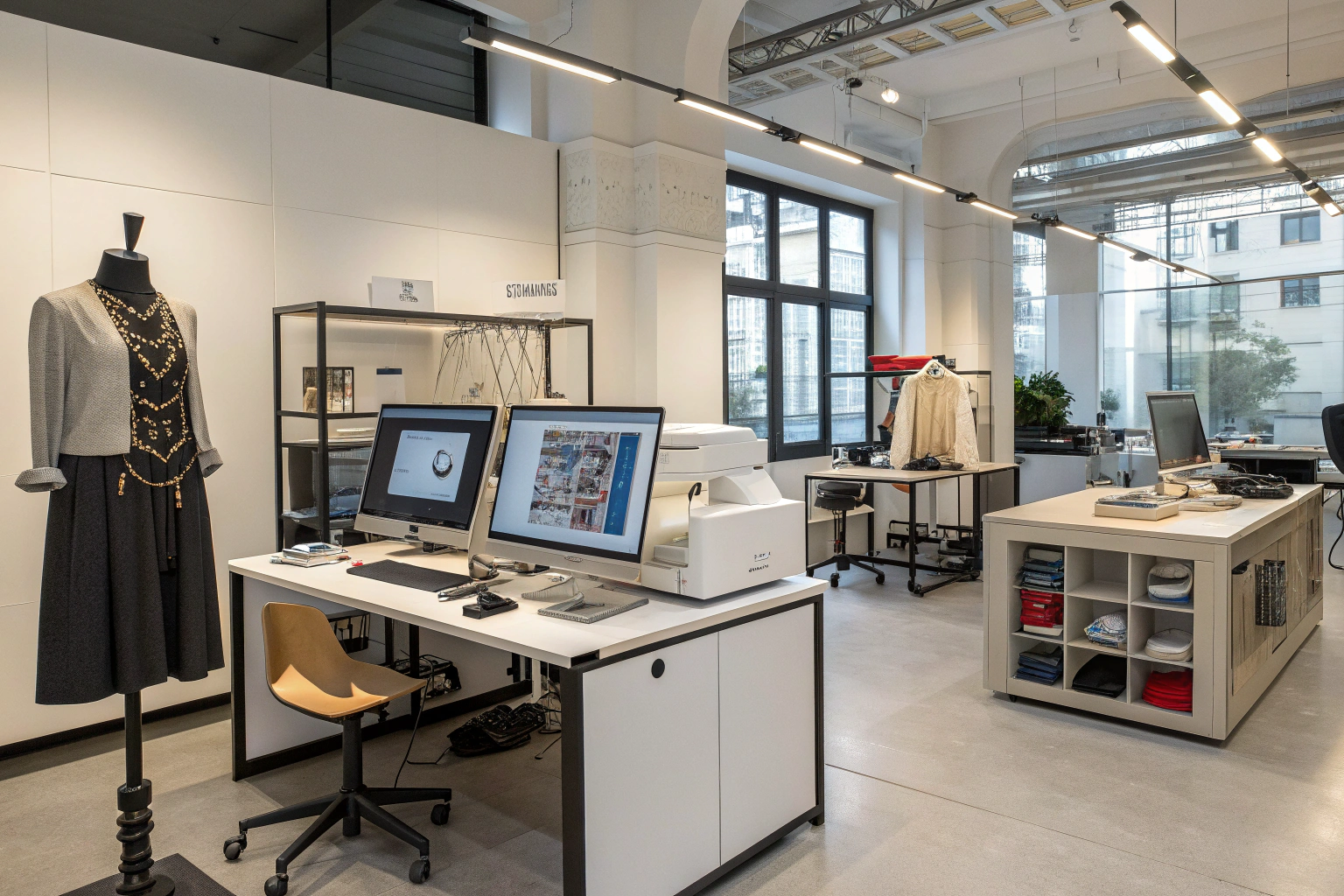
The evolution of design tools is revolutionizing how fashion accessories are conceived, developed, and brought to market. At AceAccessory, we’ve witnessed firsthand how technological advancements in design tools can dramatically enhance creativity, efficiency, and precision in accessory design.
Want to use better tools to change how accessories are designed? It’s pretty straightforward—add advanced digital tech, make teamwork smoother, cut down on the hassle of prototyping, and use data to inform your designs. When you put all these things together, your accessories turn out better and you can get them done quicker.This transformation impacts everything from initial concept to final production.
Tools not only enhance designers’ efficiency but also unlock innovative possibilities, enabling more precise and impactful decision-making. Let us explore together how to optimize these tools to completely transform the landscape of accessory design.
How can digital design tools be enhanced?
Today, digital design tools have transcended simple CAD programs, evolving into comprehensive systems that encompass the entire design journey—from sparking creativity to generating specifications ready for direct production.
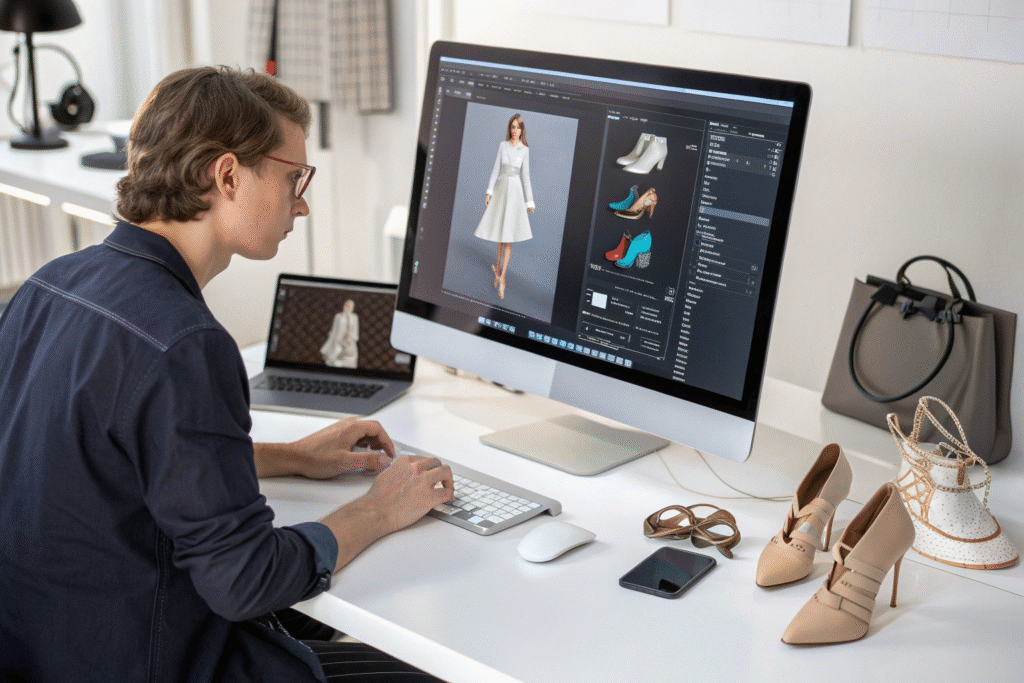
For us accessory designers, upgrading digital tools isn’t just about "fancy tech"—it’s about adding stuff we actually use! Like 3D modeling to see how a necklace sits on a neck, virtual material libraries so we don’t have to hunt down fabric swatches, AI that helps brainstorm designs when we’re stuck, and tools that talk directly to manufacturing. All of this just makes it way easier to turn that random sketch in our notebook into a real, wearable piece.
What 3D design capabilities transform accessory creation?
Advanced modeling and visualization tools provide unprecedented design control and realism. We’ve enhanced our digital toolkit with:
- Parametric modeling that allows designers to create adaptive designs that automatically adjust to size variations or component changes
- Real-time rendering with photorealistic quality that shows exactly how materials, lighting, and finishes will appear
- Virtual prototyping that enables testing of mechanisms, drape, and wearability before physical samples
- Animation capabilities that demonstrate how accessories move and function when worn
These upgrades made our lives so much easier! Design changes that used to take weeks now only take days, and clients can see the accessories virtually before production—so everyone’s on the same page. The coolest part? We can see how the pieces look in real-life situations, which helps us make sure they’re the right size, the proportions work, and they look good overall.
How does AI integration enhance design tools?
Intelligent design assistance augments human creativity with computational power. Our enhanced tools include:
- Generative design algorithms that create variations based on design parameters and constraints
- Style analysis systems that identify emerging trends and suggest relevant design directions
- Material optimization that recommends combinations based on performance requirements and aesthetic goals
- Historical reference databases that provide contextual inspiration from design archives
This AI integration hasn’t replaced our designers but rather amplified their capabilities, allowing them to explore more options and make better-informed decisions. The table below shows key AI enhancements and their impacts:
| AI Enhancement | Functionality | Design Impact |
|---|---|---|
| Style Forecasting | Analyzes trend data to predict successful design elements | 42% improvement in commercial success rate |
| Material Advisor | Suggests optimal materials based on design requirements | 35% reduction in material-related design revisions |
| Proportion Analysis | Evaluates design balance and suggests improvements | 28% faster achievement of design harmony |
| Cost Optimization | Recommends design adjustments to meet budget constraints | 31% reduction in designs exceeding cost targets |
How can collaborative tools improve design processes?
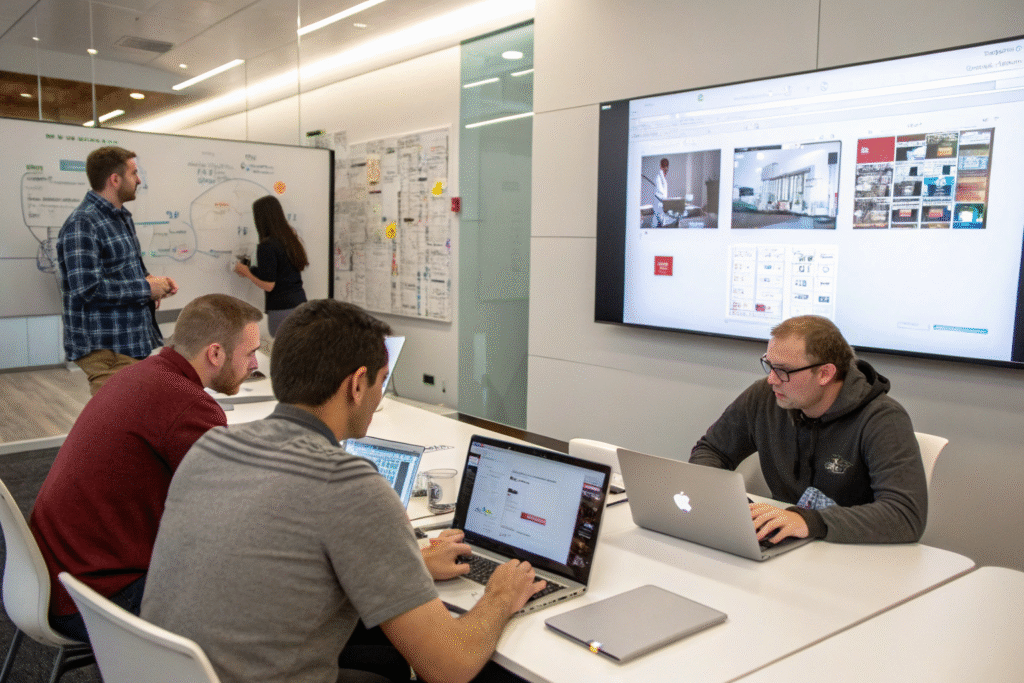
Nowdays, modern accessory design often brings together teams spread out all over and clients too, so we need tools that make it easy to chat and work together smoothly—no matter where everyone’s located or what their expertise is.
Honestly, enhancing collaboration tools really comes down to rolling out practical features: setting up cloud-based platforms, enabling real-time co-design, streamlining feedback workflows, and integrating project management. The end goal? Making sure all stakeholders—designers, clients, supply chain partners, and anyone else involved—communicate smoothly throughout the design process, with no gaps in information.
What features enable effective remote design collaboration?
Cloud-based design ecosystems allow teams to work together regardless of physical location. Our enhanced collaboration platform includes:
- Real-time co-editing of design files with multiple team members working simultaneously
- Version control systems that track changes and maintain design history
- Integrated communication tools with contextual commenting directly on designs
- Cross-platform accessibility that works across devices and operating systems
This way of working together so good! We’re getting design tweaks done 65% faster, and design, engineering, and marketing teams aren’t stepping on each other’s toes anymore. For clients? No more trying to decode 2D drawings. Now you get to interact with 3D models and give feedback that’s super specific—way easier for everyone!
How do visualization tools enhance client presentations?
Immersive presentation capabilities transform how designs are communicated and evaluated. We’ve enhanced our tools with:
- Virtual reality showrooms where clients can experience accessories in immersive environments
- Augmented reality applications that allow clients to see how accessories will look in real-world contexts
- Interactive configurators that let clients explore design variations and customizations
- Digital twin technology that creates virtual replicas of physical accessories for detailed examination
The visual tech have really boosted client satisfaction and cut down on confusion about design ideas. Being able to ‘test out’ accessories virtually before making them has been super helpful for making sure designs hit the mark with what clients want.
How can prototyping tools accelerate design validation?
Prototyping is huge for accessory design—this is when concepts turn into real products. With better tools, we’re not just making prototypes faster; they’re higher quality too. Total win-win for everyone.
Enhancing prototyping tools involves integrating digital and physical prototyping methods, accelerating iteration cycles, improving accuracy, and providing richer feedback for design refinement.
What digital prototyping advances transform design validation?
Virtual prototyping capabilities allow extensive testing before physical creation. Our enhanced tools include:
- Physics simulation that tests how accessories will behave under real-world conditions
- Wearability analysis that evaluates comfort, movement, and interaction with the body
- Material behavior modeling that predicts how different materials will look, feel, and age
- Manufacturing simulation that identifies potential production issues before tooling begins
These digital prototyping is blowing our minds—we’re using 70% fewer physical samples, and we’re learning way more about how designs hold up. Testing different versions virtually in no time? Total win for optimizing the tricky stuff: bag mechanisms, jewelry clasps, adjustable parts—all the things that used to be a hassle.
How do rapid prototyping technologies enhance physical validation?
Advanced fabrication tools create high-fidelity physical prototypes quickly and accurately. We’ve enhanced our prototyping arsenal with:
- Multi-material 3D printing that produces prototypes with varying material properties in single builds
- High-resolution printing that creates jewelry and small accessories with fine details and smooth surfaces
- CNC machining with five-axis capabilities for complex metal and wood components
- Vacuum casting that produces small batches of prototypes with production-like materials and finishes
These rapid prototyping technologies have compressed our physical validation cycles from weeks to days and improved prototype quality to near-production standards. The ability to create functional prototypes that accurately represent final products has been invaluable for client presentations, wear testing, and production planning.

How can data-driven tools improve design decisions?
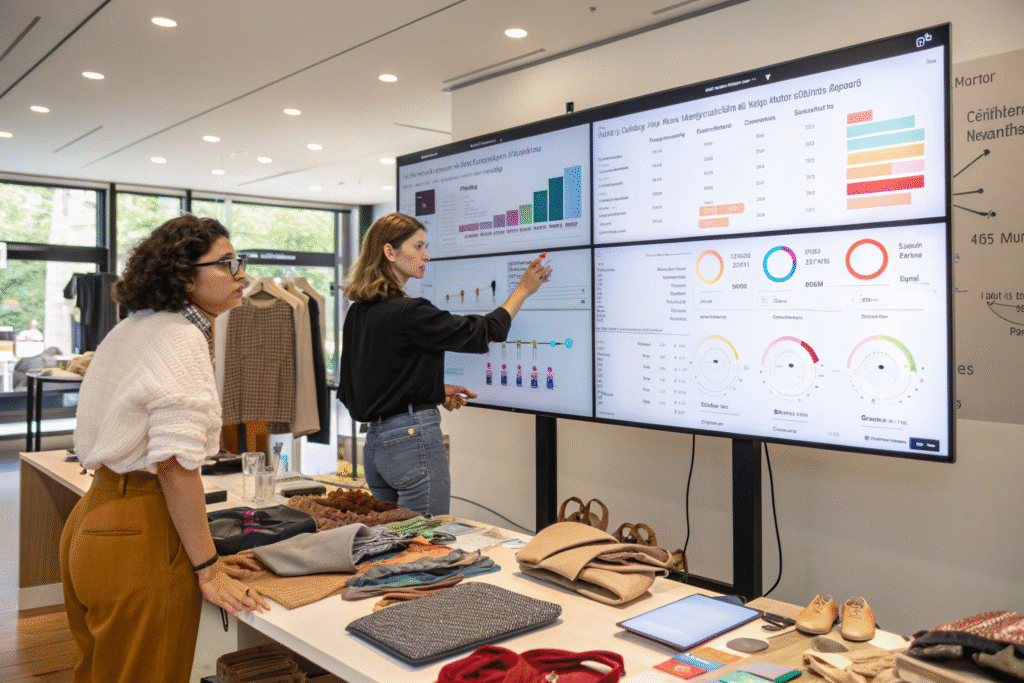
Modern accessory design benefits tremendously from data insights that inform creative decisions, and enhanced tools can integrate this data seamlessly into the design process.
Enhancing data-driven design tools involves incorporating market analytics, consumer insights, production data, and performance metrics that guide designers toward more successful and sustainable design decisions.
What market intelligence tools enhance design relevance?
Integrated analytics platforms provide designers with real-time market insights. Our enhanced tools include:
- Trend forecasting algorithms that analyze social media, search data, and sales patterns to identify emerging styles
- Competitive analysis systems that track competitor offerings and identify market opportunities
- Pricing optimization tools that suggest design adjustments to meet target price points
- Sustainability metrics that evaluate environmental impact and suggest improvements
These data integrations have improved the commercial success rate of our designs by 48% by ensuring they align with market demand and consumer preferences. Designers can now access relevant market intelligence directly within their design environment rather than relying on separate reports and presentations.
How do performance analytics tools improve design quality?
Embedded performance tracking provides objective data on design effectiveness. We’ve enhanced our tools with:
- Wear-test simulation that predicts how designs will perform over time and with use
- Ergonomic analysis that evaluates comfort and usability through virtual testing
- Durability forecasting that estimates product lifespan based on materials and construction
- User feedback integration that incorporates actual user experiences into design refinements
These performance analyses are highly valuable in the early stages of the design process, where change costs are low and issues can be identified promptly. The enhanced ability to predict component aging and performance has elevated customer satisfaction and reduced the incidence of returns.
How can traditional and digital tools be integrated?
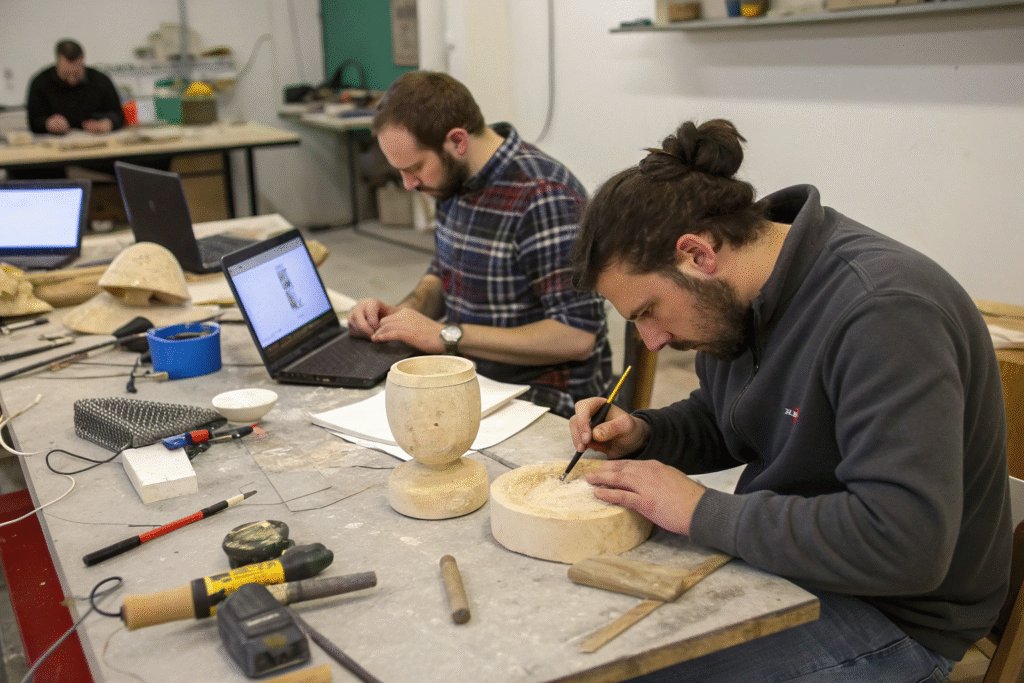
The most effective design environments blend the best of traditional craftsmanship with digital innovation, creating hybrid workflows that leverage both analog creativity and digital precision.
Integrating traditional and digital tools involves creating seamless workflows between hand skills and computer-aided design, preserving artistic expression while gaining technological advantages.
What hybrid approaches combine handcraft and digital precision?
Digitally-assisted craftsmanship enhances traditional skills with technological support. Our integrated approach includes:
- 3D scanning of hand-sculpted prototypes that capture organic forms for digital refinement and replication
- Digital guides for hand-work that use projections or laser guides to ensure precision in manual processes
- Augmented reality overlays that provide visual guidance for complex assembly or decoration
- Digital documentation of traditional techniques that preserves craft knowledge while making it accessible
This integration has allowed us to maintain the unique qualities of handcrafted accessories while achieving the consistency and efficiency of digital processes. The ability to start with organic, hand-created forms and then refine them digitally has been particularly valuable for developing accessories with both artistic character and production viability.
How can digital tools enhance material understanding?
Material simulation and analysis bridges digital and physical material knowledge. We’ve developed:
- Digital material libraries with accurate physical properties and behavioral characteristics
- Virtual material testing that predicts how materials will drape, stretch, or wear
- Surface texture scanning that captures subtle material qualities for digital representation
- Physical sample digitization that creates accurate digital twins of unique materials
These material tools make designing accessories so much less of a "wait and see" game! Before, you’d design something on screen and hope the material you picked looked the same in real life. Now? You can test fabrics, metals, and finishes upfront—so you know exactly how they’ll look and work in the final accessory. No more guessing, just confident choices.
Conclusion
Enhancing tools to transform accessory design requires a complete approach that integrates advanced digital ability, improves collaboration, accelerates prototyping, incorporates data-driven insights, and blends traditional craft with technological innovation. The most effective tool enhancements don’t just make existing processes faster—they enable entirely new approaches to design that expand creative possibilities while improving practical outcomes.
Tools aren’t just getting a single upgrade—they’re evolving all the time. This means design teams need to keep checking out new tech and ways of working. Those who stay on top of improving their tools and processes get a big edge: more creativity, better efficiency, and higher-quality designs.
As technology continues to advance, the possible for further tool enhancement remains vast, promising even more profound transformations in how accessories are conceived, developed, and brought to market.
If you’re interested in enhancing your accessory design tools and processes and would like to learn from our experience in tool integration and workflow optimization, we invite you to contact our Business Director, Elaine. She can guide you through our approach and help you develop a tool enhancement strategy tailored to your specific needs. Reach her at: elaine@fumaoclothing.com.