The fashion belt has evolved from purely functional item to strategic style accent that transforms entire outfits and collections. Through our experience designing and manufacturing belts for fashion brands worldwide, we’ve observed how this accessory consistently delivers disproportionate impact relative to its size and cost within clothing collections.
A fashion belt is considered an accent for a clothing collection because it provides focal points that direct visual attention, creates proportion adjustments that enhance silhouettes, delivers color and texture contrasts that add dimension, and serves as a styling tool that increases garment versatility—all while requiring minimal design investment compared to main collection pieces.This accent role makes belts disproportionately valuable within fashion collections.
The belt’s accent power stems from its unique position at the body’s narrowest point and its ability to interact with multiple garment elements simultaneously. Let’s examine the specific mechanisms through which belts accent clothing collections.
How do belts create visual focal points in collections?
Belts naturally draw the eye to the waistline, creating intentional focal points that guide how viewers perceive and process an outfit. This directional function makes belts powerful tools for controlling visual narrative within a collection.
Strategic focal point creation transforms how clothing is perceived and remembered, with belts serving as intentional eye-stoppers.
What visual hierarchy principles make belts effective accents?
Human vision naturally follows lines and seeks points of contrast, making properly positioned belts exceptionally effective at directing attention. We’ve documented that eye-tracking studies show viewers consistently focus on belted areas first when scanning outfits, spending 40-60% more time viewing belted regions compared to unbelted equivalents. The waist’s natural narrowing creates a canvas where belts automatically stand out, particularly when they incorporate contrasting elements like metallic hardware against matte fabrics or textured leathers against smooth textiles. This automatic visual prominence means belts require minimal design effort to achieve maximum visual impact, making them efficient accents within broader collections.
How do belts create intentional style narratives?
Beyond simple attention-direction, belts help tell specific style stories within collections. A wide cinching belt creates dramatic hourglass silhouettes that communicate vintage glamour, while a slim leather belt with minimal hardware suggests modern sophistication. Statement buckles can establish collection themes—perhaps western influences with ornate silverwork or minimalist aesthetics with geometric forms. The most effective collections use belts to reinforce design narratives consistently across multiple looks, creating cohesive storytelling that connects disparate pieces through this common accent element. This narrative function transforms belts from optional accessories to essential collection components.
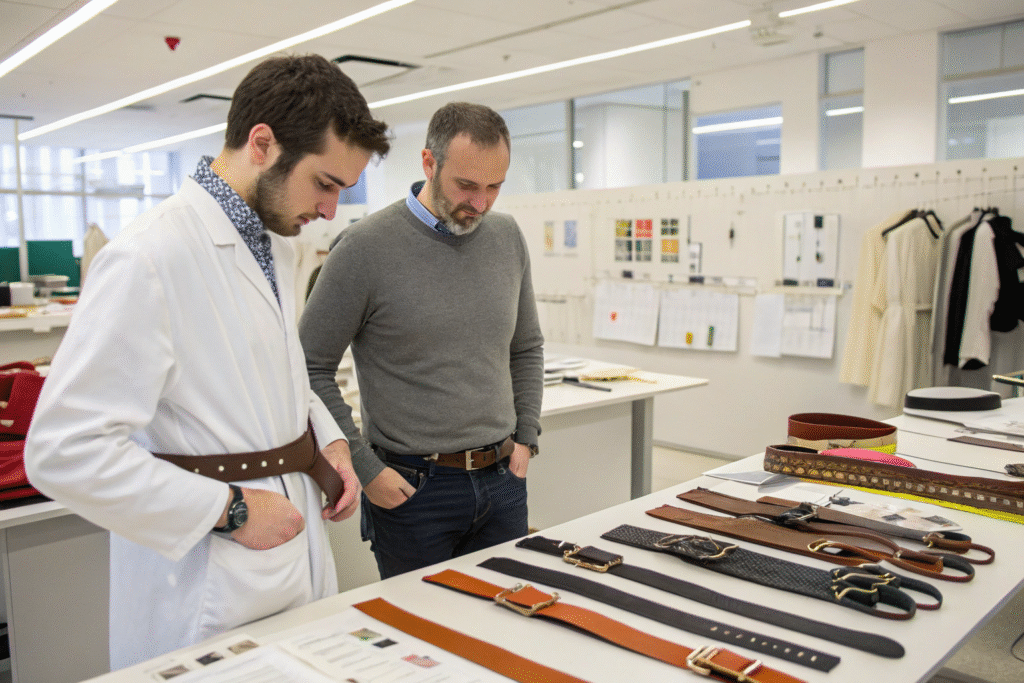
How do belts enhance silhouette and proportion?
The belt’s position at the waist gives it unique power to alter how clothing interacts with the body’s form. Even without changing garment construction, belts can dramatically transform silhouettes and create more flattering proportions.
This proportion-altering capability makes belts invaluable tools for enhancing how clothing appears on diverse body types.
What waist definition techniques transform garments?
Many garments benefit from waist emphasis that belts provide effortlessly. Unstructured pieces like shift dresses, oversized blazers, and straight-cut coats gain shape and definition when belted, creating more intentional silhouettes. High-waisted styling allows belts to create the appearance of longer legs and shorter torsos, while low-slung placement produces opposite effects for different proportional goals. The most sophisticated applications involve strategic placement that doesn’t necessarily align with the natural waist—perhaps positioning a belt at the smallest point of the ribcage to create unusual and fashion-forward proportions. These definition techniques allow single garments to work across more body types and styling preferences.
How do belts solve proportion challenges?
Beyond enhancement, belts can correct proportion issues within collections. Elongated torsos can be visually shortened with wide belts positioned high on the waist. Boxy silhouettes gain shape and movement when cinched at strategic points. Volume balancing becomes possible when belts contain excessive fabric in blouson tops or full skirts. The most valuable proportion function involves creating consistency across a collection—using similar belt styles and placements to establish cohesive silhouettes despite varied garment shapes and lengths. This problem-solving capability makes belts essential tools for designers working with diverse models, body types, and styling requirements.
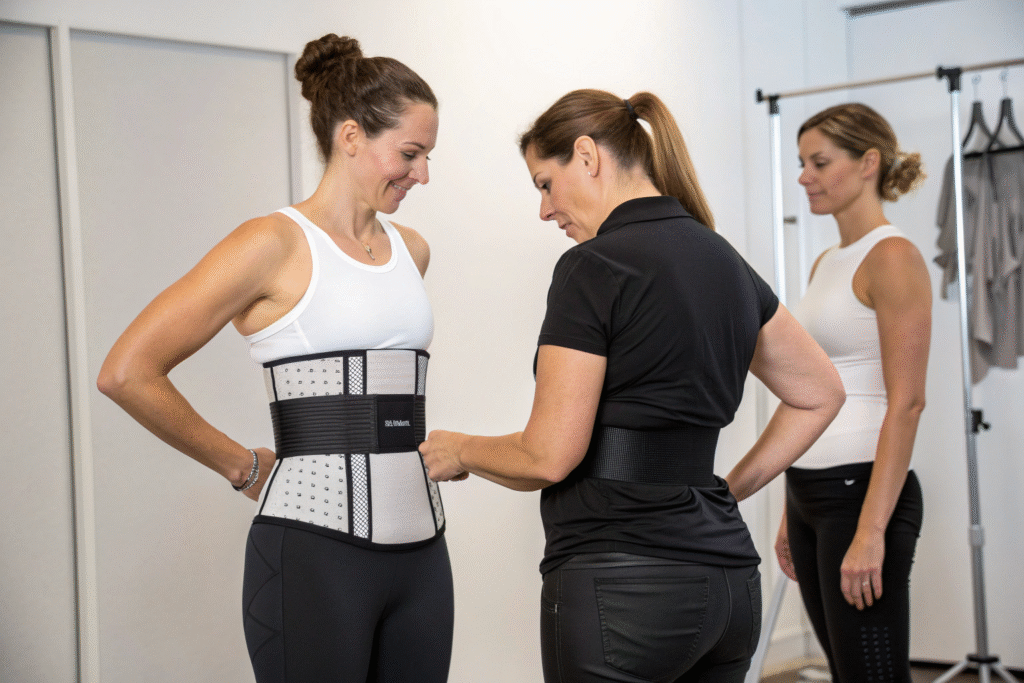
How do belts provide color and texture contrast?
Belts offer efficient opportunities to introduce contrasting elements that add visual interest without overwhelming collection cohesion. This contrast function makes belts ideal for testing bold colors, materials, or details within otherwise safe collections.
Strategic contrast creation through belts adds depth and sophistication to color stories and material mixes.
What color theory applications make belts effective accents?
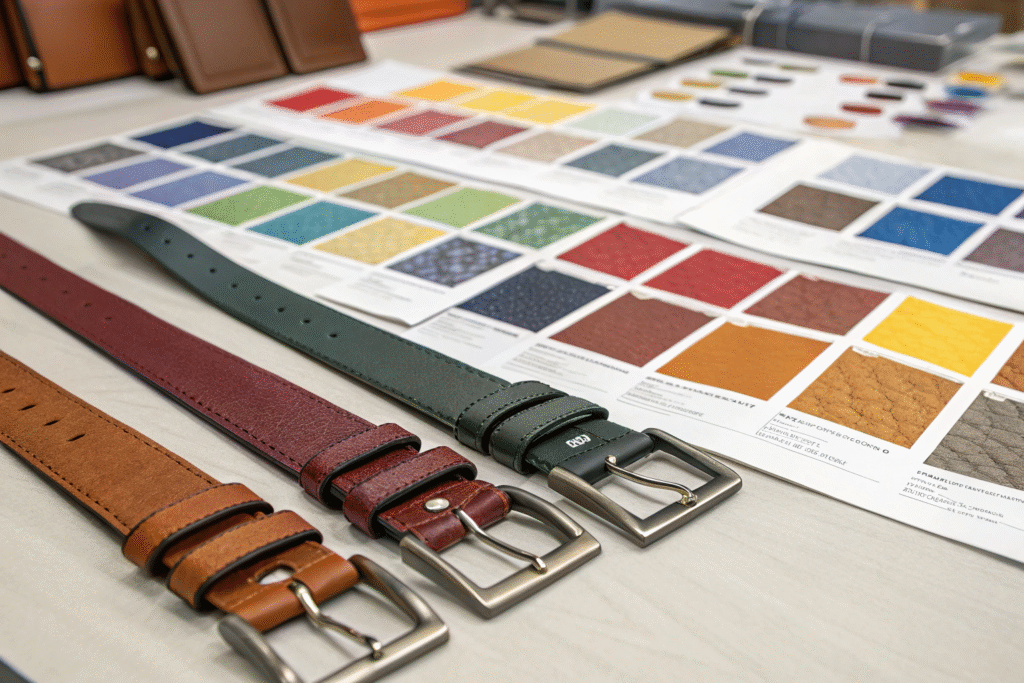
Color contrast represents one of the belt’s most powerful accent capabilities. A vibrant belt against neutral outfits creates immediate visual interest without committing to colorful garments. Tonal belting uses similar hues with different saturations or values to create sophisticated, subtle definition. The most advanced color applications involve bridging color stories—using a belt that incorporates multiple colors from different garments to create cohesive color flow throughout an outfit. This color functionality allows designers to introduce accent colors efficiently without producing entire garments in potentially risky hues, making collections more commercially safe while maintaining fashion interest.
How do texture combinations create tactile interest?
Beyond color, belts introduce textural contrasts that add richness and dimension. Smooth patent leather against nubby tweeds creates sophisticated tension, while woven textiles against fluid silks produce engaging tactile contrast. Hardware elements introduce metallic textures that catch light differently than fabrics, creating movement and variation as wearers move. The most effective textural applications consider seasonal appropriateness—perhaps heavier textural belts for autumn/winter collections and lighter, more refined options for spring/summer. This textural dimension makes outfits feel more considered and luxurious, elevating perceived quality throughout the collection.
How do belts increase collection versatility?
From a commercial perspective, belts significantly enhance collection value by increasing how many ways core pieces can be styled. This versatility function makes fashion collections more appealing to consumers seeking maximum outfit options from minimal purchases.
Strategic belting transforms how consumers perceive and utilize collection pieces, extending their styling life and perceived value.
What styling transformations increase garment utility?
Single garments can serve multiple functions through strategic belting. A straight-cut dress becomes three different silhouettes—unbelted for minimalist appeal, loosely belted for casual styling, and tightly cinched for dramatic shaping. An oversized shirt transforms from relaxed top to dressed outfit when belted over trousers or as a shirt dress. Tailored blazers gain waist definition that makes them appropriate for different occasions and body types. This transformation capability means collections require fewer unique pieces to create diverse looks, appealing to consumers who value versatility and retailers with limited inventory space.
How do belts create collection cohesion?
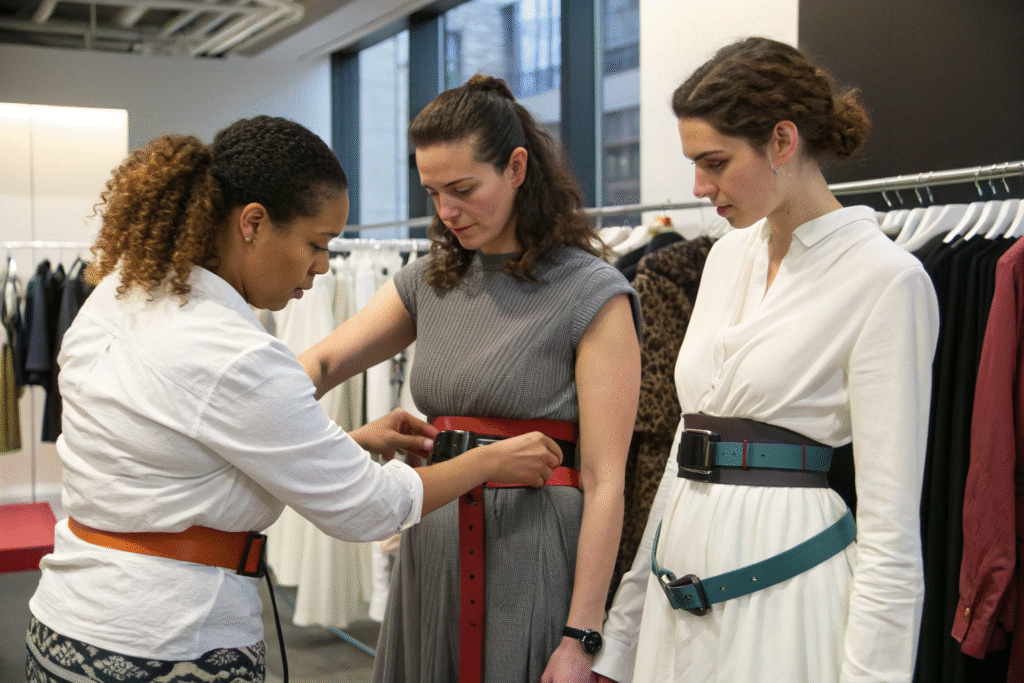
Beyond individual outfit versatility, belts help connect disparate pieces into cohesive collections. The same belt can appear across multiple looks—with dresses, separates, and outerwear—creating visual consistency that makes collections feel intentional and well-designed. Signature belt styles become recognizable collection elements that consumers associate with specific brands or designers. The most sophisticated applications involve belt systems where multiple belt options work with the same buckle or where different belt widths serve different styling purposes within the same collection. This cohesive function strengthens brand identity while providing consumers with styling guidance that increases their confidence in purchasing and wearing collection pieces.
Conclusion
Fashion belts are considered accents for clothing collections because they deliver disproportionate impact through focal point creation, proportion enhancement, contrast provision, and versatility extension—all while requiring minimal design resources compared to main collection pieces. This accent role makes belts exceptionally valuable within fashion collections, both creatively and commercially. Designers who strategically leverage belts as accents create more dynamic, versatile, and commercially successful collections that resonate with consumers seeking both style and functionality.
If you’re looking to strategically incorporate belts as accents within your clothing collections, we invite you to contact our Business Director, Elaine. Our experience designing belt programs for fashion brands can help you maximize the accent potential of this powerful accessory category. Reach her at: elaine@fumaoclothing.com.