You're on a beautiful, windy ridge, admiring the panoramic view you've worked so hard to reach. Suddenly, a strong gust of wind whips your hat off your head, sending it tumbling down the mountainside. Or perhaps you're navigating a steep, technical section and need to look down, only for your hat to slip forward, blocking your vision at a critical moment. It's a frustrating and common experience for hikers, turning a piece of essential sun protection into a liability.
Bucket hats with strings are popular for hiking because the chin strap provides crucial security in windy conditions, preventing the hat from blowing away. This simple feature, combined with the bucket hat's inherent 360-degree sun protection, packability, and lightweight design, creates the perfect blend of practicality and reliability that hikers need on the trail.
This isn't just about convenience; it's about function and safety. A secure hat means you can focus on the trail ahead without constantly worrying about losing your sun protection. It ensures your vision remains unobstructed and your hands are free for balance or using trekking poles. As a manufacturer of accessories for all kinds of conditions, we at Shanghai Fumao Clothing recognize that for outdoor gear, practical features like a simple string can make all the difference. Let's break down exactly why this combination is a winning formula for the outdoors.
What Is the Primary Role of the String?
You've seen them on countless hikers: the simple cord dangling from their bucket hat. It might seem like a minor detail, an afterthought. You might even wonder if it's more of a style choice than a functional one. This can lead you to underestimate its importance, perhaps opting for a stringless hat only to regret it the first time you encounter a gusty ridgeline or a breezy coastal path.
The primary and most critical role of the string, or chin strap, is to provide absolute security. It acts as a fail-safe, anchoring the hat to your head or around your neck, ensuring it cannot be lost to wind, sudden movements, or when you need to take it off temporarily. This transforms the hat from a loose accessory into a reliable piece of gear.
Think of the string as insurance for your sun protection. On a hike, conditions can change in an instant. A calm, sunny valley can lead to a windswept summit. The chin strap means your hat stays with you, providing consistent UV protection when you need it most. It also offers versatility; you can let the hat hang on your back when you're in the shade without having to carry it or stuff it in your pack. This simple feature directly addresses one of the biggest pain points of wearing a hat outdoors, making it an essential component for any serious hiking headwear. We'll explore other key features hikers look for in What Other Bucket Hat Features Matter for Hiking?.

How does the string work in high winds?
In high winds, the chin strap is indispensable. Most hiking bucket hats feature an adjustable toggle or cinch on the string. This allows you to tighten the cord snugly under your chin, effectively locking the hat onto your head. Even if a powerful gust lifts the hat, it can't fly away. This is a feature highlighted by outdoor gear experts at publications like OutdoorGearLab. This security allows hikers to confidently cross exposed terrain where losing a hat would not only be inconvenient but could also lead to dangerous sun exposure for the rest of the trip.
Does the string offer other benefits?
Yes, the string adds a layer of convenience beyond wind protection. When you stop for a break or move into a forested, shady area, you can simply take the hat off and let it hang down your back. This keeps your hands free and means you don't have to find space in your backpack for it. It's immediately accessible the moment you step back into the sun. This on-the-go accessibility is a small but significant quality-of-life improvement on a long hike, a point often made in reviews on retail sites like REI.
Why Is the Bucket Hat Shape Ideal for Hiking?
When you think of hiking hats, many styles might come to mind. There are baseball caps, wide-brimmed sun hats, and visors. You might wonder what makes the simple, unpretentious bucket hat shape so uniquely suited for the trail. It's easy to dismiss it as just a fashion trend, but doing so ignores the specific design elements that make it a top performer for outdoor activities.
The bucket hat's shape is ideal for hiking because its 360-degree, downward-sloping brim provides comprehensive and consistent protection for the face, ears, and neck—areas highly vulnerable to sunburn. Unlike a baseball cap, it guards against sun exposure from all angles as the sun moves across the sky.
This all-around coverage is a game-changer on the trail. A baseball cap leaves your ears and neck completely exposed, a major liability on a long day outdoors. The bucket hat's full brim creates a personal circle of shade that moves with you. According to health organizations like the Skin Cancer Foundation, a wide-brimmed hat is one of the most effective forms of sun protection. The bucket hat delivers this protection in a compact, practical package that doesn't have the unwieldy, floppy brim of some larger sun hats, which can obstruct vision or get caught on branches. The importance of the chin string, as we discussed in What Is the Primary Role of the String?, ensures this perfect shape stays where it's needed most.

How does the brim angle help?
The downward-sloping angle of a bucket hat's brim is a key design feature. It's engineered to block high-angle sun from above while still allowing for good peripheral vision. Unlike very wide, flat-brimmed hats that can feel like you're wearing a lampshade and can block your view of the trail ahead, the bucket hat's shorter, angled brim provides protection without compromising awareness. This is a critical safety consideration when navigating uneven or technical terrain, a topic often covered in hiking safety guides like those from the American Hiking Society.
Isn't a baseball cap more popular?
While baseball caps are certainly popular for casual wear and some sports, they are functionally inferior for serious hiking. Their primary design flaw is the complete lack of protection for the ears and neck, two of the most common spots for sunburn and long-term skin damage in outdoor enthusiasts. Many experienced hikers start with baseball caps but quickly switch to a full-brimmed hat like a bucket hat after experiencing a painful sunburn on their ears or the back of their neck. For all-day excursions, 360-degree coverage is not a luxury; it's a necessity.
What Other Bucket Hat Features Matter for Hiking?
You now understand the importance of the string and the brim. But as you browse for the perfect hiking bucket hat, you notice other features mentioned in the descriptions: ventilation grommets, moisture-wicking sweatbands, and different types of fabric. You're unsure which of these are essential and which are just marketing gimmicks. Choosing a hat without the right performance features could leave you with a sweaty, uncomfortable head on a hot day.
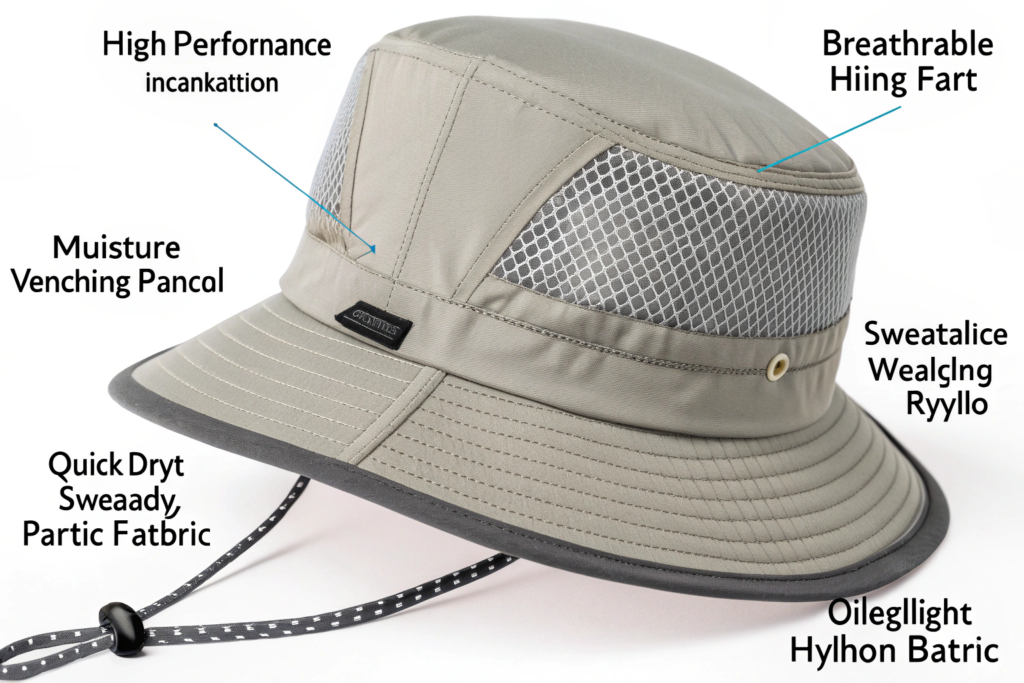
Beyond the string and brim, the most important features for a hiking bucket hat are breathability, moisture management, and packability. Look for hats with ventilation grommets or mesh panels, an internal sweatband that wicks moisture, and a fabric that is lightweight, quick-drying, and crushable for easy storage.
These features work together to keep you comfortable and safe on the trail. Breathability is crucial for preventing your head from overheating during strenuous climbs. A good sweatband stops sweat from dripping into your eyes, which can sting and impair your vision. And packability is a matter of pure convenience. A crushable bucket hat can be stuffed into a backpack pocket or clipped to a carabiner without losing its shape. As a manufacturer, Shanghai Fumao Clothing focuses on integrating these technical details to create accessories that truly perform in their intended environment.
Why is ventilation so important?
Your head is one of the primary areas where your body releases heat. During a strenuous hike, trapping that heat under a non-breathable hat can lead to overheating and excessive sweating. This is why many hiking bucket hats incorporate metal grommets or, even better, a full mesh panel around the crown. As explained by performance apparel brands like Patagonia, these features allow heat and water vapor to escape, promoting airflow and keeping your head cooler and drier. This significantly enhances comfort on hot and humid days.
What materials are best for hiking bucket hats?
The best materials for hiking bucket hats are synthetic fabrics like nylon and polyester. These materials are lightweight, which means you'll barely notice the hat on your head. They are also highly durable and abrasion-resistant. Most importantly, they are hydrophobic, meaning they don't absorb much water and are incredibly quick-drying. If you get caught in a rain shower or work up a serious sweat, a nylon hat will be dry again in no time, unlike a cotton hat which would become heavy and waterlogged. Many hiking hats also have a DWR (Durable Water Repellent) finish to make them water-resistant, shedding light rain effectively.
Conclusion
The popularity of the bucket hat with a string for hiking is no accident. It is a perfect example of form following function. The design brilliantly solves the hiker's core needs: consistent sun protection from all angles, security in unpredictable weather, and all-day comfort. The 360-degree brim shields the face, ears, and neck, while the simple chin strap ensures this protection is never lost to a gust of wind. Add in modern performance features like ventilation, moisture-wicking materials, and packability, and you have a piece of gear that is as reliable as it is practical.
It's this thoughtful combination of features that turns a simple hat into an essential tool for any outdoor adventure. At our company, we specialize in developing and manufacturing accessories that are built for a purpose. We understand that the small details are what elevate a product from good to great. If you are looking to create your own line of functional, high-performance headwear for the outdoor market, we have the expertise to bring your vision to life. Please contact our Business Director, Elaine, at elaine@fumaoclothing.com to get started.