Have you ever bought a stylish outdoor hat, only to have it fly off in a gust of wind or feel so tight it gives you a headache? Or perhaps you’ve struggled to find a hat that fits properly, leaving you to choose between too loose or too tight? These common frustrations highlight a critical but often overlooked feature: the adjustable toggle. For anyone who enjoys hiking, fishing, golfing, or simply being outdoors, a hat that doesn’t fit securely is more of a liability than an asset.
The adjustable toggle is a simple yet ingenious solution to the universal problem of head size variation and dynamic conditions. It transforms a static piece of headwear into a versatile, personalized tool for comfort and security. Beyond just preventing loss, a well-designed toggle system ensures your hat performs its primary functions—sun protection, temperature regulation, and style—without distraction or discomfort.
This article will explore the multifaceted importance of this small component. We’ll examine how toggles provide a secure, custom fit for diverse activities and head shapes, their role in enhancing all-day comfort and wearability, the specific designs that offer optimal wind resistance, and the considerations for sourcing and manufacturing durable toggle systems. Understanding these points is key to choosing or designing the perfect outdoor hat.
How Do Adjustable Toggles Ensure a Secure, Custom Fit?
The fundamental purpose of any hat is to stay on your head. However, standard hat sizes (S, M, L, XL) are approximations that cannot account for the precise circumference of every individual’s head or variations in hair volume. An adjustable toggle closes this gap. By incorporating a cord or strap with a sliding lock—typically made of plastic or metal—the hat becomes infinitely adjustable within a range, often 2-3 inches. This allows for a truly custom, snug fit that standard sizing cannot achieve.
This customizability is crucial for performance. A loose hat will bounce, shift, and block your vision during activities like trail running or cycling. A hat that’s too tight causes pressure points and headaches, ruining any outdoor experience. The toggle allows the wearer to dial in the exact tension needed for security without pain. Furthermore, fit can change throughout the day due to swelling, perspiration, or simply putting hair up or down. The toggle offers instant adaptability to these changes, ensuring consistent comfort and security from morning to evening.

What Types of Toggle Systems Are Most Effective for Outdoor Use?
Not all toggle systems are created equal for rugged environments. The most effective designs balance ease of use, reliability, and durability.
- Cord Lock Toggles: The most common and reliable. A plastic or metal barrel with an internal spring-loaded cam locks onto a cord when pulled tight. To loosen, you press two side tabs to release the cam. They are lightweight, easy to operate with one hand (even with gloves on), and provide very secure locking. Look for brands like ITW Nexus or Duraflex for industry-standard quality.
- Sliding Knot/Glide Systems: Often made of a polymer or fabric glide that friction-fits on a flat or round cord. They offer a sleek, low-profile look but can be harder to adjust with cold or wet hands and may slip under extreme tension.
- Hook-and-Loop (Velcro) Straps: Common in baseball caps. While adjustable, they are less precise, can snag on hair or other gear, and the Velcro may wear out or collect debris over time. They are better for casual than technical outdoor use.
- Elastic Bands: Provide stretch but no active adjustment. They are often paired with a short toggle to take up excess cord length after the elastic has reached its stretch limit.
For demanding outdoor hats—like those for sailing, fly fishing, or alpine hiking—a robust cord lock toggle on a durable, low-stretch polyester cord is the gold standard. It provides the surest hold in variable conditions.
How Does a Custom Fit Enhance Hat Functionality?
A secure fit directly amplifies the core functionalities of an outdoor hat:
- Sun Protection: A hat that sits properly ensures the brim consistently shades your face, neck, and ears. A shifting hat exposes skin to harmful UV rays.
- Stability for Attachments: Many outdoor hats have loops for attachment clips (for sunglasses, fishing flies, or carabiners) or slots for accessory cords (for chin straps or neck capes). A stable, well-fitted base is necessary for these attachments to function as intended.
- Compatibility with Other Gear: A hiker wearing a headlamp or a cyclist wearing glasses needs their hat to sit securely underneath without being displaced. The precise adjustability of a toggle makes this integration seamless.
- Moisture Management: A hat that fits closely but not tightly allows for better air circulation, helping to wick sweat away from the brow, enhancing the performance of moisture-wicking sweatbands.
In essence, the toggle is the interface between the human and the tool, ensuring all the hat’s designed features work in harmony.
Why is Comfort and All-Day Wearability Dependent on Adjustment?
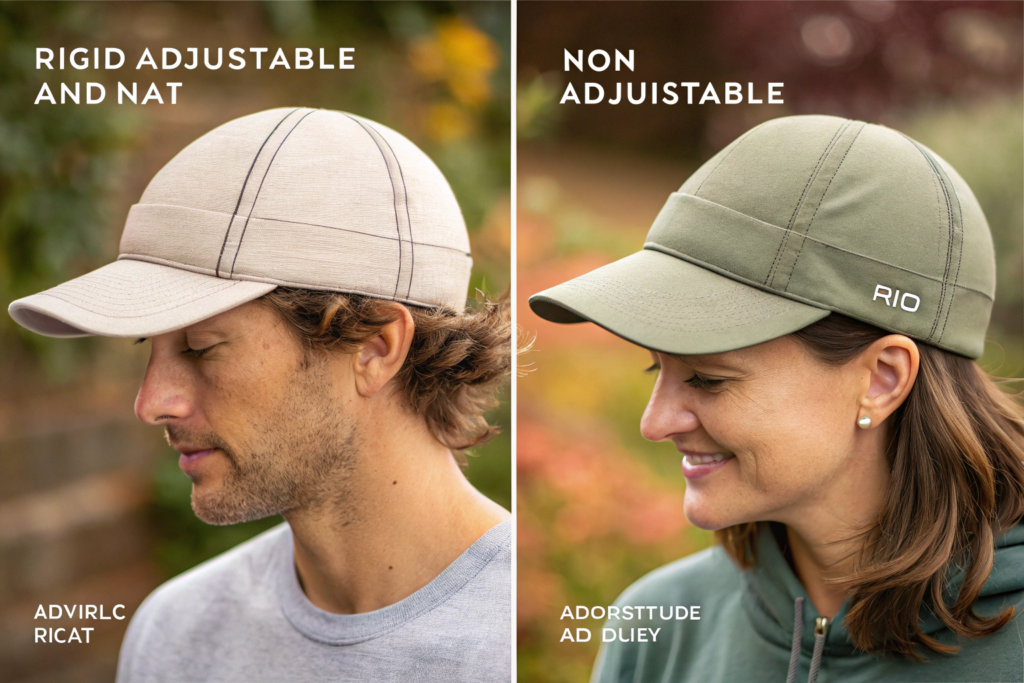
Comfort is not static; it’s a dynamic state that changes with activity level, temperature, and time. A rigid, non-adjustable hat forces your head to adapt to it, often leading to discomfort. An adjustable hat, conversely, adapts to your head. This adaptability is the cornerstone of all-day wearability, preventing the "hat headache" and the constant need to readjust a slipping brim.
The ability to micro-adjust tension relieves pressure points, particularly around the forehead and the occipital bone at the back of the head. During a long day, as your head may slightly swell or as you become more sensitive to pressure, you can simply loosen the toggle a notch. Conversely, when you start a brisk activity and need more security, a quick pull on the cord locks it down. This user-controlled comfort turns the hat from a piece of equipment you tolerate into one you forget you’re wearing—the ultimate goal for any functional apparel.
How Do Toggles Accommodate Different Hairstyles and Head Shapes?
Human heads and hairstyles are wonderfully diverse. A toggle system elegantly accommodates this variety where fixed sizes fail.
- Hairstyles: A ponytail, braid, bun, or thick, voluminous hair drastically changes the effective head size. A toggle allows the hat to expand to fit over the hairstyle and then tighten down securely above it, without crushing the style. Many hats feature a ponytail port—a slot in the back—paired with a toggle, which is a highly sought-after feature for active women.
- Head Shapes: Heads can be round, oval, or have a more pronounced occipital bulge. A toggle allows the hat to conform to these shapes without creating gaps or excessive pressure. This is especially important for unisex hat designs intended to fit a broad population with a single adjustable size.
This inclusivity not only enhances comfort but also expands a product’s market appeal, as one well-designed adjustable hat can satisfactorily fit a much larger percentage of potential customers.
Can Proper Adjustment Prevent Fatigue and Discomfort?
Absolutely. Discomfort is a distraction that leads to mental and physical fatigue. A hat that is constantly slipping requires you to use hands and attention to readjust it, breaking your focus on the trail, the fish, or the game. A hat that is too tight creates a persistent, low-grade headache or hot spots that drain your enjoyment.
By providing a tool for the wearer to eliminate these irritants, the adjustable toggle directly contributes to sustained comfort and focus. This is why in professional and serious recreational outdoor circles, adjustable hat designs are not a luxury but a baseline expectation. At Shanghai Fumao Clothing, when we develop outdoor hats for our brand partners, we consider the toggle system as critical as the choice of sun-protective fabric, because without a good fit, the best material underperforms.
How Do Toggle Designs Specifically Combat Wind?
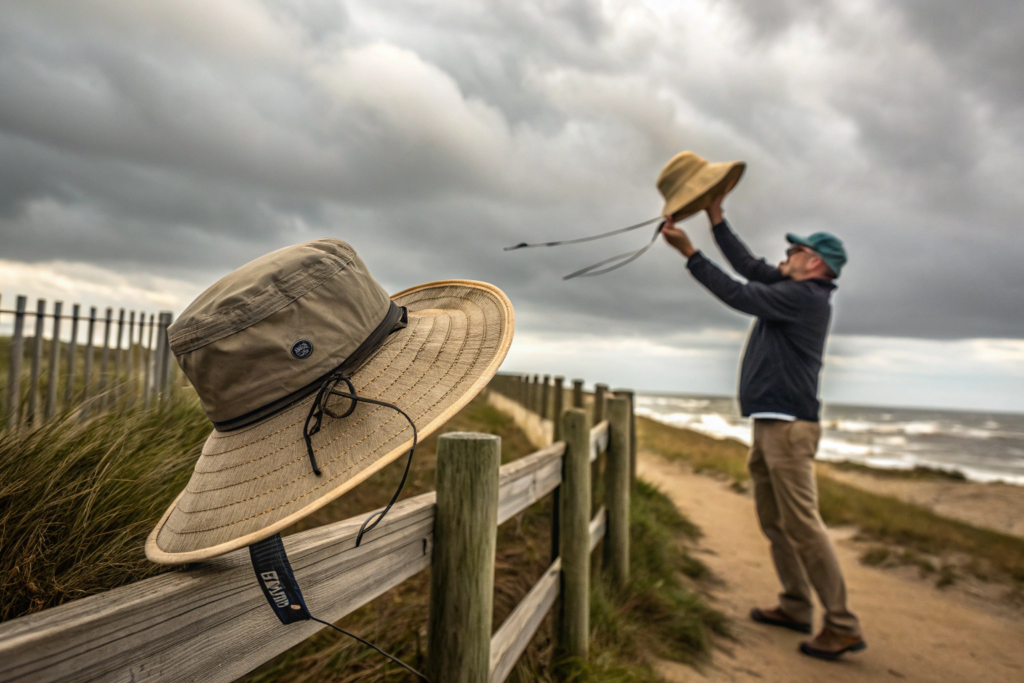
Wind is the natural enemy of any hat. A sudden gust can turn a prized piece of gear into litter or a water hazard. While chin straps are the ultimate solution for extreme conditions, they can be cumbersome for everyday use. A well-engineered toggle system is the first and most convenient line of defense against moderate to strong winds.
The principle is simple: wind gets under the brim and lifts the hat by creating upward pressure. A toggle, when tightened, reduces the internal circumference of the hat’s opening, creating a closer seal around the head. This increased friction and reduced gap make it significantly harder for wind to infiltrate and lift the hat. For activities like sailing, beach walks, or open-field sports, this feature is indispensable.
What Are the Best Toggle and Cord Configurations for Wind Resistance?
The effectiveness depends on the configuration:
- Location: A toggle at the center-back of the hat (the nape of the neck) is standard and effective. Some advanced designs feature a 360-degree adjustment system with a cord that runs through the entire hatband, allowing you to tighten the whole circumference evenly for maximum grip in high winds.
- Cord Material: A flat, wide nylon webbing or a textured, low-stretch round cord provides more surface area and grip against the head and hair than a smooth, thin cord.
- Integrated Chin Cord: Many high-performance outdoor hats have a toggle that is part of a longer cord. This cord can be tightened around the back of the head, or the ends can be released and tied under the chin for absolute security in gale-force conditions. The toggle here serves as a tidy storage point for the cord when not in use.
When sourcing components, it’s vital to select toggles and cords rated for UV resistance and saltwater corrosion if the hats are for marine use. We test these components in our quality control process to ensure they withstand environmental stressors without failing.
How Does Wind Performance Impact Safety and Enjoyment?
A lost hat is more than an inconvenience; it can be a safety issue. On the water, a hat overboard is a distraction and a piece of floating debris. On a windy ridge, chasing a hat can lead to a misstep. The mental security of knowing your hat will stay put allows you to focus fully on your activity and environment, enhancing both safety and enjoyment.
Furthermore, constantly clutching at a hat in the wind is frustrating and prevents you from using your hands for their intended purpose—holding trekking poles, fishing rods, or camera gear. A reliable toggle system provides peace of mind and functional freedom.
What Should You Look for in a Durable, Sourced Toggle System?
For brands and buyers, the toggle is a small component with a big responsibility. A failing toggle—one that breaks, slips, or has its cord fray—renders the entire hat less functional. Therefore, sourcing quality components and ensuring robust construction is paramount. This involves evaluating material integrity, design for manufacturing, and supplier reliability.
The goal is to source a system that will last the lifetime of the hat, matching the durability of the fabric and stitches. This requires attention to detail that goes beyond the initial unit cost to consider total value and customer satisfaction.
Which Materials Ensure Longevity for Toggles and Cords?
- Toggle (Cord Lock): Look for glass-filled nylon or acetal (POM) plastic. These engineering plastics are strong, UV-stable, and resistant to cracking in cold temperatures. Metal toggles (aluminum) are durable but heavier and can get cold to the touch. Internal springs should be stainless steel to prevent rust.
- Cord/Strap: Polyester braid is superior to nylon for low stretch and better UV resistance. It also dries faster and is less prone to rot. The cord should have a tight, snag-free weave. For flat straps, a durable poly-webbing is standard.
- Stitching/Attachment: The point where the cord is attached to the hat is a critical stress point. It should be bar-tacked (a dense zig-zag stitch) for maximum strength, not just a single line of stitching. The cord ends should be cleanly heat-sealed to prevent fraying.
Asking your manufacturer or supplier for material specifications or component certifications from their toggle provider is a sign of a professional operation. We use components from vetted suppliers and perform pull tests on finished hats to validate the assembly strength.
How Does Manufacturing and QC Secure the Toggle System?
Quality is built during manufacturing. Key steps include:
- Precision Placement: The toggle channel or cord anchors must be placed symmetrically and securely within the hat’s construction.
- Secure Attachment: As mentioned, using bar-tacking or other reinforced stitching at anchor points.
- Functional Testing: As part of quality control, every adjustable hat should be tested. This means an operator will repeatedly slide the toggle, tighten and loosen the cord, and check for smooth operation, secure locking, and no cord slippage.
- Stress Testing (Batch): Sampling from each production batch should undergo a pull test to ensure the cord attachment can withstand forces significantly higher than normal use.
A manufacturer that integrates these checks, like our process at Shanghai Fumao Clothing, demonstrates a commitment to delivering a fully functional, reliable product. This attention to detail in a small component like a toggle is a strong indicator of overall product quality and professional customer service.
Conclusion
The adjustable toggle is a powerhouse of functionality packed into a deceptively simple component. It is the critical link that ensures an outdoor hat delivers on its core promises of security, comfort, and protection. By providing a custom fit, accommodating dynamic conditions, combatting wind, and enabling all-day wearability, the toggle transforms a basic hat into a high-performance accessory.
For consumers, prioritizing hats with well-designed toggle systems means investing in comfort, convenience, and reliability. For brands and buyers in the outdoor industry, specifying and sourcing high-quality toggle systems is a non-negotiable aspect of product development that directly impacts customer satisfaction, product longevity, and brand reputation.
If you are looking to develop or source outdoor hats with expertly engineered, durable adjustment systems, partnering with a manufacturer that understands these details is essential. At Shanghai Fumao Clothing, we specialize in crafting technical accessories where every component, down to the toggle, is selected and assembled for optimal performance. Contact our Business Director Elaine to discuss your next outdoor headwear project. Reach out to Elaine at elaine@fumaoclothing.com to create hats that people can wear comfortably, securely, and confidently all day long.