Are you hesitant to invest in acetate hair clips and barrettes because of their higher price tag compared to plastic? Do you wonder if the premium is just for a brand name, or if there's a tangible difference in quality that customers will actually notice and value? You're weighing a critical decision that impacts your brand's perceived quality, customer satisfaction, and long-term profitability.
The higher price of acetate accessories is not a marketing gimmick; it's a direct reflection of superior material science, craftsmanship, and performance. Acetate offers a combination of luxury aesthetics, durability, and wearer comfort that mass-produced plastic simply cannot match. For brands targeting discerning customers or the better-than-fast-fashion market, acetate is the material that justifies a higher price point and builds lasting brand equity.
This article will break down the compelling value proposition of acetate. We'll explore its luxurious visual and tactile qualities, its structural integrity and longevity, the advanced design possibilities it enables, and its stronger environmental profile compared to conventional plastics. Understanding these advantages will help you position acetate accessories as a worthwhile investment for your customers.
What Makes Acetate Look and Feel More Luxurious Than Plastic?
The immediate difference between acetate and common plastic (like ABS or acrylic) is sensory. Acetate has a visual depth and a tactile warmth that plastic lacks, communicating quality before a customer even touches the product. This perceived value is the foundation of its premium positioning.
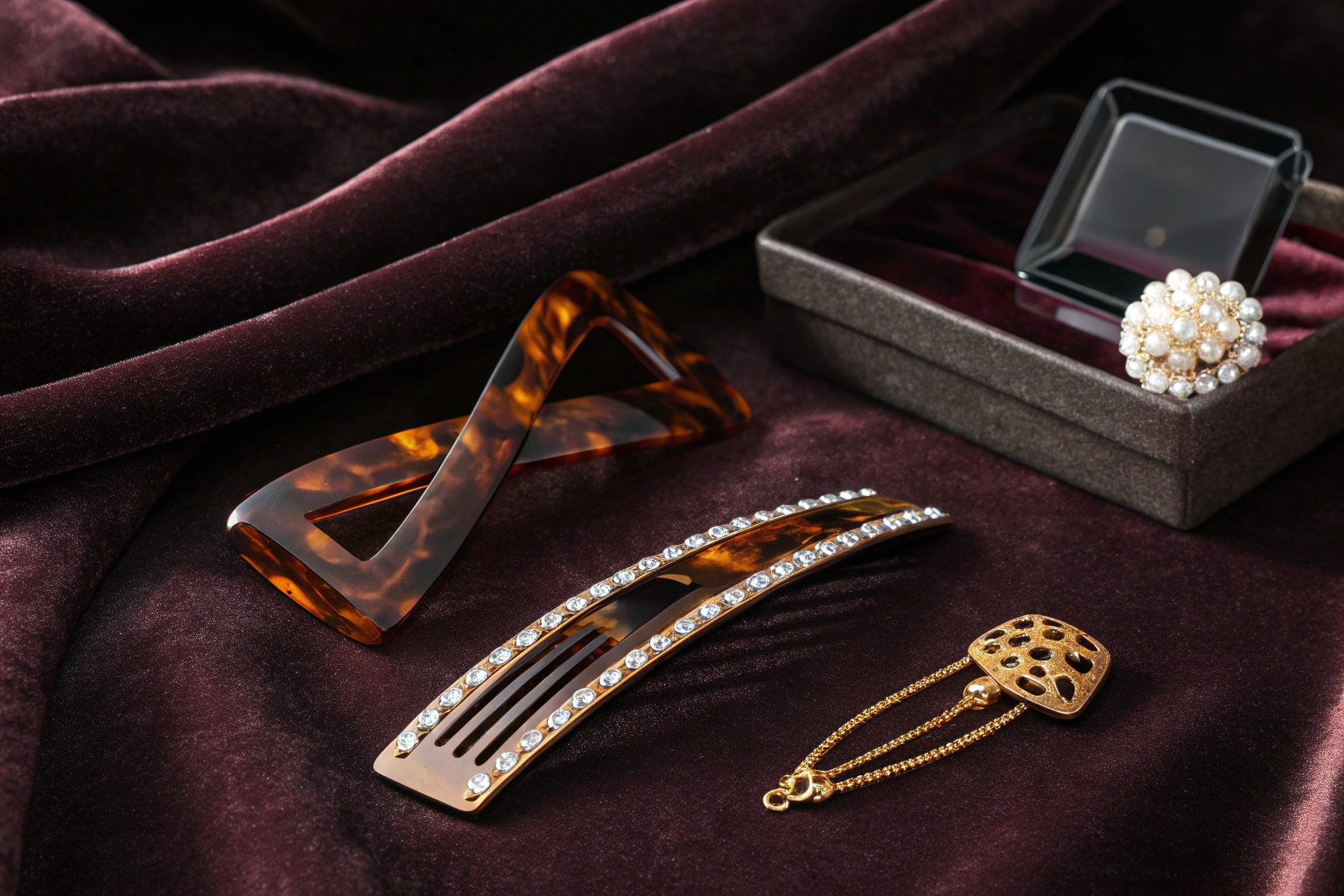
Acetate is a plant-based plastic derived from wood pulp and cotton fibers. This natural origin allows it to be manufactured with exceptional optical clarity and a wide range of sophisticated effects. Unlike the flat, opaque colors of cheap plastic, acetate can be produced in beautiful marbled, tortoiseshell, pearlized, and translucent hues with a deep, three-dimensional appearance. Its surface has a softer luster—a glow rather than a harsh plastic shine. To the touch, acetate feels substantial, smooth, and slightly warm, unlike the often light, cool, and sometimes greasy feel of lower-grade plastics. It mimics the hand-feel of materials like horn or celluloid, historically used in luxury goods.
How Do Visual Effects Like Tortoiseshell and Marbling Add Value?
Patterns like tortoiseshell and marbling are not simply printed on the surface of acetate; they are created within the material itself. During the manufacturing process, colored acetate chips are layered and fused under heat and pressure, creating organic, non-repeating patterns that have depth. This means the pattern is visible on all sides and edges of a hair clip, not just the top. This inherent, three-dimensional patterning is impossible to achieve convincingly with surface printing on cheap plastic, which often looks fake, scratches off, and has visible seams. For the customer, it translates to a unique, artisan-quality item that feels special and authentic.
Why Does the Weight and "Hand" of Acetate Matter?
The heft of a well-made acetate barrette is a silent signal of quality. It has a satisfying, substantial weight in the palm that feels intentional and durable. This contrasts sharply with flimsy plastic clips that feel disposable. The "hand"—how it feels to manipulate—is also superior. Acetate can be polished to a smooth, frictionless finish that glides through hair without snagging. High-quality factories, like Shanghai Fumao Clothing, meticulously hand-polish each piece to achieve this feel. This attention to detail in finishing is a key differentiator that customers subconsciously register as higher quality, much like the difference between PVD plating and electroplating.
How Does Acetate Offer Superior Durability and Longevity?
Beyond looks, acetate delivers functional durability that protects your brand from the returns and negative reviews caused by broken accessories. Its molecular structure and manufacturing process make it inherently more resilient than brittle, injection-molded plastics.
Acetate is manufactured through a process of sheet extrusion. The material is formed into large, dense sheets which are then precision-cut, shaped, and polished. This results in a product with greater structural integrity and resistance to cracking and snapping under stress. While no material is unbreakable, a well-constructed acetate clip with a strong metal clasp will withstand daily use for years. Furthermore, acetate is less prone to the warping and discoloration that can affect cheap plastics when exposed to heat (like from a hairdryer) or UV light. This longevity means a customer gets more cost-per-wear value, and your product earns a reputation for reliability.
Is Acetate More Resistant to Cracking and Wear?
Yes, significantly. The sheet-based construction means there are no mold lines or thin, weak points that are common failure areas in injection-molded plastic. Acetate sheets have a consistent density. Additionally, because it can be polished to a high gloss, the surface is more resistant to fine scratches that can make plastic look dull and worn over time. For functional parts like the hinge area of a barrette, the durability of the acetate combined with a quality metal spring mechanism creates a product that functions smoothly through thousands of open/close cycles. This reliability is a core component of building a trustworthy product.
How Does the Manufacturing Process Ensure Consistency?
The production of acetate accessories is more artisanal and controlled. It involves:
- Sheet Selection: Choosing sheets with consistent color and pattern.
- Precision Cutting: Using CNC machines or steel rule dies for exact shapes.
- Tumbling & Polishing: Pieces are tumbled in media to smooth all edges, then often hand-polished for a final luster.
- Assembly: Attaching high-quality metal findings (clasps, pins) with screws or strong adhesives.
This multi-step process allows for quality checks at each stage, ensuring a consistent, defect-free final product. It stands in contrast to the high-speed, fully automated molding of cheap plastic, where inconsistencies and flashing (excess plastic) are common.
What Design Advantages Does Acetate Provide?
Acetate is a designer's material. Its physical properties unlock creative possibilities that are difficult or impossible to achieve with standard plastics. This allows for unique, on-trend designs that can become signature pieces for your brand.
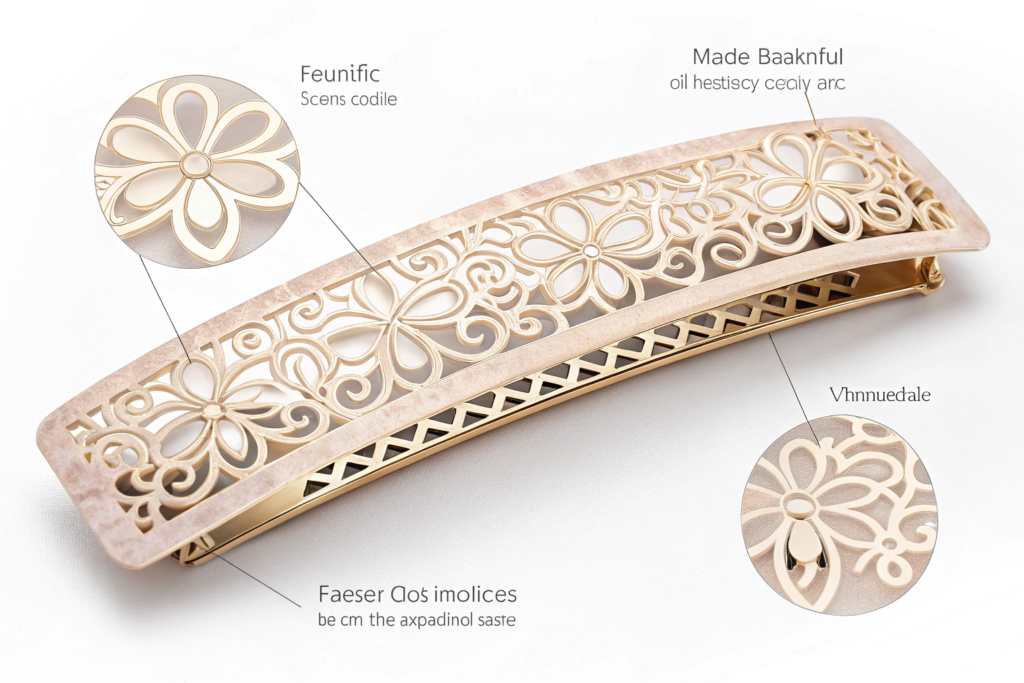
The sheet-based nature of acetate allows for laser-cutting intricate and delicate patterns with extreme precision—think of filigree hair pins or geometric cut-outs. These designs would be fragile or impossible to demold in injection plastic. Furthermore, because the pattern runs through the material, designers can utilize edge details. A marbled barrette will show its beautiful layers on the side profile, adding to the design interest. Acetate can also be laminated to create "sandwiches" of color or have metallic foils embedded within it. These techniques enable truly custom, small-batch designs that help a brand stand out in a crowded market.
Can Acetate Be Used for More Intricate and Detailed Shapes?
Absolutely. The precision cutting (via laser or CNC) of acetate sheets is ideal for intricate shapes. Designers are not limited by the constraints of mold draft angles and parting lines required for injection molding. This means you can create sharp angles, deep undercuts, and extremely fine details like delicate floral motifs or architectural lines that would break in a plastic mold or be too costly to tool. This design freedom is a key reason luxury and designer brands favor acetate for statement pieces.
How Does Acetate Facilitate Custom Colors and Brand-Specific Designs?
Achieving custom, brand-specific colors is more feasible with acetate. While creating a new color batch of plastic pellets for injection molding requires huge minimums, an acetate manufacturer can often produce custom-colored sheets with a lower minimum order quantity (MOQ). This is because coloring happens during the sheet extrusion process, which is more flexible for smaller runs. You can develop a proprietary marbled pattern or a signature translucent tint that becomes synonymous with your brand. This level of customization is a powerful tool for building a unique brand identity.
Is Acetate a More Sustainable and Safer Choice?
In an era of conscious consumption, material provenance matters. While no plastic is perfectly "green," acetate has a stronger environmental and health profile than petroleum-based plastics, which is a significant marketing advantage.
Acetate is bio-based, deriving from renewable resources (wood pulp, cotton linters). Many modern acetates are also biodegradable under specific industrial composting conditions, breaking down faster than conventional plastics that persist for centuries. From a user safety standpoint, high-quality cellulose acetate is hypoallergenic and free from harmful chemicals like BPA and phthalates often found in cheaper plastics. This makes it a safer choice for items worn close to the skin and scalp. Brands can transparently communicate these benefits as part of their sustainability story.
How Does Acetate Compare to Petroleum-Based Plastics Ecologically?
The lifecycle of acetate is generally less harmful. Its production starts with a renewable resource, reducing dependency on fossil fuels. While the chemical processing involved has an environmental impact, advanced manufacturers are implementing closed-loop systems to recapture and reuse solvents. Compared to the persistent pollution of conventional plastics, the potential for industrial biodegradability is a major plus. For brands building a sustainable product narrative, acetate presents a credible, premium alternative to virgin plastic.
Are There Hypoallergenic Benefits for Sensitive Customers?
Yes. High-purity cellulose acetate is inherently less likely to cause skin irritation than plastics containing unknown chemical additives, plasticizers, or residual monomers. For customers with sensitive skin or allergies, this is a meaningful point of differentiation. It allows you to market your accessories as gentle and safe for daily wear, expanding your addressable market. This safety assurance is a form of quality control that protects the end-user, similar to ensuring compliance with nickel release standards.
Conclusion
Acetate hair accessories command a higher price because they deliver superior value across every dimension that matters to a quality-conscious brand and its customers: unparalleled aesthetic appeal with deep, luxurious patterns; exceptional durability that reduces returns and builds trust; unparalleled design flexibility for unique products; and a more responsible material profile that aligns with modern values.
Investing in acetate is an investment in your brand's premium positioning, customer satisfaction, and product longevity. It transforms a simple accessory into a cherished object, justifying its price through tangible and perceived quality.
Ready to elevate your hair accessory line with the premium quality of acetate? At Shanghai Fumao Clothing, we specialize in custom acetate manufacturing, from developing unique colorways and patterns to precision cutting and finishing. Contact our Business Director Elaine at elaine@fumaoclothing.com to create hair accessories that are truly worth more.