As a parent or a buyer sourcing children's products, nothing is more important than safety. The cup your child drinks from every day might seem simple, but the materials it's made from can have significant health implications. Bisphenol A (BPA), a chemical once common in hard plastics, has been widely phased out due to health concerns, yet confusion remains. How can you be sure the cups you're buying or planning to sell are truly safe? The market is flooded with claims, but not all "BPA-Free" labels tell the whole story.
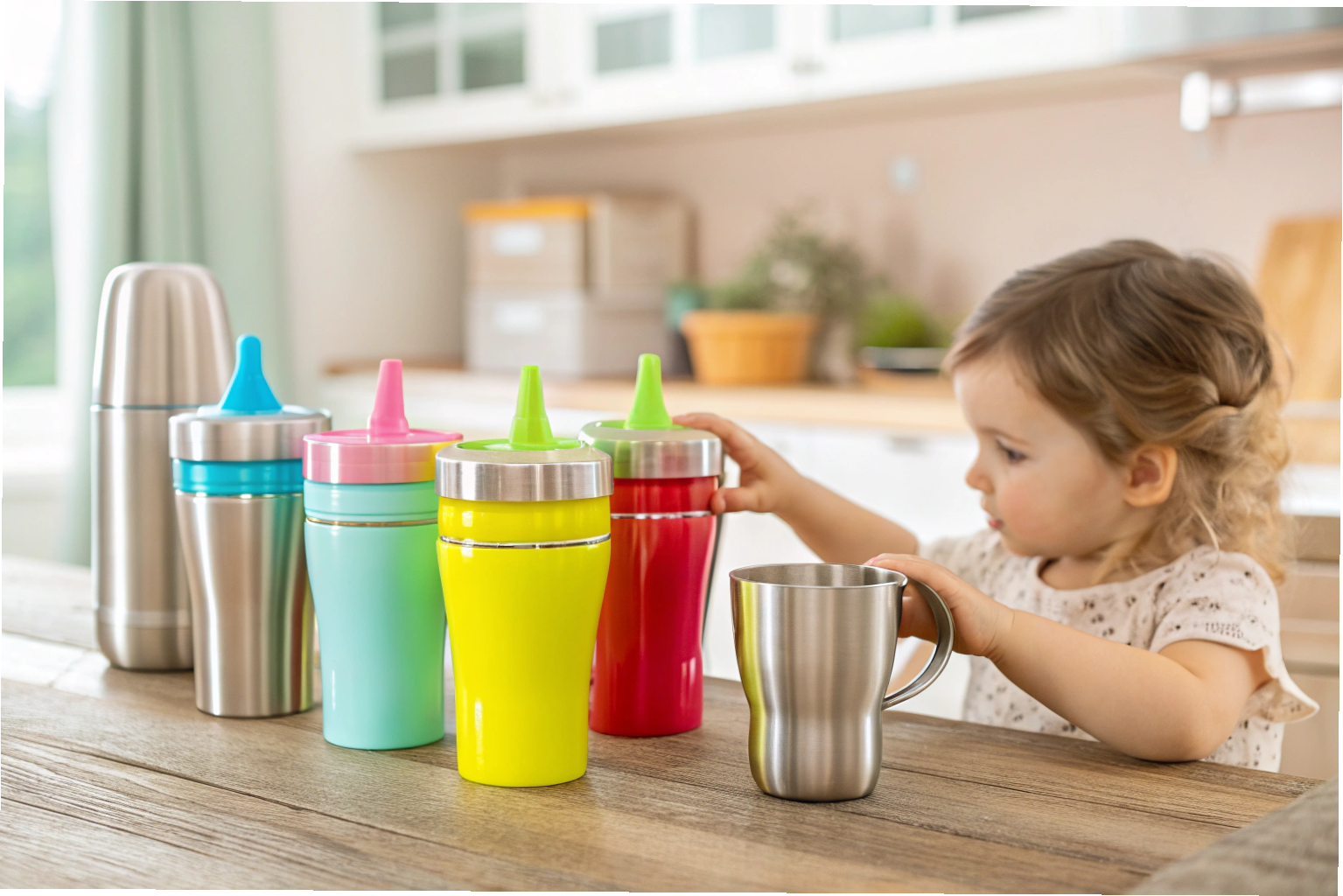
The most common BPA-free and safe materials for children's cups are food-grade stainless steel, silicone, polypropylene (PP #5), and certain types of Tritan™ copolyester. Glass is also inherently BPA-free but is less practical for young children due to breakability. Safety goes beyond just BPA; it encompasses material stability, leaching risks under heat or stress, durability, and ease of cleaning. As a manufacturer, we see the entire lifecycle of these products, from sourcing raw pellets to final quality inspections, and the choice of material is the foundational safety decision.
Selecting the right material isn't just about checking a box; it's about understanding the properties, certifications, and appropriate use cases for each. Whether you are a parent choosing a cup for your toddler or a retailer sourcing a new line of kids' drinkware, knowing what to look for empowers you to make the best choice. This guide will break down the safe materials, explain the key certifications, and highlight what truly matters when evaluating children's cup safety.
What Are the Top BPA-Free Materials for Kids' Cups?
When you're evaluating cup materials, you need a clear list of proven safe options. The goal is to find materials that are non-toxic, durable enough to withstand drops and bites, and resistant to leaching chemicals into drinks, especially when exposed to warm liquids, sunlight, or dishwashers. The good news is that several excellent, commercially viable materials meet these criteria and are widely used by reputable manufacturers like us at Shanghai Fumao Clothing in our drinkware production.
The top-tier BPA-free materials are 304 or 316 Food-Grade Stainless Steel, Medical-Grade or Food-Grade Silicone, Polypropylene (PP, Plastic #5), and Tritan™ Copolyester. Each has distinct advantages for different age groups and use cases. It's crucial to source these materials from reputable suppliers who provide material safety data sheets (MSDS) and comply with international food contact regulations. The manufacturing process itself must also preserve the material's integrity—for instance, using safe bonding agents for silicone spouts on stainless steel bodies.
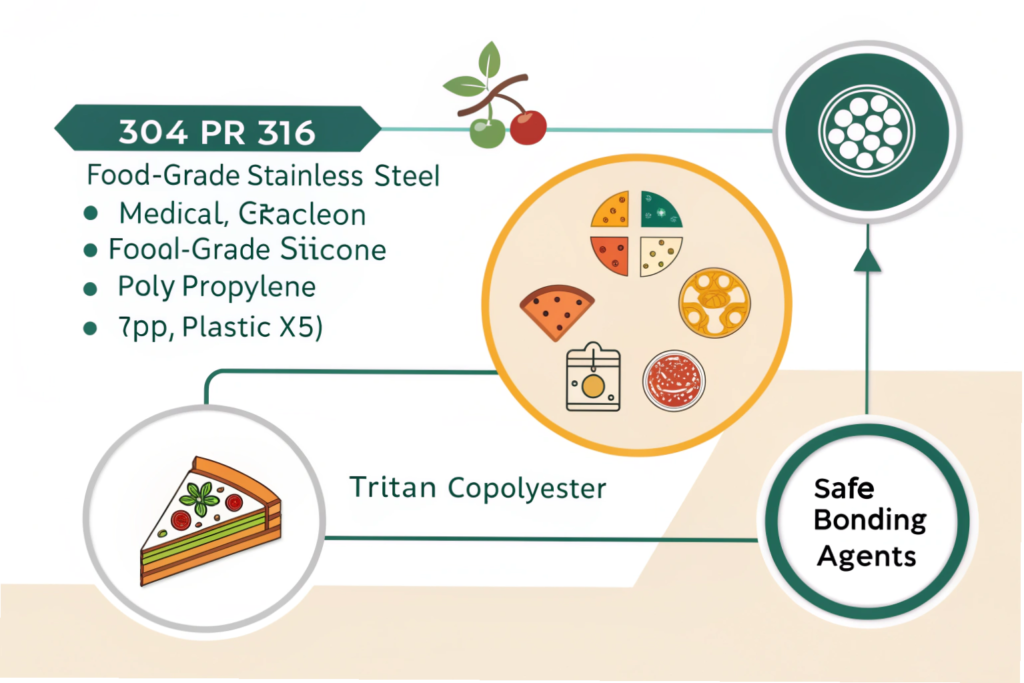
Why is Food-Grade Stainless Steel a Premier Choice?
Food-grade stainless steel (typically grades 304 or the higher-end 316) is arguably the gold standard for safety and durability. It is inherently inert, meaning it does not leach chemicals, rust, or retain flavors. Its durability makes it perfect for toddlers who frequently drop their cups. The main safety consideration with stainless steel is the lining of insulated cups; ensure it is also made of stainless steel and not a hidden plastic coating. When sourcing or manufacturing, verify the material certification. Reputable factories perform material composition tests to confirm the steel grade. From a practical standpoint, stainless steel is excellent for both hot and cold beverages, making it a versatile choice for brands targeting parents looking for a long-lasting, all-purpose solution. Information from organizations like the American Society for Testing and Materials (ASTM) provides standards for material specifications.
What Makes Silicone, PP, and Tritan™ Safe Options?
Silicone used in spouts, lids, and entire cups must be food-grade or medical-grade. High-quality silicone is soft, flexible, chew-safe, and withstands high temperatures (e.g., dishwasher and steam sterilization). A key test is its odorlessness; low-quality silicone may have a strong chemical smell. Polypropylene (PP, recycling #5) is a widely used, cost-effective BPA-free plastic. It has a high heat tolerance (often up to 100°C+), making it generally dishwasher-safe and microwave-safe. It's lightweight and shatterproof but can become scratched over time, potentially harboring bacteria if not cleaned thoroughly. Tritan™ is a premium BPA-free plastic known for exceptional clarity (like glass), durability, and resistance to odors and stains. It's often used for high-clarity sports bottles and is marketed as being more durable than older plastics like polycarbonate. When using any plastic, ensure the supplier provides a BPA-Free Declaration and, ideally, testing reports for other harmful substances like phthalates and lead. The U.S. Food and Drug Administration (FDA) regulates materials that come into contact with food.
How to Verify Safety Claims and Certifications?
Seeing a "BPA-Free" label is a start, but it shouldn't be the end of your investigation. This claim alone does not guarantee the absence of other potentially harmful chemicals like BPS, BPF, phthalates, or heavy metals. For true safety assurance, especially when sourcing in bulk for retail, you must look for verifiable third-party certifications and request documentation directly from the manufacturer. As a responsible producer, we expect and are prepared for these inquiries from our clients.
Verifying safety requires requesting and reviewing Material Safety Data Sheets (MSDS), certificates of compliance (like FDA, LFGB, or EC 1935/2004), and independent third-party lab test reports (e.g., for BPA, phthalates, lead, and cadmium). A trustworthy factory will have this documentation readily available. The certification should be specific to the exact material and colorant used in the product, as additives can change the safety profile. For instance, a safe polypropylene base resin might be combined with a colorant containing lead if not properly controlled.
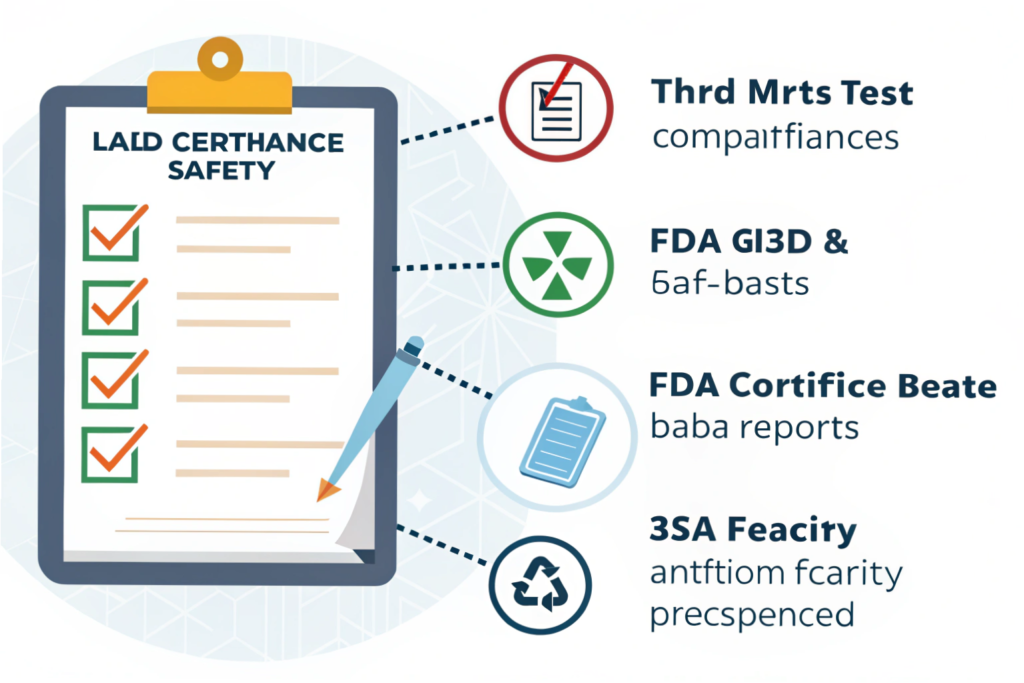
Which Third-Party Certifications Should You Look For?
Key international certifications for children's product safety include:
- FDA Compliance: For the US market, confirmation that the material complies with FDA regulations for food contact substances is fundamental.
- LFGB (Germany) or EC 1935/2004 (EU): These are stringent European food contact material standards. LFGB involves specific migration tests.
- CPSIA (Consumer Product Safety Improvement Act): For the US, this act sets limits for lead and phthalates in children's products, which applies to cups.
- Third-Party Lab Reports: Look for test reports from accredited labs like SGS, Intertek, or Bureau Veritas. Reports should explicitly state "ND" (Not Detected) for BPA, phthalates (DEHP, DBP, BBP, etc.), lead, and cadmium at levels well below the legal limits.
Always ask the manufacturer for these certificates for the specific product model you are ordering. A generic factory certificate is less valuable than a product-specific test report. Resources like the Consumer Product Safety Commission (CPSC) provide guidelines on children's product safety requirements.
What Questions Should You Ask Your Supplier?
When sourcing, go beyond the catalog. Ask your supplier pointed questions:
- "Can you provide the MSDS for the primary material (e.g., the PP resin or silicone) used in this cup?"
- "Do you have recent third-party test reports for this specific cup model covering BPA, phthalates, and heavy metals?"
- "Are the inks used for printing or decorations also food-grade and safety tested?"
- "What is your process for quality control of incoming materials to ensure they meet these safety specs?"
A factory with a robust quality management system will have a documented process for vetting material suppliers and conducting periodic safety audits. Their project managers should be able to explain this process clearly. If they are evasive or cannot provide documents, consider it a major red flag.
What Are the Practical Trade-offs Between Different Safe Materials?
Every material has its pros and cons. The "safest" material can vary depending on the child's age, use case (e.g., daycare, travel, home), and parent preferences. Understanding these trade-offs allows you as a buyer or retailer to curate the right product mix for your market or choose the best cup for your child's needs. It also informs design decisions, such as pairing a stainless steel body with a silicone spout for a balanced product.
The main trade-offs involve durability versus weight, insulation properties, clarity, cost, and suitability for different age ranges. No single material is perfect for every situation, so the choice often involves prioritizing the most important features for the intended use. For example, a cup for a newborn might prioritize lightweight and sterilizability (silicone/PP), while one for a preschooler might prioritize unbreakable durability for independence (stainless steel).
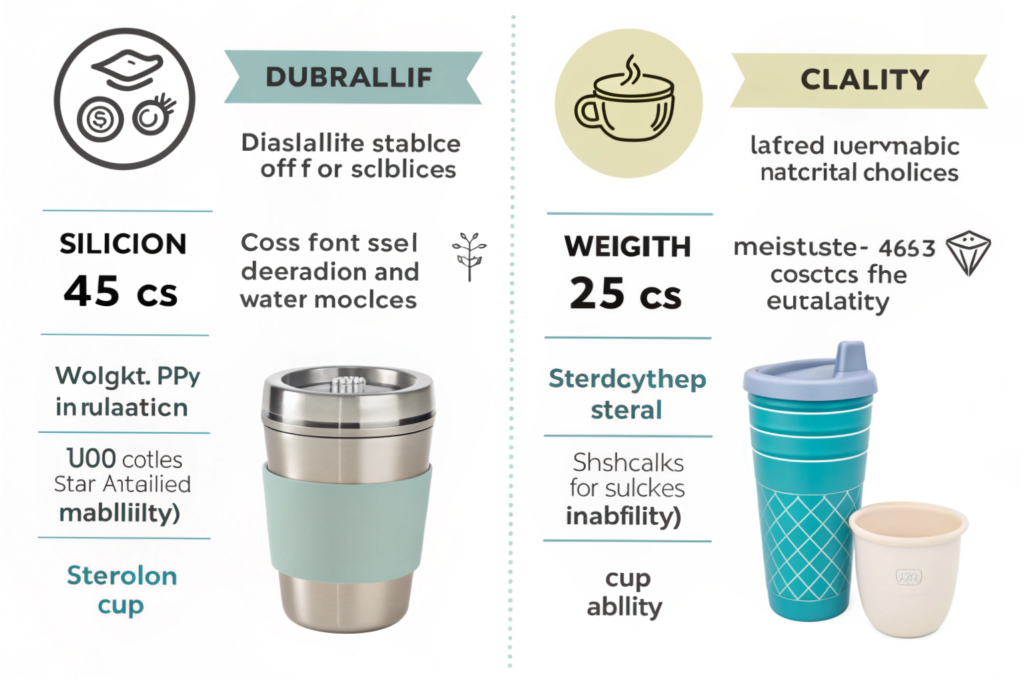
How to Match Material to Child's Age and Usage?
- Infants (0-12 months): Silicone is excellent for first sippy cups and soft spout trainers due to its chewable softness. PP is also common for simple, lightweight trainer cups. Both are easy to sterilize.
- Toddlers (1-3 years): Stainless steel (with a silicone sleeve) shines here for its indestructibility against throws and drops. Tritan™ and PP are also great for lightweight, easy-to-carry options. This age benefits from materials that are easy to clean thoroughly.
- Preschoolers & Older (3+ years): All materials are suitable. Stainless steel remains durable for school. Tritan™ offers a "grown-up," clear look for water bottles. Glass (with a protective sleeve) can be introduced for home use under supervision.
Consider also the closure type (straw, spout, open). Silicone is ideal for straws and spouts due to flexibility, while the body can be made from a different material. The design team at a factory can advise on the best material combinations for functionality and safety.
What About Cost, Durability, and Cleaning?
| Material | Relative Cost | Durability (Drops/Scratches) | Heat Resistance & Cleaning |
|---|---|---|---|
| Food-Grade Stainless Steel | Higher | Excellent (dent-resistant) | Excellent. Dishwasher-safe. |
| Tritan™ Copolyester | Medium-High | Very Good (shatterproof, scratch-resistant) | Excellent. Dishwasher-safe. |
| Polypropylene (PP) | Low-Medium | Good (shatterproof, can scratch) | Good. Often dishwasher & microwave-safe. |
| Silicone | Medium | Good (flexible, but can tear if cut) | Excellent. Boilable & dishwasher-safe. |
From a sourcing perspective, PP offers the most cost-effective entry point for a safe product line. Stainless steel commands a higher price but also allows for a premium brand positioning. Tritan™ sits in between, offering a premium plastic feel. Ensure any plastic cups are designed for easy cleaning, with no hidden crevices where mold can grow—a key aspect of product development that impacts long-term safety.
How to Maintain Safety Throughout the Product's Lifespan?
Safety isn't just about the new product; it's about how it holds up through months or years of use. Wear and tear can potentially create new hazards, such as cracks harboring bacteria, chipped coatings, or degraded plastic becoming more prone to leaching. Educating end-consumers on proper care and designing products for longevity are both critical responsibilities of brands and manufacturers.
Maintaining safety involves proper consumer care instructions (e.g., avoiding extreme abrasives, checking for damage) and, from a manufacturing standpoint, designing for durability and easy inspection. Products should be tested not just when new, but also after simulated use cycles (like repeated dishwasher runs, drop tests, and bite tests for spouts). This is part of a comprehensive quality control protocol that looks at product lifecycle.
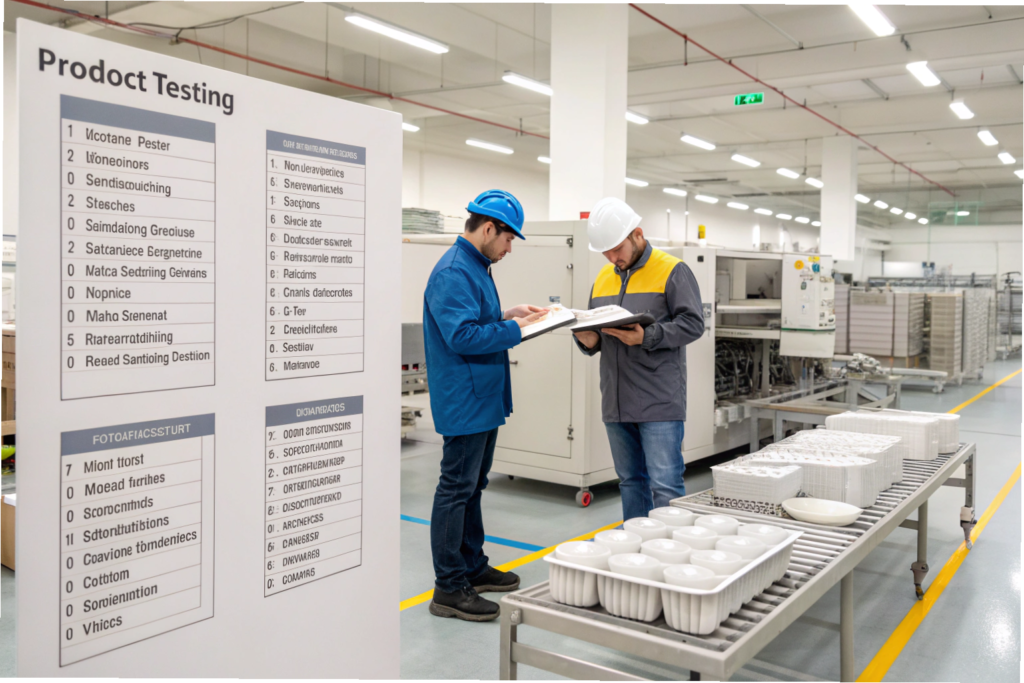
What Care Instructions Preserve Material Integrity?
Clear labeling is key. Instructions should include:
- Cleaning: "Handwash recommended for longevity" or "Top-rack dishwasher safe." Advise against using harsh abrasive cleaners that can scratch plastics or damage coatings.
- Inspection: "Regularly check for cracks, deep scratches, or damaged silicone parts and discontinue use if found."
- Temperature: "Do not use with carbonated drinks under pressure in sealed bottles" or "Do not expose to open flame." While silicone is heat-resistant, extreme direct heat can damage it.
Providing these instructions on packaging or a leaflet helps parents prolong the safe life of the cup. This level of detail in user guidance reflects well on a brand's commitment to safety and is something a professional project management team can help coordinate.
How Does Manufacturing Quality Ensure Long-Term Safety?
The factory's role is to build in durability. This includes:
- Stress Testing: Performing drop tests, overtightening tests on lids, and chew simulation tests on silicone parts.
- Material Bonding: Using food-grade, high-strength adhesives or ultrasonic welding to securely attach spouts to lids, ensuring they don't become a choking hazard.
- Coating Adhesion: For painted or coated steel bottles, performing peel tests to ensure the coating won't chip off and be ingested.
A manufacturer like Shanghai Fumao Clothing integrates these tests into our production process. Our QC team doesn't just inspect for visual defects; they inspect for potential failure points that could compromise safety over time. Following recognized international standards for product safety guides this entire approach.
Conclusion
Choosing BPA-free and safe materials for children's cups is a multi-layered process that blends material science, rigorous certification, practical design, and lifecycle management. The safest choice is one that pairs a verified, stable material with robust manufacturing quality control and clear user guidance. By focusing on food-grade stainless steel, certified silicone, polypropylene (PP), and Tritan™, and by demanding transparent proof of safety from suppliers, you can have full confidence in the products you give to children or bring to market.
Remember, safety is the most powerful feature any children's product can have. It builds unshakable trust with parents and forms the foundation of a reputable brand. As a manufacturer dedicated to producing safe, high-quality accessories, we believe that this diligence is not just a regulatory requirement but a core ethical responsibility.
If you are looking to develop or source a line of children's drinkware that prioritizes verified safety without compromising on design or functionality, we are here to help. Our team can guide you through material selection, certification requirements, and design for durability. Contact our Business Director, Elaine, at elaine@fumaoclothing.com to discuss how we can create safe, appealing cups for your youngest customers.