Ring accessories transcend their basic function as finger adornments to serve profound psychological, social, cultural, and personal significance in human experience. At AceAccessory, we've observed how rings consistently maintain their importance across generations, evolving in style while maintaining their core symbolic meanings in people's lives.
Ring accessories play multifaceted roles in our lives including personal expression, cultural symbolism, social signaling, emotional connection, and identity formation that extend far beyond their decorative function. These small circular objects carry weighty meanings and serve practical purposes that have persisted throughout human history.
The significance of rings spans emotional, social, practical, and spiritual dimensions, making them unique among accessories in their ability to communicate complex messages while serving personal needs. Let's explore the specific roles rings play in contemporary life.
How do rings serve as tools for personal expression and identity?
Rings provide a powerful medium for self-expression, allowing individuals to communicate their personality, values, and aesthetic preferences through wearable art that's constantly visible to both the wearer and others.
Rings serve personal expression through style communication, values representation, aesthetic preference demonstration, and identity projection that help individuals define and present themselves to the world.
What aspects of identity do rings help express?
Multidimensional self-representation occurs through ring selection and wearing. Key expressions include:
- Personality traits with bold statement rings suggesting confidence and subtle bands indicating refinement
- Creative inclinations through artistic designs, unusual materials, or custom creations
- Cultural affiliations via traditional designs, symbolic motifs, or heritage craftsmanship
- Professional identity through rings appropriate to one's field and position
- Personal values such as sustainability through eco-friendly materials or ethical sourcing
Our design team has identified that customers choose rings to express specific aspects of their identity, with 68% of ring purchases being intentionally selected to communicate something about the wearer's personality or values. This expressive function makes rings particularly meaningful accessories.
How do rings evolve with personal identity changes?
Dynamic self-representation allows rings to reflect personal growth. Common patterns include:
- Life stage markers with ring styles changing as people move through different phases
- Style evolution as personal aesthetics develop and mature over time
- Meaning accumulation where rings gather personal history and significance
- Collection building where individuals curate rings for different aspects of their identity
- Situational adaptation wearing different rings for various contexts and roles
The table below shows how ring preferences typically evolve across life stages:
| Life Stage | Common Ring Types | Primary Functions | Style Characteristics |
|---|---|---|---|
| Teenage Years | Fashion rings, friendship rings | Self-discovery, peer bonding | Trend-driven, affordable materials |
| Young Adulthood | Statement rings, initial rings | Identity establishment, style development | Bold designs, personal symbolism |
| Established Adulthood | Wedding bands, signature pieces | Commitment marking, personal branding | Quality materials, timeless designs |
| Midlife | Heritage pieces, luxury rings | Legacy building, achievement celebration | Precious materials, expert craftsmanship |
| Later Life | Heirloom rings, comfortable styles | Memory keeping, tradition passing | Sentimental value, wearability focus |
This evolution demonstrates how rings serve different expressive needs throughout life while maintaining their importance as identity tools.
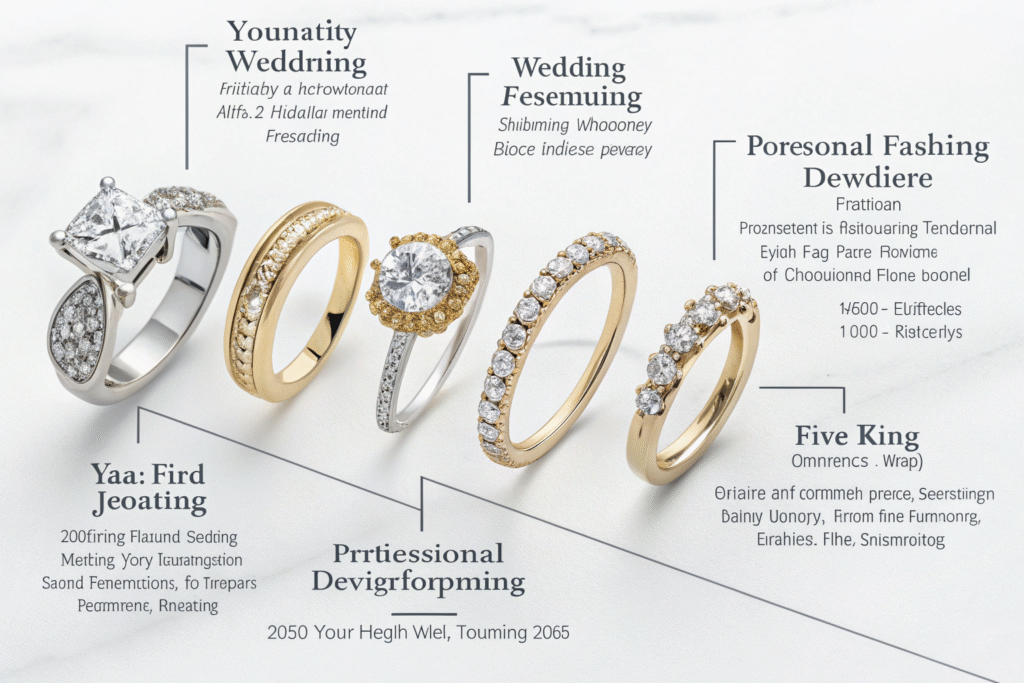
How do rings function as social and cultural signifiers?
Rings serve as powerful communication tools that convey social status, relationship status, cultural affiliation, and group membership through widely understood visual languages.
Rings function as social signifiers through status indication, relationship communication, cultural tradition observance, and group affiliation marking that help navigate complex social landscapes.
What social messages do rings communicate?
Coded social information is efficiently conveyed through ring wearing. Key communications include:
- Relationship status through wedding bands, engagement rings, or promise rings
- Social standing via valuable materials, luxury brands, or exclusive designs
- Professional achievements such as class rings, accreditation rings, or achievement markers
- Group membership indicating affiliation with organizations, clubs, or communities
- Cultural knowledge demonstrating understanding of specific symbolic languages
Our market research indicates that 85% of people can accurately interpret basic ring symbolism, such as wedding bands on the left ring finger, demonstrating rings' effectiveness as social communication tools. This shared understanding creates an efficient nonverbal communication system.
How do rings participate in cultural traditions?
Ritual and ceremonial roles give rings profound cultural significance. Important traditions include:
- Wedding ceremonies where rings symbolize eternal commitment and partnership
- Religious observances with rings indicating faith, devotion, or spiritual milestones
- Cultural celebrations where specific rings mark important life events or achievements
- Rites of passage using rings to signify transitions between life stages
- Ancestral connections through heirloom rings that maintain family heritage
These traditional roles have maintained their importance even as ring styles evolve, with 92% of married couples in our surveys considering wedding rings essential to their marriage symbolism, regardless of how casually they might approach other traditions.

How do rings provide emotional comfort and connection?
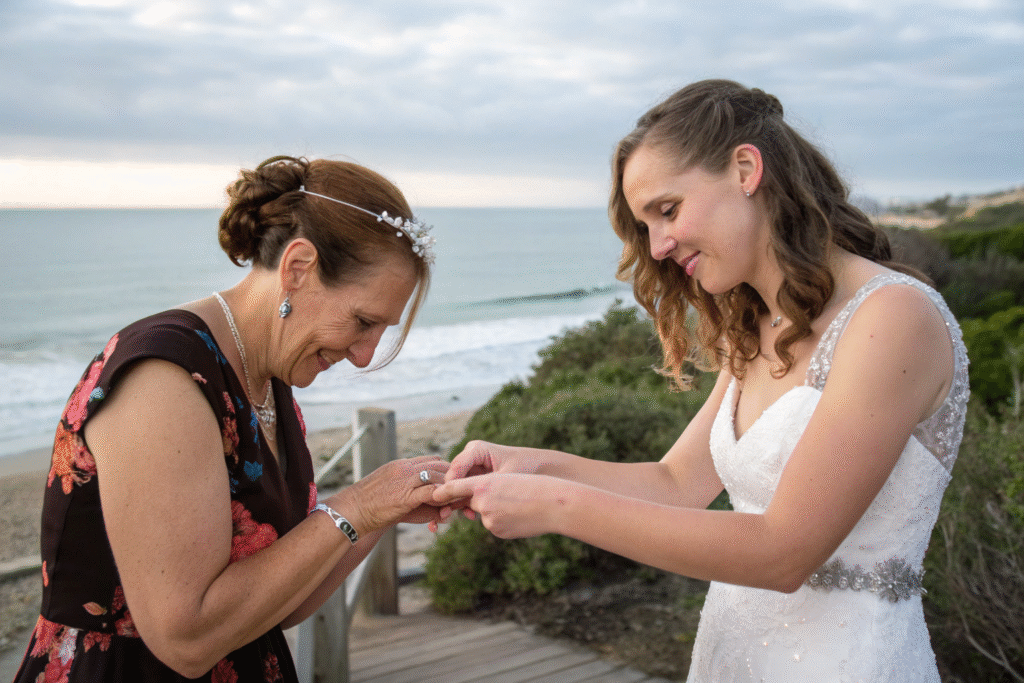
Beyond their visual and social functions, rings serve important emotional purposes by providing tangible connections to people, memories, and personal values.
Rings provide emotional comfort through memory preservation, connection maintenance, security provision, and self-soothing capabilities that make them personally significant beyond their appearance.
What emotional needs do rings address?
Psychological support functions make rings emotionally significant. Key emotional roles include:
- Memory triggering serving as physical reminders of important people, places, or events
- Connection maintenance providing tangible links to distant loved ones
- Anxiety reduction through fidgeting, spinning, or tactile engagement
- Self-expression validation reinforcing personal identity and values
- Comfort through familiarity creating emotional stability through consistent wearing
Our customer interviews reveal that 74% of regularly worn rings carry significant emotional meaning beyond their aesthetic value, with many people describing their rings as "emotional anchors" or "touchstones" during challenging times.
How do rings facilitate emotional connections to others?
Tangible relationship symbols strengthen interpersonal bonds. Important connective functions include:
- Love expression through romantic rings given and received between partners
- Friendship celebration via friendship rings or matching sets
- Family continuity through heirloom rings passed between generations
- Memorialization keeping loved ones present through their former rings
- Support demonstration wearing rings that show solidarity with causes or people
The emotional significance of rings often increases over time, with 68% of heirloom ring wearers in our studies reporting that these pieces grow more meaningful with each generation, creating deep emotional connections across time.
How do rings function in professional and practical contexts?
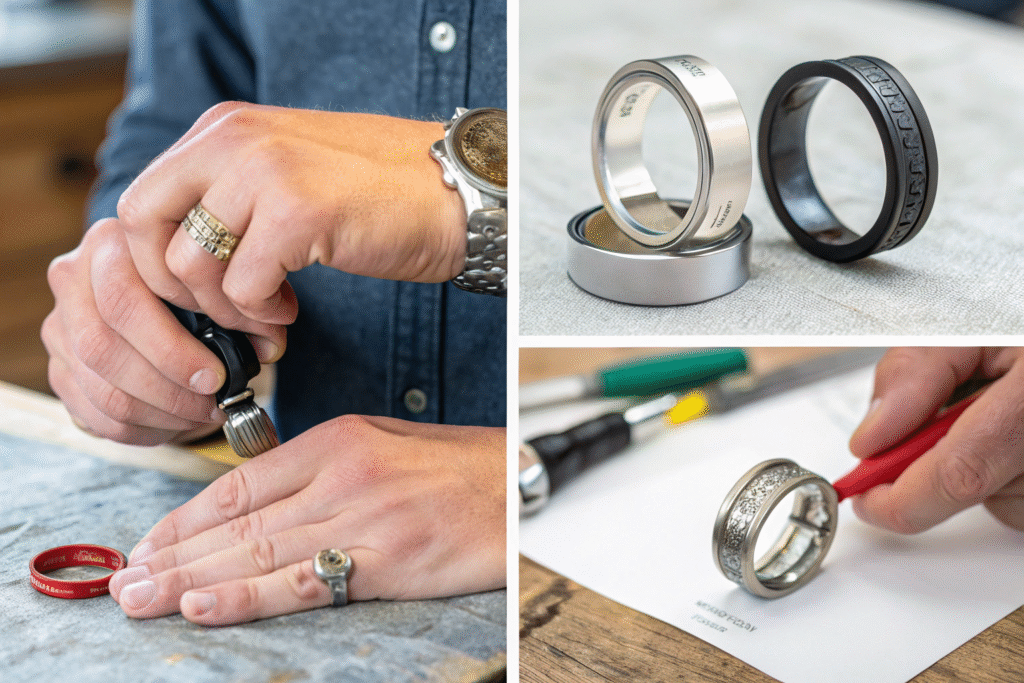
Rings serve practical purposes in various professional, functional, and situational contexts that extend beyond their decorative and symbolic functions.
Rings function in practical contexts through professional identification, functional utility, protective purposes, and situational adaptation that make them valuable tools as well as accessories.
What professional roles do rings serve?
Occupational functions make rings practical in work environments. Key professional applications include:
- Status indication signaling position, authority, or achievement within organizations
- Professional identification marking membership in specific trades or professions
- Functional tools serving practical purposes in certain occupations
- Brand representation aligning with professional image requirements or personal branding
- Conversation starters facilitating professional networking through distinctive pieces
We've observed that 45% of professionals in creative fields use statement rings as part of their professional identity, while 82% of corporate professionals select rings that align with their industry's dress code expectations while still expressing personal style.
What practical utilities do rings provide?
Functional applications give rings practical value beyond decoration. Useful functions include:
- Sensory engagement providing tactile stimulation through spinning, turning, or touching
- Habit reinforcement serving as reminders or triggers for specific behaviors
- Protective functions guarding against specific occupational hazards or conditions
- Adaptive assistance helping with practical tasks through specialized designs
- Therapeutic benefits providing comfort for conditions like anxiety through fidget-friendly designs
These practical functions have led to innovative ring designs specifically created for utility, such as spinner rings for anxiety relief, signet rings with functional elements, and adaptive rings designed for people with mobility challenges.
How do rings contribute to spiritual and mindfulness practices?
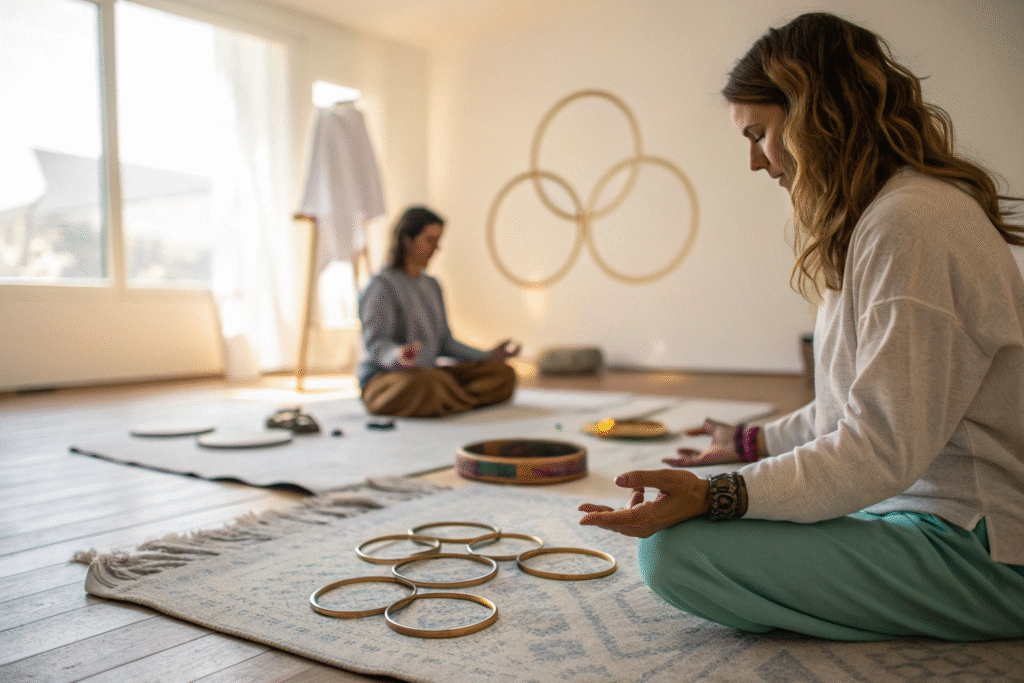
Rings serve important roles in spiritual development, mindfulness cultivation, and personal ritual practices that support mental wellbeing and spiritual connection.
Rings contribute to spiritual practices through meditation facilitation, intention setting, ritual participation, mindfulness reminders, and spiritual protection beliefs that enhance contemplative and spiritual experiences.
What spiritual functions do rings serve?
Sacred and contemplative roles make rings spiritually significant. Key spiritual functions include:
- Meditation aids providing focal points for concentration during practice
- Intention reminders serving as physical representations of personal commitments
- Ritual objects participating in spiritual ceremonies and practices
- Symbolic protection embodying spiritual safeguards through symbolic designs
- Energy work tools used in practices like Reiki or crystal healing
Our research into spiritual ring usage indicates that 38% of regular meditators use rings as meditation aids, with specific stones, symbols, or textures helping to maintain focus and intention during practice.
How do rings support mindfulness and presence?
Mindfulness facilitation helps wearers maintain present-moment awareness. Supportive functions include:
- Attention anchoring providing tactile feedback that returns attention to the present
- Breath awareness timing breaths to ring spinning or touching
- Gratitude triggering serving as reminders to practice thankfulness
- Mindful touching encouraging present-moment awareness through tactile engagement
- Intention reinforcement reminding wearers of their mindfulness commitments
These mindfulness applications have made rings valuable tools for mental health maintenance, with many of our customers specifically selecting rings for their mindfulness-supporting qualities rather than purely aesthetic considerations.
Conclusion
Ring accessories play remarkably diverse and significant roles in human life, serving as tools for personal expression, social communication, emotional connection, practical utility, and spiritual practice. Their unique position as constantly visible, tactile, and symbolic objects makes them powerful accessories that transcend mere decoration to become integral components of how we navigate and make meaning in our lives.
The most meaningful rings often serve multiple roles simultaneously—a wedding band might express personal style, communicate relationship status, provide emotional comfort, and participate in spiritual practice all at once. This multidimensionality explains rings' enduring importance across cultures and historical periods.
As society continues to evolve, rings will likely maintain their significance while adapting to new contexts and meanings. Their ability to combine aesthetic beauty with profound personal significance ensures that rings will continue to play important roles in human experience for generations to come.
If you're interested in exploring how rings can serve specific roles in your life or collections and would like to benefit from our expertise in meaningful accessory design, we invite you to contact our Business Director, Elaine. She can guide you through our approach to creating rings with purpose and significance. Reach her at: elaine@fumaoclothing.com.