You found a belt manufacturer in China with beautiful leather work and a price that gives you a 65% margin. You are ready to place a deposit on 3,000 units of reversible leather belts with custom buckles. The factory sends you an invoice. The payment terms say "100% T/T before production." Your stomach tightens. You remember the story from a fellow importer who wired $40,000 upfront and never saw a single belt. The factory stopped answering emails. The phone number was disconnected. You are not just trying to buy belts. You are trying to protect your cash flow and your business from a catastrophic loss.
The safest payment terms for importing belts from China are 30% deposit via T/T with 70% balance against a copy of shipping documents, or using a Letter of Credit for larger orders, combined with Alibaba Trade Assurance or third-party inspection as added layers of security.
I have been manufacturing belts and accessories in Zhejiang for many years. I have sat on both sides of the payment negotiation table. I understand why Ron wants to protect his money. I also understand why a factory needs a deposit to buy leather and metal buckles. Let me walk you through the real-world payment landscape so you can structure a deal that protects your interests while still getting your belts produced on time.
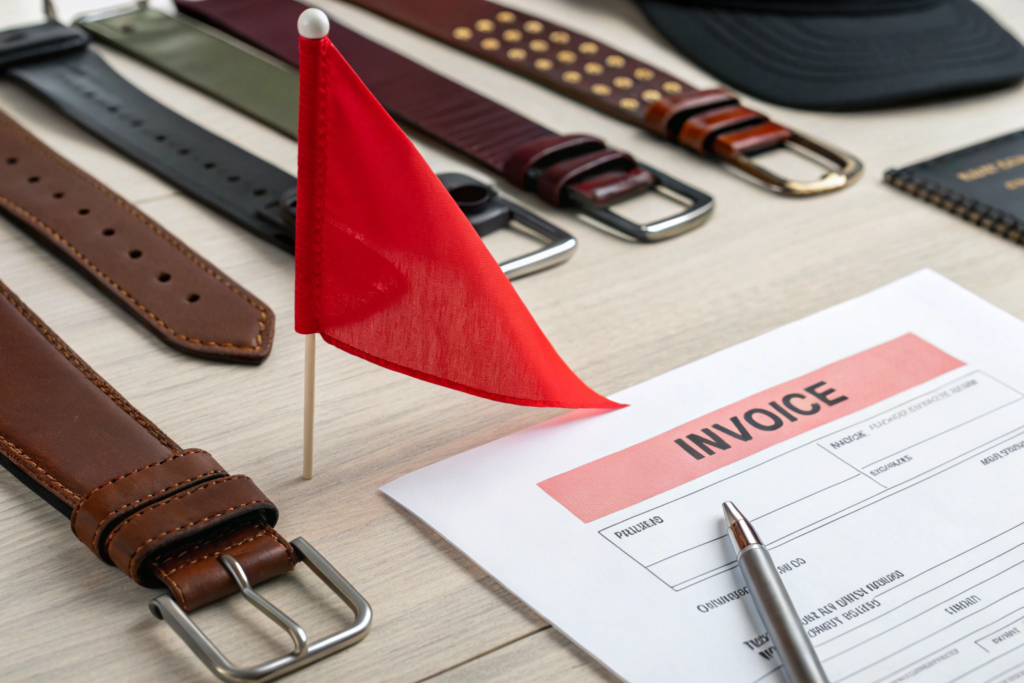
Why Is 100% T/T Upfront a Red Flag for Belt Imports?
The term "100% T/T before production" is common among small trading companies and new factories with weak cash flow. T/T stands for Telegraphic Transfer, which is just a bank wire transfer. When you wire 100% upfront, you have zero leverage. Zero. The factory has all your money and you have a promise. If they run into production problems, they have no urgency to fix them because they have already been paid in full. If they go bankrupt, you are an unsecured creditor at the back of a very long line in a Chinese bankruptcy court.
I tell my clients this directly: AceAccessory does not require 100% upfront. We ask for a deposit to cover raw materials. For belts, the raw materials are significant. Leather hides cost money. Metal buckles require molds and plating. We need a deposit to secure those components. But we do not need 100% of the order value before a single belt is cut. A factory asking for full payment upfront is either financially unstable or they do not trust you. Either way, it is not a partnership you want to enter.
The only time 100% upfront might be acceptable is for a very small sample order under $500 where the administrative cost of managing a balance payment is higher than the risk. For any production order over $1,000, you need a secure payment structure for China imports that ties the final payment to proof that the goods exist and meet quality standards.
What Does a Standard 30/70 T/T Payment Structure Look Like?
This is the industry standard for established factories like AceAccessory. It is a compromise that balances the factory's need for working capital with the buyer's need for security.
Here is how it works in practice. You place an order for 3,000 belts. The total invoice is $15,000. You wire 30%, which is $4,500, to our bank account. We use that $4,500 to purchase leather, order buckles, and start cutting. This deposit is non-refundable because the materials are custom cut for your order. We cannot sell your specific belt style to another client.
We produce the belts. They go through quality control. They are packed into cartons. We book the shipping container. At this point, the goods are finished and sitting in our warehouse. We send you photos and a video of the finished goods. We also send you a copy of the Bill of Lading. This is the document issued by the shipping line that proves the goods are on the vessel. You now have proof that the belts exist and are on their way. You wire the remaining 70% balance of $10,500. We release the original shipping documents or we instruct the forwarder to release the cargo at the destination port. This 30 70 T/T payment term negotiation is fair to both parties.
How Can You Negotiate Better Payment Terms with a New Supplier?
You have more leverage than you think, especially as an American buyer. Factories want long-term relationships with US importers because the order volumes tend to be larger and more consistent than domestic Chinese orders.
Start the negotiation by stating your standard terms clearly. Say: "Our company policy is 30% deposit and 70% against copy of documents. We have been importing for ten years and this is how we work with all our suppliers." This frames it as a standard business practice, not a special request.
If the factory pushes back, offer a compromise. Suggest a 30/70 split but with the balance paid before shipment rather than against documents. This gives the factory slightly more security because they have the money before the container leaves China. You still have the security of seeing the finished goods photos and inspection report before wiring the balance.
Another option is to offer a higher deposit percentage on the first order. Suggest 40% or even 50% deposit for the first order only, with the understanding that future orders will revert to standard 30/70 terms. This shows good faith while you build trust. At AceAccessory, we are flexible on the first order because we understand the need to establish a trusted supplier payment negotiation foundation.
Is a Letter of Credit Practical for Belt Orders Under $50,000?
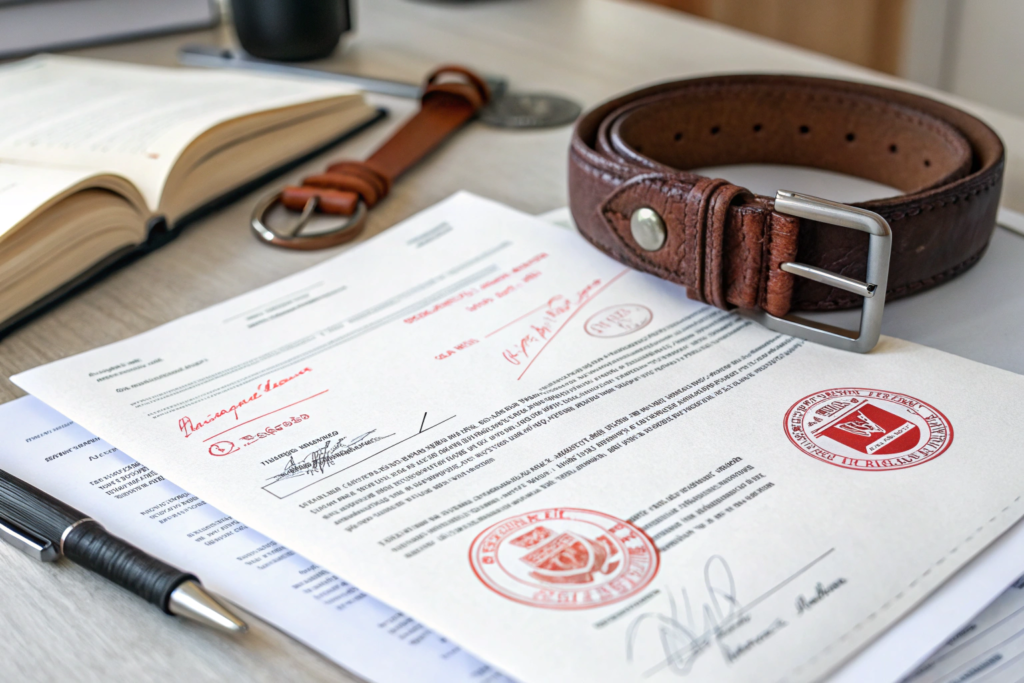
A Letter of Credit or L/C is the gold standard of secure international trade. It shifts the payment risk from the buyer and seller to the banks. The buyer's bank guarantees payment to the seller's bank once specific documents are presented. These documents include the Bill of Lading, Commercial Invoice, Packing List, and often an Inspection Certificate.
The security is excellent. But the practicality for small to medium belt orders is questionable. Banks charge fees for opening and negotiating an L/C. These fees typically range from $300 to $800 per transaction. For a $15,000 belt order, that is a 2% to 5% transaction cost. That eats into your margin. Additionally, the paperwork is complex. A single typo on the Bill of Lading that does not exactly match the L/C wording can cause the bank to reject the documents. The payment is delayed while the discrepancy is corrected.
At Shanghai Fumao, we accept L/Cs for orders over $50,000. Below that threshold, the administrative burden and bank fees make T/T a more efficient option for both parties. We are happy to provide our bank information and work with your bank to set up the L/C. But I always make sure the buyer understands the total cost and the strict documentation requirements. An L/C is a precision instrument. It is not forgiving of letter of credit discrepancy and bank fees caused by small clerical errors.
What Is an Irrevocable Letter of Credit at Sight?
This is the specific type of L/C you should request if you go this route. "Irrevocable" means the terms cannot be changed without the agreement of all parties. The buyer cannot cancel it unilaterally. "At Sight" means the seller gets paid immediately upon presenting compliant documents. They do not have to wait 60 or 90 days.
The process works like this. You apply for the L/C at your bank. Your bank issues the L/C to our bank in China. We review the draft L/C before it is finalized. This is a critical step. We check that the description of goods matches our proforma invoice exactly. We check that the required documents are documents we can actually produce. We check the latest shipment date and the expiry date. Once the L/C is issued, we produce the belts and ship them. We gather the required documents and present them to our bank. Our bank checks the documents and forwards them to your bank. Your bank checks them and releases payment to our bank. The documents are then released to you so you can claim the goods from the shipping line. This irrevocable letter of credit sight payment process is the most secure method available.
What Documents Are Typically Required in an L/C for Belts?
The L/C will specify exactly which documents the seller must present. Getting this list right at the beginning prevents problems later.
For a belt shipment, the required documents usually include a Signed Commercial Invoice, a Detailed Packing List, a Clean On Board Bill of Lading, and often a Certificate of Origin if you want to claim duty preferences. The L/C may also require a Beneficiary's Certificate stating that a set of non-negotiable documents has been sent to the buyer. Some buyers add an Inspection Certificate issued by a third-party agency like SGS or Intertek.
The key is that every document must be perfectly consistent. The description of goods on the Commercial Invoice must match the L/C description word for word. If the L/C says "Leather Belt, Black, Size 36" the invoice cannot say "Leather Belts, Black, Size 36-38." That plural "Belts" versus singular "Belt" is a discrepancy that can justify non-payment. We have a dedicated documentation specialist at AceAccessory who reviews all L/C documents with a fine-tooth comb before presentation. This letter of credit document compliance checklist saves our clients from payment delays.
How Does Alibaba Trade Assurance Protect Belt Buyers?
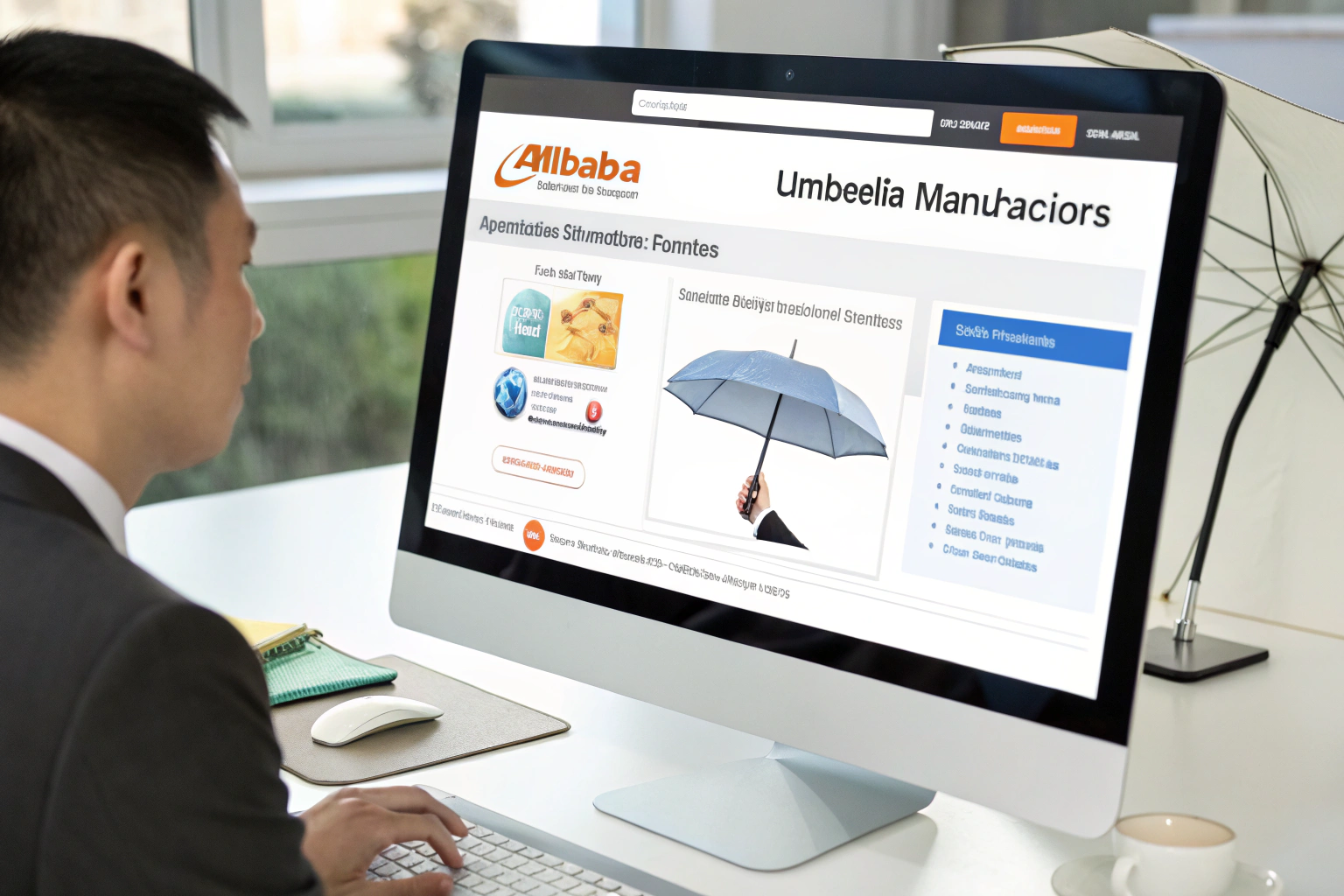
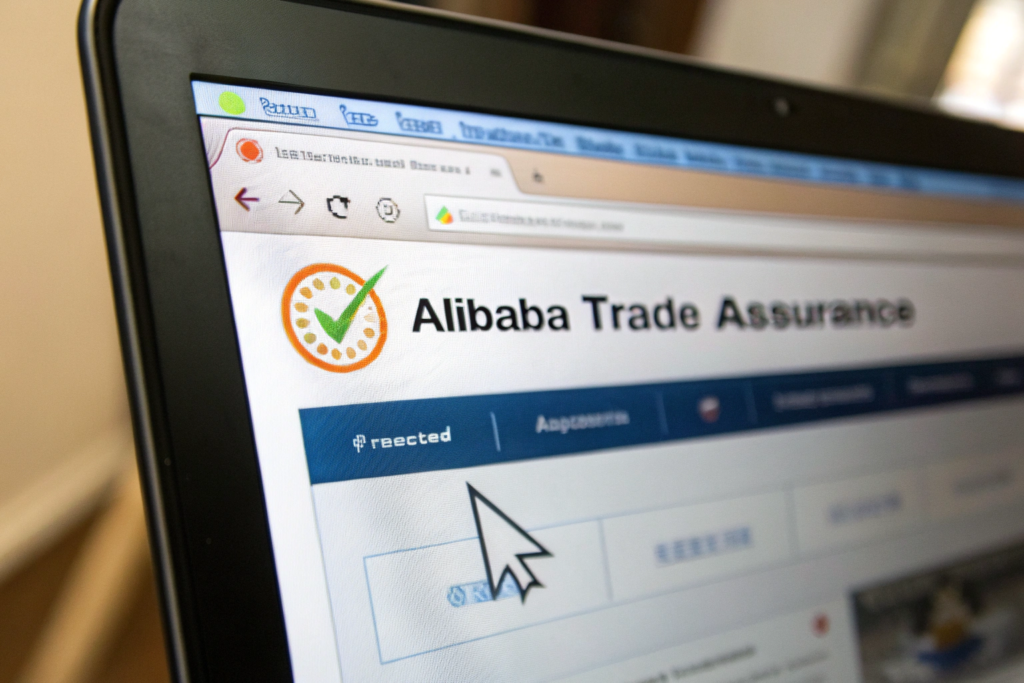
If you found AceAccessory or another belt supplier through Alibaba, you have access to a tool called Trade Assurance. This is a free service provided by Alibaba that acts as a safety net for buyers. It is not as ironclad as an L/C, but it is significantly better than a direct wire transfer with no recourse.
Trade Assurance works by holding the supplier accountable to the terms of the order contract. You place the order on the Alibaba platform and pay through Alibaba's payment system. The funds are held in an escrow account. The supplier only gets paid when they fulfill the contract terms. If the supplier fails to ship on time or if the goods arrive with significant quality defects, you can file a dispute. Alibaba investigates and can refund your money up to the protected amount.
I encourage my new clients to use Trade Assurance for their first order with AceAccessory. It costs them nothing extra and it gives them peace of mind. It also demonstrates that we are confident in our ability to deliver. We have been a Gold Supplier on Alibaba for years with a strong track record of on-time delivery and quality. The Alibaba Trade Assurance coverage amount is displayed on our company profile for full transparency.
What Disputes Does Trade Assurance Actually Cover?
Trade Assurance is not a blanket warranty. It covers specific breaches of the order contract. The most common covered disputes are shipping delay and quality discrepancy.
If the contract states shipment within 30 days and we ship on day 45, you have a valid claim. You can submit evidence of the delay and request a refund. The refund amount is calculated based on a percentage of the order value. If the goods arrive and the leather is peeling or the buckle finish is wrong, you have a quality claim. You must provide clear photo evidence and, in some cases, a third-party inspection report.
Trade Assurance does not cover disputes over minor subjective issues. It will not refund you because you decided you do not like the shade of brown after approving the sample. The protection is for objective, measurable breaches of the written contract. Understanding the scope of Trade Assurance dispute coverage is essential before relying on it as your sole protection.
How Do You Verify a Supplier's Trade Assurance History?
Alibaba makes this information public. On the supplier's storefront page, you can see the Trade Assurance badge. Click on it. It will show you the total value of orders covered by Trade Assurance and the supplier's on-time delivery rate.
A supplier with a high protected amount and a 95% or higher on-time delivery rate is a good sign. It means they regularly process orders through the platform and they ship on time. A supplier with a low protected amount or no Trade Assurance badge is a risk. They may have been penalized by Alibaba or they may be avoiding the platform's accountability measures.
I tell Ron and buyers like him to use this information as part of their due diligence. Check the badge. Check the history. Ask the supplier why they do not offer Trade Assurance if they are a Gold Supplier. The answer will tell you a lot about their business practices. At AceAccessory, we are proud of our Trade Assurance performance metrics and we actively encourage buyers to place orders through the platform for their own protection.
What Role Does Third-Party Inspection Play in Payment Security?
You can have the perfect payment terms, but they are worthless if the belts that arrive are garbage. The final balance payment is your last point of leverage. You should only release that payment when you have independent confirmation that the goods meet your specifications.
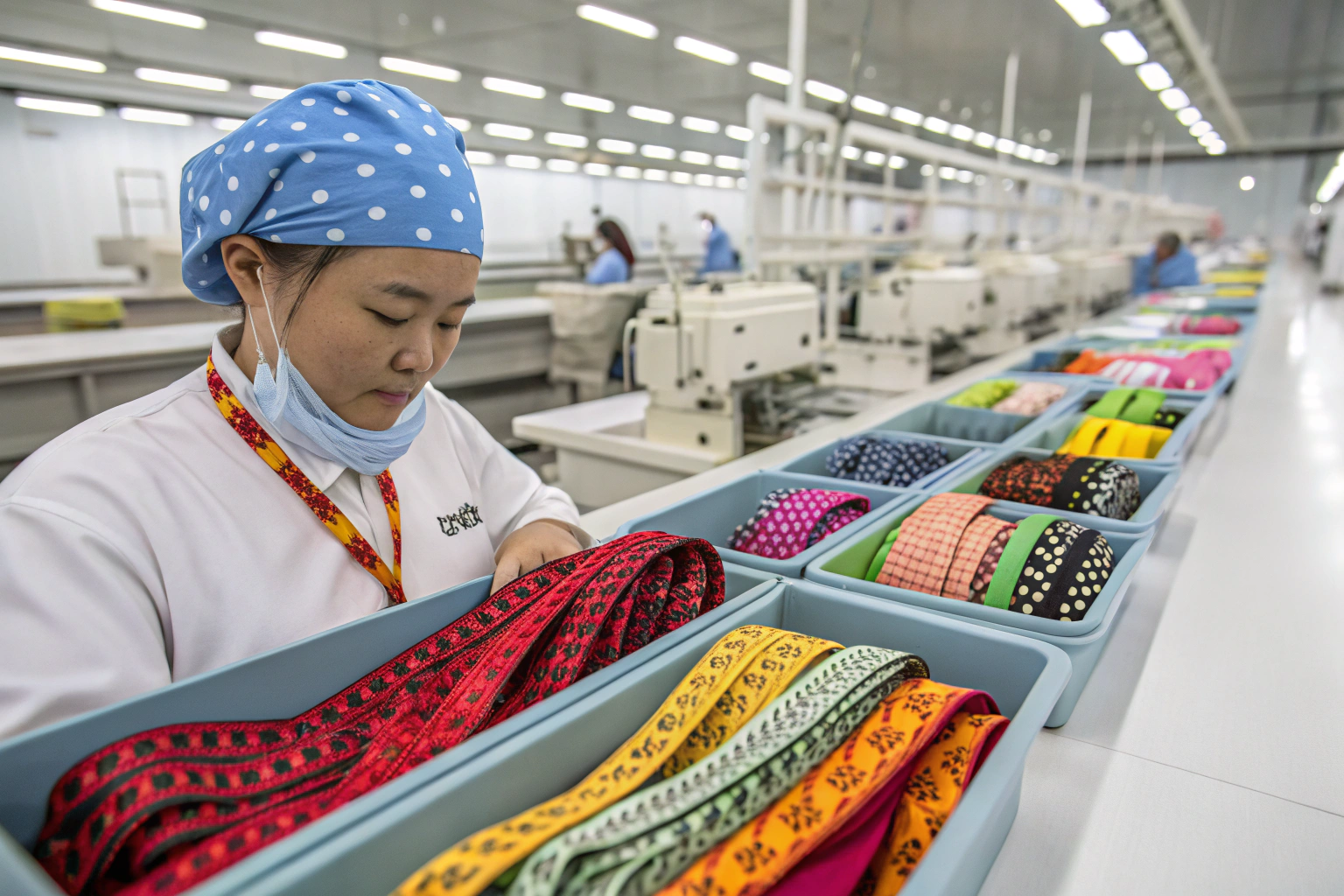
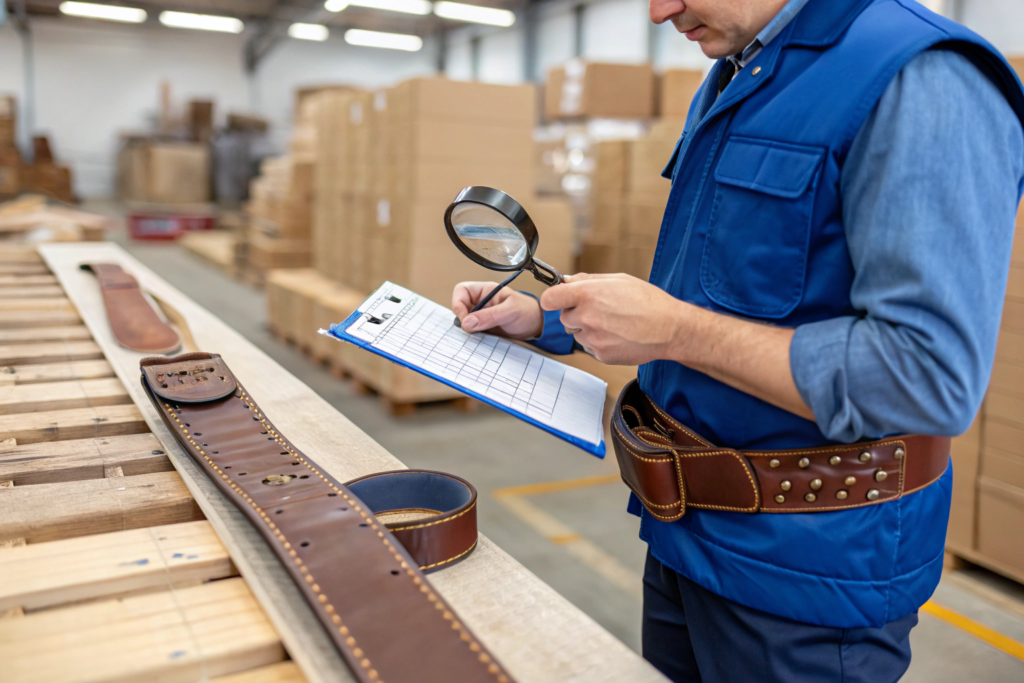
This is where third-party inspection companies come in. Firms like SGS, Bureau Veritas, Intertek, and AsiaInspection offer services specifically for importers. You hire them. They send an inspector to our factory in Zhejiang. The inspector counts the cartons, pulls a random sample based on AQL standards, and checks every aspect of the belts. They look at the leather quality, the stitching, the buckle attachment, the size accuracy, and the packaging.
I welcome third-party inspections at AceAccessory. A clean inspection report is a point of pride for our quality control team. It also makes the final payment conversation very simple. The report says the goods are good. You wire the balance. The goods ship. There is no argument about quality because an independent expert has already verified it. An inspection costs between $300 and $500 depending on the complexity of the order. For a $15,000 shipment, that is a 2% to 3% insurance premium. It is money well spent for pre shipment inspection service China peace of mind.
What Is an AQL Inspection and How Does It Work?
AQL stands for Acceptable Quality Limit. It is a statistical sampling method used worldwide. You do not inspect every single belt. You inspect a representative random sample.
The inspector uses a standard table. For an order of 3,000 belts, the sample size might be 125 belts. The AQL level you choose determines how many defects are allowed before the lot fails. A typical AQL for fashion belts is 2.5 for major defects and 4.0 for minor defects. A major defect is something that makes the belt unusable, like a broken buckle or a seam coming apart. A minor defect is something cosmetic, like a slight variation in leather grain.
If the inspector finds more than the allowed number of defects, the lot fails. You then have a choice. You can require the factory to rework the entire order and re-inspect it at their cost. Or you can negotiate a discount on the final payment to accept the goods as-is. The inspection report gives you objective data to support that negotiation. Understanding AQL sampling inspection standards empowers you as a buyer.
When Should You Schedule the Inspection During Production?
Timing the inspection correctly is critical. If you inspect too early, the goods are not finished. If you inspect too late, the goods are already packed in the container and it is too late to fix problems.
The ideal time for a belt inspection is "Final Random Inspection" or FRI. This happens when 100% of the goods are finished and at least 80% are packed. The inspector can open cartons, pull samples, and assess the finished product. If the inspection passes, we close the cartons and load the container. If it fails, we have time to rework the order before the vessel cutoff.
At AceAccessory, we provide a production status update weekly. When the belts are about 80% complete, we notify the client that it is time to schedule the inspection. We coordinate with the inspection company to schedule a date that works for everyone. This proactive communication ensures the inspection does not delay the shipment. It is part of our production timeline and inspection scheduling standard operating procedure.
Conclusion
Importing belts from China does not have to feel like a gamble. By understanding and negotiating the right payment terms, you can protect your capital while still building a productive relationship with a quality manufacturer. The safest path forward combines several layers of protection.
Start with a standard 30/70 T/T structure or Trade Assurance for smaller orders. Add a third-party inspection before the final balance payment. For larger orders, consider the security of an Irrevocable Letter of Credit at Sight. Avoid 100% upfront payment unless the order value is negligible. And always, always verify the supplier's history and credentials.
At Shanghai Fumao, we believe that clear, fair payment terms are the foundation of a long-term partnership. We want you to feel secure wiring that deposit because you know we have the materials, the workforce, and the integrity to deliver exactly what we promised. Our belts are made with care in Zhejiang, and our payment process is designed to be as reliable as our stitching.
If you are ready to discuss a belt program and want to structure a payment plan that works for your business, I invite you to contact our Business Director, Elaine. She can explain our standard terms and work with you to find a comfortable arrangement for your first order. You can email her at: elaine@fumaoclothing.com. Let's get your belt designs into production with terms that let you sleep well at night.