As a brand manager for a children's clothing line, you face a unique set of challenges. Every product decision must be viewed through the dual lenses of safety and practicality. You want to source a line of children's belts to complement your apparel, but the choice of material is critical. You're worried about choosing a material that could be unsafe, uncomfortable, or too difficult for a child to use, leading to frustrated parents and negative reviews. The wrong choice could be a safety liability and a commercial failure.
The best materials for children's belts prioritize safety, comfort, and ease of use. Elasticated woven fabric and soft, pliable PU (polyurethane) leather are the top choices. Elastic provides unmatched comfort and a forgiving fit for growing kids, while high-quality PU offers a classic "leather" look without the rigidity and maintenance of genuine leather, and crucially, both materials can be easily certified as safe and non-toxic.
At my company, Shanghai Fumao Clothing, we have extensive experience manufacturing children's accessories for the US market. We understand that when it comes to kids' products, there is no room for error. The material isn't just a feature; it's the core of the product's safety and functionality. Choosing the right one is the most important decision you'll make. Let's explore why these materials are the industry standard and what you need to look for.
Why is Elastic Fabric the #1 Choice for Kids?
Picture a young child running, jumping, and climbing on a playground. Their clothes need to move with them. A rigid, traditional belt can dig into their waist, restrict movement, and become uncomfortable throughout an active day. You're concerned that a standard belt design is fundamentally unsuited for a child's lifestyle, making it a product parents will regret buying.
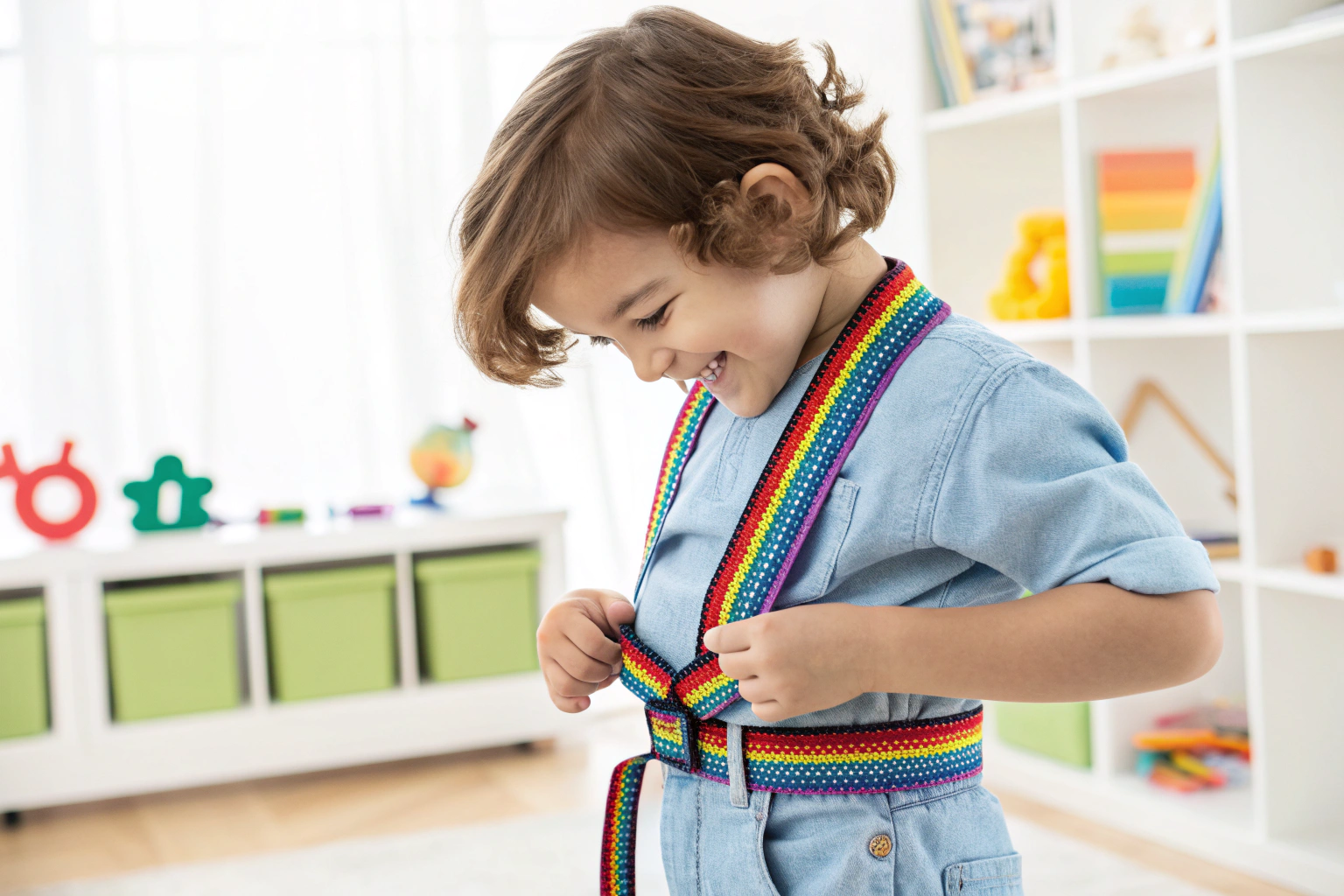
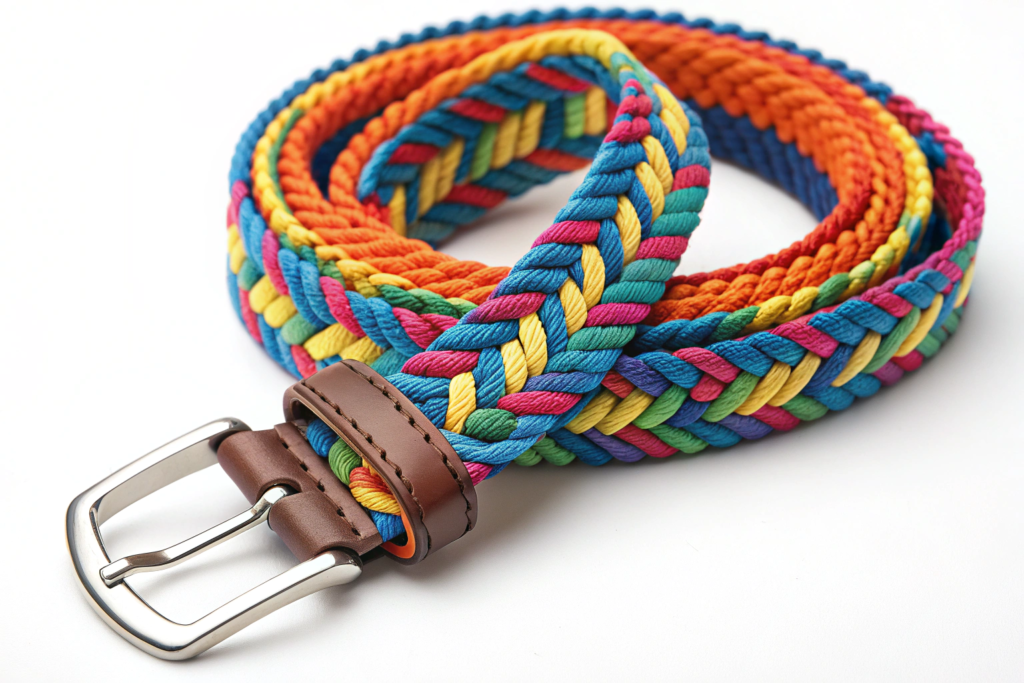
Elastic woven fabric is the number one choice for children's belts because it solves the core problems of fit and comfort for a growing, active child. Its inherent stretch accommodates growth spurts and movement, providing a secure fit without ever feeling restrictive. It's the ultimate "set it and forget it" solution for both kids and parents.
The genius of an elastic belt is its simplicity and forgiveness. There's no need for precisely punched holes; the buckle prong can pass through the woven fabric anywhere, allowing for micro-adjustments and a perfect fit every time. This makes it incredibly easy for a child to learn to use themselves, fostering independence. For parents, it means not having to buy a new belt every six months. This focus on user-experience, a key topic in children's product design guides like those from the Children's Product Manufacturers Association (CPMA), is why elastic belts are a commercial success.
What are the key benefits of elastic belts?
- Comfort and Flexibility: The belt moves with the child, never digging in or restricting play.
- Adjustable Fit: The woven design allows for a perfect fit, ideal for in-between sizes and growing waists.
- Ease of Use: It's simple for small hands to fasten and unfasten, promoting self-dressing skills.
- Durability: High-quality braided elastic is strong and resilient, holding its shape and elasticity even with constant stretching.
What specific material should I ask for?
When creating your tech pack, specify a "poly-blend woven elastic." This typically refers to a durable blend of polyester and spandex/elastane fibers. This combination offers the best of both worlds: the strength and colorfastness of polyester and the superior stretch and recovery of spandex. Be sure to specify a high-quality, dense weave to ensure longevity.
Is PU Leather a Safe and Practical Alternative?
You want to offer a more classic, "grown-up" looking belt, perhaps for dressier occasions or to match a line of school uniforms. Genuine leather seems like a quality choice, but you're worried it's too stiff, heavy, and expensive for the children's market. You're also concerned about the complex chemicals used in tanning genuine leather.
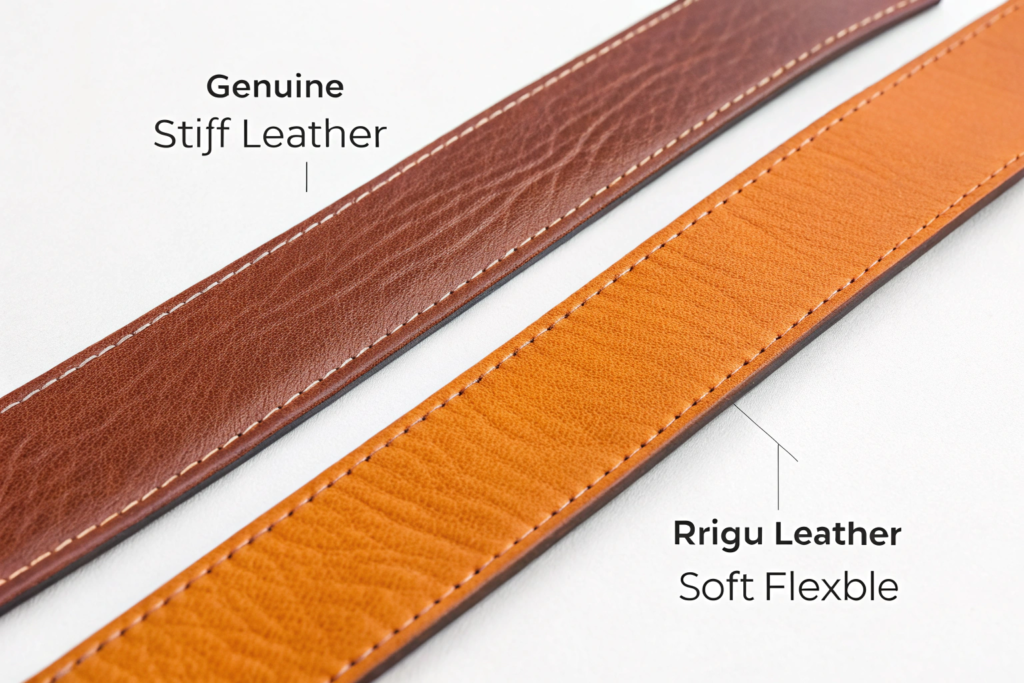
High-quality, certified PU (polyurethane) leather is the ideal alternative for creating classic-style children's belts. It provides the look of leather in a softer, more flexible, and lightweight material that is easier for a child to wear. Crucially, it is a synthetic material whose composition can be controlled to ensure it is free from harmful chemicals.
Don't confuse high-grade PU with cheap, flimsy PVC or "pleather." Modern PU is a durable and versatile material that can be produced in a vast range of colors and finishes. For children's belts, its key advantage is its softness and flexibility right from the start—there's no "breaking-in" period required. It's also easy to clean, a major plus for any kids' product. From a manufacturing perspective, we at shanghai Fumao Clothing prefer working with PU for children's lines because we can reliably source certified non-toxic materials that meet all US safety standards.
Why not use genuine leather?
Genuine leather is generally not recommended for children's belts for several reasons:
- Stiffness: It's often too rigid and uncomfortable for a child's waist.
- Weight: It can be heavier than necessary.
- Maintenance: It can be damaged by water and requires conditioning.
- Cost: It is significantly more expensive, which is a hard sell for an item a child will quickly outgrow.
- Safety Concerns: The tanning process for some leathers can involve heavy metals like chromium, which would require rigorous and expensive testing to certify as safe.
What makes PU leather "safe"?
When sourcing PU leather belts, you must ensure your supplier is using materials that have been tested and certified to be free from harmful substances. This means no lead in the buckle, and no phthalates, BPA, or other harmful chemicals in the PU material itself. A reliable supplier will be able to provide test reports from a certified lab to prove compliance.
What Are the Critical Safety Standards I Must Meet?
You've chosen your material. Now you face the most important hurdle: safety compliance. The US has extremely strict regulations for children's products, and failure to comply can result in massive fines, forced recalls, and irreparable damage to your brand. You're worried about navigating this complex legal landscape and ensuring your supplier meets every requirement.
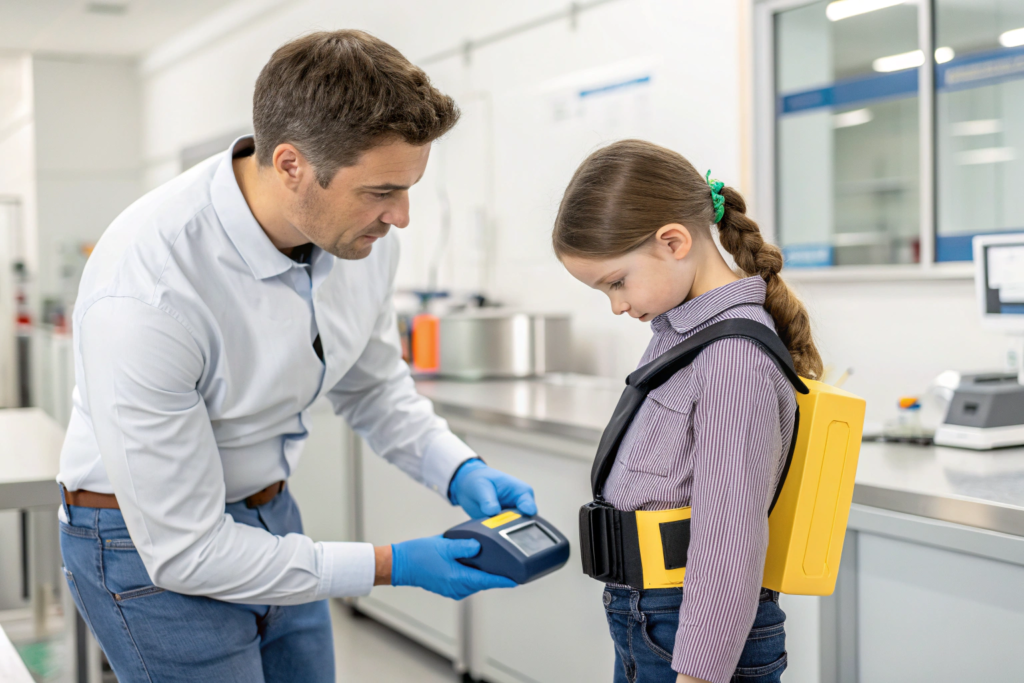
All children's products sold in the US, including belts, must comply with the Consumer Product Safety Improvement Act (CPSIA). This is not optional. Your supplier MUST be able to prove that their materials and components are tested and certified to be free of lead and banned phthalates. You, the US brand, are legally responsible for this compliance.
This is the most critical conversation you will have with a potential supplier. You must demand to see their Children's Product Certificate (CPC) and the underlying third-party lab test reports for the specific materials they will use for your order. The CPC is a document in which the importer or domestic manufacturer certifies that its children's product complies with all applicable children's product safety rules. As explained by the Consumer Product Safety Commission (CPSC), the US importer of record (your brand) is ultimately responsible for ensuring this certification is complete and accurate.
What are the key elements of CPSIA for belts?
- Lead Content: The surface coatings on the buckle and any other metal parts must contain less than 0.009% lead. The base material (substrate) of any accessible component must contain less than 100 parts per million (ppm) of lead.
- Phthalates: The plasticized components of the belt (like a PU strap or a PVC coating) must not contain more than 0.1% of certain banned phthalates, which are chemicals used to soften plastics.
- Small Parts: For belts intended for children under 3, you must ensure there are no small parts that could detach and become a choking hazard.
How can I ensure my supplier is compliant?
- Ask Upfront: Make CPSIA compliance a mandatory requirement in your initial outreach.
- Demand Documents: Request current (usually within the last year) third-party test reports for the exact materials they propose to use.
- Specify in Your PO: Your purchase order should have a clause explicitly stating that all materials must be CPSIA compliant and that you require a CPC upon completion of the order.
- Consider Your Own Testing: For your first order, it can be wise to send a final production sample to a US-based certified lab yourself for verification and peace of mind.
What About the Buckle and Hardware Design?
You've sorted out the strap material and safety testing. But the buckle is the interactive part of the belt. A poorly designed buckle can be frustrating for a child, pinching their fingers or being too difficult to operate. This can lead to a parent giving up on the product, no matter how great the strap is.
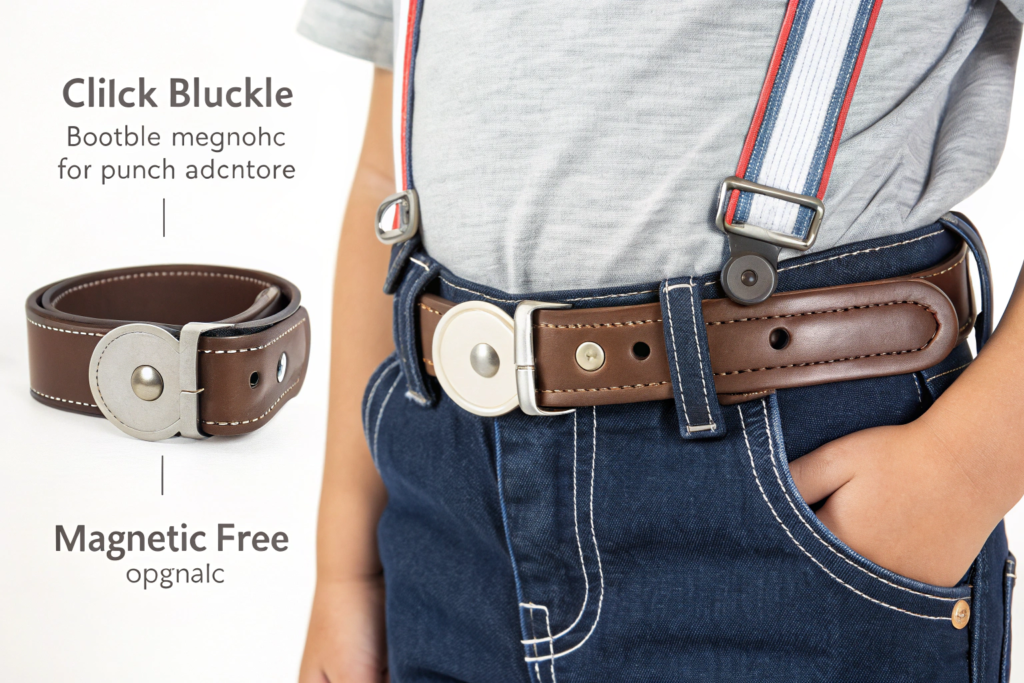
The buckle and hardware on a children's belt must be designed for safety and ease of use. Opt for simple, functional designs with rounded, smooth edges to prevent pokes and scratches. The mechanism should be intuitive and easy for small, developing hands to operate independently.
Functionality is key. For younger children, consider innovative buckle designs that are even easier than a traditional prong buckle.
- Magnetic Buckles: These snap together with a satisfying "click" and are incredibly easy for kids to use.
- D-Ring Buckles: Simple to thread and pull tight, with no prongs to worry about.
- Plastic "Click" Buckles: Similar to those on backpacks, they are lightweight and very intuitive.
For a classic prong buckle, ensure the prong is not overly sharp and the buckle frame is smooth. As a manufacturer, we always recommend a nickel-free and lead-free plating for any metal hardware on children's products to prevent skin irritation and ensure CPSIA compliance.
What material should the buckle be made of?
The most common material is a zinc alloy. It's durable, can be easily cast into custom shapes, and takes plating well. It is essential that you specify and verify that the material and its plating are lead-free. For a more casual or toddler-focused belt, high-quality, durable plastic (like POM) is an excellent lightweight and safe option.
Should the design be different for boys and girls?
While you can offer different colors, the core material and functional design should be universal. The principles of safety, comfort, and ease of use apply to all children. The primary differentiation should be in the color of the elastic weave or PU strap and perhaps a fun, molded shape for the buckle (e.g., a flower or a dinosaur), ensuring any design still meets all safety and usability standards.
Conclusion
Choosing the right material for a children's belt is a decision that balances practicality, comfort, and, above all, safety. Soft, forgiving elastic fabric and pliable, non-toxic PU leather are the clear winners, offering the best solutions for active, growing kids. By prioritizing these materials and rigorously ensuring they meet all CPSIA safety standards for lead and phthalates, you can create a product that parents will trust and children will love to wear. The right material, combined with a thoughtfully designed, easy-to-use buckle, will set your brand apart and build a reputation for quality and safety in the competitive children's market.
At Shanghai Fumao Clothing, we are deeply committed to the safety and quality required for children's products. We have the experience, the certified supply chains, and the rigorous testing protocols to be your trusted manufacturing partner. If you are ready to develop a line of safe, stylish, and practical children's belts, please reach out to our Business Director, Elaine, at elaine@fumaoclothing.com to ensure your project is done right from the start.