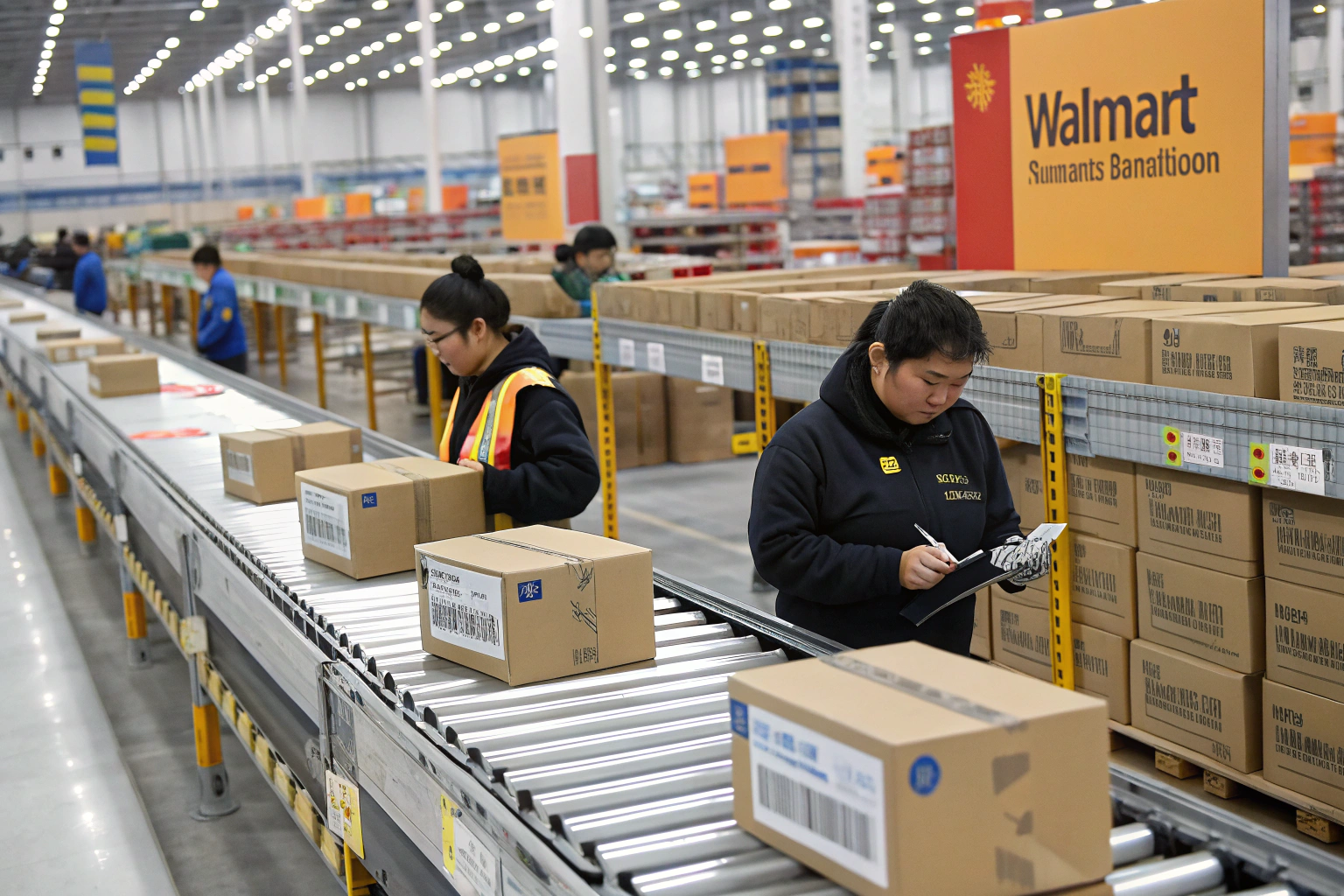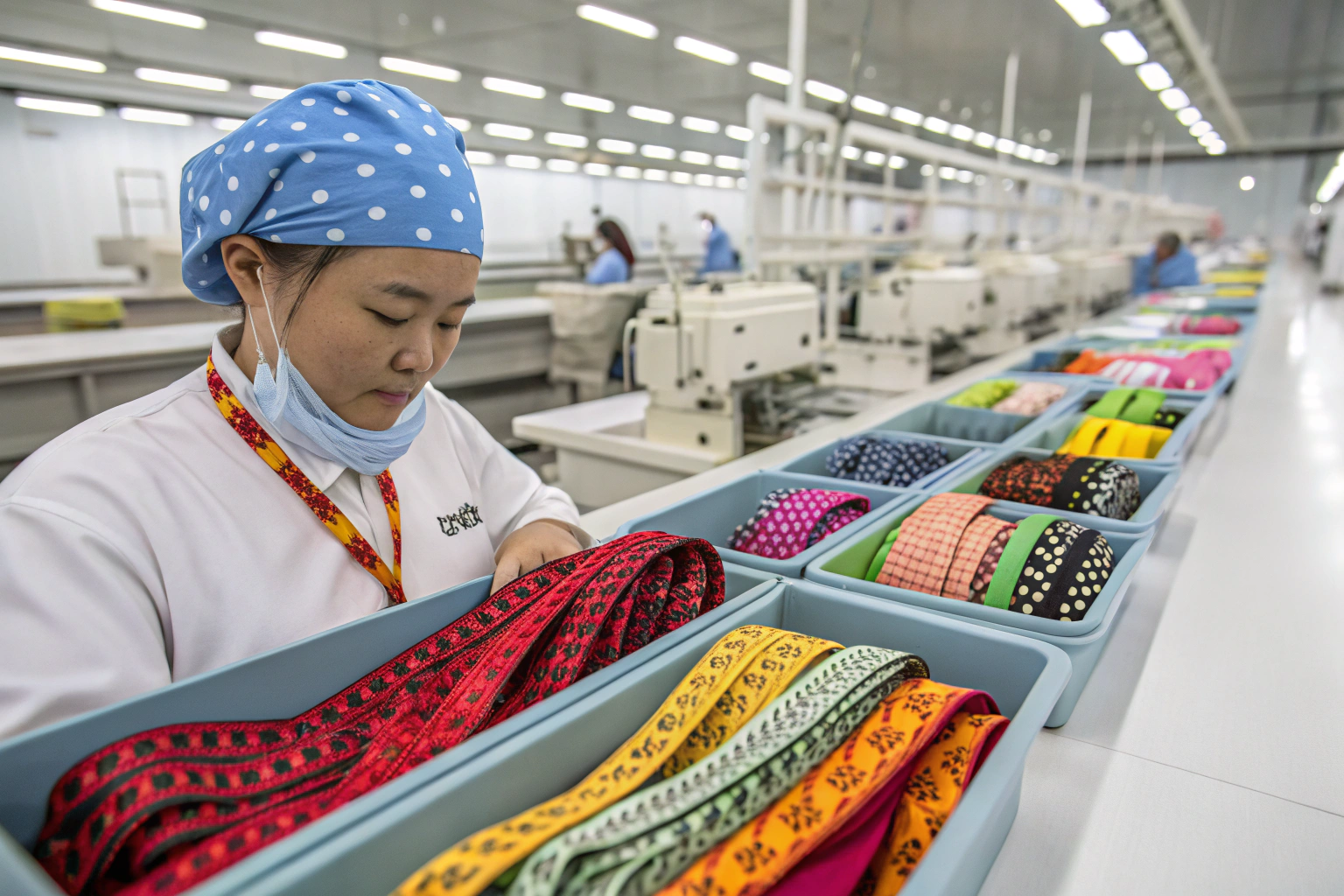
You just received the purchase order from your largest retail account. They want 5,000 units of a custom knotted headband in three colorways, delivered to their distribution center in New Jersey in eight weeks. You did the math quickly. Eight weeks minus two weeks for ocean freight minus one week for customs clearance leaves five weeks for production. Your current supplier in China just emailed you back. Their lead time is eight to ten weeks for production alone. You feel the panic rising. You already accepted the PO. You already promised the delivery date. Now you are scrambling to find a factory that can actually hit the timeline without cutting corners on quality.
The typical production lead time for 5,000 custom headbands from a professional Chinese factory is 25 to 35 days from sample approval to ex-factory shipment. This timeline can be compressed to 20 days with expedited service or extended to 45 days if custom fabric dyeing or complex embellishments are required.
I manage production at Shanghai Fumao in Zhejiang, and headbands are a core category for us. We make knotted headbands, turban-style headbands, athletic elastic headbands, and embellished fashion headbands. The 5,000 unit order quantity sits in a sweet spot. It is large enough to justify dedicated production scheduling but small enough to remain agile. Let me walk you through the real-world production timeline so you can plan your purchasing calendar with confidence and avoid the nightmare of late deliveries.
What Are the Stages of Headband Production and Their Durations?
A headband seems simple. It is a loop of fabric. How long can it take? The answer lies in the sequence of steps that transform a roll of raw fabric into a finished, packaged, retail-ready headband. Each step consumes calendar time. Understanding this sequence allows you to identify where time can be saved and where it cannot be compressed.
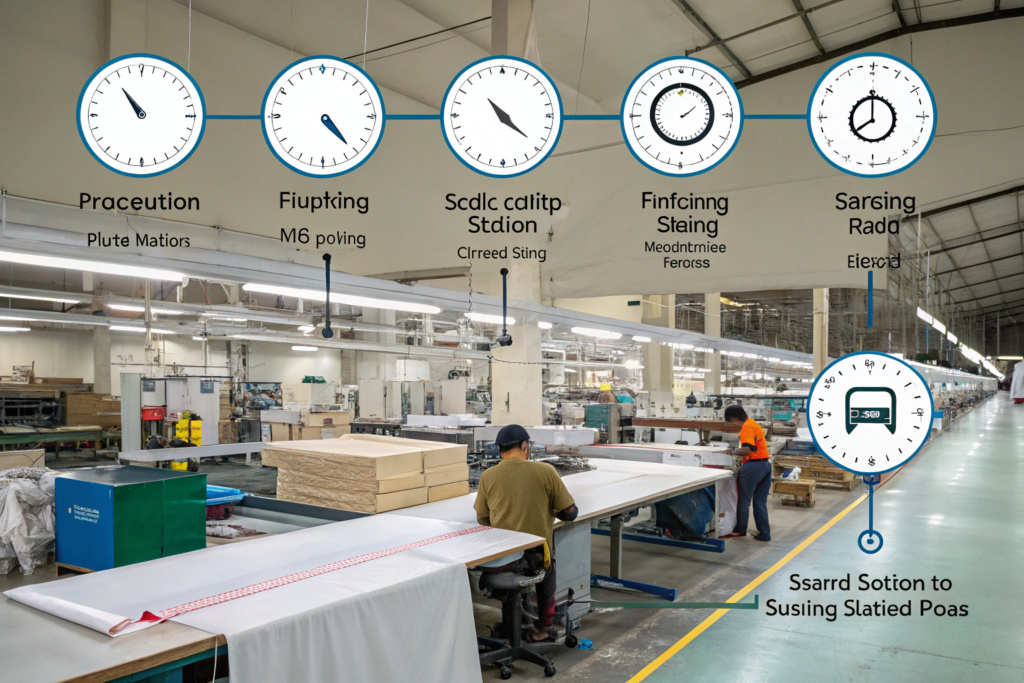
The production of 5,000 custom headbands breaks down into five distinct phases. First, material preparation and cutting. Second, sewing and assembly. Third, finishing and pressing. Fourth, quality control inspection. Fifth, packing and carton labeling. At AceAccessory, our project managers track each phase on a shared production schedule. We know exactly how many days each phase requires for a 5,000 unit order.
I recall an order for 5,000 satin knotted headbands for a bridal accessories brand. The client needed them for a spring wedding season launch. We started cutting on a Monday. The sewing was completed by the following Tuesday. QC and packing were finished by Friday. The goods were ready for shipment in twelve working days. This was possible because the satin fabric was in stock and the design was a standard knot that our sewers produce efficiently. The headband manufacturing process timeline breakdown is predictable when you work with an experienced team.
How Long Does Fabric Cutting and Preparation Take for 5000 Units?
The cutting phase is the foundation of the entire order. For 5,000 headbands, depending on the style, you are cutting between 5,000 and 10,000 individual fabric pieces. A knotted headband requires a long tube of fabric. A turban headband requires multiple pattern pieces that must be sewn together.
The cutting process for 5,000 units typically takes three to five working days. This includes spreading the fabric on the cutting table in multiple layers, placing the pattern markers, and cutting with either a straight knife cutter or a band knife cutter. For synthetic fabrics like polyester or nylon that are prone to slipping, the spreading process requires more care and time.
At Shanghai Fumao, we use automated cutting machines for high-volume headband orders. This technology reduces the cutting time for 5,000 units to approximately two days. It also improves cutting accuracy, which reduces waste and ensures consistent sizing across all 5,000 headbands. If the fabric requires fusing with interfacing for structure, add one additional day to this phase. This fabric cutting and preparation lead time for headbands is the first critical path item in your production schedule.
What Is the Sewing Throughput Rate for a Headband Factory?
The sewing phase is where the bulk of the labor hours are consumed. The speed of this phase depends on the complexity of the headband design and the number of sewing lines we can allocate to your order.
A standard knotted headband with a hidden seam requires approximately three to four minutes of sewing time per unit. A simple elastic athletic headband requires about one minute of sewing time per unit. A complex turban headband with twists and pleats can require eight to ten minutes per unit. Multiply these times by 5,000 units, and you can calculate the total labor minutes required.
At Shanghai Fumao, a dedicated sewing line with eight operators can produce approximately 1,000 to 1,500 standard headbands per day. For an order of 5,000 units, the sewing phase takes four to six working days with one dedicated line. If the order is urgent, we can allocate two lines and cut the sewing time in half. This is the flexibility that a factory with in-house production capacity can offer. A trading company has no control over this. They are at the mercy of whatever capacity their subcontractor has available. This headband sewing production capacity and throughput is a key metric for assessing a supplier's ability to meet your deadlines.
How Do Custom Materials Impact the 5000 Headband Timeline?
The single biggest variable in headband lead time is material availability. If the fabric you want is sitting on our shelf in Zhejiang, we can start cutting tomorrow. If the fabric needs to be sourced or custom dyed, the timeline stretches significantly.
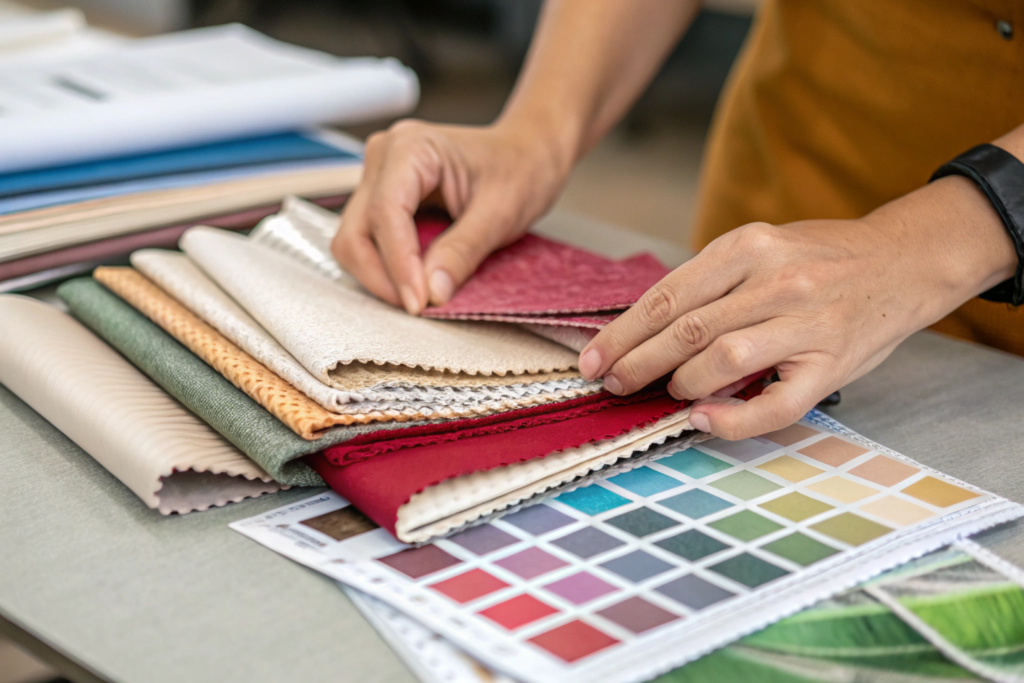
Stock fabrics are the fastest option. At AceAccessory, we maintain an inventory of popular headband fabrics. These include solid color cotton spandex for athletic bands, basic polyester satin for fashion knots, and common prints like leopard and floral. If your design uses a stock fabric, the material preparation phase is essentially zero days. If you require a specific color that we do not stock, the fabric must be sourced from the market or dyed to order. Sourcing from the market adds two to four days. Custom dyeing adds ten to fourteen days.
I always advise clients to ask about stock fabric availability during the design phase. A slight compromise on the exact shade of navy blue can save two weeks on the production calendar. Our design team shows clients the available stock colors that closely match their target Pantone. This material availability impact on headband lead time conversation happens before we finalize the sample order.
Does Custom Printing on the Headband Fabric Add Weeks?
Yes, custom printing is a significant time adder. If you want your brand logo or a custom pattern printed on the headband fabric, you must account for the printing process.
There are two main options. Digital printing is faster for small quantities. The setup time is minimal. The fabric can be printed and ready for cutting within five to seven days. Screen printing requires the creation of screens for each color. This setup takes longer and has higher fixed costs, but the per-unit printing cost is lower for large quantities. Screen setup can take seven to ten days.
After the fabric is printed, it must be heat-set to cure the ink. This takes one day. Then the fabric can be cut and sewn. At AceAccessory, we manage the entire printing process in coordination with our partner printing houses in Zhejiang. We provide a consolidated timeline that includes printing, curing, and delivery of the printed fabric to our cutting table. You do not have to manage multiple vendors. This custom fabric printing timeline for headband production is integrated into our master schedule.
What About Custom Embellishments Like Beading or Embroidery?
Embellishments transform a basic headband into a premium fashion accessory. They also transform a simple production timeline into a more complex one. Each embellishment requires a separate production step with its own labor requirements.
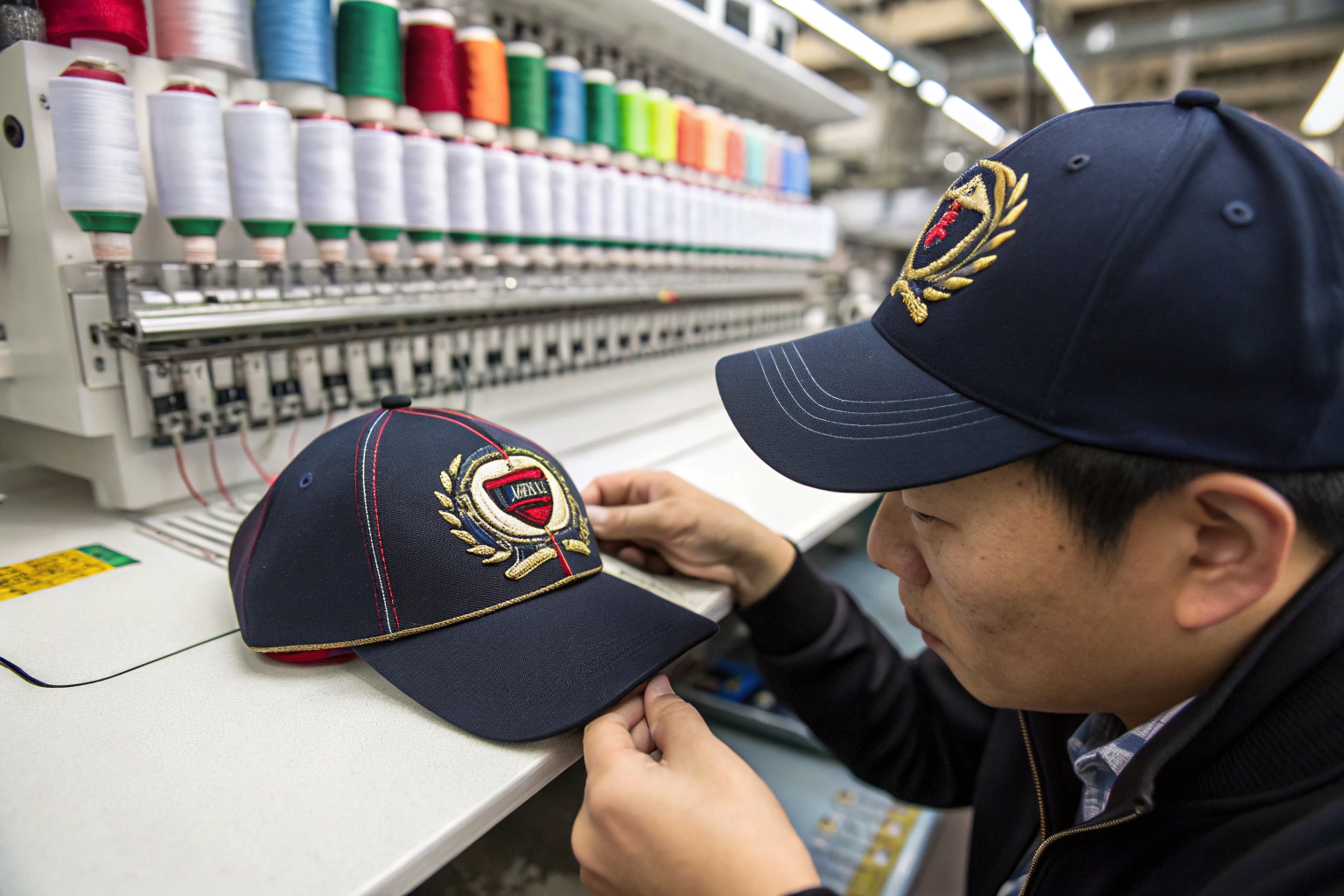
Embroidery on the front knot or the band itself adds two to three days to the timeline. The embroidery machine must be programmed with the digitized logo file. The headbands must be hooped individually and sewn. For 5,000 units, this is a significant labor allocation.
Beading or rhinestone application by hand adds five to seven days. This work is skilled and slow. A worker can embellish maybe 100 headbands per day. For 5,000 units, that is fifty labor days. We must allocate multiple workers to the task to meet the deadline. This increases the cost and the calendar time.
At Shanghai Fumao, we provide a clear breakdown of the time impact for each embellishment option. We help clients decide if the added value justifies the added lead time. Sometimes, a simpler design that ships on time is better than a complex design that arrives after the selling season ends. This embellishment process time estimation for headbands is part of our project planning service.
What Is a Realistic Timeline from Sample Approval to Shipment?
The clock on the 5,000 unit production run does not start until you approve the final pre-production sample. Everything before that approval is development. Everything after that approval is production. Understanding this distinction is critical for managing your retail delivery deadlines.
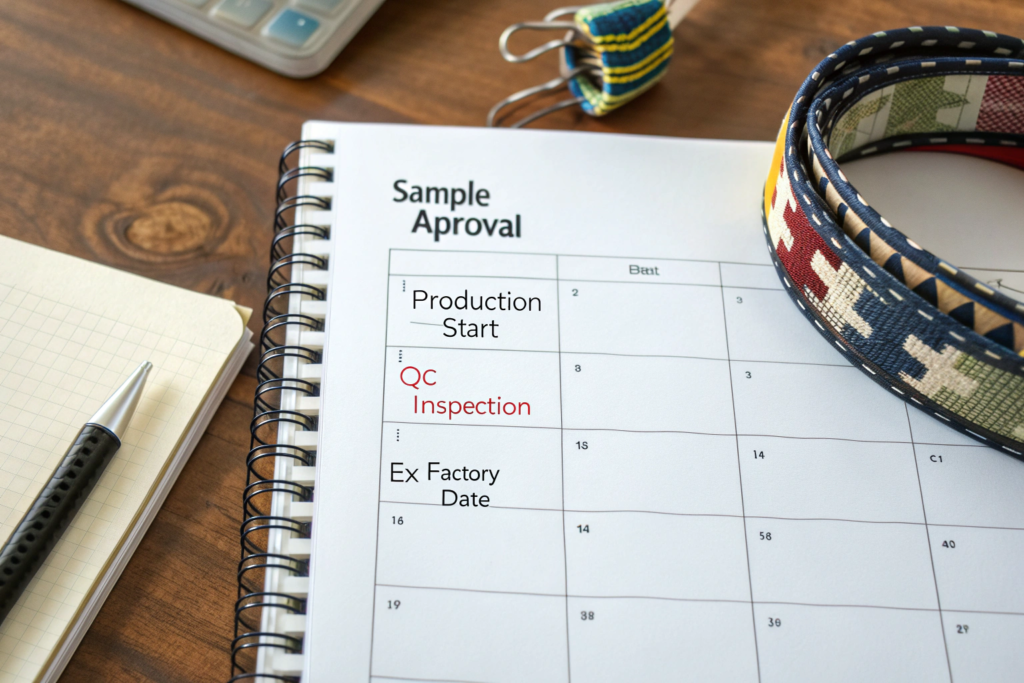
Once you email us the words "PP Sample Approved," our internal clock starts. We release the fabric purchase order or issue the cutting ticket for stock fabric. For a 5,000 unit headband order with stock fabric and a standard design, the timeline looks like this. Days 1 to 3 are fabric spreading and cutting. Days 4 to 10 are sewing and assembly. Days 11 to 12 are finishing and pressing. Days 13 to 15 are quality control inspection. Days 16 to 17 are packing and carton labeling. Day 18 is the ex-factory date. This is a total of eighteen working days, which translates to just over three calendar weeks.
I provide this detailed schedule to clients like Ron at the beginning of the project. It is not a guess. It is a production plan based on our known capacity and the specific requirements of the order. If we encounter a problem, I communicate it immediately. You never have to wonder where your order stands. This post approval production timeline for headband orders transparency is what allows our clients to manage their own inventory and sales expectations accurately.
How Do You Manage Quality Control Without Delaying 5000 Units?
Quality control is not a separate phase that happens at the end. It is integrated throughout the production process. This is how we maintain speed without sacrificing quality.
Inline QC happens during sewing. Our line supervisors check the stitching tension and seam alignment on every headband as it comes off the machine. This catches defects immediately, before the headband moves to the next station. Final QC happens after the headbands are finished and pressed. Our QC team pulls a random sample based on AQL standards. For 5,000 units, the sample size is 200 headbands. The inspection covers stitching, sizing, color consistency, and overall appearance.
This inspection takes one full day. If the lot passes, we move to packing. If the lot fails, we have a problem. But because we performed inline QC, the failure rate is extremely low. We do not wait until the end to discover a systemic issue. This integrated quality control process for bulk headband production prevents last-minute delays and shipment holds.
What Is the Difference Between Ex-Factory Date and Ship Date?
This is a distinction that confuses many first-time importers. The ex-factory date is the day the finished goods leave our factory gate in Zhejiang. The ship date is the day the vessel departs the port in Shanghai or Ningbo. These dates are not the same.
After the goods leave our factory, they travel by truck to the port. This takes one day. They must be delivered to the container freight station or CY at least three days before the vessel cutoff. The container is loaded onto the vessel. The vessel departs on its published sailing schedule. The time between ex-factory date and actual ship date can be three to seven days depending on the port cutoff and the vessel schedule.
When a client asks for a delivery date to their US warehouse, I work backward from that date. I subtract the ocean transit time. I subtract the port-to-door drayage time. I subtract the buffer for vessel schedule and port cutoff. This gives me the required ex-factory date. I then plan the production schedule to meet that ex-factory date. This ex factory versus actual ship date planning for imports is the foundation of reliable logistics management.
How Can You Shorten the Lead Time for an Urgent Headband Order?
Sometimes the timeline is not negotiable. You have a tradeshow. You have a launch event. You have a buyer who needs goods in six weeks, not eight. In these situations, you need a factory that can execute an expedited production plan without compromising quality.
There are several levers we can pull to compress the timeline. First, we can allocate additional sewing lines to your order. Instead of one line of eight operators, we assign two lines or sixteen operators. This cuts the sewing phase time in half. Second, we can run overtime shifts. Our standard workday is eight hours. We can authorize a four-hour overtime shift to increase daily output. Third, we can prioritize your cutting ticket. Your fabric moves to the front of the cutting queue.
These actions cost us more in labor and disrupt our standard production flow. We charge a rush fee to compensate for these costs. But the fee is a small price to pay compared to the cost of missing a hard delivery deadline. At AceAccessory, we have executed 5,000 unit headband orders in fifteen calendar days from sample approval to ex-factory. It requires intense focus and coordination. It is not our standard service. It is our emergency service. And we are honest about the expedited production options for urgent headband orders and the associated costs.
Does Air Freight Solve the Lead Time Problem for Headbands?
Air freight compresses the transit time, not the production time. A headband order that takes thirty days to produce will still take thirty days to produce, regardless of how it ships. Air freight can turn a thirty-day ocean voyage into a five-day flight. That is a significant time saving on the back end.
But air freight is expensive. Headbands are lightweight, but 5,000 units packed in cartons still have significant volume. The air freight cost per unit is many times higher than ocean freight. For a low-cost accessory like a headband, air freight can completely erase your profit margin.
I advise clients to use air freight only for a partial shipment. Produce the bulk of the 5,000 units by sea. Produce a small air freight portion of 500 units to meet the initial floor set or launch date. This hybrid approach balances the need for speed with the reality of cost. We can manage the split shipment and provide separate packing lists for the air and sea portions. This air freight versus sea freight timeline and cost analysis for headbands helps you make an informed logistics decision.
What Information Do You Need to Provide for an Accurate Timeline Quote?
You cannot get an accurate timeline if you do not provide complete information. The factory's first response is often a range. "Four to six weeks." To get a specific, committed date, you must provide specific details.
We need to know the exact headband style. Is it a knotted headband, a turban wrap, an elastic athletic band, or a structured Alice band? We need to know the fabric type and whether it is stock or custom. We need to know the number of colorways. 5,000 units in one color is faster to produce than 5,000 units split across five colors. Each color change requires machine re-threading and line clearance.
We need to know the embellishments. Are there embroidered logos? Are there sewn-on tags? Are there custom hang tags or packaging requirements? Each of these details adds time to the finishing and packing phase. The more complete your initial inquiry, the more precise our timeline commitment. At AceAccessory, we use a standardized Request for Quote form that prompts for all this information. It ensures we do not miss a detail that could delay the accurate production timeline quotation checklist process.
Conclusion
The production lead time for 5,000 custom headbands is not a mystery. It is a calculation based on material availability, design complexity, and factory capacity. A well-organized factory like AceAccessory can reliably produce this quantity in 25 to 35 days from sample approval. With stock materials and a simple design, that timeline can be compressed to as little as 18 to 20 days.
The key is to partner with a manufacturer who has in-house production control, a transparent scheduling process, and the flexibility to allocate resources when deadlines tighten. A trading company cannot offer this level of predictability. They are dependent on the schedules of the workshops they subcontract to. A factory with its own sewing lines and cutting tables controls its own destiny, and by extension, controls your delivery timeline.
When you are planning your next headband purchase order, do not just ask for a price. Ask for a detailed production schedule. Ask about stock fabric availability. Ask about the impact of embellishments on the timeline. Ask about the ex-factory date versus the ship date. The answers to these questions will reveal whether you are working with a professional manufacturing partner or just another order-taker.
If you have a headband order in development and need a reliable timeline commitment, I encourage you to reach out to our Business Director, Elaine. She can review your design specifications and provide a detailed production calendar with specific milestone dates. You can email Elaine directly at: elaine@fumaoclothing.com. Let us give you the confidence of a firm delivery date so you can focus on selling those headbands, not chasing them.