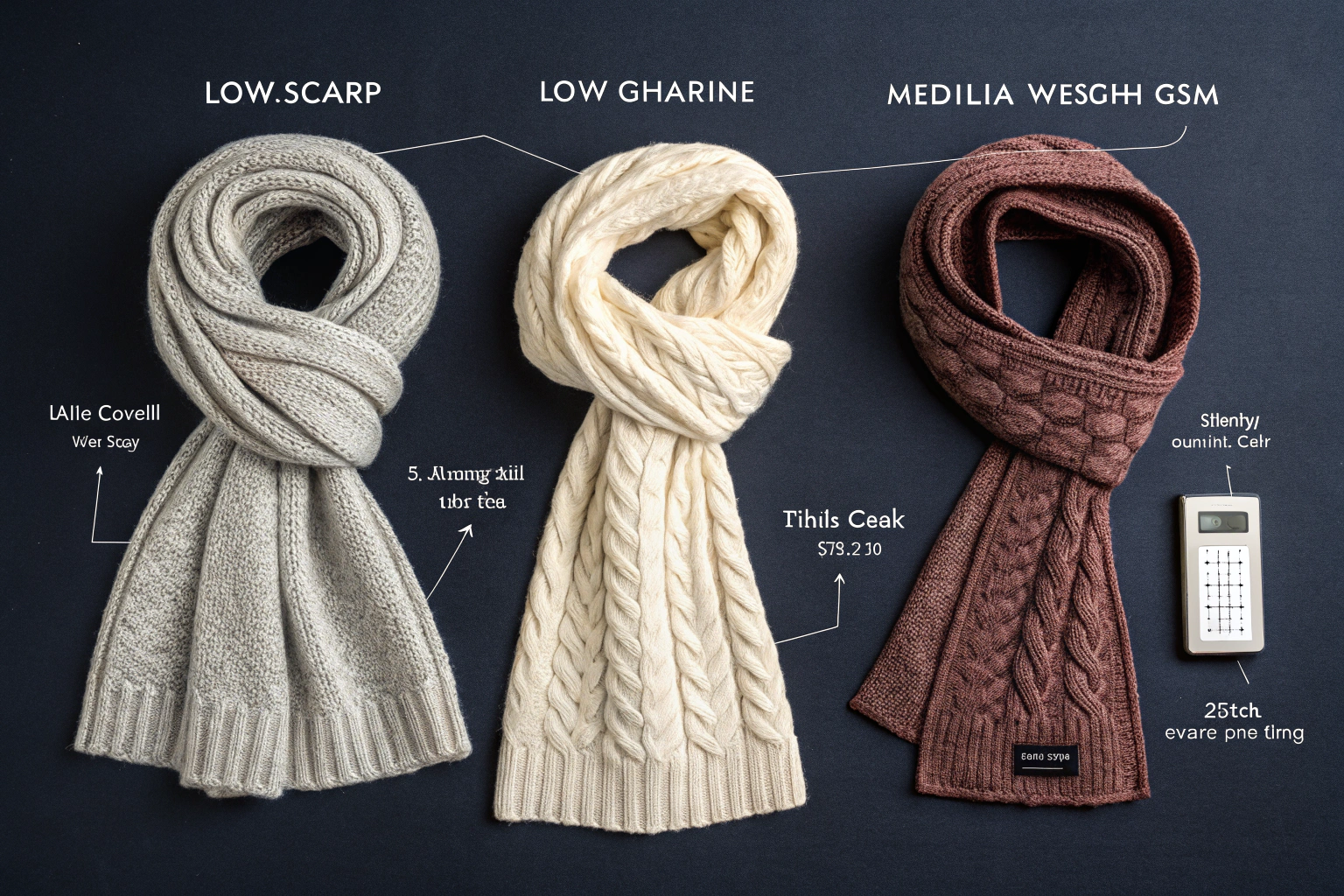
Are you sourcing winter scarves but confused by fabric weight specifications? Do terms like "GSM," "momme," or "oz/yd²" leave you unsure if you're ordering a substantial, warm scarf or a flimsy fashion piece? You're facing a critical quality checkpoint that directly impacts customer satisfaction. The weight of the fabric, measured in Grams per Square Meter (GSM), is the single most objective indicator of a winter scarf's warmth, durability, and perceived luxury.
For high-quality winter scarves, there is no single "standard" GSM, but rather a target range that varies by material. However, a general industry benchmark for a warm, substantial winter scarf begins at approximately 250 GSM and can go up to 600 GSM or more for extremely heavy, chunky knits. The ideal weight depends on the fiber content (wool, cashmere, acrylic blend), the construction (woven, knitted, fleece), and the intended use (lightweight layering vs. extreme cold protection). Understanding GSM empowers you to specify exactly what you want and avoid receiving disappointingly thin products.
This guide will demystify fabric weight for winter scarves. We'll break down the optimal GSM ranges for key materials, explain how construction affects warmth and drape, show you how to verify weight, and discuss why hitting the right GSM target is crucial for your brand's reputation and value proposition. Let's ensure your scarves are as warm and luxurious as they look.
What are the Optimal GSM Ranges for Different Scarf Materials?
GSM is meaningless without context of the material. A 300 GSM cashmere scarf is incredibly dense and luxurious, while 300 GSM for a polyester fleece scarf might be considered medium-weight. Here are the target GSM ranges for high-quality winter scarves by primary material:
- Wool (Merino, Lambswool): The workhorse of winter scarves. For a good, warm wool scarf, aim for 250-400 GSM. A scarf at 280-320 GSM offers excellent warmth-to-weight ratio and drape. Scarves above 400 GSM become very heavy and dense, suitable for extreme cold.
- Cashmere: The gold standard for luxury and softness. Due to the fineness and insulating power of the fibers, a lower GSM can still provide great warmth. High-quality cashmere scarves typically range from 200-350 GSM. A 250-280 GSM cashmere scarf is considered substantial and premium.
- Acrylic & Synthetic Blends: Often used for affordable, colorful scarves. To feel substantial and warm, they should be in the 300-450 GSM range, as synthetics are less insulating by weight. Be wary of very low GSM acrylic scarves (under 200 GSM); they will feel cheap and offer little warmth.
- Cotton Fleece & Sherpa: Popular for casual, soft scarves. A good quality fleece scarf should be 300-500 GSM. The higher the GSM, the plusher and warmer the fleece.
- Chunky Knits (Wool/Acrylic): This is where GSM peaks. Artisanal, oversized knit scarves can easily be 500-700 GSM or more, prioritizing extreme texture and volume over lightweight wearability.
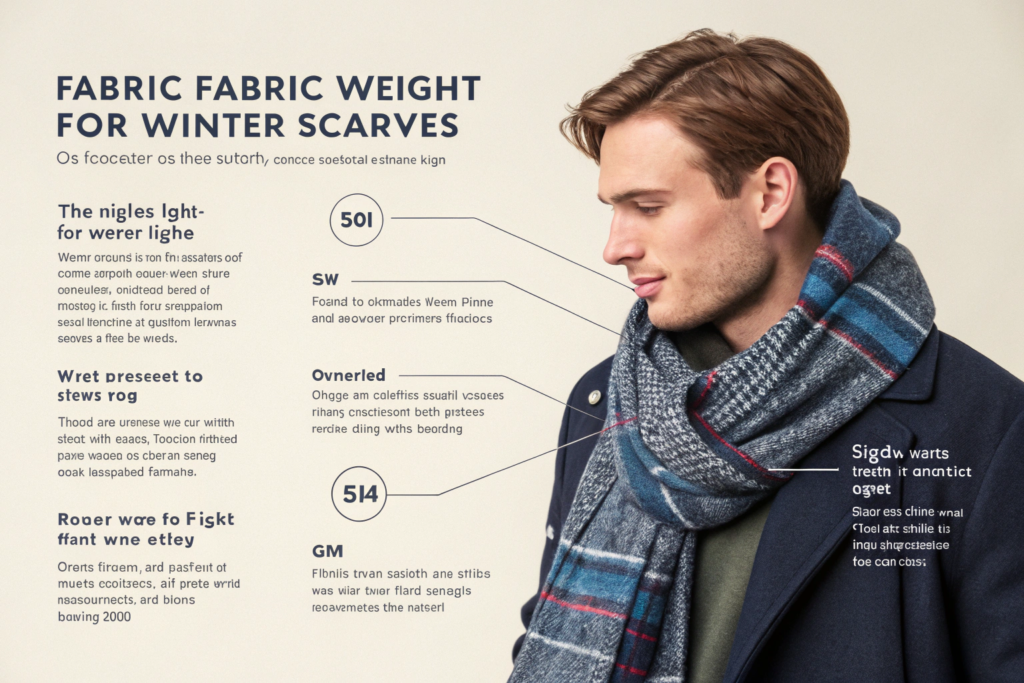
How Does GSM Differ Between Wool, Cashmere, and Acrylic?
The difference lies in fiber density and insulating properties.
- Wool: A hollow fiber with natural crimp, providing excellent loft and insulation. A 300 GSM wool fabric will be warm, breathable, and have good body.
- Cashmere: Fibers are finer and softer than wool, with a higher insulating capacity per gram. Therefore, a 250 GSM cashmere can be as warm as a 300+ GSM wool scarf, while feeling significantly lighter and softer against the skin. This is why cashmere commands a premium.
- Acrylic: A solid, synthetic filament. It has less innate insulation, so a higher GSM is required to achieve comparable warmth. It also lacks wool's natural moisture-wicking and temperature regulation. A high-GSM acrylic scarf can be warm but may feel less breathable.
When discussing specifications with a manufacturer like Shanghai Fumao Clothing, always pair the GSM demand with the exact material. Requesting a "300 GSM scarf" is vague; requesting a "320 GSM, 100% Merino Wool, 2x2 rib knit scarf" is precise and professional.
What is the Minimum GSM to Avoid a "Flimsy" Feeling Scarf?
For a scarf to be perceived as a true winter accessory—not a decorative fall piece—it must have a minimum heft. As a general rule of thumb for woven or lightly knitted fabrics:
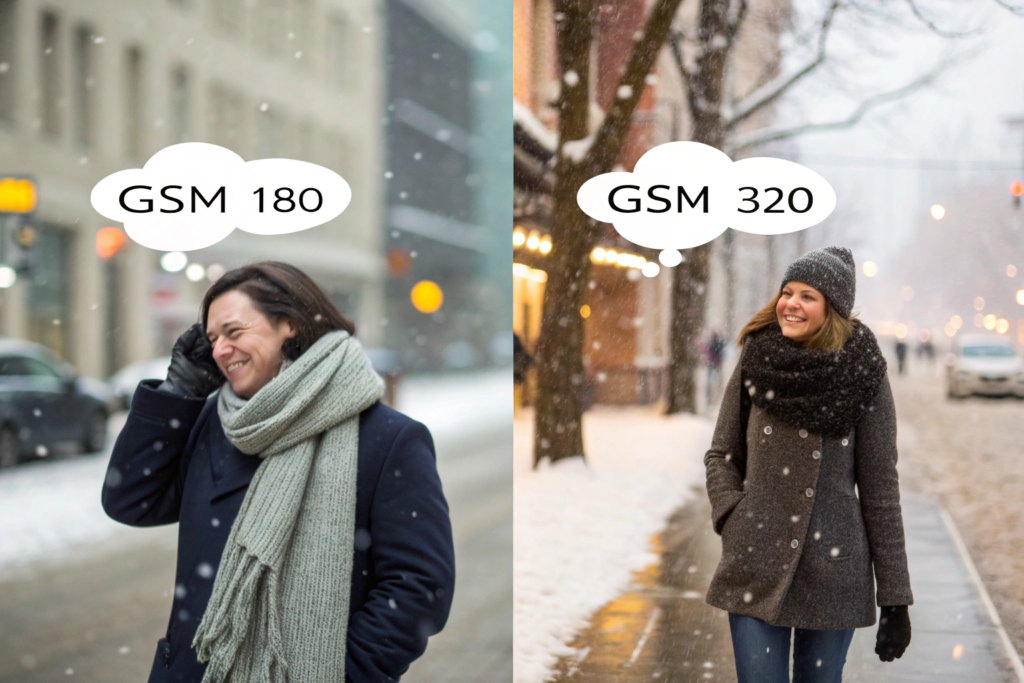
- Absolute Minimum: 180-200 GSM. Anything below this will feel insubstantial, like a large handkerchief, and will not provide meaningful warmth.
- Acceptable Entry-Level: 220-250 GSM. This is a lightweight winter or deep autumn scarf.
- Good Quality Standard: 280-350 GSM. This is the sweet spot for most brands, offering a balance of warmth, drape, and cost.
Scarves below 180 GSM are typically marketed as spring/summer fashion scarves or shawls. Always ask for the GSM specification before approving a bulk order sample.
How Does Fabric Construction Affect Warmth and Drape?
GSM tells you how much material there is, but the construction (weave or knit) determines how that material is arranged—which directly impacts warmth, texture, and how the scarf falls. Two scarves with identical GSM but different constructions can feel completely different.
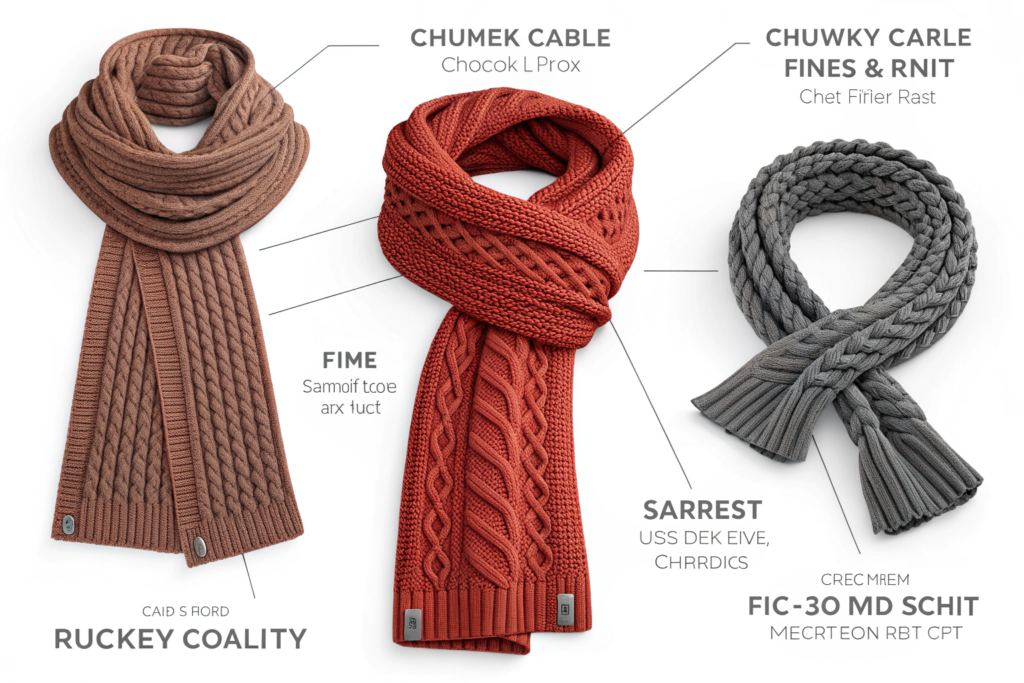
Knit Scarves (e.g., rib knit, cable knit, basket weave): Knitted fabrics are made from interlocking loops, creating air pockets that trap heat. This makes them inherently warmer, softer, and more stretchy than wovens of the same GSM. A chunky cable knit at 500 GSM will be extremely warm and have a bold, textured look with a heavy drape. A fine rib knit at 300 GSM will be sleek, warm, and have an elegant, fluid drape.
Woven Scarves (e.g., twill, plain weave, jacquard): Woven fabrics have threads crossing at right angles, creating a denser, less stretchy material. They tend to be more structured and can have intricate patterns. A woven wool scarf at 350 GSM will be very dense, wind-resistant, and have a firm, tailored drape. It may feel less immediately soft than a knit but can be exceptionally durable.
Why are Knitted Scarves Often Warmer at the Same GSM?
The key is loft. Knitted structures are inherently loftier—the loops create tiny pockets of still air, which is an excellent insulator. Imagine the difference between a solid brick (woven) and a basket of wool balls (knit) of the same weight; the basket traps more air. Therefore, a 300 GSM knitted merino wool scarf will generally feel warmer and softer than a 300 GSM woven merino wool scarf. For maximum warmth in a lightweight package, knits are superior. This principle is why most high-quality winter beanies and sweaters are knitted.
How Does Weave Density Impact Wind Resistance and Durability?
While knits win on loft, dense weaves excel at wind resistance. A tightly woven wool or wool-blend fabric with a high thread count acts as a barrier against wind chill, making it ideal for very cold, windy climates. This density also contributes to durability; a tightly woven fabric is less likely to snag or pull than a loose knit. When evaluating a woven scarf sample, don't just feel it—hold it up to a light source. Less light passing through indicates a tighter, denser, and typically more wind-resistant weave. This level of detail is part of a comprehensive material and quality inspection process.
How Can You Verify GSM and Avoid Supplier Deception?
Trust but verify. Unscrupulous suppliers may claim a high GSM but use cheaper, lighter materials or a looser construction to save cost. As a buyer, you must have methods to confirm specifications. This protects your cost calculations and ensures you receive the quality you paid for.
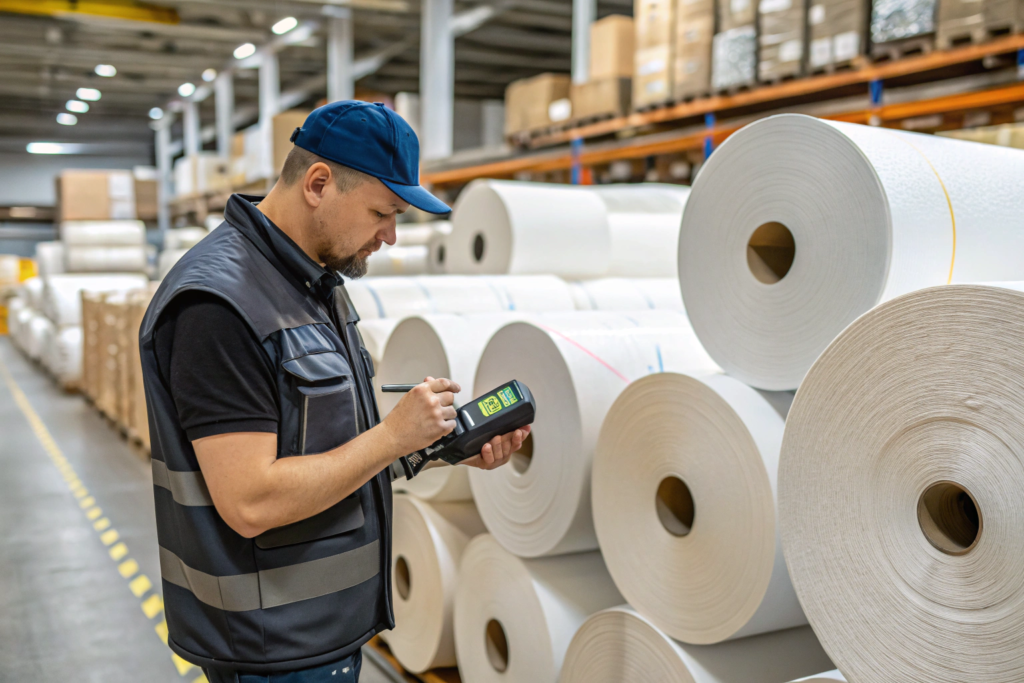
The most accurate method is to request a fabric swatch or a full scarf sample and have it tested. You can do a rough check yourself: weigh the entire scarf on a precise digital scale (in grams), then calculate its total area (length in meters x width in meters). GSM = (Total Weight in Grams) / (Area in Square Meters). For a more professional verification, you can send a sample to a third-party testing lab (like SGS, Intertek, or Bureau Veritas) for a formal fabric weight test. Reputable manufacturers will provide mill test reports for the fabric rolls they purchase.
What is the Simple "Hand Feel" Test for Assessing Weight?
While subjective, an experienced hand can gauge approximate GSM. Compare your sample to a known benchmark. For example, keep a scarf you know is 300 GSM as a reference. Your new sample should feel similar in density, thickness, and heft when you pick it up and fold it. A high-GSM fabric will have substantial drape weight—it will fall heavily and create deep folds. A low-GSM fabric will feel light, airy, and may not fold crisply. This test is not a replacement for measurement, but it's a useful first alert. If a sample feels suspiciously light for its claimed 350 GSM, it's time for a physical measurement.
Should You Request a Mill Certificate or Third-Party Test Report?
Absolutely. For bulk orders, especially of luxury materials like cashmere or high-grade wool, this is a best practice. A Mill Test Report (MTR) from the fabric supplier provides verified data on weight (GSM), composition, yarn count, and sometimes colorfastness. It is a chain-of-custody document. For added assurance, you can stipulate in your purchase contract that pre-shipment inspection includes a random GSM check, or you can arrange for a third-party lab test on pre-production fabric rolls. This level of verification is a hallmark of working with a trusted and transparent partner.
Why is GSM Critical for Pricing, Marketing, and Customer Satisfaction?
GSM is directly tied to your Cost of Goods Sold (COGS). Heavier GSM means more raw material used, which increases the fabric cost, which is the largest component of your product cost. Therefore, GSM is a primary driver of your wholesale price. You cannot profitably sell a 400 GSM scarf at the same price as a 200 GSM one.
For marketing, GSM is a powerful, tangible proof point. You can communicate value explicitly: "Heavyweight 340 GSM Wool Blend for Maximum Warmth." It educates the customer and justifies a higher price point. It moves the conversation from subjective "soft and warm" to objective "substantial and insulating."
Ultimately, it dictates customer satisfaction. A customer expecting a warm winter scarf who receives a thin, gauzy piece will be disappointed, leading to returns and negative reviews. Consistently delivering on the promised weight builds trust and brand loyalty for repeat business.
How Does GSM Directly Impact Scarf Costing?
The calculation is relatively linear: if Fabric A costs $10 per kilogram and is 200 GSM, and Fabric B costs $10 per kilogram and is 400 GSM, Fabric B will cost exactly twice as much per square meter. Therefore, when a factory quotes you a price, the GSM is a major variable. A quote that seems too low for a claimed high GSM should be a red flag—they may be using inferior, lighter raw materials or planning to reduce the scarf's dimensions. Always ensure your tech pack specifies not only the target GSM but also an acceptable tolerance (e.g., 320 GSM +/- 5%).
Can You Market GSM as a Key Quality Feature?
Yes, and increasingly, savvy brands do. Highlighting GSM in product descriptions educates consumers and builds perceived value. For example:
- "Crafted from premium 280 GSM Merino Wool for a perfect balance of warmth and wearability."
- "Our classic winter scarf features a dense 380 GSM knit, designed for harsh climates."
This transparent language appeals to informed shoppers and differentiates your product from vague competitors. It shows you understand and care about the technical details that matter, much like emphasizing natural fiber benefits for summer lines.
Conclusion
Understanding and specifying the correct GSM is fundamental to sourcing successful winter scarves. It is the objective bridge between your quality expectations and the physical product you receive. By targeting the optimal GSM range for your chosen material (e.g., 280-350 GSM for wool, 250-300 GSM for cashmere), understanding the impact of construction, and implementing verification steps, you ensure your scarves deliver on their promise of warmth, luxury, and durability.
This knowledge empowers you to make informed buying decisions, communicate value effectively to your customers, and build a reputable brand known for quality and transparency.
Ready to source winter scarves with guaranteed specifications and premium quality? At Shanghai Fumao Clothing, we provide detailed fabric specifications, including GSM reports, and work with you to select the perfect weight and construction for your target market. Contact our Business Director Elaine at elaine@fumaoclothing.com to develop a winter scarf line that stands out for all the right reasons.